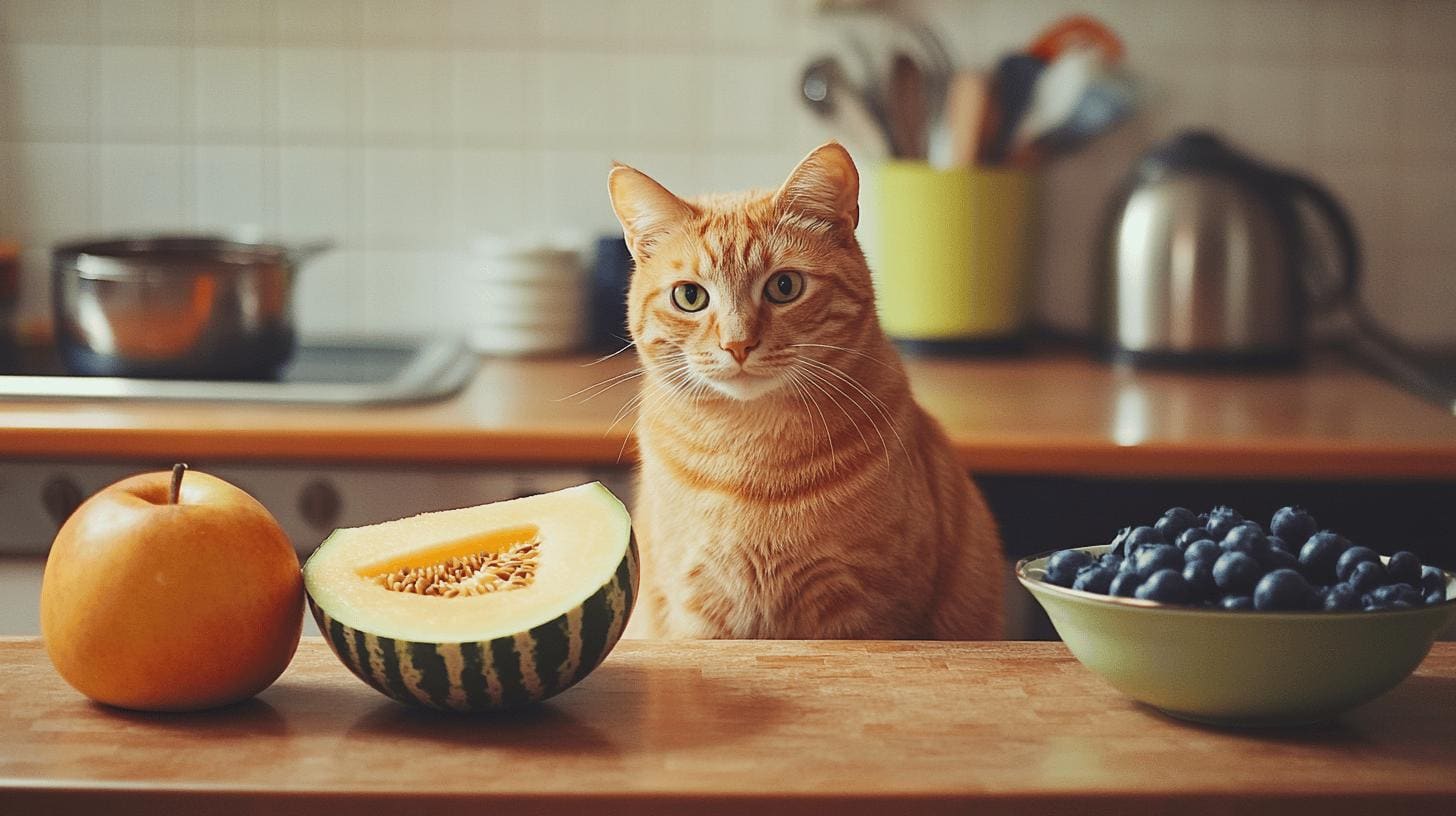
Can cats eat melon, or are we putting our furry pals at risk with this sweet treat? Many pet owners are curious about sharing their favorite fruits with their whiskered companions.
Melon can be a juicy delight for humans, but is it safe for our cats? In this article, we'll explore whether the sweet allure of melon is worth the risk for your feline friend.
We'll delve into the potential choking hazards, the effects of cyanide found in seeds, and the slim nutritional benefits these fruits offer to obligate carnivores. Let’s find out if melon can ever be more than an occasional indulgence.
Can Cats Safely Eat Melon?
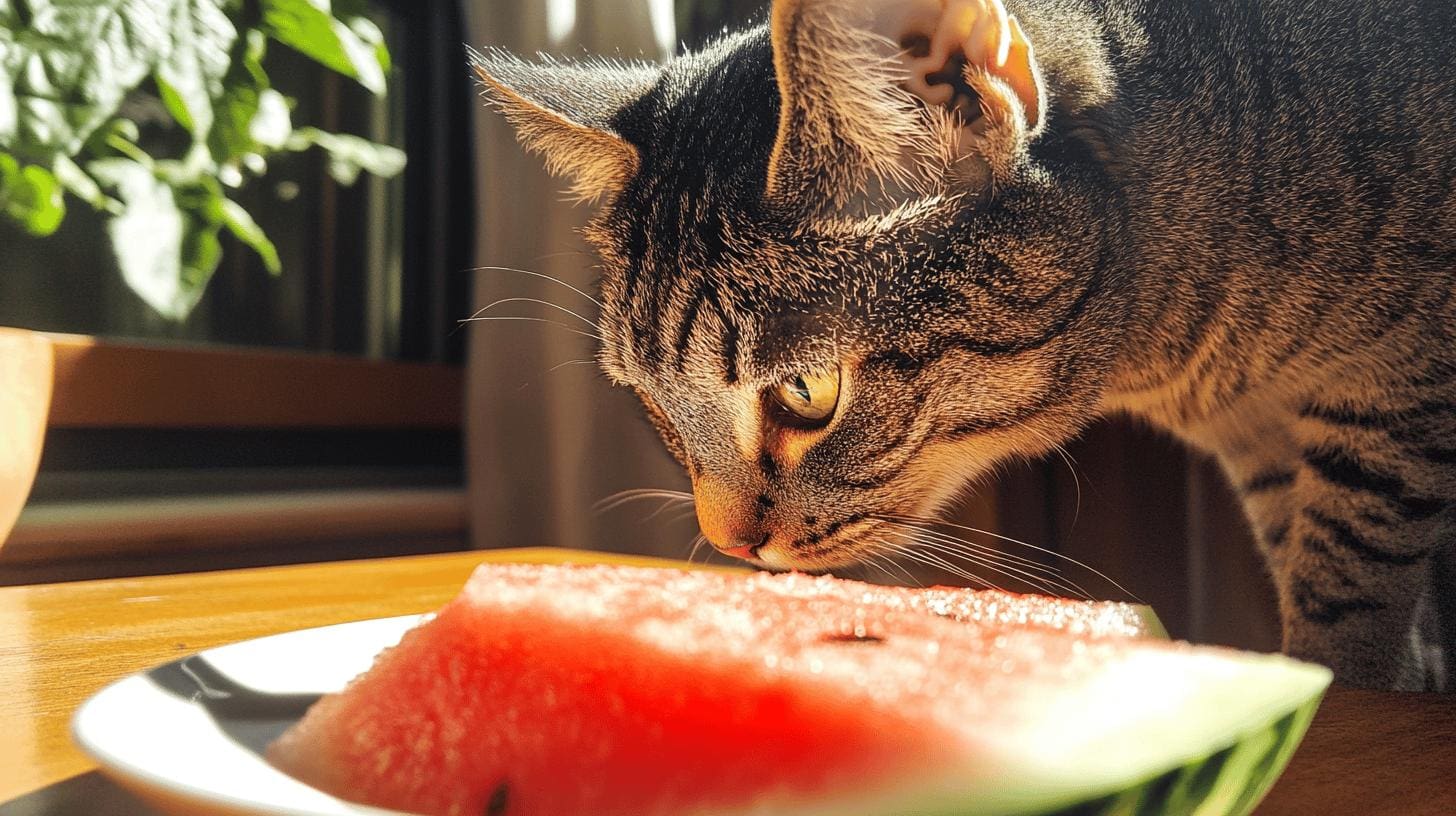
Cats can safely eat small amounts of melon, including cantaloupe and watermelon. These fruits are non-toxic, but only the flesh should be fed to cats. Melon seeds contain small amounts of cyanide, and the rind can pose choking hazards or cause digestive issues.
When considering whether melons are safe for cats, it is essential to focus on portion control and preparation. Avoid giving cats the seeds, as these contain cyanide, which is harmful. The rind should also be removed to prevent choking or gastrointestinal blockages.
While melons do contain nutrients and water, they offer little nutritional value for cats, who are obligate carnivores. Their primary dietary needs are met through meat, so melon should be considered an occasional treat rather than a regular part of their diet.
- Choking hazards from rind
- Cyanide in seeds
- Gastrointestinal upset from overconsumption
- Lack of nutritional benefit for obligate carnivores
- Monitoring cat's reaction post-consumption
It's crucial to practice moderation when feeding melon to cats. Small, manageable pieces of melon flesh can be a refreshing treat, but too much can lead to stomach upset. Always monitor your cat after introducing any new food, including melon, to ensure there are no adverse reactions.
Benefits of Melon for Cats
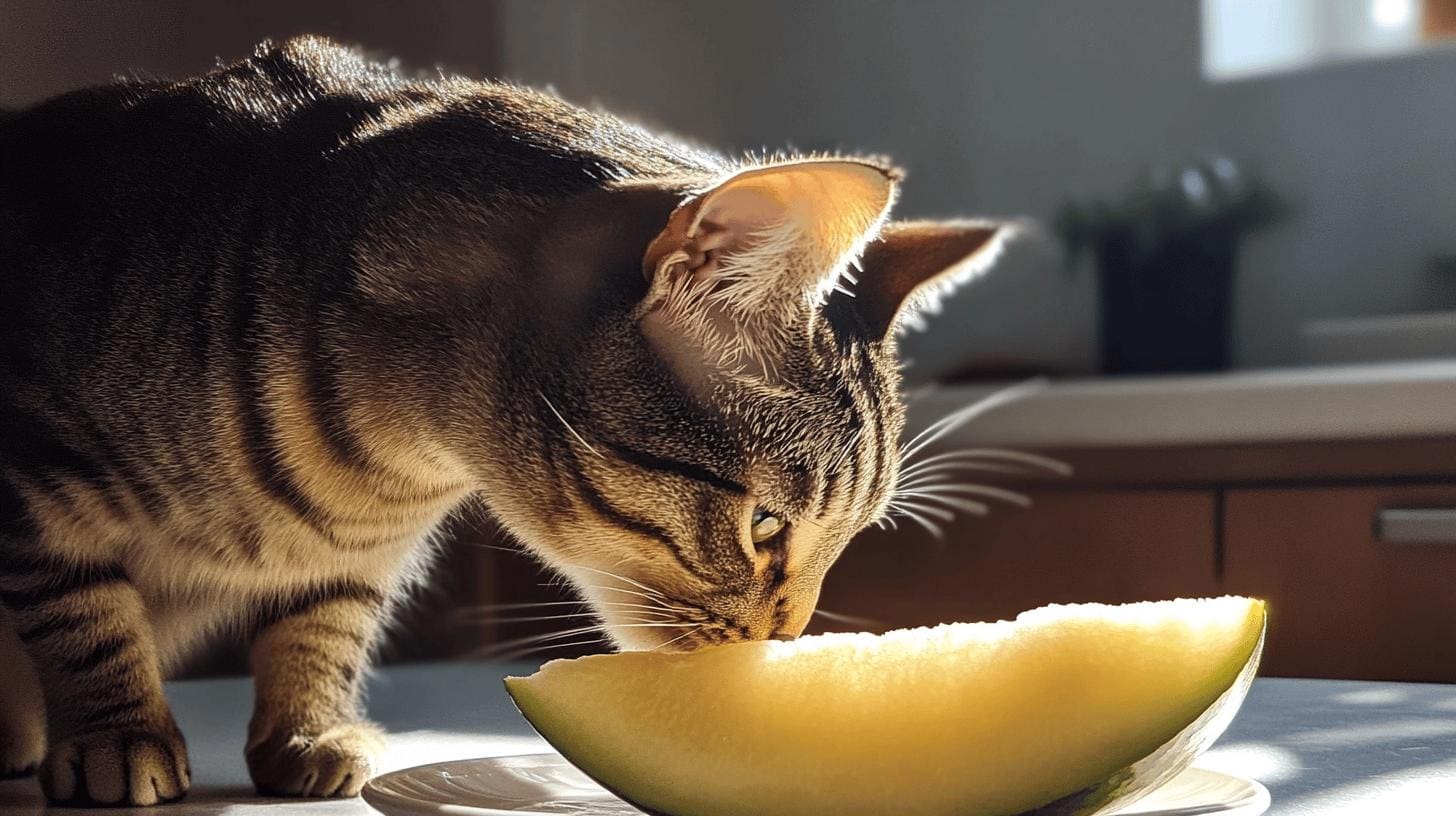
Melons can provide some health benefits for our feline friends. They are packed with dietary fiber and essential vitamins such as B6, A, and C. Additionally, melons offer niacin and potassium, which contribute to overall health.
While cats primarily need a meat-based diet, these nutrients can be a bonus when offered in moderation. The fiber in melon can support digestive health, helping to keep things moving smoothly.
Melons also have a high water content, making them a refreshing treat, particularly during hot weather. This can aid in keeping your cat hydrated.
While cats often get their hydration from their regular diet, a small amount of melon can supplement their water intake, especially for those who may not drink as much water as they should.
| Nutrient | Benefit for Cats |
|---|---|
| Vitamin A | Supports vision and immune function |
| Vitamin C | Antioxidant that can boost immunity |
| Vitamin B6 | Essential for brain health |
| Potassium | Helps maintain fluid balance |
| Niacin | Supports energy metabolism |
While melons can offer these benefits, it's important to remember they should not replace a cat's primary diet. Offering melon as a treat, in small amounts, can provide a refreshing boost of hydration and nutrients. But always prioritize their meat-based meals to fulfill their essential dietary needs.
How to Feed Melon to Your Cat
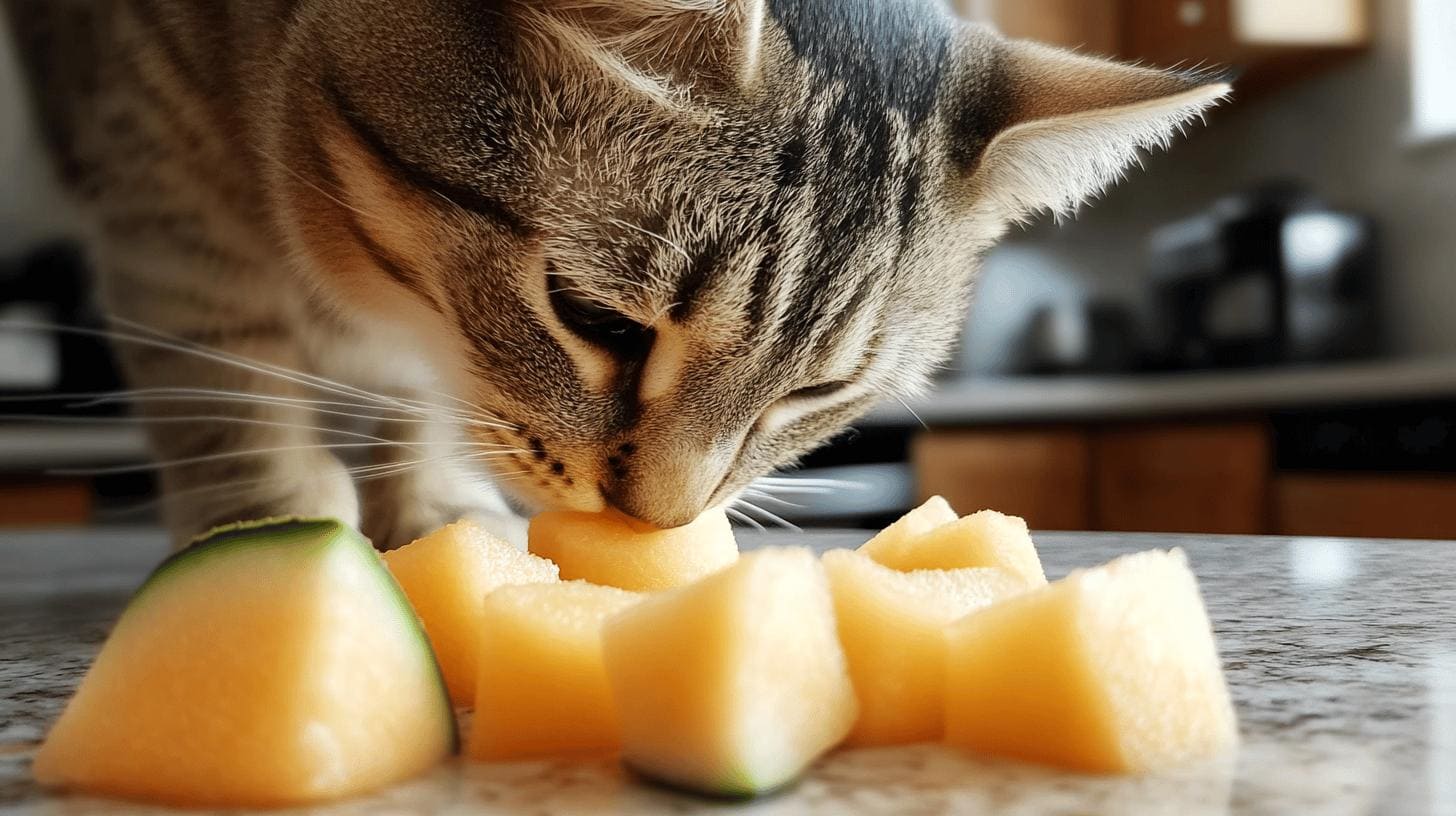
When feeding melon to your cat, preparation is key. First, remove all the seeds and rind, as these parts can pose a choking hazard and contain harmful substances. Once that's done, cut the melon flesh into small, bite-sized cubes. This makes it easier for your cat to eat and reduces the risk of choking.
Limit the serving to just one or two small cubes. This portion size allows your cat to enjoy a refreshing treat without replacing their primary meat-based diet. Remember, cats are obligate carnivores, so melon should only be an occasional treat.
- Remove seeds and rind
- Cut melon into small cubes
- Start with a tiny amount for first-time feeding
- Observe the cat for any adverse reactions
- Consult a veterinarian if unsure
Keep a close watch on your cat after introducing melon, especially if it's their first time. Look for any signs of stomach upset or allergic reactions, such as vomiting or diarrhea. If any unusual symptoms occur, consult a veterinarian to ensure your cat's health and safety.