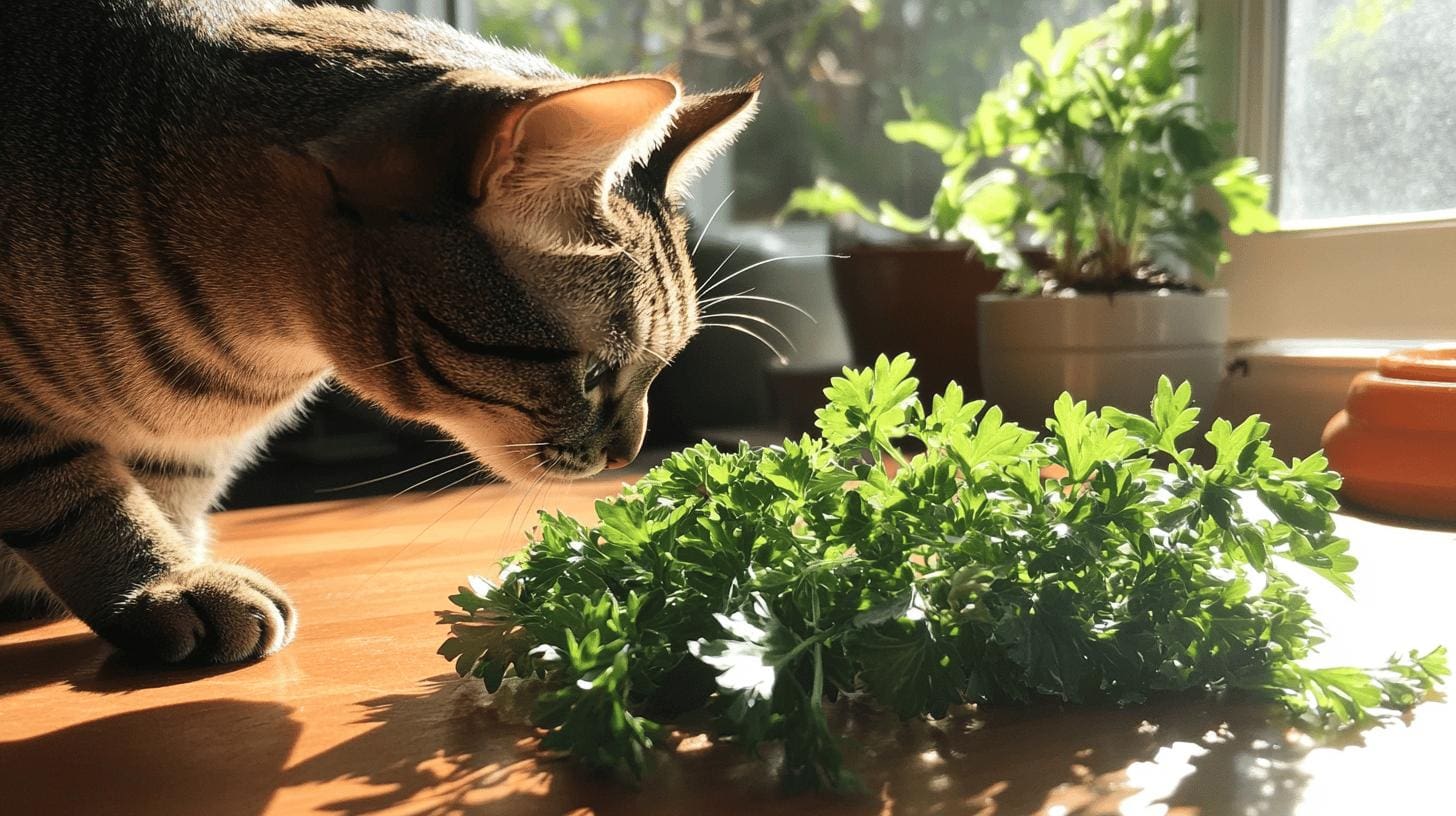
Is your curious kitty eyeing your rosemary plant lately? You’re not alone in wondering if cats can safely enjoy this fragrant herb. While rosemary is generally non-toxic to cats, the reality is more nuanced than a simple yes or no. Your cat’s safety depends on quantity, form, and how carefully you introduce it. Let’s explore exactly how rosemary affects cats, what symptoms to watch for, when to call the vet, and how to make the right call for your feline friend.
Can Cats Safely Eat Rosemary?
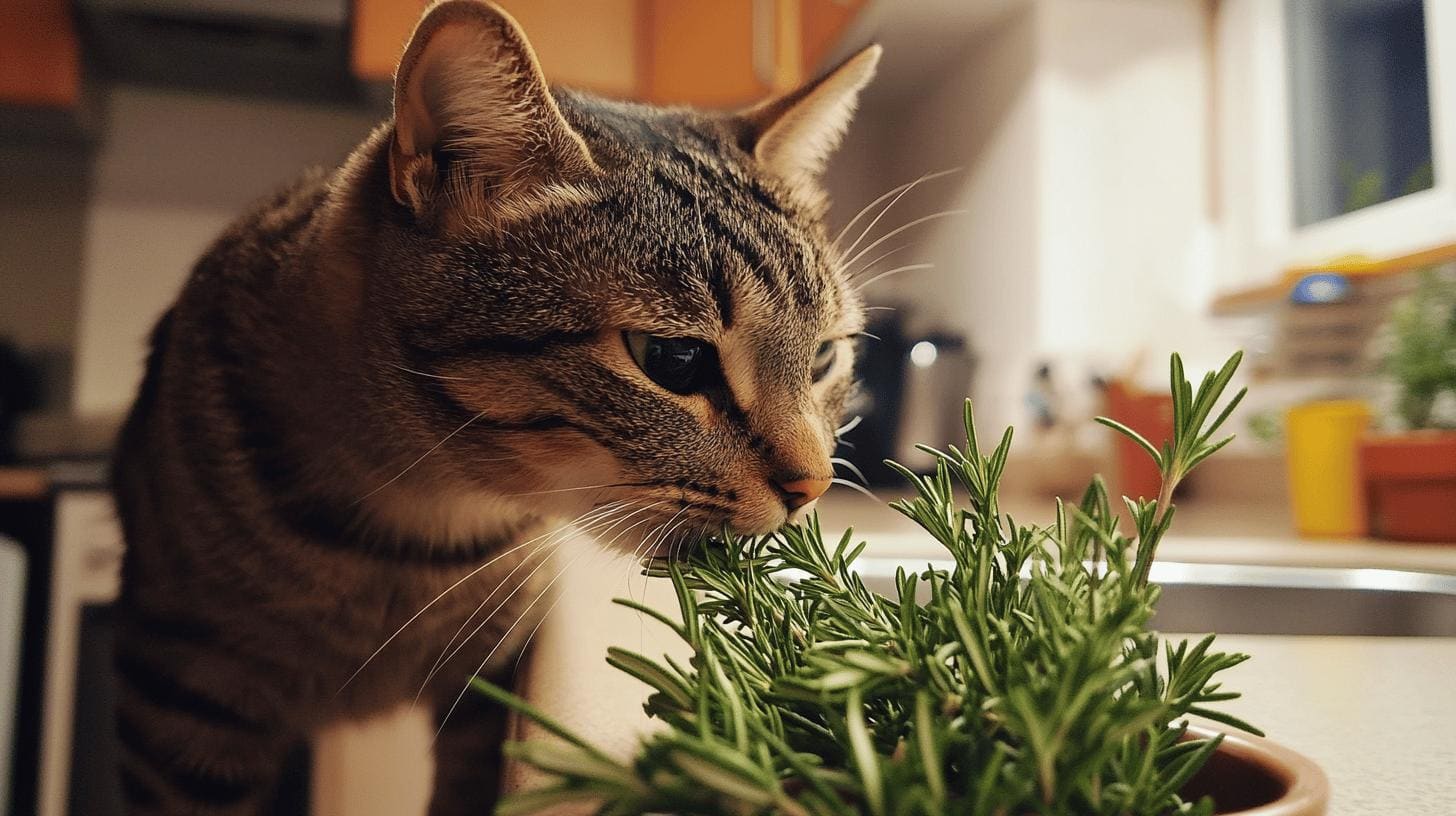
Yes, cats can safely consume small amounts of fresh or dried rosemary. The American Society for the Prevention of Cruelty to Animals (ASPCA) confirms that rosemary is non-toxic to felines. This means occasional, controlled exposure won’t poison your cat.
However, “safe” doesn’t mean unlimited. Cats have smaller digestive systems than humans and process plant matter differently. Their stomachs lack certain enzymes to break down complex plant compounds efficiently. When a cat eats rosemary, their body must work harder to digest it, especially in larger amounts.
The key distinction is this: small doses of plain rosemary leaves (fresh or lightly dried) are fine. But rosemary oil, extract, or heavily concentrated dried rosemary poses a real toxic risk. Essential oils contain highly concentrated compounds that can overwhelm a cat’s system, potentially causing serious health issues within hours.
Safe rosemary forms for cats:
- Fresh rosemary leaves (1-2 leaves maximum, rare occasions only)
- Lightly dried rosemary (tiny pinch amount)
Never give to cats:
- Rosemary essential oil or diffuser products
- Rosemary extract or concentrate
- Cooking sprays with rosemary
- Any heavily processed rosemary product
- Foods seasoned with rosemary intended for human consumption
Rosemary’s Impact on Cat Digestion and Health
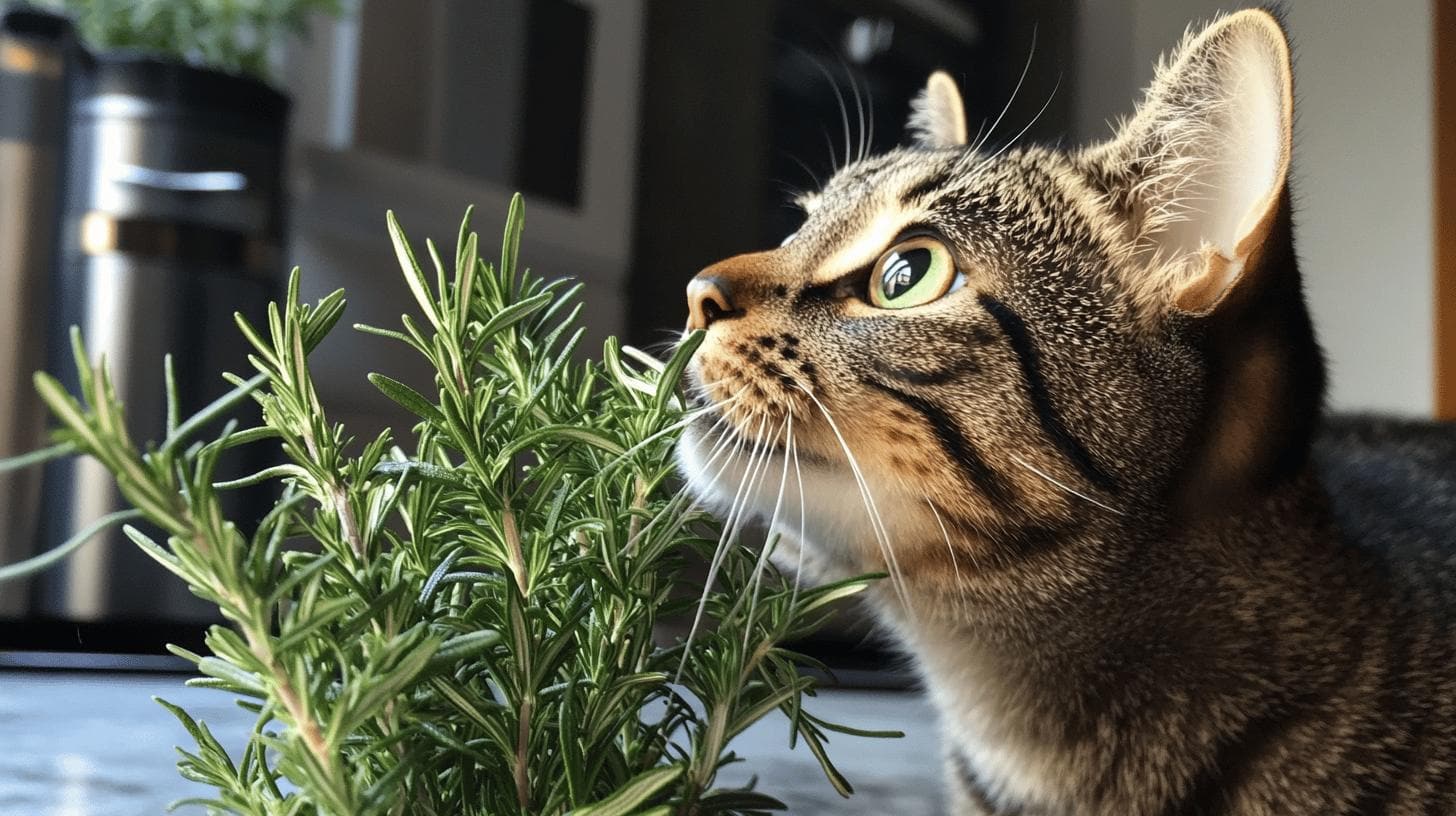
Rosemary does contain antioxidants and mild anti-inflammatory compounds. In very small amounts, these might provide minimal immune support. However, cats don’t require rosemary to stay healthy. Protein-rich meat, not herbs, fuels their immune system and cellular repair. Rosemary should be viewed as an occasional curiosity, not a health supplement or dietary necessity.
When a cat ingests moderate amounts of rosemary, their digestive system becomes irritated. The aromatic oils in rosemary can inflame the stomach lining and intestines. This leads to the gastrointestinal upset mentioned in safety guides: vomiting, diarrhea, and abdominal discomfort.
Larger doses of rosemary, especially oil or extract, can cause more serious problems. Some cats experience lethargy (unusual tiredness), loss of appetite, excessive drooling, or refusal to drink water. In rare cases, cats show neurological symptoms like tremors, muscle twitching, or depression. These signs indicate your cat needs immediate veterinary attention.
The severity of reaction depends on several factors: your cat’s age and size, overall health status, and the form of rosemary consumed. A small kitten exposed to rosemary oil will react more severely than a large adult cat eating one fresh leaf. Cats with pre-existing digestive issues, kidney problems, or immune conditions face higher risk.
Recognizing Rosemary Toxicity Symptoms
If your cat nibbled rosemary leaves from your garden, consumed rosemary oil, or accidentally got into a rosemary-based product, watch closely for these warning signs. Timing matters: mild toxicity appears quickly, while oil toxicity builds over hours.
Mild symptoms (usually appear within 2-6 hours of exposure):
- Vomiting or retching (once or twice)
- Diarrhea or soft, loose stools
- Reduced appetite or refusal to eat
- Mild lethargy or unusual quietness
- Excessive drooling or wet mouth area
- Slightly elevated heart rate
Moderate symptoms (develop within 4-12 hours, require vet consultation):
- Repeated vomiting (more than 2-3 episodes)
- Persistent diarrhea with mucus or blood
- Abdominal pain (hunched posture, crying when touched, reluctance to move)
- Significant lethargy or unresponsiveness
- Loss of appetite lasting more than a few hours
- Trembling or muscle twitching
Severe symptoms (require emergency vet care immediately, do not wait):
- Violent or repeated vomiting with blood
- Bloody or black tarry stools
- Severe abdominal distension or visible pain
- Tremors that don’t stop
- Seizure activity or loss of consciousness
- Difficulty breathing or gasping
- Collapse or inability to stand
- Uncontrolled drooling
The severity depends on how much rosemary your cat ate and in what form. Fresh leaves cause mild to moderate upset. Rosemary oil causes severe reactions. Extraction products and concentrated dried rosemary fall in between. Time is critical, don’t wait to see if symptoms pass on their own. Contact your vet the moment you notice vomiting, diarrhea, or any unusual behavior after rosemary exposure.