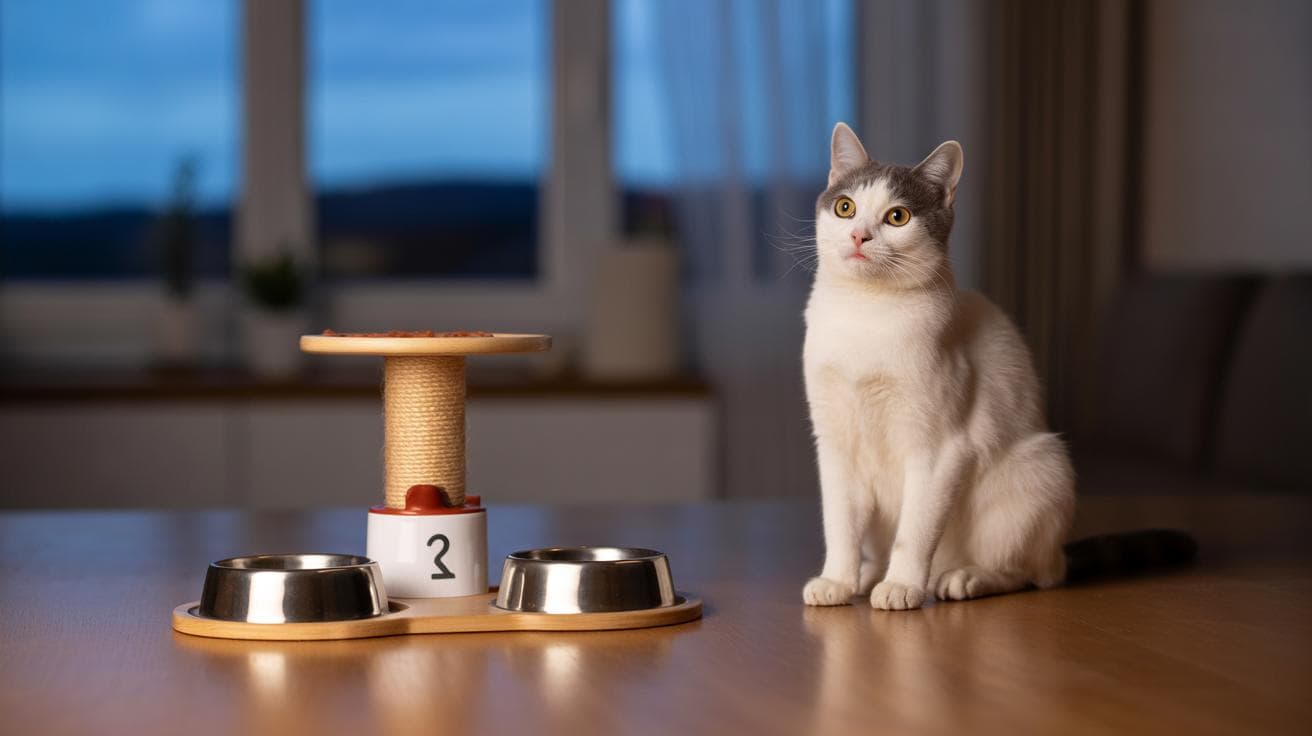
Cat Feeding Schedule for Indoor Cats: Kittens-Seniors

Do two meals a day really work for indoor cats?
A lot of people feed morning and night, then wonder why their fluffball snacks all evening or meows at 3 a.m. It’s confusing, and it can feel a little frantic when dinner time becomes performance art.

Cats are made to hunt little meals throughout the day. Small, frequent servings match that instinct and keep their energy steady, which makes weight control easier and moods calmer. Ever watched your kitty chase a shadow and act like it’s the best game ever? That’s the hunting brain at work.

I once watched Luna leap across the couch for a single kibble, whiskers forward, eyes huge, and it changed how I feed her. So now we do several tiny feedings and play short hunts with a teaser wand (think fishing rod for cats). It’s simple, it’s fun, and yes, she’s feline fine.

I’ll walk you through age-based schedules for kittens, adults, and picky seniors, plain calorie math for portions (calories are the energy in food), and quick tips for busy owners to make mealtime predictable and less frantic. For busy days, try a timed feeder or a puzzle feeder to spread meals without extra work. Worth every paw-print.

How a feeding schedule answers timing, portions, and routines
- How a feeding schedule answers timing, portions, and routines.jpg

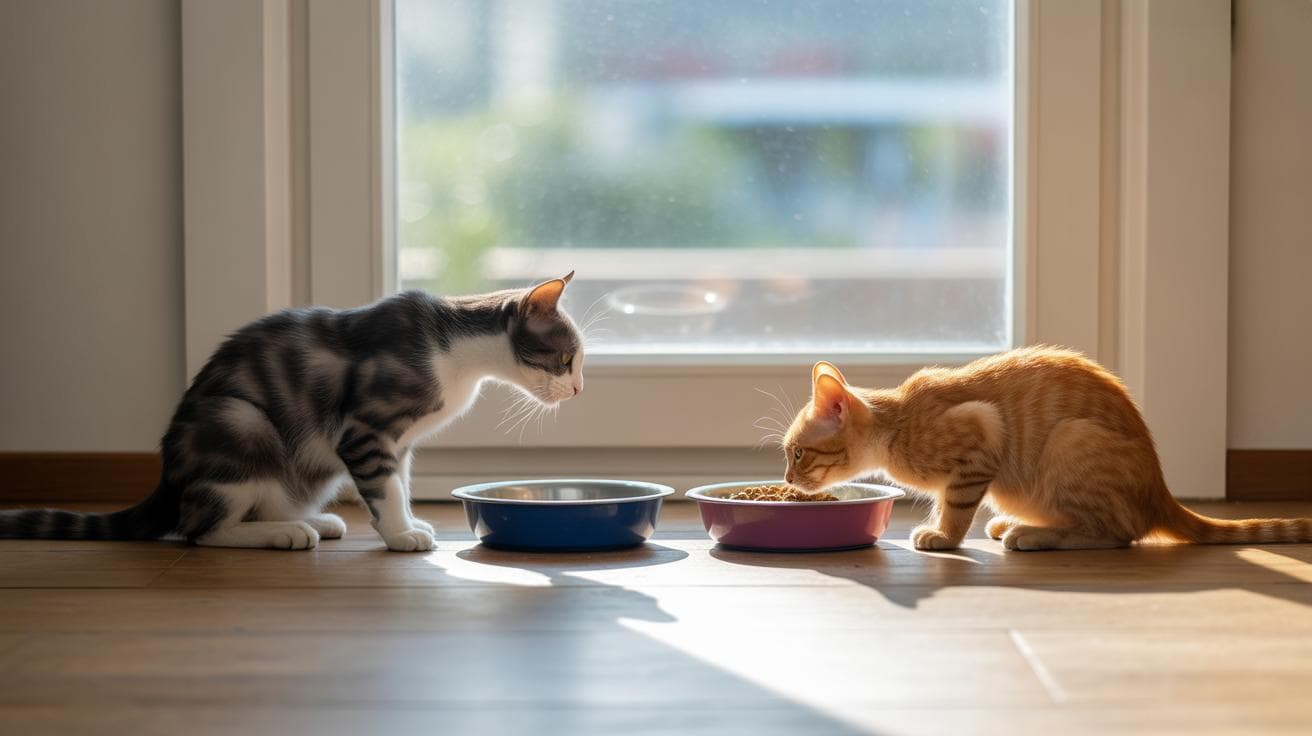
Short answer: Most indoor adult cats do best with several small meals spaced about every 5 to 6 hours during their awake time. It mimics their natural snacking pattern, helps keep energy steady, and makes hunger cues easier to predict. Ever watched your cat nose the bowl and stroll off like nothing happened? Timing helps fix that.

A simple calorie rule of thumb is about 20 kcal per pound of body weight (kcal meaning food calories). So a 10-pound cat needs roughly 200 kcal a day. For exact portion math, see the Portion sizes and calorie planning section. For trade-offs between food types, check Wet vs dry vs mixed feeding. Meal-feeding (set meals at set times) works best when you can measure portions and be consistent. Limited grazing (measured dry food left out for calm snacking) is a good fallback if you’re busy or your cat prefers nibbling through the day.

Why small, frequent meals? Cats are natural hunters who eat little and often. Small meals keep blood sugar steadier and cut down frantic begging. It also helps with weight control for couch-potato cats and fuels the zoomies for playful ones. Try it for a week and watch the difference in energy and mood. Worth every paw-print.

Quick tips: weigh your cat every few weeks and watch body condition rather than just the scale. If your cat needs special care, kitten growth, senior health issues, or a medical diet, check with your vet and adjust calories and timing. And uh, if your cat launches a stealth attack on the food bag, consider measured meals or a slow feeder.

Routine Type Age / Activity Meals per day Typical meal times Approx. daily calories Notes
Young kitten Neonate / early weaned Frequent, small (6+) Every 2 to 4 hrs 250 to 450 kcal/day Vet-guided feeding for fast growth
Older kitten 8 to 16 weeks 4 7:00, 11:00, 15:00, 19:00 300 to 400 kcal/day High energy, keep an eye on weight
Adult, sedentary Low activity adult 2 7:00, 19:00 About 160 to 200 kcal/day Smaller portions, monitor body condition
Adult, active High activity adult 4 7:00, 12:00, 17:00, 22:00 About 200 to 260 kcal/day Good for playful or outdoor-access cats
Senior / health-adjusted 10+ years or medical needs 2 to 4 smaller meals Example: 7:00, 11:00, 16:00, 21:00 About 160 to 220 kcal/day Adjust per vet advice and appetite

Routine ideas for busy people: try timed feeders for midday meals, or leave measured dry food in a puzzle feeder so your cat works a bit for snacks. Think of a puzzle feeder like a slow-motion hunting game, keeps them busy and satisfied. Next, mix wet and dry if your cat needs extra hydration or calorie control. In truth, consistency matters more than perfection. Try one schedule for a month, tweak, and enjoy the calmer mealtimes.

Life-stage feeding schedule: precise step-down timelines and meal counts by age
- Life-stage feeding schedule precise step-down timelines and meal counts by age.jpg

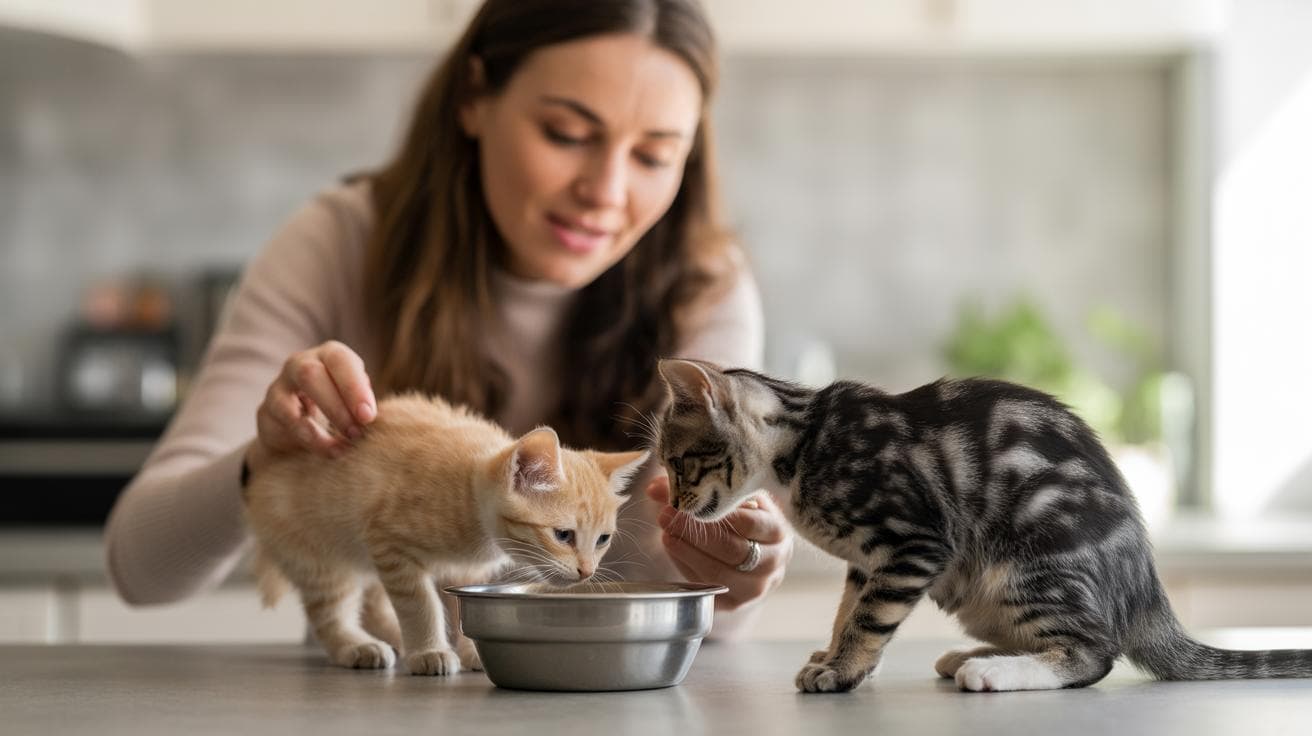
Think of this as a friendly roadmap: a step-down timeline (a gradual move from many tiny meals to fewer, fuller ones) that follows a cat from neonatal (newborn) through kitten, adolescent, adult, and senior stages. It helps meal frequency match growth, energy, and digestive maturity. Ever watched your kitty’s whiskers twitch as food hits the bowl? That’s the moment this schedule aims to create, predictable, balanced, and a little joyful.

  • Neonatal / early-weaned (newborn kittens needing round-the-clock care): near-constant, very small feeds under veterinary guidance (ask a vet about formula amounts). Example: feed every 2-4 hours while under vet or foster care, tiny portions so they don’t overfill a tiny tummy.

  • 8-12 weeks (fast-growing kittens): 4 meals/day. Example times: 7:00, 11:00, 15:00, 19:00. Keep meals higher in calories to support growth. Your kitten will gobble fast and nap harder, cute chaos.

  • 3-4 months (still growing, but steadier): 3 meals/day. Example times: 7:00, 13:00, 19:00. Shrink each portion slightly as growth evens out. You’ll notice longer play bursts between meals.

  • 4-6 months (transition phase): move to 2-3 meals/day over 1-3 weeks. Transition tip: shift the midday meal later, then merge it with the evening feed so the cat lands at two meals smoothly. Take it slow and watch appetite.

  • Adult (~1 year+): generally 2 meals/day at dawn and dusk. Example times: 7:00 and 19:00. Some very active adults do better on four smaller meals if you can fit them in. Think of it as breakfast and dinner that keep the zoomies in check.

  • Senior / pregnant / nursing: adjusted counts depending on need. Seniors (older adult cats) often do well with 2-3 small meals: 7:00, 12:00, 18:00. Queens (pregnant or nursing mom cats) usually need more frequent meals or free access to food under veterinary direction.

Worth every paw-print.

Every cat is an individual. If appetite, weight, or energy changes, slow the step-down, add a meal, or call your veterinarian. Sudden eating changes, quick weight loss, or unexplained gain should prompt a clinic check so feeding adjustments match medical needs and keep your cat feeling their best.

Portion sizes and calorie planning for indoor cats
- Portion sizes and calorie planning for indoor cats.jpg

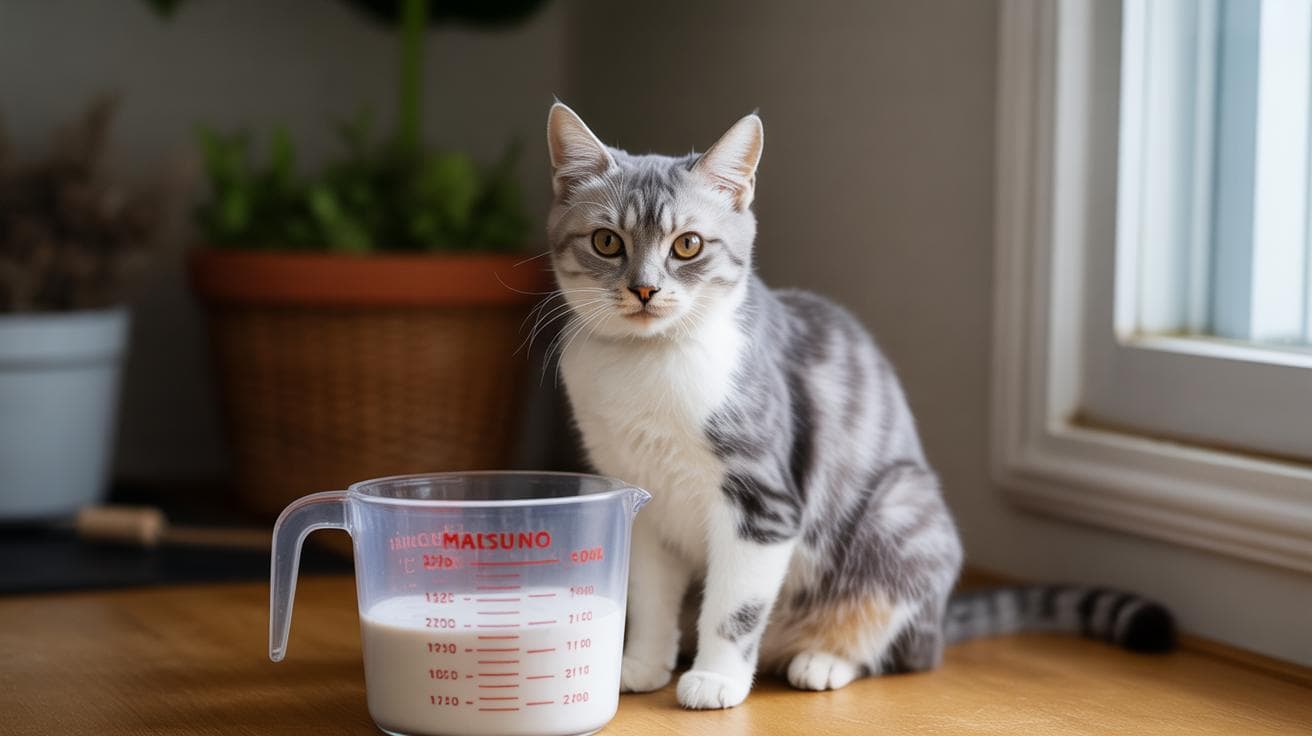
Start with two simple steps: figure out your cat’s maintenance calories, then match that number to the kcal values on the food label. Think of kcal as the calories listed on pet food (kcal = kilocalories). It’s the same energy number you see on human food, just for cats. Use your cat’s ideal body weight when you do the math, not the weight they are right now if they’re under- or overweight. That helps you plan portions that move them toward a healthy size.

Find kcal per cup for dry food, or kcal per can/serving for wet food on the label or the maker’s website. Also use the cat’s ideal weight in kg (kg = kilograms). If you can’t find kcal, check for kcal per 100 g and convert. Little tip: labels sometimes hide the grams-per-cup info, so you might need to weigh a level cup yourself.

Use RER then MER. RER (resting energy requirement, the quiet-cat baseline) = 70 × (body weight in kg)^0.75. Then multiply RER by a life-stage or activity multiplier to get MER (maintenance energy requirement, the calories to keep weight steady). Typical multipliers: indoor neutered adult 1.0 to 1.2 (low activity), active adult 1.2 to 1.4, growing kitten 2.5 to 3.0 (big growth needs). Pregnant or nursing cats need a lot more, ask your vet for exact numbers.

Worked example A – dry food. Say dry food = 400 kcal/cup and one cup weighs 100 g. If MER = 250 kcal/day then: cups = 250 ÷ 400 = 0.625 cups. Grams = 0.625 × 100 g = 62.5 g. If a single kibble (a piece of dry food) weighs about 0.2 g (weigh a small sample to check), you’d get roughly 62.5 ÷ 0.2 ≈ 313 pieces. Fun to count, but weighing is easier.

Read labels like a detective. For dry food look for kcal per cup or kcal per 100 g. For wet food look for kcal per can or per 100 g. If a label gives kcal per cup but not grams per cup, weigh one level cup on a kitchen scale (tare the bowl first) so you can convert cups to grams. To count kibbles, weigh a known scoop or count pieces in a small, weighed sample so you know grams per piece.

Worked example B – canned food. If a can is 170 g and has 150 kcal per can, and MER = 200 kcal/day, then cans needed = 200 ÷ 150 ≈ 1.33 cans. Grams = 1.33 × 170 g ≈ 226 g. Easy math. Your cat will probably be thrilled with the extra slurps.

Mixed feeding is just arithmetic. Subtract the calories from the wet portion, then top off with measured dry. Worked example C – mixed: target MER = 240 kcal/day. Give 1 wet can = 150 kcal. Remaining = 90 kcal. Dry = 400 kcal/cup → 90 ÷ 400 = 0.225 cups → grams = 0.225 × 100 g = 22.5 g → roughly 22.5 ÷ 0.2 ≈ 113 kibbles if each is 0.2 g. If your cat leaves food, begs, or seems hungry, tweak portions or try a different food and re-weigh after a week to see how weight changes.

If anything feels off, or your cat has special needs, check the Managing weight section and the lede for a quick calorie anchor, and talk with your veterinarian for a tailored plan. Worth every paw-print.

Wet vs dry vs mixed feeding for indoor cats
- Wet vs dry vs mixed feeding for indoor cats.jpg

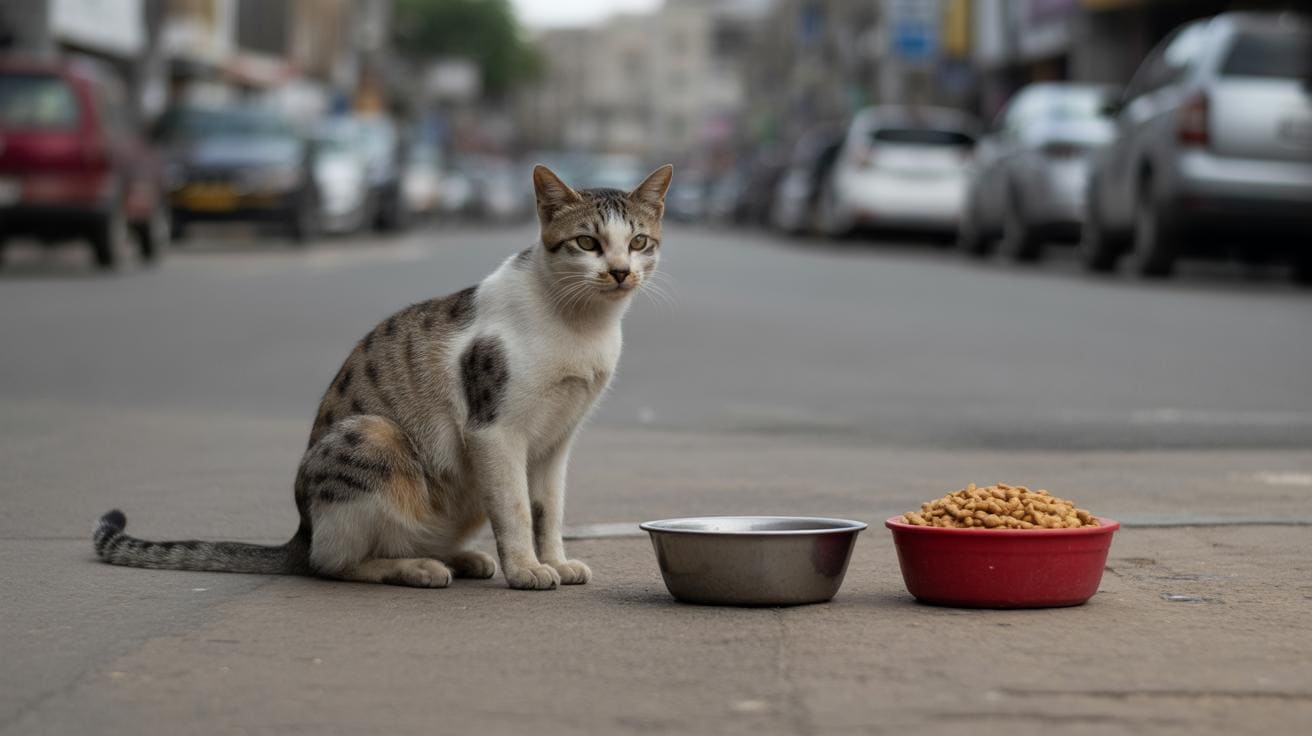
Wet food is great for keeping cats hydrated. It usually has fewer kcal (food calories) per gram, so your cat eats more weight for the same energy. That extra moisture helps cats that don’t drink enough and can support urinary and kidney health. And honestly, many cats love the soft texture, soft slurps, happy whiskers. Because wet food brings water, you’ll often measure by can or grams instead of cups, and meal timing can be tighter; for spoilage windows, refrigeration tips, and cleaning, see the Practical feeding schedule tools section.

Dry food is calorie-dense (more kcal in less weight), so it’s handy when you need longer gaps between meals or want easy portioning into automatic feeders. It’s convenient, shelf-stable, and simple to scoop for measured servings, but some brands pack more starch and some cats will graze and overeat if kibble is left out. If your cat is a secret snack thief, use portion-controlled devices or puzzle feeders to slow intake and keep body condition steady.

Mixed feeding gives you the best of both worlds: one or two measured wet meals for hydration, plus weighed dry to hit a daily calorie target and stretch feeding windows. A simple method: subtract the wet meal calories from the daily goal, then divide the remainder into measured dry meals or puzzle-fed portions. If you’re home most days, meal-feeding gives tight control. If you’re away, measured limited grazing paired with a timed feeder keeps things sane.

Practical tip: think of feeding like budgeting calories, wet food covers the hydration, dry helps balance the rest. Ever watched your cat choose the wet bowl over the kibble? Cute, and telling. Worth experimenting a week or two to see what keeps your kitty healthy and purring.
Implementing and transitioning to a feeding schedule for indoor cats

- Implementing and transitioning to a feeding schedule for indoor cats.jpg

Start by saying the goal out loud: move from free-feeding or a messy meal routine to predictable, portioned meals that match your cat’s calories and behavior. If your cat has medical needs, call your veterinarian first. Some conditions need slower changes or clinic guidance. Quick wins: measure the total daily food, pick two times you can keep, and expect a short adjustment period.

7-day diet transition schedule

When switching foods, mix old and new over 7 to 10 days. A common plan is 75:25 (old:new) to 50:50 to 25:75, then full new food. If your cat shows GI (stomach and intestine) upset , vomiting, watery stool, belly pain, or sudden appetite loss , slow the pace. Pause for about 48 hours, then try a smaller step.

  1. Day 1 , Weigh or measure the full daily portion (use a kitchen scale or measuring cup) and note how much your cat usually eats. Pick meal times you can stick to, for example 7:00 and 19:00.
  2. Day 2 , Offer the measured daily amount divided into your two meals. Start the 75:25 old-to-new mix at both meals and watch stool and appetite.
  3. Day 3 , Move to 50:50 at each meal. Start removing free food between meals for short stretches, about 4 to 6 hours.
  4. Day 4 , Keep 50:50. Add a quick 5-minute play burst before each meal to build anticipation and help digestion.
  5. Day 5 , Shift to 25:75 old-to-new. Stop free-feeding altogether and serve only scheduled meals.
  6. Day 6 , Serve only the new food at meals. Observe energy, litter-box habits, and weigh your cat if you can.
  7. Day 7 , Lock in the two-meal routine. If GI signs showed up at any point, go back one step and talk to your vet.

Training cues and setting mealtime routines

Pick a clear cue so your cat learns the signal: a bowl clink, a short whistle, or a specific spot. Use the same place every time and add a tiny pre-meal play session (2 to 5 minutes) so your cat links movement with food. Cats love ritual. Ever watched a kitty stalk a feather like it’s the hunt of the century? That kind of focus helps.

Dawn and dusk match natural cat rhythms, but choose times that fit your schedule. Use smartphone reminders or a simple app to keep you honest. For midday coverage, consider a timed or automatic feeder (a device that drops measured meals). For cats with health issues, coordinate timing and portions with your veterinarian so food, meds, and monitoring line up.

Worth every paw-print.

Feeding schedule for multi-cat homes and feeder selection

- Feeding schedule for multi-cat homes and feeder selection.jpg

Living with several cats can turn mealtime into a circus. You get food stealing, crowding at bowls, and one cat gobbling down another’s special food. That unequal sharing leads to stress, wrong portions, and diet slip-ups. You’ll want a plan that keeps portions accurate, cuts down on mealtime squabbles, and fits your daily routine.

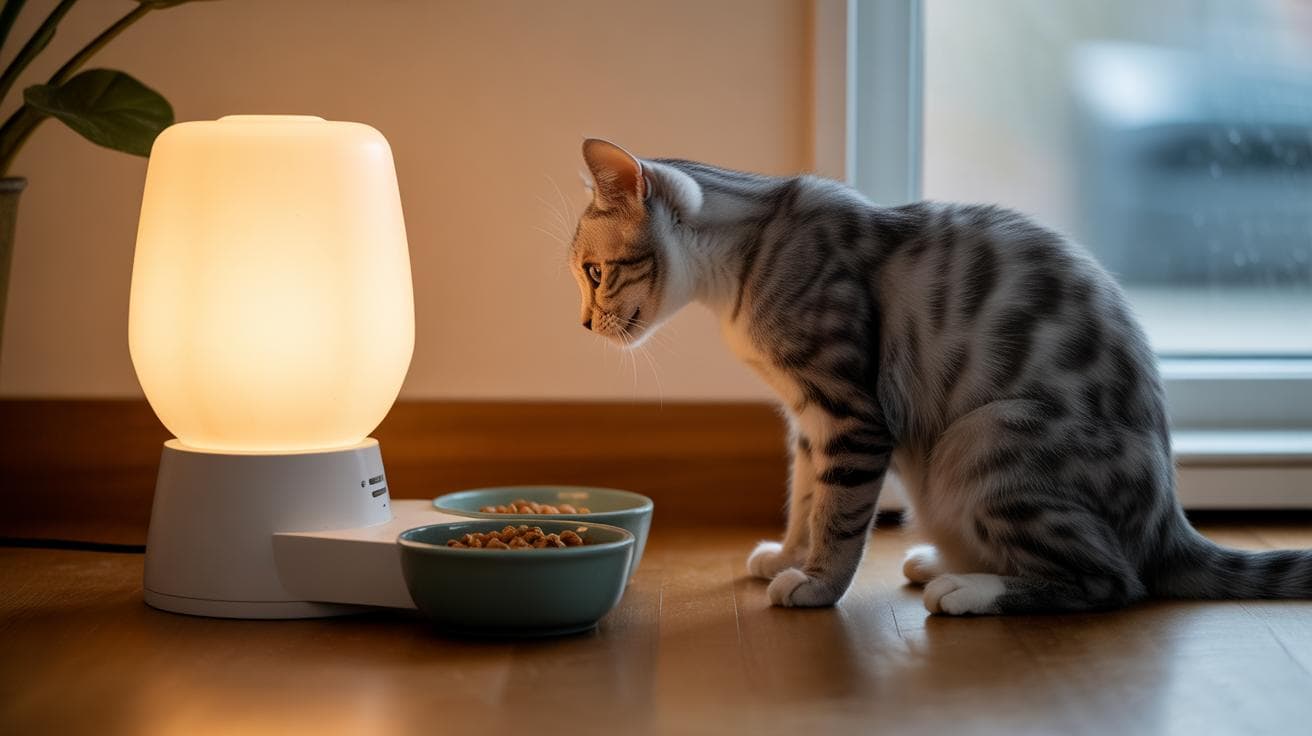
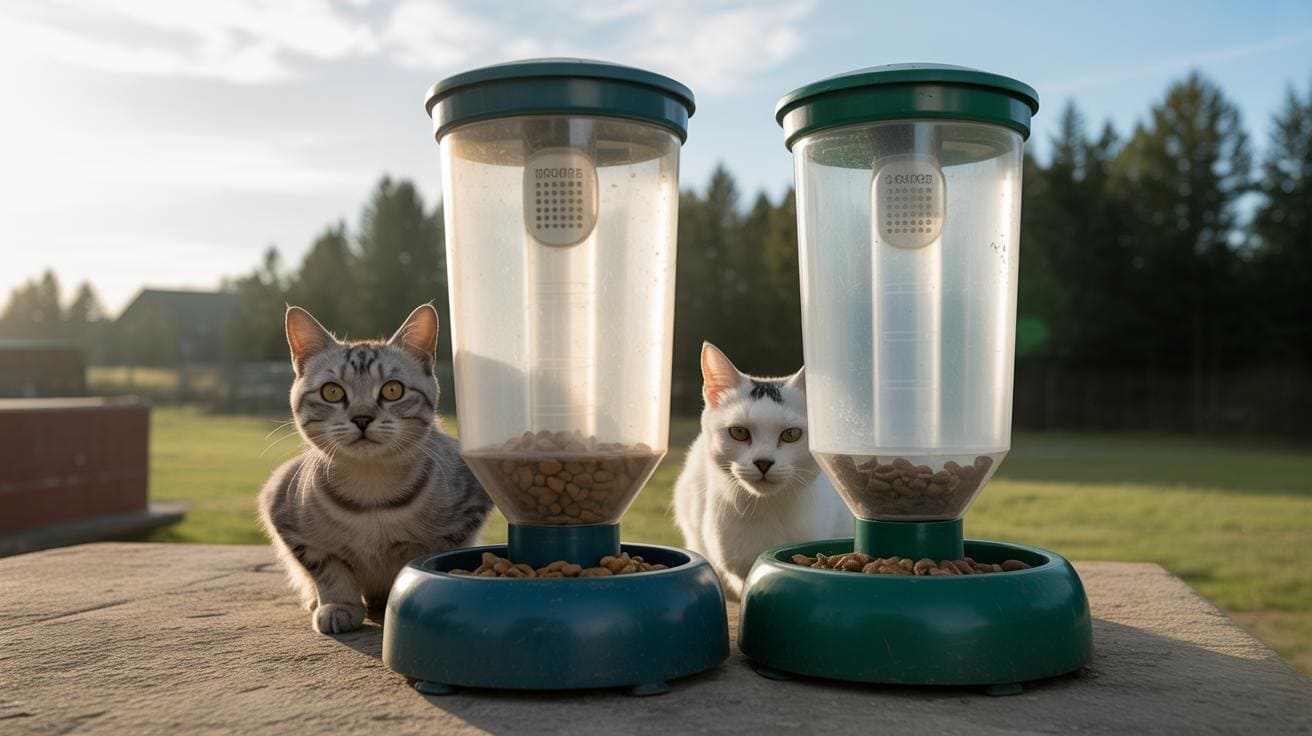
Use a mix of devices and smart placement to fix it. Microchip feeders (a reader that checks a tiny ID chip implanted under the skin, or a collar tag) open only for the right cat. Timed feeders (feeders that release meals on a schedule) help when you’re out. Portion-controlled feeders (dispense set grams or calories) stop over- or under-feeding. Match the feeder to the food form and any vet-prescribed diet, and try one model first with your most food-motivated cat to see how it goes. Ever watched your greediest cat test a new gadget? Fun, and informative.

Microchip and portion-controlled feeders

Microchip feeders learn who’s who and unlock only for that cat, which is perfect for different prescriptions or calorie targets. They work best with measured dry portions, though some accept sealed wet trays (single-serve wet food sealed to stay fresh). Give each diet its own feeder so foods don’t mix. And don’t place feeders in tight hallways where a bold cat can camp and guard the entry.

Station placement and monitoring strategy

Plan one feeding station per cat, plus an extra for shy or new cats. Spread stations across rooms or use low barriers so timid cats can eat without being stared at. Use camera checks or feeder app logs to confirm who’s eating and how much (feeder analytics show portions and times). For help picking models, cleaning routines, and safe spoilage windows, see the Practical feeding schedule tools section.

Worth every paw-print.

Managing weight, signs, and safe weight-change protocols

- Managing weight, signs, and safe weight-change protocols.jpg

Too much food usually shows up as steady weight gain, a rounder silhouette, and the loss of that tucked waist you used to see. About 60 to 61% of cats in America are classified as overweight or obese, so you’re not alone. Your cat might nap more, move less, vomit after meals, or breathe harder during play. And that’s not just annoying, obesity raises the chance of diabetes (a high blood sugar condition) by about 4.5 times, musculoskeletal problems (issues with bones, joints, and muscles) by around 7 times, and shortens lifespan by roughly 2 times.

Underfeeding looks different. Think steady weight loss, a dull coat, sunken flanks, weakness, or frantic, nonstop begging. Sudden or lasting appetite shifts, eating a lot or almost nothing, can point to parasites (worms or tiny bugs), hyperthyroidism (an overactive thyroid gland), or other metabolic problems. If your cat is losing weight while eating the same food, or gaining despite tiny portions, don’t shrug it off, book a vet visit.

Feel your cat regularly. If you can’t feel the ribs with gentle pressure or the waist is gone, that’s a red flag. Watch behavior too, when an active cat turns lethargic or quits playing, call your veterinarian. Ever watched your kitty chase shadows one day and barely move the next? That change matters.

Check weight and body condition on a schedule. Weigh at home or at the clinic monthly while you’re changing the diet, and about every three months when things are stable. Do a quick body check each week: run your hands along the ribcage (you should feel ribs with a light covering of fat), look for a visible waist behind the ribs, and note any abdominal tuck. Log weight, portion sizes, and activity so you and your vet can spot trends and tweak the plan.

Safe weight change needs a veterinarian’s supervision. A simple template: work with your vet to set an ideal weight and a target weekly loss, calculate new daily calories to hit that target, reduce calories gradually (a modest percent at a time while keeping protein levels up), and reweigh monthly to adjust. If an overweight cat stops eating for more than 24 to 48 hours, or you see rapid weight loss, repeated vomiting, severe lethargy, trouble breathing, or signs of pain, seek emergency veterinary care, hepatic lipidosis (fatty liver disease) and other dangers can develop fast. Worth every paw-print.

Practical feeding schedule tools, device recommendations, cleaning, and sample day plans

- Practical feeding schedule tools, device recommendations, cleaning, and sample day plans.jpg

Let’s start with the gear that actually makes a feeding schedule stick. Puzzle feeders (toys that release food when a cat nudges or bats them) stretch meal time and slow down gulpers , you’ll love watching whiskers twitch as kibble rolls. Pick puzzle feeders that accept measured grams or small kibble pieces (dry cat food pieces) so you can hit calorie targets. Timed automatic dispensers (programmable bowls that drop set portions at set times) are great if you work odd hours; look for portion presets, a reliable timer, and a battery backup (battery power if the electricity fails). Microchip feeders (feeders that read an implanted ID chip or a collar tag) keep multi-cat homes peaceful when diets must stay separate. For wet food, single-serve sealed trays or disposable sealed bowls make portioning easy and cut bacterial risk.

Quick checklist for devices:

  • Let you set portion size in grams or scoops.
  • Easy to clean with removable parts.
  • Battery backup or power-failure plan.
  • Match the food form you use (kibble vs sealed wet trays).

Keep gear clean and food safe so your schedule actually works. Rinse bowls and feeder bowls daily with hot, soapy water; do a deep clean of removable feeder parts once a week, soaking and scrubbing to remove oil build-up. Opened wet food should sit at room temperature for up to 4 hours, then toss it; if your house gets warm above about 77°F (25°C), shorten that to 1 to 2 hours. Store unused sealed wet food in the fridge and warm it briefly at mealtime if your cat prefers it closer to room temperature.

Plan for equipment failures before they happen. Check batteries monthly and keep a small stash of pre-measured meals in sealed bags so you can swap to manual bowls if a unit stops or the power goes out. If a feeder dies mid-day, switch to measured bowls or a puzzle feeder and give a slightly smaller portion now and later rather than leaving food out all day. True story: my Luna’s feeder died once on a Monday , we switched to puzzle feeders and she was happily busy for half an hour while I reset the device.

Sample day plans

Two-meal adult plan , morning and evening routine for indoor cats: 7:00 (breakfast) and 19:00 (dinner). Portion anchor: about 20 kcal per pound daily split evenly (a 10-lb cat gets ~100 kcal at each meal). Use a manual bowl or a timed automatic dispenser set to those times. Add a 2 to 5 minute play burst before each meal to cue appetite and burn off a little energy.

Four-meal kitten plan , high-energy feedings for growth: 7:00, 12:00, 17:00, 22:00. Portion anchor: follow your vet or the feeding chart on the food for daily kcal, then split into four equal meals. Use small bowls or multiple puzzle feeders that accept wet-food trays or measured kibble so your kitten gets both nutrition and mental stimulation.

9-to-5 owner plan , midday feeding strategies when you’re at work: 6:30 (before leaving), 12:30 (timed feeder or puzzle feeder), 18:30 (main meal), optional 22:30 snack. Portion anchors: combine a measured morning wet meal, a timed mid-day dry portion in an automatic feeder, and an evening wet meal. Device mapping: manual bowl at home, a reliable automatic feeder for the lunch drop, and a puzzle feeder for mid-day enrichment if the automatic is unavailable.

A few final practical tips: weigh portions with a small kitchen scale so you’re not guessing, and keep a simple log for a week to see if your cat maintains weight. Ever watched your cat chase shadows after a meal? That little burst of movement means the schedule is working. Worth every paw-print.

Final Words

Put the plan into action: aim for multiple small meals spaced about every 5 to 6 hours, and use the 20 kcal-per-pound anchor (so a 10-lb cat needs roughly 200 kcal/day).

We covered life-stage step-downs, exact meal counts, portion math and label reading, wet vs dry tradeoffs, gentle food transitions, multi-cat feeder strategies, weight checks, and ready-to-use sample day plans.

Try the templates, set reminders or feeders, watch how your cats respond, and tweak as needed. It's worth every satisfied purr. Follow these steps and your cat feeding schedule for indoor cats will be predictable, stress-reducing, and fun for everyone.

FAQ

What is the feeding schedule for indoor cats?

The feeding schedule for indoor cats is multiple small meals about every 5-6 hours during their active day. Use about 20 kcal per pound; a 10-lb cat needs about 200 kcal/day.

What is the 3-3-3 rule for new cats?

The 3-3-3 rule for new cats breaks settling into three stages: three days to decompress, three weeks for routine building, and three months to feel fully at home.

How much should you feed an indoor cat per day?

About 20 kcal per pound; a 10-lb cat needs roughly 200 kcal per day.

How many hours in between should my cat eat?

Most adult indoor cats should eat about every 5-6 hours, which fits a four-meal day like 7:00, 12:00, 17:00, 22:00.

How many times should I feed my cat wet food?

Usually one to two measured wet meals per adult cat per day, included in the daily calorie plan; kittens eat wet food more often.

What is a cat feeding schedule by age?

Step-down frequency by age: near-constant neonatal; 8–12 weeks four meals; 3–4 months three meals; 4–6 months two to three; adults two; seniors and nursing cats adjusted with vet guidance.

What should a feeding schedule for weight loss look like?

A weight-loss schedule uses measured, reduced-calorie meals with regular weigh-ins and veterinary supervision; feed smaller, frequent meals and track weekly changes to keep progress safe.

Do you have a cat feeding schedule template or sample routine?

A sample four-meal adult routine: 7:00, 12:00, 17:00, 22:00. Choose meal-feeding for portion control or limited grazing for relaxed eaters and owner schedules.

How should I combine wet and dry food in a feeding schedule?

Split measured daily calories between a wet meal and scheduled dry portions; wet aids hydration, dry gives flexible timing and longer intervals.

Author

  • Isabella Tiu

    Isabella Tiu is a transcriptionist from Calhoun, Florida, known for her sharp attention to detail and her commitment to providing accurate and efficient transcription services. With a passion for language and communication, she thrives on transforming spoken words into clear, readable content for her clients.

    When she's not working, Isabella enjoys hiking and camping, finding peace and inspiration in the beauty of the outdoors. She often says, “The best lessons are often learned in nature,” a philosophy she embraces both in her work and personal life.

    Isabella’s love for both her craft and the natural world reflects her belief in continuous learning and exploration.

    View all posts

Similar Posts