automatic cat feeder: benefits and setup for indoor cats

Think your cat’s mealtimes are under control? Think again. I used to assume the same until Luna stared at an empty bowl right when I had a meeting. Oops.

Automatic cat feeders (timed food dispensers – machines that drop measured meals at set times) give steady, portion-controlled meals (measured amounts). They help indoor cats stay a healthy weight and cut down on begging at odd hours. Your cat’s whiskers twitch as kibble makes that tiny clack into the bowl. Nice.

They’re like a reliable dinner buddy that shows up on schedule, even when you’re working weird hours or running late. Ever watched two cats stage a standoff at one dish? These feeders can keep peace by separating meals and timing portions, so nobody steals a second breakfast. Feline fine, right?

Setup is simple. Pick a flat spot, load the hopper, set the times, and test one cycle. Watch for jams (when kibble gets stuck) and choose fresh food so you don’t end up with stale kibble (old, soft food). If you have multiple cats, try one feeder per cat or feeders with individual bowls to avoid feeding fights (rivalry over food). Worth every paw-print.

automatic cat feeder: benefits and setup for indoor cats
- Quick start should you use an automatic feeder.jpg

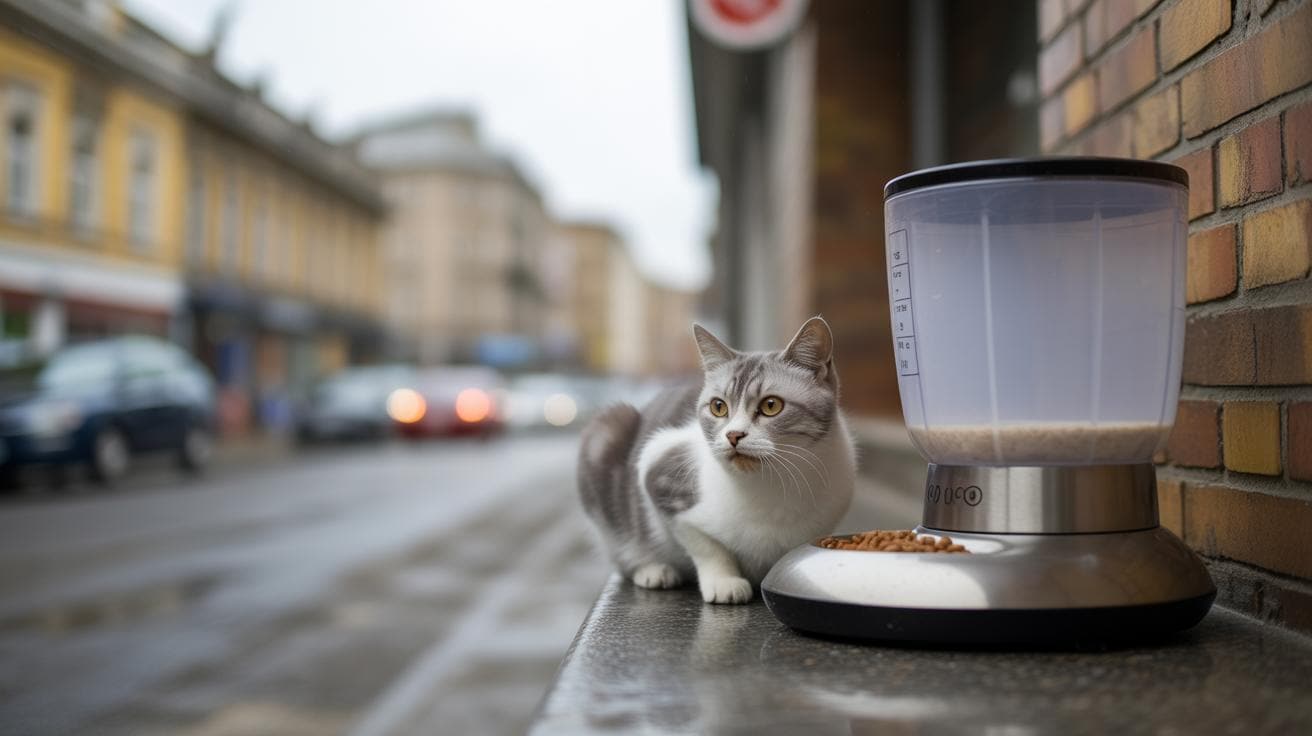
Yes, for most indoor cats, an automatic feeder gives steady, portion-controlled meals and helps with weight when used the right way. Think of it as a reliable dinner buddy for your cat when you’re busy or working weird hours.

The three big wins are clear. Portion control: measured servings that help curb overeating. Schedule consistency: meals go out at set times, even if your work shift changes. Less spoilage: sealed hoppers (the covered kibble bin) keep food fresher than an open bowl.

There are a few risks to watch for. Devices can fail when you’re away, which is stressful. Some cats are grazers and will try to outsmart the feeder and overeat. And if more than one cat uses the same dispenser, you can get guarding or fights.

  1. Is your cat a single, self-controlled eater? → Features
  2. Do you need wet-food support or refrigerated servings? → Model types
  3. Are you setting up a schedule or calibrating portions? → Setup and Schedules
  4. Worried about jams, power, or app errors? → Maintenance
  5. Managing two or more cats? → Multi-cat

Writers and editors: this bit is just a teaser, not the how-to. Keep all setup steps, calibration details, portion tables, troubleshooting workflows, and feature comparisons in their named sections below. Put procedures, portion math, test runs, and comparison charts only in their dedicated spots so readers can find them fast.

automatic cat feeder benefits for indoor cats: portion control, routine, and weight management

sections Each checklist item must be framed as a quick decision and linked to its deeper.jpg

Portion-controlled automatic feeders give set amounts of food at set times. An automatic feeder is a timed dispenser that opens and drops food on schedule. The hopper (covered kibble bin) keeps food sealed until it’s time to eat, so kibble stays fresher than an open bowl. You’ll even notice a soft whir when a portion drops , little reassurance for you and your cat.

  • Meals showing up at the same time every day builds a calm routine, and begging usually fades. Ever watched your kitty sit by the feeder like clockwork?
  • Short trips and changing work hours get easier when meals are automatic. Pop out for an hour or work a late shift and not worry about who feeds dinner.
  • Predictable feeding can ease mealtime anxiety and make the house quieter between meals. Your cat knows what to expect and relaxes.
  • Many feeders work well alongside a water fountain (a steady trickle so your cat drinks more), helping hydration stay steady with scheduled meals.

Measuring servings matters. When you weigh portions to match your cat’s calorie target, weight management actually becomes doable for busy homes. It’s practical: set it once, check progress, tweak as needed. For extra help, choose a feeder with clear portion sizes and tracking.

A feeder only stops overeating if portions are set right and cats can’t access extra food. In multi-cat homes, problems pop up: misprogrammed portions can still mean overeating, shared dispensers can lead to guarding, and mechanical glitches might leave a cat hungry when you’re away. Consider a microchip-activated feeder (opens only for the cat with that chip) or feeders with locking bowls to prevent freeloaders and fights.

Worth every paw-print. I once watched Luna wait for that soft whir and then launch into the happiest pounce , saved me from a late-night snack fight and kept her at a good weight.

automatic cat feeder features to look for when selecting a model for indoor cats
(use internal anchors to these sections, not external URLs).jpg

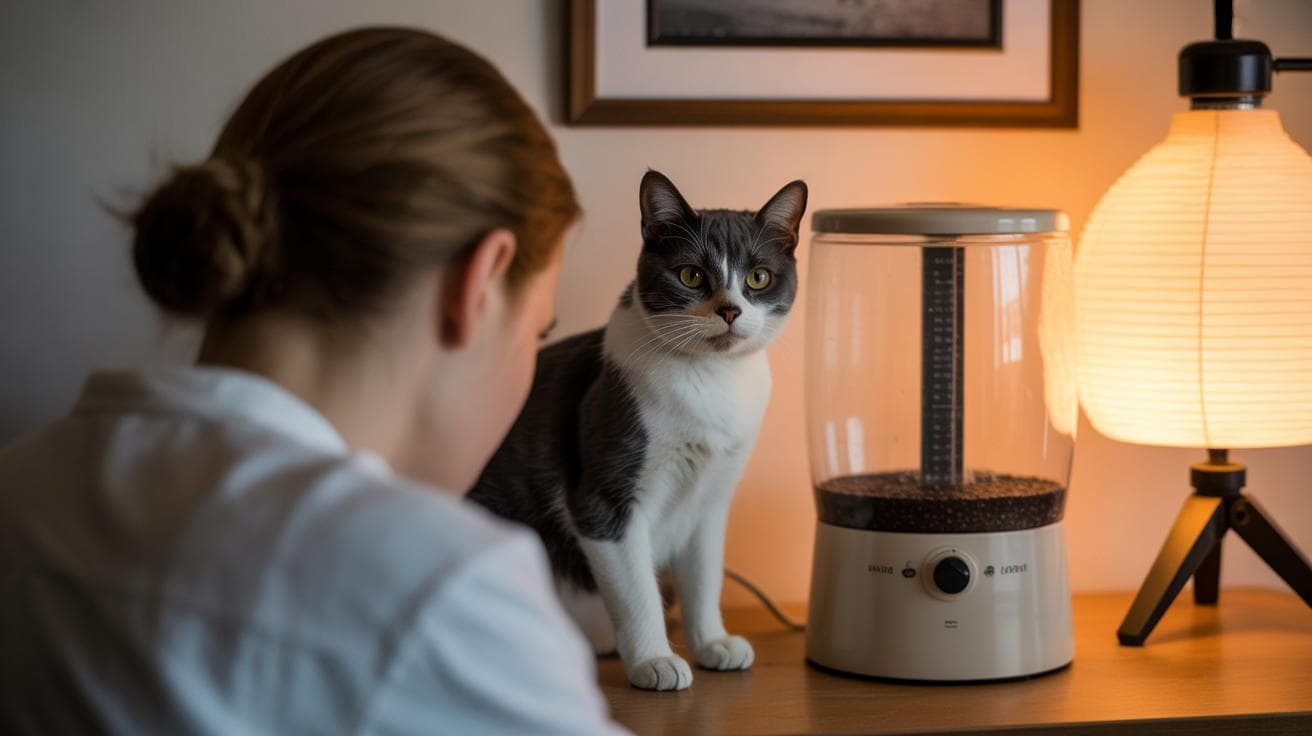
Start with the things that actually matter to your cat and your peace of mind: precise portion control, a hopper sized for your home, reliable power, a lid that locks out scavengers, and a dispenser that won’t jam mid-meal. These basics keep meals consistent and your floors kibble-free.

For portioning, choose a programmable portion control (lets you set measured amounts on a schedule) that you can tweak in small steps so daily calories add up just right. Look for anti-jam mechanisms (designs that stop kibble from getting stuck); motors hate when pieces bridge or dust builds up and then everything stalls. Power options are big: AC power (household plug) with a battery backup (batteries that run the unit when the power goes out) keeps meals coming during outages. A locking lid keeps curious paws or raccoons from emptying the hopper (food storage bin), and clear portion readouts help you see what each dispense actually weighs.

Think about food type and capacity next. Most feeders are made for dry food, which is cheaper and low maintenance. Wet-food models need a refrigerated compartment or single-meal cartridges (single-use food pods) and usually need daily cleaning, so plan for that. Hopper sizes matter: small hoppers (about 0.5 to 2 liters) fit a single cat, while larger ones (3 to 6+ liters) work better for multi-cat homes. Dual-bowl or dual-drum designs (two separate food drums) let you feed two cats different amounts or schedules without them sharing one bowl.

Smart features and pet-ID options are the nice extras. App-connected feeders send missed-meal alerts and let you change the schedule from your phone, hello, feed-from-work convenience. RFID (radio-frequency ID tag) or microchip (implantable pet ID chip) feeders open only for the tagged cat, which cuts down on freeloaders and food guarding, super handy when one cat is on a diet.

Quick feature checklist

  • Capacity: hopper size matches single or multi-cat needs.
  • Portion control precision: programmable portion control (sets exact amounts) with small repeatable steps.
  • Power: AC with battery backup (household plug plus batteries recommended).
  • Locking mechanism: lids that secure against curious paws and critters.
  • Wet-food compatibility: refrigerated bowl or single-meal cartridges and easy cleaning.
  • Anti-jam: dispenser design that resists kibble bridges and dust.
  • App/notifications: missed-meal alerts and remote scheduling.
  • RFID/microchip support: pet-ID access to prevent guarding or freeloading.

A little planning now saves a lot of “where did all the food go?” later. Worth every paw-print.

how to set up an automatic cat feeder for indoor cats: step-by-step calibration and placement
(Features).jpg

  1. Choose the spot.
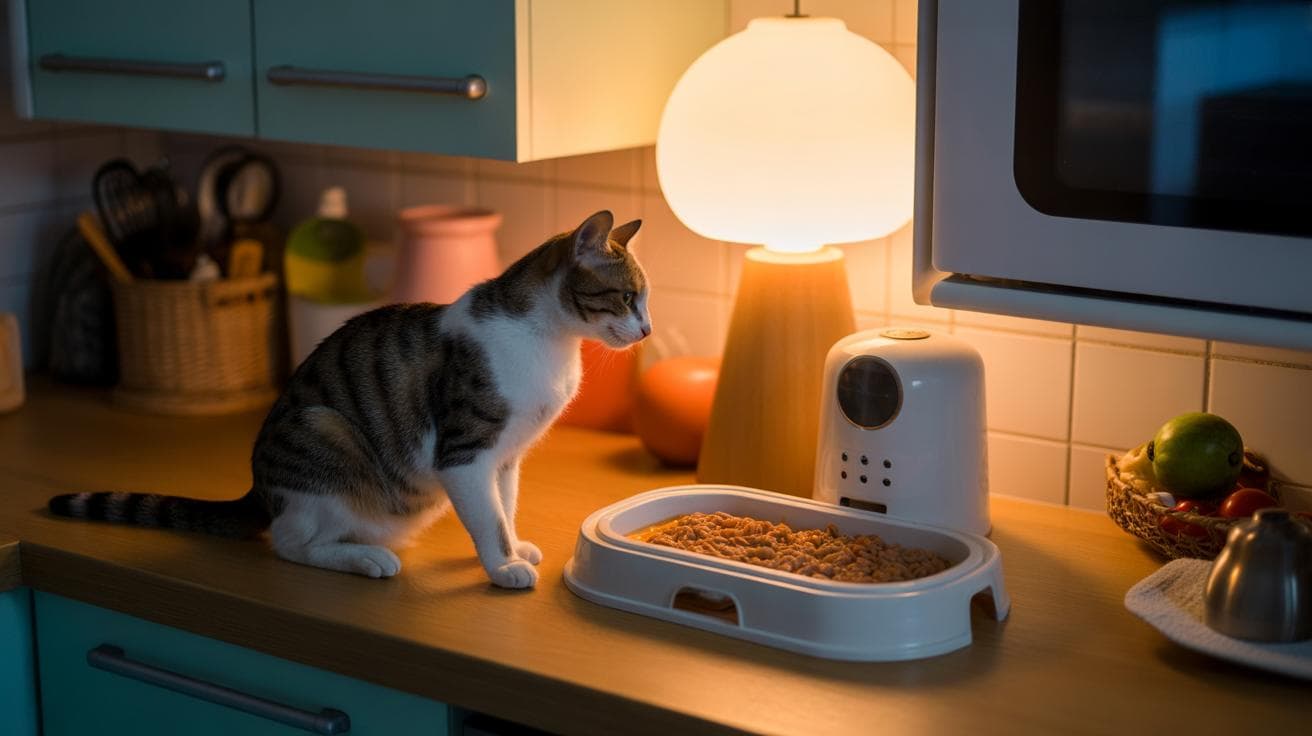
    Pick a flat, sheltered place where your cat actually eats. Aim for low foot traffic, away from the litter box and humid spots. Keep it out of direct sun so the hopper (covered kibble bin) doesn’t sweat and clump the food. Your cat’s whiskers should be able to twitch freely as kibble falls into the bowl.

  2. Load food and set hopper capacity.
    Pour in the kibble your cat already likes. Set the hopper size so portions match how you store food , small hoppers are great for single cats, bigger ones for multi-cat homes. If you’re not sure, start smaller; stale kibble is nobody’s friend.

  3. Program portions and meal times.
    Use the maker’s suggested portion settings to begin, and schedule meals around your cat’s usual routine. You’ll probably tweak sizes after a few tests. Think of this like dialing in a radio station , a little turn here and there until it sounds right.

  4. Run a dry-run for several cycles.
    With the bowl in place, run at least three test dispenses. Listen for jams, partial drops, or strange clunks. If it sounds wrong or food gets stuck, fix that before trusting the feeder with real meals.

  5. Observe your cat for 3-7 days.
    Let your cat try the feeder while you watch meals and behavior. Note how much they eat, if they guard the unit, or if pieces are left behind. If your cat seems stressed, or one cat blocks others, pause and retrain with supervised feedings.

Placement and safety considerations

Set the feeder on a non-slip mat so it doesn’t scoot during a frantic pounce. Keep it away from water bowls so splashes don’t reach electronics. Tuck cords out of paw reach and secure them so curious kitties can’t chew or trip. For long outages, use a UPS (uninterruptible power supply) or a battery backup so meals keep coming when the power doesn’t. Safety first, so your cat stays fed and you stay calm.

Portion calibration method

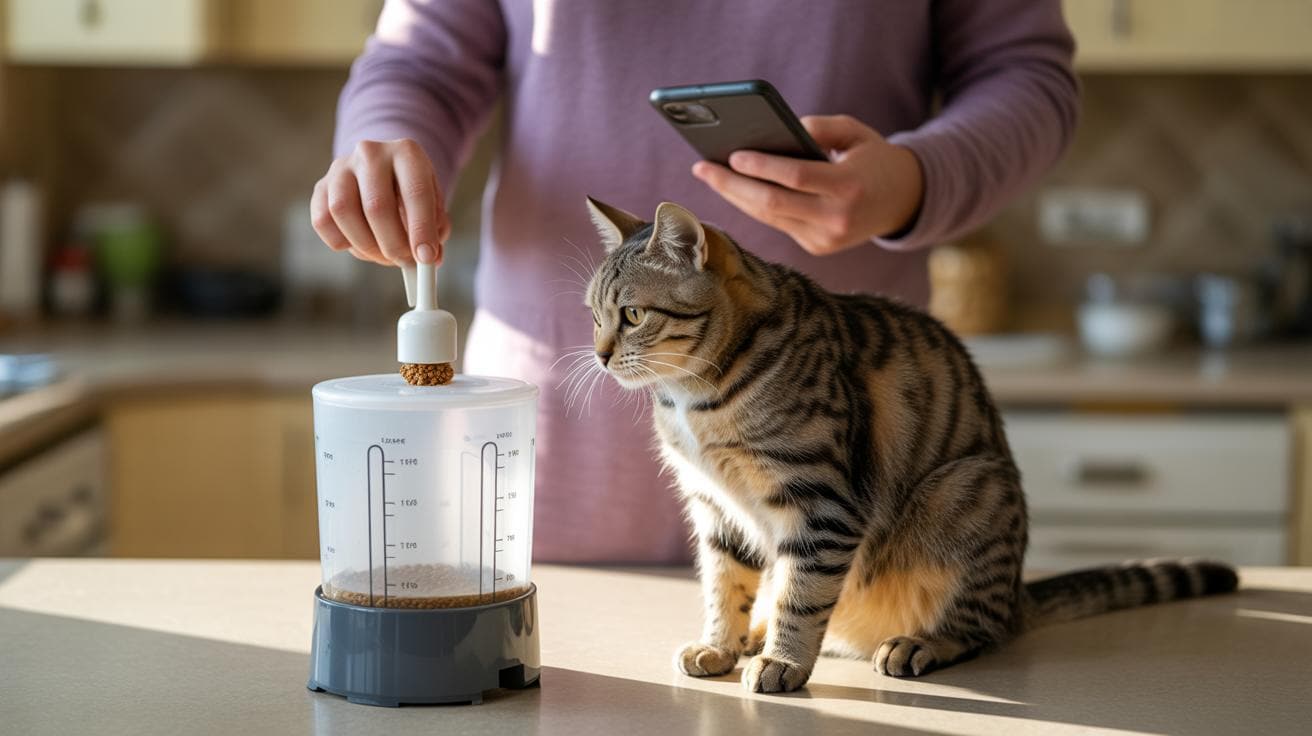
Weigh an initial portion on a kitchen scale (grams per serving). Note that number. Adjust the feeder dial or app to that setting. Test three cycles and weigh each dispense. Take the average grams and change the setting in 1-5 g steps until the average matches your target. It’s a little fiddly, but the satisfying clink of perfect portions is worth it.

Testing and observing the cat’s response

Watch your cat for 3-7 days and pay attention to patterns: quick snacking, leftover kibble, or a cat camped by the feeder. Signs of guarding include hissing, blocking other cats, or staying by the unit and growling. If you see stress or overeating, switch back to manual meals for a bit and retrain the routine so everyone feels safe.

Worth the paw-print: when the feeder’s set right, you’ll get calmer mornings and a happier cat. Ever watched your kitty leap for a kibble like it’s a trophy? Me too, and that little victory never gets old.
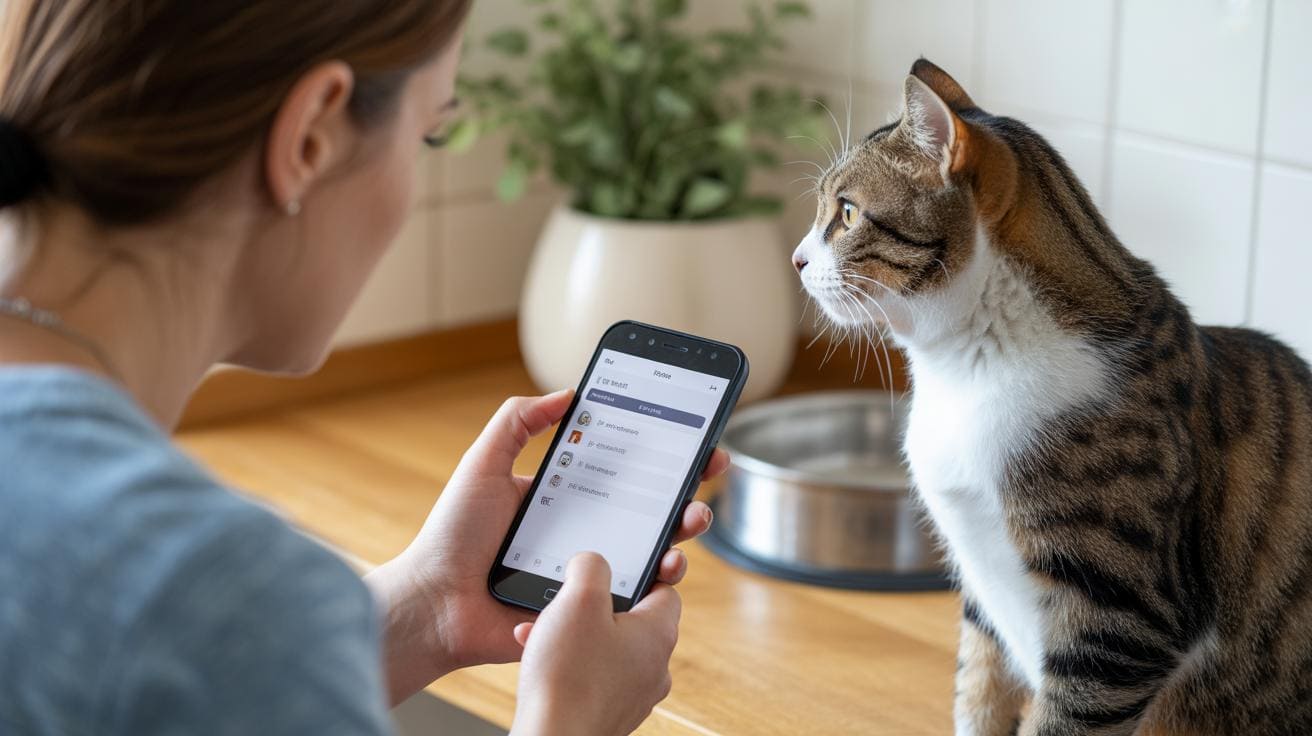
feeding schedules and portion guidance for indoor cats using automatic cat feeders

(Model types).jpg

Our goal is simple: help your indoor cat keep a healthy weight, lose pounds if needed, or get extra calories for growing kittens. Think in daily calorie targets: kcal (kilocalories, the energy in food). Then convert those calories into grams of your kibble (kibble = dry cat food) using the kcal per 100 g number on the bag. An automatic feeder just controls timing – the math and watching your cat make it work.

  1. Adult maintenance , 2 to 3 measured meals per day.
    Pick a daily calorie target, then convert to grams. Formula made easy: grams per day = target kcal × 100 ÷ (kcal per 100 g on the bag). Example: target 200 kcal/day and your kibble is 350 kcal/100 g → 200 × 100 ÷ 350 ≈ 57 g/day. Split that into three meals and you get about 19 g per meal. Simple, right?

  2. Weight loss plan , 1 to 2 smaller meals a day, with vet guidance.
    Drop calories slowly so your cat doesn’t get cranky or lose muscle. Same conversion applies. Example: target 160 kcal/day on the 350 kcal/100 g kibble → 160 × 100 ÷ 350 ≈ 46 g/day; two meals = 23 g each. Weigh your cat weekly and adjust gradually.

  3. Grazing but controlled , 4 to 6 small portions a day.
    If your cat wolfs down one meal, try spreading food into many tiny dispenses. For big eaters, six dispenses of 10 to 15 g can keep daily calories steady and stop bingeing. The feeder becomes a portioner, not a free-for-all.

  4. Kittens and growth , 3 to 6 meals per day on higher-calorie kitten food.
    Kittens need more energy and more frequent feedings. Use the food maker’s kitten calorie chart, convert to grams the same way, and spread feeds across the day for steady growth. Your kitten will thank you with zoomies and purring.

Keep a two-week food log: note the time, grams dispensed, and how much your cat actually ate, plus a weekly body weight or body-condition note. Ever watched your kitty ignore half a meal? Write that down. This log helps you see trends and catch problems early.

Check with your veterinarian if your cat is under 1 year, over 10 years, has health issues, or if weight isn’t changing as planned. They’ll pick the right calorie target and timetable for safe changes. And um, quick tip: a food scale is worth it for accuracy.

Worth every paw-print.

maintaining and troubleshooting your automatic cat feeder for reliable use

s (Setup  Schedules).jpg

Keep a simple cleaning rhythm so the feeder stays friendly for food and fur. Empty and wipe the hopper (covered kibble bin) and bowls once a week for dry food (kibble means the dry cat food pellets). Do a deeper clean of removable parts like drums (the rotating food chamber) and lids once a month. If you use wet food, wash the wet-food compartment every day and keep leftovers in the fridge between feeds to stop spoilage and smells. A clean feeder means fewer clunks, fewer fly-by nose-turns, and happier, less picky kitties.

Daily

  • Wipe bowl rims and clear visible crumbs so food doesn’t build up.
    Weekly
  • Empty and wipe the hopper and clean exterior surfaces to cut dust and oil.
    Monthly
  • Fully disassemble and deep-clean removable parts following the maker’s directions.
    Batteries
  • Swap or top off batteries every 3–6 months or when the unit gives low-battery alerts.
    Firmware
  • Install firmware updates (the software inside the feeder) when the app or maker posts them to fix bugs and tighten timers.
    Part inspection
  • Look for cracked plastic, frayed cords, or worn gears and replace parts if you spot damage.

Five common problems and quick fixes

  • Jammed kibble: Oversized kibble or a packed hopper can block feeding. Try smaller pellets or clear the hopper (you might need to break up a compacted pile).
  • Stuttering motor: Dust and debris around gears make motors (the little mechanical heart that turns the drum) falter. Clean the gear area and test again.
  • Missed meals: If the clock is off, re-sync the time and run a test dispense. Timers can slip after power loss.
  • App disconnects: Re-pair the feeder to Wi‑Fi and reboot your router, most drops are just a glitch in the signal.
  • Intermittent power: Weak batteries or a loose AC plug (wall adapter) cause spotty power. Replace batteries and check connections.

When to stop using the feeder and call support
Stop using the unit and contact the maker if you see smoke or smell burned plastic, if parts crack, if repeated errors persist after resets, or if your cat goes hungry despite test dispenses. Don’t wait, safety first. Call for repair or replacement.

Quick troubleshooting flow

Start with the basics so you don’t call tech support for something simple. Ever pressed the manual button and it worked? Good clue.

  1. Check power: confirm the AC plug (wall adapter) is snug and check battery status.
  2. Check hopper: open it and clear any visible blockages or oversized kibble.
  3. Manual test: press the manual-dispense button to see if the motor runs and food drops.
  4. Reset: reboot the unit and re-sync the app following the maker’s instructions (sometimes a quick reboot fixes everything).
  5. Contact manufacturer: if the motor still fails or errors keep happening, report the issue and request repair or replacement.

Worth every paw-print when it runs smoothly.

choosing the best automatic cat feeder for indoor cats: model types, price ranges, and quick comparisons

(MaintenanceTroubleshooting).jpg

Think of automatic feeders in three simple price groups that usually line up with what they do and the food they handle. Budget dry feeders run about $30-$80 and are basic programmable units for dry kibble. Mid-range units, $80-$200, bring bigger hoppers (food bin), finer portion control, and some app features. Premium models, $200-$400+, add app connectivity, refrigerated wet-food options, and things like RFID (radio-frequency ID tag) or microchip (implantable pet ID chip) access so one cat’s dinner doesn’t get eaten by another.

Wet-food feeders cost more and need a bit more care because they have refrigerated bowls or single-meal cartridges and usually require daily cleaning. Dry-only feeders are cheaper and lower maintenance. If you want sealed cartridges or coolers, expect to clean more often. Worth it if your cat loves pate.

Match the feeder to how your cat eats and how many cats you have. One cat on dry kibble? A small hopper (about 0.5-2 L) with reliable portion control will save money and hassle. Two or more cats call for dual-drum or multi-station designs and larger hoppers (about 3-6 L) so you’re not refilling every day. For wet food, pick a refrigerated unit and clear the bowls daily. Think about power too: plug-in power (AC) with battery backup keeps meals on schedule during outages, and anti-jam dispensers help the motor keep spinning. Little features, locking lids, easy-clean parts, and clear portion readouts, make life easier for you and safer for your cat.

Ever watched your cat stalk the kibble like it’s prey? That’s the fun part. Use the quick table below to match a basic model type to your cat’s habits and your budget, then dive into reviews and check hopper size and portion accuracy before you buy.

Model Type Best for Typical Price Range Key feature to check
Budget dry feeder Single cat, dry kibble, tight budgets $30-$80 Simple portion control and hopper size (0.5-2 L)
Mid-range smart feeder Owners who want app control and better portions $80-$200 Portion precision, plug-in power (AC) + battery backup, anti-jam
Dual / multi-cat feeder Two or more cats needing separate portions $80-$300 Dual drums or separate channels; 3-6 L hopper capacity; RFID or microchip options (for separate access)
Wet-food / refrigerated feeder Owners who serve wet meals and want freshness $200-$400+ Refrigerated bowl or sealed cartridges; easy daily-clean design

safety, behavior tips, and multi-cat strategies when using an automatic cat feeder

(Multicat).jpg

Place the feeder on a stable, non-slip surface away from the litter box and any water bowls so the electronics stay dry and the food stays tidy. Tuck cords out of reach and use a mat to catch stray kibble. Lock the hopper lid (the covered kibble bin) so curious paws or a determined raccoon don’t turn dinner into a mess.

If you’ve got more than one cat, make sure each cat gets a fair shot at dinner. Try an RFID feeder (radio-frequency ID tag) or a microchip-enabled unit (reads your cat’s implanted pet ID chip) so only the right cat gets a portion. Scatter feeding stations in different rooms or corners so shy cats aren’t bullied. Dual-drum feeders (two separate food chambers) or separate-channel feeders help you give distinct portions or different diets with less drama.

Introduce the machine while you’re home. Start with manual dispenses so your cat learns that the clack or rattle means food is coming. Pair that sound with praise or a quick petting session. After a few supervised tries, switch to scheduled feeds. Watch how everyone reacts for about a week, whiskers twitching and happy pounces are good signs.

A few quick tips:

  • Use an RFID or microchip feeder to stop freeloaders.
  • Place multiple feeding stations to reduce traffic jams and fights.
  • Set up video monitoring to spot guarding or stress when you’re away.
  • Stagger meal times if cats need different diets or portioning.
  • Pair feeders with enrichment (puzzle toys or a short play session) to cut boredom and guarding.

Keep an eye out for warning signs: persistent hissing, blocking the feeder, dramatic weight gain or loss, or a cat camping by the unit. If that happens, stop the feeder plan and switch to a pet sitter or a timed human-feed routine until everyone calms down. Worth the effort.

Final Words

You’ve got what you need to act. Automatic feeders offer portion control, steady meal times, and less kibble spoilage. Huge wins for indoor cats and busy schedules.

We covered which features matter, how to set and calibrate a feeder, sample schedules, maintenance tips, model trade-offs, and multi-cat safety tricks (RFID, extra stations).

If you’re ready, this guide on automatic cat feeder: benefits and setup for indoor cats will help you pick a model that keeps whiskers twitching and furniture safe. Worth every paw-print.

FAQ

Are automatic feeders good or bad for cats?

Automatic feeders can be good for most indoor cats, providing consistent, portion-controlled meals that help manage weight. Watch for misprogramming, jams, or stress in multi-cat homes, and supervise during setup.

How often should I set my automatic cat feeder?

Set the feeder to match your cat’s needs: most adult indoor cats do well with 2–3 measured meals daily, or 4–6 small dispenses for grazing or weight control.

Can automatic feeders handle wet food or both wet and dry?

Feeders handle dry kibble easily. Wet-food compatibility requires refrigerated bowls or single-serve cartridges (sealed meal packs) and daily cleaning; most wet options cost more and need steady power.

How do automatic feeders work for multiple cats and what’s best for multi-cat homes?

Use RFID (ID tag readers), dual-drum models, or multiple stations so each cat gets its own portions. This helps prevent guarding and keeps portions separate.

Can I use an automatic feeder without WiFi or for a 7-day trip?

Yes—many feeders have onboard timers and battery backup and don’t need WiFi. Whether a feeder lasts 7 days depends on hopper size and kibble amount; wet food will not stay fresh without refrigeration.

What are the key setup steps for indoor cats when starting an automatic feeder?

Place the feeder on a flat, sheltered spot, program portions and times, run dry tests to check dispensing, and observe your cat for 3–7 days to confirm behavior and intake.

Author

  • Isabella Tiu

    Isabella Tiu is a transcriptionist from Calhoun, Florida, known for her sharp attention to detail and her commitment to providing accurate and efficient transcription services. With a passion for language and communication, she thrives on transforming spoken words into clear, readable content for her clients.

    When she's not working, Isabella enjoys hiking and camping, finding peace and inspiration in the beauty of the outdoors. She often says, “The best lessons are often learned in nature,” a philosophy she embraces both in her work and personal life.

    Isabella’s love for both her craft and the natural world reflects her belief in continuous learning and exploration.

    View all posts

Similar Posts