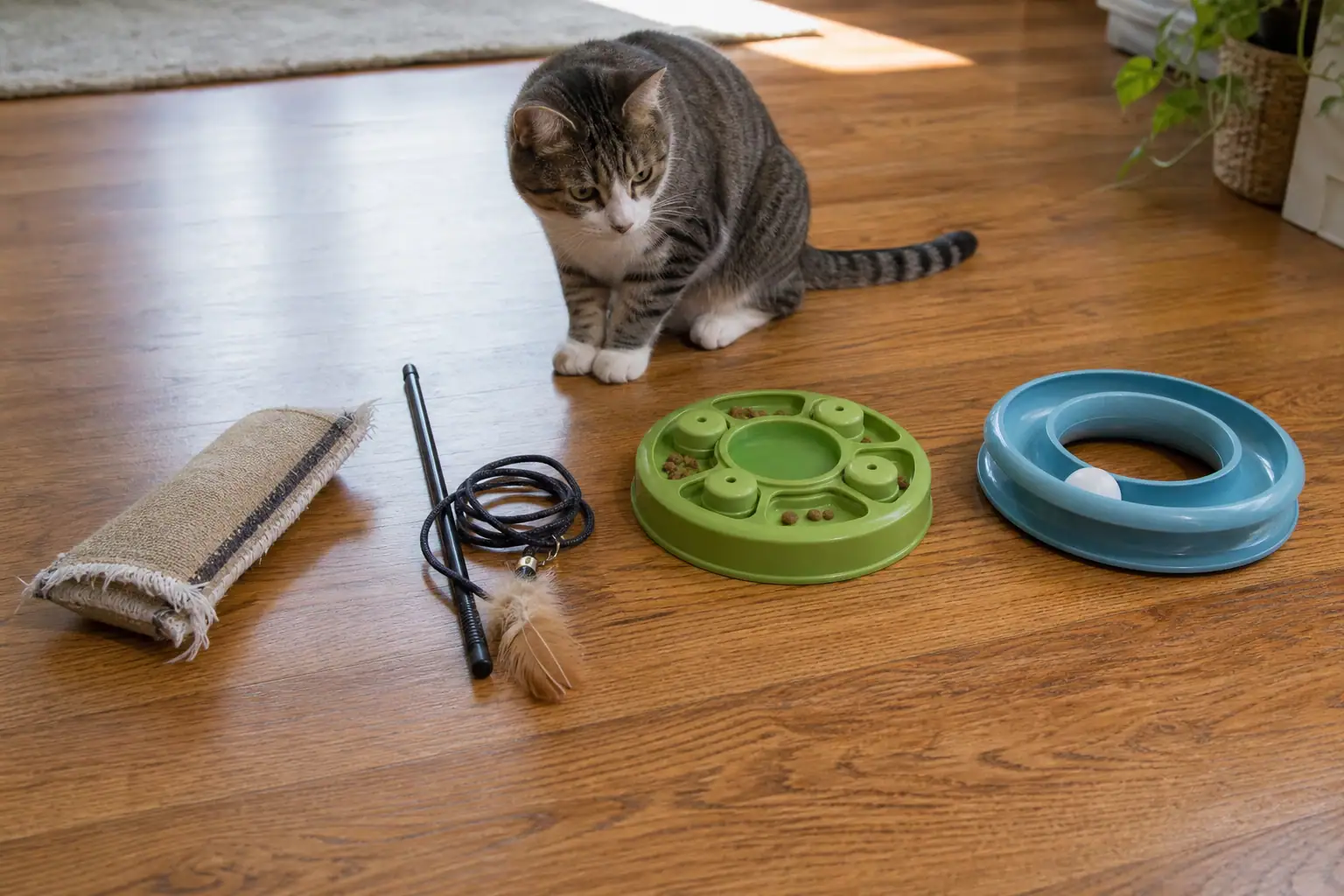
If you searched for the best cat toys 2025, the useful answer in 2026 is this: the winners are not just cute mice, electronic gadgets, or whatever topped last year’s shopping list. The best cat toys are the ones that let your cat stalk, chase, pounce, bite, wrestle, and solve problems without giving them loose parts to swallow.
For most homes, a strong toy setup includes five categories: an interactive wand used only with supervision, a rugged kicker for gripping and bunny-kicking, a puzzle feeder for food-motivated play, a safe solo toy such as a ball track, and a rotating stash of simple low-risk toys like ping-pong balls or cardboard boxes. If your cat destroys ordinary toys, put durability and inspection ahead of novelty.
This guide updates the 2025 conversation for June 2026. Product roundups change quickly, but the decision rules hold up: match the toy to the play job, remove damaged toys early, and avoid treating any cat toy as indestructible.
What Changed Since 2025?
The 2025 and early 2026 search results are crowded with tested product lists, retailer category pages, Reddit recommendations, and expert enrichment roundups. Those pages are useful for discovering specific brands, but they often skip the question rough-play owners care about most: what happens after a cat bites, tugs, chews, and wrestles the same toy for weeks?
That is the Titan Claws lens. A toy can be fun on day one and still be a poor choice for an aggressive chewer if it has glued-on eyes, thin elastic, loose feathers, bells, brittle plastic, or seams that open quickly. For cats who shred toys, the best pick is usually the toy that fails slowly and visibly, not the toy that looks exciting in packaging.
The Best Cat Toy Categories for 2026
1. Wand toys for supervised hunting. Wands are still one of the best ways to trigger stalking, chasing, leaping, and pouncing. Use them actively, let your cat catch the target, then put the wand away when the session is over. The AAFP/ISFM environmental needs guidelines describe play and predatory behavior as a core part of a healthy feline environment, not a luxury.
2. Kicker toys for cats who wrestle. A good kicker is long enough for your cat to hug with the front paws and kick with the back legs. Look for dense fabric, reinforced seams, minimal decorations, and no tiny pieces. If your cat chews through plush toys, read our deeper guide to choosing durable cat toys for rough play.
3. Puzzle feeders for food-motivated cats. Puzzle feeders turn part of a meal into a hunting task. They are especially useful for indoor cats who get bored between human-led play sessions. Start easy so your cat wins quickly, then increase difficulty only after they understand the game.
4. Ball tracks and contained motion toys for solo play. The safest solo toys are usually the ones that keep the moving part contained. Ball tracks, sturdy rollers, and timer-based electronic toys can help when you are working or asleep, but they still need inspection. Avoid leaving out string, feather attachments, or anything your cat can dismantle and swallow.
5. Simple household enrichment. Some of the best cat toys are not premium products. Cornell’s Feline Health Center notes that bags, boxes, and ping-pong balls can be entertaining when used safely. Rotate them, supervise the first few sessions, and remove anything your cat starts eating rather than batting.
Safety Rules That Matter More Than the Label
A package can say interactive, durable, natural, premium, or tough. None of those words replaces a safety check. Cornell’s safe toys guidance warns against toys with small pieces or strand-like parts that may detach and be ingested, especially when chewed.
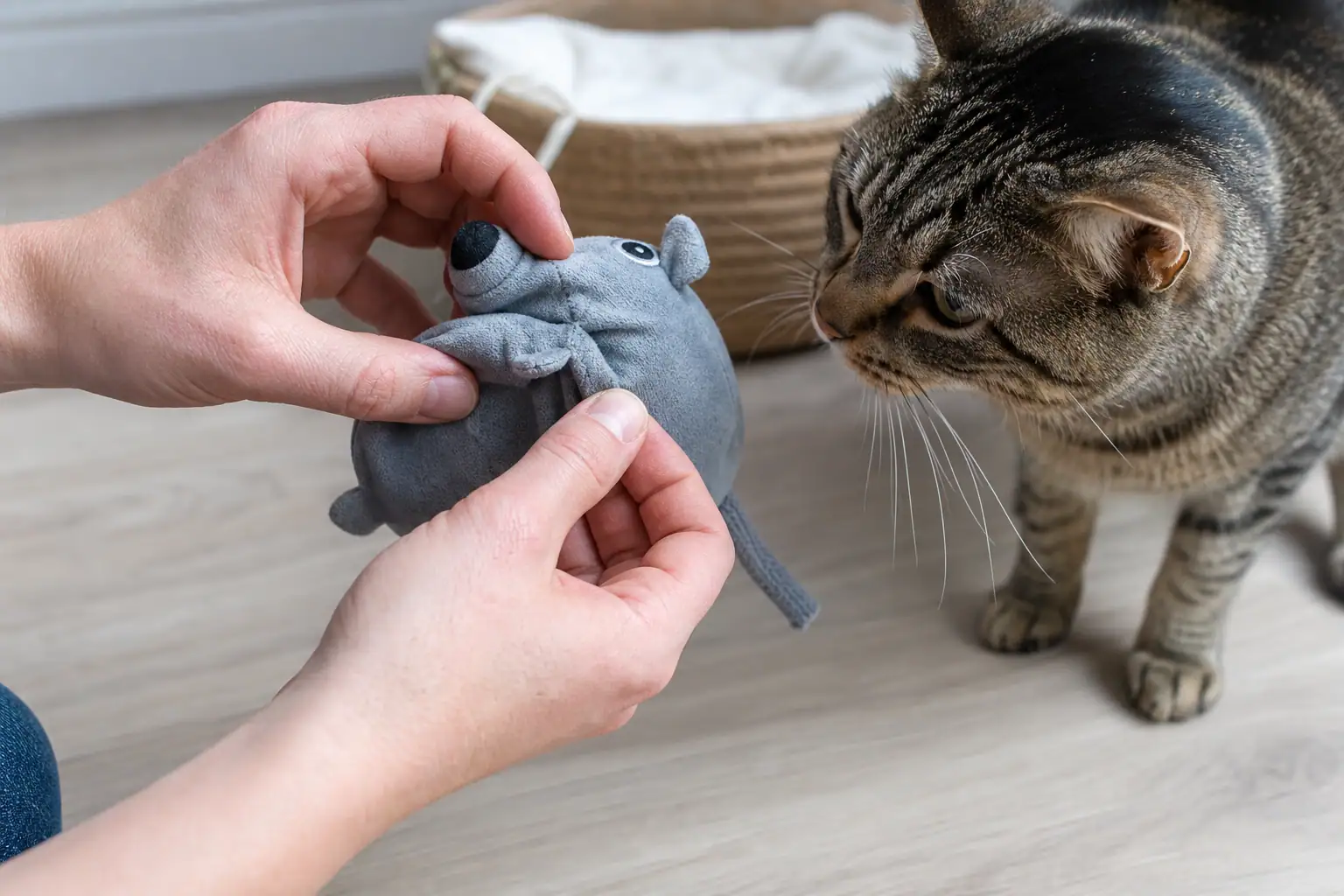
Use this quick inspection before a new toy becomes part of the rotation:
- Pull gently on seams, tails, tabs, feathers, bells, ribbons, and glued decorations.
- Check whether the toy is small enough to be swallowed or lodged in the mouth.
- Look for loops that could catch a paw, jaw, or claw.
- Press hard plastic parts to see whether they flex, crack, or expose sharp edges.
- After each rough session, check for wet spots, stuffing leaks, loose threads, and torn seams.
The University of Wisconsin School of Veterinary Medicine gives similar advice for cats who chew aggressively: avoid feathers, strings, and sparkly pieces that can be ingested, choose sturdy construction, remove loops or tags, and take away pieces as soon as they are chewed off.