
Can cats indulge in the creamy delight of cheesecake, or is this beloved dessert a hidden danger? The answer is straightforward: cheesecake is not safe for cats. The combination of cream cheese, sugar, and potential chocolate, raisins, or xylitol makes cheesecake dangerous for cats. Every component creates health risks for feline bodies. From cream cheese to sugar to potential chocolate or raisins, nearly every component of cheesecake creates health risks for feline bodies. Understanding each ingredient individually reveals why cheesecake should never be offered to cats, not even a small taste.
Cheesecake Ingredients Broken Down: What Each Component Does to Cats
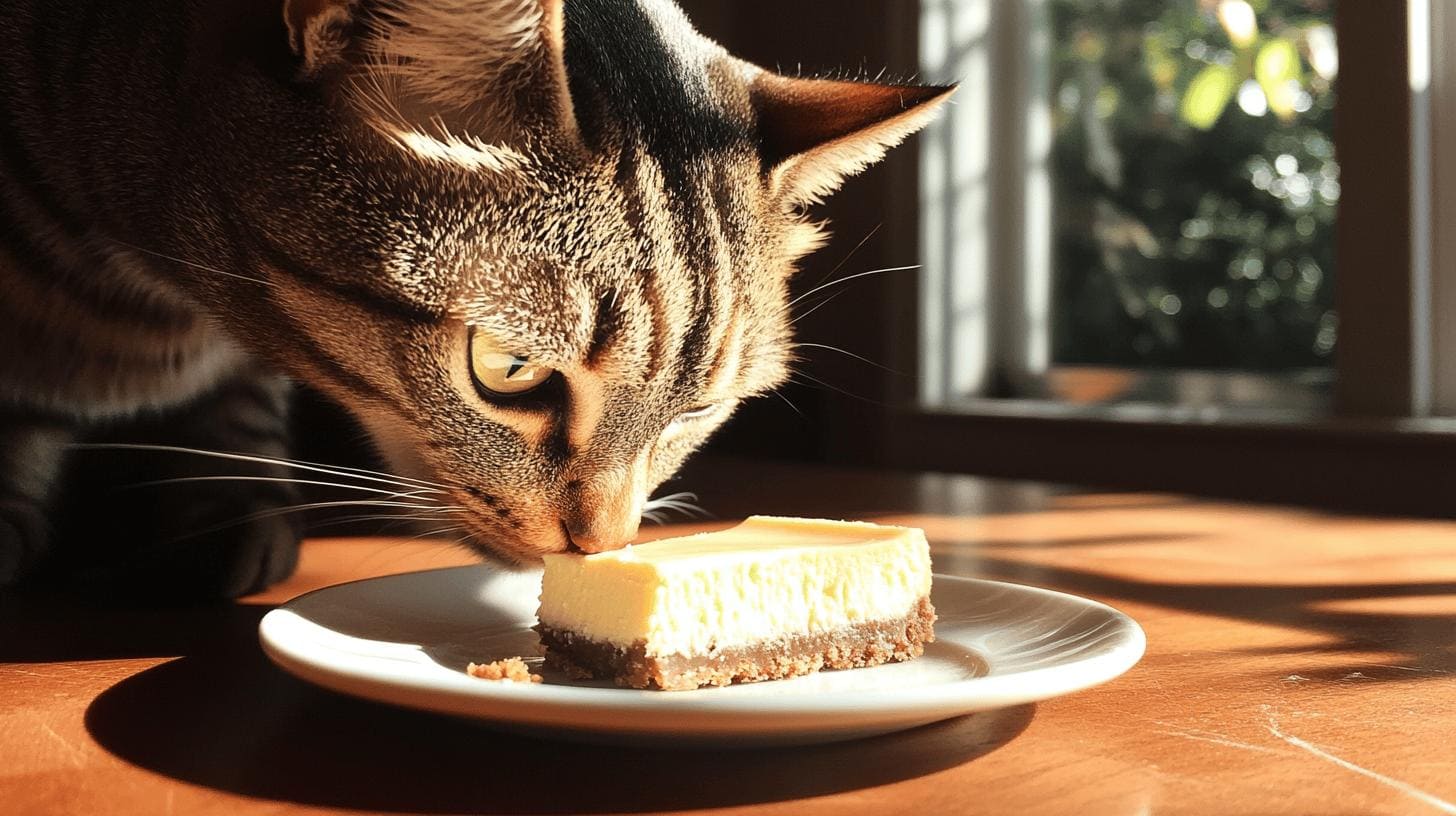
Cheesecake is a layered dessert with multiple problematic components. Let’s examine each ingredient individually:
1. Cream Cheese (Primary Base)
Cream cheese is roughly 70-80% fat and contains lactose. This combination makes it one of the most problematic dessert ingredients for feline consumption. Most adult cats are lactose intolerant, lacking sufficient lactase enzyme to digest dairy sugar. When a cat consumes cream cheese, the lactose passes undigested into the colon where bacteria ferment it. This produces gas, bloating, and osmotic diarrhea (watery, urgent). Even small amounts trigger digestive symptoms within 8-12 hours. Additionally, the high fat content (34g per 100g) overwhelms a cat’s delicate digestive system and can trigger pancreatitis (painful inflammation of the pancreas).
2. Sugar (Filling Sweetener)
Cheesecake typically contains 25-35g of sugar per slice. Cats have no nutritional requirement for carbohydrates or sugar. Their taste receptors don’t even perceive sweetness effectively (unlike humans). Sugar in a cat’s diet causes weight gain, obesity, and metabolic dysfunction. Over time, high sugar consumption increases diabetes risk by forcing the pancreas to produce excessive insulin. A cat eating cheesecake regularly will develop obesity within months (indoor cats already overweight gain 1-2 pounds per month with improper feeding). This leads to joint problems, arthritis, reduced mobility, and shortened lifespan.
3. Graham Cracker Crust (Base Layer)
Graham crackers contain refined grains, sugar (again), and are designed for human digestion. Cats receive zero nutritional benefit. The sugar and carbohydrate content contribute to obesity and diabetes risk. Additionally, many commercial graham crackers contain soy lecithin or other additives cats don’t tolerate well.
4. Sour Cream (Optional Ingredient)
When included, sour cream adds additional lactose and fat (20% lactose, 19g fat per 100g). This compounds the digestive distress from cream cheese alone. Cats consuming sour cream experience the same lactose intolerance symptoms.
5. Chocolate (Topping or Swirl, TOXIC)
Dark chocolate and cocoa powder contain theobromine, a methylxanthine compound toxic to cats. This alkaloid isn’t metabolized efficiently by feline livers. Even small amounts can cause serious poisoning. Toxicity depends on chocolate type and amount: dark chocolate is 10-17x more dangerous than milk chocolate. Symptoms of chocolate poisoning in cats include vomiting, diarrhea, restlessness, tremors, rapid heart rate (up to 220 bpm), seizures, and cardiac arrhythmias. Some cases result in death from cardiac complications.
6. Raisins (Fruit Topping, HIGHLY TOXIC)
Raisins, dried grapes, and grapes are among the most toxic foods for cats. The toxic agent is unknown but causes acute kidney injury (renal failure). Even tiny amounts, as little as ½ raisin per pound of body weight, can trigger poisoning. A single raisin can poison a 10-pound cat. Symptoms appear within 24-48 hours: vomiting, diarrhea, abdominal pain, loss of appetite, lethargy, and increased drinking/urination. Kidney failure can be irreversible, requiring emergency dialysis or resulting in death.
7. Xylitol (Sugar-Free Cheesecakes, EXTREMELY TOXIC)
This artificial sweetener is catastrophically toxic to all animals. In cats, it triggers rapid insulin release, causing severe hypoglycemia (dangerously low blood sugar) within 30 minutes. Symptoms include vomiting, weakness, seizures, collapse, and death. It also causes acute liver failure. As little as 0.1g per kilogram of body weight is toxic. A cat eating even a small piece of sugar-free cheesecake containing xylitol faces life-threatening emergency requiring immediate veterinary intervention.
Cheesecake Ingredient Toxicity Matrix
| Ingredient | Toxicity Level | Health Effect on Cats | Danger from Typical Slice |
|---|---|---|---|
| Cream Cheese | Moderate | Lactose intolerance: diarrhea, gas, bloating. High fat: pancreatitis risk | Digestive upset within 8-12 hours (not life-threatening but uncomfortable) |
| Sugar | Low-Moderate | Weight gain, obesity, diabetes, metabolic dysfunction | Single slice: minimal acute risk. Repeated exposure: serious long-term damage |
| Sour Cream | Moderate | Additional lactose intolerance, high fat | Compounds digestive upset with cream cheese |
| Graham Crackers | Low | Empty carbohydrates, sugar, no nutritional value | Contributes to obesity over time |
| Chocolate | HIGH | Theobromine toxicity: vomiting, tremors, seizures, cardiac arrhythmias, death | DANGEROUS: Dark chocolate can be fatal even in small amounts |
| Raisins/Grapes | CRITICAL | Acute kidney failure, irreversible renal damage | LIFE-THREATENING: Single raisin can poison a cat. No safe amount. |
| Xylitol | CRITICAL | Severe hypoglycemia, liver failure, seizures, death | LIFE-THREATENING: Requires emergency veterinary care. Minutes matter. |
What to Do If Your Cat Eats Cheesecake
Why these precautions matter for your household: Cheesecake toxicity risk varies dramatically based on ingredients. Even a tiny piece containing raisins or xylitol represents a medical emergency. The delayed symptom presentation in raisin toxicity (24-48 hours) means you must treat any exposure as potentially serious. Never assume a cat is safe just because immediate symptoms don’t appear. Conversely, plain cream cheese alone is uncomfortable but not life-threatening. Your response must match the ingredients consumed.
If your cat ate a tiny piece (cream cheese base only, no chocolate/raisins/xylitol):
Why immediate monitoring matters: The first 24-48 hours after cheesecake ingestion are critical. Even if your cat appears fine initially, symptoms can develop suddenly. Raisin toxicity is dose-dependent and unpredictable. Some cats show no signs, while others develop life-threatening kidney failure from tiny amounts. This is why veterinary consultation is essential, even for small amounts. Your vet can run baseline kidney bloodwork (BUN and creatinine) to detect early kidney damage before visible symptoms appear. Early intervention with IV fluids and supportive care significantly improves survival rates.
- Monitor for vomiting and diarrhea for next 24 hours
- Offer water and their normal food
- Contact vet if diarrhea persists beyond 12 hours or if vomiting occurs
If your cat ate cheesecake containing chocolate, raisins, or xylitol:
- Contact veterinary emergency clinic immediately (don’t wait for morning)
- Tell them: how much ate, what type (dark/milk chocolate), when it happened
- Expect emergency treatment: IV fluids, stomach pumping (gastric lavage), activated charcoal, monitoring
- Be prepared for potential hospitalization