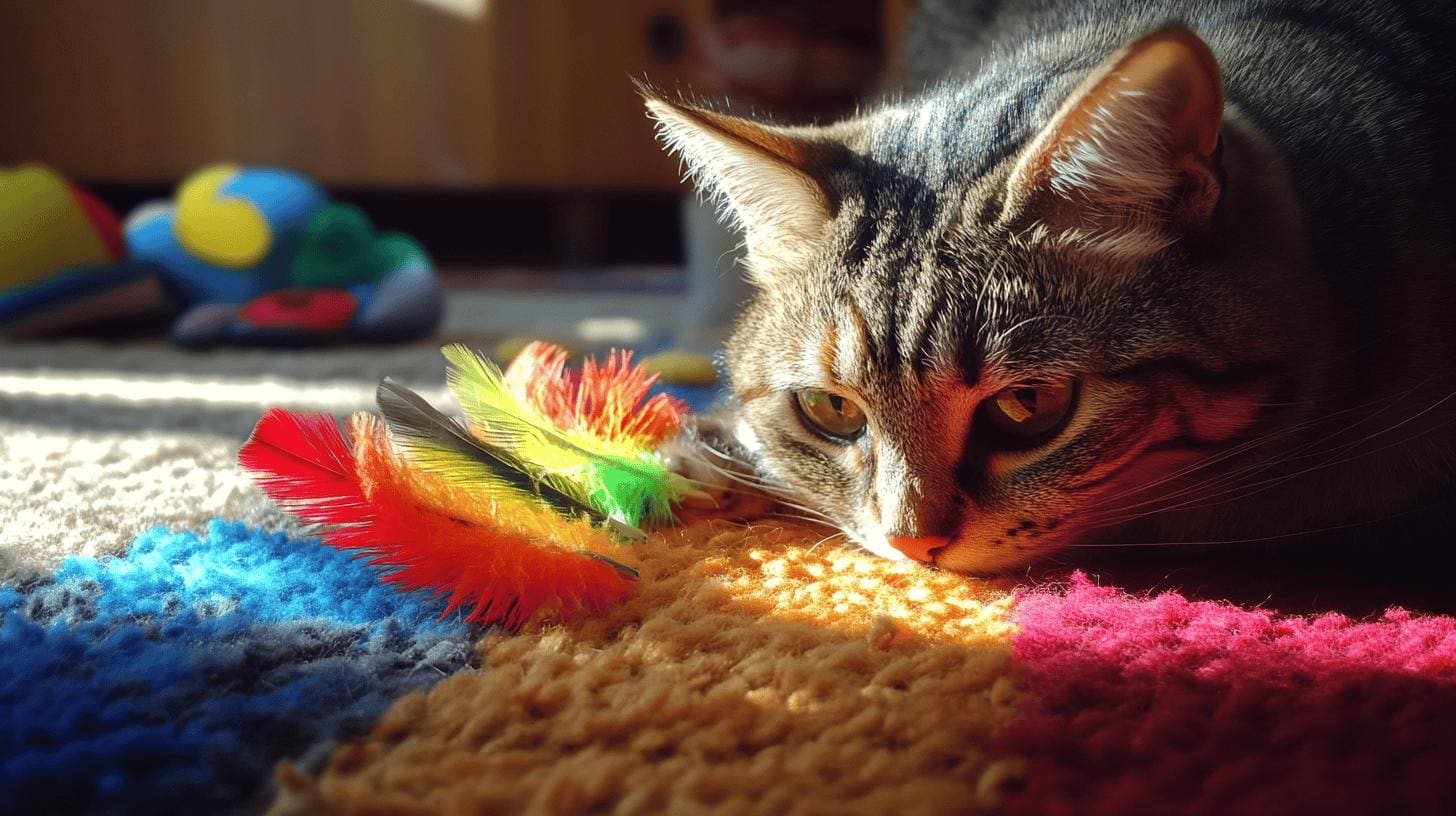
Can cats really eat hamsters? This question might seem straightforward, but it’s more complicated than you think. While cats are naturally driven to hunt small creatures, allowing them to prey on hamsters can lead to risky situations for both animals.
A cat might view a hamster as a plaything, but consuming one poses serious health risks, like digestive blockages. Focusing on preventing these dangerous encounters is key. By creating a secure space and providing exciting cat toys, we can protect our tiny pets and keep the peace at home.
Can Cats Eat Hamsters? Understanding the Risks
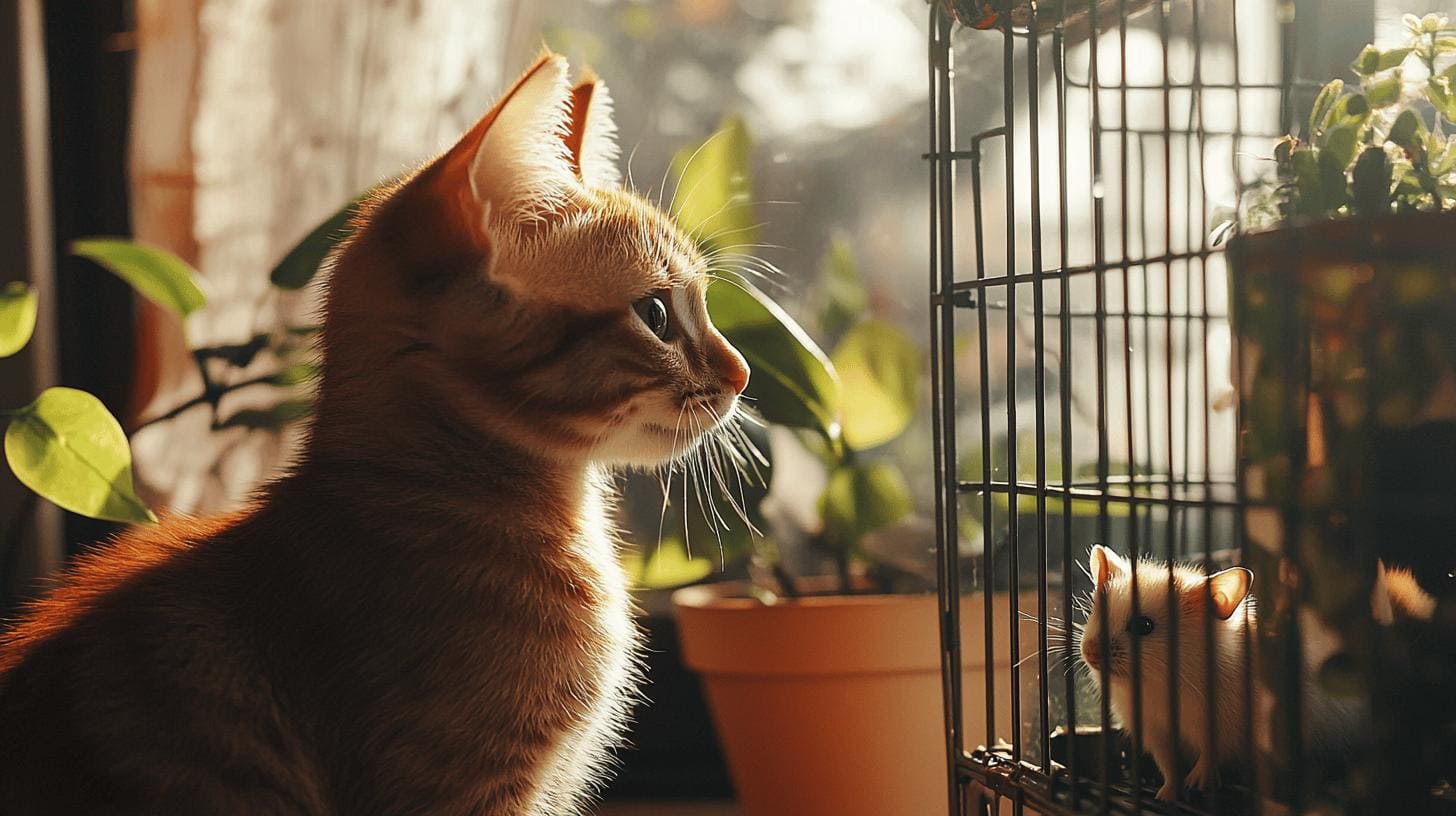
Cats are natural predators, and their instincts drive them to hunt small animals. So, the question arises: can cats eat hamsters? While it might seem like a straightforward yes or no, the reality is more complex. It is not safe or advisable for a cat to eat a hamster.
Doing so not only poses a threat to the hamster but also to the cat itself. Cats may see hamsters as prey, but allowing such behavior can lead to dangerous situations and is not recommended for the welfare of either animal.
If a cat does manage to eat a hamster, it could face several health risks. The hamster’s fur and bones can cause digestive problems, potentially leading to blockages or other gastrointestinal issues for the cat. Additionally, the hamster’s diet and physiology are different from what cats are naturally equipped to handle, which could cause further complications. While cats are obligate carnivores, their diet should consist of food specifically designed for their nutritional needs.
To prevent such incidents, it is crucial to establish a secure environment. Keep hamsters in durable cages with small slats that prevent cats from reaching inside. Always ensure that the room where the hamster is kept is closed off to prevent any unobserved interactions.
By providing cats with engaging toys and activities, you can help distract them from their predatory instincts. Supervising both pets when they are out of their enclosures is key to maintaining a safe environment for all.
Understanding Cat and Hamster Interactions and Cohabitation
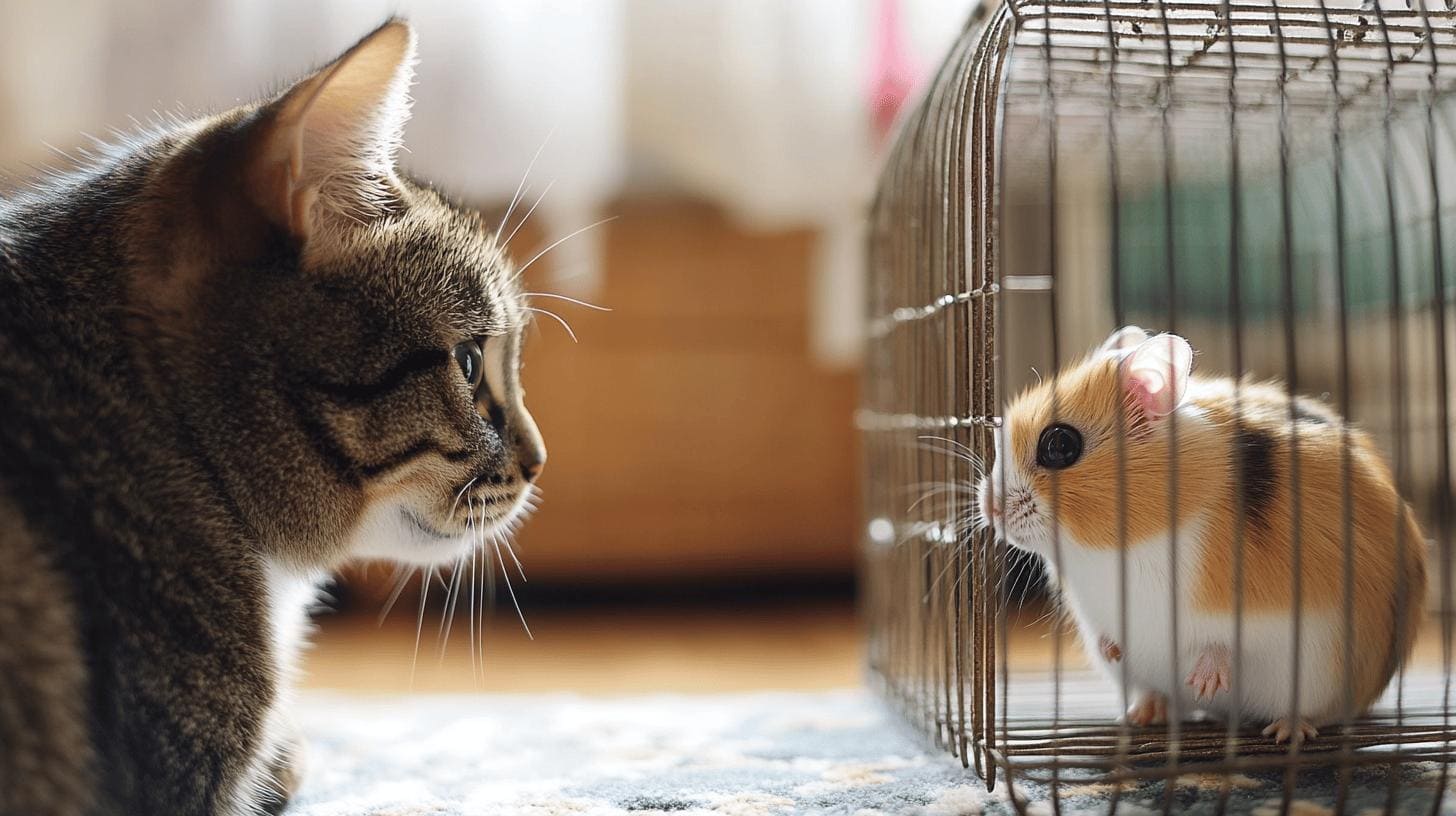
Cats and hamsters can have a complex relationship due to the natural predator-prey instincts of cats. Even when well-fed, cats might stalk or pounce on small animals like hamsters. Recognizing these behaviors is essential to prevent dangerous encounters.
Hamsters, being prey animals, may show stress by hiding, refusing food, or running frantically. Identifying these stress signals is crucial. Owners should observe their pet’s behavior and limit direct encounters with cats to help the hamster feel secure.
To enhance cohabitation, it’s beneficial to enrich the cat’s environment with specific activities. Interactive toys or puzzle feeders can effectively divert a cat’s attention from the hamster. Incorporate gradual acclimation techniques, such as allowing the cat to sniff items with the hamster’s scent, to foster a sense of familiarity without direct contact.
Vigilance in monitoring interactions is key. Always supervise when both pets are in the same space and use barriers like baby gates to create a safe distance. Ensure the hamster’s cage is secure from tampering. By understanding each pet’s behavioral cues and maintaining clear boundaries, a safer living situation for both pets can be achieved.
Creating a Safe Environment for Hamsters

Ensuring your hamster’s safety around cats starts with a secure and durable cage. It’s crucial to choose a heavy-duty cage with small slats, preventing cats from poking their paws inside. Make the hamster’s room a cat-free zone by securely closing doors to keep curious felines out. This setup not only protects hamsters from cats’ natural hunting instincts but also creates a stress-free environment for your little buddy.
- Cage Placement: Put the cage on a high table or shelf to keep it out of the cat’s reach.
- Secure Lids: Use lids that are difficult for cats to tamper with.
- Use Baby Locks: Enhance security by adding baby locks to the cage doors.
- Room Security: Keep the room door closed to stop cats from entering.
- Visual Barriers: Drape a blanket over part of the cage to minimize visual stimulation for the cat.
- Avoid Cat Access: Block climbing routes that might allow the cat to get near the cage.
Supervision is essential when ensuring a safe environment. Always keep an eye on interactions between cats and hamsters, especially when hamsters are out of their enclosures. By understanding a cat’s hunting instincts and a hamster’s stress signals, you can prevent accidents. Stay vigilant and maintain boundaries to ensure both pets live together safely and peacefully.