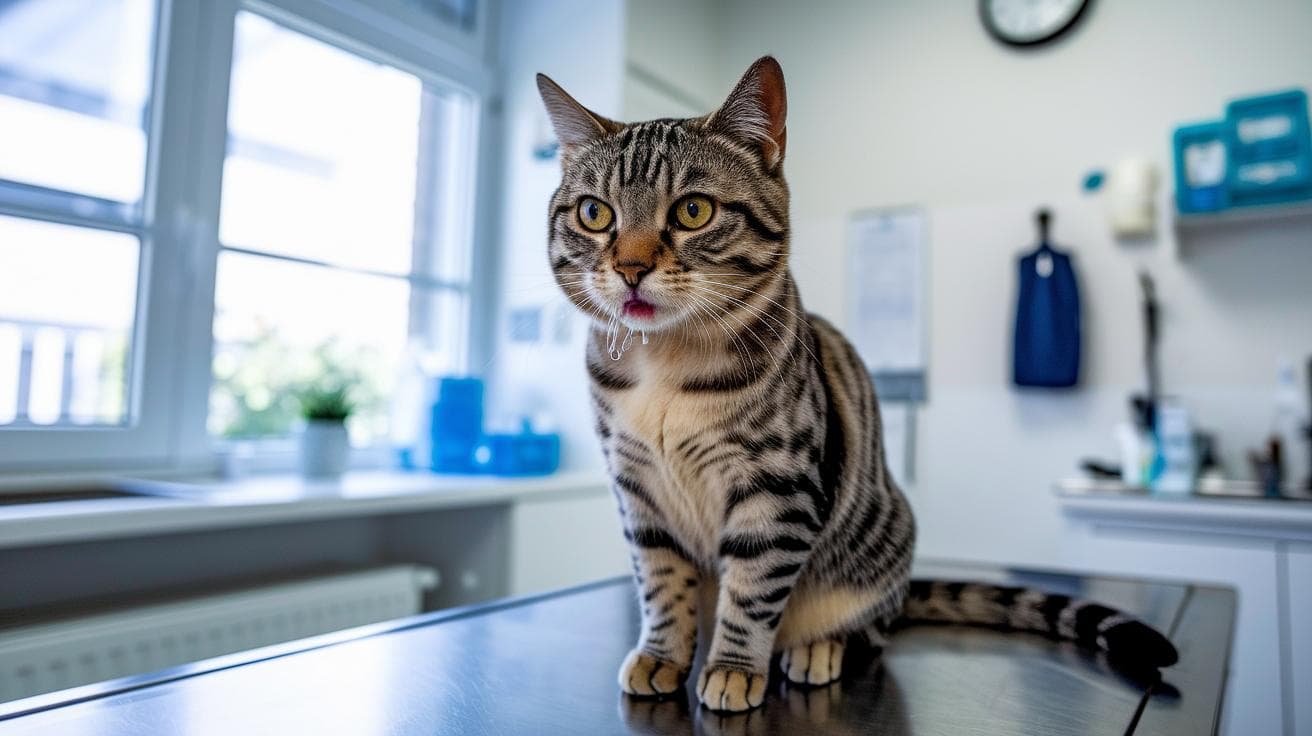
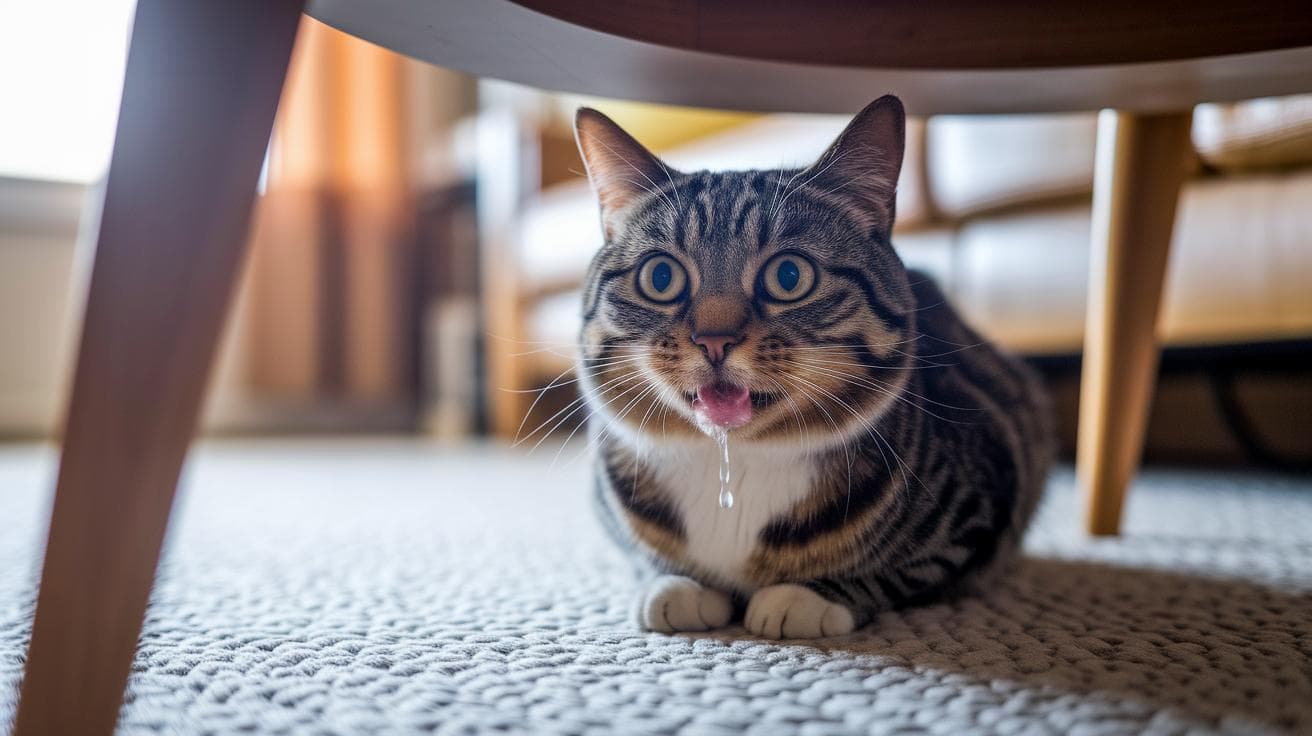
Ever jumped when your cat shoots out a little spit? It feels odd. That quick puff of drool is actually your kitty’s built-in alarm and stress relief.
Cats might do this when a stray bit of fluff tickles their tongue or a sudden noise spooks them. You spot those tiny spit moments early when you watch for your cat’s stress tells, you know?
Once you know why they puff, you can swoop in with gentle pets or quiet words to soothe them. Your cat stays purring. And you get fewer surprise vet trips and a more peaceful, happy home.
Feline Spitting Behavior Explained
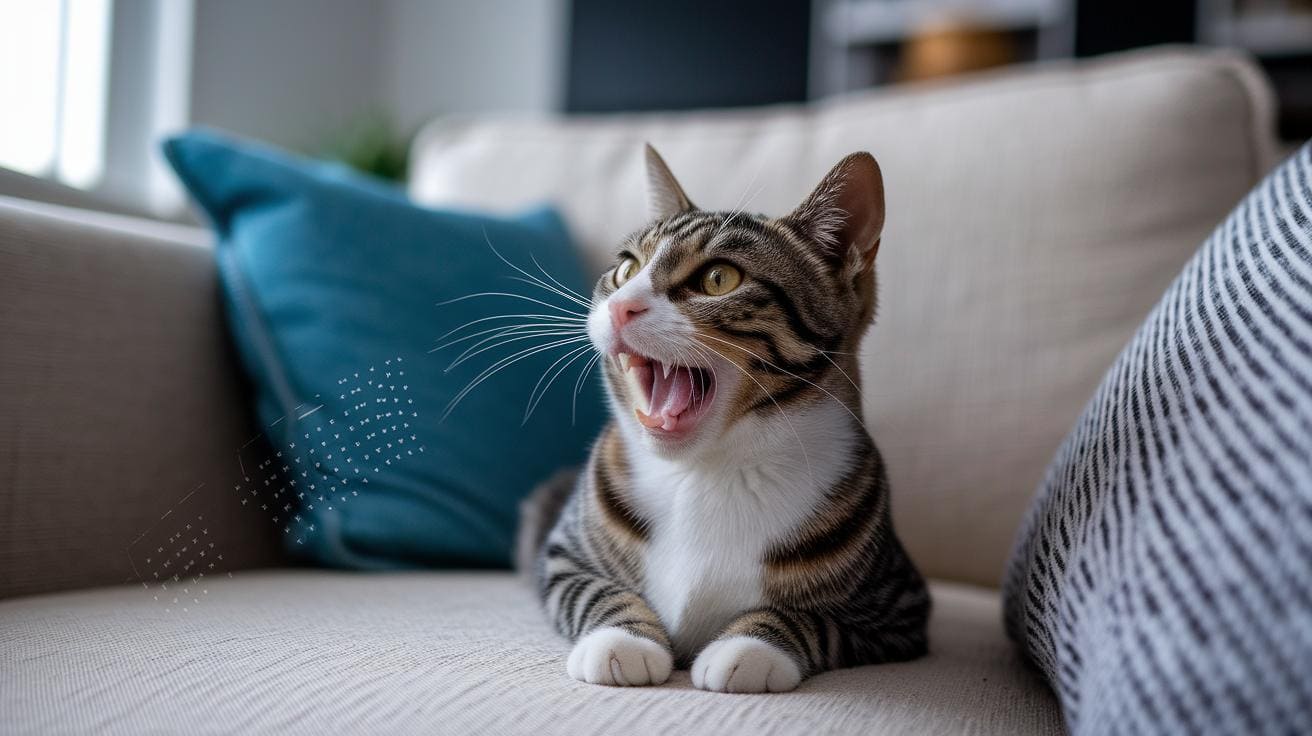
Ever wondered if cats spit like we do? It’s like a quick puff of air with a drop or two of saliva. Not the same as hacking up a hairball or drooling everywhere. It’s more like a mini alarm, a cousin to the hiss that warns off trouble with no full-on growl.
And um, licking is totally different. That’s slow and soothing. Cats groom or cool off with their tongue. But spitting? That’s a burst of air and a little spit at whatever spooked them.
Inside your cat’s mouth, you know, the barbed tongue (tiny backward hooks) and jaw shape team up for that spit. The tongue directs air over those rough patches. Then a quick inhale and strong exhale make that sharp sound. It’s unplanned, almost a startled gasp. Really.
What sets off a feline spit session:
- Loud bangs or stress. Your vacuum roars and your kitty jumps.
- Mouth or throat aches can trigger a defensive spit.
- Feeling threatened. Like another cat at the window or a fast hand reach.
Spotting this tells you they’re anxious or scared. Once you know why cats spit, you can give them room or check for pain. Maybe your cat spits at a new toy because it needs a slower intro. Noticing these signs turns confusion into calm. And that’s worth every paw-print.
Common Causes of Cat Spitting
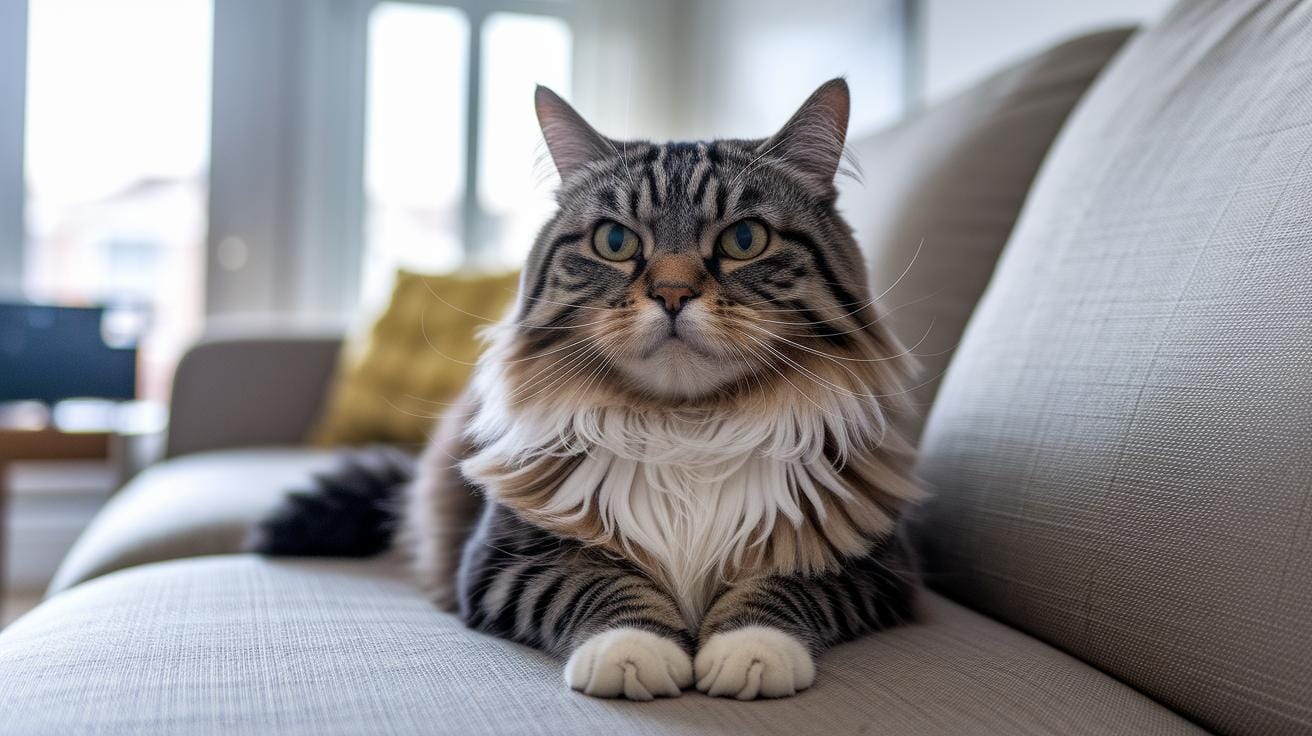
Ever seen your cat suddenly spit saliva? It’s a quick mouth reflex to clear a scratchy bit or loose hair. It’s not the same as hacking up a hairball or that big stress puff. Often it means their tummy (stomach and intestines) feels off or something in their mouth is bothering them.
Digestive Upset and Diet-Related Mouth Irritation
- Sudden food swaps. When you change your cat’s meal too fast, their tummy (stomach and intestines) can get upset. Then they might retch or send out a little spray of saliva. Like Muffin who tried that new salmon kibble (dry cat food pieces) and let out a spit because her tummy just wasn’t ready.
- Sharp kibble fragments. Tiny crunchy bits can jab your cat’s gums (soft tissue around the teeth) or scrape enamel (hard coating on a tooth). Then they’ll flick saliva to rinse it away. Simba learned that the hard way. He crunched a piece, winced, and spat like he was saying “ouch.”
Lip smacking, drooling, or a quick spit is your cat’s way of telling you “my mouth needs a break.” Next time, go slower with new meals or try softer bites.
Worth every paw-print.
Spitting vs Hissing vs Drooling: Understanding Cat Mouth Sounds
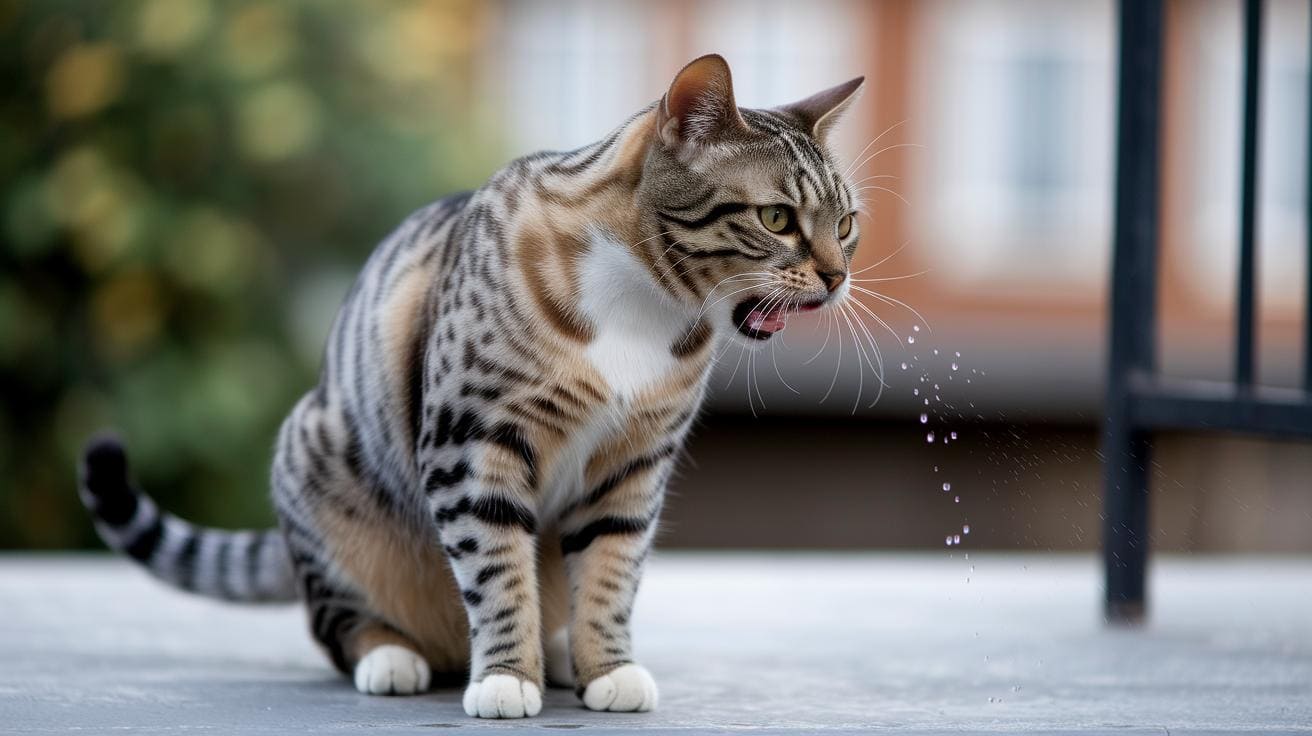
Spitting happens when your kitty lets out a quick, sharp puff of air with a tiny spray of saliva. It sounds like a startled gasp, really sudden. Ever seen a cat spit at its reflection? It’s basically your cat’s way of saying “back off!” Uh, don’t take it personally.
Hissing is a louder, drawn-out ssss, like a slow wind sneaking under a door. Ever watched your kitty fluff up then hiss? Your cat hisses when it feels threatened or ready to guard its turf. It’s pure defensive mode.
Drooling is a gentle, steady drip of saliva along the chin. Think of a tiny stream winding down a rock. Um, often it means your cat is content, purring and kneading away, or sometimes it flags an upset tummy or a sore tooth.
| Sound | Why It Happens | What to Watch For |
|---|---|---|
| Spitting | Quick warning puff | Sharp spray, startled look |
| Hissing | Defensive threat | Long “sss,” ears flat |
| Drooling | Contentment or discomfort | Steady chin drip, maybe purring |
Spotting these mouth sounds helps you figure out if your cat is marking territory, feeling scared, or just feline fine. Worth every paw-print.