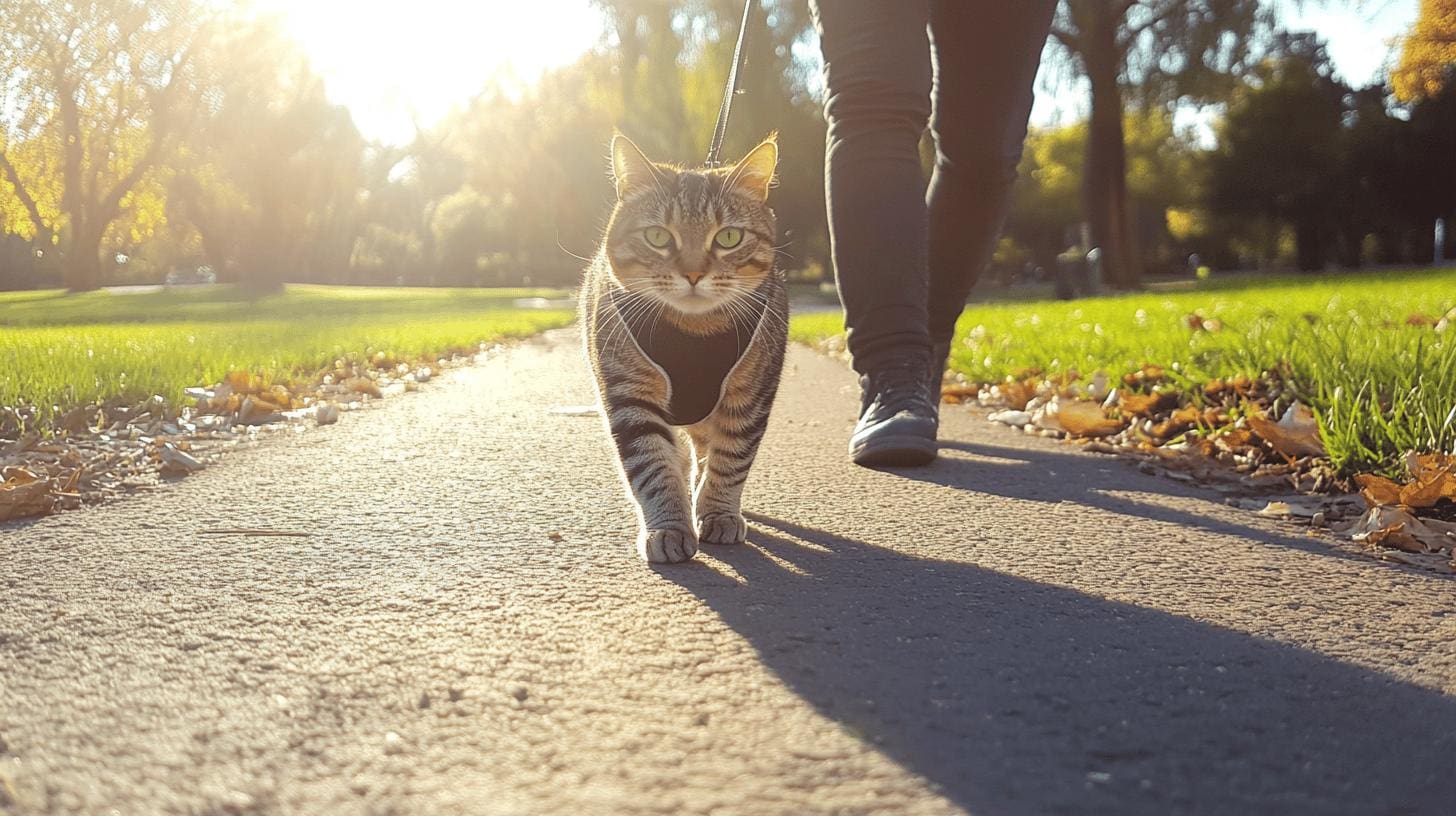
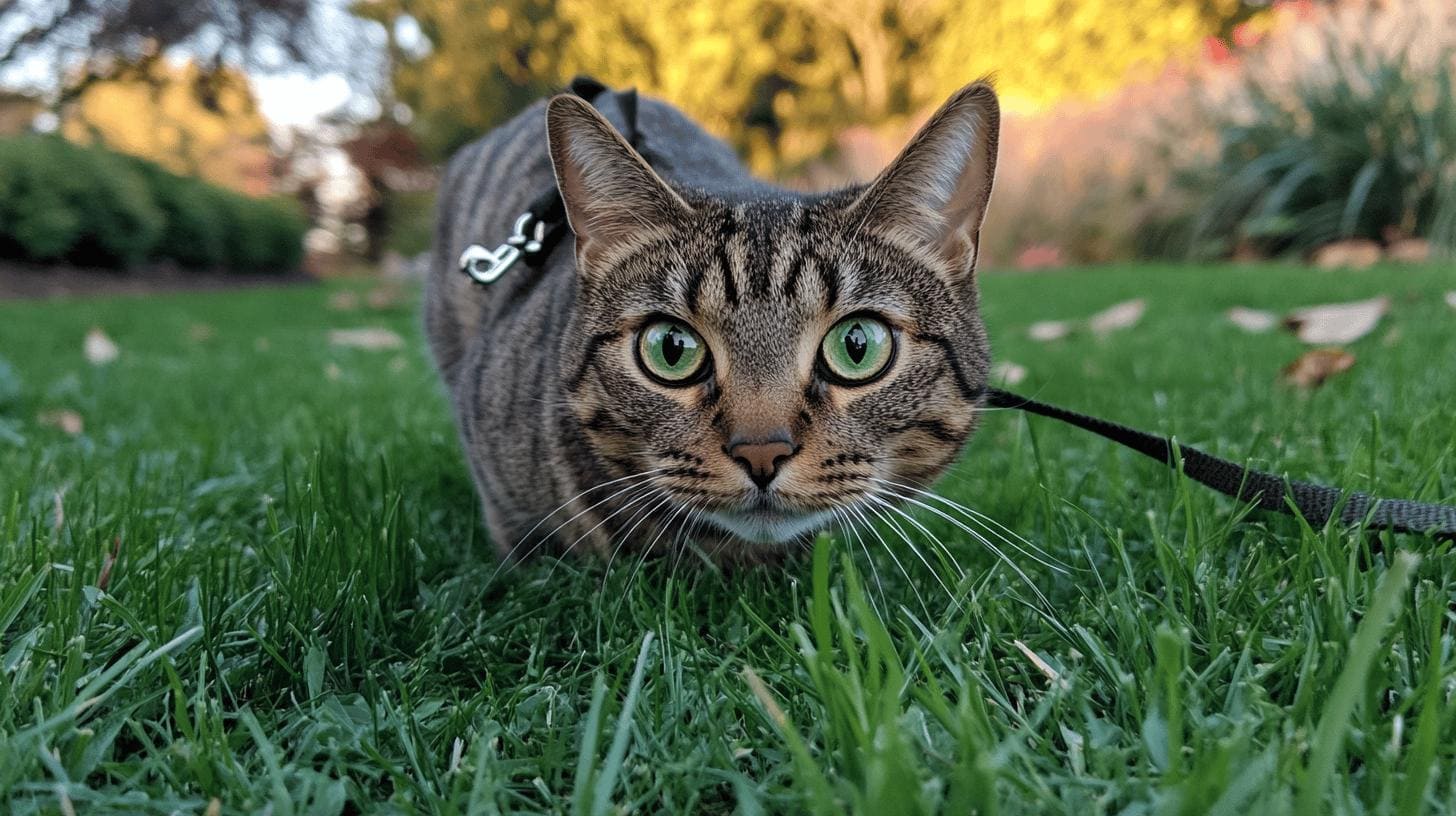
Did you know that cats can go on walks just like dogs? Imagine your feline friend exploring nature alongside you. Walking a cat doesn’t just add a splash of excitement to their routine—it’s also great for their health and yours too.
The journey starts with understanding and patience, guiding your cat from couch potato to trailblazer. In this guide, you’ll learn how to make harness training a positive experience, step by step, ensuring your cat feels safe and comfortable every paw of the way. Ready to embark on this adventure together?
Step-by-Step Guide on How to Train a Cat to Go for Walks
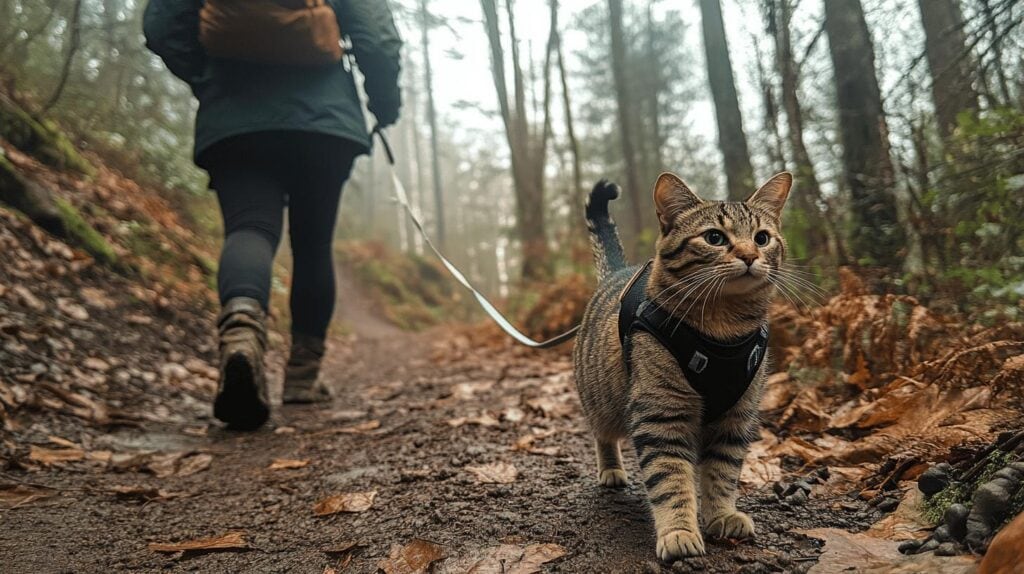
Leash training for cats can be a rewarding experience that enriches their lives and strengthens your bond. It opens up a world of exploration and exercise. The key to success is patience and understanding your cat’s comfort level.
Before venturing outside, it’s crucial to start in a familiar environment. Begin by introducing your cat to a harness indoors. Make this new accessory feel welcoming by associating it with positive experiences, such as treats or playtime.
Here are the steps to guide you through cat walking training:
- Introduce the Harness: Place the harness near your cat’s favorite resting spot or food area. Allow them to sniff and investigate it. Use treats to build a positive association.
- Try the Harness On: Once your cat seems comfortable, gently put the harness on without fastening it. Let them wear it for short periods while offering treats and praise.
- Secure the Harness: After a few trials, buckle the harness and let your cat walk around indoors. Make sure it fits snugly but not too tight.
- Attach the Leash: Clip the leash to the harness and let your cat drag it around the house. This helps familiarize them with the sensation of being tethered.
- Practice Indoor Walks: Gently hold the leash and guide your cat around the room. Encourage them with treats and soft words, making the experience enjoyable.
- Step Outside: Once your cat is comfortable indoors, take them to a quiet outdoor area. Start with short sessions close to home, gradually introducing new sights and sounds.
Patience is essential throughout this process. Each cat will adjust at their own pace, so it’s important to be attentive to their body language and comfort level. Gradual progression is key; rushing can lead to fear or resistance.
Celebrate small victories, and remember that some cats might take longer to embrace this new activity. With time, your cat’s confidence and curiosity will grow, paving the way for many enjoyable adventures together.
Selecting the Right Equipment for Cat Walks
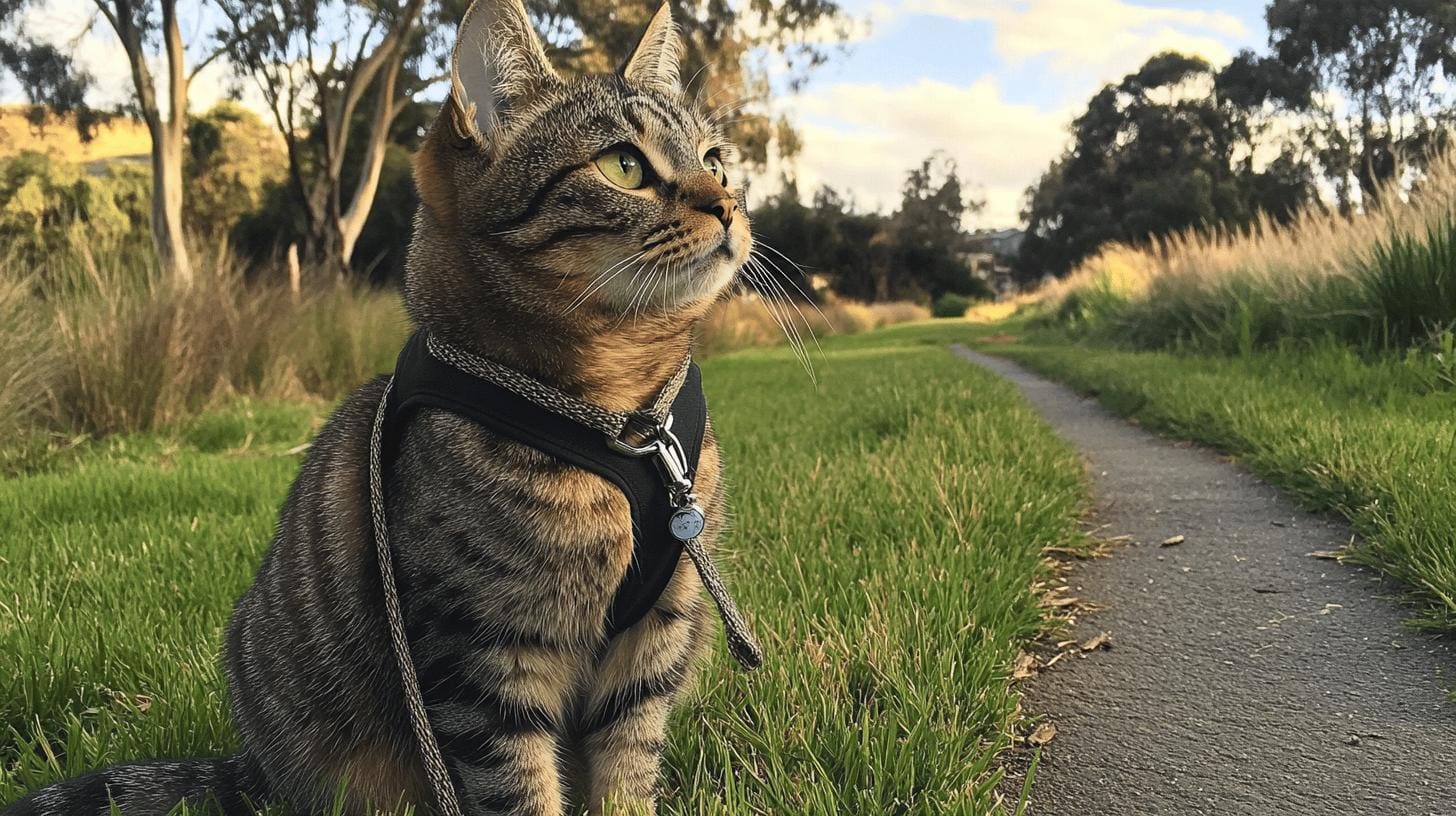
Choosing the right harness and leash is crucial for safe and comfortable cat harness training. The right gear makes a world of difference in your cat’s walking experience. A lightweight, escape-proof harness ensures your cat won’t wiggle free during an adventure.
It’s important to select a harness specifically designed for cats, which provides the right balance between security and mobility. Similarly, a flexible leash allows for gentle control without weighing down your feline friend. These considerations help create a positive walking experience, keeping your cat safe while exploring the outdoors.
| Product Name | Features |
|---|---|
| True Adventurer Reflective Cat & Kitten Harness and Leash | Reflective material for visibility, adjustable fit |
| Kitty Holster Cat Harness | Comfortable cotton, escape-proof design |
| Padded Handle Cat Leash by LupinePet | Padded handle for comfort, durable webbing |
When selecting the best leashes for cats, consider the length and material. A leash that’s too short might restrict movement, while one that’s too long can lead to tangling. Opt for a standard six-foot leash for beginners, providing enough freedom without losing control. Consider your cat’s size and personality when choosing a harness style.
Some cats prefer vest-style harnesses for added security, while others might favor a more minimalist design. Always ensure the harness fits snugly without being too tight to avoid discomfort or escape.
Understanding Cat Behavior During Leash Training

Observing your cat’s body language is crucial during leash training. Cats often express stress or discomfort through subtle cues. Watch for signs like flattened ears, a tense posture, or a twitching tail.
These signals suggest that your cat might be feeling uneasy about the situation. It’s also important to notice if your cat is crouching low to the ground or has dilated pupils, indicating heightened anxiety. Recognizing these behaviors will help you adjust your approach and keep the training session positive.
Positive reinforcement is a powerful tool in leash training cats. Rewarding your cat for desired behaviors encourages them to repeat those actions. Use treats, praise, or playtime when your cat responds well to the harness or shows curiosity about the leash.
Timing is key—reward your cat immediately after the desired behavior to create a clear association. Consistent positive reinforcement helps build confidence and reduces fear, making the training experience enjoyable for both you and your cat.
Every cat has a unique personality, so adapting training techniques to suit individual needs is essential. Some cats may be more adventurous and quickly take to leash training, while others might require more time and patience.
Adjust the pace of training based on your cat’s comfort level, and be willing to try different types of rewards or approaches. By paying attention to your cat’s reactions and preferences, you can tailor the training process to fit their personality, increasing the likelihood of success.