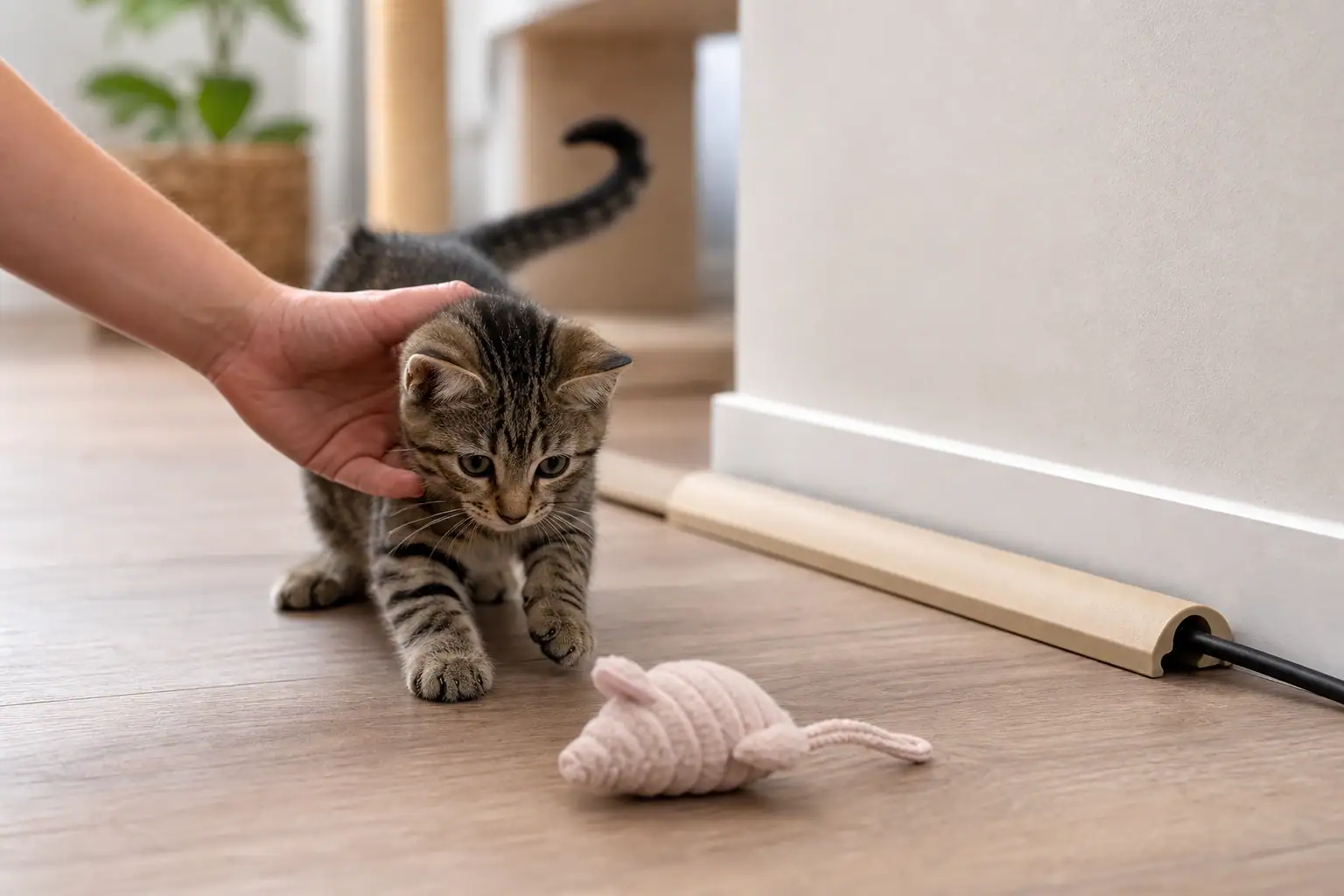
Kitten chew toys should give a young cat something legal to bite without adding new choking, tooth, or swallowing risks. The safest choices are soft, flexible, washable, too large to swallow, and simple enough that you can inspect every seam and likely bite point.
Do not shop for an indestructible kitten toy. Kittens have small mouths, sharp baby teeth, developing adult teeth, and very little judgment. The better standard is: safe for supervised chewing, appropriate for the kitten’s age and size, easy to retire when damaged, and part of a wider play routine that keeps hands, cords, clothing, and fragile household items out of the bite zone.
What Can I Give My Kitten to Chew On?
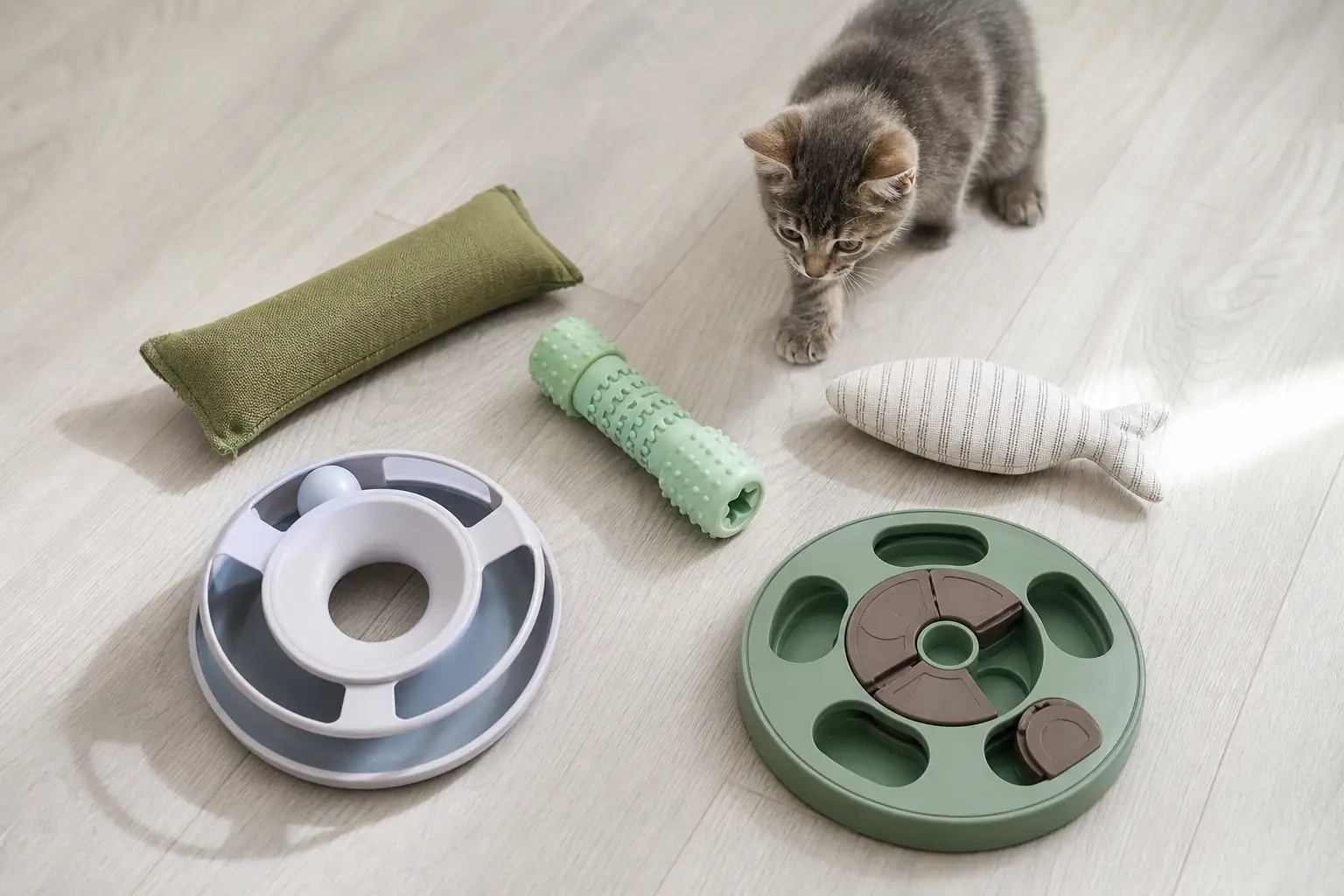
Start with soft fabric toys, kitten-sized chew toys made from flexible rubber-like material, larger cloth toys that can be chilled briefly, sturdy ball tracks, and food puzzles with pieces that cannot be swallowed. For rougher kittens, use a longer kicker-style toy so the kitten can grab, bite, and rake without your hand becoming the target.
The right toy depends on what your kitten is doing. A kitten who gently mouths toys may be fine with soft fabric and a simple chew. A kitten who shreds seams needs fewer decorations, heavier fabric, and closer supervision. A kitten who swallows pieces needs the environment changed first and a veterinarian involved if non-food eating repeats.
Use this quick match:
- Chewing furniture corners or cardboard: offer a soft chew toy, then add chase play and a safe scratcher so chewing is not the only outlet.
- Biting hands and ankles: switch to wand play and a kicker toy; do not wrestle with hands.
- Gnawing cords: block access with cord covers or furniture placement before offering toys.
- Working at tags and seams: cut off tags, skip loops, and choose simpler toys with fewer failure points.
- Trying to eat toy pieces: remove destructible toys and ask your veterinarian for guidance.
Why Kittens Chew So Much
Kittens chew because they are teething, exploring, playing, self-soothing, and testing the world with their mouths. PetMD’s veterinary teething guide explains that kittens develop baby teeth first, then replace them with adult teeth; baby teeth are usually in by about eight weeks, and adult teeth typically come in between roughly three and a half months and seven months.
That timeline matters because the kitten most likely to search for chew targets may also be the kitten with tender gums, loose baby teeth, and very sharp little teeth. Cats Protection notes that kitten baby teeth are fragile and that hard plastic or wood toys can hurt teeth and gums during teething. This is one reason kitten chew toys should have give instead of feeling rock hard.
Chewing is normal. Swallowing toy parts, repeated cord chewing, bleeding gums, trouble eating, heavy drooling, pawing at the mouth, vomiting, lethargy, or belly pain is not a normal toy-selection problem. Those signs belong in a veterinary conversation.
Safe Kitten Chew Toy Materials
For kittens, material choice is about mouth comfort and failure control. A good chew toy should compress or flex, stay intact during the first supervised sessions, and fail visibly before it becomes dangerous.
- Soft fabric: good for gentle chewing, carrying, and cuddling. Choose tight stitching and no beads, glued eyes, ribbon, bells, yarn tails, or tiny appendages.
- Dense fleece or canvas-style covers: better for kittens that bite harder, especially when the shape is simple and seams are easy to inspect.
- Flexible rubber-like kitten chews: useful for gum pressure if the material bends and does not crack, peel, or shed pieces.
- Washable cloth chews: good for messy kittens because drool and food residue weaken toys over time.
- Closed ball tracks: not chew toys exactly, but useful for independent swatting when the ball cannot come loose.
- Beginner food puzzles: helpful when chewing is boredom-driven, as long as no small caps or loose parts can be pried off.
Avoid judging durability by stiffness. For a kitten, a toy can be too hard even if it looks strong. If you cannot slightly compress or flex the chew surface, treat it cautiously and supervise closely.
What to Avoid
Many search results for kitten chew toys are store categories or product lists. They help with ideas, but they often understate the difference between a kitten that mouths toys and a kitten that dismantles them. If your kitten chews hard, avoid toys where the fun part is also the failure point.
- String, yarn, thread, ribbon, elastic, and dental floss: these are for active supervision only and should be stored after play.
- Hard plastic, wood, bone, antler, and rigid dog chews: these can be too hard for kitten teeth and tender gums.
- Tiny mice and balls: skip anything that can fit fully inside the kitten’s mouth.
- Glued decorations: eyes, noses, bells, beads, feathers, sparkly trim, and charms are common chew-off parts.
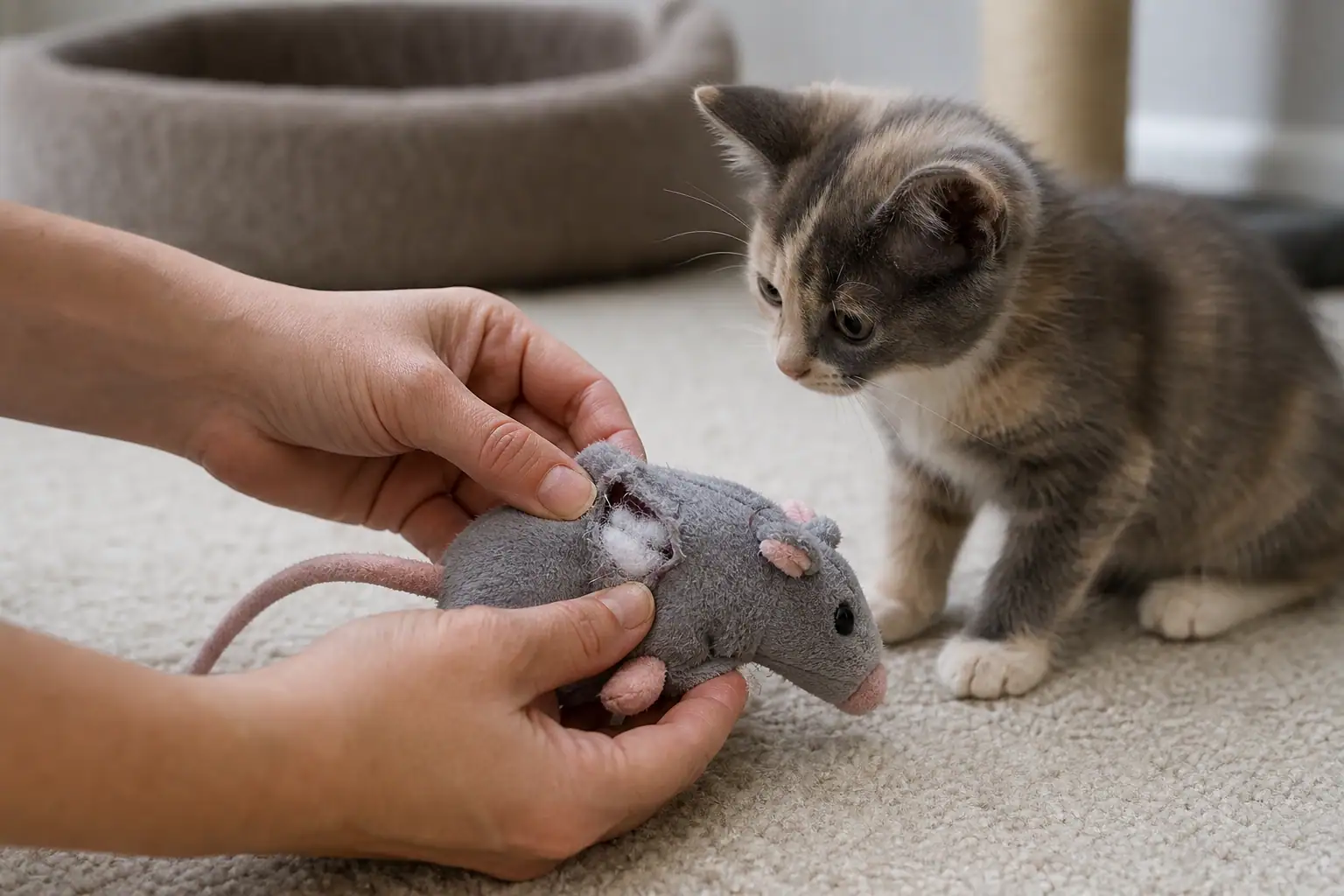
- Loose stuffing or crinkle film: remove the toy if the outer layer opens.
- Battery toys left out unattended: battery doors, charging ports, moving parts, and replacement lures need inspection.
- Household substitutes: hair ties, rubber bands, foam earplugs, twist ties, shoelaces, plastic packaging, and cords are not kitten chew toys.
The University of Wisconsin School of Veterinary Medicine gives practical advice for cats that chew aggressively: avoid feathers, strings, and sparkly parts that can be ingested; choose sturdy construction; remove loops or tags; and take away pieces that get chewed off. For kittens, those rules should be treated as the baseline, not the advanced version.