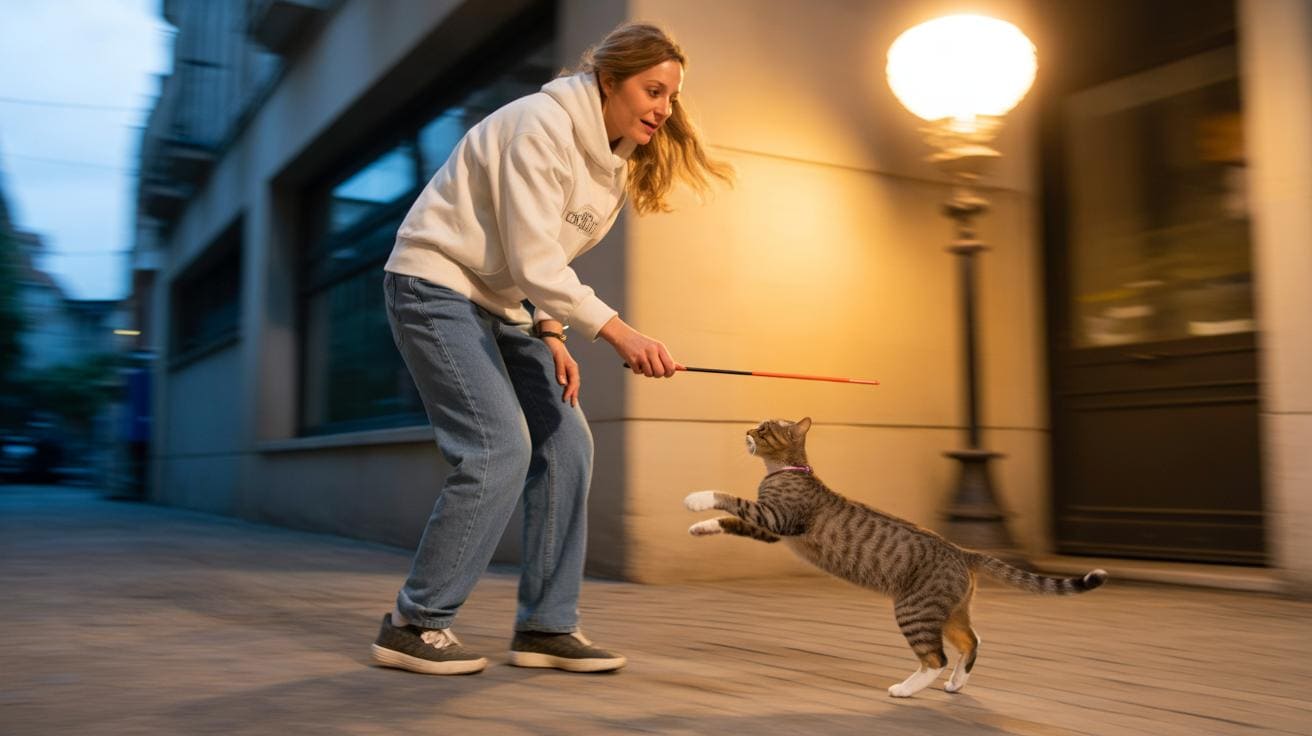
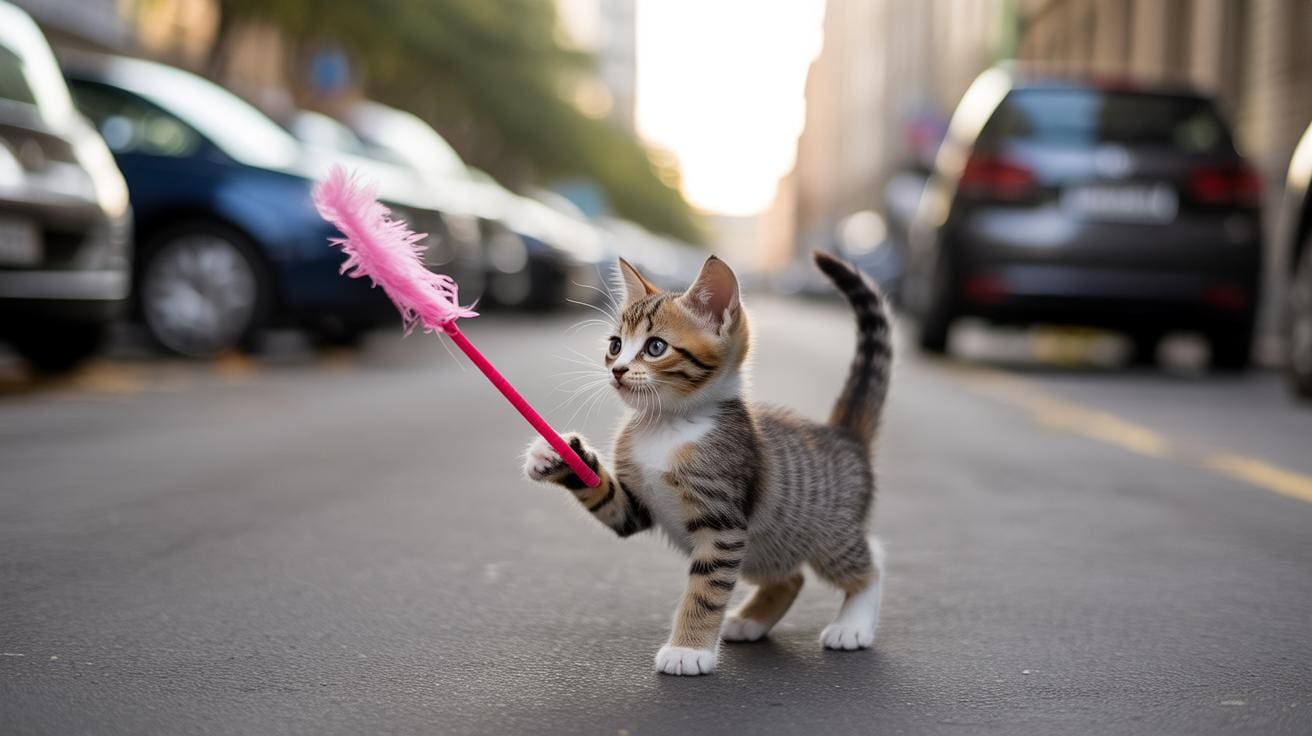
Teaser Wand Training for Kittens: Step-by-Step

Think a teaser wand is just a toy? Think again. Spend a few focused minutes with the right moves and that feather-on-a-stick becomes a mini hunt that sharpens focus, builds muscle, and beats boredom. Ever watched whiskers twitch as the lure skitters? It’s the best.

Here’s a short, friendly 8-step routine to make each play session count. Follow it a few times a day and you’ll see better pounces, longer focus, and that satisfied flop after a capture.

    1. Wake-up wiggle. Wiggle the wand slowly near their nose so they notice the movement. Keep it small and teasing.
    1. Slow drift. Move the lure in a smooth line across the floor so they track it with their eyes. Let them follow.
    1. Quick skitter. Make the feather dart suddenly like a fleeing bug. That tiny burst sparks their hunting instinct.
    1. Pause and wait. Stop the motion and hold it still. Let them stalk a little before you move again.
    1. Tease near cover. Drag the lure behind a box or under a blanket corner so they learn to hunt around obstacles.
    1. Big chase. Pull it away for a longer sprint to get their heart rate up. Short bursts are better than marathon runs.
    1. Capture moment. Let them catch it sometimes. A successful grab teaches them to finish the hunt.
    1. Calm down. End with a slow, gentle wave and a soft pet or treat to signal rest time.

Safety first, five quick checks before you play.

  • Check the wand tip for loose threads or cracks; replace it if it looks worn.
  • Avoid tiny parts that can come off and be swallowed.
  • Use toys with sturdy attachments so nothing detaches mid-chase.
  • Keep strings away when unsupervised to prevent tangling.
  • Watch body language; if your cat freezes or hisses, stop and try slower play later.

Short on time? Try these pacing tips for busy people.

  • Ten-minute bursts work great before you leave for work or after dinner. It’s enough to burn off energy.
  • Do two short sessions instead of one long one to keep them engaged.
  • Leave a safe, puzzle-style toy for solo play when you can’t be there. I know, I know, you can’t be everywhere.

Watching a perfect pounce is its own reward: the soft thump, the little roar in their shoulders, and that proud flop afterward. It’s kitten training that’s playful, safe, and actually works. Worth every paw-print.

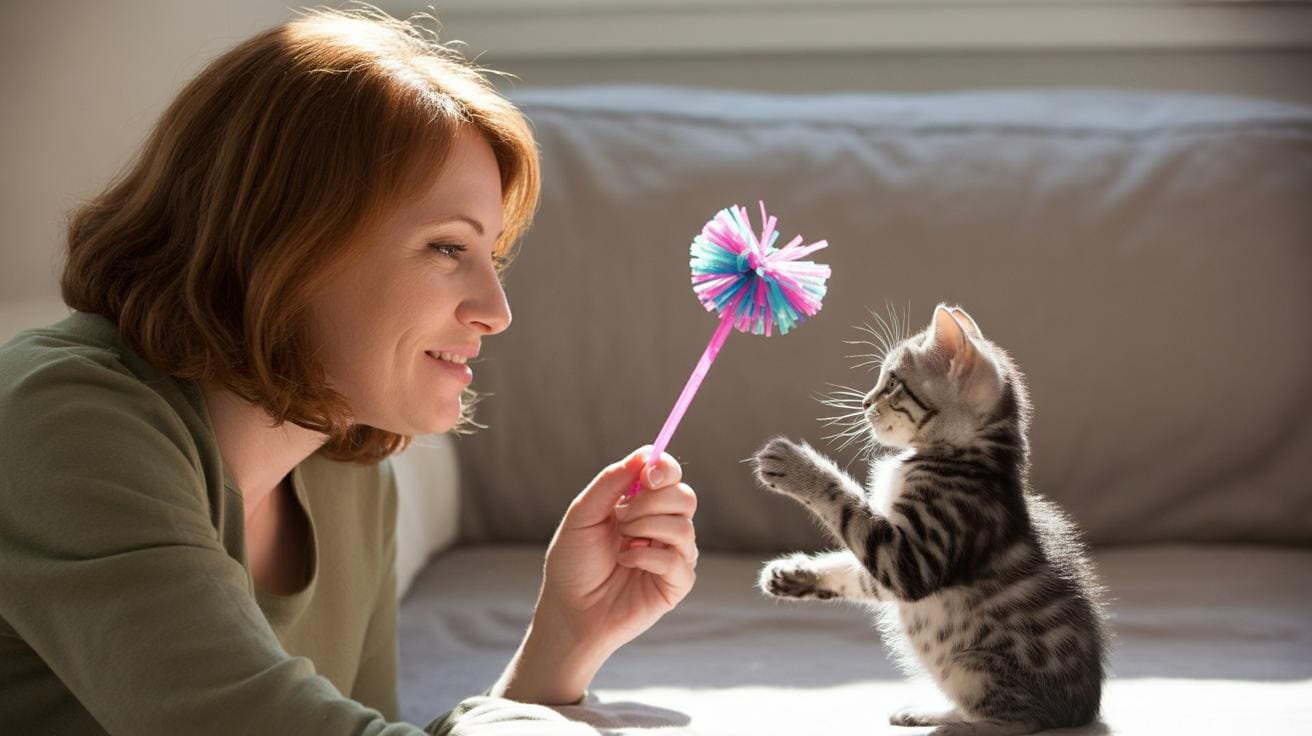
Quick Start: 8-step teaser-wand routine (do this first)
- Quick Start 8-step teaser-wand routine (do this first).jpg

Ready to play right now? This 8-step teaser-wand routine is short, sharp, and built to get chasing, pouncing, and real thinking into your kitten's day. It only takes minutes, and it works great for busy people who want clear steps without fuss. Ever watched your kitty’s whiskers twitch as a lure skitters by? That’s the good stuff.

Short bursts mimic real hunting, so kittens stay excited and focused. You can start today and see quicker activity and better attention.

  1. Inspect the wand with the 5-point safety checklist below.
  2. Warm-up: slow drag across the floor for 30 to 60 seconds. Make it obvious and easy to follow.
  3. Bug sequence: quick, erratic tiny bounces for 60 to 90 seconds, with sudden stops and starts like a startled insect.
  4. Snake sequence: slow ground drag for 30 to 60 seconds, a long, slithery motion that teases the belly-hunt reflex.
  5. Mouser sequence: low skittering fuzz moves for 60 seconds, shallow pulls and small hides that invite the pounce.
  6. Bird-chase: short flutter tosses for 30 to 60 seconds, a light toss so the lure floats, then settles.
  7. End on a capture: let your kitten catch the lure, give praise or a tiny treat right away. Positive finish.
  8. Store the wand out of reach and note any wear for replacement, especially frayed parts or loose pieces.

Pacing tip: keep a playful tempo. Use short bursts, brisk changes, then a calm capture. Aim for about a 30 to 50 percent catch rate so your kitten feels challenged but rewarded. Try sessions when your kitten is naturally active, like early morning or evening. Quick five-minute wand runs between naps work wonders.

Training variables:

  • Session length options: three 5-minute bursts, or two sessions of 10 to 15 minutes.
  • Frequency: 2 to 4 times a day.
  • Start age: supervised introduction around 8 to 10 weeks; adapt for younger litters and always watch closely.

5-point safety checklist:

  • Check the string integrity, no frays or exposed core (exposed core means inner fibers poking out).
  • Confirm attachment security, make sure the lure is firmly fastened where it meets the wand.
  • Verify materials are labeled non-toxic (non-toxic means safe if a pet chews a bit).
  • Inspect for no small removable parts or beads that could be swallowed.
  • Store the wand where the kitten cannot access it unsupervised.

Watch a short demo (30 to 90 seconds) showing this 8-step flow. For deeper tutorials and product picks, see how to train kittens with interactive teaser wands.

See details below: Choosing safe teaser wand toys; Training progression (week-by-week goals); Preventing biting (prevention & cues); Using teaser wand training for behavior redirection; Troubleshooting (problem fixes); Practical sample schedule and progress log; FAQs.

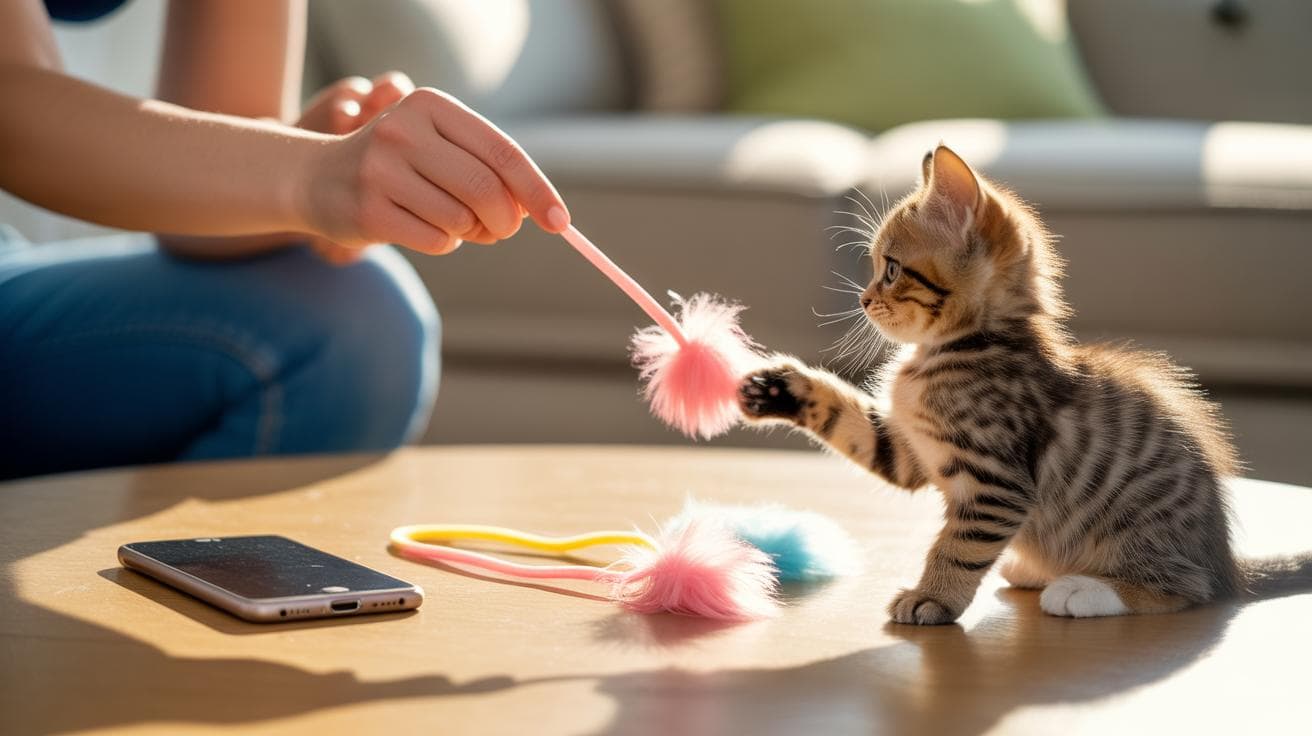
Choosing safe teaser wand toys for kittens: what to look for
- Choosing safe teaser wand toys for kittens what to look for.jpg

For a quick routine, see Quick Start. This section digs into picking a wand and lures that are sturdy, safe, and downright fun for tiny hunters. For product guides and picks, check how to train kittens with interactive teaser wands.

Think of a wand as three parts: handle, shaft, and attachment. Pick handles with a soft, grippy coating or smooth wood that resists chewing, so it’s comfy in your hand and less tempting for nibblers. The shaft should bend without snapping – fiberglass (like a strong fishing-rod core) or a flexible polymer (a durable plastic) give lively motion without breaking. Attachment joints should be stitched, crimped, or bonded, with no loose glue bits that could fall off.

Match the lure to the play style your kitten loves. Crinkle textures call out the bird-and-bug chases, faux-fur or short plush fits mouser play, and thin silicone (soft, rubbery) or ribbon slides like a little snake. Keep fluttery lures very light, about 5 to 10 grams, and small ground lures a bit heavier, about 10 to 20 grams. Ever watched your kitten stalk a flutter? Their whiskers tell you everything.

Keep trailing lengths short – no longer than 12 inches (30 cm). And never leave a wand unattended with kittens around, even if they seem careful.

Rotate attachments every 3 to 7 days to keep things exciting. Retire any lure that shows exposed foam, loose threads, or chewed edges. Oops, make that a rule: if it looks worn, toss it.

Do the Quick Start safety checklist before every session.

Product tips:

  • Pick single-piece lure heads or tightly stitched assemblies so there aren’t loose bits.
  • Skip loose beads, glitter, or tiny decorations that could come off and be swallowed.
  • Choose shatter-free fittings – no brittle plastics or thin metal crimps.

Training progression: week-by-week goals for teaser wand training
- Training progression week-by-week goals for teaser wand training.jpg

For the quick routine, see Quick Start.

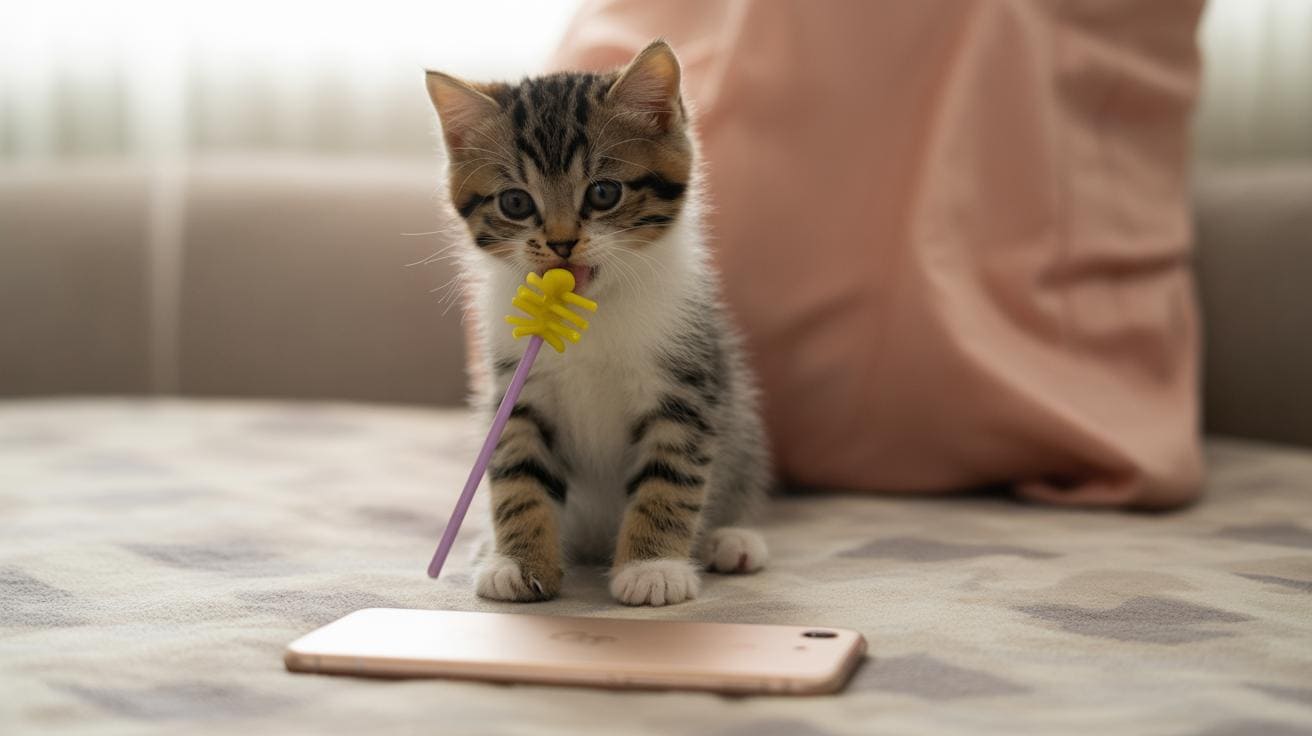
Think of this plan like a gentle ramp. Each week adds a little more challenge so your kitten learns to hunt, think, and listen without getting overwhelmed. The goals below focus on clear behaviors you can watch for, approach, confident pounce, and a calm drop or handback, rather than every tiny move (those are in Quick Start).

Week 1: Familiarization and engagement

Goal: your kitten willingly approaches the wand and gives short pounces. Keep sessions low-intensity and frequent so the toy feels fun, not scary. Let the kitten sniff the lure (the toy tied to the wand), chase slow ground drags, and reward tiny wins with praise or a small treat; short positive moments build curiosity fast. Ever watched your kitten’s whiskers twitch as a lure moves? That’s the good stuff.

Week 2: Build chase and pounce confidence

Goal: consistent chases and partial captures across different prey patterns. Add a few erratic bounces and mild flutter tosses to mix things up, and watch interest levels. If your kitten hesitates, back off to simpler moves for a session or two, then try slightly faster or higher targets to encourage jumping. It’s okay to take it slow, you’re building boldness, not stress.

Week 3: Release-on-cue and retrieval basics

Goal: start teaching a "drop" or "leave" cue and encourage brief handback attempts. Use a tiny treat or immediate praise the instant the kitten releases the lure, repeating during calm moments so they link giving up the toy with something good. Begin short retrievals by swapping the lure for a reward (handback means bringing the toy back to your hand) so they learn that returning the toy is worth it.

Keep a simple log: date of first voluntary pounce, first controlled capture, first release on cue, notes on enthusiasm or signs of overstimulation, and any retreat steps you used. These notes tell you when to add challenge or pause practice.

For two copyable daily templates, see Practical sample schedule and progress log.

Worth every paw-print.

Preventing biting and overstimulation during teaser wand training for kittens (prevention & cues)
- Preventing biting and overstimulation during teaser wand training for kittens (prevention  cues).jpg

For the quick routine, see Quick Start.

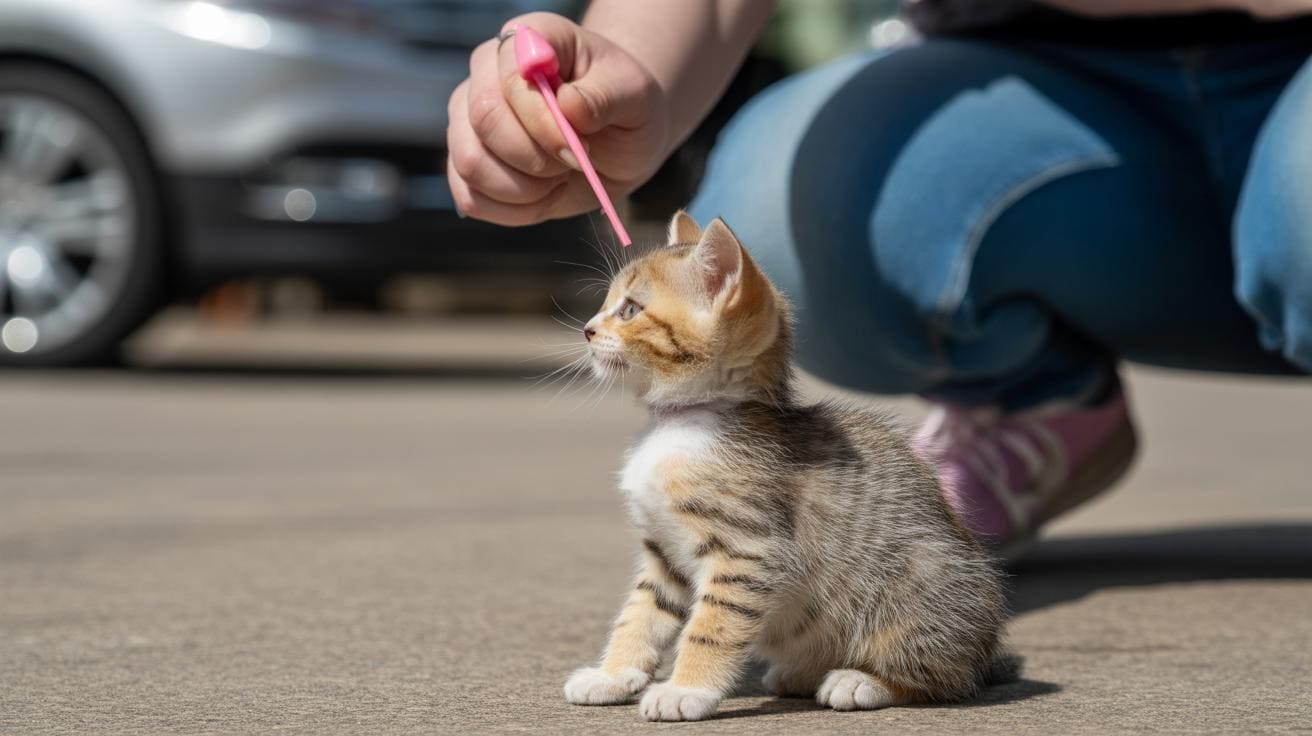
Start with simple, consistent rules. Don’t let hands act like prey; use a teaser wand (a stick with feathers or a small toy on the end) instead of your fingers. Keep sessions short and sweet, five minutes is fine, and move the toy slowly when a kitten is new or overly excited, because slow moves really cut down on biting. Use the same short phrase to begin and end play, like "play time" and "all done," so your kitten learns the routine.

Practice cue work when things are calm. Teach "leave it" and "drop" during quiet moments, not in the middle of a full chase. Reward the right response right away, within one second, with praise or a tiny treat so the kitten makes the connection. Rehearse the cues without the wand so they work on and off playtime.

Early overstimulation signs to watch

Look for these early warning signals:

  • Big, wide pupils.
  • A tail whipping or thrashing.
  • Ears flattened against the head.
  • Sudden, sharp swipes or quick lunges.
  • Loud, prolonged yowling or frantic chattering.

If you see any of these, stop the game immediately. Give a calm break until your kitten relaxes.

Prevention protocols and cue-training steps

Follow this 5-step checklist to keep things fun and safe:

  1. Start each session with a predictable warm-up, like a slow drag across the floor so the kitty can focus.
  2. If your kitten aims for your hands, swap in a plush target they can bite safely.
  3. Keep intensity low: short bursts, low jumps, and controlled speed. It’s better to leave them wanting more than to overdo it.
  4. Pair the "drop" cue with an immediate reward within one second so they learn to release on command.
  5. End on a calm capture or gentle hold, not a wild pounce, so the last memory is relaxed.

If things escalate despite these steps, see Troubleshooting for focused fixes. Worth every paw-print when it clicks.
Teaser Wand Training for Kittens: Step-by-Step

- Using teaser wand training for behavior redirection and enrichment.jpg

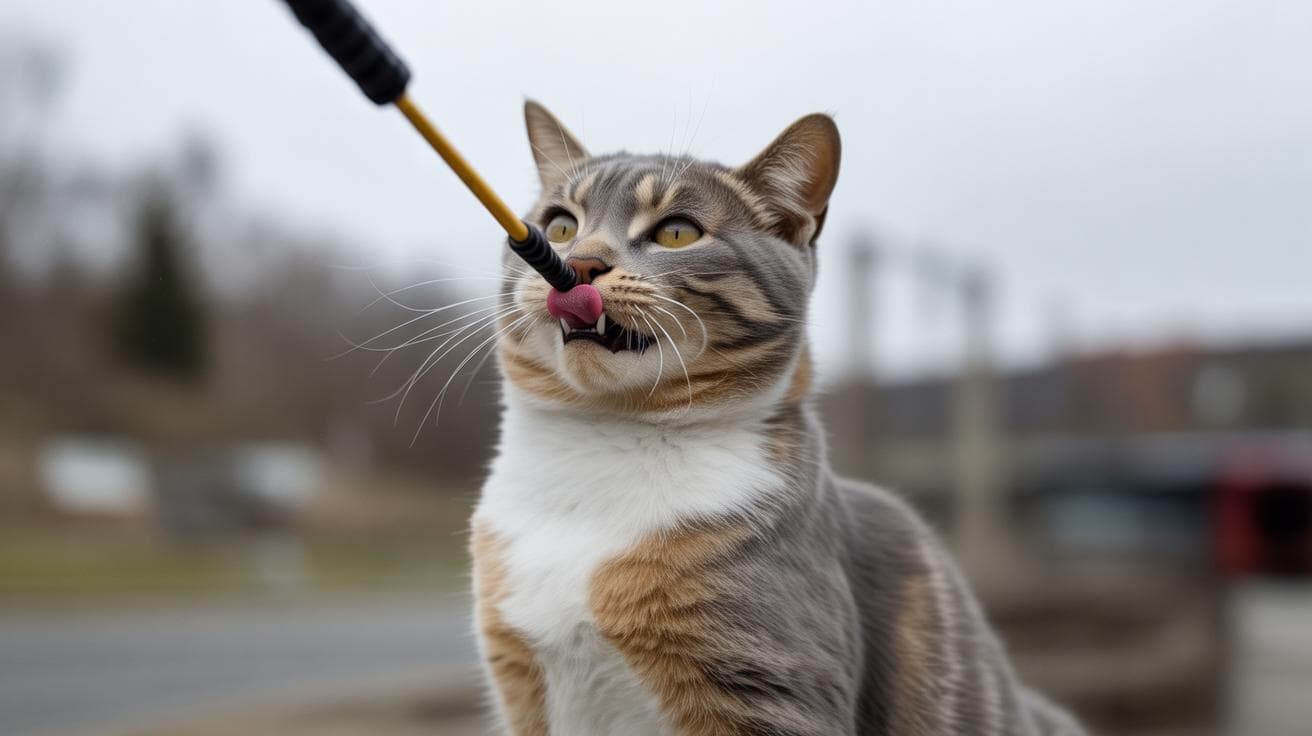
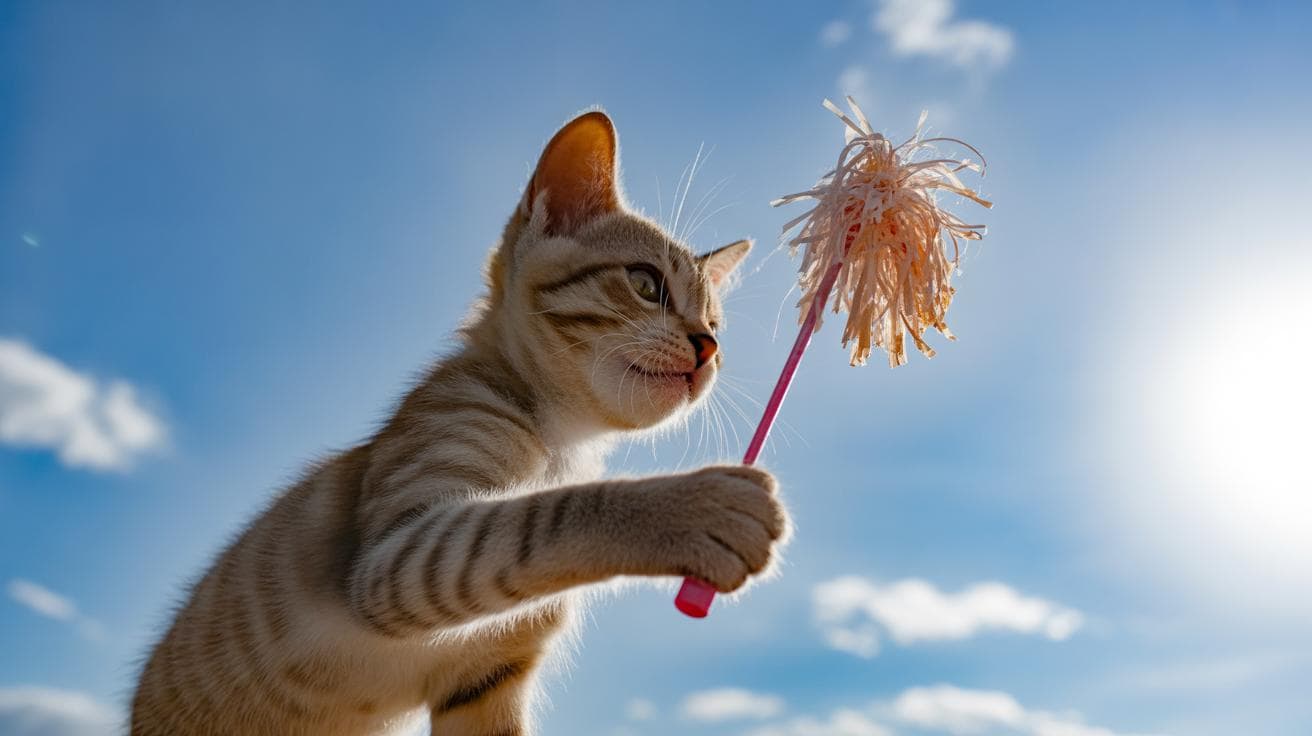
Wand play turns a kitten's hunting urge into quick, happy bursts of chase and pounce. Do short, lively sessions right before quiet times and you'll slash furniture attacks and late-night zoomies. Plus your kitty will learn a calming routine they can count on. Ever watched whiskers twitch as a feather skims the carpet? It’s oddly satisfying.

Try an evening rhythm: 7:00 pm active play (fast flutter and big jumps), 7:08 pm calm lure (slow drag along the floor), 7:10 pm a small meal. Active, then calm, then food. That sequence helps your cat use up energy and then settle down for sleep. Worth every paw-print.

Use the wand to steer play toward a scratching post or a tunnel entrance so hunting ends in the right spot. Guide them to touch or step into the target, then reward with a little flourish of the wand and praise. Over time they’ll learn where playtime finishes safely.

Rotate toys every 3 to 7 days so things stay fresh. Pair wand sessions once or twice a week with a puzzle feeder (a toy that releases food slowly) to make treats work a bit for their dinner. Add climbing shelves and a cozy hide for post-play snoozes. If your cat starts snoozing through sessions or gets bored, rotate more often.

Keep a simple 2-4 week behavior log: note the date, how many sessions you did, and the problems you saw before and after (scratching, night vocalizing, hyperactivity), plus which lure you used. A tiny table helps.

Date Sessions Before Issues After Issues Lure Used
2026-02-01 2 Night zoomies Settled faster Feather wand

Watch for fewer furniture attacks, quicker settling, and calmer nights over two to four weeks. If things don’t improve, tweak the timing, try a different lure, or bring in a behavior pro. I once watched Luna leap six feet for a feather and then curl up immediately after dinner. It’s small moments like that that make this worth it.

Troubleshooting common problems in teaser wand training for kittens: focused fixes

- Troubleshooting common problems in teaser wand training for kittens focused fixes.jpg

If you want the quick routine, check Quick Start.

Watch, tweak one thing, try again. Start by observing a few short play sessions, change only one element, motion, texture, or timing, and run it again. For example: I slowed the drag and Luna started pouncing after two tries. Simple wins like that are common.

Re-engaging a bored kitten (ignoring the wand)

  • Add sound. Use a crinkle lure (thin paper or foil layer that makes noise) or a tiny bell to spark curiosity.
  • Play at dawn or dusk when cats naturally wake up.
  • Try a slow demo: wiggle the lure on the floor for 20–30 seconds, then stop and wait. That pause usually makes them pounce. Ever seen that twitch in the whiskers?
  • Rotate lure textures across sessions to find what clicks.

When to retire a lure (shredding / ingestion risk)

  • Stop play right away if you spot shredding, exposed foam, or loose threads. Safety first.
  • Replace the lure with a single-piece silicone (soft, rubbery) or a tightly stitched faux-fur head (fake fur that won’t pull apart).
  • Supervise future sessions and keep spare lures ready so you can swap mid-play if fraying appears. If the tail starts to fray, pull it out of rotation and use a spare right away.

Fear or avoidance

  • Back up a few feet and do slow ground drags for 3–5 short sessions to rebuild trust. Small steps.
  • Reward calm approaches with a high-value treat right after they sniff or touch the lure. Positive vibes only.
  • Only reintroduce higher-energy moves after several calm, no-pressure exposures. Slow drags for three sessions, then one tiny hop, reward the calm sniff.

Runaway overstimulation (brief guide and cross-reference)

  • Look for frantic tail thrash or flattened ears. If you see those, pause play. Then follow the overstimulation interruption in Preventing Biting: a 30–60 second break, withdraw the wand, offer a calm plush target, then restart slowly and reward calm. Pause, swap to a soft plush, then restart with a slow drag and a treat for calm.

Common beginner mistakes and quick fixes

  • Sessions that are too long → switch to 3–5 minute bursts. Short and sweet.
  • Lure too easy to catch → add unpredictability and mid-air pauses so they work for the catch.
  • Inconsistent cues → pick two short words and use them every time (try "Go" and "Stop"). Cats learn patterns.
  • Using your hands as prey → never do it. Redirect to a plush toy or wand. Your fingers will thank you.
  • Ignoring damage signs → retire lures at the first exposed foam or loose threads and use spares.

For prevention protocols and cue training, see Preventing Biting.

Practical sample schedule and copyable daily templates for teaser wand training

- Practical sample schedule and copyable daily templates for teaser wand training.jpg

For a fast routine, see Quick Start.
Pick Basic if you’ve got a busy day and need short, reliable sessions. Pick Intensive when you want quicker progress and can run three focused bursts. Week-by-week goals live in Training progression, so use those milestones while you copy these templates.

Basic template (for busy owners)
Two 7-10 minute sessions a day. Example minute-by-minute:
0:00-1:00 warm-up slow drag (gentle lure across the floor to get the whiskers twitching).
1:00-6:00 mixed prey patterns , bug, snake, mouser, bird (vary speed and direction so it feels like real hunting).
6:00-7:00 calm capture + tiny treat (a pea-sized reward, or a lick of wet food).
Morning idea: quick 7-minute burst before breakfast to burn off waking energy.
Evening idea: an active 7-minute chase then a calm drag before a small meal to help your cat settle. Worth every paw-print.

Intensive template (for focused training)
Three 5-minute bursts spread across the day. Per burst micro-exercises:
0:00-0:30 slow drag (get them interested).
0:30-1:30 erratic flutter (short, buzzy moves like a trapped insect).
1:30-3:30 ground skitter (fast, low movement across the floor).
3:30-4:30 short toss (lift and drop the lure for a little air chase).
4:30-5:00 calm capture and reward (soft praise and a tiny treat).
Space bursts by a few hours so the kitten stays eager and doesn’t overheat. I once watched Luna leap six feet after a fluttering feather in a five-minute blast , pure joy.

Progress log fields
Keep a simple log so you can see patterns and wins. Fields to track: date, age, template used, session lengths, approaches used, milestone reached, signs of overstimulation, notes. Example entry below.

Field Example
Date 2026-02-01
Age 9 weeks
Template used Basic
Session lengths 2 × 7 min
Approaches used bug + snake
Milestone reached first pounce
Signs of overstimulation mild tail whip
Notes very eager

Stop conditions (when to end the session)

  • Loss of interest for more than 60 seconds. If they ignore the wand, try again later.
  • Repeated biting after gentle redirection. Don’t let biting become a habit.
  • Clear overstimulation signs: tail thrash, flattened ears, wide pupils. If you see these, pause and give a calm break.

Quick tips

  • Think of your teaser wand (toy with a stick and dangling lure) like a fishing rod for cats. Short, varied sessions beat long, boring ones.
  • Keep rewards tiny. A little treat goes a long way.
  • For busy days, toss an unbreakable ball before you head out , that’s ten minutes of safe play.
  • Um, and remember: play should be fun for both of you. If it ever feels stressful, slow it down and try a gentler pattern.

Teaser Wand Quick Reference Checklist

- Frequently asked questions about teaser wand training for kittens quick answers.jpg

  • Quick Start: See the Quick Start section for when to begin and for session templates. Quick rule of thumb , start supervised at 8–10 weeks and keep mini-sessions short: 2–5 minutes. (Begin at 8 weeks with 2–3 minute play bursts.) These short bursts help build focus and keep play fun.

  • Choosing safe teaser wand toys: See that section for the full safety checklist and lure comparisons. Short picks for regular play: faux-fur (synthetic soft fur), silicone (flexible rubber-like material), or tightly woven fabric (closely knit cloth). These feel nice to touch and are less likely to shred into dangerous bits.

  • DIY feather-wand safety: Moved to Choosing safe teaser wand toys , but quick tips here: bind feathers tightly, cap any sharp ends, avoid loose glue, and retire the wand if any bits start to come loose. Better safe than sorry, right?

  • Troubleshooting: If your kitten ignores the wand, nips, or shows signs of overstimulation, check the Troubleshooting section for step-by-step fixes. Quick tries: change the lure texture, demo the motion for 20–30 seconds so they can learn the pattern, then pause and swap to a plush target to let them “catch” something. Ever watched a kitty go from meh to full pounce after a demo? It’s magic.

  • Tracking progress: Use the Practical sample schedule to log date, session length, approaches used, milestones, and any overstimulation signs. A simple log helps you spot patterns, when they’re tired, when they escalate, and what play they love.

  • Safety pre-checks: Inspect toys before each play: look for frays, loose parts, or tiny pieces. Retire any toy at the first sign of damage , a little caution now avoids a vet visit later.

  • When to escalate: If aggression, severe fear, or injury keeps happening after 2–4 weeks of consistent, documented training, consult a certified behaviorist or your veterinarian. Get help sooner rather than letting things get worse.

Final Words

Right in the action: you’ve got a punchy 8-step quick-start, a five-point safety checklist, session-length options, week-by-week goals, and troubleshooting fixes so you can start play now.

Keep sessions short, aim for a 30%–50% catch rate. Run play during naturally active times. Your cats will show it with bright eyes and satisfying pounces.

Use the demo video and Practical templates to get rolling. Try teaser wand training for kittens: step-by-step and watch those multi-cat households settle into more calm, playful evenings. Worth every paw-print.

FAQ

FAQ

How do I train kittens with a teaser wand step-by-step at home or using a video or free guide?

Inspect the wand for safety, do a short warm-up, run varied prey patterns (bug, snake, mouser, bird), finish each play session with a calm “capture,” and keep short supervised sessions starting around 8–10 weeks.

How do I use a wand toy with a cat?

Start with a safety check, do a slow 30–60 second warm-up, mimic varied prey motions, finish on a calm capture, and store the wand out of reach when play is over.

What is clicker training for cats and how can it stop bad behaviors like jumping on counters?

Clicker training uses a small handheld sound marker to mark desired actions, then you reward. To stop counter jumping, click and reward stepping down, teach an “off” cue, and redirect the cat to an approved spot.

What is the best clicker for cat training?

A simple, loud, easy-press clicker with a clear click and durable build. Choose a small metal or plastic model that fits your finger comfortably.

What is the 3-3-3 rule for kittens?

The 3-3-3 rule: first 3 days to decompress and hide, next 3 weeks to settle into a routine, and about 3 months to fully bond and feel secure in their new home.

What is the easiest trick to teach a kitten?

The easiest trick is “sit.” Lure with a treat to guide the rear down, click or mark the moment it sits, reward, and repeat in short 1–2 minute bursts.

What is the two kitten rule?

The two kitten rule means adopting two kittens together so they have a playmate, learn bite inhibition, burn energy, and reduce separation mischief—handy for busy households.

Feather vs ribbon vs faux-fur lures—which is best?

Feather lures spark aerial chases but can shed shafts; ribbons are lightweight but have higher ingestion risk; faux-fur mimics small prey and is usually tougher. Always supervise and retire frayed lures.

Author

  • Lucas Turner

    Lucas Turner is an urban photographer based in Chicago, Illinois, known for his captivating images that highlight the pulse of city life. With a unique perspective, he captures the vibrant contrasts between architecture, people, and the urban environment, telling stories through his lens.

    Outside of photography, Lucas enjoys coffee shop hopping, exploring the diverse cafes around the city. He finds that each coffee shop has its own vibe, offering a perfect setting for creativity to flow. As he often says, “A good cup of coffee and a new view always inspire my best work.”

    Lucas’s photography is a reflection of his love for the city’s energy and the quiet moments found within it.

    View all posts

Similar Posts