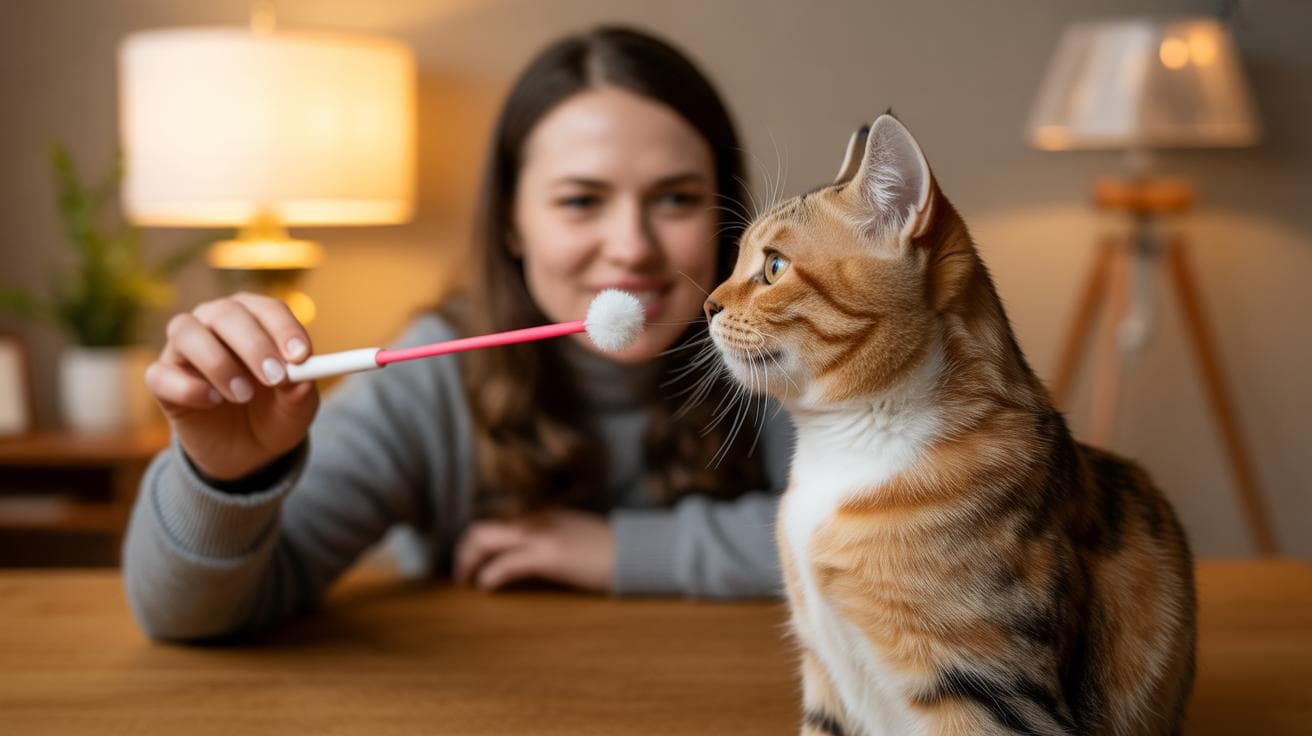
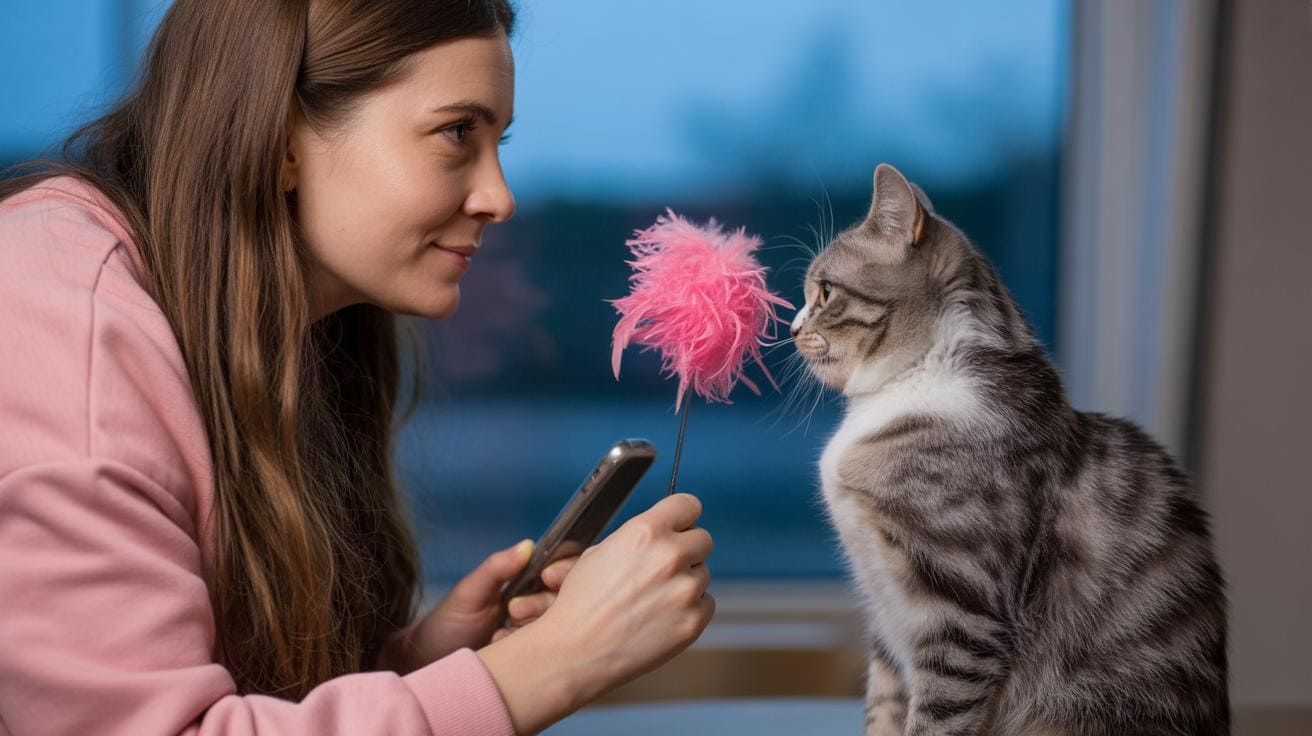
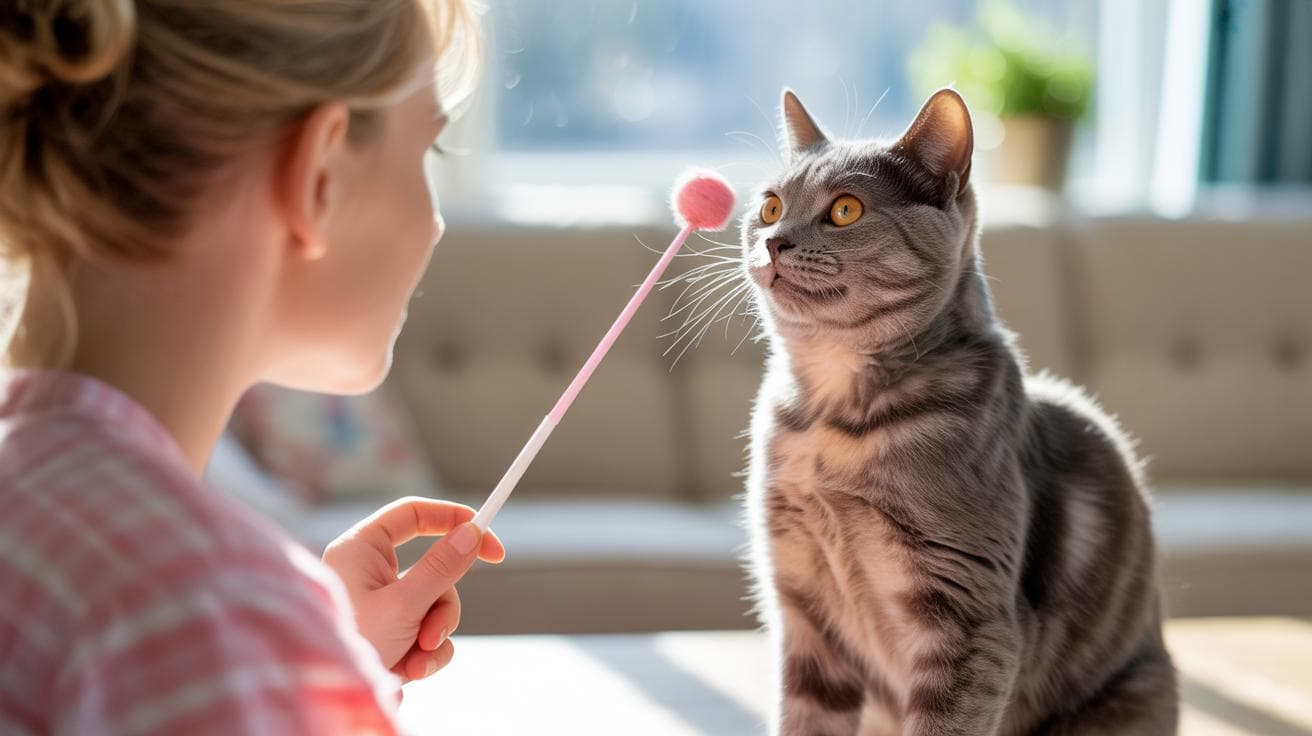
Think training your cat with a teaser wand is impossible? Think again. You're about to be pleasantly surprised.
Start with three tiny wins. First, teach your cat to come when the wand calls. Next, cue a calm stop-bite (a gentle touch or nibble, then let go). Then practice a short fetch that ends with a clean capture (a quick, tidy grab and release). Keep play in tight, short bursts. Give a treat within a second or two so the lesson lands.
Watch your cat's whiskers twitch as the lure darts like real prey. Feel the tiny thrill when they pounce and the satisfying thud when they catch it. Training that feels like play is the best kind, your cat thinks they're just having fun, and you get real progress. Ever watched your kitty chase a feather and then sit like they won the lottery? Yeah, that.
Worth every paw-print!
Quick action plan , TL;DR to start training now
Immediate wins for this session: teach your cat to come to the wand, learn a calm stop-bite cue, and practice a simple fetch/hold that ends with a clean capture. Short, focused wins build your cat’s confidence fast. Three behaviors. One quick run.
We’re doing one short session with tight play bursts and fast rewards. Keep each active window small so your cat stays excited and doesn’t burn out. Give the treat within 1–2 seconds of the right move so your cat links the action to the reward.
Safety first. Stay with your cat the whole time and stop if you see stress signs like tail flicking, hissing, or hard, fixed eyes. Check the wand, line, and lure before you start and keep the wand shaft away from the cat so it never becomes the toy.
Run this sequence now and you’ll get noticeable progress. The Key rules section has the full timing and reward rules if you want the full rulebook.
- Introduce the wand stationary (10–20 seconds) , let your cat sniff the lure without movement.
- Warm-up: low, slow movement (30–60 seconds) , small, tempting motions to build interest.
- Active chase: vary speed/height (2–4 minutes) , mix fast darts and teasing pauses.
- Ambush/obstacle: place toy behind low cover (1–2 minutes) , simulate prey hiding.
- Kill and reward: allow capture, deliver treat within 1–2 seconds, let the capture happen then reward immediately.
- Cool-down: slow drag and brief petting (30–60 seconds) , calm finish and gentle praise.
Choosing and preparing a durable teaser wand for training
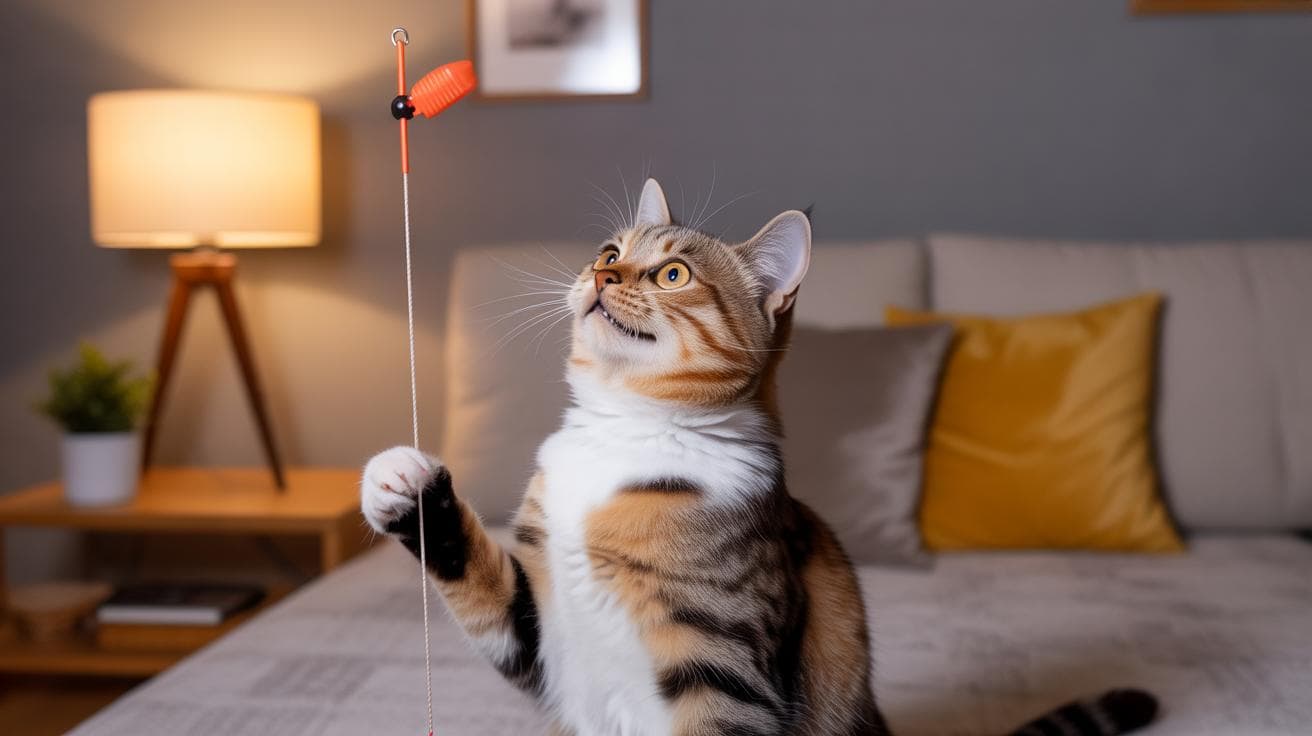
Pick a wand that keeps your hands well away from the action. Go for a longer shaft or handle and a thicker line or a braided line (braided nylon, a strong woven synthetic). Replaceable lures are great , you can swap a chewed end instead of tossing the whole toy. Aim for a build that can handle a medium cat’s jump or landing. In plain terms, look for a sturdy shaft and a stout line that won’t snap if a 12 to 16 pound cat clamps the lure. Ever watched your kitty launch like a furry missile? You want gear that survives that.
Wand styles and lengths vary a lot. You’ll see 30 inch wands, kits with a 16 inch wand plus a 48 inch ribbon, and retractables that extend from about 16 to 39 inches or 17 to 37 inches. Common weak spots are telescoping sections (sections that collapse into each other) that slide without firm locks, two-piece shafts that can pull apart, thin lines, and flimsy clasps. Those are the parts that break first during high-energy play, so give them extra attention when you shop.
Before the first play session, run a quick toy safety check. Tug the clasp, wiggle the telescoping parts, and look for loose threads or splitting plastic. Trim stray threads so no toes or mouths get cut. Attach a spare lure or line and make sure the clasp swaps lures smoothly. Keep spare parts nearby so training stays safe and repeatable. Worth every paw-print.
For busy days, having a ready-to-go spare lure gives you ten minutes of safe, engaging play before you head out. It’s simple, it’s practical, and it keeps your cat claw-tastic happy.
| Model | Wand/line length | Key features | Notes on durability |
|---|---|---|---|
| Pet Fit for Life | 30 inches | Foam handle, two-piece shaft, woven nylon line, lobster-claw clasp, 2 feather lures | Good materials. Two-piece shaft can sometimes pull apart under heavy play. |
| Cat Dancer Rainbow Charmer | 16 inch wand + 48 inch ribbon | Soft stretchy fleece ribbon for slow, flowing motion; kitten-friendly | Ribbon can tangle and may not challenge very athletic adults. |
| MeoHui Retractable Kit | 16 to 39 inches | Two telescoping wands, 5 feather lures, 4 wiggle lures, replacement lines and clasps | Handy spare parts included. Telescoping sections may lose firm locks over time. |
| Frisco Bird with Feathers | 17 to 37 inches | Catnip-filled bird lure, stretchy line, flexible wand | Large lure is durable. Catnip is not refillable, but you can refresh with spray. |
Setting up a safe, repeatable training space for teaser wand sessions (environment only)
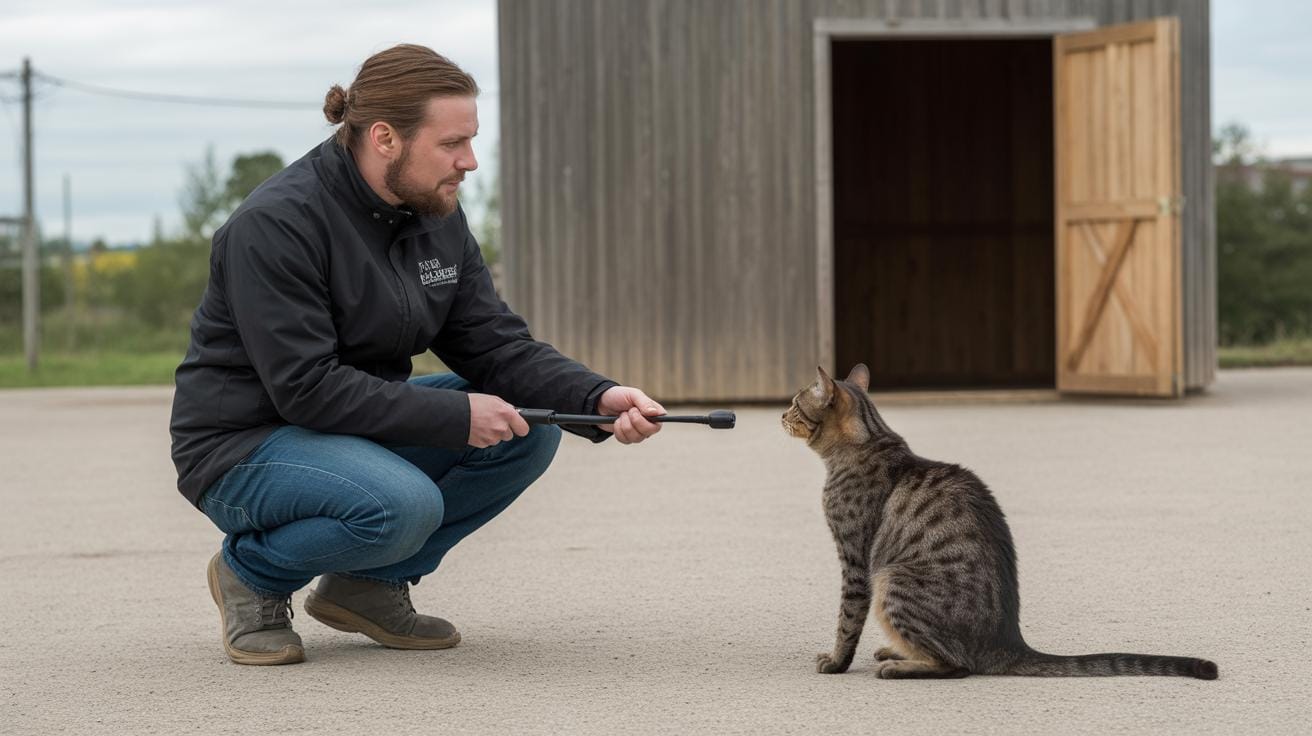
Clear a play zone free of breakables and low trip hazards. Aim for about a 6-8 foot clear radius so acrobatic cats can jump, twist, and land without clipping lamps or plant pots. Pick floor surfaces that give grip, area rugs (small carpets) or a non-slip mat (rubber-backed grip pad) work much better than slick hardwood (polished wood floor) or tile (slick ceramic). Move small furniture that could snag paws or tails.
Keep your movements controlled, and think about placement like fly-fishing. Cast the lure so it flutters past corners or under a low chair, instead of whipping the wand in wide, accident-prone arcs. Sit down if you want finer control and slower motion; stand up when you need extra reach or bigger sweeps. Practice short wrist flicks and gentle pauses so the toy mimics real prey and your cat’s leaps stay predictable, whiskers twitching, eyes locked on the prize.
Use a teaser wand (a stick with a dangling lure) that’s the right size for your space. Ever watched your kitty chase shadows? Make the toy feel alive by varying speed and direction, but keep safety first: no fast swings near fragile stuff or people.
Pick consistent locations and times so sessions become a repeatable habit. Morning or evening energy peaks are usually best for most cats. Check the Key rules section for exact session lengths, daily frequency, and the end-of-session routine so your setup matches the training plan. Worth every paw-print.
Step-by-step training progression (phased learning goals, advancement criteria, cues, shaping exercises)
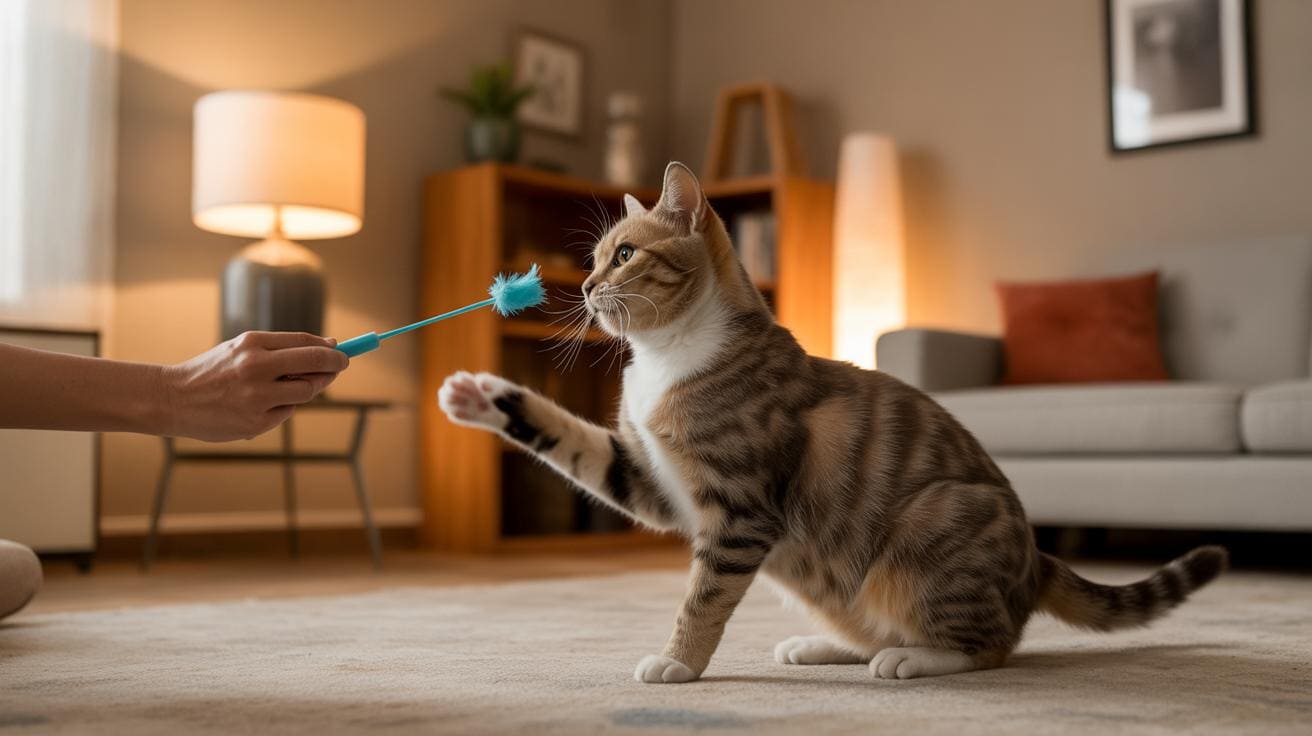
This chapter lays out a friendly, step-by-step path from first contact to reliable trick work. The phases are: Intro → Engagement → Capture control → Cue pairing → Fetch/hold → Targeting/tricks → Recall with distractions → Generalization. Think of this as the long game after the quick-start stuff , same basics, but stretched into short, repeatable drills with clear goals.
Phases A–C build steady attention and neat captures. Intro is all about calm curiosity: let the cat sniff and inspect a still lure (the toy end that moves), then reward quiet interest. Keep things in tiny bites so the cat doesn’t get overwhelmed. Engagement brings motion in slowly. Warm-ups, short chases, aim for 3 to 5 good catches per session so momentum stays fun. Capture control teaches a soft hold. Shape a calm grab, then reward the pause and the release with tiny treats and gentle praise so the cat learns to hold without chomping.
Phases D–F introduce cues and trick shaping. Say a single-word cue like "Stop", "Take", or "Here" right when the cat does the thing you want, then fade the lure so the cue predicts the move. For fetch and hold, reward each step toward picking the toy up and keeping it for 3 to 5 seconds. For targeting and tricks like a high-five, start with a flat target, mark a paw touch, and reward five growing attempts until a full paw lift happens. Small steps win the race.
Advanced phases test reliability in tougher places. Practice recall with low-level distractions, then move to a new room once the cat is consistent. Aim for three good trials in every new context before you level up the challenge. Keep sessions short and repeatable. If you want timing and reward details, check the Key rules section.
Track progress and keep maintenance light. Jot the date, drills, catches, cues tried, treats used, and any stress notes. Move on when the milestone counts are hit. If you stall, try these resources: interactive teaser wand troubleshooting tips and how to introduce new play routines.
- Consistent attention to a stationary lure (3 sessions with about 70% attention within 30 seconds)
- Reliable short chases without overstimulation (3–5 successful chases in one session)
- Clean capture with a calm hold and immediate treat (3 captures with calm recovery)
- Response to single-word "Stop" cue on early presentations (3 of 5 trials)
- Recall to wand or handler when the lure is shown (3–5 recalls per session)
- Paw target or high-five shaped by successive approximations (5 increasing attempts then reward)
- Fetch and hold for 3–5 seconds on cue (3 successful holds)
- Generalization: perform core behaviors in a second room or with small distractions (3 successful trials)
Starting kittens with a teaser wand
Kittens love slow, flowing motion and tiny sessions. Use a teaser wand (a stick with a dangling lure) with ribbons or feathers and keep play to 3–5 minutes total. Focus on curiosity, not endurance. Reward tiny steps a lot and stop before they get tired. Let them bat and bite gently under supervision, and swap to a softer lure if the teeth get rough. Short wins build happy habits.
Adapting wand training for senior or mobility-limited cats
Make moves lower and gentler so joints don’t complain. Sit the handler down and drag a lighter lure along the floor so the cat can chase without big jumps. Choose soft tails or low fluttering ribbons that reward pouncing with little strain. Keep sessions shorter than for athletic cats, praise calm engagement, and celebrate small successes. Worth every paw-print.