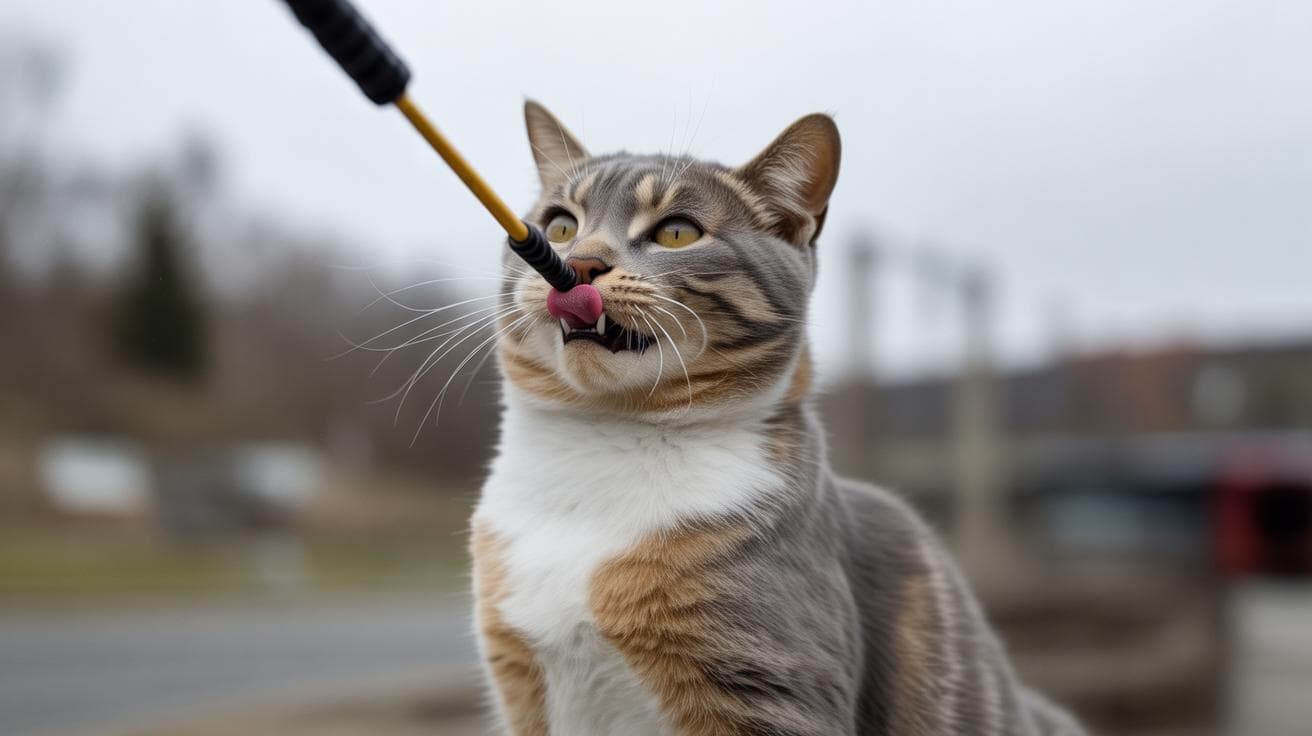
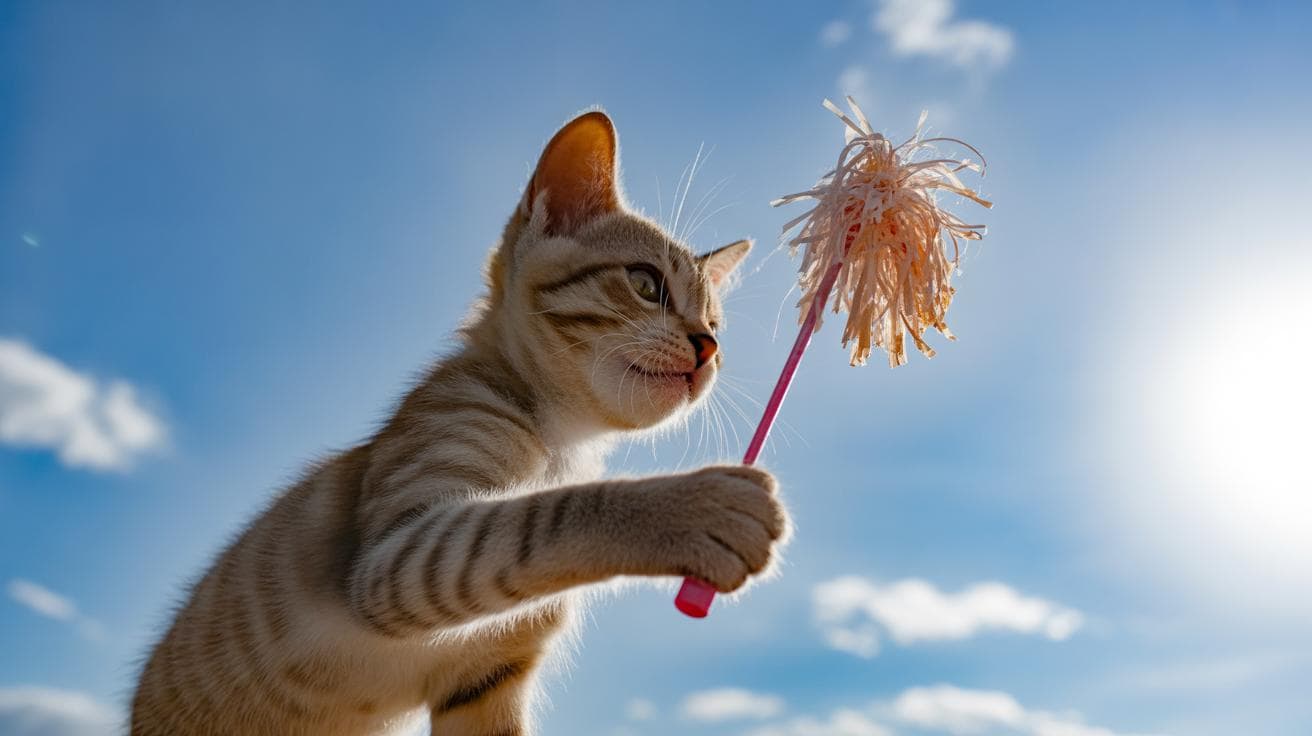
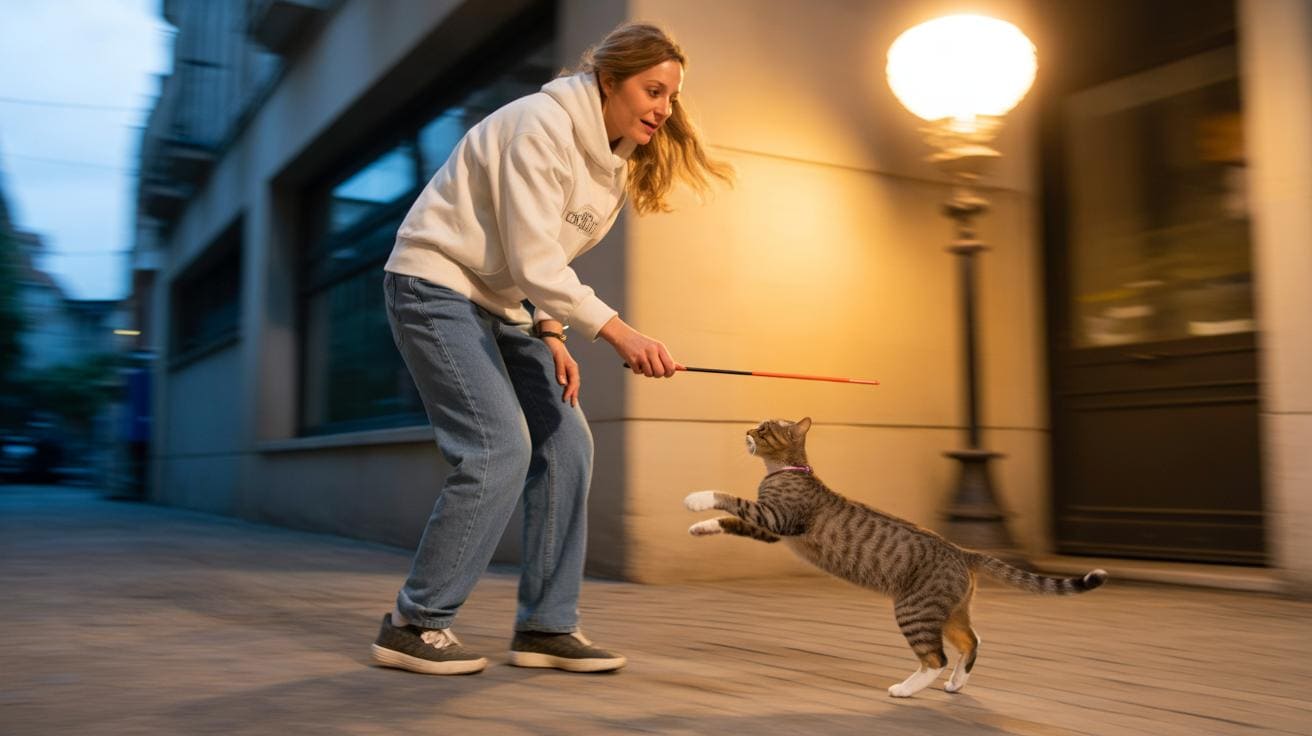
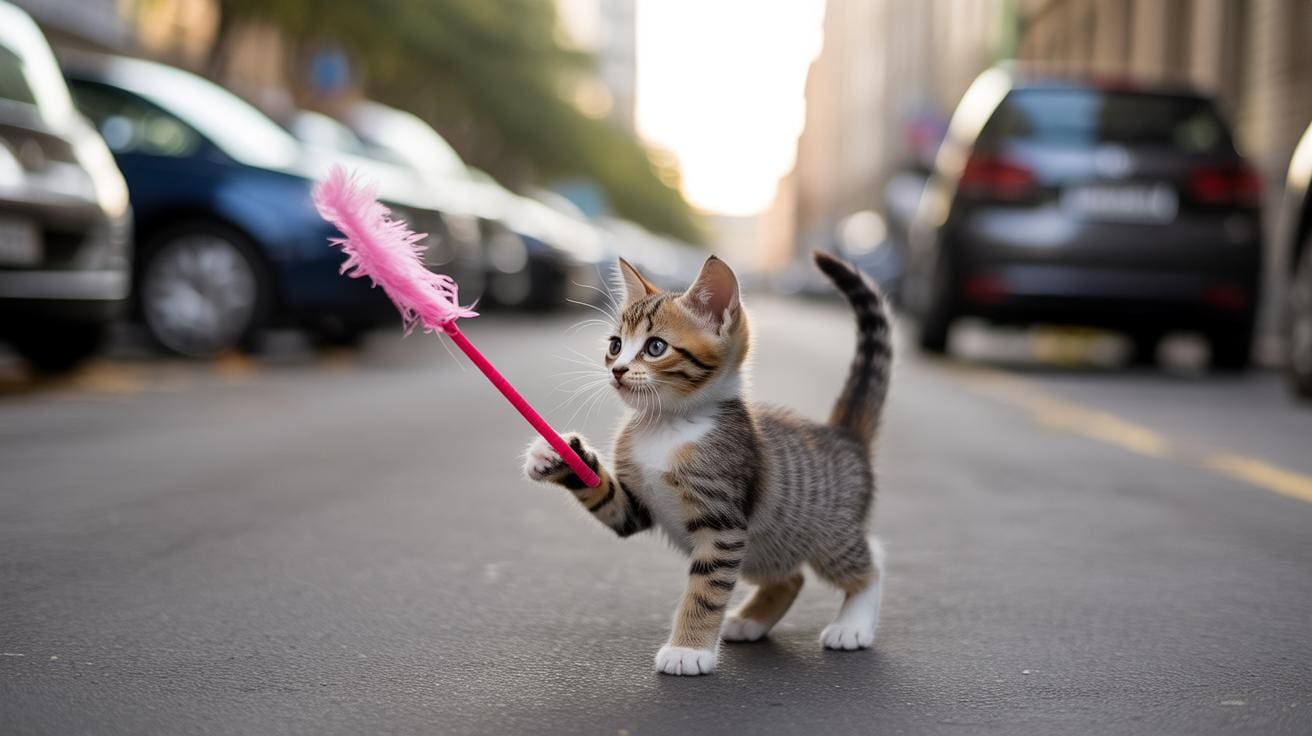
Think a teaser wand is just a toy? Think again. Spend a few focused minutes with the right moves and that feather-on-a-stick becomes a mini hunt that sharpens focus, builds muscle, and beats boredom. Ever watched whiskers twitch as the lure skitters? It’s the best.
Here’s a short, friendly 8-step routine to make each play session count. Follow it a few times a day and you’ll see better pounces, longer focus, and that satisfied flop after a capture.
-
- Wake-up wiggle. Wiggle the wand slowly near their nose so they notice the movement. Keep it small and teasing.
-
- Slow drift. Move the lure in a smooth line across the floor so they track it with their eyes. Let them follow.
-
- Quick skitter. Make the feather dart suddenly like a fleeing bug. That tiny burst sparks their hunting instinct.
-
- Pause and wait. Stop the motion and hold it still. Let them stalk a little before you move again.
-
- Tease near cover. Drag the lure behind a box or under a blanket corner so they learn to hunt around obstacles.
-
- Big chase. Pull it away for a longer sprint to get their heart rate up. Short bursts are better than marathon runs.
-
- Capture moment. Let them catch it sometimes. A successful grab teaches them to finish the hunt.
-
- Calm down. End with a slow, gentle wave and a soft pet or treat to signal rest time.
Safety first, five quick checks before you play.
- Check the wand tip for loose threads or cracks; replace it if it looks worn.
- Avoid tiny parts that can come off and be swallowed.
- Use toys with sturdy attachments so nothing detaches mid-chase.
- Keep strings away when unsupervised to prevent tangling.
- Watch body language; if your cat freezes or hisses, stop and try slower play later.
Short on time? Try these pacing tips for busy people.
- Ten-minute bursts work great before you leave for work or after dinner. It’s enough to burn off energy.
- Do two short sessions instead of one long one to keep them engaged.
- Leave a safe, puzzle-style toy for solo play when you can’t be there. I know, I know, you can’t be everywhere.
Watching a perfect pounce is its own reward: the soft thump, the little roar in their shoulders, and that proud flop afterward. It’s kitten training that’s playful, safe, and actually works. Worth every paw-print.
Quick Start: 8-step teaser-wand routine (do this first)
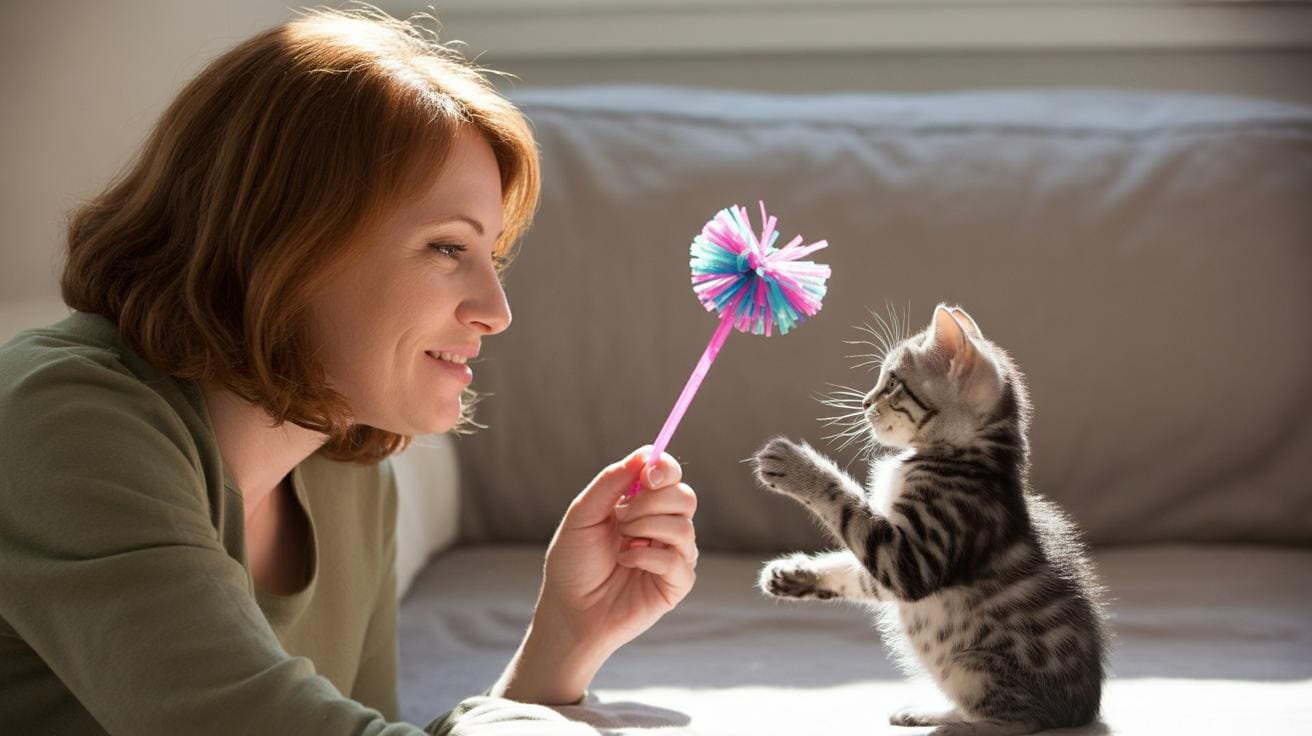
Ready to play right now? This 8-step teaser-wand routine is short, sharp, and built to get chasing, pouncing, and real thinking into your kitten's day. It only takes minutes, and it works great for busy people who want clear steps without fuss. Ever watched your kitty’s whiskers twitch as a lure skitters by? That’s the good stuff.
Short bursts mimic real hunting, so kittens stay excited and focused. You can start today and see quicker activity and better attention.
- Inspect the wand with the 5-point safety checklist below.
- Warm-up: slow drag across the floor for 30 to 60 seconds. Make it obvious and easy to follow.
- Bug sequence: quick, erratic tiny bounces for 60 to 90 seconds, with sudden stops and starts like a startled insect.
- Snake sequence: slow ground drag for 30 to 60 seconds, a long, slithery motion that teases the belly-hunt reflex.
- Mouser sequence: low skittering fuzz moves for 60 seconds, shallow pulls and small hides that invite the pounce.
- Bird-chase: short flutter tosses for 30 to 60 seconds, a light toss so the lure floats, then settles.
- End on a capture: let your kitten catch the lure, give praise or a tiny treat right away. Positive finish.
- Store the wand out of reach and note any wear for replacement, especially frayed parts or loose pieces.
Pacing tip: keep a playful tempo. Use short bursts, brisk changes, then a calm capture. Aim for about a 30 to 50 percent catch rate so your kitten feels challenged but rewarded. Try sessions when your kitten is naturally active, like early morning or evening. Quick five-minute wand runs between naps work wonders.
Training variables:
- Session length options: three 5-minute bursts, or two sessions of 10 to 15 minutes.
- Frequency: 2 to 4 times a day.
- Start age: supervised introduction around 8 to 10 weeks; adapt for younger litters and always watch closely.
5-point safety checklist:
- Check the string integrity, no frays or exposed core (exposed core means inner fibers poking out).
- Confirm attachment security, make sure the lure is firmly fastened where it meets the wand.
- Verify materials are labeled non-toxic (non-toxic means safe if a pet chews a bit).
- Inspect for no small removable parts or beads that could be swallowed.
- Store the wand where the kitten cannot access it unsupervised.
Watch a short demo (30 to 90 seconds) showing this 8-step flow. For deeper tutorials and product picks, see how to train kittens with interactive teaser wands.
See details below: Choosing safe teaser wand toys; Training progression (week-by-week goals); Preventing biting (prevention & cues); Using teaser wand training for behavior redirection; Troubleshooting (problem fixes); Practical sample schedule and progress log; FAQs.
Choosing safe teaser wand toys for kittens: what to look for
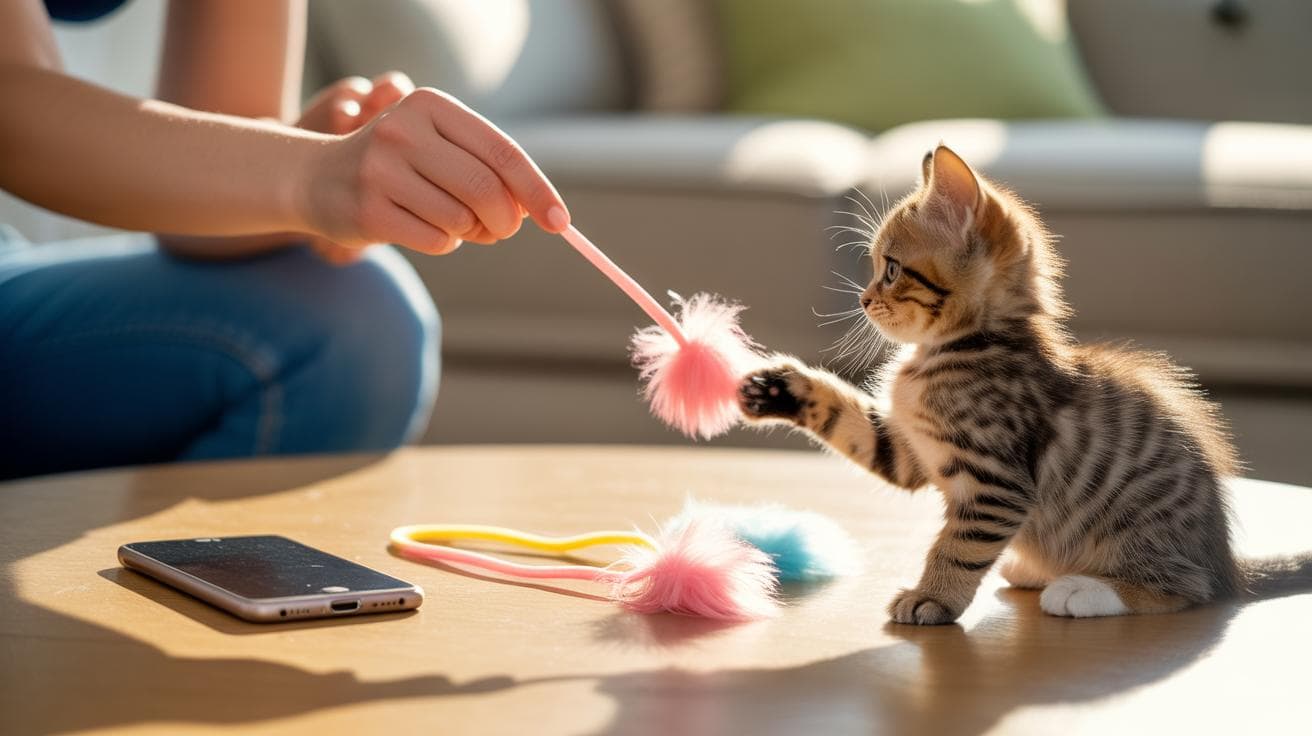
For a quick routine, see Quick Start. This section digs into picking a wand and lures that are sturdy, safe, and downright fun for tiny hunters. For product guides and picks, check how to train kittens with interactive teaser wands.
Think of a wand as three parts: handle, shaft, and attachment. Pick handles with a soft, grippy coating or smooth wood that resists chewing, so it’s comfy in your hand and less tempting for nibblers. The shaft should bend without snapping – fiberglass (like a strong fishing-rod core) or a flexible polymer (a durable plastic) give lively motion without breaking. Attachment joints should be stitched, crimped, or bonded, with no loose glue bits that could fall off.
Match the lure to the play style your kitten loves. Crinkle textures call out the bird-and-bug chases, faux-fur or short plush fits mouser play, and thin silicone (soft, rubbery) or ribbon slides like a little snake. Keep fluttery lures very light, about 5 to 10 grams, and small ground lures a bit heavier, about 10 to 20 grams. Ever watched your kitten stalk a flutter? Their whiskers tell you everything.
Keep trailing lengths short – no longer than 12 inches (30 cm). And never leave a wand unattended with kittens around, even if they seem careful.
Rotate attachments every 3 to 7 days to keep things exciting. Retire any lure that shows exposed foam, loose threads, or chewed edges. Oops, make that a rule: if it looks worn, toss it.
Do the Quick Start safety checklist before every session.
Product tips:
- Pick single-piece lure heads or tightly stitched assemblies so there aren’t loose bits.
- Skip loose beads, glitter, or tiny decorations that could come off and be swallowed.
- Choose shatter-free fittings – no brittle plastics or thin metal crimps.
Training progression: week-by-week goals for teaser wand training
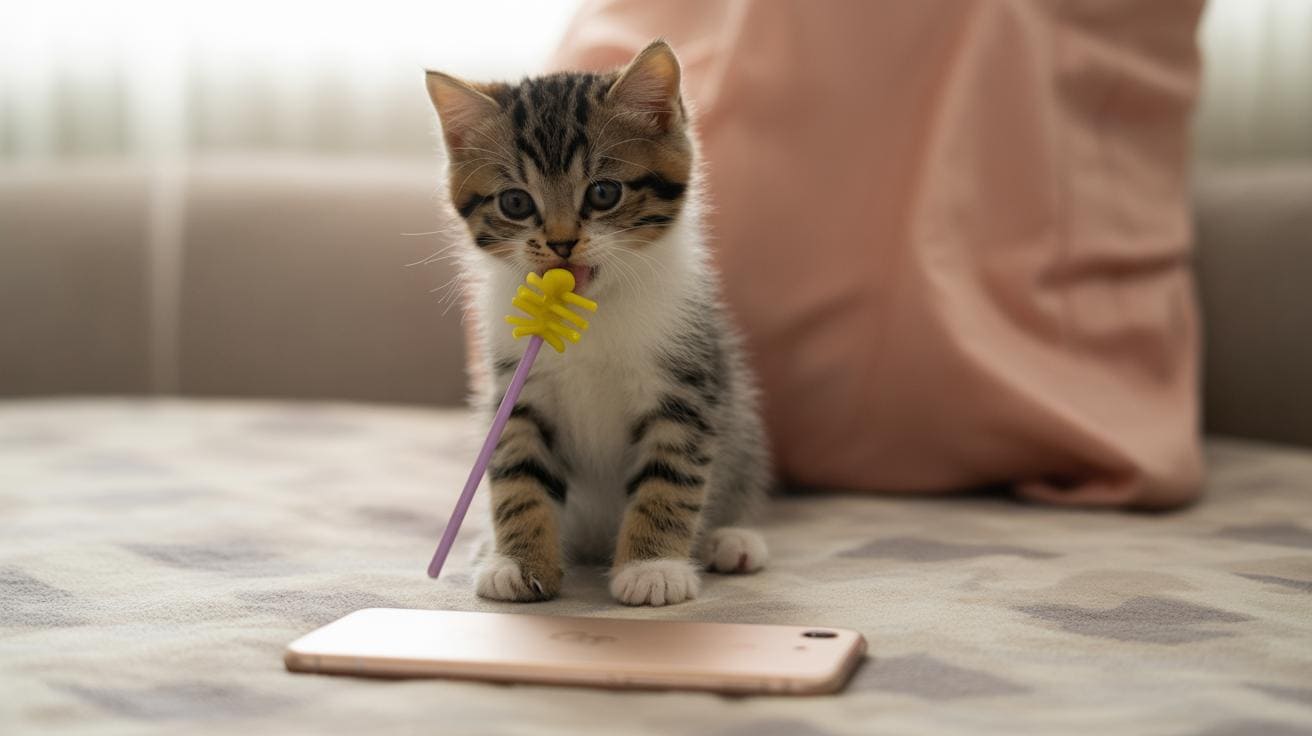
For the quick routine, see Quick Start.
Think of this plan like a gentle ramp. Each week adds a little more challenge so your kitten learns to hunt, think, and listen without getting overwhelmed. The goals below focus on clear behaviors you can watch for, approach, confident pounce, and a calm drop or handback, rather than every tiny move (those are in Quick Start).
Week 1: Familiarization and engagement
Goal: your kitten willingly approaches the wand and gives short pounces. Keep sessions low-intensity and frequent so the toy feels fun, not scary. Let the kitten sniff the lure (the toy tied to the wand), chase slow ground drags, and reward tiny wins with praise or a small treat; short positive moments build curiosity fast. Ever watched your kitten’s whiskers twitch as a lure moves? That’s the good stuff.
Week 2: Build chase and pounce confidence
Goal: consistent chases and partial captures across different prey patterns. Add a few erratic bounces and mild flutter tosses to mix things up, and watch interest levels. If your kitten hesitates, back off to simpler moves for a session or two, then try slightly faster or higher targets to encourage jumping. It’s okay to take it slow, you’re building boldness, not stress.
Week 3: Release-on-cue and retrieval basics
Goal: start teaching a "drop" or "leave" cue and encourage brief handback attempts. Use a tiny treat or immediate praise the instant the kitten releases the lure, repeating during calm moments so they link giving up the toy with something good. Begin short retrievals by swapping the lure for a reward (handback means bringing the toy back to your hand) so they learn that returning the toy is worth it.
Keep a simple log: date of first voluntary pounce, first controlled capture, first release on cue, notes on enthusiasm or signs of overstimulation, and any retreat steps you used. These notes tell you when to add challenge or pause practice.
For two copyable daily templates, see Practical sample schedule and progress log.
Worth every paw-print.
Preventing biting and overstimulation during teaser wand training for kittens (prevention & cues)
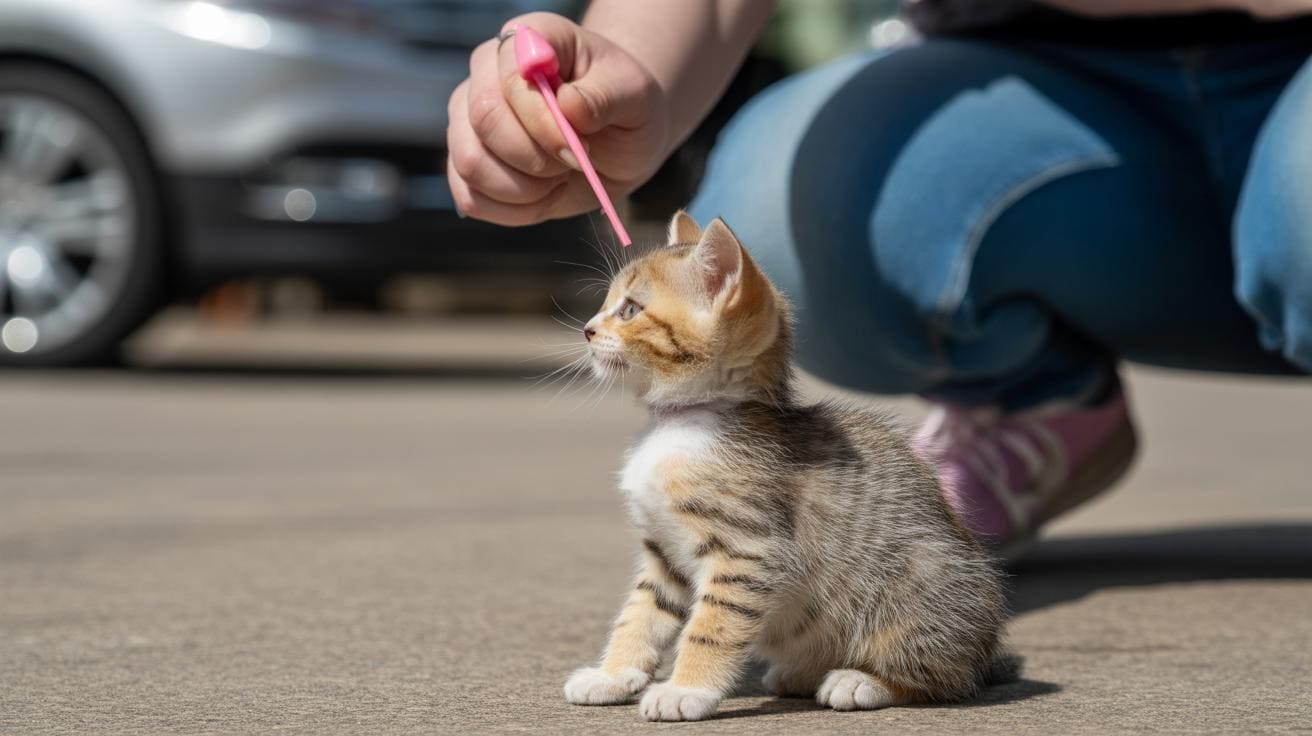
For the quick routine, see Quick Start.
Start with simple, consistent rules. Don’t let hands act like prey; use a teaser wand (a stick with feathers or a small toy on the end) instead of your fingers. Keep sessions short and sweet, five minutes is fine, and move the toy slowly when a kitten is new or overly excited, because slow moves really cut down on biting. Use the same short phrase to begin and end play, like "play time" and "all done," so your kitten learns the routine.
Practice cue work when things are calm. Teach "leave it" and "drop" during quiet moments, not in the middle of a full chase. Reward the right response right away, within one second, with praise or a tiny treat so the kitten makes the connection. Rehearse the cues without the wand so they work on and off playtime.
Early overstimulation signs to watch
Look for these early warning signals:
- Big, wide pupils.
- A tail whipping or thrashing.
- Ears flattened against the head.
- Sudden, sharp swipes or quick lunges.
- Loud, prolonged yowling or frantic chattering.
If you see any of these, stop the game immediately. Give a calm break until your kitten relaxes.
Prevention protocols and cue-training steps
Follow this 5-step checklist to keep things fun and safe:
- Start each session with a predictable warm-up, like a slow drag across the floor so the kitty can focus.
- If your kitten aims for your hands, swap in a plush target they can bite safely.
- Keep intensity low: short bursts, low jumps, and controlled speed. It’s better to leave them wanting more than to overdo it.
- Pair the "drop" cue with an immediate reward within one second so they learn to release on command.
- End on a calm capture or gentle hold, not a wild pounce, so the last memory is relaxed.
If things escalate despite these steps, see Troubleshooting for focused fixes. Worth every paw-print when it clicks.