
Think cats can't be trained? Think again.
clicker training is simple and fun. It uses a clicker (a tiny handheld tool that makes a crisp click) and tiny special treats. The click works as a sound marker (a short, consistent "yes") that tells your cat exactly when they did the right thing. Watch those whiskers twitch.
This short guide is your quick-start roadmap. You’ll get immediate steps, realistic timelines, and basic troubleshooting so you see first responses in just a few sessions. You’ll learn how to pair the click and the treat (so the click truly means yes), pick one easy behavior to start like touch or sit, and run short daily reps that actually fit a busy life. Ever watched your kitty chase shadows? This fits right into those little bursts of play.
I once taught my cat to touch a target in two quick sessions, so doable.
Worth every paw-print.
Quick-start roadmap: immediate steps, timelines, and quick wins
This tiny plan gets you started fast with clicker training for cats and tells you what to expect in the first few weeks. You’ll build a clear marker-reward loop, see the first responses quickly, and have a short routine you can keep even on busy days. Kittens often show quick wins, watch those whiskers twitch.
- Pick a clear marker sound (a short click or one-word cue that always means “yes”) and choose a training-only reward (a tiny food treat or a special toy you only bring out for practice).
- Pair the marker with the reward 8 to 10 times so the sound reliably predicts the treat. Say the marker, then give the reward right away. Repeat.
- Pick one simple first behavior to teach, like sit or target (target means touching a stick or your hand with the nose or paw). Keep it easy.
- Mark the exact instant the behavior happens with your marker sound. Timing matters, mark the moment, not after.
- Give a tiny reward immediately from a saucer or treat pouch so it’s obvious what earned the treat (tiny means pea-sized for food).
- Do 3 to 5 quick reps of that behavior each session. Short bursts beat long, boring sessions.
- Run 1 to 3 short sessions a day until the response is steady. Consistency wins.
You might see first responses in 1 to 3 sessions. A reliable cue usually takes 2 to 6 weeks of short, regular practice. Larger tricks or behavior chains can take months of shaping work, so be patient and celebrate small victories. Worth every paw-print.
Troubleshooting quick tips:
- Timing: re-time the marker so it lines up with the exact behavior.
- Motivation: try a higher-value reinforcer (think: tastier treat or a toy reserved just for training).
- Session length: shorten sessions if your cat loses interest.
See Troubleshooting section below for full fixes and stepwise recovery strategies.
Choosing the right clicker and rewards , Detailed guide
Pick a clicker that makes a clear, repeatable sound and pair it with a reward your cat can’t resist. Ever watched your kitty chase a shadow and think, yes, that look? That’s the energy we want when you click and treat.
Types of clickers and what they feel like
Handheld plastic clickers are loud and steady (plastic clicker: a small plastic box that makes a clear click). They’re great when you need the sound to be exactly the same every time. Finger-ring clickers sit on your hand so you can click fast without fumbling. Silent or ultrasonic markers are nice for quiet homes (ultrasonic: a very high-pitched tone cats hear, but people often don’t). Voice or tongue clicks work in a pinch, but timing and tone can vary.
Rewards that actually motivate
Tiny high-aroma treats work best here (aroma means a strong smell cats notice from across the room). Soft, moist bites are eaten quickly so you can reward lots of repetitions. Crunchy treats last longer and can slow delivery, which is good for pacing. Training-only toys like a feather teaser or a small catnip mouse keep play exciting when food won’t do it. Match treats to any diet limits or allergies, and check ingredient lists if your cat has sensitivities.
Quick checklist
- Sound distinctiveness and repeatability: plastic clickers give a consistent click; voice clicks can change with your mood.
- Ergonomics and single-handed use: finger-ring models let you hold a toy and click at the same time; handhelds tuck in pockets.
- Silent/ultrasonic options: perfect for skittish cats or apartments; um, they might be harder for guests to copy.
- Durability and cost: simple plastic is cheap and light; metal or branded models last longer but cost more.
- Reward types and diet notes: tiny aromatic treats, soft vs crunchy trade-offs, and training-only toys for non-food reinforcement; always check ingredients for allergies.
- DIY marker notes: tongue clicks or small noisemakers work short-term but lack the exact timing of a manufactured clicker, upgrade if timing matters.
Practical tips for speedy training
Keep treats in airtight tubs so they stay tasty, and use a small saucer for fast delivery. Rotate two or three reinforcers so your cat stays curious and interested. Wash hands and saucers after sessions, and keep your clicker where you can grab it in a flash for those short daily practices. For busy days, toss an unbreakable ball before you head out, that’s ten minutes of safe play.
A tiny anecdote
I once watched Luna leap four feet for a feather teaser after just three quick sessions. Worth every paw-print.
Timing, session length, and structure for effective progress , Detailed guide
Timing is the secret sauce. The marker sound needs to happen the instant your cat does the right thing so their brain links the action to the reward. Use a bridging marker (a short click that links the behavior to a later treat) and get that treat into the cat’s mouth within a second. Try a small saucer (a shallow dish with ready treats) or a treat pouch (a little pouch you keep at your hip) so you’re not fumbling when you need speed.
| Cat level | Session length | Repetitions per behavior |
|---|---|---|
| Beginner (kitten or new) | 3–4 minutes | 3–5 reps |
| Intermediate | 5–7 minutes | 5–10 reps |
| Advanced / trick shaping | 7–10 minutes | Variable shaping reps |
Stop a session when your cat’s focus drops. Repeated failed attempts, strolling away, or tail swishing are signs to quit while you’re ahead. A handy rule: end after two or three misses or when enthusiasm fades. Finish on a win so your cat walks away feeling clever.
Aim for one to three short sessions a day, spaced out, morning, mid-afternoon, and evening often work. Practice speed-of-delivery drills: click, then immediately drop a pre-portioned treat from your saucer, aiming for under one second. Pre-portioned treat (one tiny kibble or a pea-sized wet morsel) keeps timing consistent and avoids overfeeding.
For sequence work, use a helper to hand fast rewards or try a small bridge tool (a second sound or tiny marker that links the next step). That way your first click stays precise while you deliver the next reward. Ever watched your cat lock on, whiskers forward, waiting for the next move? That’s timing doing its magic.
Practical exercises and lesson plans , Detailed guide
Pick exercises that match what actually gets your cat moving. Food-driven kitties often love sit and recall (recall = coming when called). Play-motivated cats usually glow with target work and paw tricks. Set a clear criterion (what counts as a success) for every step, and raise that criterion a little at a time so your cat keeps winning and having fun.
Sit (lesson plan)
Start tiny. Reward any small movement toward sitting, then shape the full sit over short, frequent sessions. Think in four micro-shaping stages (micro-shaping = breaking the behavior into tiny steps):
- Reward a slight head drop or a shift back toward the haunches.
- Reward a deeper lowering of the back, even if the feet stay planted.
- Reward the full sit held for one second.
- Add a verbal cue just before the action, then reward the sit.
Fade the lure (lure = a treat or toy you use to guide the movement) across several sessions by cueing a little earlier each rep. Keep sessions short, 30 to 90 seconds for most cats. Motivated cats can give you reliable sits in a few days; expect steady cue-response in a few weeks with regular short practice. Worth every paw-print.
High Five (lesson plan)
Use a target or your open hand to build a paw touch, and keep criteria tiny at first so your cat succeeds. Gentle shaping steps:
- Present a target at paw height and reward nose touches.
- Reward any paw lift toward the target.
- Reward direct paw contact on the target surface.
- Raise contact time or height to shape a clear high five.
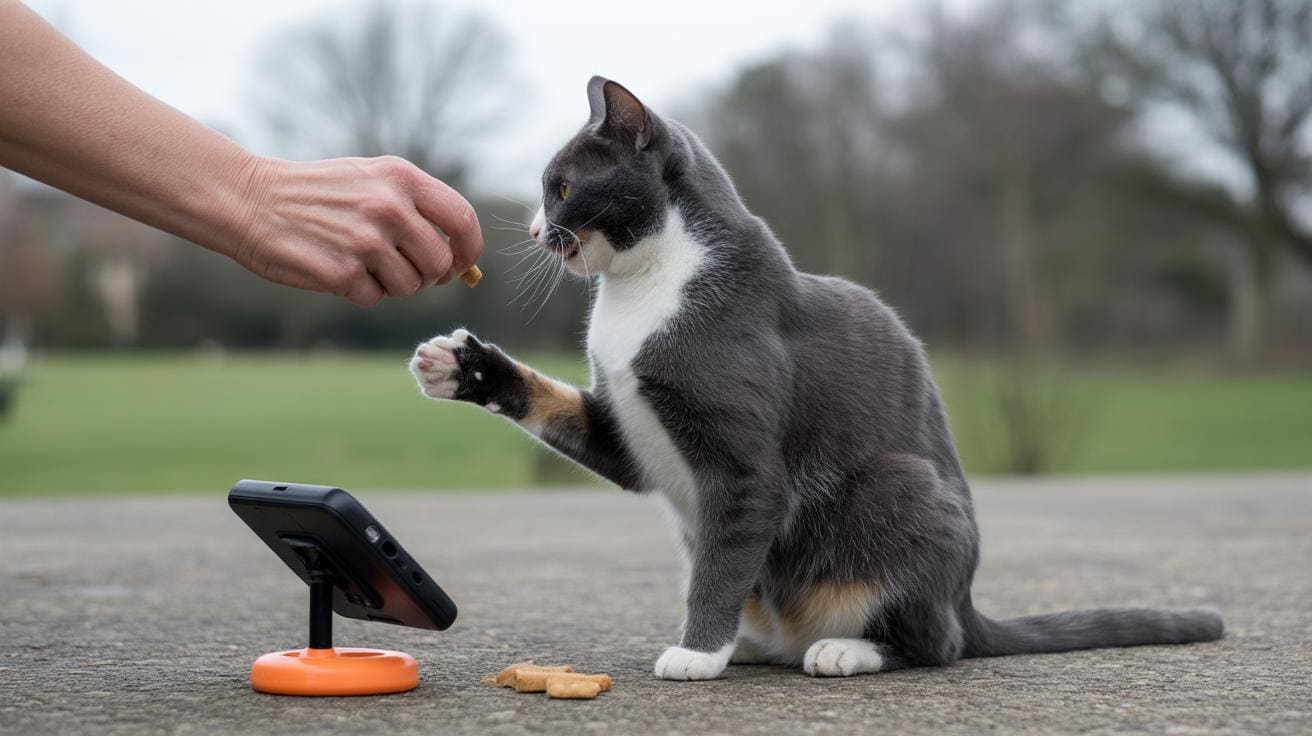
A target stick (a small wand with a ball or dot) helps keep your hands out of the way, but your hand works fine. If your cat bats instead of touching, lower the target and reward softer, quieter contacts. This trick often takes several weeks, so be patient and celebrate the small wins.
Recall / Come (lesson plan)
Start close and reward every arrival. Then increase distance slowly. Distance progression idea: 1–2 feet, 4–6 feet, room-to-room, then door thresholds. Use a reward ladder: tiny frequent treats when close, higher-value treats or a short play session for longer distances, and a jackpot reward for a perfect outdoor or long-distance recall.
For outdoor practice, use a long line (a long safety leash) and proper harness gear, and never let them free-run until recall is rock-solid. Log milestones like first reliable room-to-room come, dependable door recall, and percent success at longer distances.
Track progress with a simple log: date, behavior, criterion, reps, reward, notes. Monitor trends over 2 to 6 weeks to spot steady gains or plateaus. I once saw Luna leap six feet for a jackpot treat, true story, and it started with tiny steps.
Quick tip: short sessions, lots of praise, and timing your rewards right will make training feel like playtime rather than a chore. Ever watched your kitty chase a feather and forget the world? Do more of that.