Think your cat is "just playing" when it suddenly nips, claws, and treats your hand like a moving toy? That quick pounce is often play aggression (when play turns rough and your cat bites or claws), and the good news is it’s teachable. Start by stopping play at the first sign of trouble , tail twitch, whiskers rippling, flattened ears, or big pupils. Ever notice those little signals? They mean, hey, pause. Check out our guide on Toys to Reduce Play Aggression.
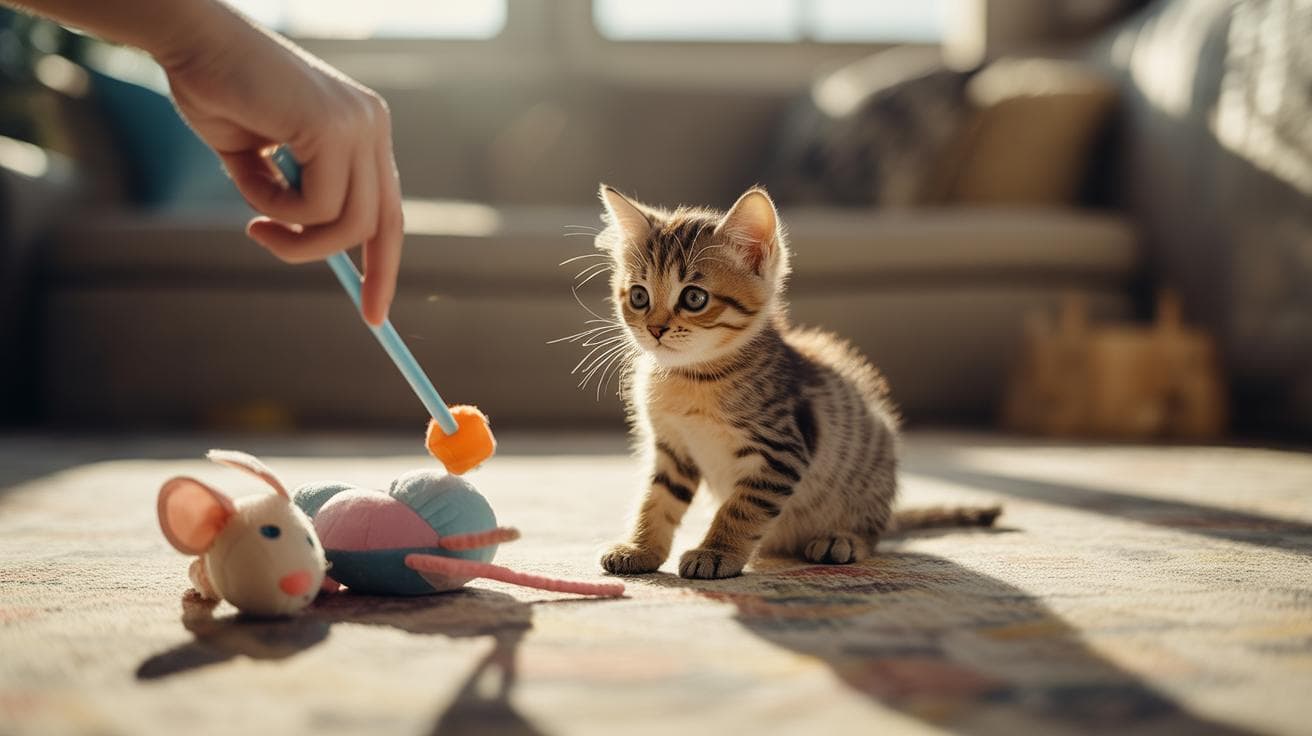
Calmly swap your hand for a wand (a stick with a string and feathers) or toss a pocket toy (a small fabric mouse or ball) so ambushes land on fabric, not skin. Think of a wand like a fishing rod for cats , irresistible from a distance. I once watched Luna leap three feet for a feather, and nobody lost a finger.
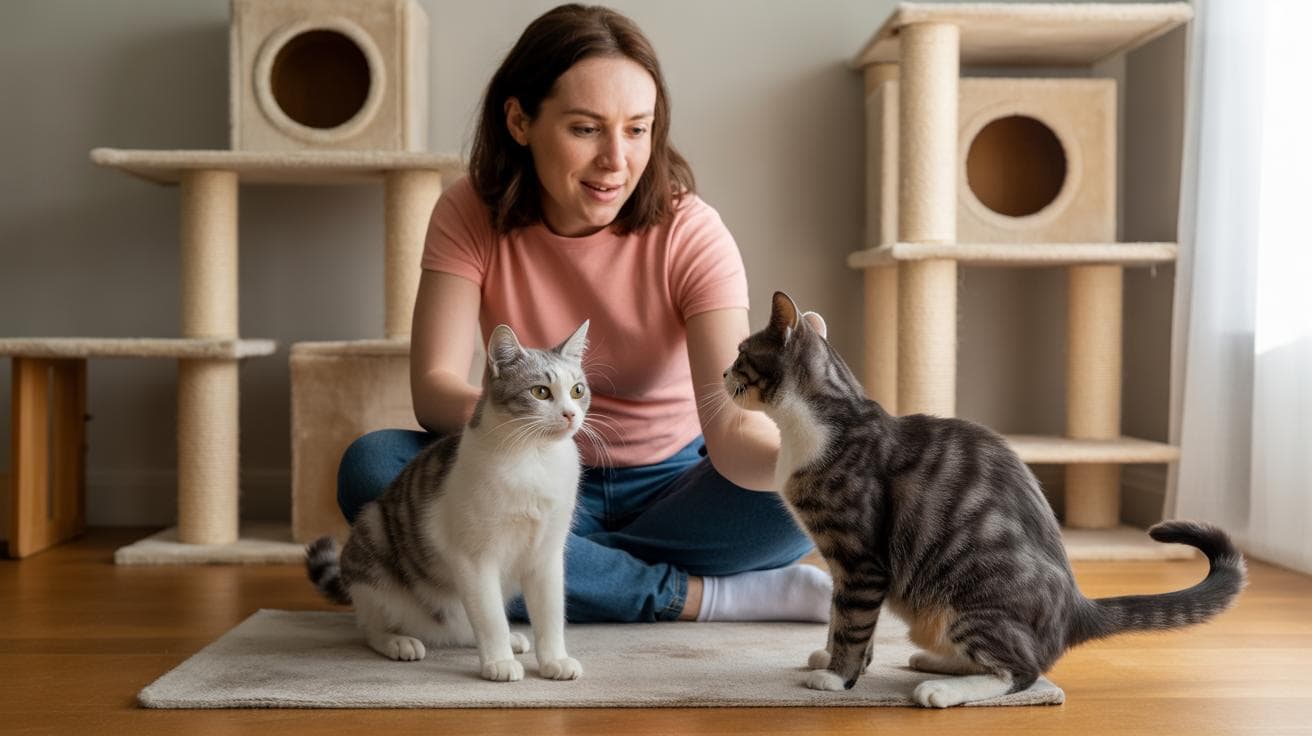
If your cat bites, get up and walk away so they learn rough play ends the fun. Keep sessions short and regular, like five minutes a few times a day, and always trade your hand for a toy before things get too wild. With steady swaps and consistent timing, most cats learn to play gentler.
Worth every paw-print.
Immediate Steps to Stop Play Aggression Now
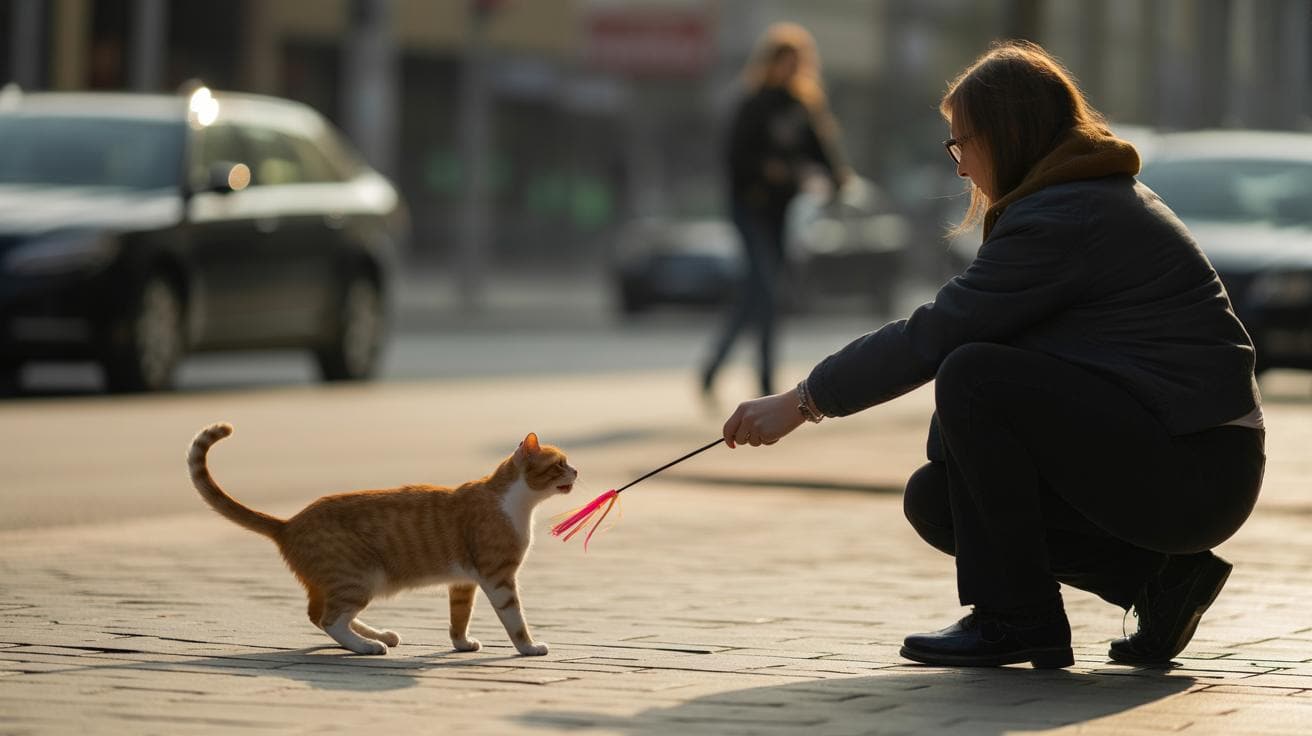
When your cat gets too rough, stop play, redirect to a toy, and take away attention. Do it calmly so your cat learns the rule without getting more hyped. Ever watched your kitty go from purring to pounce in seconds? Yeah, same.
Catch the warning signs early. Look for tail twitching, ears flattening, or dilated pupils (big black centers of the eye). Stopping play the moment you see one of those cues breaks the reward cycle that makes rough play feel like a win. If you walk away right when the cue appears, your cat learns that fun ends when it gets too rough.
Give biting a safe outlet by swapping your hand for a toy. Wand toys (a stick with string and feathers) keep your fingers out of reach and let cats stalk, pounce, and “capture” a moving target. Tossing a small toy or using a pocket toy (tiny stuffed mouse or crinkle ball) redirects ambushes fast. If your cat has been using your hands as toys, it’ll take repetition and patience to change the habit , steady, consistent swaps win the day.
When a bite or scratch happens, withdraw attention so your cat links the action to losing playtime. Don’t punish physically , that makes fear and aggression worse. Calmly stop interaction, turn away, or leave the room for a minute to reset both of you.
- Stop play at the first warning sign: tail twitch, flattened ears, or dilated pupils.
- Switch to a wand toy or toss a toy away from you to redirect attention.
- Never use hands or feet as toys; don’t reinforce the behavior.
- If bitten, push your hand gently toward the cat so it loosens its grip (do not yank), then withdraw.
- Keep pocket toys handy for instant redirection of surprise attacks.
- Keep sessions short and intense , about 10 to 15 minutes , and aim for several sessions a day.
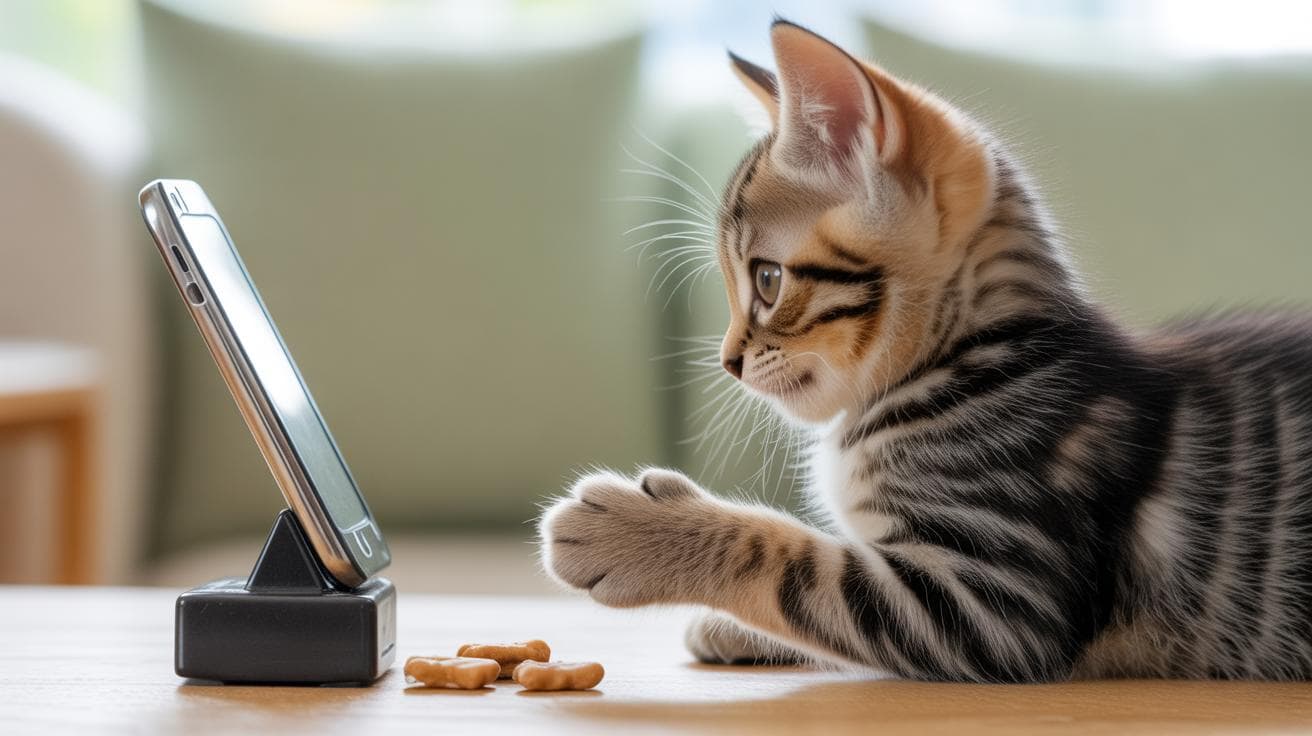
- Reward calm behavior after play with a tiny treat or brief gentle petting once play is over.
- Seek veterinary or behaviorist help if attacks are frequent, intense, sudden, or cause injury , see "When to Consult" for details.
Schedule play around your cat’s natural peaks, like dawn and dusk. Short bursts of focused chase followed by a capture and a meal help your cat feel satisfied , think of it as a tiny hunt that finishes with dinner. I once watched Luna leap six feet to snag a wand toy and then flop down, totally content. Worth every paw-print.
If aggressive incidents keep happening, get professional help right away so medical or deeper behavioral issues aren’t missed. See "When to Consult" for what to look for and who to call.
Causes of Play Aggression in Cats: Why Biting and Rough Play Happen
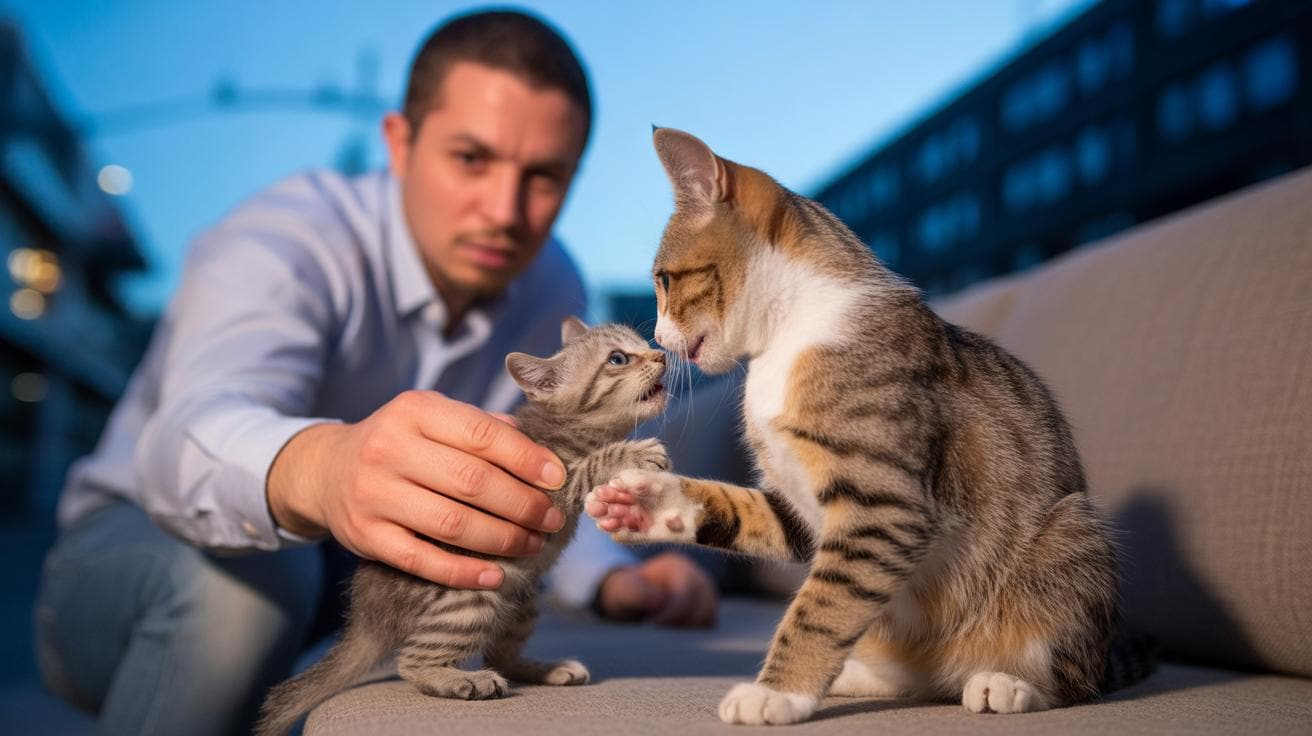
Kittens come wired to hunt , they love stalking, pouncing, and chasing anything that moves. If they miss the socialization window (3-16 weeks, when they learn how to play nicely with littermates and people) they might not learn bite inhibition (how hard is too hard). Early weaning or being hand-raised (mostly by humans instead of a mom and siblings) often means nobody showed them the limits of rough play, so they can grow up a bit bite-happy.
Living indoors can turn that hunting motor inward. Without interactive play at dawn and dusk, or enough toys and vertical space (cat shelves or tall trees for climbing), all that predatory energy looks for a target , your waving hand, dangling toes, or the ankle that walks by. Picture whiskers twitching as a cat launches at a moving sock; young cats under three tend to do this more since they’re burning lots of energy and still learning self-control.
Sometimes rough play is actually pain talking. Sudden or worsening aggression can mean dental trouble, arthritis, or neurologic issues (problems with the brain or nerves) are making even a chill cat snap. If rough episodes start quickly or get worse, check "When to Consult" for a red-flag checklist and then see your vet so medical causes can be ruled out , better safe than shredded, right?
Recognizing Overstimulation and Play-Aggression Body Language
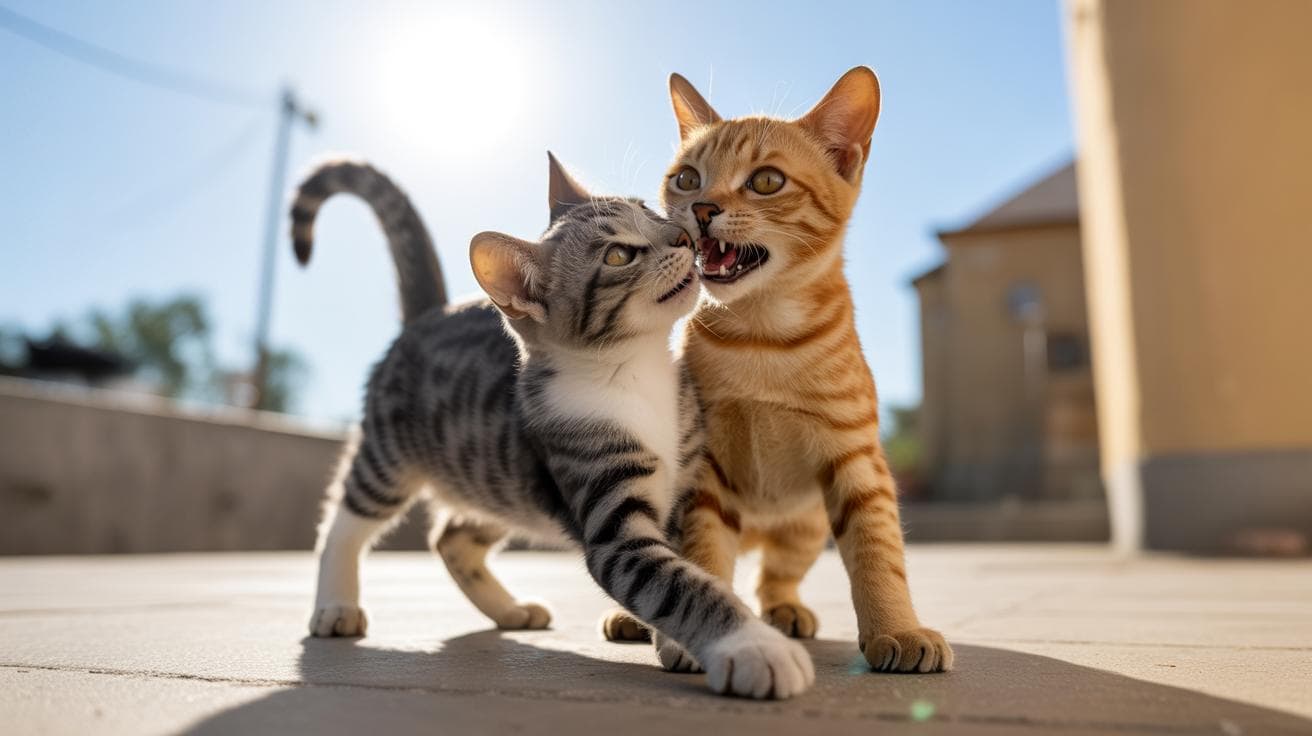
Quick reads of posture and eyes help you step in before play gets too rough. If you want a short checklist of early signals, see Immediate Steps to Stop Play Aggression Now so the cue list lives in one place and we avoid repeating it here. Think of this as spotting the first little twitches before things escalate.
Recognizing Overstimulation vs. Fear-Based Aggression
Overstimulation (when play gets too exciting and a cat’s nerves spike) usually shows as short, punchy bursts , a rapid pounce, a quick shake, then right back to chasing. It’s noisy and brief. Your cat resets fast and often wants to jump right back in.
Fear-based aggression (when the cat feels threatened or unsafe) gives clearer, longer warnings , prolonged hissing, turning away or backing off, or frantic escape attempts. These are not quick bursts; they’re avoidance and panic. When you see those, separate and calm the cat instead of trying to lure them back to play. Ever watched a cat bolt and hide after a hiss? That’s fear. Short, twitchy bursts are usually play.
| Stop Immediately |
|---|
| Bites that break the skin |
| Repeated lunges without pause |
| Sustained growling or yowling |
| Long, frozen crouch right before an ambush |
If you notice early signals (check Immediate Steps to Stop Play Aggression Now), stop or slow play right away. Pause movement. Switch to a calmer toy, or end the session so your cat can reset , ten minutes of quiet can work wonders.
If any Stop Immediately signs show up, separate calmly and give space. Let the cat retreat, and avoid forcing comfort. If the behavior repeats or causes injury, get help from your vet or a behavior professional. Worth the peace of mind.
How to Stop Play Aggression in Cats

Redirecting play biting onto toys lets your cat use its hunting instincts without turning your hand into the target. Wand toys, plush prey, and little tossable toys give your cat a clear target and teach it to aim at objects, not people , see Immediate Steps for the triage and capture rationale. Ever had your sleeve treated like dinner? Yep, we’ve all been there.
Wand toys are especially handy for bouncy kittens. A wand toy (a stick with a string, feather, or plush at the end) copies quick prey movement and keeps your fingers out of the danger zone. Do short chases, pause so your cat can stalk, then let it win with a capture so it feels satisfied. Soft plush prey (a soft stuffed toy) and lightweight balls (plastic or foam, easy to carry) help teach gentle mouthing. Be strict about safety: toss anything with loose eyes, strings, or stuffing , replace or retire ragged toys.
| Toy | Why it works | Safety & usage technique |
|---|---|---|
| Wand toy (stick with string/feather) | Keeps your hands safe and recreates stalk – pounce – capture play | Move unpredictably, pause so the cat stalks, let it “catch” the toy at the end. Store out of reach after play. |
| Furry mouse / plush prey (soft stuffed toy) | Feels like real prey to bite and carry; great for solo cuddling or post-chase reward | Supervise if small parts exist, replace when ragged, give after interactive play so the cat can carry a prize. |
| Lightweight ball (plastic or foam) | Encourages chasing and batting without heavy impact | Pick balls without small detachable bits, toss away from you to redirect ambushes, swap if chewed through. |
| Crushed paper / foil | Cheap, noisy, and delightfully unpredictable | Watch for ingestion of foil, retire when torn, use in short supervised bursts only. |
| Puzzle feeder / treat ball (toy that hides food) | Turns meal time into a hunt and stretches playtime | Use near the end of a session to calm energy, pick sizes that fit kibble, clean regularly. |
| Laser pointer (pair with a capture toy) | Triggers fast stalking and pouncing without hand contact | Short bursts only, never shine in eyes, and always finish by tossing a tangible toy so the cat gets a real capture. |
Rotate toys weekly so they feel fresh , tuck some away for a few weeks, then bring them back like new. Wash plush and puzzle feeders per the label, and toss anything with loose stuffing or chewed plastic. Keep a small pocket toy for quick redirection when an ambush starts , see Immediate Steps for when to swap toys during an escalation.
Worth every paw-print. Um, actually , make that every playful pounce.