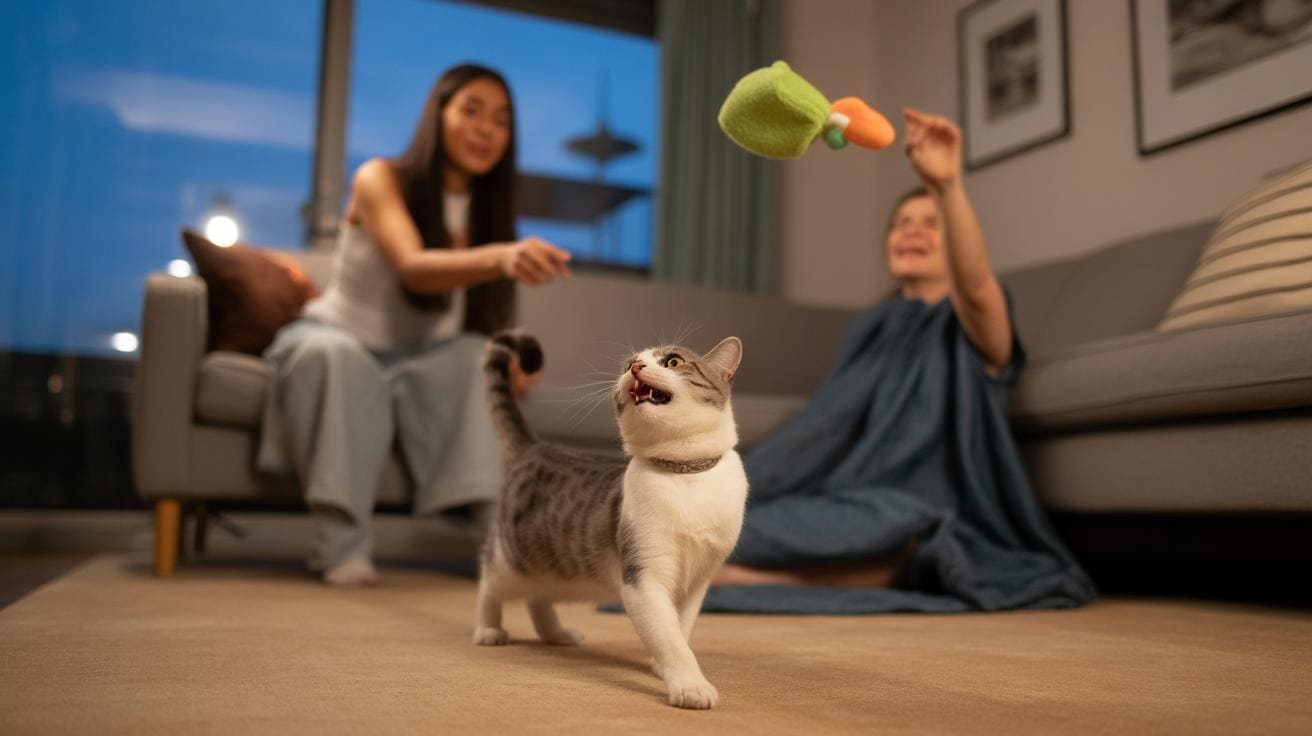
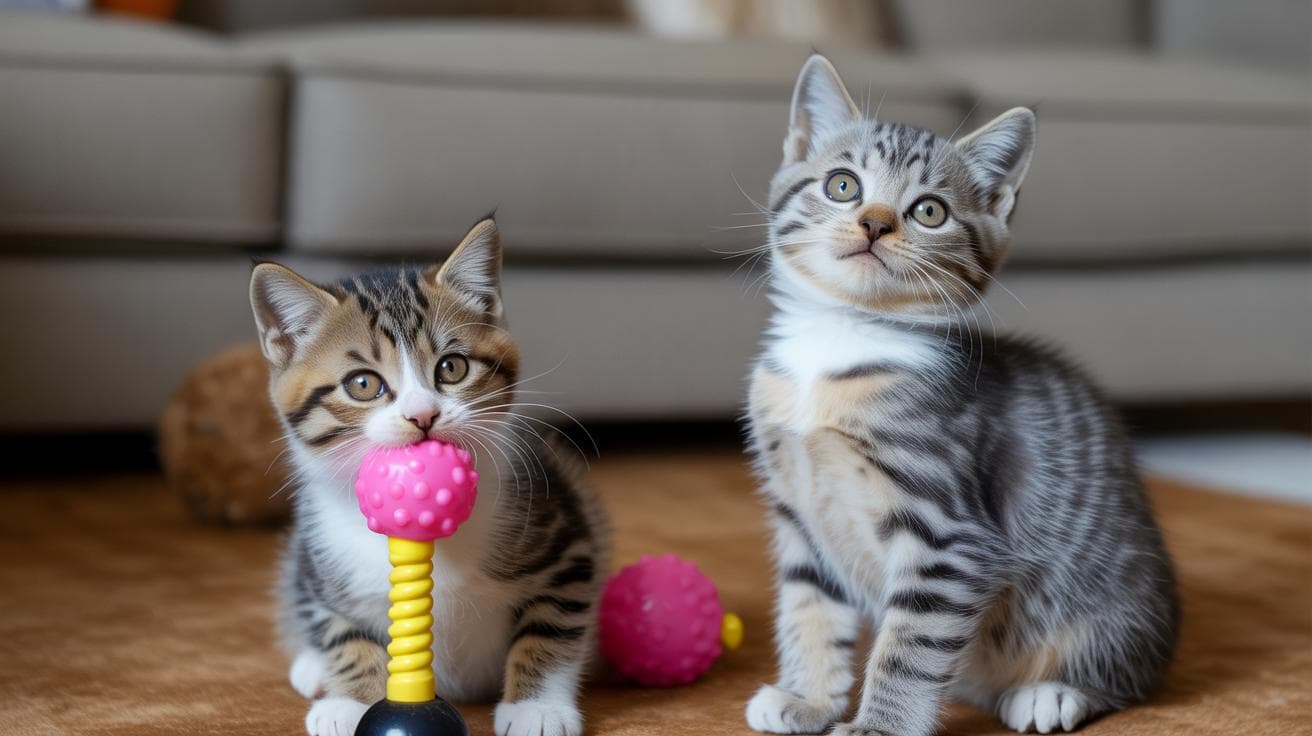
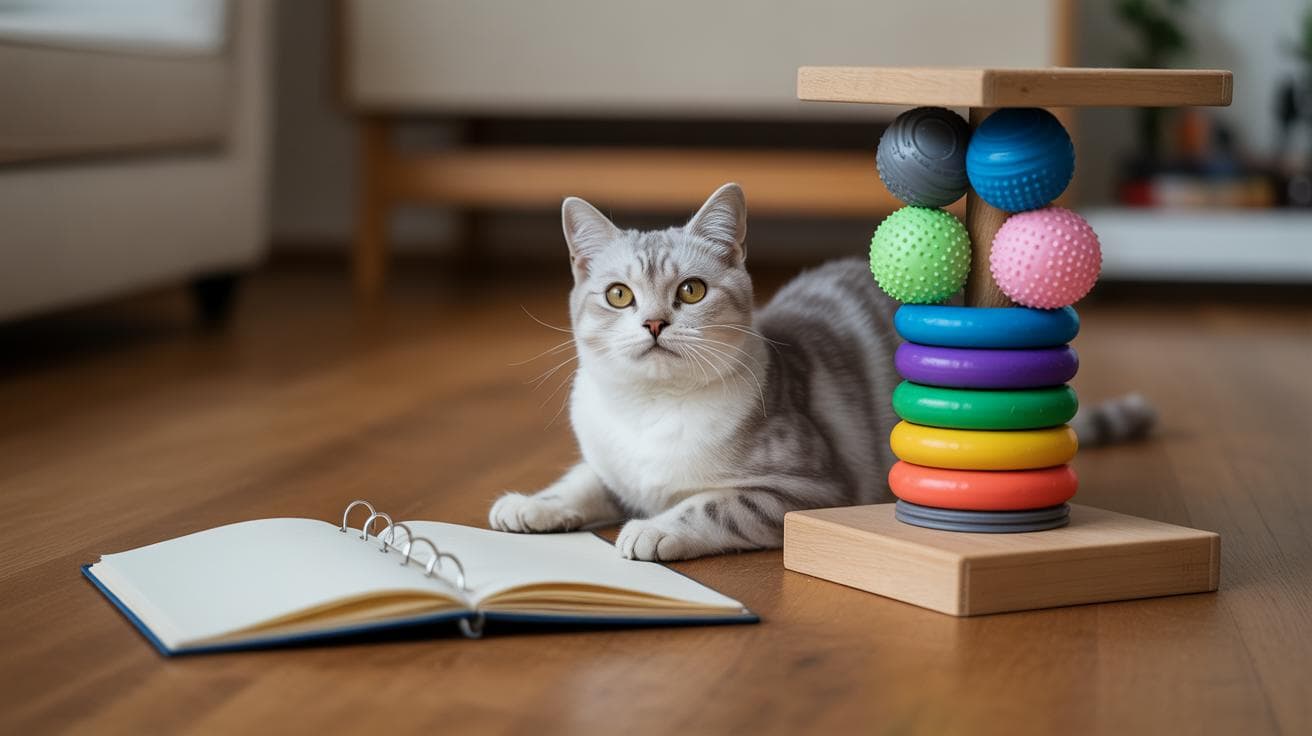
Think more toys mean more fun? Think again. Cats get bored when everything's always out. A small, hand-picked stash you swap every two to three days keeps their hunting spark alive and cuts down on chaotic shredding. Ever watched your cat's whiskers twitch as a toy rolls across the floor? It’s the best.
This simple, eight-step rotation shows you how to mix chase toys (fast toys that dart), wrestling toys (for batting and tackling), soft carry toys (small plush toys they can carry), and a scent toy (a toy with a smell cats love). It also walks you through hiding and reintroducing favorites so each toy feels new again. Quick wins: more focused playtime, fewer shredded cushions, and toys that actually last. Try it. Your cat will pounce like it's brand new again.
Quick 8-step rotation protocol for immediate results
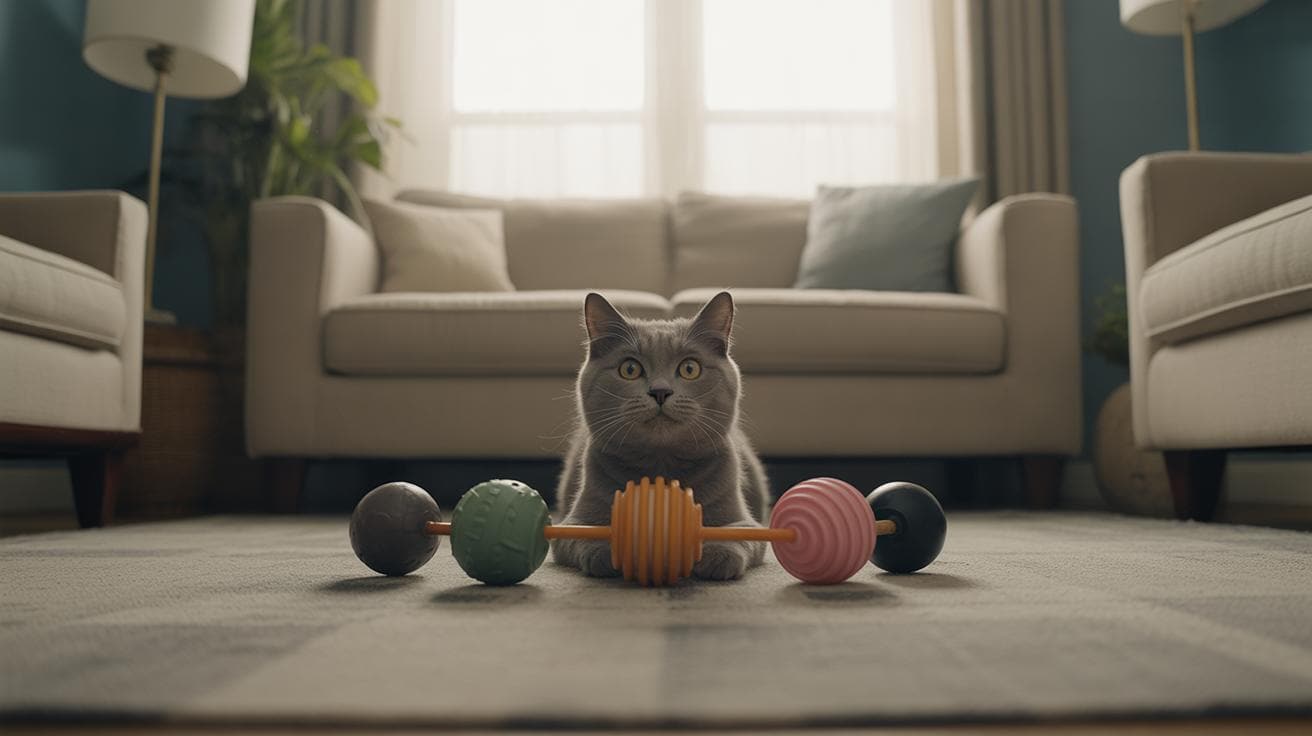
Keep a small, hand-picked group of toys out and swap them every 48 to 72 hours to keep things feeling new. Cats love novelty. When a toy becomes too familiar, their hunting spark dulls and they move on, so a compact set that includes chase toys, wrestling toys, soft carry toys, and a scent toy (something with a smell like catnip) keeps play exciting.
Reintroducing an older favorite often works better than a shiny new gadget. The surprise of a returned toy can spark big pounces. Try nudging it, tapping it, wiggling it, or talking to your cat, and hide toys in different spots , the sofa edge, behind a curtain, a low shelf , to copy the angles of real hunting and get them curious again. Ever watched your kitty sniff a toy like it’s a tiny treasure? Cute, right.
- Take inventory of all toys and toss anything broken or dangerous, especially choking hazards.
- Sort toys into 3 to 4 sets, and try to give each set a mix: chase, wrestling, soft carry, and a scent toy.
- Pick Set A to start and leave a small, curated selection out for daily play.
- Stash the rest in a closed bin or drawer to keep them smelling new.
- After the baseline cycle (48 to 72 hours , see above), swap Set A for Set B and repeat on that schedule.
- When you bring a toy back, show your cat how it moves, and optionally refresh scent with catnip or silvervine (silvervine is a plant many cats love).
- Include a short, 5-minute interactive session with one returned toy so your cat remembers how fun it is.
- Watch interest over several cycles and shorten or lengthen rotation if needed. Look for boredom signs like ignoring toys, sleeping a lot, overgrooming, or losing interest mid-play.
Expect fast wins: more playtime, fewer bored antics, and toys that last longer because wear is spread out. Worth every paw-print. For step-by-step wash instructions, retirement rules, and repair tips see Storage/Cleaning/Safety; for longer reintroduction scripts and clever hiding spots see Reintroduction.
Toy rotation schedules: sample templates and decision rules
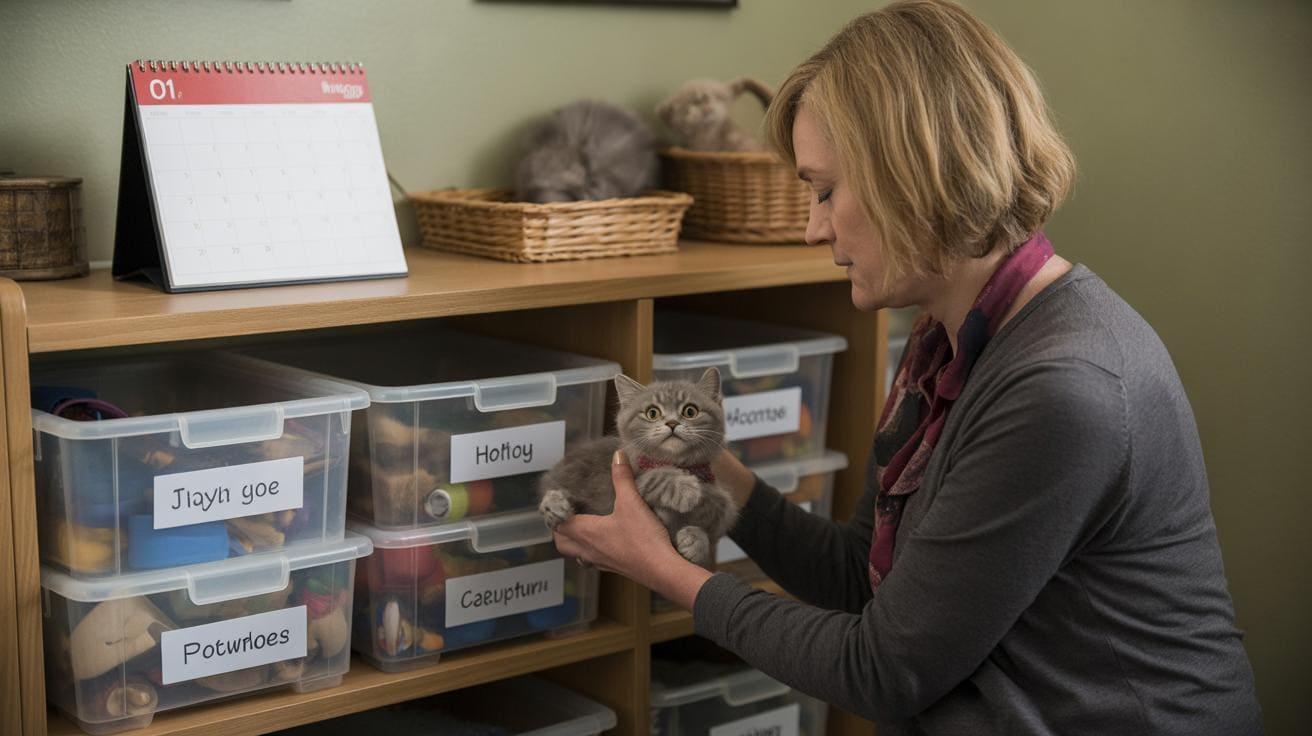
Start with the baseline protocol from the lede as your timing guide, then pick a template that matches your household rhythm and your cat’s energy. Think about when you have time for short play bursts and when toys need to hold the fort on their own. That helps you set a sensible schedule and decide how often to rotate (swap toys in and out).
| Schedule Name | Cycle description | Toys per Set | Best for |
|---|---|---|---|
| Brief-cycle template | Quick swaps to keep things fresh; short gaps between changes | Small curated set (2-4 toys) | Very high-energy cats or kittens who love new things |
| Moderate-cycle template | Regular swaps with enough time for your cat to explore | Moderate curated set (4-6 toys) | Typical adult indoor cats with mixed activity levels |
| Themed-swap template | Rotate by theme, like chase week, plush week, or puzzle week | Themed sets (grouped by play style) | Multi-cat homes or owners who want clear variety |
| Low-touch template | Long tuck-away storage, fewer returns, focus on puzzle feeders | Larger tucked-away stash (8+ toys) | Busy owners using puzzle feeders (food-dispensing toys) and occasional play |
Short decision rules: shorten cycles when your cat’s attention drops fast or toys get ignored. Lengthen cycles when a cat digs in and studies a toy for a while. Keep quick notes or a tiny log of engagement scores (how much your cat plays) to guide adjustments. Try one template for several cycles before switching so you can see real trends and fine-tune your schedule.
Ever watched your kitty sniff a toy like it’s a mystery prize, then pounce? Use that curiosity. Swap novelty and familiar objects, add a short play burst before you leave, and you’ll probably get better engagement. Worth every paw-print.
How many toys to rotate and how to group them by toy type
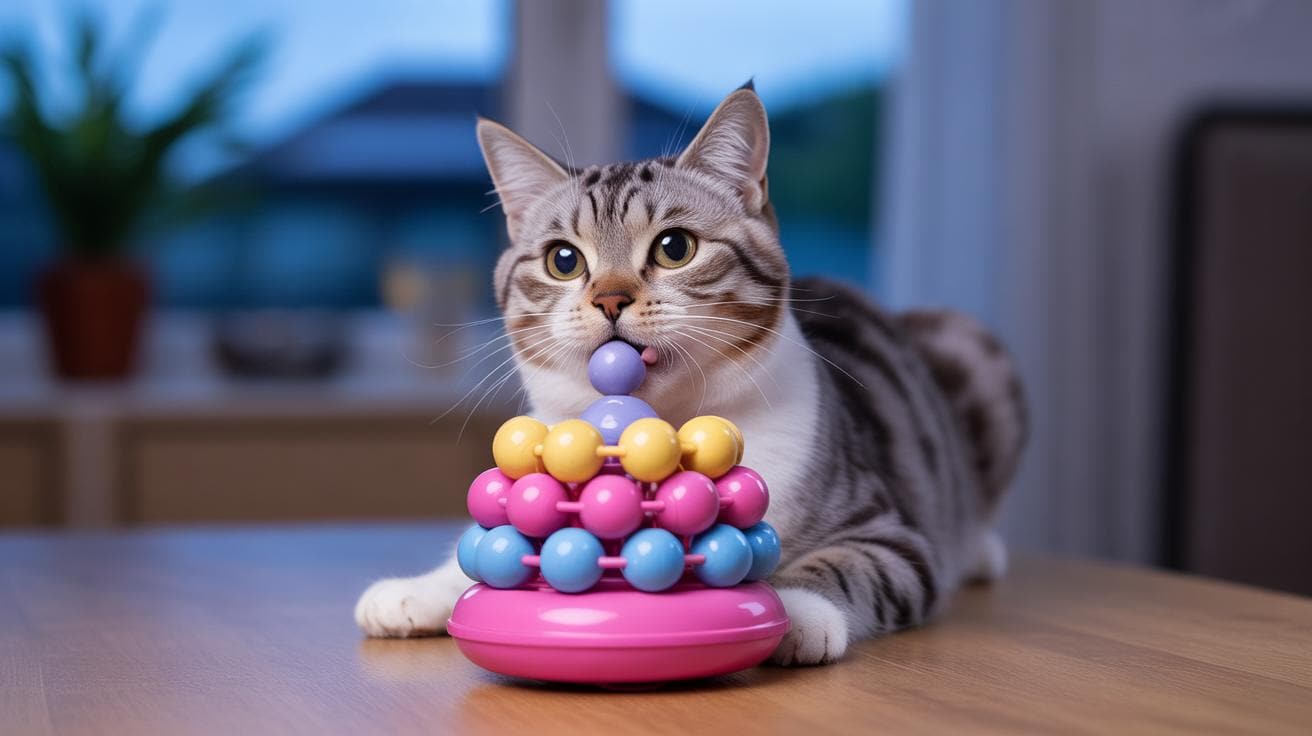
Aim for 2 to 6 toys per active set, with 3 or 4 as a sweet spot for most homes, because that gives variety without overwhelming your cat. Keep each set focused and simple so your cat can learn the game and stay curious. Ever watched a kitty ignore a pile of toys? Less is often more.
Mix play roles in every set: chase, tug or wrestle, carry, scent, and puzzle (treat-dispensing toy). That way a single rotation hits different instincts, stalking, grabbing, chewing, sniffing, problem-solving. Three toys can cover a lot: a bouncing ball, a crinkle mouse (thin, crunchy material), and a short tug rope make a lively trio.
Copy-and-play set ideas:
Set A: 2 chase + 1 scent (two zip-balls and a scent sachet (small pouch with cat-safe scent oils)).
Set B: 1 tug + 2 plush (soft, fuzzy fabric).
Set C: 1 puzzle (treat-dispensing toy) + 1 crinkle (thin, crunchy material) + 1 ball.
Quick kit line you can use: "Set A keeps chasers busy: two zip-balls and a scent sachet make a fast, focused play session." Cute and useful, right?
Two practical tips to keep rotations fresh:
- Mix textures and sounds across sets so each rotation feels new. Try plush (soft, fuzzy fabric) + rubber (stretchy, chew-resistant material) + a rattle or a quiet felt ring (soft, dense fabric). Your cat will love the contrast of soft, bouncy, and noisy.
- Rotate scent-heavy items less often so their oils last longer. Put scented pieces away for 48 to 72 hours between uses instead of swapping them every day, and the smell will stay interesting.
A plush mouse, a rubber ball, and a quiet felt ring make a lively trio; stash scent sachets for longer breaks so the smell stays special. Worth every paw-print.
Toy storage, cleaning, safety checks, and when to retire or repair toys
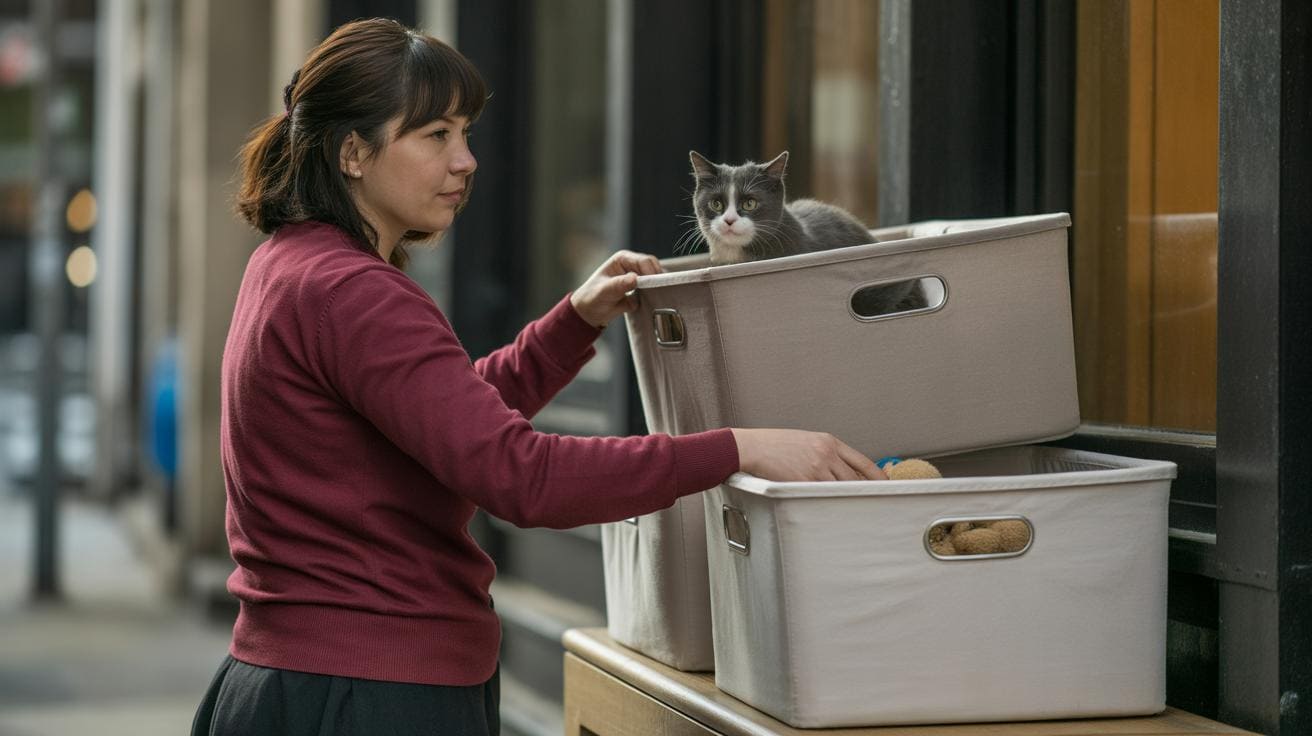
This is your quick, friendly guide for cleaning, storing, and retiring your cat’s toys. Keep the 48 to 72 hour swap timing from the lede in mind so you know when to pull a new set out of storage. Think of this as the toy rotation cheat sheet.
Wash washable plush toys on a regular schedule, or sooner if they get slobbered or soiled. Machine-wash soft toys inside a mesh bag (a laundry net that stops tiny toys from snagging) on a gentle cycle, or hand-wash with mild fragrance-free soap (soap without perfumes). Air-dry completely before letting your cat play again so damp stuffing doesn’t grow mold. Keep scented items sealed in a fabric bin with a lid (a cloth storage cube with a cover) or a zip-top bag (plastic bag with a sealing strip) to preserve catnip and silvervine (a cat-attracting plant) oils.
For electronic toys, battery-powered moving toys, wipe external surfaces with a damp cloth and remove batteries before any washing. Follow the maker’s care instructions for motors (tiny electric engines) and charging ports (where you plug in the charger). If a toy has a charging dock, keep that dry and clean so contacts don’t corrode.
Do safety checks every swap. Inspect seams (the stitched edges) for loose threads, look for exposed stuffing (soft inner filling), and watch for loose beads or hard bits. Retire frayed strings, loose small parts, or failing motors right away so nothing becomes a choking hazard. Simple fixes that work: restitch seams, replace stuffing with clean fill, sew shut holes, or trim and securely remove dangling bits. If plastic is snapped, electronics are broken, or safety parts are missing and you can’t make it safe again, replace the toy and recycle what you can.
At each swap, launder washable toys as needed and refresh sealed scent pouches before reintroducing them. Repair small wear or retire anything unsafe. Label containers by set or theme for quick swaps, catnip set, feather wands, fetch balls, so you can grab a ready-to-go box and start playtime fast. Worth every paw-print.