Sick of getting tiny sharp nips when you try to cuddle or play with your cat? Your hand goes from warm to surprising little teeth, and ouch. Ever watched your kitty stalk a sock and think, huh, I wish that were my hand instead?
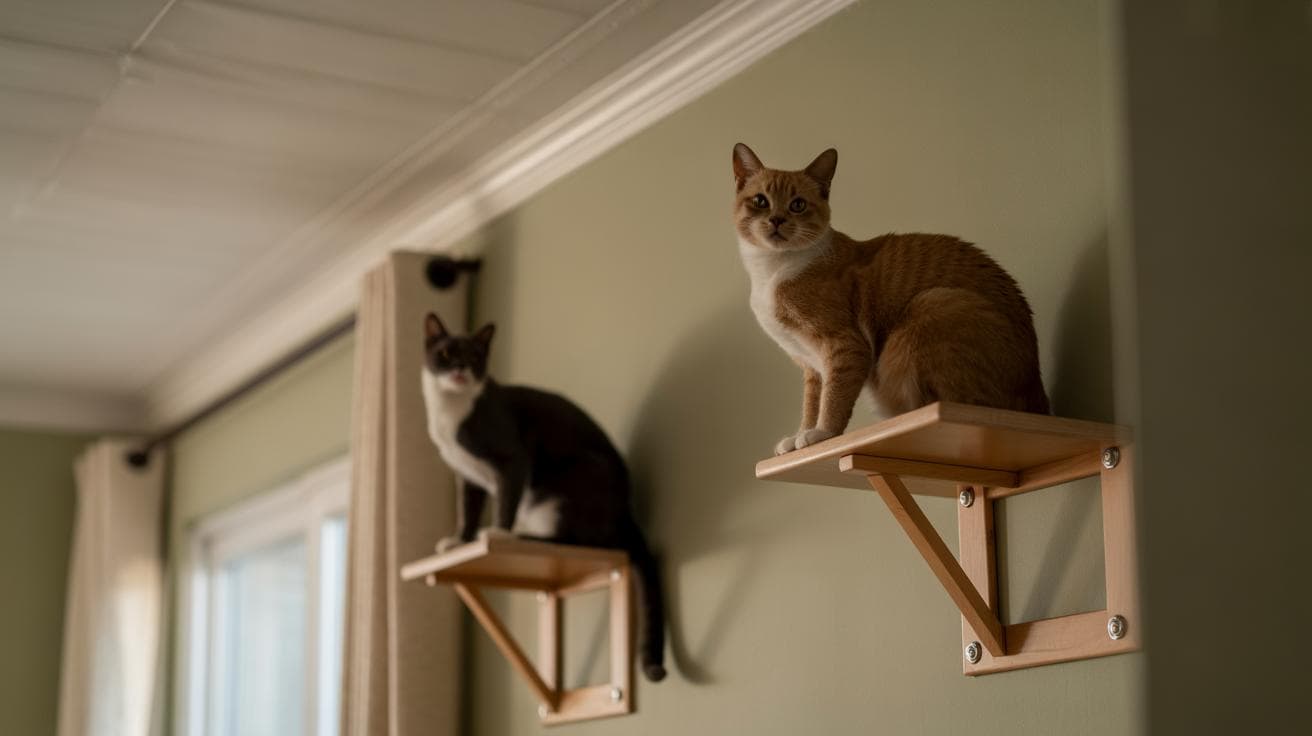
Try environmental enrichment (small, easy changes to your cat’s world , perches [high spots they love], hiding spots [boxes or tunnels], wand toys [a stick with feathers or string], and puzzle feeders [toys that hide food so they have to figure it out]) to give them better ways to hunt, pounce, and burn off zoomies. Your cat’s whiskers will twitch as the toy rolls across the floor. It makes play feel safe and real.
It’s not about buying every toy in the store. It’s about predictable play, short chase sessions, and letting them choose when to be wild so your hands stay off-limits. For busy days, toss an unbreakable ball before you leave , ten minutes of focused fun.
This post gives a quick five-step start-now roadmap you can use today to cut biting and calm itchy paws. Ready to get your cat back to polite play? Worth every paw-print.
Start-now roadmap: 5 immediate actions to reduce play aggression
Start with these five easy steps to calm itchy paws and build better play habits. Think of them as quick, practical moves you can do today to cut down biting and make playtime more fun for both of you.
- Get a vet exam, to rule out pain or medical causes. Sudden or new aggression can mean discomfort, and we want to be sure your kitty isn’t hurting.
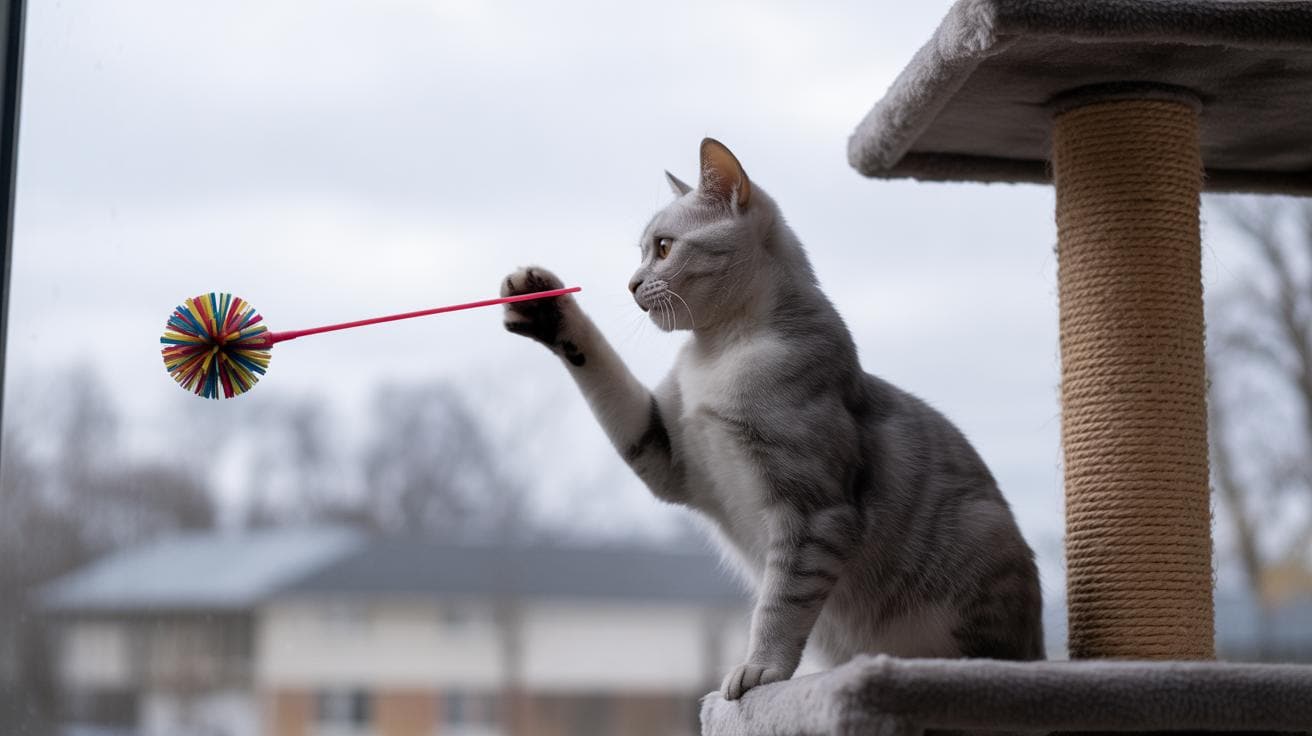
- Run two 15-minute wand sessions each day, one in the morning and one before dinner. A wand (a stick with a string and toy on the end) is like a fishing rod for cats, perfect for safe pouncing and satisfying chases.
- Stop using hands-as-toys. Always redirect bites to a toy, especially the wand, so your hands stay off-limits. It’s tough at first, but your fingers will thank you.
- Add a perch and a hiding spot to the main room. A window perch (a cozy ledge) and a little hideaway let your cat watch, stalk, and decompress without needing to act out on you.
- Pair a short chase with a puzzle feeder before meals. A puzzle feeder (a toy that dispenses food) gives your cat the thrill of the hunt, then dinner, calming, mentally engaging, and yummy.
Short-term goals to aim for in 2 to 4 weeks:
| Goal | Target |
|---|---|
| Weekly bite incidents | Decrease by 50% |
| Play sessions ending calmly | At least 80% of sessions |
| Human injuries requiring first aid | Zero new incidents |
If the behavior starts suddenly, gets worse, seems linked to pain, or causes injury, book a vet appointment right away. If these steps don’t help after 4 to 6 weeks, or attacks escalate, contact a certified applied animal behaviorist (a credentialed specialist in animal behavior). Keep a daily log, time, what happened, what you were doing, and how severe the bite was. That record is gold for vets and behaviorists, and it helps you spot patterns fast.
Worth every paw-print. Try this plan, tweak as you learn, and hey, watch those whiskers twitch when play finally clicks.
Recognizing play aggression in cats: signs, causes, and differences from true aggression
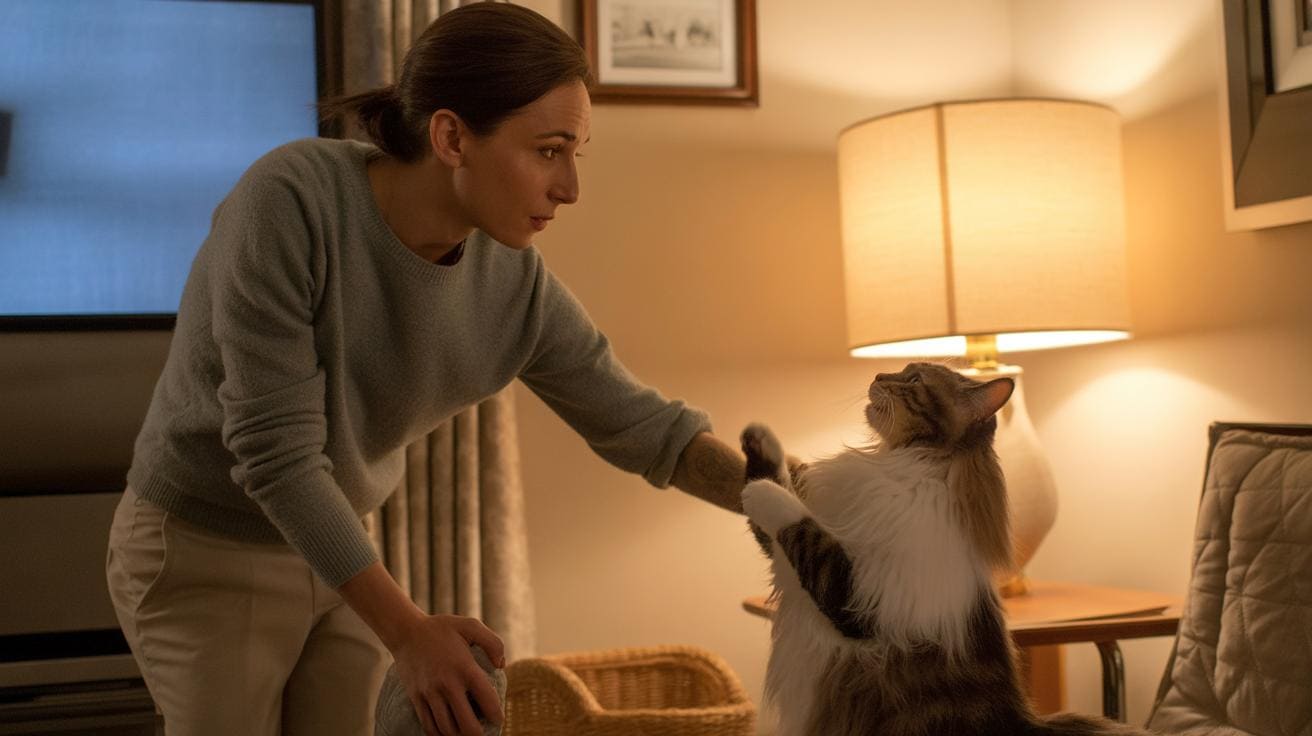
Play aggression is your cat practicing hunting. Think pounce, quick bites that don’t stick, and fast chase-then-roll role play. Kittens and young cats do this a lot, and bored adults sometimes join the fun too. Ever watched whiskers twitch as a toy skitters away? That’s the vibe.
Check the Start-now roadmap for the exact session timing and the hands-off wand rule so you can test whether enrichment fixes it. Enrichment (toys, play sessions, and puzzle feeders that satisfy hunting drive) usually calms this down.
- Quick pounces with immediate breaks and little or no growling – usually playful stalking practice.
- Soft-to-medium pressure bites that come and go, without a hard, fixed clamp (bite-inhibition gaps means they never learned to soften a bite).
- Rapid chase-and-switch behavior, like rolling and role-play, often with relaxed whiskers and loose body language.
- Prolonged hissing or growling, flattened ears, a rigid body, and a fixed, focused stare – these look more like real predatory or defensive aggression (serious attack or fear-based defense).
- Sudden redirection – when a cat lashes out at whoever’s nearby after being startled; redirected arousal (excitement or fear gets shifted onto another target) is common if another pet or loud noise triggered it.
- Tense tail twitching and wide-eyed hard stares that escalate instead of stopping when you interrupt – not playful.
Common causes are pretty simple. Developmental bite-inhibition gaps (they didn’t learn to be gentle), under-stimulation, and inconsistent routines that leave hunting drive pent up. For busy people: a short, regular play session before you leave can buy you calm minutes at home.
See your vet if aggression shows up suddenly, if wounds appear, or if your cat has other health changes like appetite loss or lethargy. And, uh, if you need help setting up safe play, ask a behavior pro or your vet – they can point you to good toys and timing tricks. Worth every paw-print.
Toys, rotation, and redirection

Wand-style interactive toys are the cornerstone of play. Keep your fingers out of the action and let your cat practice stalking and pouncing from a safe distance. Think of the wand like a fishing pole for cats, just wiggle the lure and watch the whiskers twitch. Ever watched your kitty go full ninja? It’s the best.
Mix supervised interactive sessions with toys your cat can use alone. That way they get to hunt, capture, and reset their focus without turning you into a moving toy. Keep about 5 to 8 active items out at a time and swap them every 3 to 7 days to keep things fresh. See the Start-now roadmap for the core session timing and the hands-off wand rule so those numbers stay consistent across the plan.
- Wand teaser , great for kittens and adults. Check for frayed strings and split shafts (the stick part) and always supervise.
- Plush mice , soft stuffed prey that help kittens learn bite inhibition; retire if seams open or stuffing shows.
- Crinkle tunnels , noisy hide-and-seek fun; crinkle refers to a thin plastic layer that makes the sound, so watch for torn bits and exposed plastic.
- Lightweight balls , perfect for solo chase; remove if paint chips or small pieces come loose.
- Food-dispensing puzzle ball , a puzzle feeder (a toy that hides food so your cat works for treats) is great for slow feeding and brain work; clean often to prevent mold.
- Lick mat , a rubbery mat with grooves (good for calming and enrichment); use with wet food or paste and wash after each use.
- Catnip-stuffed toy , fun for playful adults and tolerant kittens; skip it if your cat gets overstimulated.
- Safe chew/tug toy , helpful for bite-prone kittens learning limits; pick one with reinforced stitching (extra-strong thread) and non-toxic materials.
| Toy Type | Primary Purpose | Best Material/Size | Session Recommendation |
|---|---|---|---|
| Wand teaser | Interactive stalking and ambush | Light shaft (stick), soft lure, 12–18 in reach | Use under supervision; replace frayed parts |
| Plush prey | Solo capture practice | Small, machine-washable plush (soft stuffed), no small eyes | Rotate often; retire if torn |
| Puzzle feeder | Extend hunt → reward sequence | Durable plastic or rubber, food-safe | Introduce slowly; watch first uses |
| Ball/rolling toy | Chase and pounce | Lightweight, no small detachable bits | Good for independent play; swap every few days |
| Tunnel/box | Hide, ambush, low-arousal play | Sturdy fabric or cardboard, wide entry | Keep clean; refresh to keep interest |
| Chew/tug toy | Mouthing outlet and gentle tug | Reinforced fabric or rubber, no toxic fillers | Supervise kittens; watch for wear |
Supervision guidance: watch new toys closely for the first few sessions, especially those with strings or small parts. Inspect toys weekly for loose pieces and weak stitching; repair or retire anything that looks unsafe. For low-cost wand repairs and replacement parts see DIY replacement attachments for teaser wands. Worth every paw-print.
Play–feed sequencing and feeders
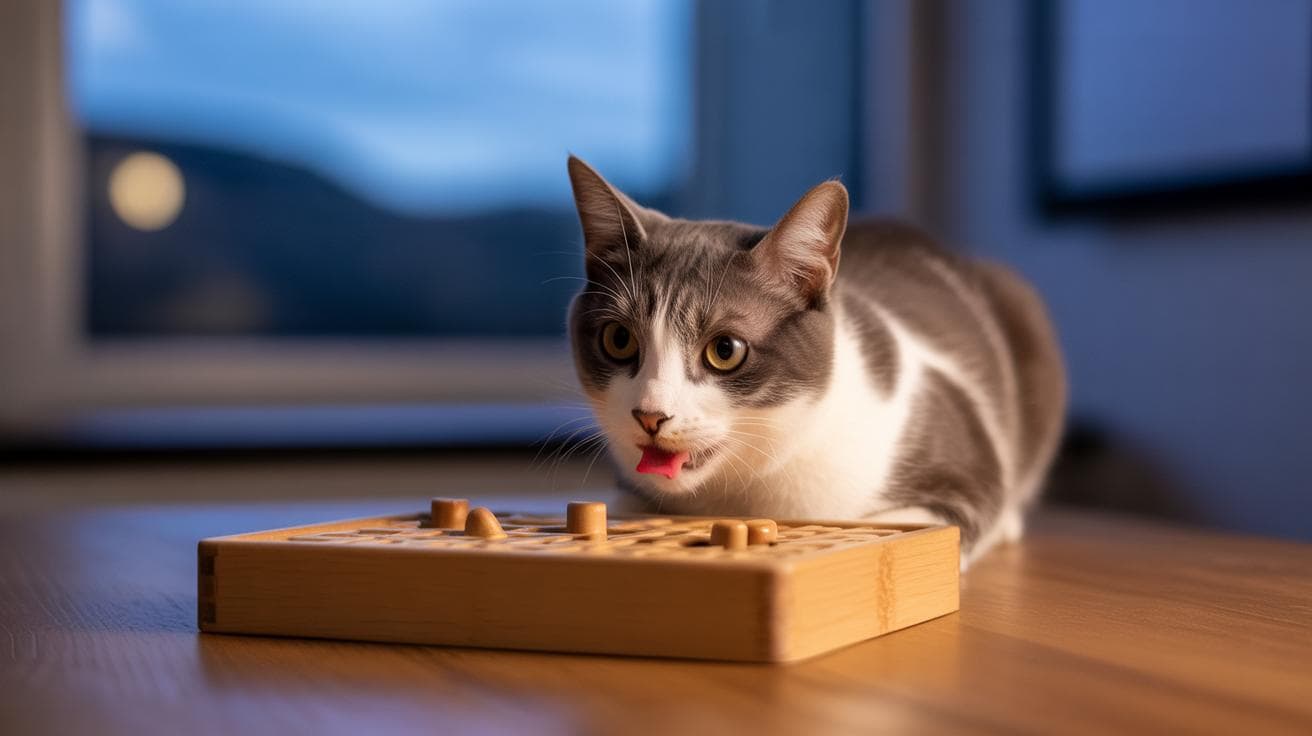
Match play with mealtime so your cat gets the full hunt, catch, eat feeling. Start with a lively chase, wiggle a wand or roll a toy, and then give food right away from a puzzle feeder (a toy that drops kibble) or a regular bowl. It’s like a tiny hunting routine: wiggle, pounce, grab, snack. Your cat’s instincts get used, not frustrated.
Safety first. Pick feeders made of food-safe materials (safe for mouths) and chew-resistant parts (won’t tear off easily). Wash them between uses. Watch new toys for small bits that could come loose. Supervise the first few sessions with any new feeder, and set up separate stations if you have more than one cat so meals don’t turn into contests. For exact play timing and capture counts, check the Start-now roadmap so your routine lines up with the rest of your plan.
Session structure: hunt – chase – capture – reward
Hunt: tease interest with a wand or rolling toy so your cat locks on.
Chase: keep the motion varied and a little unpredictable so it feels like real prey.
Capture: let your cat have a clear win, drop a plush mouse or slide a toy into a tunnel so they can grab it.
Reward: give the food right after the catch, then finish with 1-2 minutes of calm petting so play ends gently and predictably.
| Feeder Type | How It Reduces Arousal | Average Session Duration | Best For (kitten/adult/multi-cat) |
|---|---|---|---|
| Slow-feed bowl | Spaces out bites so the meal doesn’t spike excitement | 5-15 minutes | Kitten to adult |
| Rolling treat ball (a ball that spills kibble when nudged) | Encourages gentle chasing and active foraging | 10-25 minutes | Kitten and active adults |
| Modular puzzle feeder (pieces you rearrange) | Extends the hunt with problem-solving and paw work | 15-40 minutes | Adult and multi-cat (use multiple units) |
| Snuffle mat (fabric mat with hidden pockets) | Slows eating by making cats search by scent | 10-30 minutes | Shy cats and multi-cat homes |
| Timed electronic feeder (battery-powered dispenser) | Makes rewards predictable and spaces them out to lower anticipation | Varies by setting | Busy households, multi-cat with separate stations |
Introduce a new feeder over 7-14 days so your cat isn’t overwhelmed. Start with short, supervised bites at an easy level and slowly make it tougher. Watch the first few full meals for chasing, guarding, or frustration and move feeders apart if cats start to compete. Keep daily calories the same while spreading food across play sessions, and jot down which feeders calm your cat best so you can repeat what works. Ever watched your cat figure out a new toy and look so proud? Worth every paw-print.