Think shy cats won’t play? Think again. They often just need a gentler, slower invite to feel curious.
Start with a scent-soak (rub the toy on a blanket or your shirt so it smells like home). Use distance play (play from across the room with a wand or laser so your hands stay safe). Celebrate tiny, slow practice wins. Short, calm sessions help them learn without pressure.
Here’s a quick-start plan you’ll actually use: pick a quiet room, begin with a teaser wand (like a fishing rod for cats), then try gentle laser moves once they’re comfortable. Keep sessions tiny and sweet, two to five minutes, and finish with capture-plus-treat (let them catch the toy, then give a tiny treat). Ever watched whiskers twitch into full-on focus? It’s the best.
Worth every paw-print.
Step-by-step plan
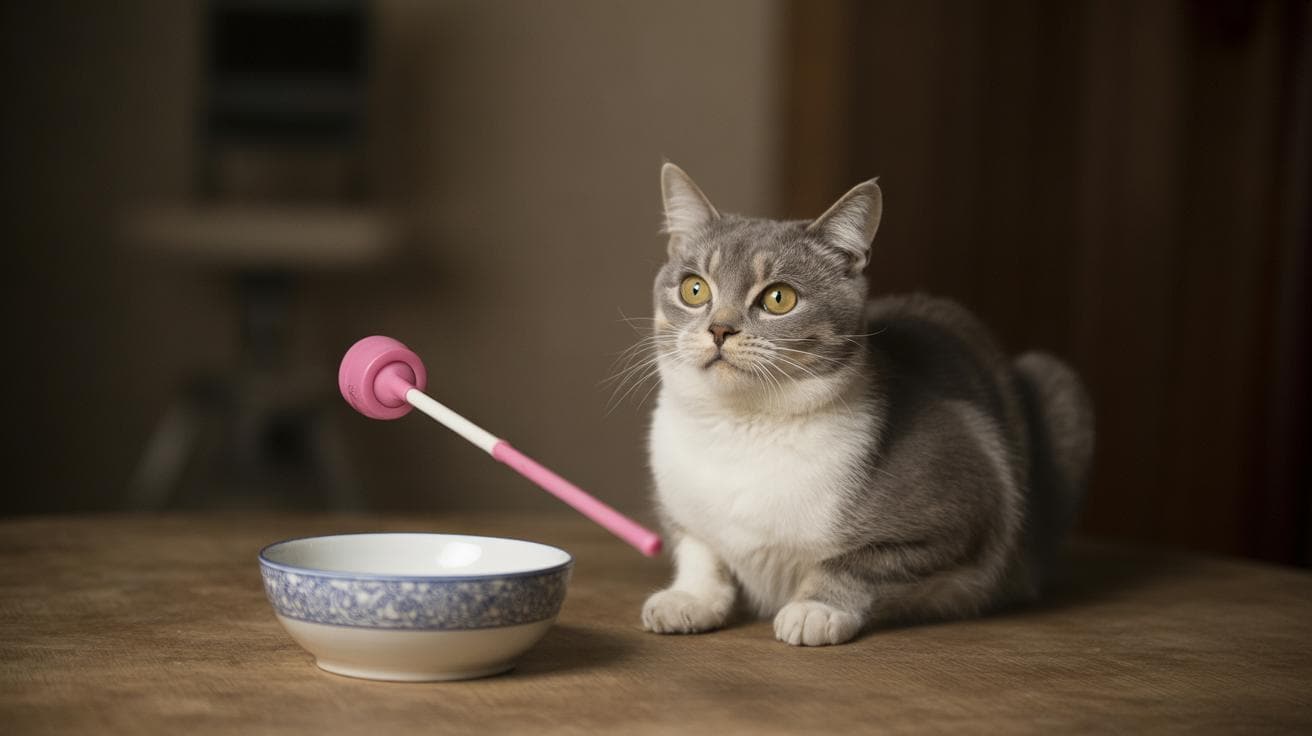
Quick-start play plan: 1) set up a quiet room with a scented safe toy, 2) try distance play with a long wand (a pole with feathers or a dangling toy) or a laser pointer (the little red-dot toy), 3) finish with a small capture toy (something your cat can catch) and a treat. Simple. Fast. Fun.
Expect this to take anywhere from a few days to several weeks for a shy or fearful cat. Go slow. Tiny wins every day beat one big, stressful session.
- Check temperament and health first with a quick checklist: appetite, mobility, any signs of pain. See Reading shy cat body language for red flags and vet cues.
- Put the new toy where the cat already feels safe so it soaks up familiar smells (see Using scent and placement for the full scent-soak procedure). Think of it like leaving a scarf in a new house so it smells like home.
- Place toys near comfort spots or feeding areas, not in busy hallways. That makes approaching voluntary and low-stress.
- Use distance play with wands or a laser. Keep your hands out of the cat’s space so they don’t feel threatened. See Slow-play techniques for wand progressions and sample plan.
- Keep sessions very short: 1 to 3 minutes, repeated 2 to 4 times a day. Short and frequent beats long and rare for gradual toy introduction.
- Always end with a capture toy and a treat reward to avoid laser frustration. Rewarding the catch helps them feel successful. See Training, treats, and reinforcement for reward schedules and treat-fading.
- Move closer only as the cat chooses to come forward. If you see stress, hold position and respect their pace. See Reading shy cat body language.
- Pause or step back when stress signals appear and check the troubleshooting list in Toy rotation, tracking progress, and troubleshooting if things stall.
Quick checklist before the first session:
- Quiet room set up
- Chosen safe toy (no loose parts)
- 2 to 4 minute timer
- Small, high-value treats
- Easy retreat route for the cat
- Notebook or tracker to jot short notes
For full procedures on scent, slow-play, training, body language cues, and milestones/troubleshooting, consult the linked detailed sections so this stepwise plan stays compact. Worth every paw-print.
Choosing toys
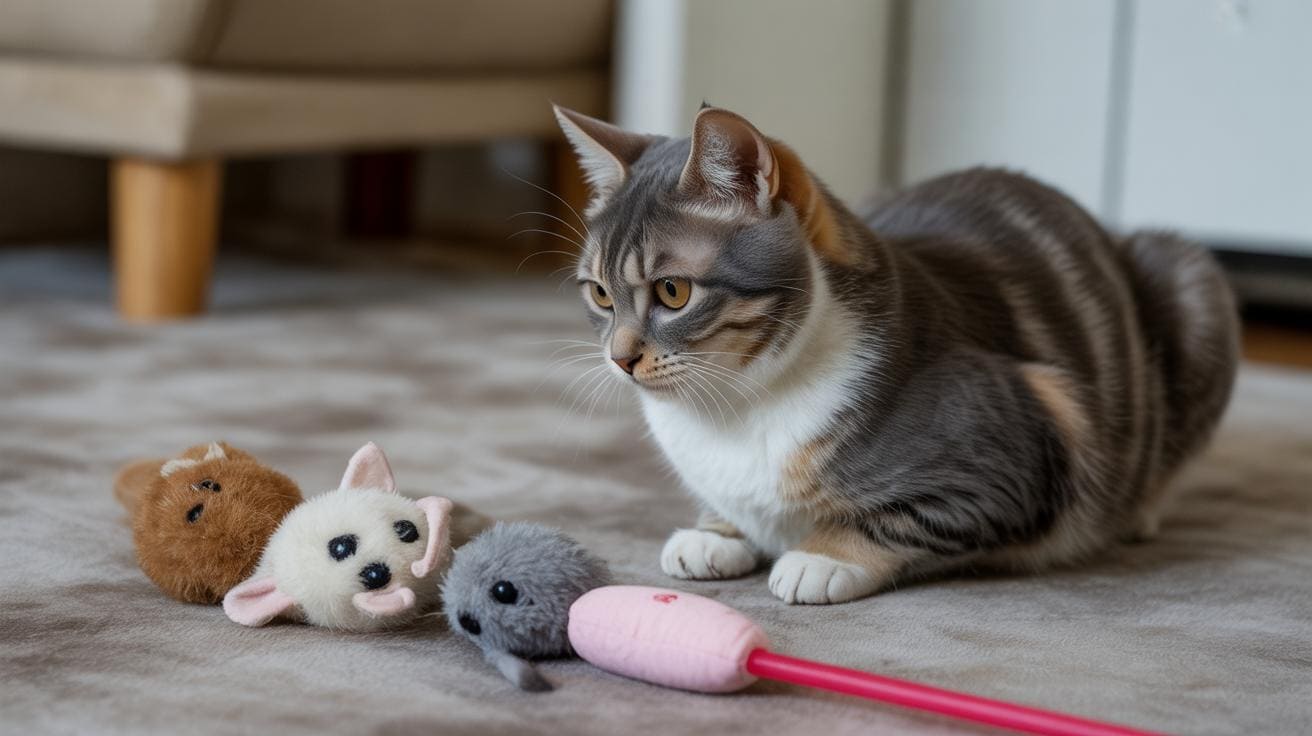
Pick toys that move quietly, at a slow pace, and feel small and non-threatening in your cat’s paw. Look for simple designs made from tough, safe materials so the toy says "play" and not "surprise." Quiet motors are okay, think a tiny, gentle buzz, not a jackhammer.
| Toy Type | Typical Movement | Best For | Safety Notes |
|---|---|---|---|
| Wand / feather (like a fishing pole for cats) | Slow flutter and twitch | Timid cats who like distance play | Supervise. No loose strings or bits that can detach. |
| Plush mouse (soft fabric, cuddle-friendly) | Soft bounce, optional crinkle (thin crunchy material) | Comfort seekers and capture practice | No button eyes; strong seams; washable fabric (easy to clean). |
| Puzzle feeder (food puzzle that makes cats work for kibble) | Slow dispense, foraging motion | Food-motivated shy cats | Easy-clean surface; no small removable pieces. |
| Laser pointer | Point-of-light dash | Pressure-free stalking and energy burn | Never shine in eyes; end sessions with a catch toy plus a treat. |
| Quiet rolling toy | Gentle roll, soft thud | Curious trackers who follow motion | Low noise; enclosed wheels; washable shell. |
| Remote-controlled prey | Slow skitter, variable speed | Wary chasers who like lifelike motion | Low-vibration motor (small motor that barely buzzes); sturdy casing. |
| Soft batting toy | Light nudge and tap | Gentle pawers who bat tentatively | No long strings; sized to avoid swallowing. |
Wands and lasers are great first steps because they keep your hands out of the kitty’s zone and let the cat choose how close to get. Plush mice are a sweet finish, something soft to catch and carry. Puzzle feeders add mental work, which can calm a nervous cat by giving them a job to do.
Remote-controlled prey can be brilliant for cats who need a realistic target, but pick one with a low-vibration motor (small motor that barely buzzes) so it doesn’t startle. I once watched Luna leap six feet for a slow-skitter toy, worth every sigh.
Older cats and vision-impaired cats often prefer toys with gentle sound or texture. A soft bell or crinkle helps them find the toy, but watch reactions, some cats find bells scary. Match toy type to comfort level: distance toys first, then grab-and-hold plush, then moving toys that encourage light chasing.
Safety quick-check before first use:
- No loose or detachable parts that could be swallowed.
- Non-toxic materials (safe if chewed a bit) and washable fabric.
- Secure battery hatch or sealed compartment so batteries stay put.
- Size large enough to avoid swallowing, small enough to bat safely.
- Smooth edges; no sharp bits that could snag fur or skin.
Worth every paw-print.
Using scent and placement
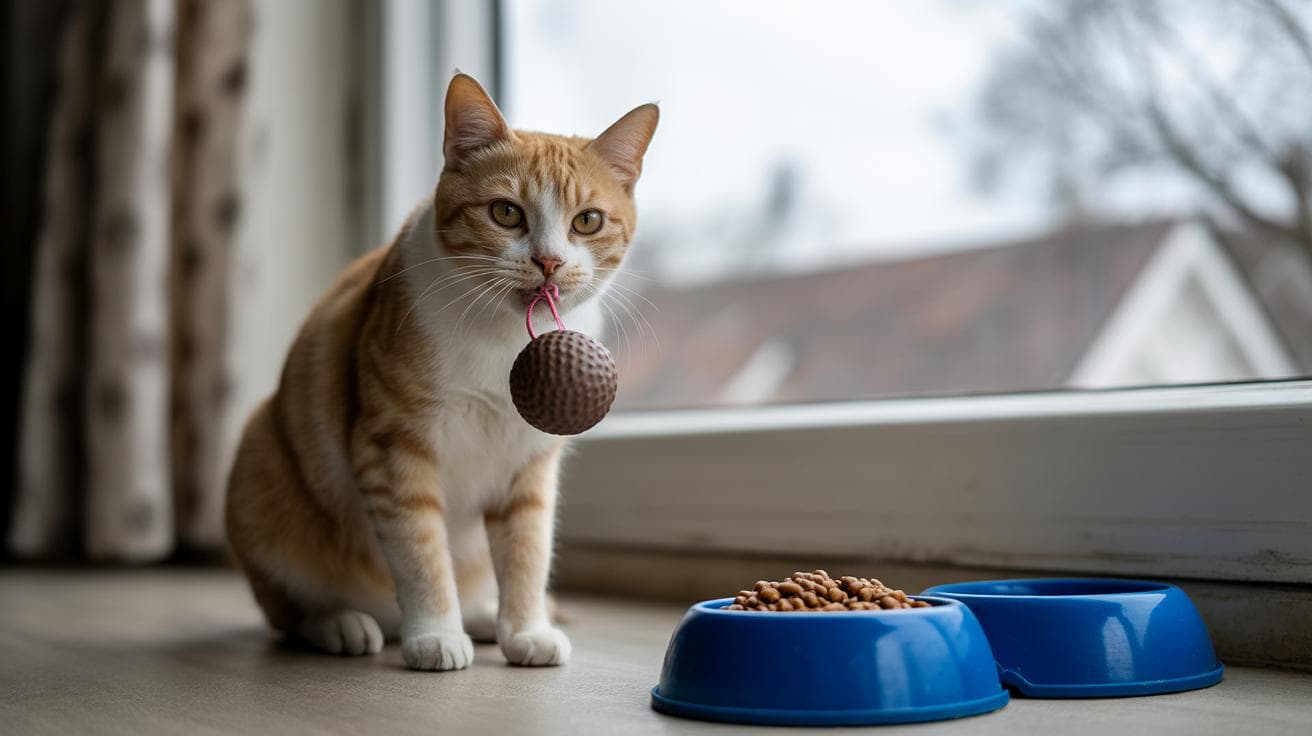
Scent is a cat’s first language. A toy that smells like home suddenly feels less scary and more like a friendly thing to explore. Ever watched your kitty sniff a new object like it’s a tiny mystery? This is how we make shy cats come around, on their own terms.
- Make a scent soaker (an item that soaks up your cat’s smell). Pick a soft blanket, their bed, or a cardboard scratcher (thick corrugated pad). Leave it in the cat’s main area for 24 to 48 hours so it gathers those familiar smells.
- Let the new toy hang out with the soaker for 24 to 48 hours. Think of the toy borrowing the blanket’s “I live here” smell. It makes the toy feel like less of a stranger.
- Move the soaker and toy to a nearby neutral spot for 2 to 5 days to spread that familiar scent between rooms. Scent swapping (moving smells around) helps shy cats accept new spaces.
- Put the scented toy near the food bowls for 1 to 3 meals so the toy shows up during a good thing. Cats quickly learn to link the toy with positive moments.
- Warm plush toys in your hands for 5 to 10 minutes before offering them (warmth and your scent help). You’ll feel the toy go from chilly to cozy, your cat notices that small detail.
- If your cat is very fearful, leave the toy where they can see it but can’t reach it for several days, and just watch from a distance. Don’t force interaction; let them investigate at their pace. Site-swapping and scent swapping are especially useful when direct visual contact is too stressful.
- Keep a tiny tracker or notebook. Jot down sniffing, short approaches, bats, or full avoidance so you know when to try slow-play next (see Step-by-step and Slow-play techniques).
Usually this scent work speeds up voluntary approach; a cat who sniff-sniffs and bats a toy a day or two later is on the right track. If you see dilated pupils (big, wide black circles), flattened ears (pinned back), or a full-body freeze (becomes a statue), back off and check the cues in Reading shy cat body language so you don’t push them into stress. Worth every paw-print.
Slow-play techniques and distance control
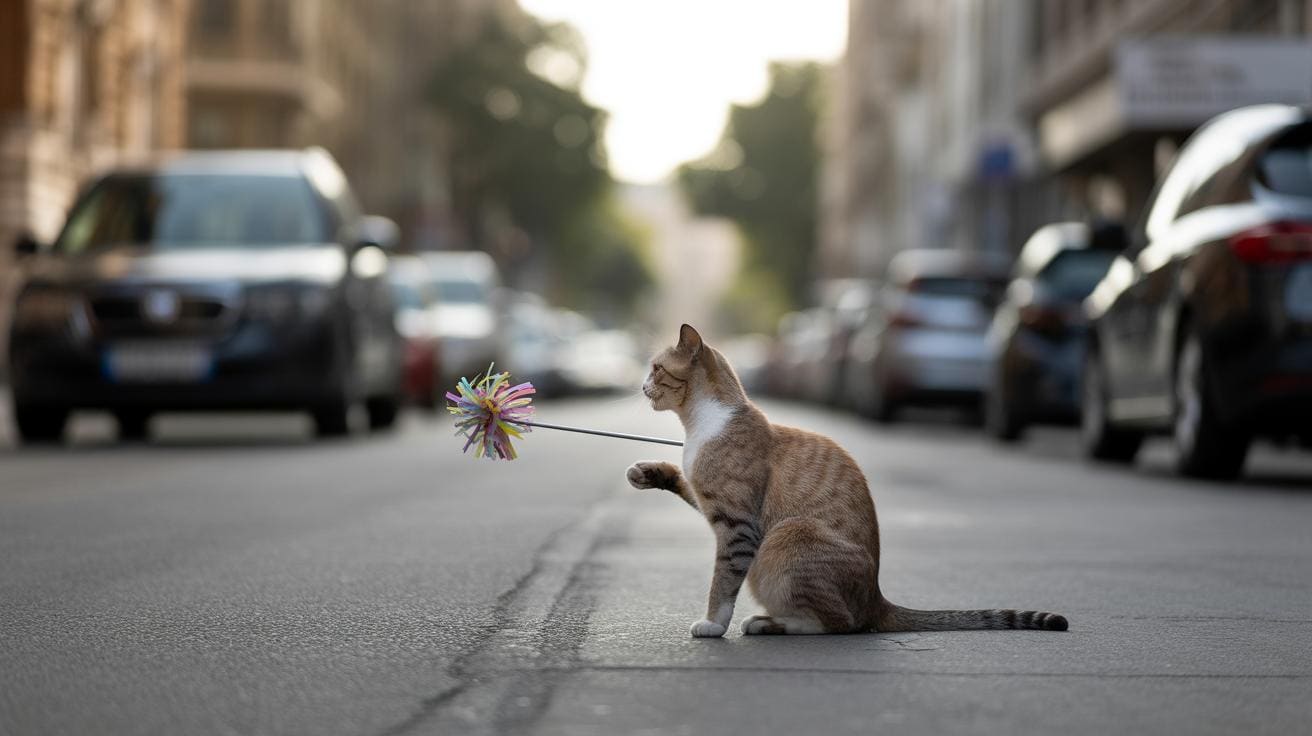
Slow, steady moves and giving space help a shy cat feel safe and curious. Start with tiny, lure-like motions and let the cat choose when to join. This is all about building trust with short, frequent play sessions so your cat learns play is optional and fun.
Ever watched whiskers twitch as a toy rolls by? That little signal means you’re on the right track. Keep sessions calm and repeat them through the day, your cat will learn the game on their own time.
Using wand toys safely
Long wands (think fishing-rod style shafts with a flexible core, like fiberglass (like a strong fishing-rod core)) keep your hands out of the kitty zone and let you control distance. Use soft, prey-like tugs and watch the cat’s body language for curiosity or stress.
- Start with your arm fully extended so the toy sits 3-5 feet away. The wand length controls how close you get.
- Keep motion low and parallel to the floor so the toy feels less threatening.
- Use tiny twitching moves, small, sharp jerks mimic real prey and help timid explorers engage.
- Pause after each motion and give the cat a beat to watch or sniff. Silence is part of the game.
- Don’t move your hand toward the cat; let the lure do the talking.
- Keep sessions short. Aim for 1-3 minutes, 2-4 times a day to build comfort slowly.
- End each playtime by leaving a capture toy nearby so your cat can snag something tangible. See Training, treats, and reinforcement for reward specifics.
You’ll notice progress in tiny signs: a focused stare, a half-step forward, a soft paw swipe. Celebrate those little wins, totally worth every paw-print.
Sample 2-week progression plan
Treat this as a gentle template you can slow down or repeat. Cats set the tempo.
- Days 1-4: work at 3-5 feet, 1-3 minute sessions, 2-4 times a day. Keep moves tiny and quiet.
- Days 5-10: when your cat shows soft interest (a look or a sniff), try 2-3 feet while keeping pauses frequent.
- Days 11-14: attempt 1-2 foot approaches for brief touches or light pats with the toy; back off the moment stress appears. See Reading shy cat body language.
If your cat hesitates, hold the distance steady and repeat shorter sessions instead of pushing forward. Log each session in a tracker, distance, length, and the cat’s response, so you can spot patterns and know when to consult Toy rotation, tracking progress, and troubleshooting for next steps.
Worth every paw-print.