Tired of surprise ankle ambushes and those tiny, sharp nips? Ever watched your kitty pounce from nowhere and wondered what just happened? Play aggression (when cats act out hunting, biting, pouncing, ambushing during play) is the usual culprit.
You’re not alone. It’s not spite. It’s hunting instincts mixed with extra energy and boredom. Kind of like a kid with too much sugar, but furrier.
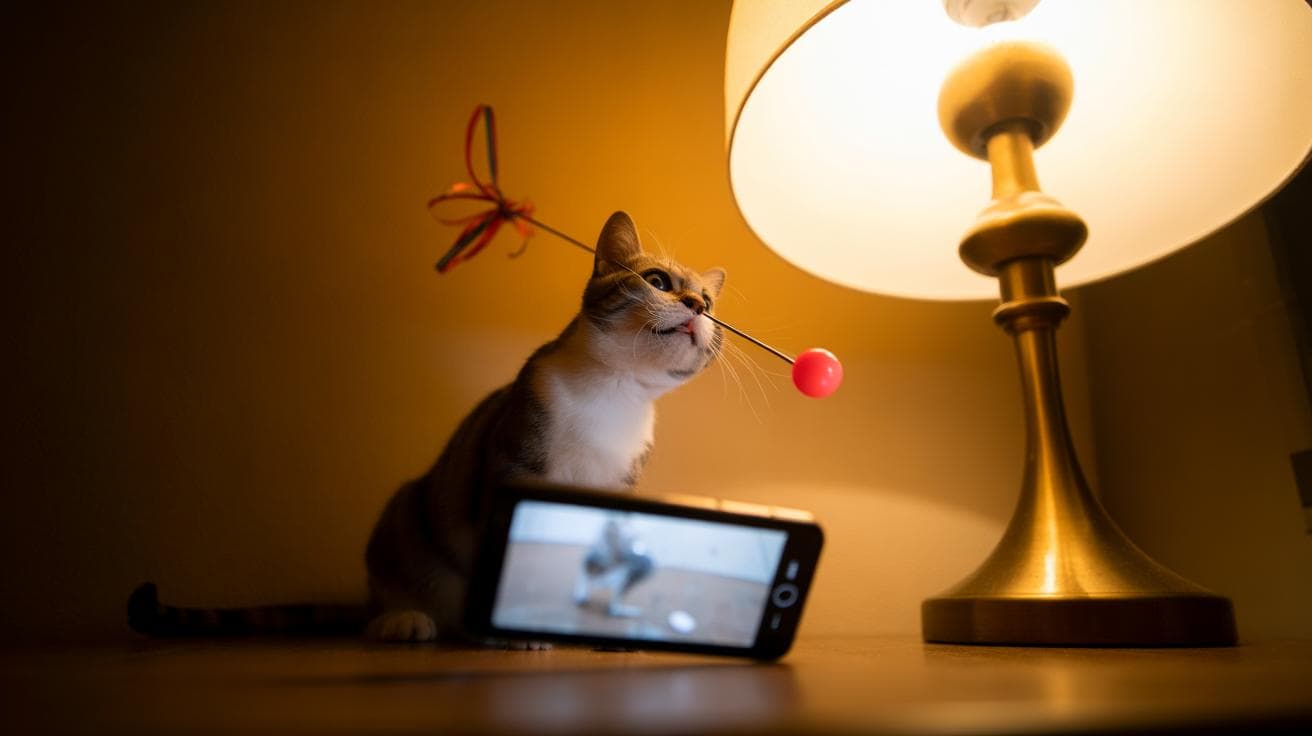
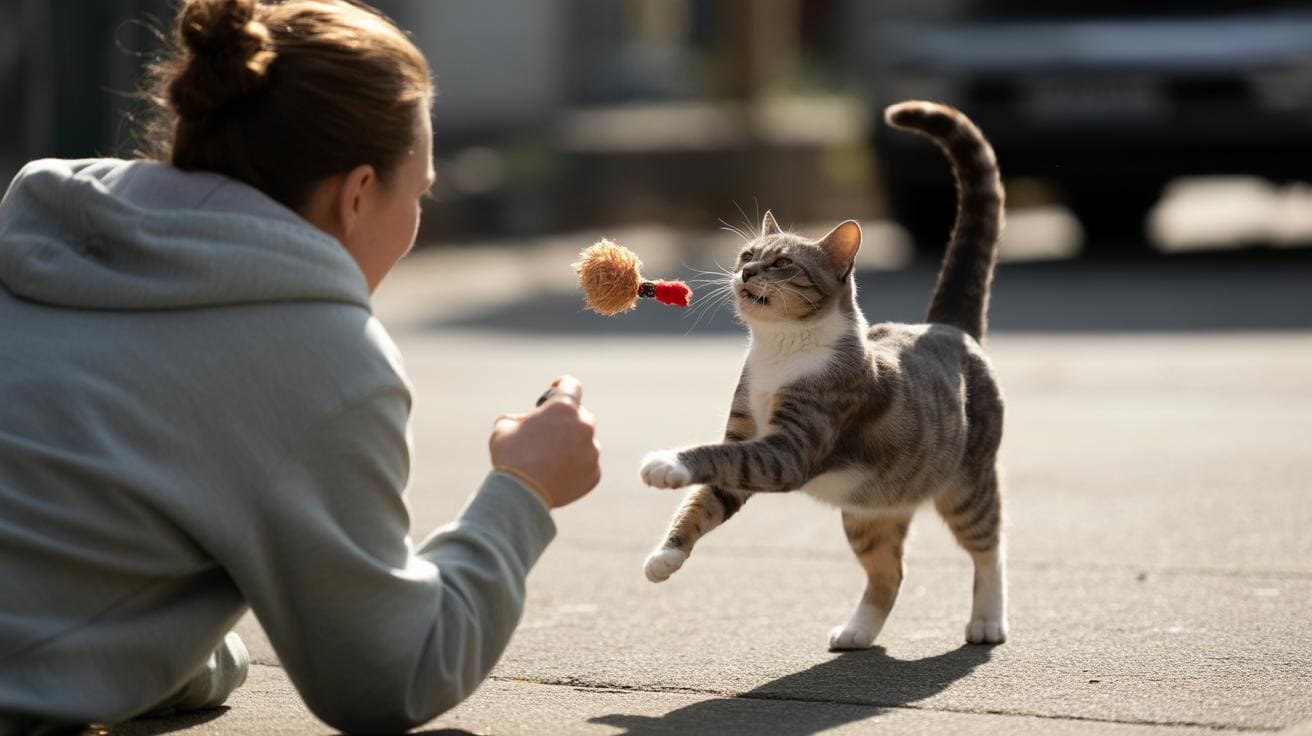
First rule: stop using your hands as toys. Seriously. Hands teach them that skin is fair game. Swap to wand or teaser toys (a stick with feathers or string you wave around) so your fingers stay safe. Think of it like a fishing rod for cats, just add feathers.
Use quick time-outs after a bite: 30 to 60 seconds of removing attention (time-outs, meaning brief calm breaks) when teeth land. No yelling, no drama, just pause the party and walk away. They’ll learn that biting ends the fun.
Block ambush spots where your cat loves to jump out, behind doors, under chairs, or at the foot of the bed. Add a little obstacle or a toy lure to change the habit. And run two 10–15 minute interactive play sessions daily (interactive play sessions = you moving the toy so they chase). Morning and evening works great for most schedules, watch the satisfying pounce and the soft thud when they catch it.
Short, consistent practice changes behavior. Do this every day for a few weeks and you’ll see real improvement. Oops, let me rephrase that… stick with it, and you and your cat will be pals again.
Worth every paw-print.
Immediate and Long-Term Fixes
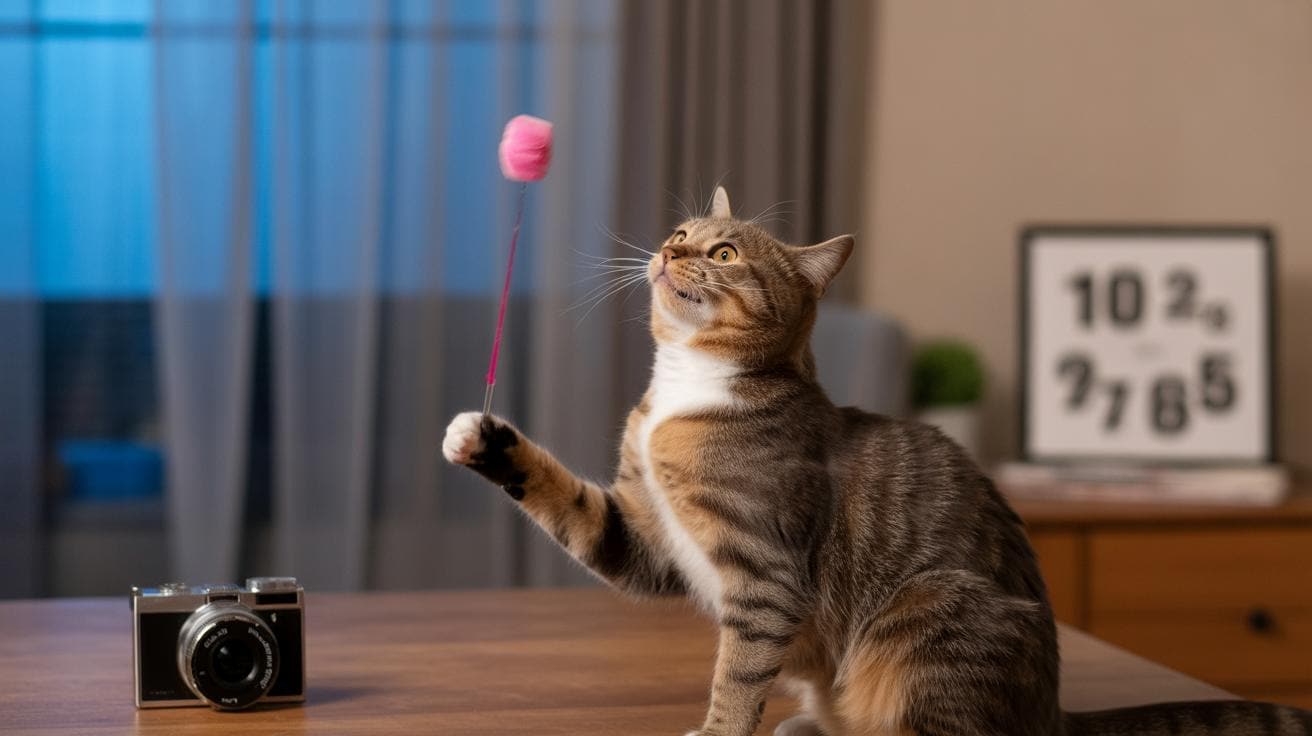
Let’s get practical and a little bit gentle. Stop using your hands or feet as toys right away, your skin is not a cat toy. Swap to wand or teaser toys so you keep some distance and the fun stays safe. Ever watched your kitty chase a feather and go full ninja? That’s the good stuff we want to keep.
If a bite happens within the next five minutes, stop play right away. Move away calmly. Give a 30–60 second time-out by leaving the room and withholding attention while you check the spot for bleeding or punctures (puncture wounds = deep skin holes). If the skin is broken or it’s a deep puncture, see a doctor. If the bite is just a nip with no skin break, clean it and keep an eye on it.
If your cat ambushes ankles, don’t stomp or yell. Toss a toy away from your body to interrupt the ambush and lure them off you. Block common hiding spots where ambushers wait. Then, later that evening, run a focused 10–15 minute interactive session to help drain energy, part of a twice-daily routine that really helps.
Here’s a short, friendly checklist to follow now:
- Stop using hands or feet as toys. Your toes are not a teaser.
- Use wand/teaser toys to keep distance and make play predictable.
- Do timed interactive play sessions of 10–15 minutes, twice a day.
- End each session with several successful captures so play finishes on a win.
- Rotate toys regularly so stuff feels new and exciting.
- Redirect ambushes by tossing a toy away from your body and blocking hiding spots.
- If bitten, give a 30–60 second time-out by leaving the room and withholding attention.
- If aggression shows up suddenly or behavior changes a lot, schedule a vet check (veterinarian = animal doctor) and consult a certified behaviorist (trained animal behavior specialist) for ongoing issues.
Want a practical multi-week rhythm? Keep sessions short and consistent, and track progress. Follow the drills in Step-by-Step Training Plan, learn posture and sounds in Recognizing Play Aggression, set up toy rotation and timing from Toys, Rotation & Routines, and use the safety and wound steps from Safety, Overstimulation & First Aid. Add tall perches and quiet zones from Environmental Enrichment so they’ve got choices. If sudden aggression or deep bites show up, move to When to Consult for veterinary or behaviorist escalation.
Call a pro fast if you see any of these escalation signs: sudden, unprovoked aggression; deep puncture wounds; aggression that gets worse or happens more often; or clear signs your cat is in pain. Act quickly and get medical or behavioral help, worth every paw-print.
Recognizing Play Aggression in Cats vs Other Aggression

Play aggression looks a lot like hunting practice. You’ll see short, gentle mouthing (soft nibbling), a relaxed "play face," and quick grab-and-release moves instead of a long, holding bite. The body stays loose, ears and tail look normal, and there’s no growling or hissing. Your cat’s whiskers might twitch as they stalk a toy. Ever watched your kitty chase shadows? Same vibe, just practice.
Fear or defensive aggression feels and sounds different. You’ll hear growling or hissing, see flattened ears or a crouched, flattened body, and notice tail flipping or sustained piloerection (raised hackles). The whole cat looks tense and ready to defend. Rule out pain, illness, or redirected aggression with a veterinary exam before you call behavior "play" , sudden changes can be medical. See 'Immediate and Long-Term Fixes' above for quick safety steps.
Play signals:
- Quiet mouth, light mouthing (gentle nibbling, not hard bites).
- Relaxed "play face" and a loose, bouncy posture.
- Intermittent grab-and-release, not a sustained hold.
- Normal ear and tail position, no stiffness.
Aggression or fear signals:
- Growling or hissing during the interaction.
- Flattened ears or a low, flattened body stance.
- Rapid tail flipping or sustained piloerection (raised hackles).
- A very stiff, defensive stance.
Checklist: get a veterinary exam if you see any of the following
- Sudden start of aggressive behavior with no clear trigger.
- Signs of pain or a limp after handling or while moving.
- Repeated severe bites that puncture the skin.
- Other medical signs like appetite change or unusual lethargy.
Primary Causes of Play Aggression in Cats
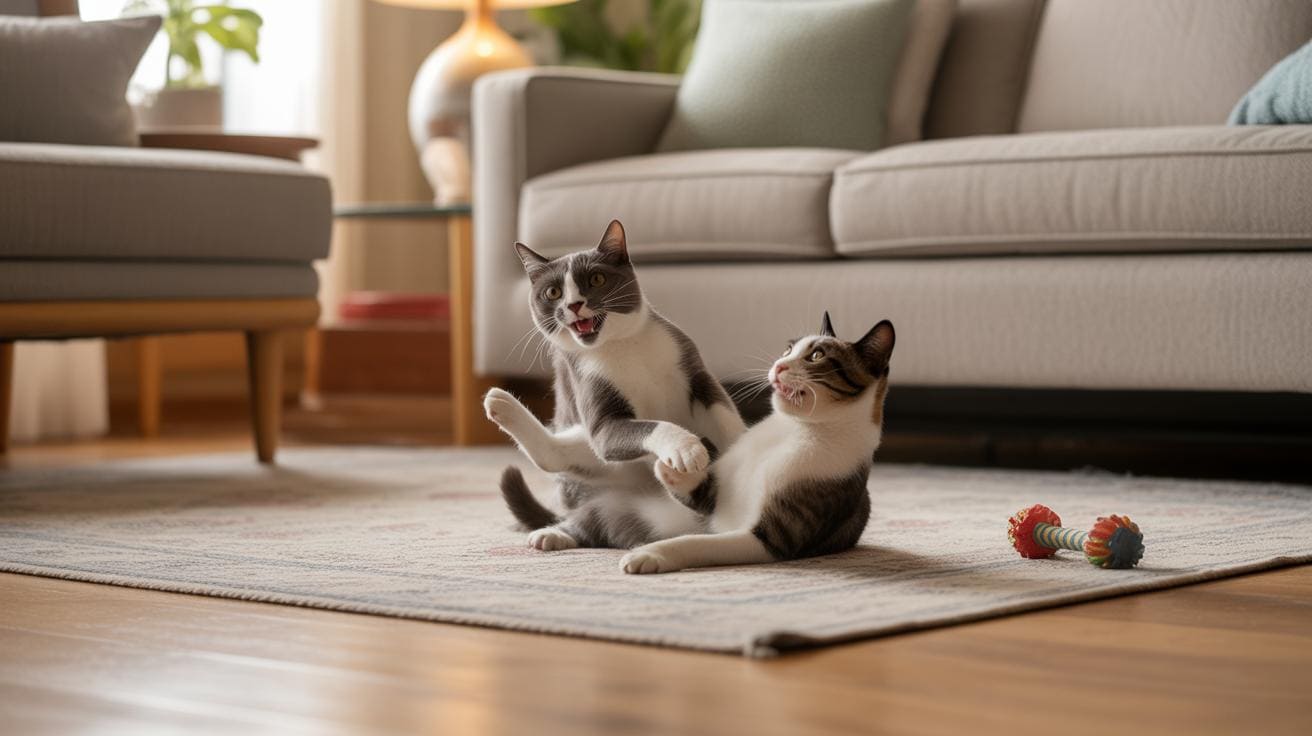
Play-biting is usually just your cat's hunting instinct at work and little gaps in their day. The prey drive (the urge to chase, catch, and bite fast-moving things) can turn toes and hands into moving targets during short, excited bursts. Kittens who missed littermate play (the rough-and-tumble between siblings that teaches gentle biting) often never learn soft-mouth skills, and boredom or teething (when baby teeth fall out and adult teeth come in) makes mouthing worse.
Ever had your ankle attacked at 2 a.m.? Yeah. That’s often a mix of pent-up energy and instinct. Pain, sudden changes at home, or high-arousal moments with other cats can turn playful nips into harder bites. Neutering (surgical removal of reproductive organs) can lower sex-driven aggression, but it won't stop the prey-driven pounce.
- Hunting instinct , Prey drive (instinct to chase and capture prey) makes cats stalk, pounce, and bite. Think fluttering toys, socks, or moving toes.
- Undersocialized kittens , Missed littermate play means poor bite inhibition (they never learned to hold back their teeth).
- Boredom and lack of enrichment , Not enough play or toys leads to rough, attention-seeking nips. Tossing an unbreakable ball before you leave can help.
- Teething , Mouthing and chewing peak when kitten teeth are changing, because it feels soothing to their sore gums.
- High energy from a sedentary routine , Long naps then sudden zoomies end in boisterous ambushes.
- Playing with hands , Using your fingers as toys teaches that skin is fair game, so use wands instead (like a fishing rod for cats).
- Multi-cat redirected triggers , A fight or excitement with another cat can get redirected at a person (they bite you after a cat squabble).
- Pain or illness , Discomfort lowers patience and makes a cat more likely to snap or bite.
Understanding why it happens makes it easier to fix. Try more play, safer toys, and small changes in the routine. Worth every paw-print.
Step-by-Step Training Plan
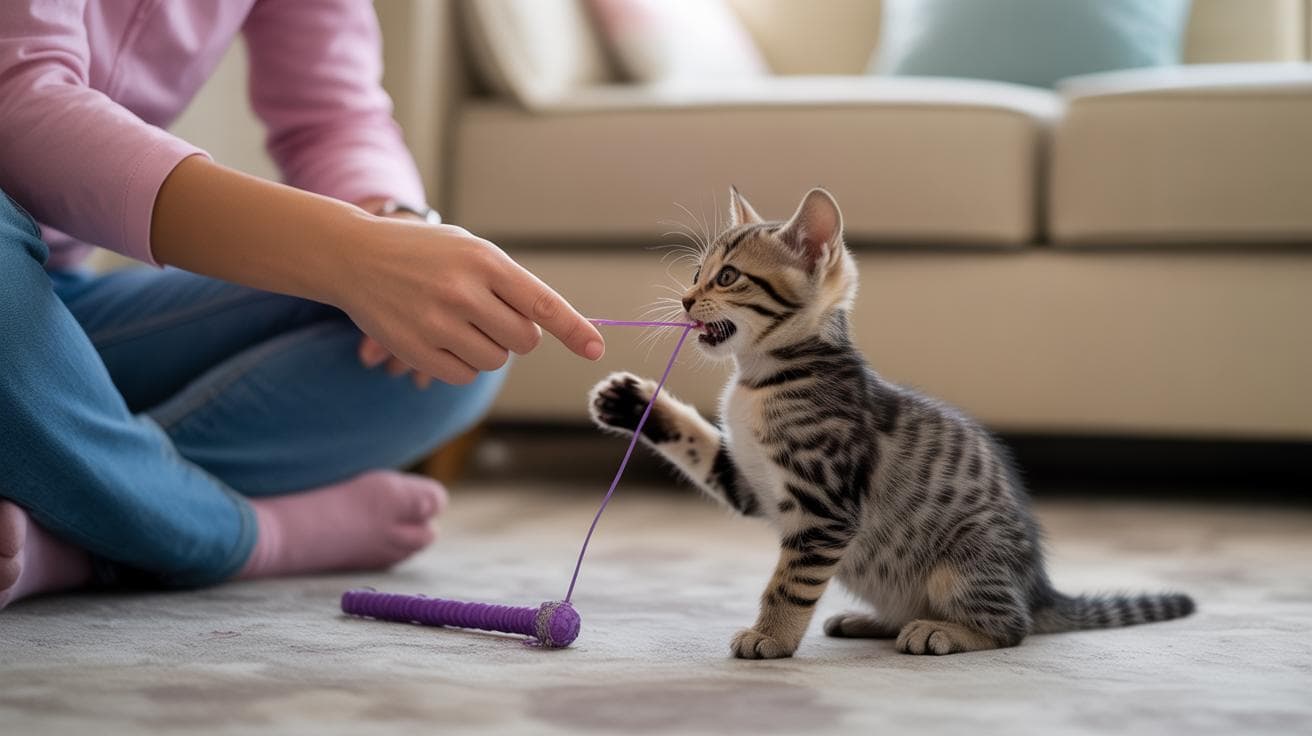
See "Immediate and Long-Term Fixes" above for the eight immediate actions. This section lays out a friendly, multi-week plan you can follow to teach gentler play and cut down on nips.
Bite-Inhibition Training for Kittens
Kittens learn bite inhibition (learning to control how hard they bite) from rough-and-tumble littermate play, where siblings yelp or stop playing when a bite is too hard. You can copy that lesson with short, supervised sessions that shape softer mouthing (light use of the mouth, not a full bite) using a click-and-treat method and clear stopping cues.
Keep sessions short and playful. Use a wand toy (a long stick with a toy on the end so your hands stay out of reach), let the kitten stalk and pounce, then mark gentle mouthing with a clicker (a small plastic device that makes a sharp click) and offer a tiny treat right away. If a bite is hard, stop the motion immediately and pause play for a short quiet break so the kitten learns that hard bites stop the fun. Repeat often and be patient. Ever watched your kitten pounce like a little tiger? That joy is what we keep, we just teach them softer landings.
Checklist – gradual bite-pressure reduction:
- Start with distance play using a wand toy so the kitten never practices biting skin.
- Mark soft mouthing with a click and give a small treat within one second.
- If the kitten bites too hard, stop movement instantly and hold still for 3 to 5 seconds.
- Resume play only when the kitten is calm and paws are relaxed.
- Over several sessions, require softer mouthing before you click-and-treat.
- End each session with a few successful gentle captures so play finishes on a high note.
Teaching "Leave It" and Calm Cues
Teach "leave it" and a calm cue with short, easy drills. Present a toy or a low-value treat, say the cue, and reward the cat when they look away or sit calmly. Start with tiny wins and only raise the challenge once your cat reliably looks away for a second or two.
Practice sequence:
- Offer a toy, say "leave it," and reward any glance away within one second.
- Increase the calm time to about three seconds before giving the reward.
- Add mild distractions (a different room or a moving hand) once three-second trials succeed.
- Use the calm cue to pause play just before exciting moves so your cat learns to settle first.
Time-Out and Escalation Protocol
If a bite breaks skin or becomes persistent, stop play right away and remove your attention so biting doesn't pay off. Use short, predictable time-outs that teach limits without scaring your cat.
- On a hard bite, freeze and stop all movement for 1 to 2 seconds, then leave the room.
- Give a 30 to 60 second time-out out of sight with no petting or eye contact.
- Return calmly and only resume play when the cat is settled and quiet.
- If bites continue, lengthen time-outs or pause training for the day.
- If bites are severe, there’s sudden aggression, or you see no progress after steady practice, get a veterinary check and consult a certified behaviorist.
Expect measurable change in 2 to 8 weeks with steady practice: fewer nips per session, longer calm windows, and fewer ambush attempts mean you’re making good progress. Worth every paw-print.