Think your new kitten is being mean or just practicing ninja moves? Ever watch those tiny pounces and think, huh, aggressive or adorable?
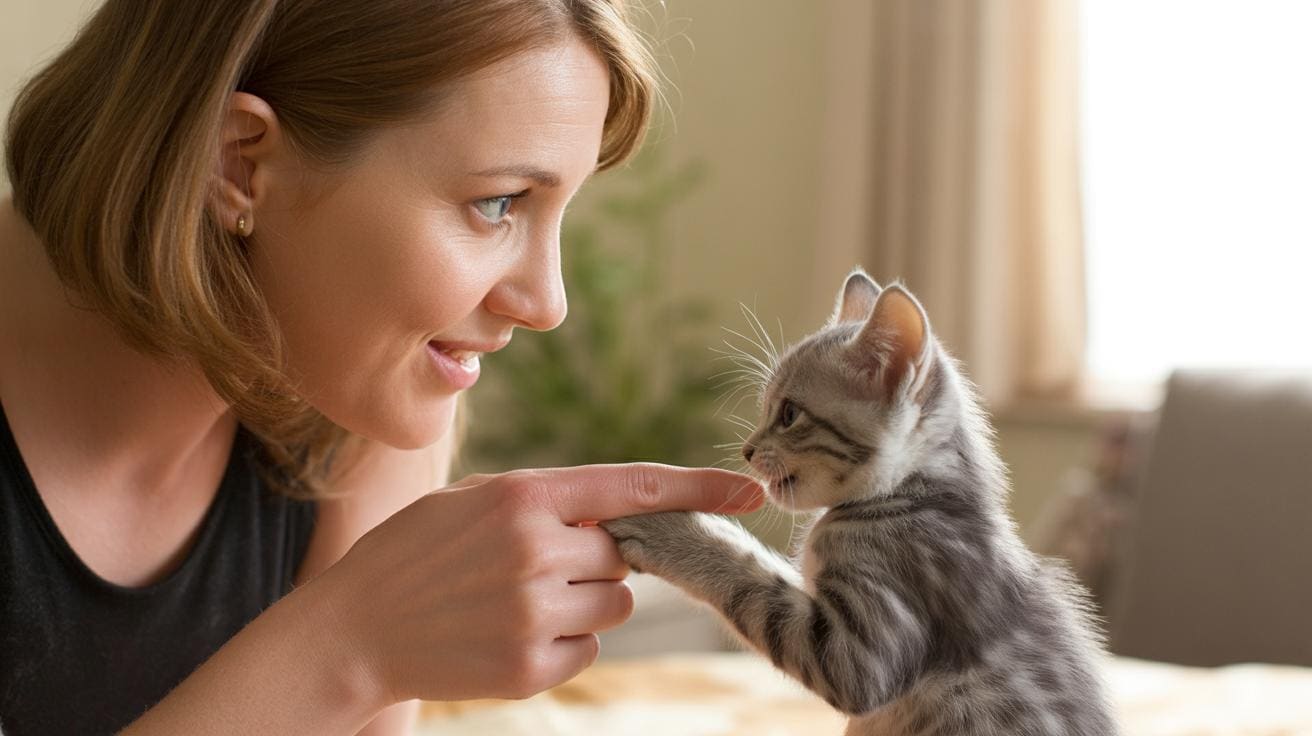
Play aggression is totally normal. Those pounces, the soft nibbles (gentle mouthing – soft nibbling with no real bite), and quick swats are your kitten practicing hunting. It usually peaks around 2-6 months when they’re teething (teething – gums can hurt as new teeth come in) and full of zoomies.
Watch for signs that play is getting too intense: wide, dilated pupils (big, round eyes), a flicking or lashing tail, a stiff body, or sudden bites that come out of nowhere. Those moments are your cue to step in before fingers become target practice.
What to expect: this phase tends to ease as they get older and you give them better outlets. Most kittens mellow over a few months, especially if they get regular play and something safe to chew on. I once saw a kitten leap six feet for a feather toy, pure joy.
How to redirect that wild energy into safe play:
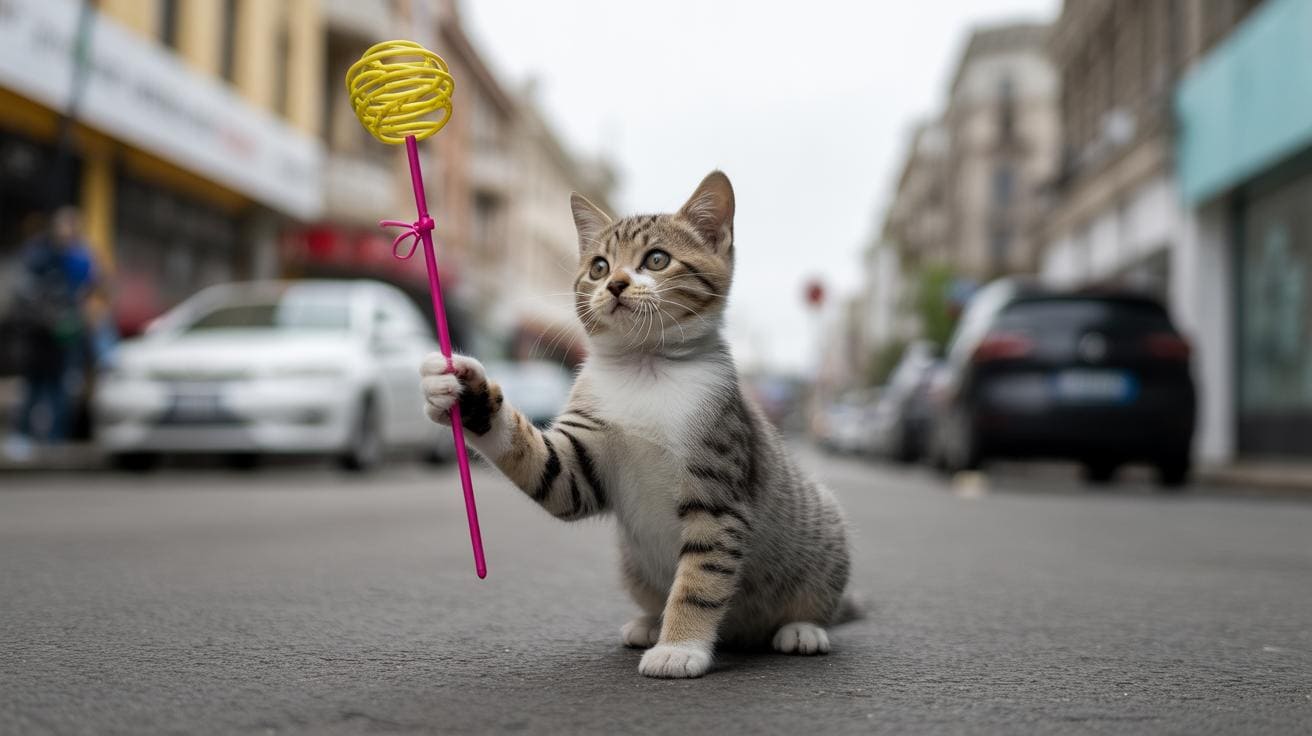
- Use wand or teaser toys like a fishing rod for cats – you stay out of reach and they chase.
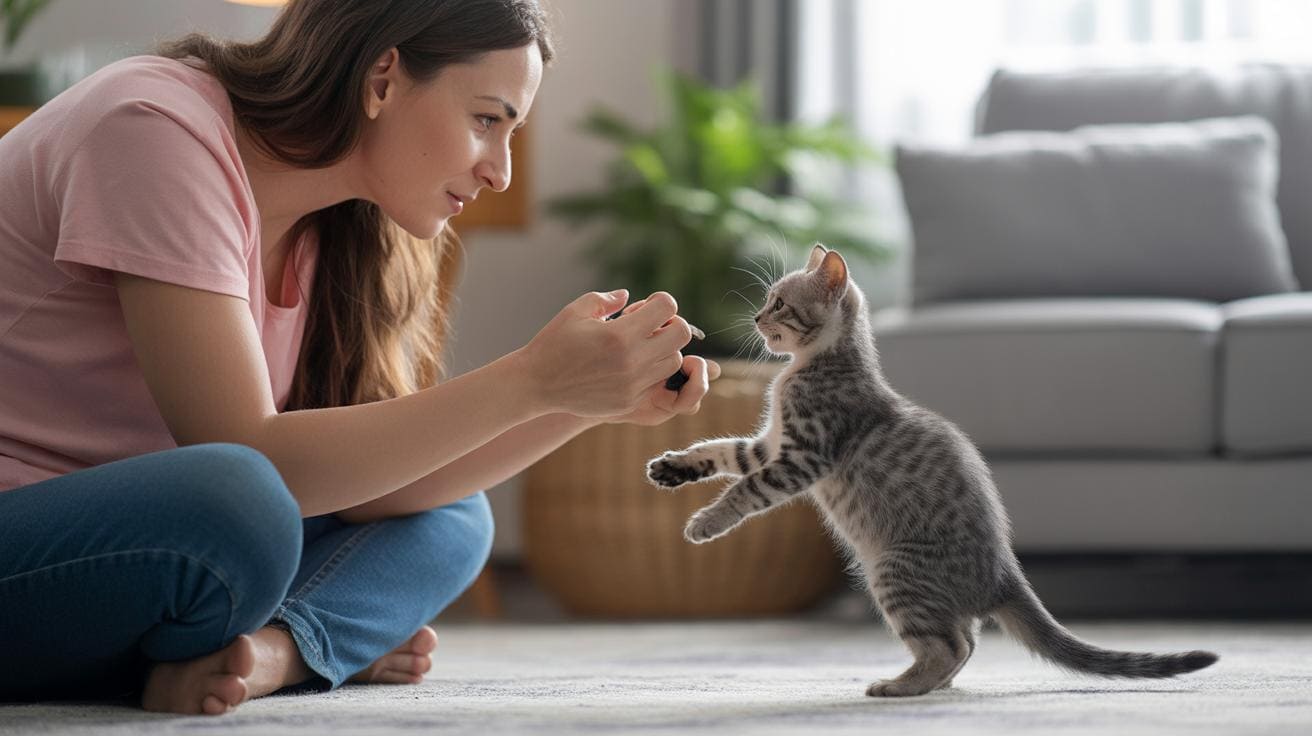
- Swap your hand for a chew-safe toy when they try to bite. No hands as toys, ever.
- Rotate toys so each one feels new and exciting.
- Offer teething-friendly chew toys or rubber bits made for cats.
- Do short play sessions before you leave or at night – ten minutes of vigorous play can calm a kitten for a while.
- If play gets too rough, pause the fun and walk away for a minute so they learn that biting ends play.
Keep it fun and consistent. Praise gentle play, give a quick correction when things get fierce, and reward redirection with a feather chase or a treat. Your fingers will survive, and your cat will learn to be delightfully playful instead of painfully personal.
Worth every paw-print.
Play Aggression in Kittens: What to Expect
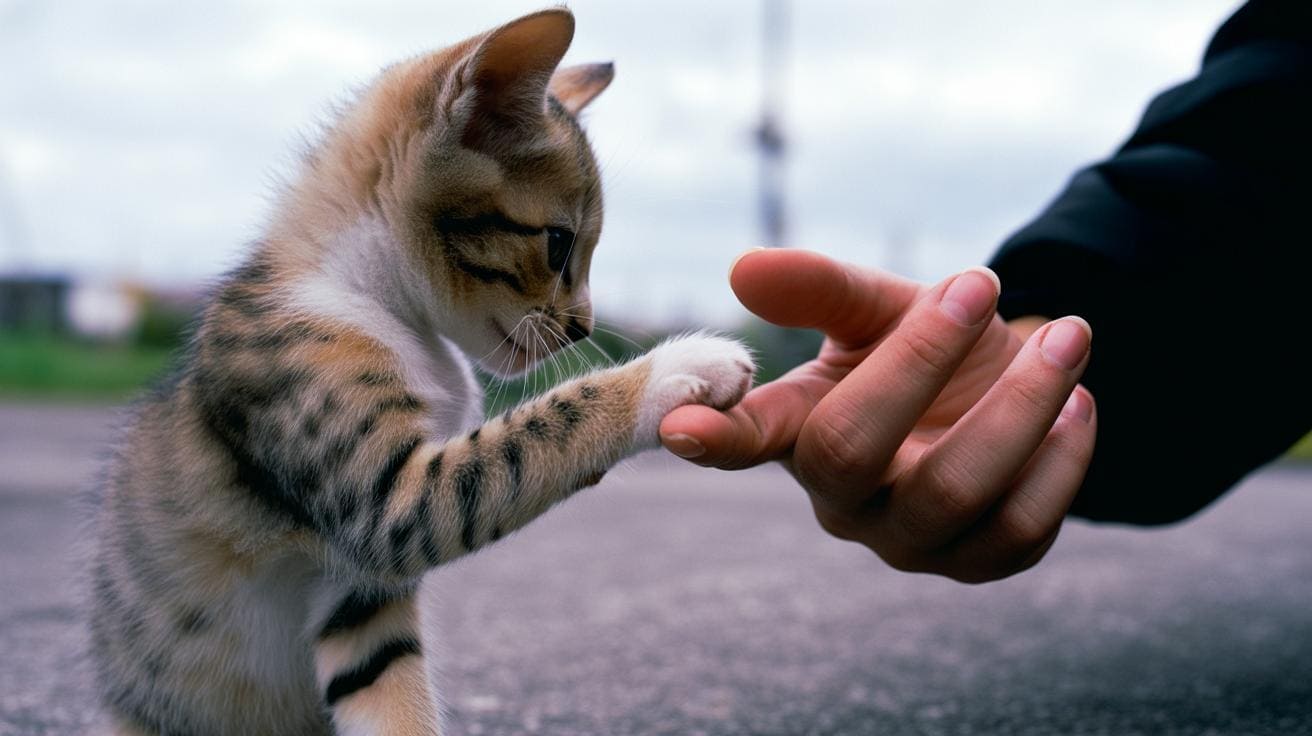
Play aggression is when normal hunting and play behaviors, like pouncing, mouthing (gentle nibbling), and swatting (quick paw hits), get aimed at people or housemates and turn rough instead of gentle. It’s a normal part of kitten life, but yeah, it can sting a bit, literally sometimes.
You’ll see it most in kittens and younger cats under about 3 years, with a big spike around 2 to 6 months. That’s when they have loads of teenage energy and are often teething (when baby teeth are coming in), so they chew and bite more.
Look for these signs before play gets out of hand:
- Dilated pupils, like big round moons.
- Flattened or pinned ears, which say “I’m tense.”
- Rapid tail lashing, a quick swipe back and forth.
- A sudden jump from soft play to hard biting.
- Targeting moving hands, feet, or ankles.
- Repeated unprovoked attacks that seem to come out of nowhere.
Keep play sessions short and focused. Five to fifteen minutes is perfect. It’s enough to burn energy but not long enough for things to spiral. Never use your bare hands as toys. Ever. Think of a teaser wand like a fishing rod for cats, up close fun, with feathers or a toy on the end so your fingers stay safe.
Redirect biting to proper toys, and give a firm “no” or stop the fun when they go too far. Timeout works. Give a chew-safe toy if they’re teething. For busy days, toss an unbreakable ball before you head out, that’s ten minutes of safe play and less shredded fingers.
Get professional help if bites break skin, if attacks keep escalating, or if your cat suddenly changes behavior. A vet or certified behaviorist can check for pain, medical issues, or training plans that actually work.
I once watched Luna leap six feet for a wand toy and then settle down to knead a blanket. Worth every paw-print.
| Quick Tips | |
|---|---|
| Session length: 5–15 minutes | |
| Never use hands as toys | |
| Get professional help if bites break skin or escalate |
Causes and common triggers of play aggression in kittens
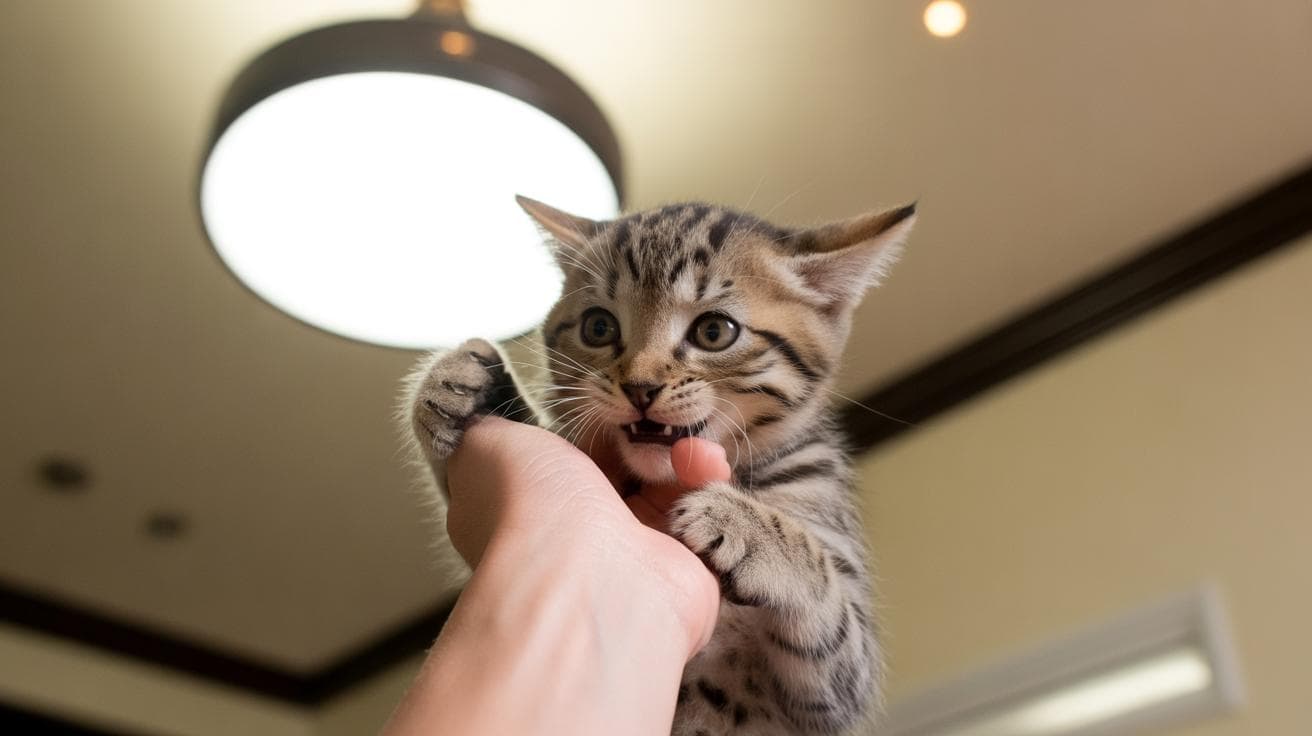
Play aggression usually starts when normal kitten instincts , stalking, pouncing, mouthing , get aimed at the wrong thing. Ever watched a whisker-twitch before a pounce? That hunting spark is natural. It’s instinct, not meanness.
Common root causes are easy to spot. Overstimulation from too-intense play can overwhelm a kitten (sensory overload). An unmet predatory drive (the urge to hunt) makes them want to chase and grab. Boredom or not enough outlets leaves them restless. Early social gaps, like being separated from littermates or missing maternal correction, mean they never learned bite inhibition (how hard is okay when they bite). And when people rough-house and treat hands like toys, kittens learn that skin is fair game , soft nibbles turn into harder bites over time.
Typical triggers around the home include fast-moving hands or feet, high-energy play without a real toy, nighttime zoomies, or feeding and play schedules that don’t match the kitten’s rhythm. Solo kittens with no playmate get extra wound-up. In multi-cat homes, scarce resources can raise tension and lead to rough play. Pain or illness also lowers a kitten’s tolerance for handling and can make them snap.
Always rule out medical causes with a vet check if biting starts suddenly or your kitten seems touchy; pain changes behavior. Practical fixes help a lot. Keep play sessions short and toy-focused. Add solo enrichment like puzzle feeders or unbreakable balls (unbreakable means tough plastic or rubber). Use toys , think of a teaser wand like a fishing rod for cats , and keep hands out of the play. Slow, predictable routines calm them down. Extra play before bed can burn off zoomies and make nights calmer.
See quick tips above.
Worth every paw-print.
Play aggression timeline: kitten development, teething, and peak weeks to expect
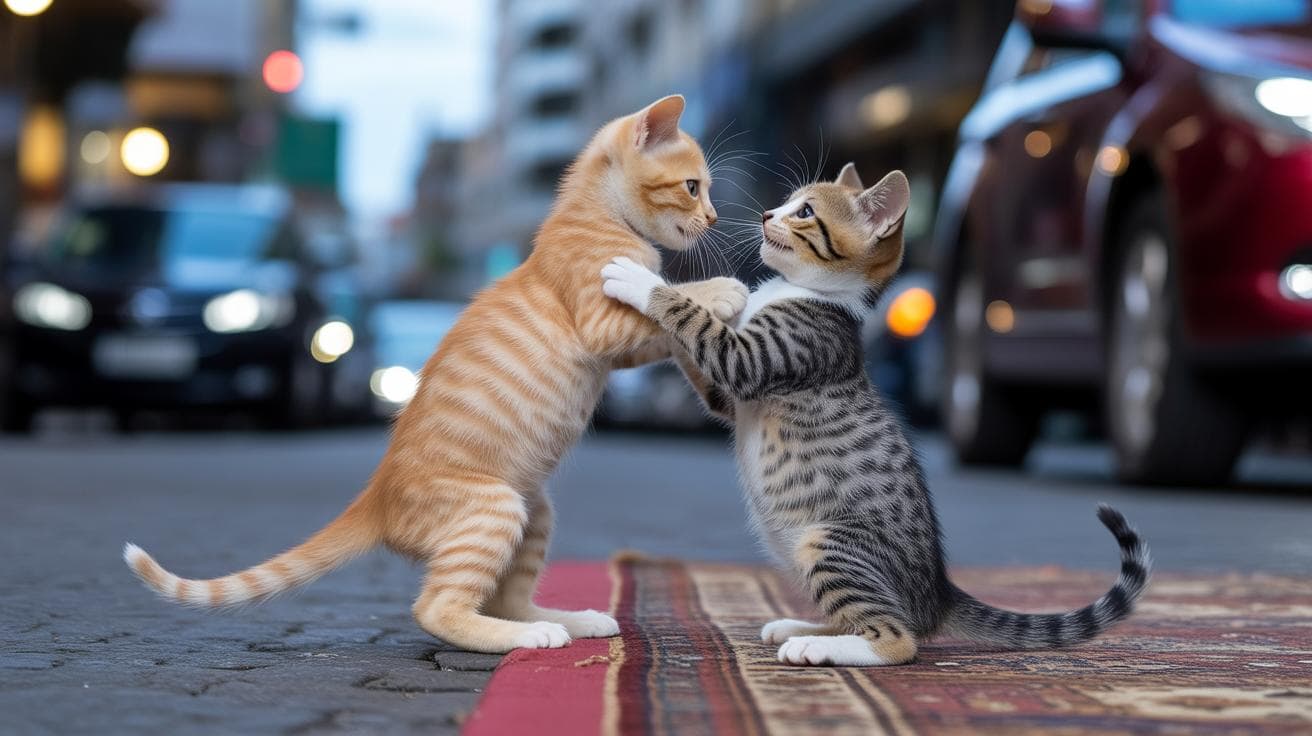
This chart is a friendly week-by-week guide to what your kitten might do as they grow , when play-fighting starts, when teething makes mouthing worse, and when you’ll see big energy spikes. Think of it as a roadmap so you’ll know which behaviors are normal and when to step in with gentle guidance. Ever watched tiny teeth meet your finger? Yeah, that one’s common.
Short version: play-fighting picks up after week 3. Bite inhibition (learning how hard is okay) is strongest around 7 to 12 weeks. Teething (when baby teeth are coming in) often increases nipping between 8 and 16 weeks. A big energy surge shows up around 3 to 6 months. Most cats calm down by a year, though some hunting habits can hang on until about 3 years.
| Age/Weeks | Typical play behaviors | Recommended interventions |
|---|---|---|
| 0–3 wks | Newborns sleep and nurse most of the time. Very little play yet , mostly snuggles and tiny movements. Neonatal (newborn) reflexes rule the day. | Handle very gently for short checks. Keep mom and litter calm and warm. Let nature do its thing while you offer soft, careful touch. |
| 3–7 wks | Social play starts: soft swats, little pounces, basic stalking. The socialization window opens and curious kitten energy shows up. Their whiskers twitch and they explore. | Supervised handling and lots of littermate play. Gentle exposure to people and everyday sounds. Use calm voices and short cuddle sessions to build confidence. |
| 7–12 wks | Really intense littermate play teaches bite inhibition (how hard is okay). Expect full-on wrestling, tiny yelps, and role-play that shows them limits. | Encourage group play and let kittens teach each other when possible. Use wand toys as targets so hands stay safe. Short, fun sessions work best. |
| 8–16 wks | Teething (when baby teeth are coming in) makes mouthing and nipping more frequent. They may nibble for comfort, chew on soft things, or lightly bite while playing. | Offer chew-safe toys and rotate them. Keep play sessions short and redirect nibbling to toys. Stay patient , it’s temporary and needs gentle guidance. |
| 3–12 months | Adolescent energy spike: zoomies, vigorous play, and sometimes rougher bites. Control improves slowly as they grow into their adult moves. | Do daily interactive play for 5 to 15 minutes to burn energy. Be consistent with rules and reward calm behavior. Consider puzzle feeders for extra brain work. |
Early, gentle handling and time with littermates usually helps kittens learn better bite control and can shorten the rough phase. If a kitten was raised alone or weaned too early, the rough period often lasts longer, so be extra patient and consistent.
Worth every paw-print.
Recognizing signs: normal play biting versus problematic play aggression in kittens
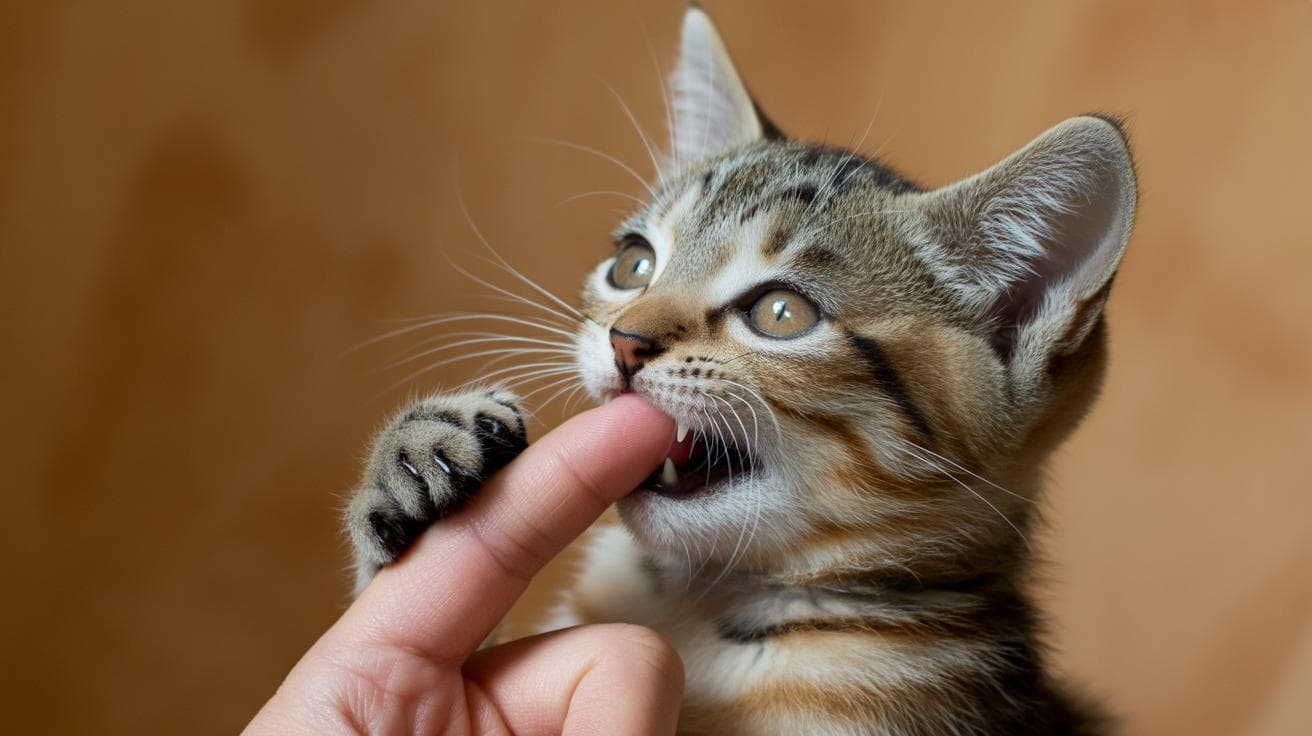
Play bites are usually quick, soft, and followed by the kitten relaxing or going back to a toy. You might feel a tiny nibble during a pounce and then your kitten chills out. Problematic play aggression is different – harder grabs, repeated nips that escalate, or focused attacks on skin that make you flinch instead of smile.
Watch clusters of body signals, not just one move. Big, round pupils that flick toward a toy then shrink again usually mean excitement. Pinned ears and tense shoulders often mean the kitten is wound up. Tail twitches, sudden yowls, or a cat that won’t calm down after a catch are signs play is tipping into rough territory. Ever watched your kitty stalk then go silent before striking? That quiet can be a clue.
| Play biting | Problematic play aggression |
|---|---|
| Quick mouthing, relaxed body | Repetitive hard bites, tense posture |
| Stops after a pause or distraction | Keeps coming back to target flesh |
| Playful chirps or silence | Hissing, yelps, or loud growls |
Concrete scene: your kitten stalks your socked foot at dusk, pounces, and clamps down. Do this instead – toss a wand toy so the kitten gets a successful catch, stop moving your foot, and give a calm break of 30 to 60 seconds before you try playing again. Think of the wand like a fishing pole for cats – let them win sometimes.
For deciding severity, keep track of frequency, whether skin is broken, the context (was it play or handling?), and if the cat shows calming signals afterward. If bites are frequent, draw blood, or happen while you’re just petting, get help from your vet or a behaviorist. In truth, small bites that stay playful usually fade with redirected toys and short time-outs.
Quick tips:
- Swap feet for toys during play.
- Reward calm behavior with a quiet pet or treat.
- Short, consistent breaks teach limits.
- Seek professional advice if bites break skin or get worse.
Worth every paw-print.