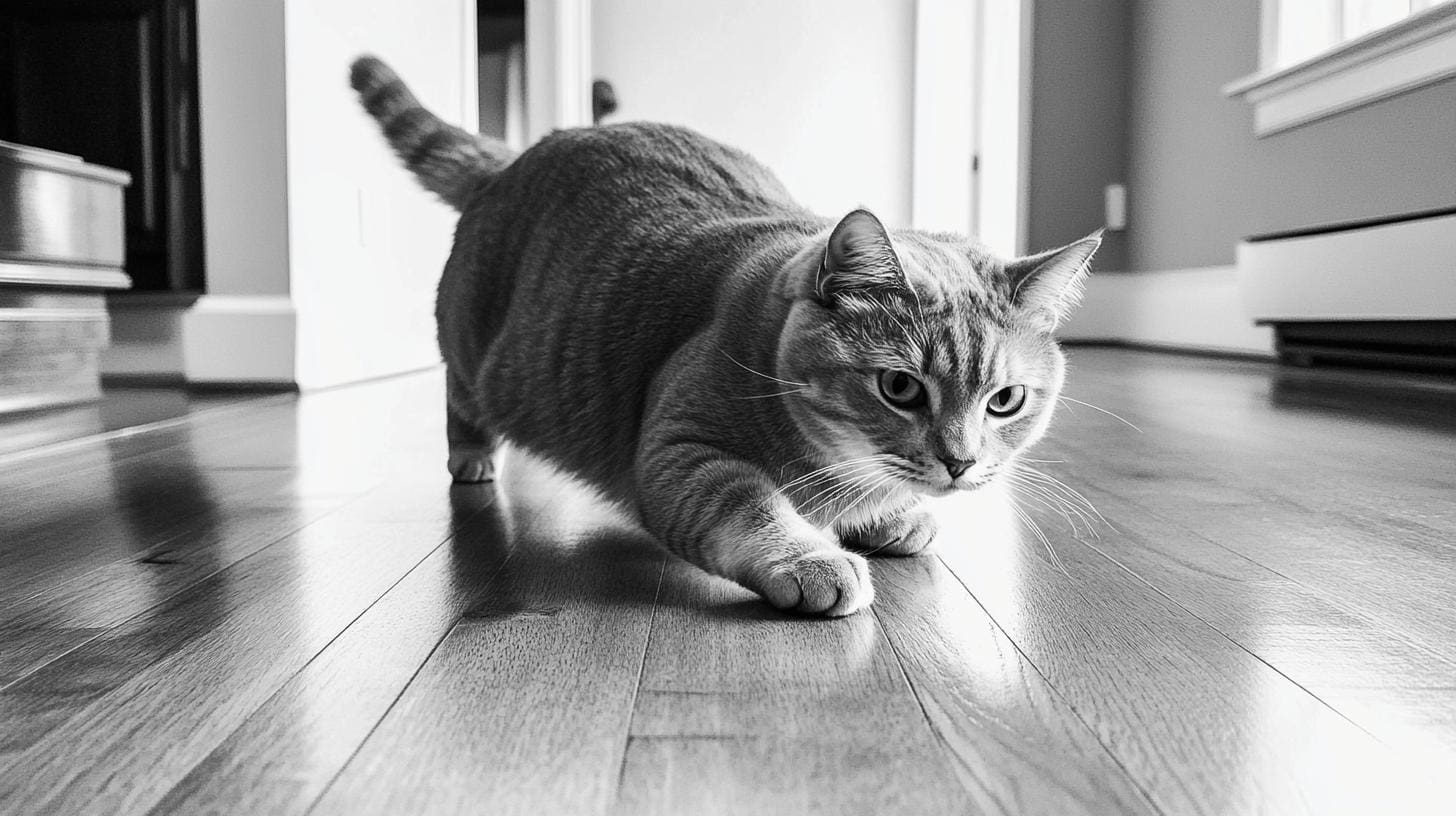
Ever wondered why your cat is suddenly twirling after its own tail like it's the greatest plaything on earth? Cats are known for their quirky antics, but tail chasing is more than just an entertaining display. In this blog post, we'll delve into the fascinating reasons behind this feline behavior.
From honing their hunting instincts to simply seeking a playful distraction, there's more to these dizzying spirals than meets the eye. Understanding the motives can also highlight any signs of stress or health issues. Let’s unravel the mystery together!
Understanding Why Cats Chase Their Tails
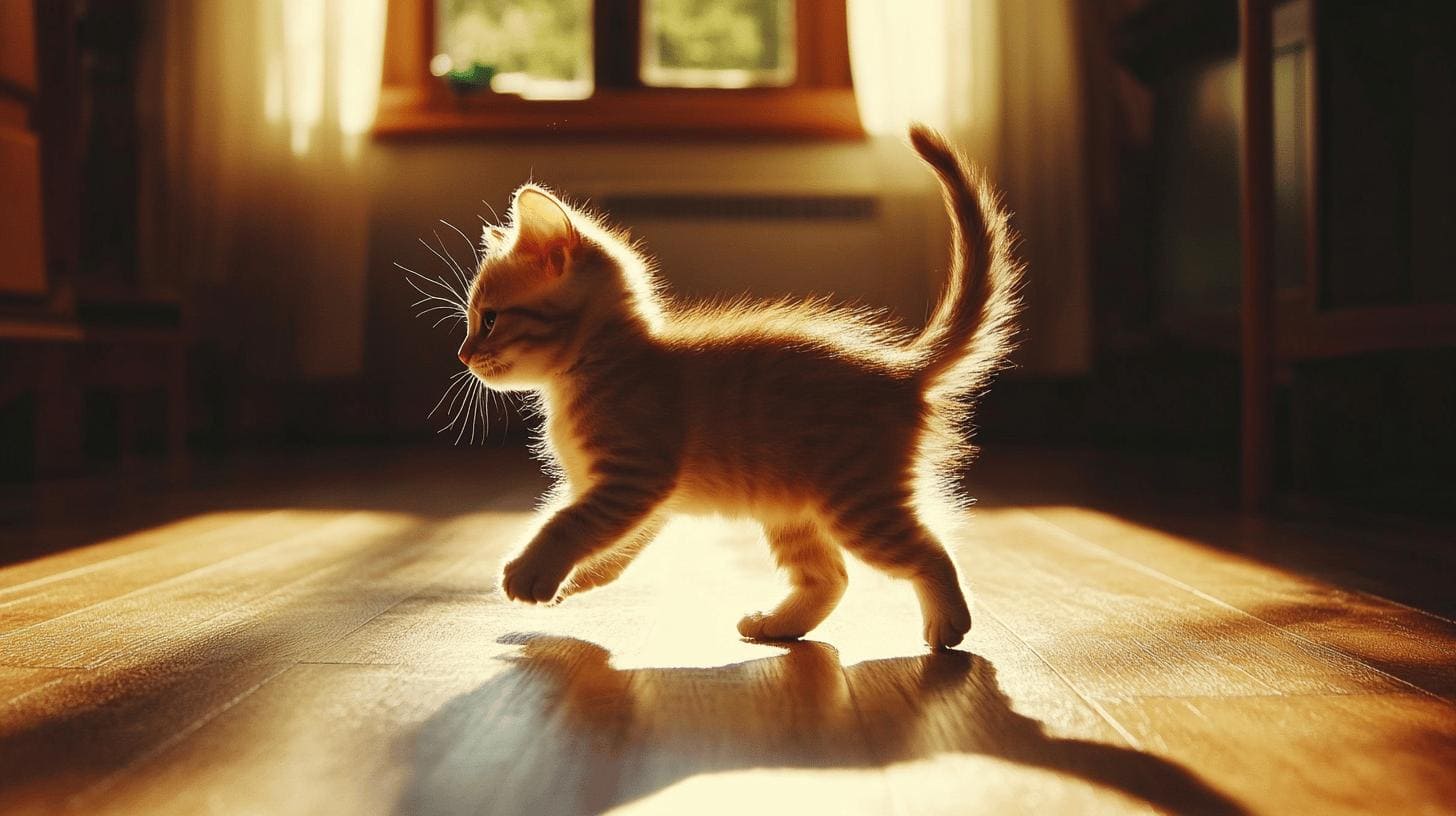
Cats chase their tails for a variety of reasons. Here are five key reasons why this behavior occurs:
- Instinctual hunting practice
- Developmental behavior
- Response to stress
- Curiosity
- General playfulness
Cats are natural hunters, and tail chasing is often an expression of their instinctual behavior. They might perceive their tail as prey, using the behavior to practice and refine their hunting skills. This is common in kittens and young cats as they develop motor skills and explore their environment. Tail chasing allows them to satisfy their innate curiosity about their own bodies and their surroundings.
It's essential to observe this behavior in context. While playful tail chasing is normal, especially in younger cats, it can also indicate stress or boredom, particularly in indoor cats with limited stimulation.
Understanding the circumstances in which your cat chases its tail can help you determine whether it's a benign activity or a sign of underlying issues. If you notice the behavior becoming excessive or accompanied by signs of distress, it may warrant a closer look to ensure your feline friend is healthy and happy.
Medical and Behavioral Causes of Tail Chasing
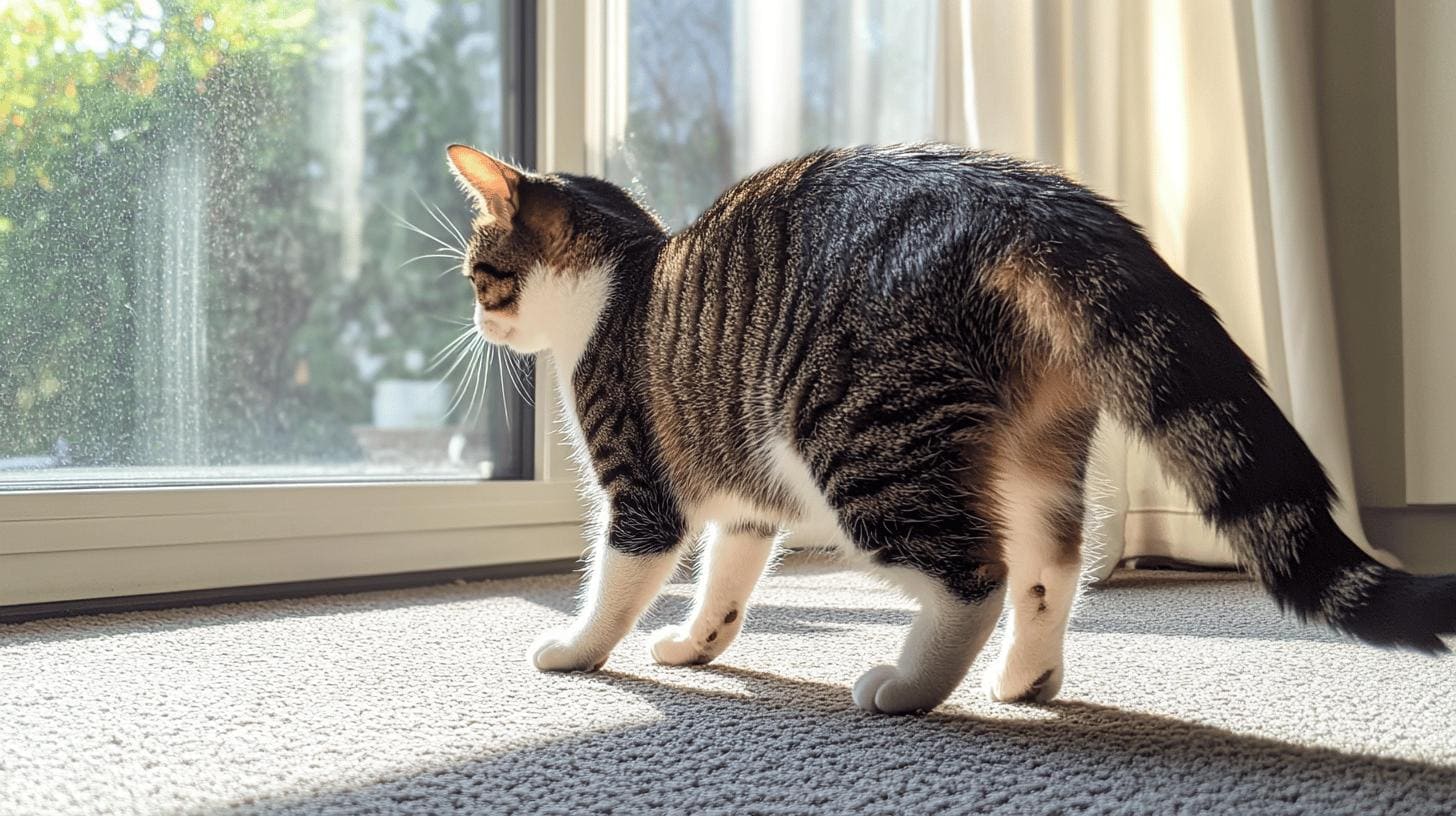
Tail chasing in cats can sometimes be a sign of underlying health issues. This behavior might manifest due to medical conditions like neurological disorders, eyesight problems, or even dementia. When a cat frequently chases its tail, it's crucial to consider these potential health concerns.
Here are six potential causes of tail chasing in cats:
- Fleas
- Allergies
- Neurological disorders
- Compulsive disorders
- Eyesight problems
- Dementia
Observing changes in the frequency and intensity of tail-chasing is important. If your cat suddenly starts this behavior or if it becomes more pronounced, it might be time to seek veterinary advice.
Signs such as self-injury, vocalizations indicating distress, or any change in your cat's usual behavior patterns should prompt a consultation with a vet. A professional can help diagnose the issue and provide guidance on management or treatment.
Stress and anxiety are also significant behavioral factors that contribute to tail chasing. Cats might chase their tails as a coping mechanism to deal with stress. This could be triggered by changes in the environment, such as moving to a new home, the introduction of new pets, or alterations in their routine. Understanding these triggers can help in providing a more stress-free environment for your cat, potentially reducing the occurrence of tail-chasing behavior.
Playfulness and Boredom: Common Causes of Tail Chasing
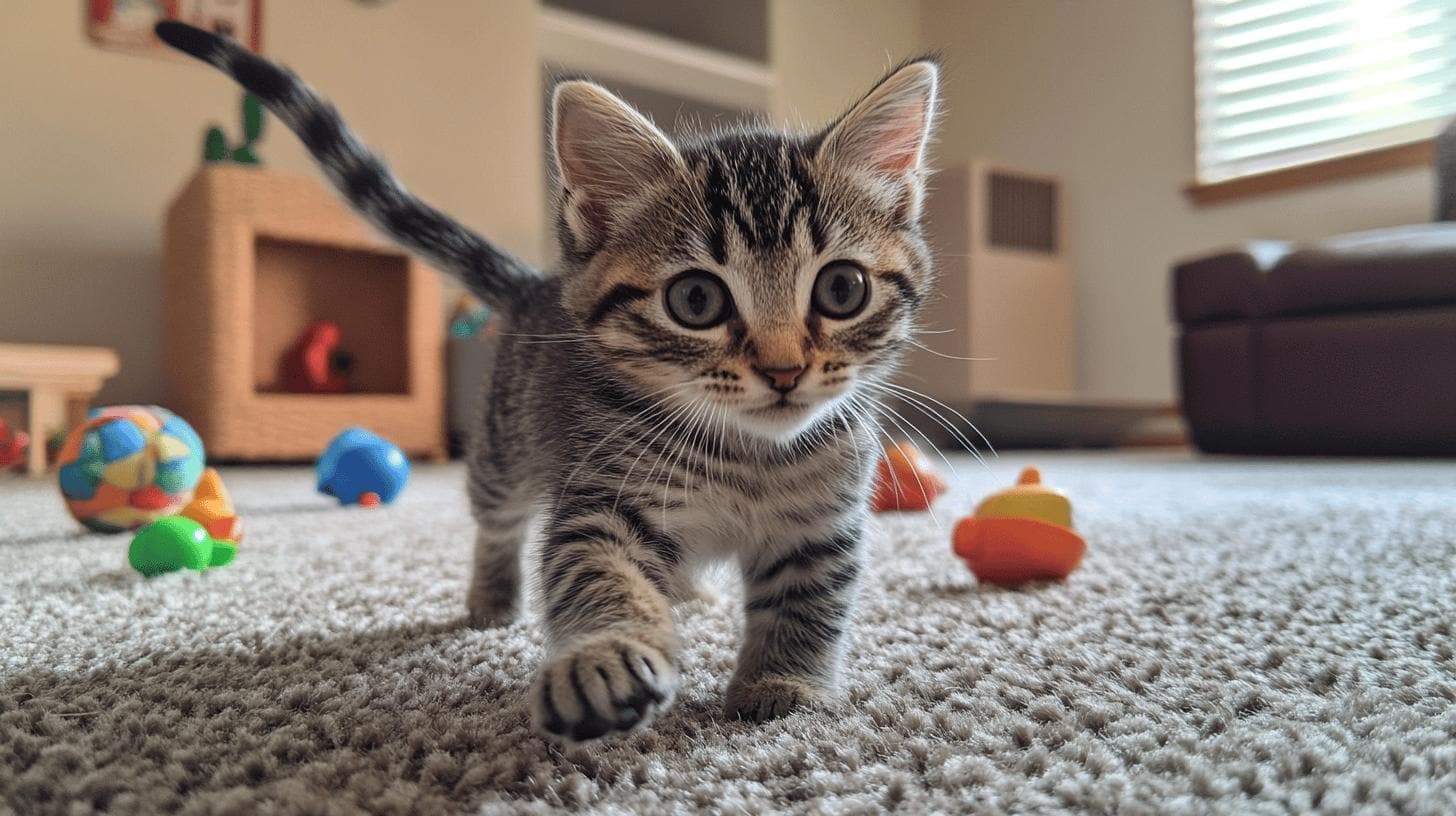
Kittens and young cats are bundles of energy, often chasing their tails as a form of play. This playful behavior helps them develop crucial motor skills and provides an outlet for their natural curiosity. Their tails become an entertaining target as they pounce, leap, and bat at this seemingly elusive prey. As they grow, this behavior might diminish, but it's a normal part of feline development.
To prevent boredom, which can lead to tail-chasing, it's important to enrich a cat's environment. Here are four ways to keep your cat engaged:
- Interactive toys: Toys that move or make noise can captivate a cat's attention and provide hours of entertainment.
- Climbing structures: Cat trees or shelves offer opportunities for climbing and exploring different heights.
- Scheduled playtime: Consistent play sessions with your cat can satisfy their need for activity and strengthen your bond.
- Window perches: Offering a view of the outside world can stimulate a cat's senses and keep them occupied.
Exercise and mental stimulation are vital for indoor cats to reduce boredom and minimize tail-chasing. Regular play and interaction help channel their energy into positive activities, keeping them both healthy and content. By ensuring they have ample opportunities to play and explore, you can help decrease the likelihood of tail-chasing driven by boredom.