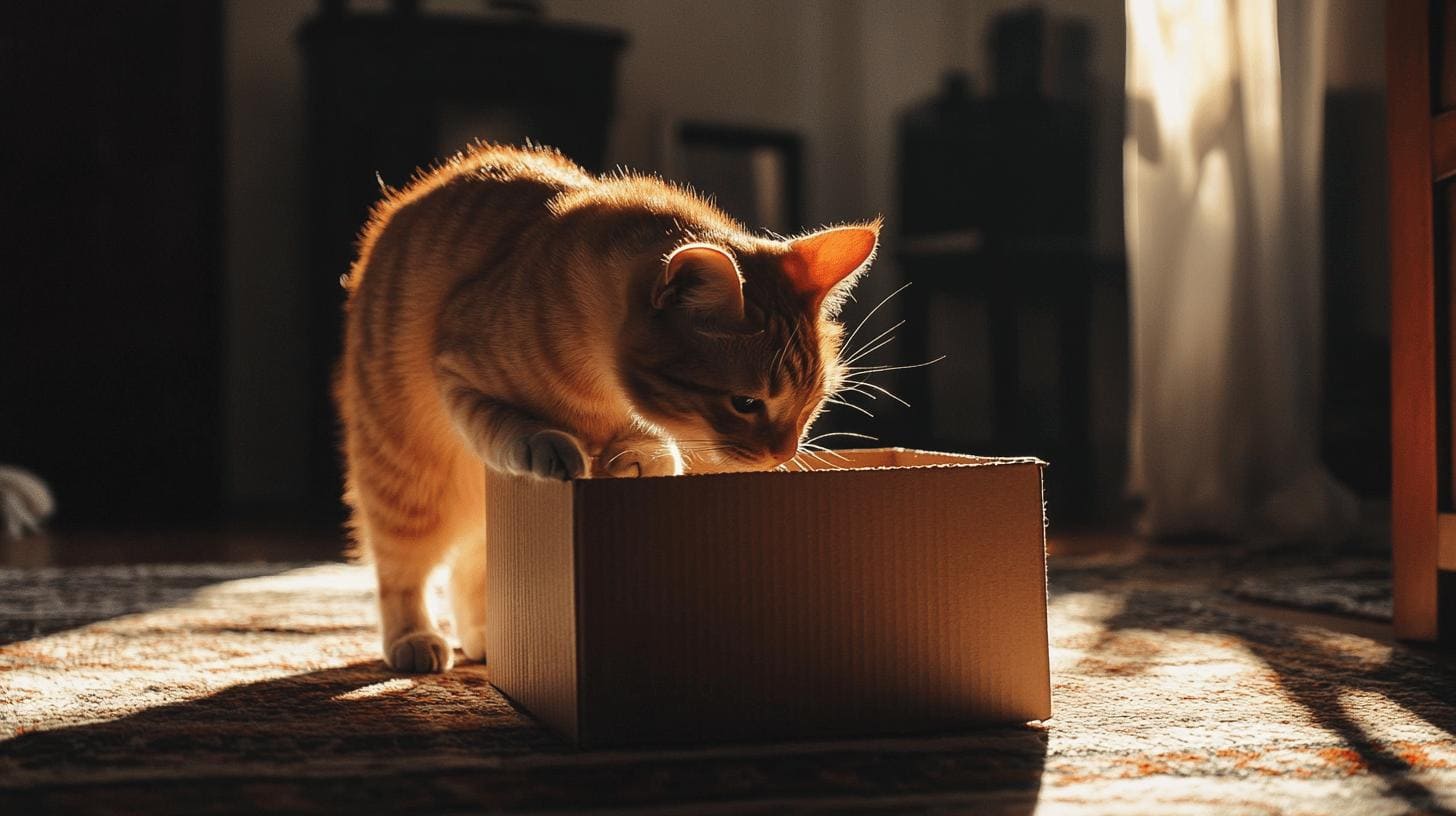
Why are cats so obsessed with boxes? It turns out, there are several fascinating reasons behind this feline fascination. Boxes are more than just cardboard to your cat—they serve as a sanctuary, tapping into instincts deeply rooted in their wild ancestors.
Imagine your cat stepping into a box like entering a secret fortress, where they can hide, observe, and de-stress. Discover in this article how boxes cater to their primal instincts, offering security, warmth, and endless curiosity. Get ready to see your cat’s love for boxes from a whole new furry perspective!
Why Cats Love Boxes: Behavioral Insights
Cats have an instinctual need for safety and love to hide, which boxes perfectly fulfill. These small enclosures offer a retreat where cats can escape from the world. In the wild, cats hide to avoid predators and stalk their prey.
Even as domestic pets, this instinct persists. The enclosed space of a box gives them a secure vantage point to observe their surroundings without being seen. It’s a place where they can feel invisible and protected, satisfying their natural inclination to seek out hidden spots.
Boxes provide a profound sense of security, functioning as a stress-relief sanctuary. The feeling of being enclosed gives cats a break from the daily hustle, reducing anxiety and stress. Imagine the box as a personal fortress where your feline can retreat during frantic times or when strangers are around.
This snug barrier between them and the outside world helps them manage stress more effectively. It’s a simple way to cater to their need for a safe haven.
- Hiding Instinct: Boxes satisfy the feline instinct to hide and seek refuge.
- Security Feeling: They offer a protective space, reducing stress.
- Curiosity: Cats love exploring new spaces, and boxes are an irresistible mystery.
- Playfulness: Boxes become a playful zone where cats can pounce and jump around.
Snug spaces like boxes offer unparalleled comfort and warmth to our feline friends. Cats are drawn to these cozy nooks because they mimic the enclosed environments cats naturally seek. Snug spaces make them feel cradled and secure, much like a kitten in its mother’s embrace. The walls of the box act as a comforting boundary, enhancing a cat’s sense of belonging and relaxation.
Temperature regulation is another pivotal factor in a cat’s attraction to boxes. Cats prefer temperatures warmer than we typically maintain in our homes—around 86 to 97 degrees Fahrenheit. The multiple layers of cardboard provide excellent insulation, making boxes an ideal place to snuggle up. They trap the cat’s body heat, creating a warm cocoon that’s perfect for lounging or napping.
Scientific studies bolster these observations, confirming that the behaviors associated with box love align with a cat’s natural instincts. Research in Applied Animal Behavioral Science highlights how boxes help cats manage stress by offering a safe and controlled environment.
This aligns with their evolutionary need for secure, hidden spaces. So next time you see your cat diving into a box, know that it’s not just play; it’s an essential part of their behavioral repertoire.
Play and Exploration: Boxes as Feline Playgrounds
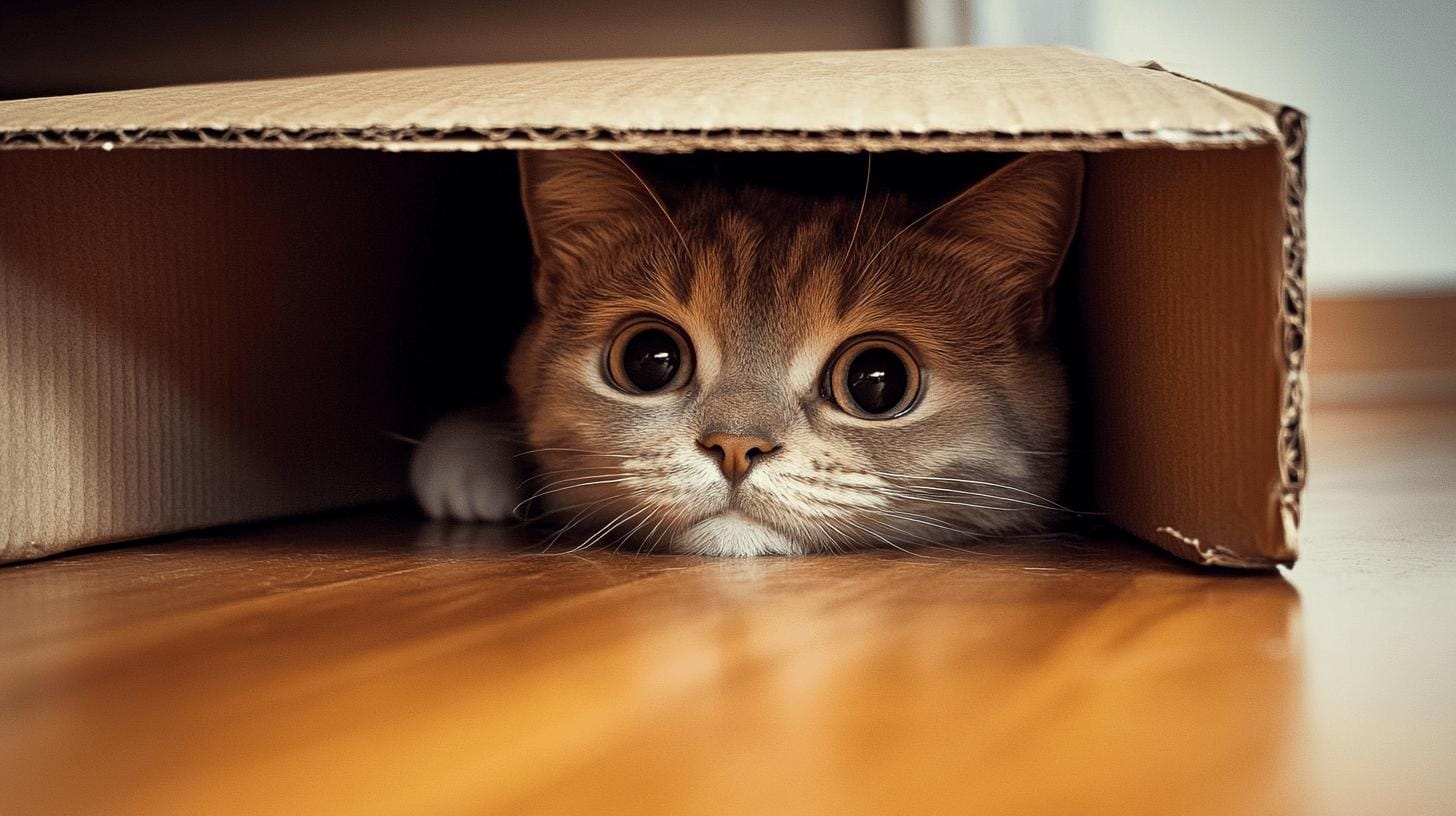
Boxes are a feline’s dream playground, triggering playful behavior and the urge to explore. These simple cardboard spaces become vibrant play zones where cats can engage in a variety of activities. The allure of a new box is hard for a cat to resist.
It provides a fresh environment full of corners to investigate and surfaces to scratch. Even the sound of claws against the cardboard seems to call out to them. With a box, every day is a new opportunity for a cat to discover something exciting.
Engaging with boxes satisfies a cat’s predatory instincts. Even though our domestic cats don’t need to hunt for survival, they still love to act like they do. Boxes allow them to mimic the behavior of stalking and pouncing on prey.
They can hide silently, waiting for the perfect moment to “attack” a toy or an unsuspecting human foot. This play is not only fun but also reinforces natural behaviors that are deeply ingrained in their DNA.
- Jumping in and out
- Hiding and sneaking
- Pouncing on toys
- Scratching surfaces
- Napping in cozy corners
These activities provide both physical and mental enrichment for cats. Jumping and pouncing help develop their muscles and coordination, keeping them agile and fit. The mental stimulation of exploring a new space or strategizing a perfect pounce keeps their minds sharp. When a cat plays in a box, it’s not just about fun—it’s exercising both body and mind, which is vital for overall health and happiness.
Curiosity is another key factor in a cat’s fascination with boxes. Cats have a sense of smell far superior to ours, which makes them naturally inclined to investigate anything new in their environment.
A box offers the promise of new scents and textures to explore. It becomes an adventure zone, a place where a cat’s imagination can run wild. Whether it’s squeezing into a box that’s just a bit too small or discovering how to make a piece of paper inside crinkle, the possibilities seem endless. For a cat, every box is a new world waiting to be explored.