Ever wondered why your cat rolls around in the dirt like it’s a luxury spa? Though it might seem strange, this quirky behavior holds surprising benefits rooted in their wild ancestry. Unlike humans, cats don’t sweat and rolling in cool, dusty earth helps them chill out on sweltering days.
It also offers much-needed itch relief and a full-body massage in one go. Exploring these behaviors reveals the fascinating blend of instinct and comfort, providing a deeper understanding of our feline friends’ nature and why they embrace what seems like unconventional playtime.
Understanding and Benefits of Cats Rolling in Dirt
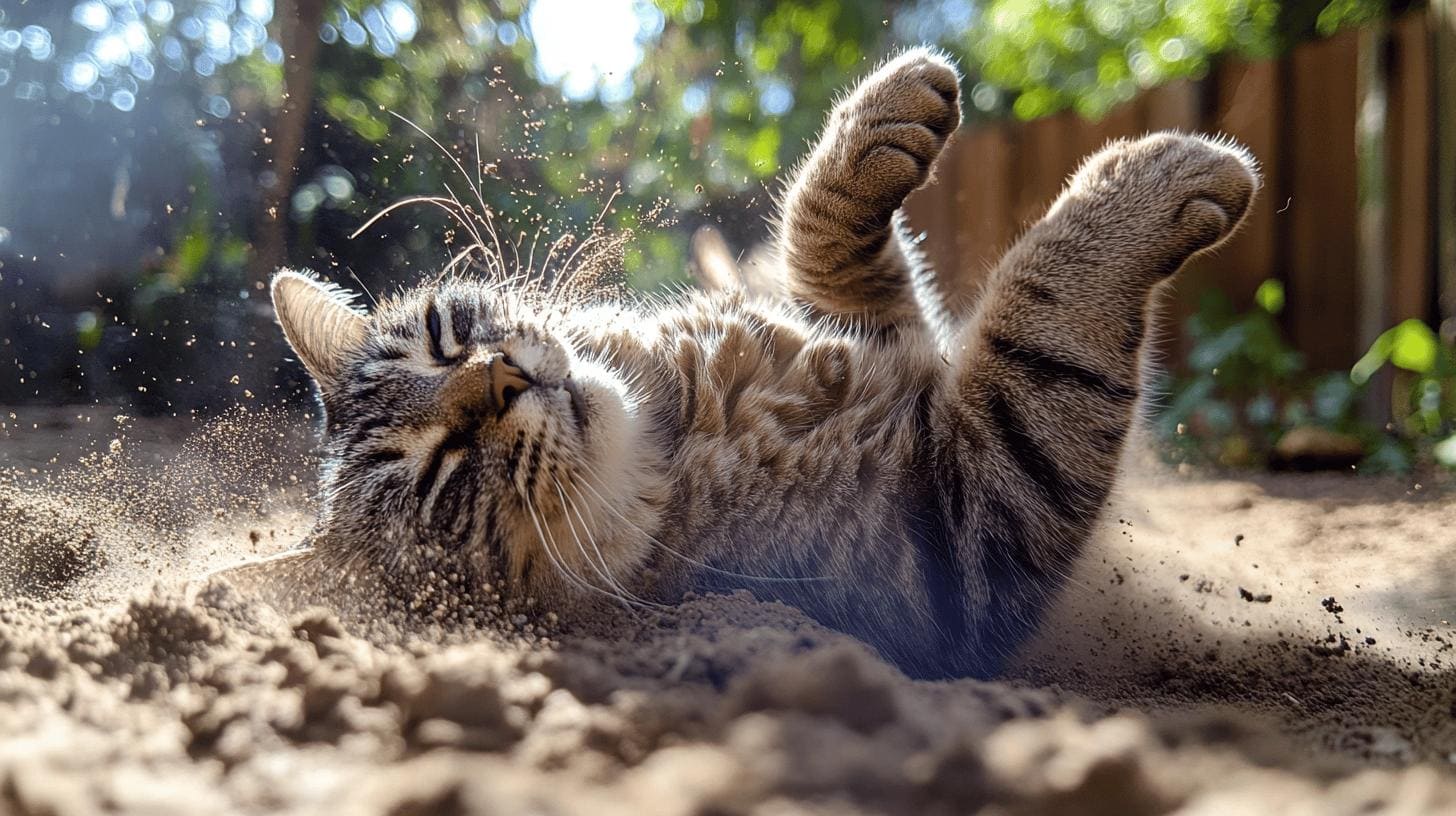
Cats rolling in dirt is a fascinating behavior deeply rooted in their evolutionary history. Our feline friends share this instinct with their wild ancestors, who used dust bathing as a survival strategy. In the wild, rolling in dirt helped cats mask their scent, making it harder for predators to track them.
This instinctual behavior has been passed down through generations, reflecting a natural part of cat behavior. Understanding these roots helps us appreciate why our domestic cats engage in this seemingly odd activity.
There are several physical benefits for cats when they roll in dirt. First, it helps them cool down, especially on hot days. Cats don’t sweat like humans do, so finding a patch of cool, moist earth is a natural way to regulate their body temperature. Additionally, rolling in dirt can provide itch relief.
The friction against the ground helps to scratch areas that are hard to reach, which can be particularly beneficial if a cat is experiencing minor skin irritations or itching. The tactile stimulation from the dirt can also be pleasurable for cats, offering a different sensory experience that they seem to enjoy.
Rolling in dirt also plays a crucial role in scent marking and social interactions. Cats have scent glands on various parts of their bodies, including their flanks, paws, head, and cheeks. When they roll, they distribute their scent onto the ground, marking their territory and communicating with other cats.
This behavior is essential for establishing dominance, attracting mates, and simply letting others know they’ve been there. Socially, rolling may be a way for cats to express submission or engage in playful interactions with their feline peers or even with humans.
| Aspect | Description |
|---|---|
| Evolutionary and Instinctual | Rooted in survival strategies like scent masking from ancestors. |
| Physical Benefits | Cooling, itch relief, and tactile stimulation. |
| Scent Marking | Distributes scent for territory and communication. |
| Social Interactions | Involves play, submission, and communication with others. |
| Tactile Pleasure | Provides sensory enjoyment and satisfaction. |
Potential Health Concerns and Solutions for Cat Rolling
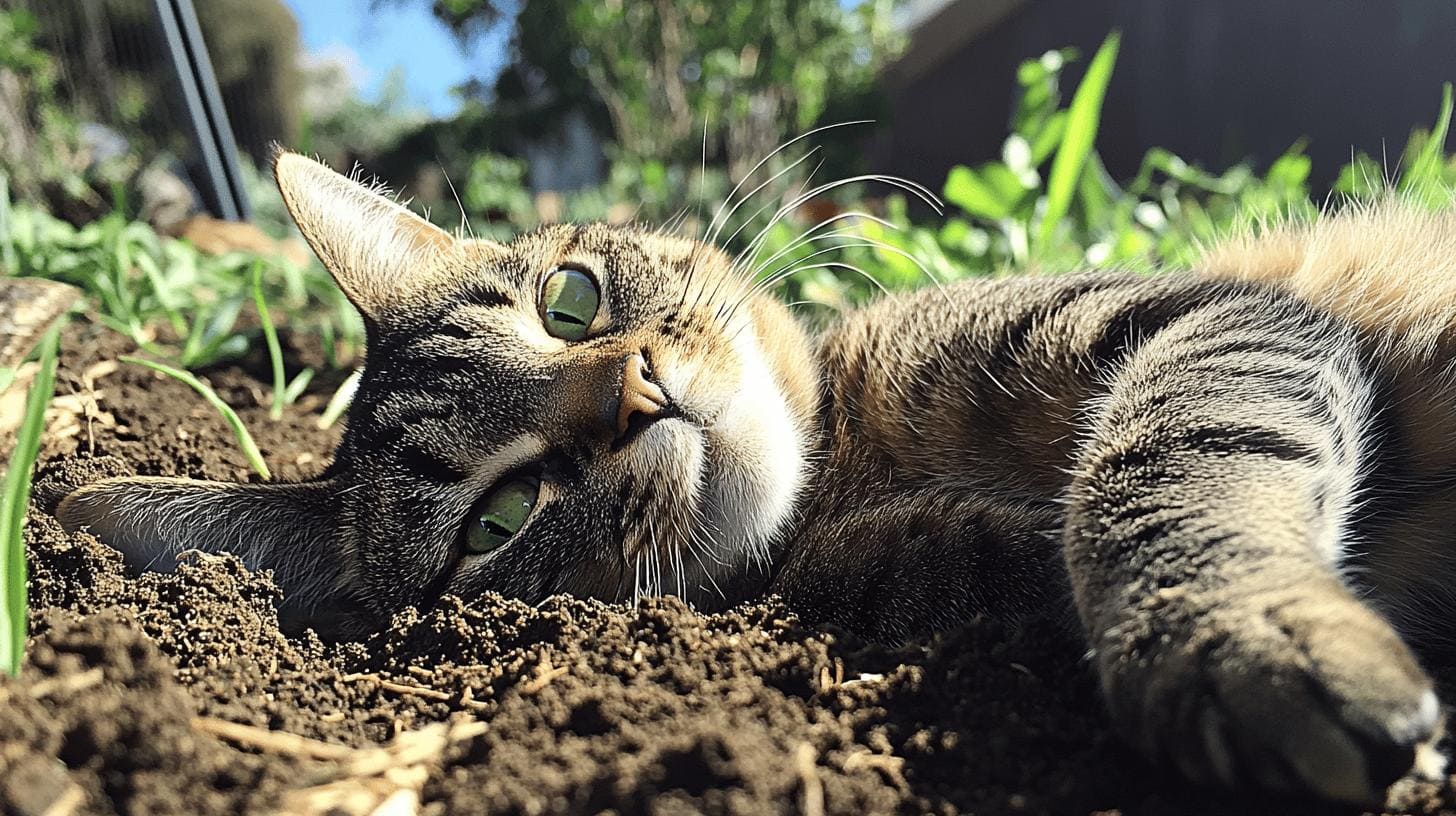
While cats rolling in dirt is generally a normal behavior, it does carry some potential health risks. One primary concern is exposure to parasites. Dirt can harbor fleas, ticks, and other external parasites that may latch onto your cat’s fur and skin.
These parasites can lead to skin irritations or more serious health issues if not addressed. Another risk involves skin irritations caused by sharp objects or allergens present in the dirt. Ingesting harmful substances is also a possibility, especially if chemicals or pesticides have been used in the area where your cat likes to roll.
Excessive rolling can sometimes indicate underlying issues that may require attention. If your cat seems to be rolling more than usual, it might be a sign of skin discomfort or an infestation of parasites like fleas or ticks.
Watch for other symptoms such as obsessive scratching, redness, or bald spots on the skin. These could signal that the rolling is more than just a fun activity and may need veterinary evaluation. It’s crucial to differentiate between normal behavior and signs that suggest a deeper problem.
To mitigate these health risks and ensure your cat’s well-being, consider the following prevention tips:
- Monitor the environment for harmful substances
- Keep up with regular veterinary check-ups
- Ensure proper flea and tick prevention
- Maintain a clean coat through regular grooming
- Provide alternative enrichment activities indoors
By addressing these potential concerns, you can help your cat enjoy the benefits of rolling in dirt while minimizing health risks.