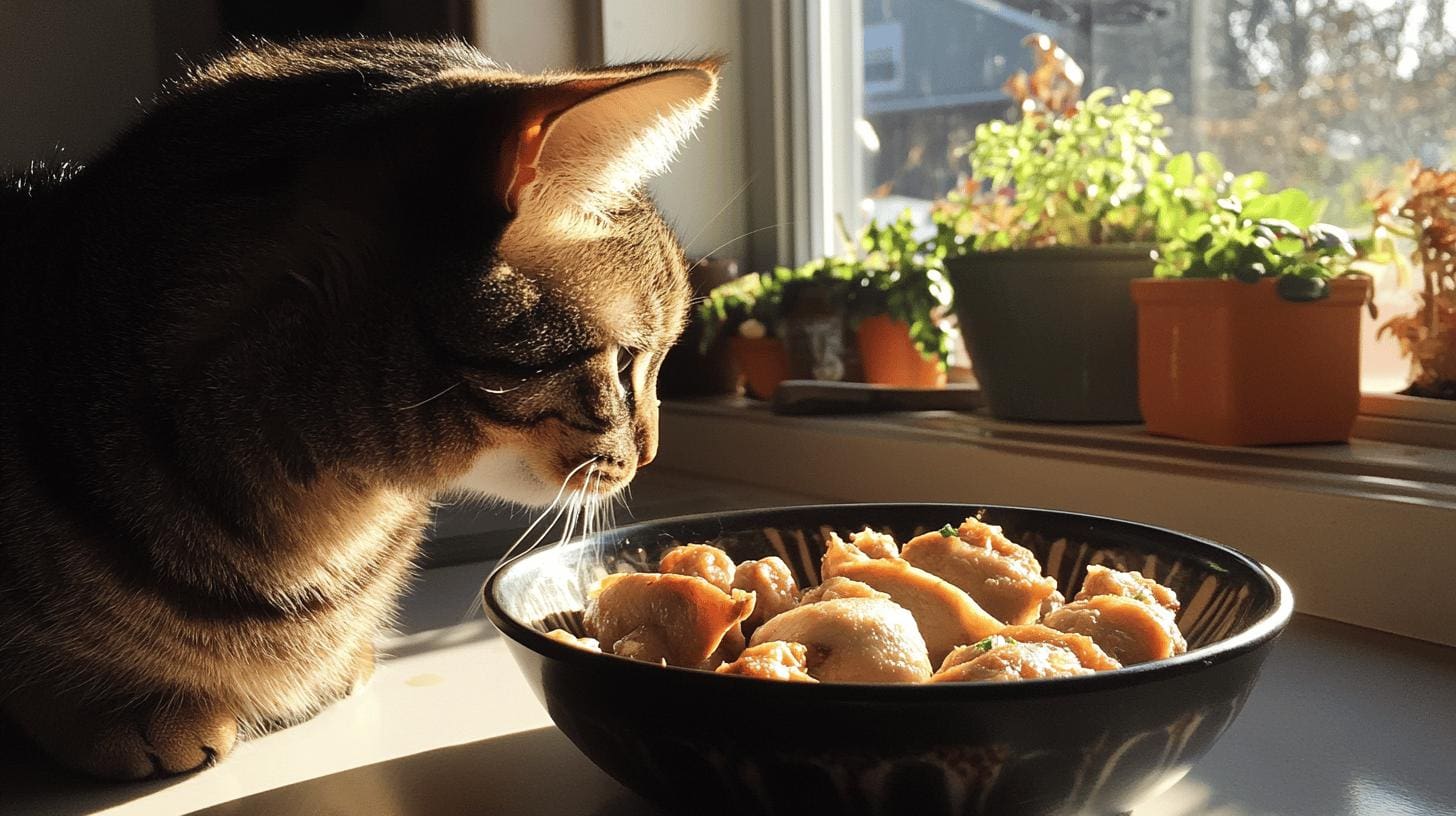
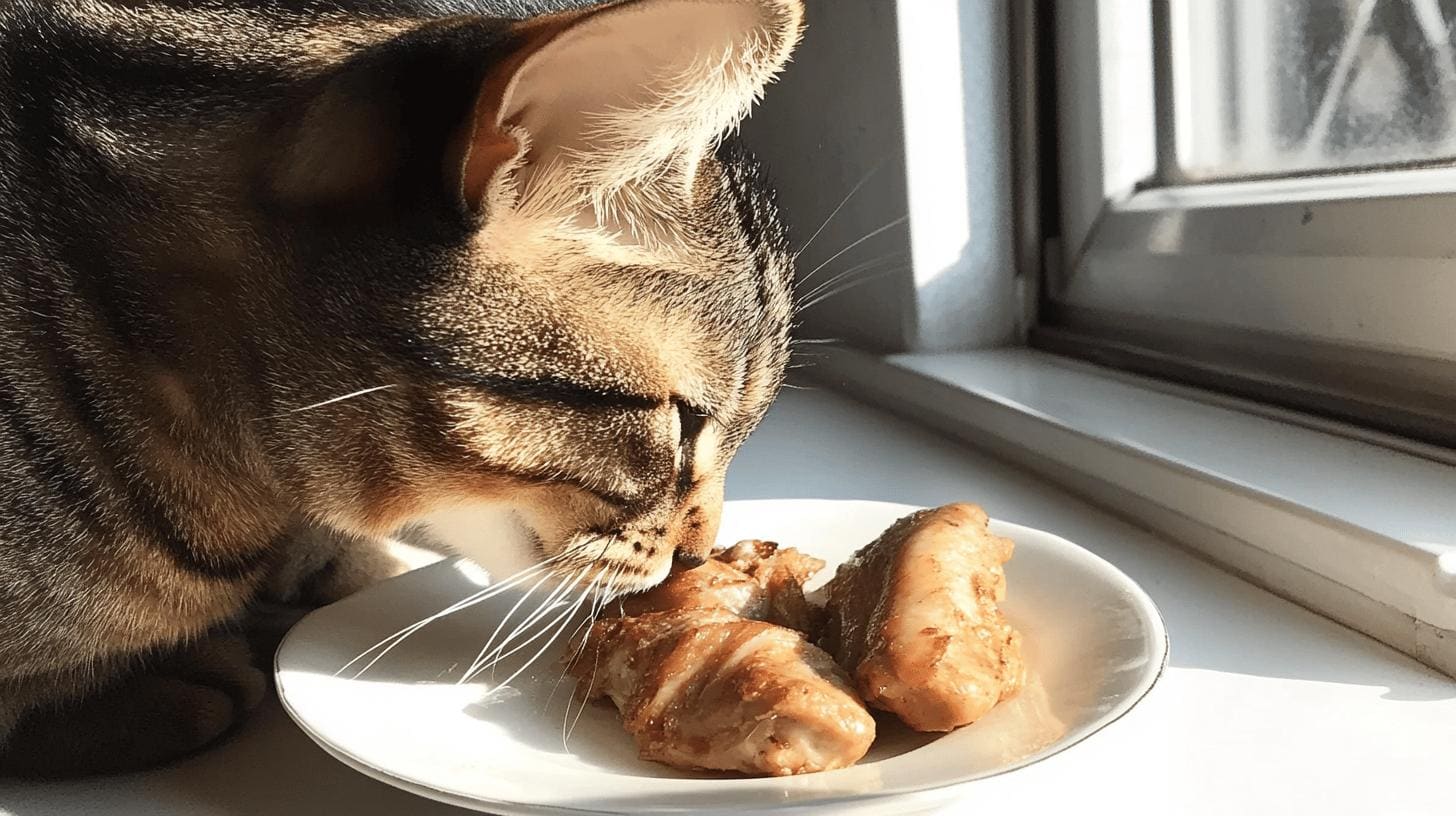
Can cats and burgers mix? For many cat lovers, the sight of their pet eyeing a delicious burger raises this question. While sharing a piece might seem harmless, it’s vital to examine the burger’s ingredients first. Cats are meat lovers by nature, so plain, cooked meat can be healthy. But the other parts of burgers aren’t safe for cats. Ingredients like onions, garlic, and condiments can be harmful. Understanding these risks can help you protect your cat’s health and ensure their diet is both tasty and safe.
Can Cats Eat Burgers? Understanding the Risks and Safety
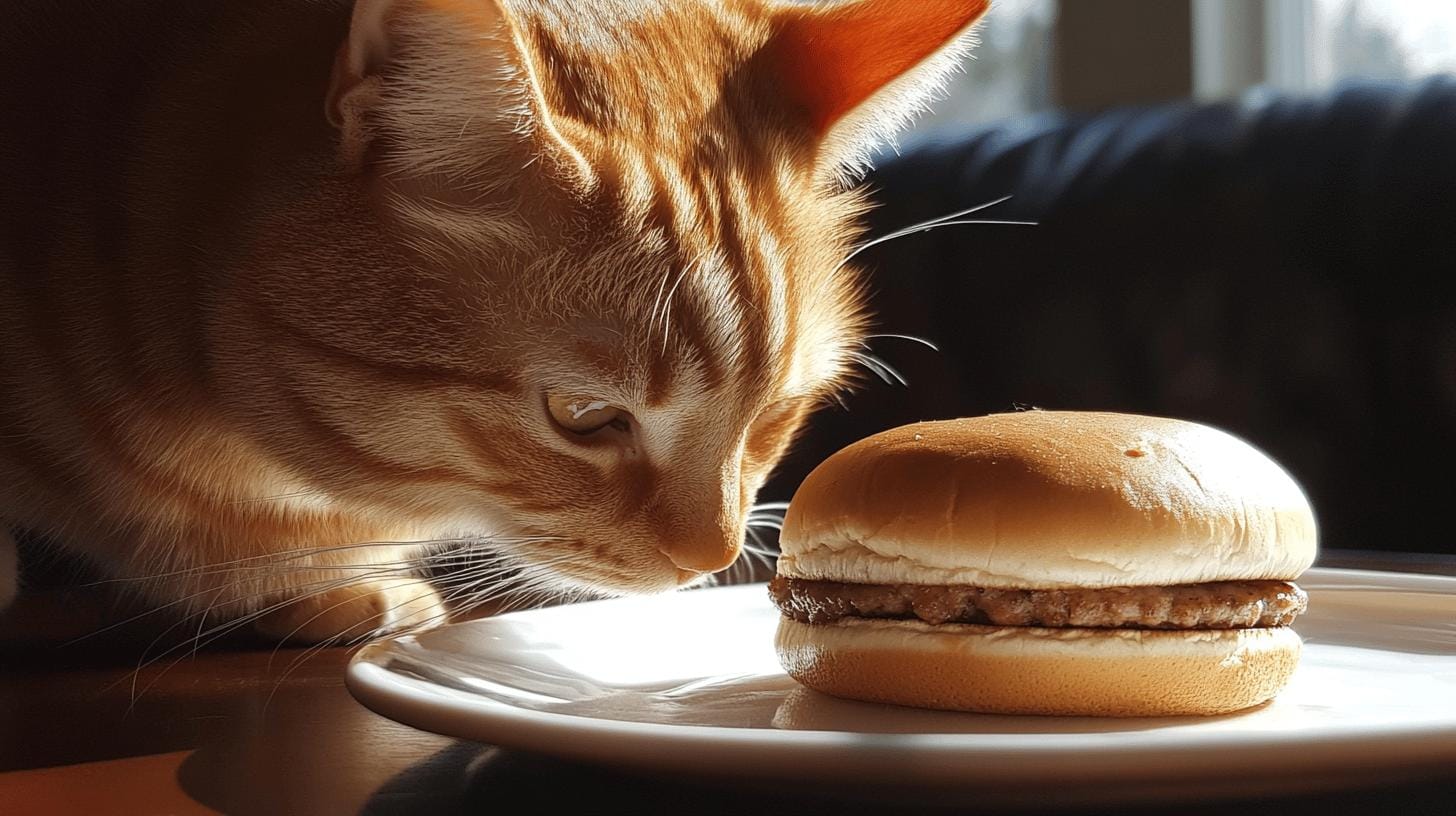
Pet owners often wonder if they can share a bite of their juicy burger with their feline companions. After all, cats are obligate carnivores, and the idea of giving them a meaty treat may seem appealing. However, it’s crucial to consider what goes into a burger and whether it’s truly safe for your cat. Plain cooked meat, like ground beef from a hamburger, can provide essential nutrients such as protein, iron, zinc, and B vitamins. Yet, the rest of the burger ingredients can pose significant health risks to cats.
When considering feeding your cat a burger, it’s important to steer clear of these harmful ingredients often found in burgers:
- Onions
- Garlic
- Condiments
- Buns
- Processed additives
Processed and packaged burgers are particularly risky due to the potential presence of toxic additives and preservatives. These can cause various health issues in cats, from digestive upset to more severe reactions. While the meat itself might be safe, if cooked plainly, it’s best to avoid sharing a typical burger with your cat. Always prioritize your pet’s health by sticking to foods specifically formulated for feline dietary needs.
Nutritional Implications of Feeding Burgers to Cats
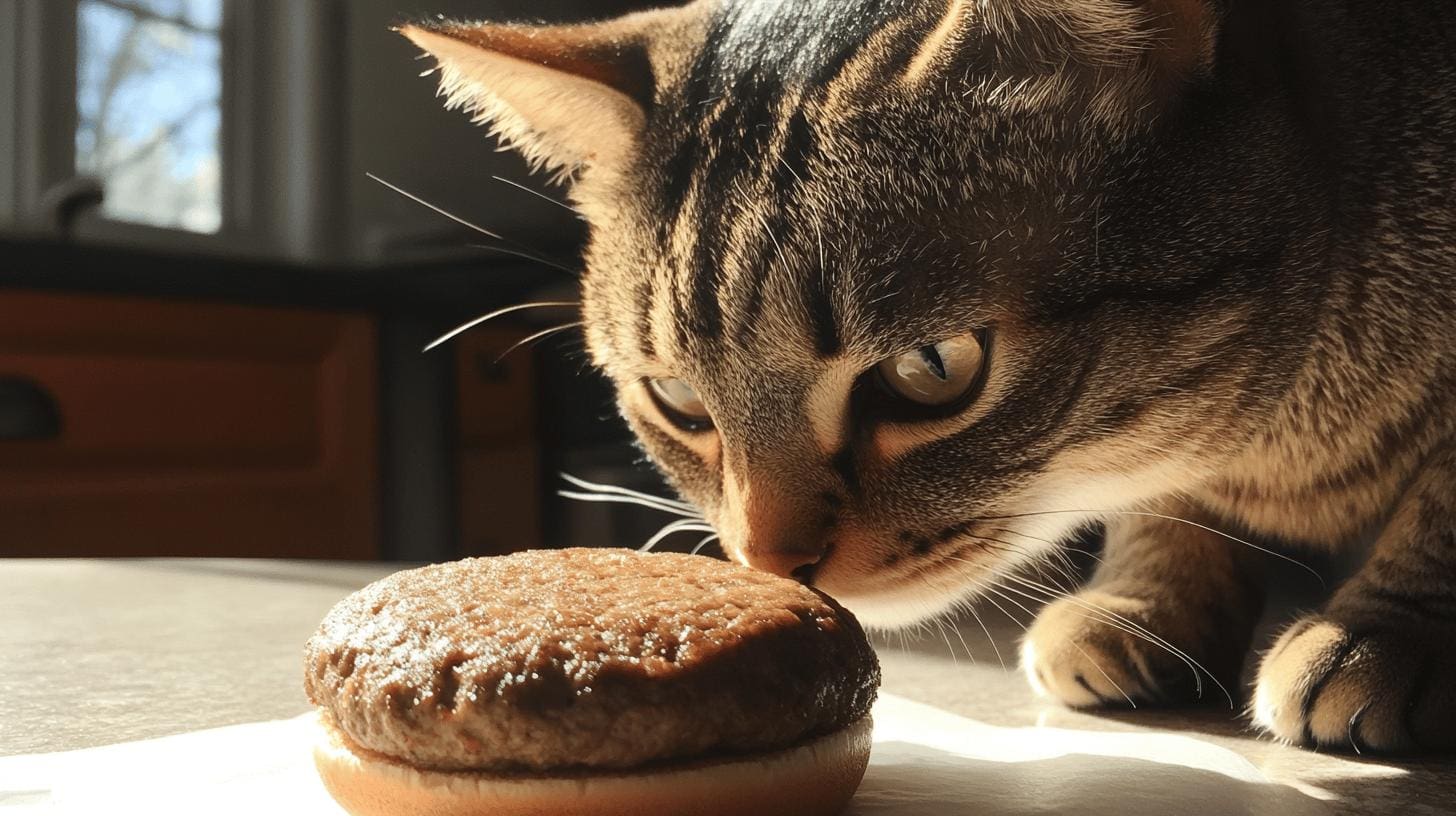
Cats, being obligate carnivores, rely heavily on protein-rich diets to thrive. Beef can be a significant source of protein, providing essential nutrients like iron, zinc, and B vitamins. But it’s crucial to manage portion sizes carefully and select lean beef to minimize fat intake. High-fat content in burgers can lead to obesity, diabetes, and heart disease in cats. Harmful additives in burgers like condiments or onions must be avoided.
| Nutrient | Potential Benefit | Risk |
|---|---|---|
| Protein | Essential for health | Overconsumption leads to obesity |
| Iron | Supports blood health | Excess can cause toxicity |
| Zinc | Aids in metabolism | Imbalance affects immunity |
| B vitamins | Crucial for energy | High levels can be harmful |
When considering burgers in a cat’s diet, focus on the plain beef patty while being cautious of its fat content and size. A small piece of lean beef is better than a whole burger. Exploring alternative protein sources like chicken or fish can diversify their diet while meeting nutritional needs. Balancing these human foods with feline-specific foods helps ensure overall health and fulfillment of dietary requirements.
Expert Opinions on Feeding Cats Human Foods

Veterinary professionals stress the significance of feeding cats specially formulated diets tailored to their unique nutritional needs. Cats are obligate carnivores, requiring a high-protein diet primarily from meat sources. While sharing human foods with cats might seem harmless, experts warn that even safe-seeming human foods can disrupt a cat’s nutritional balance, potentially leading to health issues.
Consulting with a veterinarian before introducing any human foods into a cat’s diet is essential. They offer guidance on safe options, ensuring that you don’t inadvertently compromise your cat’s health. Prioritizing a diet designed for your cat’s specific needs is crucial for their well-being.
Veterinarians’ Perspective on Burgers for Cats
Experts advise caution with burgers due to harmful ingredients like onions, garlic, and condiments. Even plain, cooked beef should be given sparingly and under professional guidance. These additives can cause digestive issues and other health concerns. Prioritize a balanced diet to maintain your cat’s health.