Did you know that cilantro, a common herb found in many kitchens, might be a treat for your whiskered friend? As curious creatures, cats often inspect their world by taste-testing various plants, cilantro included.
But is it safe for them? While cilantro is non-toxic and safe in moderation, too much could upset your cat’s stomach. In this article, we’ll explore the balance between curiosity and caution, ensuring that your cat can enjoy a dash of green without compromising their health. Let’s dive into the safe way to add cilantro to your cat’s world!
Can Cats Eat Cilantro Safely and Its Health Implications?
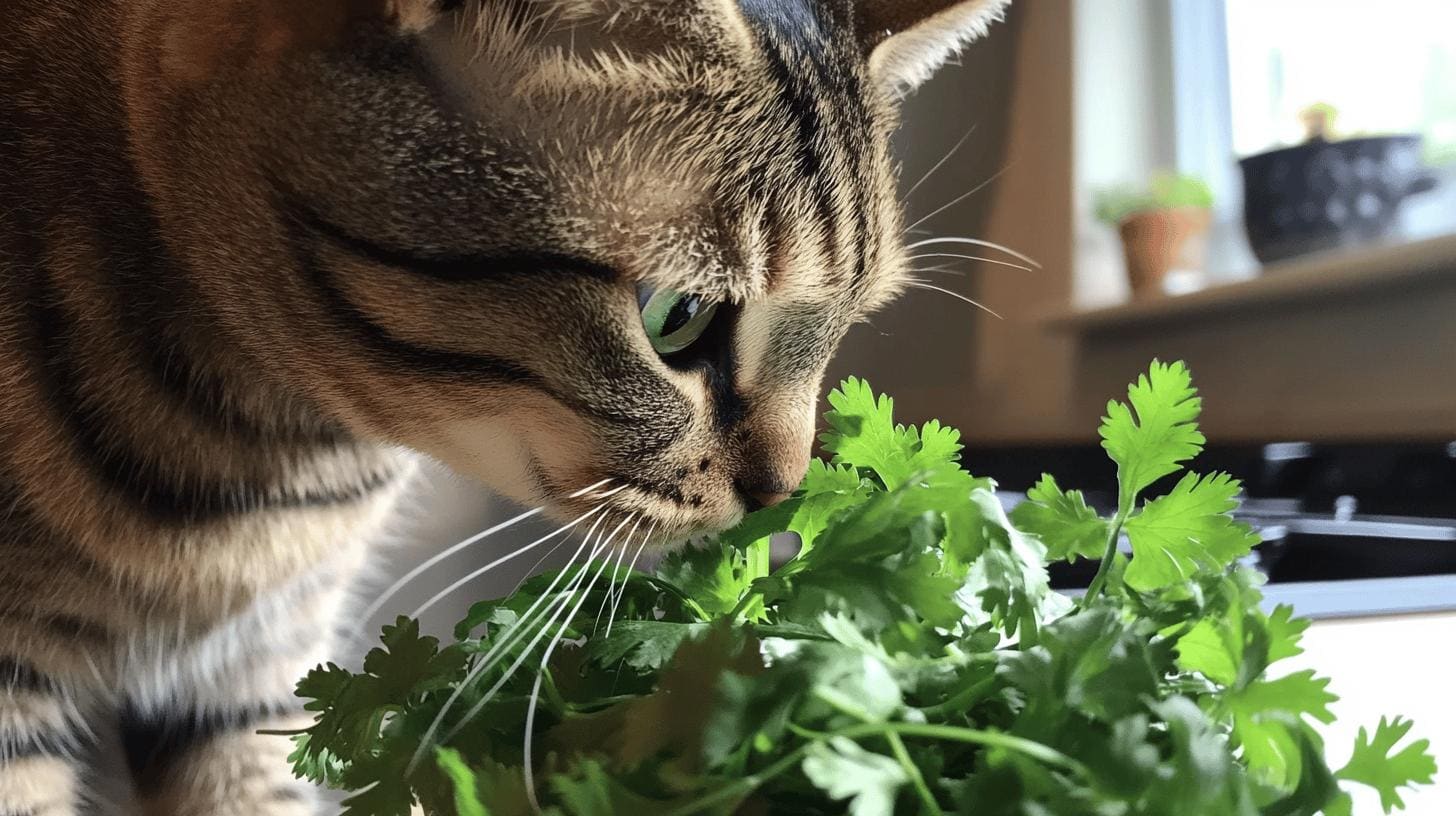
Cilantro is generally safe for cats when consumed in moderation, making it a non-toxic option for curious nibblers. Cats often explore their environment by tasting various plants, and cilantro is no exception.
While it poses no significant harm, it’s crucial to keep an eye on the quantity they ingest. Overindulgence can lead to digestive issues such as vomiting or diarrhea. This is why moderation is key when introducing cilantro to a cat’s diet.
Cats are obligate carnivores, meaning they primarily require animal protein. Thus, cilantro should not replace their main food source, but rather serve as an occasional treat if they show interest.
Potential symptoms of overconsumption include:
- Vomiting
- Diarrhea
- Changes in appetite
Cilantro contains a variety of nutrients that can offer some health benefits to cats, albeit in small amounts. It boasts antioxidants, fiber, and essential vitamins like A, C, and K. These components can potentially support a cat’s overall well-being if given sparingly.
The fiber in cilantro can aid digestion, promoting regular bowel movements. However, it’s important to remember that cats’ digestive systems are not designed to process large quantities of plant matter. Hence, while cilantro can be a fun and healthy addition to their diet, it should be limited to avoid any adverse effects.
| Benefit | Risk |
|---|---|
| Provides antioxidants | Possible vomiting |
| Contains fiber for digestion | Diarrhea risk |
| Offers vitamins A, C, and K | Appetite changes |
How to Introduce Cilantro to Your Cat’s Diet
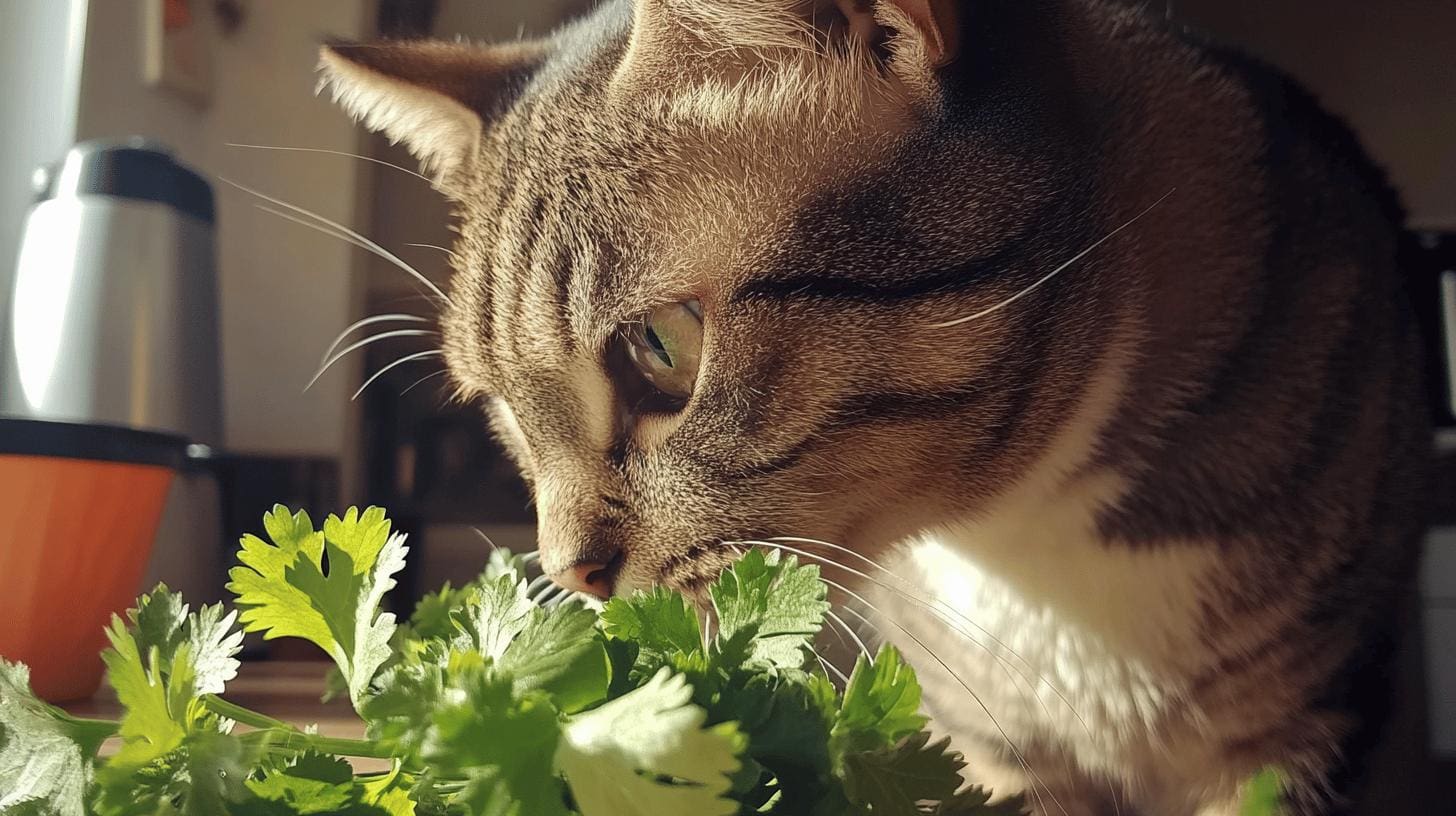
Introducing cilantro to your cat’s diet can be a simple process. Begin by preparing a small amount, like a single leaf, and mix it into your cat’s regular food. This helps them get used to the new flavor without overwhelming their senses.
Cats can be finicky eaters, so patience is key. It’s crucial to ensure cilantro does not replace their main diet. Keep it as an occasional treat and ensure it doesn’t exceed 10% of their daily caloric intake.
Steps to monitor for adverse reactions:
- Start small with a single leaf.
- Observe your cat’s digestion after consumption.
- Adjust the amount if any digestive issues occur.
Balancing cilantro with your cat’s regular diet is essential to their overall health. Cats are obligate carnivores, so their primary nutrition should come from animal proteins found in commercial cat food.
While cilantro can add a bit of variety and some nutrients, it should not be a staple. Always keep an eye on how your cat reacts to new additions like cilantro, and consult with a vet if any concerns arise.
Comparing Cilantro to Other Safe Herbs for Cats
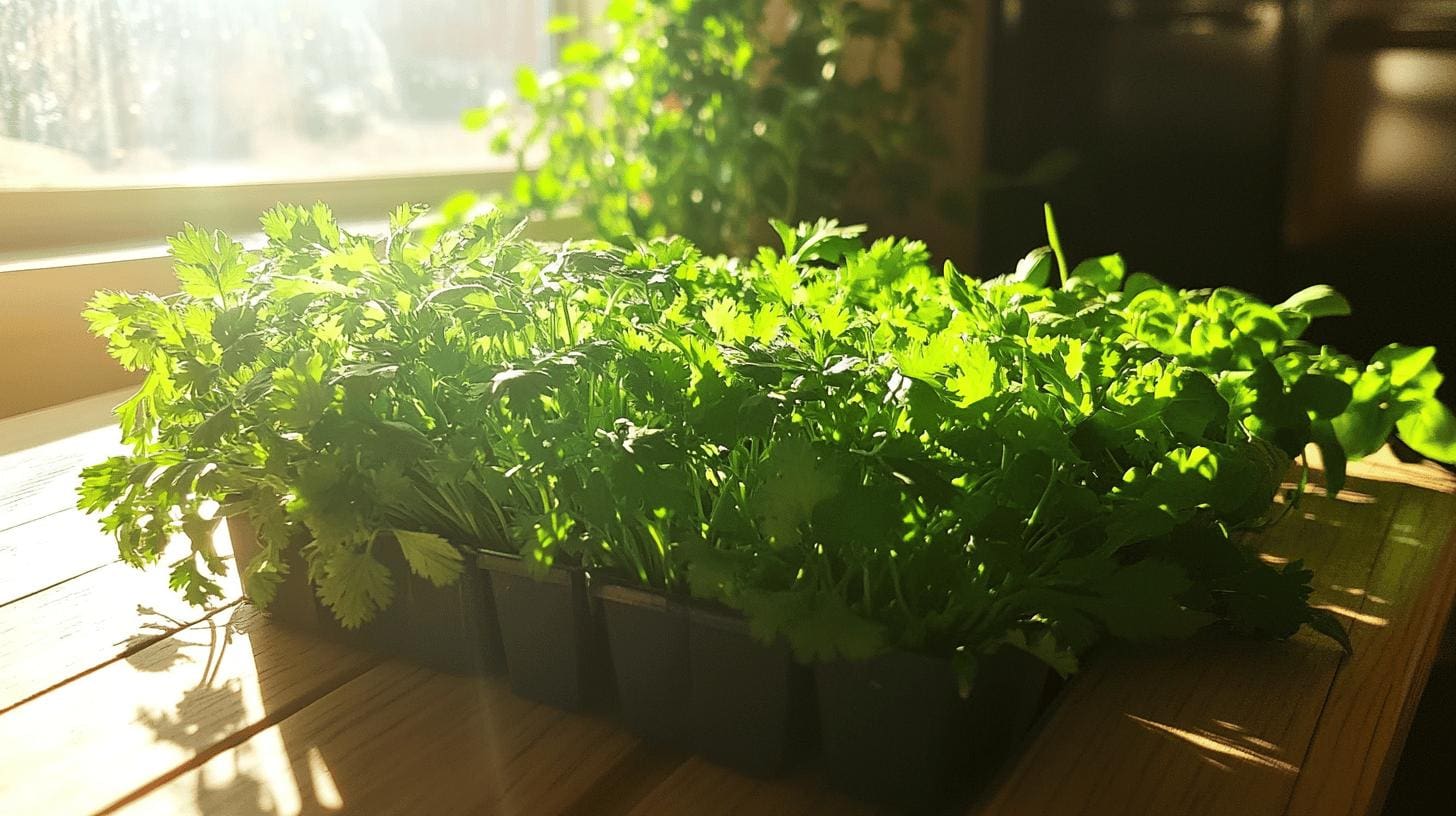
Many cat owners wonder which herbs are safe for their furry friends. Cilantro is one of them, known for its non-toxic nature and mild appeal to some cats. Just like humans, cats have their preferences, and while cilantro might be a hit with one feline, it might not pique the interest of another.
Beyond cilantro, there are several other herbs that are considered safe for cats. These herbs can provide a bit of variety in your cat’s diet, but it’s essential to introduce them carefully to avoid any digestive issues.
Here’s a list of other safe herbs and some of their benefits:
- Basil: Known for its anti-inflammatory properties and potential to improve digestion.
- Parsley: Often used as a breath freshener and contains vitamins C and K.
- Rosemary: Offers antioxidants and can support a healthy coat and skin.
It’s crucial to differentiate between safe and toxic herbs when considering what to offer your cat. Not all plants are created equal in the eyes of a cat’s digestive system. Some herbs, though seemingly benign, can be harmful.
For instance, chives and garlic are toxic and should be avoided entirely. Always ensure that any new herb introduced to your cat’s diet is safe and watch for any adverse reactions, consulting with a vet if needed. This cautious approach helps keep your cat safe and healthy while exploring new flavors.