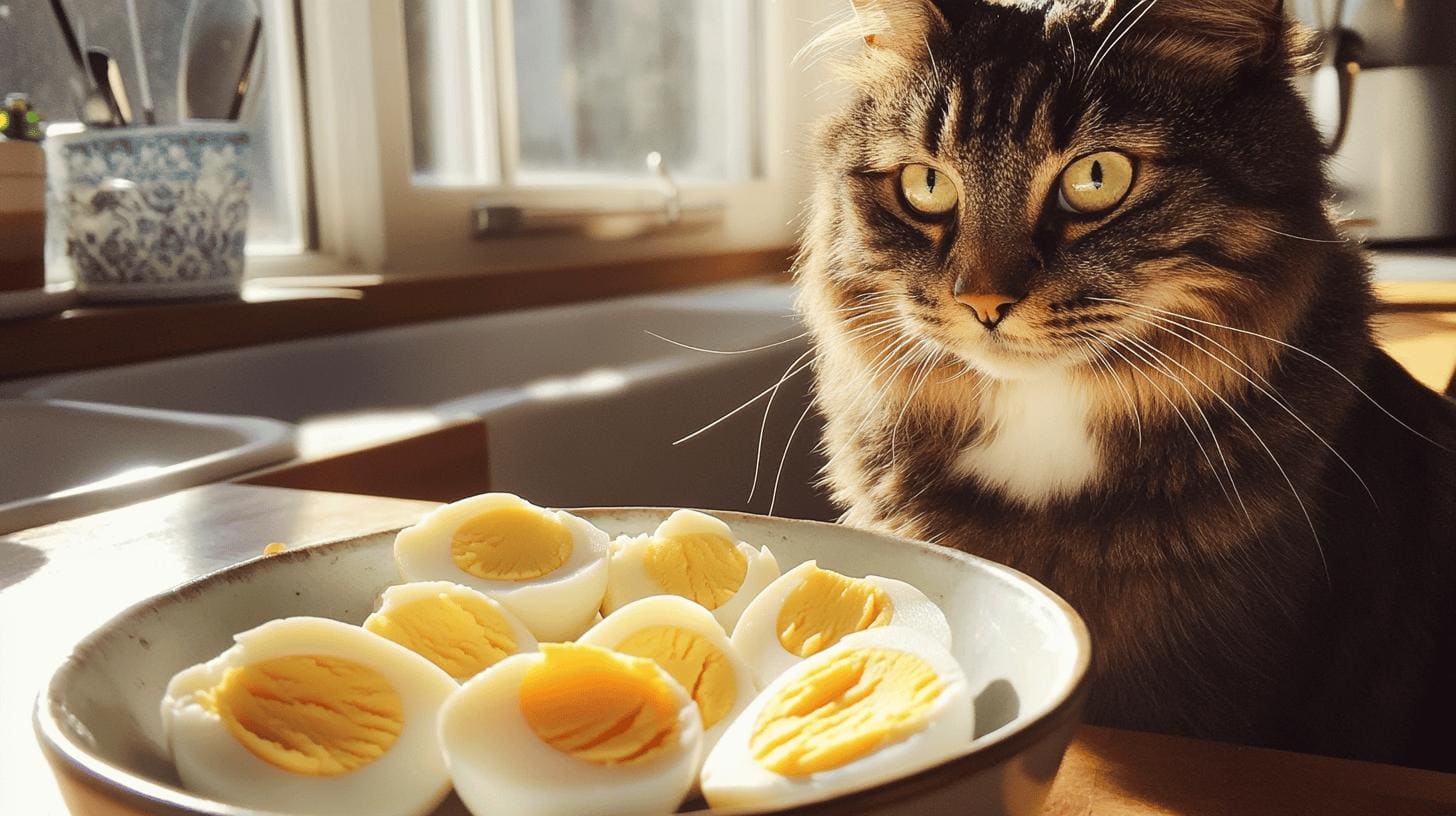
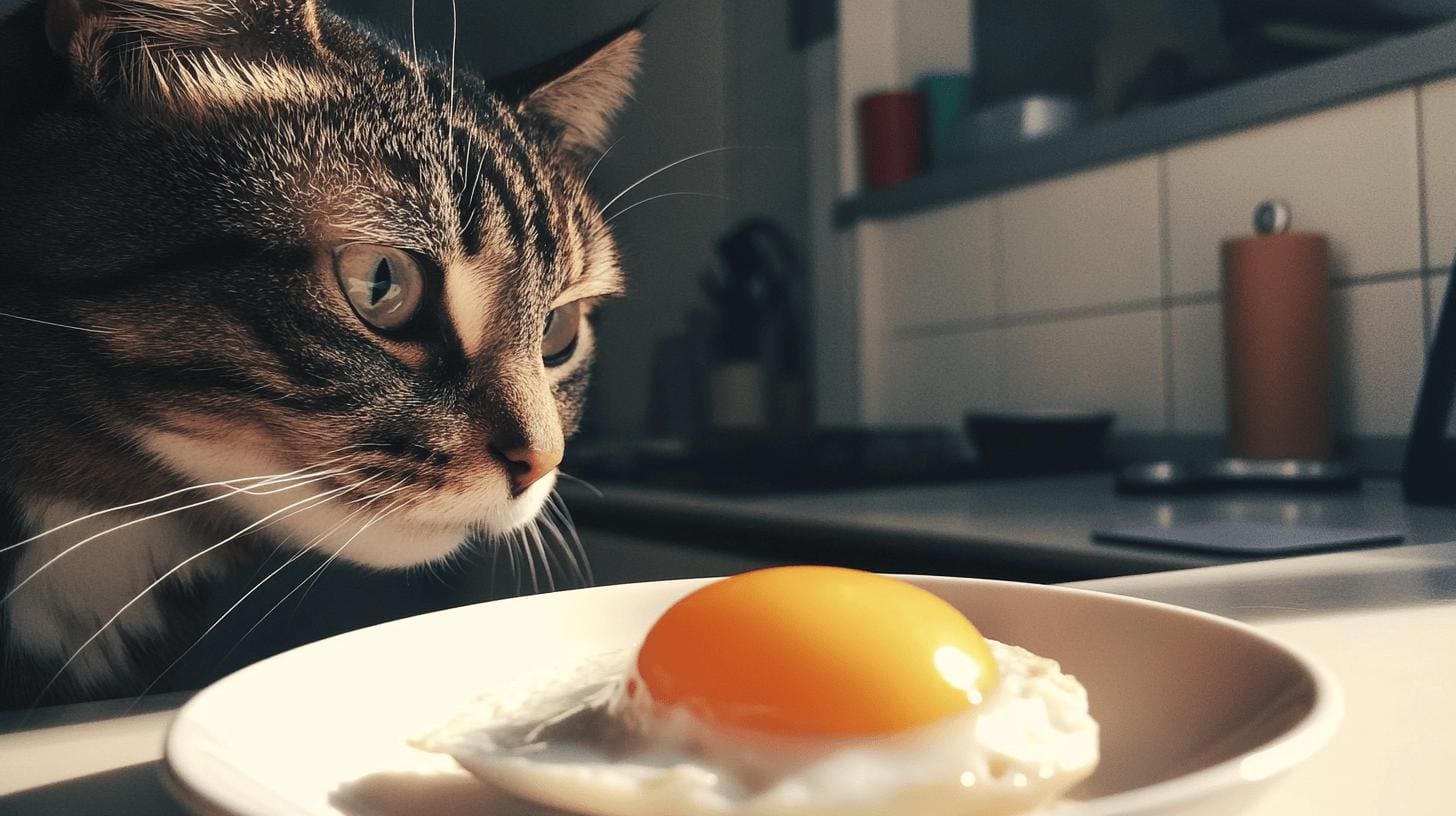
Can cats enjoy a tasty plate of cooked eggs without worry? The answer is yes, but with a few important guidelines. Cooked eggs can be a wholesome treat to spice up your cat’s meal plan, offering nutritious proteins and essential vitamins. However, like a double-edged sword, it’s crucial to prepare them safely. Thorough cooking means boiling or scrambling them to a solid state, hitting that magic temperature of 160°F. In this article, I’ll unveil how cooked eggs can fit safely and healthily into your feline’s diet, without fear of hidden risks.
Can Cats Eat Cooked Eggs Safely?

Cooked eggs can be a safe and nutritious treat for cats if prepared correctly. The key is thorough cooking, which eliminates any potential pathogens like E. coli or salmonella that could cause illness. Eggs are a good source of protein, fatty acids, and vitamins, which can contribute positively to a cat’s diet.
However, it’s crucial to ensure that the eggs are fully cooked before offering them to your feline friend. This means boiling, scrambling, or frying them until they reach an internal temperature of at least 160°F, ensuring all parts are firm.
While cooked eggs are generally safe, there are some potential risks to keep in mind. Cats, like humans, can have food allergies, and eggs are no exception. Signs of an allergic reaction might include vomiting, diarrhea, or skin irritations. If any of these symptoms occur, it’s wise to consult a veterinarian immediately. Additionally, eggs should only be a small part of a cat’s diet. Overfeeding can lead to weight gain and other health issues. Veterinarian advice can help determine the right amount and frequency of egg treats, especially if your cat has existing health conditions.
- Risk of contamination from raw eggs
- Monitoring for allergic reactions
- Importance of fully cooking eggs
- Consultation with a vet for allergies
- Serve in moderation to avoid health issues
Safe preparation and moderation are key when incorporating eggs into your cat’s diet. By ensuring the eggs are thoroughly cooked and serving them in measured portions, you can provide your cat with a healthy treat that complements their regular diet. Always start with small quantities to gauge your cat’s reaction and adjust based on their dietary needs and overall health.
Nutritional Benefits of Eggs for Cats

Egg whites are particularly beneficial for cats as they provide a substantial amount of protein without the added fat and cholesterol. This makes them a great option for cats needing to manage their weight while still ensuring they get enough protein.
When incorporating eggs into a cat’s diet, it’s crucial to do so in moderation to prevent dietary imbalances. Mixing cooked eggs with their usual food can offer nutritional benefits without leading to overconsumption. Always consult with a veterinarian to tailor dietary changes to your cat’s specific needs.
Can Cats Eat Cooked Eggs Safely?
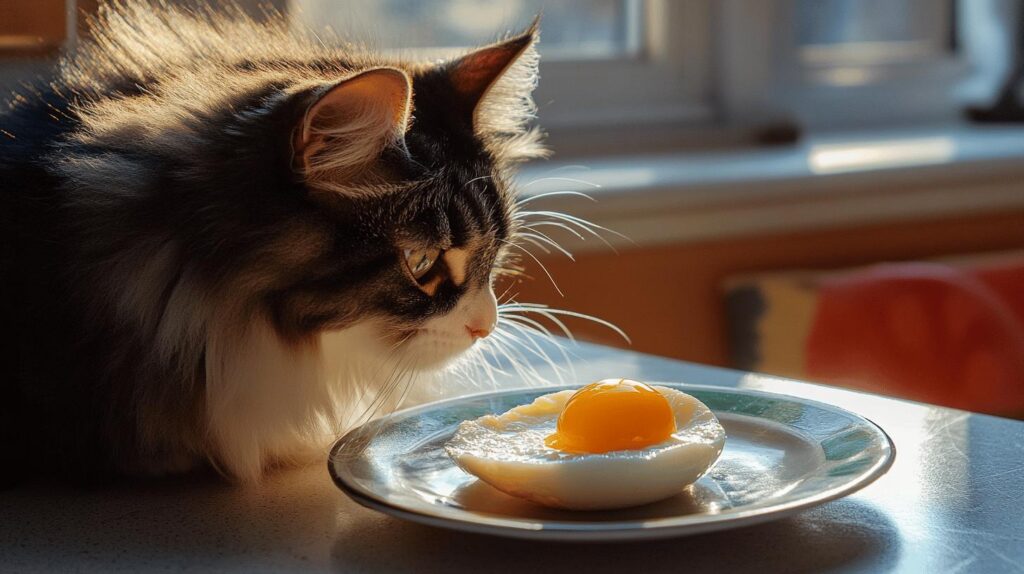
Cooked eggs can be a nutritious addition to your cat’s diet. When properly prepared, they offer a rich source of protein and essential nutrients like vitamins B12 and D. These vitamins support your cat’s energy levels and bone health. To ensure safety, cook the eggs to an internal temperature of 160°F. This eliminates bacteria such as E. coli and salmonella. Consider serving scrambled or boiled eggs as a treat. Mixing them with your cat’s regular food can be an exciting way to introduce variety into their meals.
It’s crucial to be aware of potential food allergies. Eggs can trigger reactions in some cats, leading to vomiting, diarrhea, or skin irritations. If you notice any of these symptoms, reach out to your veterinarian. They can offer guidance on how to safely incorporate eggs into your cat’s diet. Moderation is key to preventing health issues like weight gain. A balanced diet is vital for maintaining your cat’s well-being.
- Mix eggs with regular cat food
- Use cooked eggs as training treats
- Introduce eggs slowly into the diet
- Monitor for signs of allergies
- Consult your vet for personalized advice
By incorporating eggs in a balanced manner, you enhance your cat’s diet while minimizing risks. Start with small portions to gauge your cat’s reaction. If they enjoy it and show no adverse effects, you can gradually include eggs as an occasional treat. Always prioritize your cat’s health needs and preferences.
Nutritional Benefits of Eggs for Cats
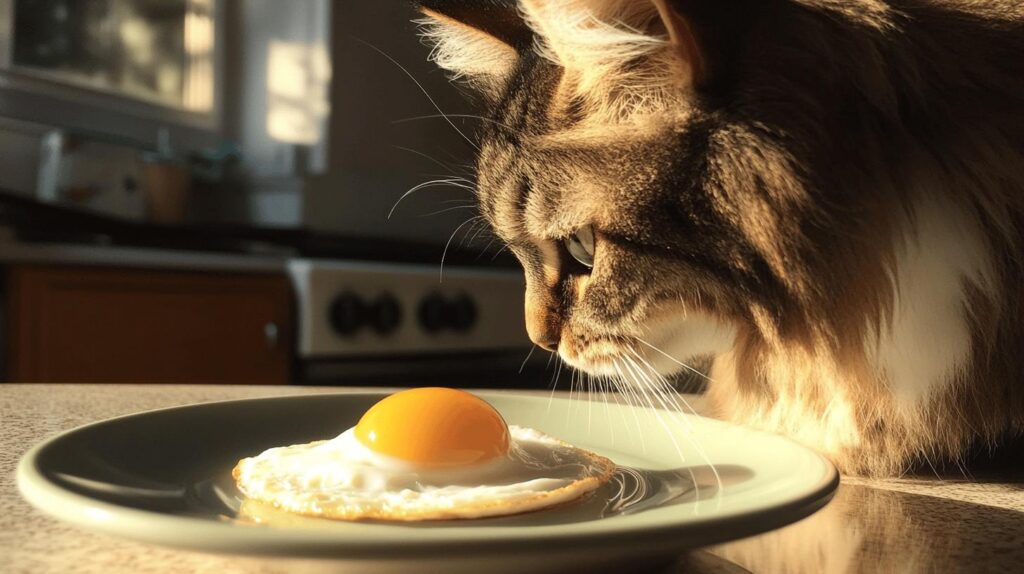
Eggs provide an excellent protein source, essential for muscle development and maintaining a cat’s vitality. This high protein content supports their active lifestyle.
Vitamins like B12 and D in eggs promote energy metabolism and bone health. Fatty acids contribute to a shiny coat and strong claws. These nutrients make eggs beneficial beyond basic nourishment. Recent studies suggest that vitamin D from eggs may enhance a cat’s immune system, offering added health benefits.
Egg whites are a low-fat, high-protein option for cats. They are cholesterol-free, making them a healthier treat compared to other protein sources.
Incorporating eggs into a cat’s diet can enhance overall health when done thoughtfully. Eggs provide nutrients that complement their regular food, making them a valuable dietary addition.