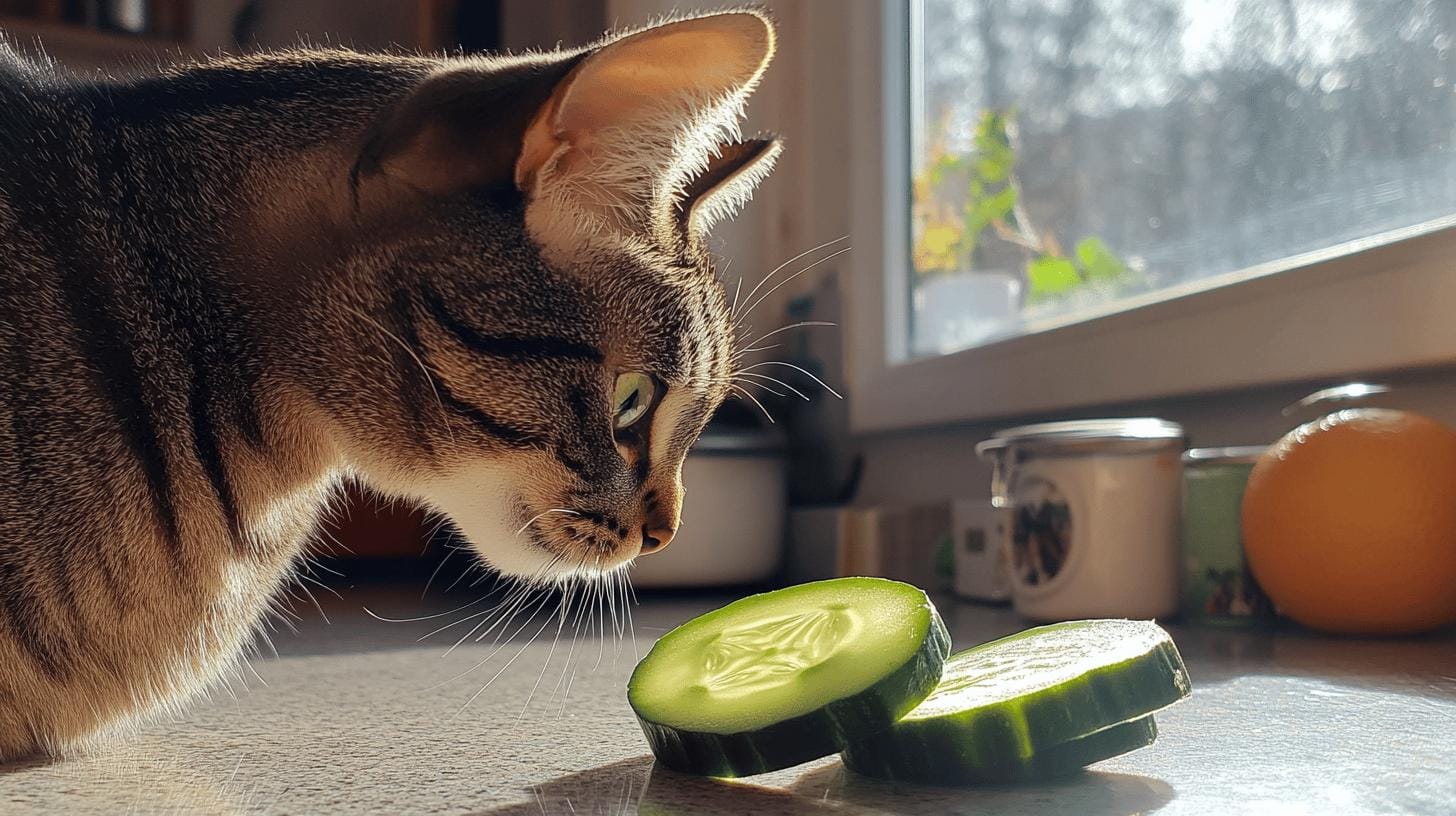
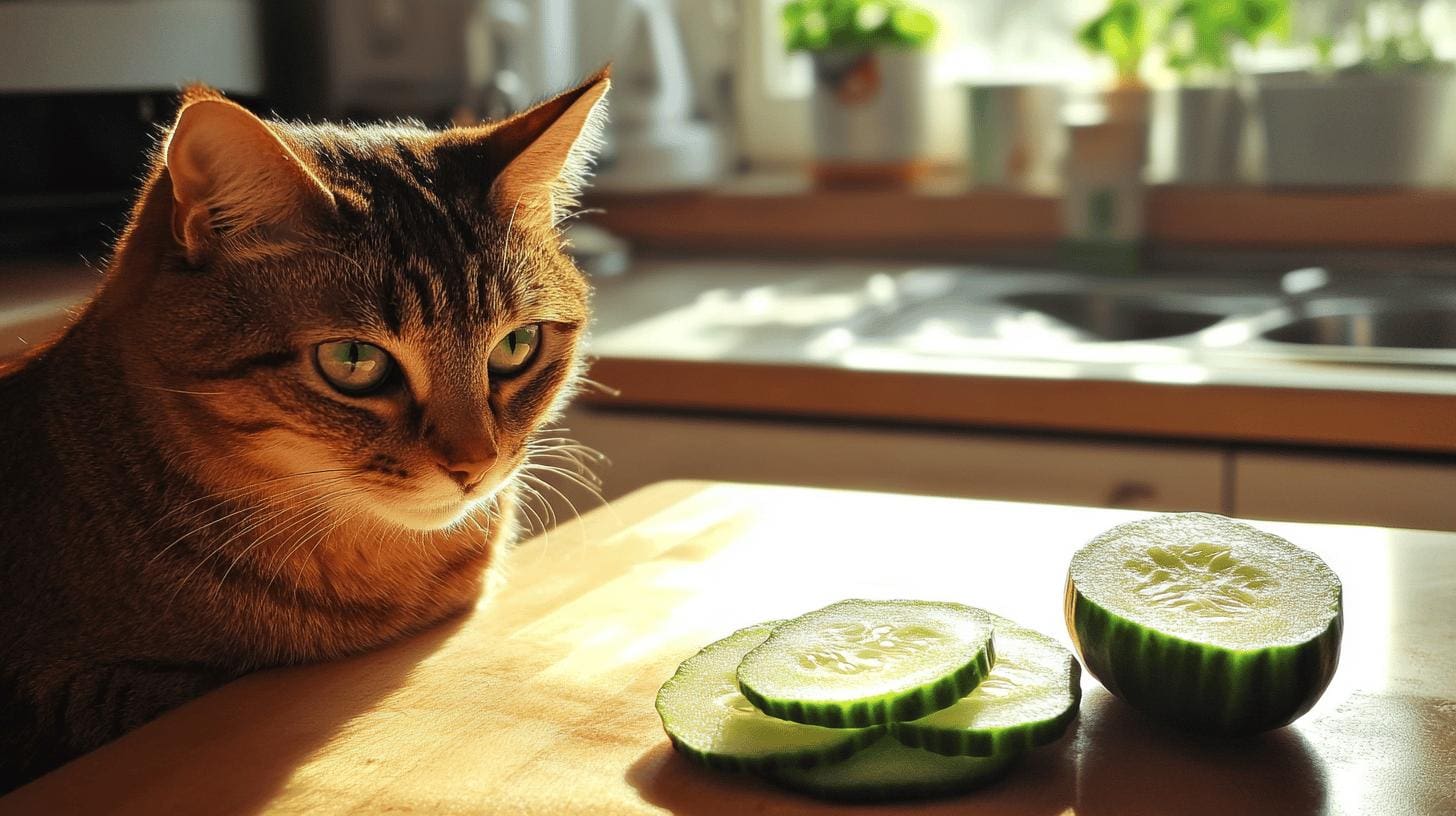
Can your cat munch on cucumbers safely and healthily? It’s a question many cat owners ponder. The short answer is yes, but with a few important pointers.
Cucumbers can be a safe snack for cats when given in moderation. They offer hydration and nutrients, resembling a refreshing treat.
But, like anything, too much can lead to problems. In this article, we’ll explore how to introduce cucumbers to your cat’s diet safely, what benefits they offer, and what to watch out for to ensure your feline friend stays happy and healthy.
Can Cats Eat Cucumber Safely?
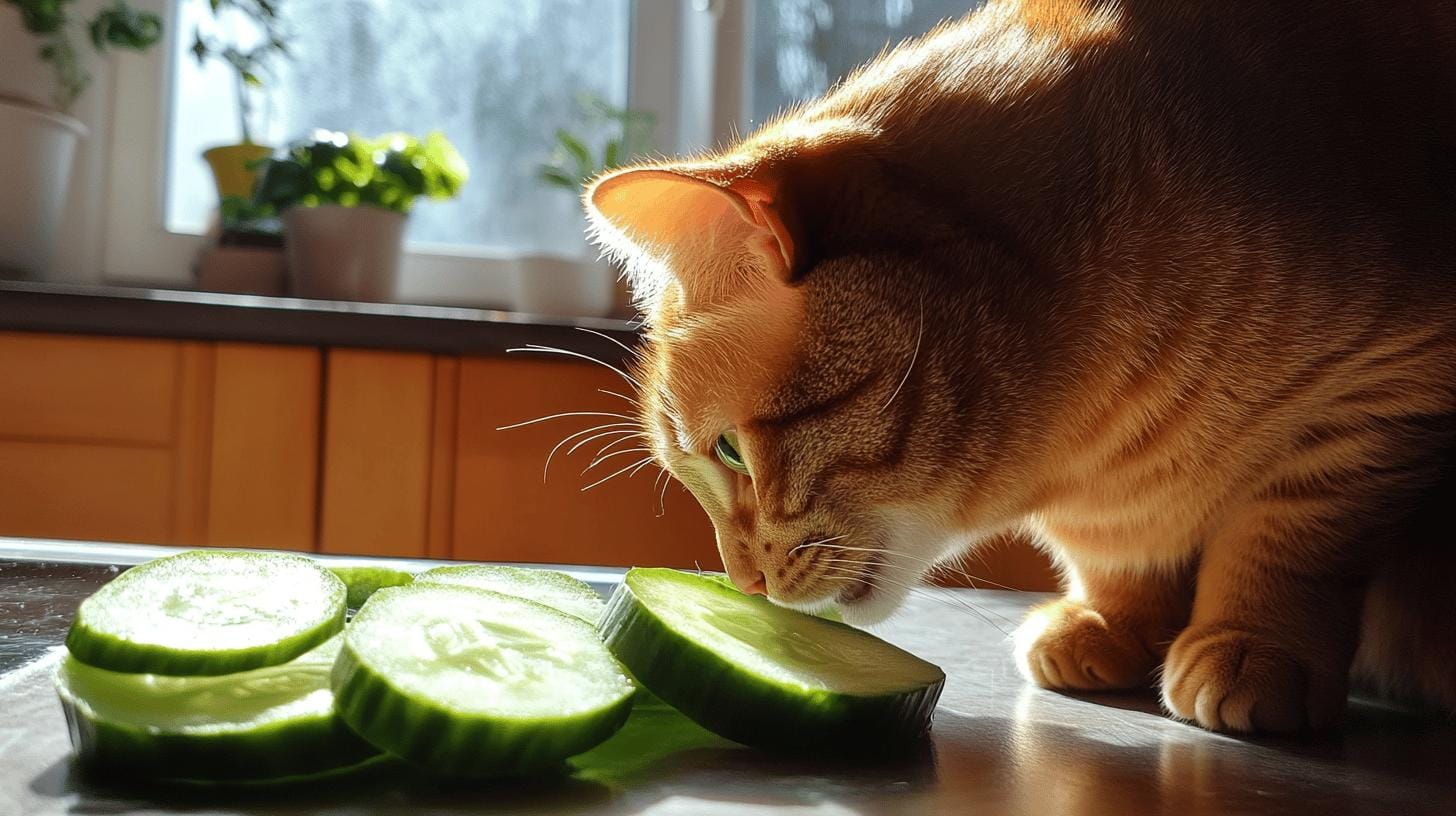
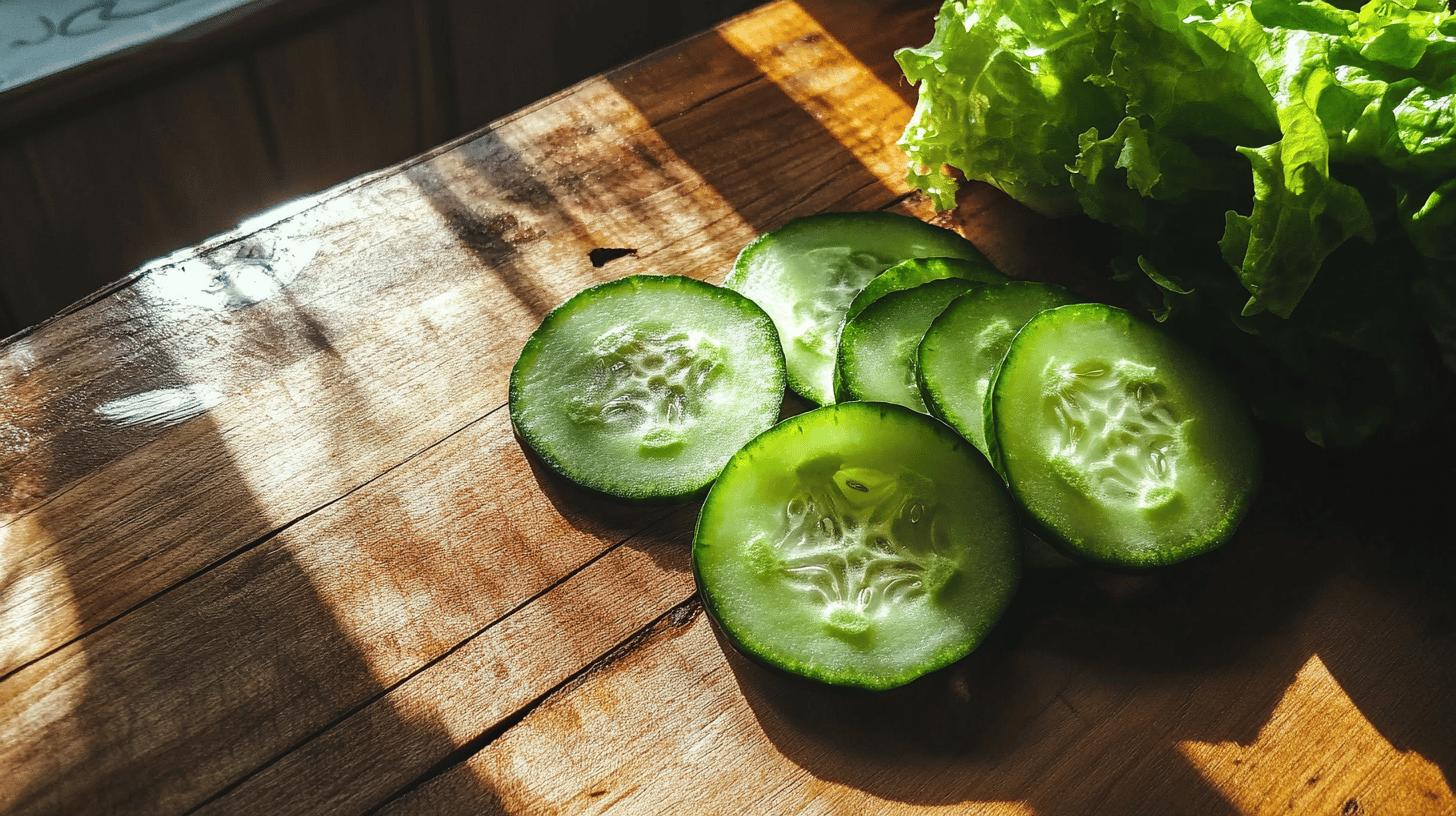
Cats can indeed eat cucumbers, but they should be given as an occasional treat and in moderation. Cucumbers are generally safe for cats if you slice them into small pieces to prevent any potential choking hazards or startling effects. Serving cucumbers in moderation helps avoid any digestive issues that might arise from overconsumption.
- Slice cucumbers into small, manageable pieces.
- Introduce cucumbers gradually to monitor the cat’s reaction.
- Avoid giving them cucumbers as a primary food source.
- Watch your cat closely during the first few feedings for any signs of discomfort.
Though cucumbers are safe for cats to eat, it’s important to be aware of any potential risks. Some cats might experience digestive discomfort when first introduced to cucumbers.
Keep an eye out for any signs of nausea, vomiting, or diarrhea. If your cat shows any immediate adverse reactions, it’s best to stop feeding them cucumbers and consult with a vet.
Feeding cucumbers to cats can be a healthy practice when done correctly, but it comes with considerations. Overfeeding or introducing cucumbers too quickly can lead to digestive issues, paving the way for further health concerns. This highlights the need for careful observation and moderation, which will be explored in more detail in the upcoming ‘Risks and Considerations’ section.
Can Cats Eat Cucumber Safely?
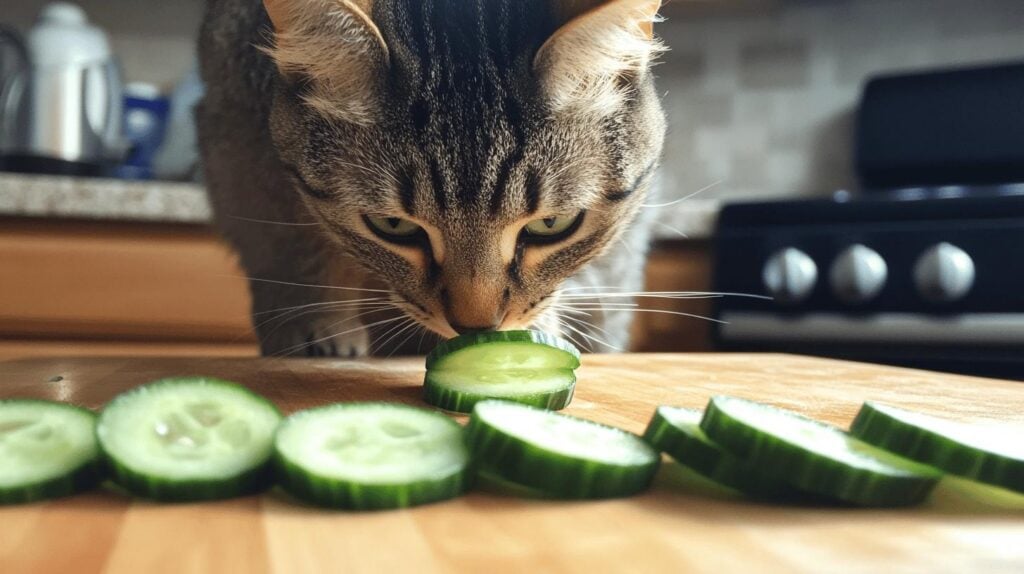
Cats can enjoy cucumbers as a refreshing treat, offering hydration benefits due to their high water content. Cucumbers also contain vitamin K and potassium, which can support overall health when given in moderation. These nutrients, along with hydration, make cucumbers an interesting addition to a cat’s occasional snack options.
- Slice cucumbers into small, manageable pieces.
- Introduce cucumbers gradually to monitor the cat’s reaction.
- Avoid giving them cucumbers as a primary food source.
- Watch your cat closely during the first few feedings for any signs of discomfort.
While cucumbers can offer some health benefits, it’s crucial to be aware of potential risks. Some cats may experience digestive issues, such as nausea or diarrhea, when first introduced to cucumbers. Monitoring your cat’s reaction is essential. If any discomfort occurs, stop feeding cucumbers and consult your veterinarian.
We’ll delve deeper into the ‘Risks and Considerations’ in the next section, where we’ll explore potential health concerns and how to safely incorporate cucumbers into your cat’s diet. This ensures your cat enjoys the benefits without unnecessary health risks.
Nutritional Value and Benefits of Cucumber for Cats
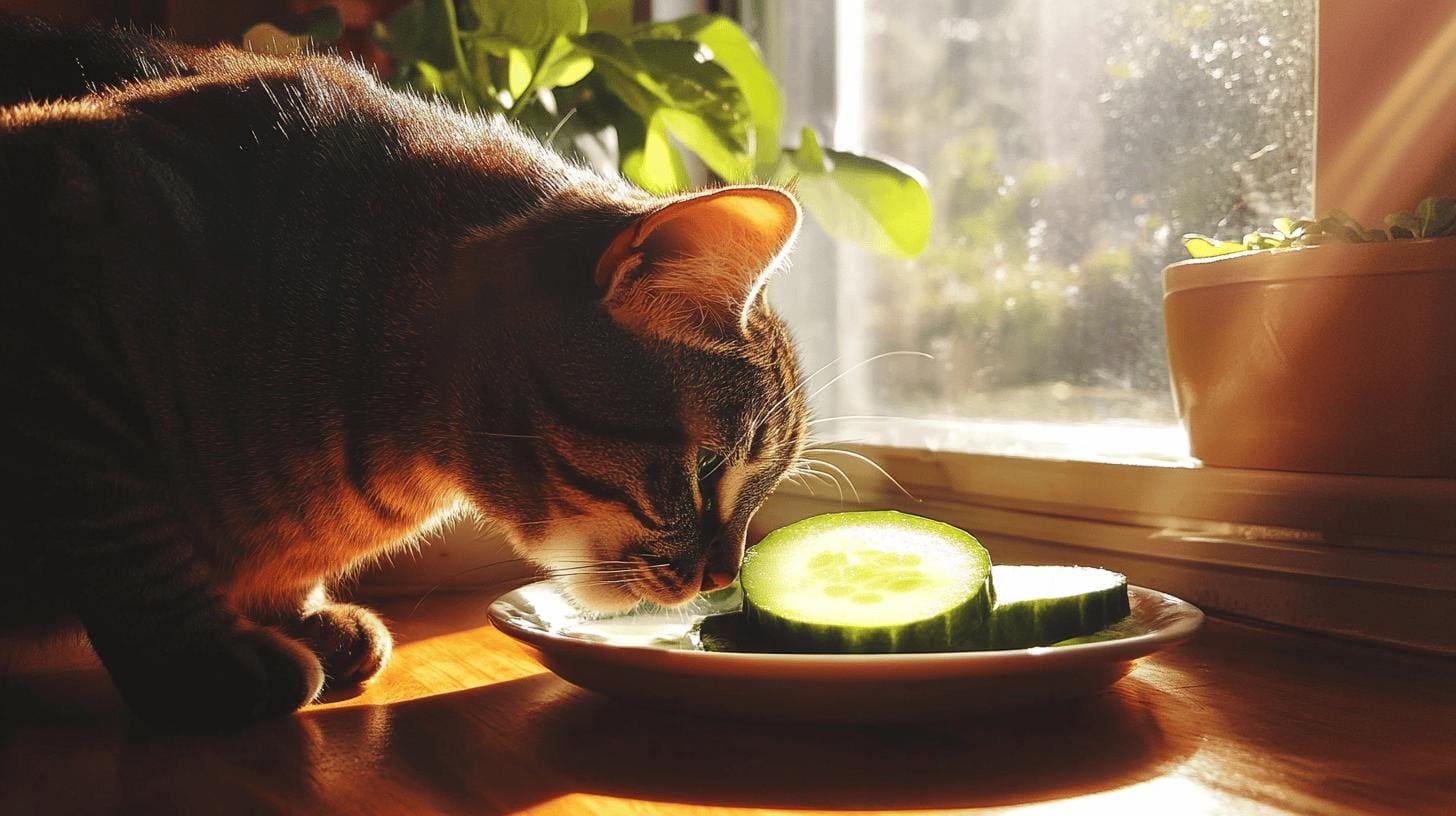
Cucumbers deliver a variety of nutrients that can be beneficial to cats. In addition to vitamins C and K, which are critical for immune support and blood clotting, cucumbers contain potassium and manganese, essential for overall feline health. Furthermore, they provide antioxidants and molybdenum, which can enhance metabolism.
Cucumbers are made up of about 95% water, making them an effective way to boost your cat’s hydration. This can be especially beneficial for cats that tend to drink less water, offering a supplementary source of fluids. Increased hydration can support kidney health and may help reduce the risk of urinary tract issues.
Cucumbers are low in calories, making them a suitable light snack for cats. Their refreshing crunch can offer a change from regular cat treats, providing a healthy option that satisfies without adding unnecessary calories.