Can cats safely enjoy octopus as part of their diet, or is this seafood too risky for our feline friends? When prepared the right way and given sparingly, octopus can be a delightful treat packed with protein and omega-3s. But beware—this seafood isn't without its dangers. If it's not cooked thoroughly, octopus can harbor harmful bacteria and heavy metals. In this post, we'll dive into the nutritional perks and safety tips of feeding octopus to your cat, so you can make informed choices for your furry companion.
Is It Safe for Cats to Eat Octopus?
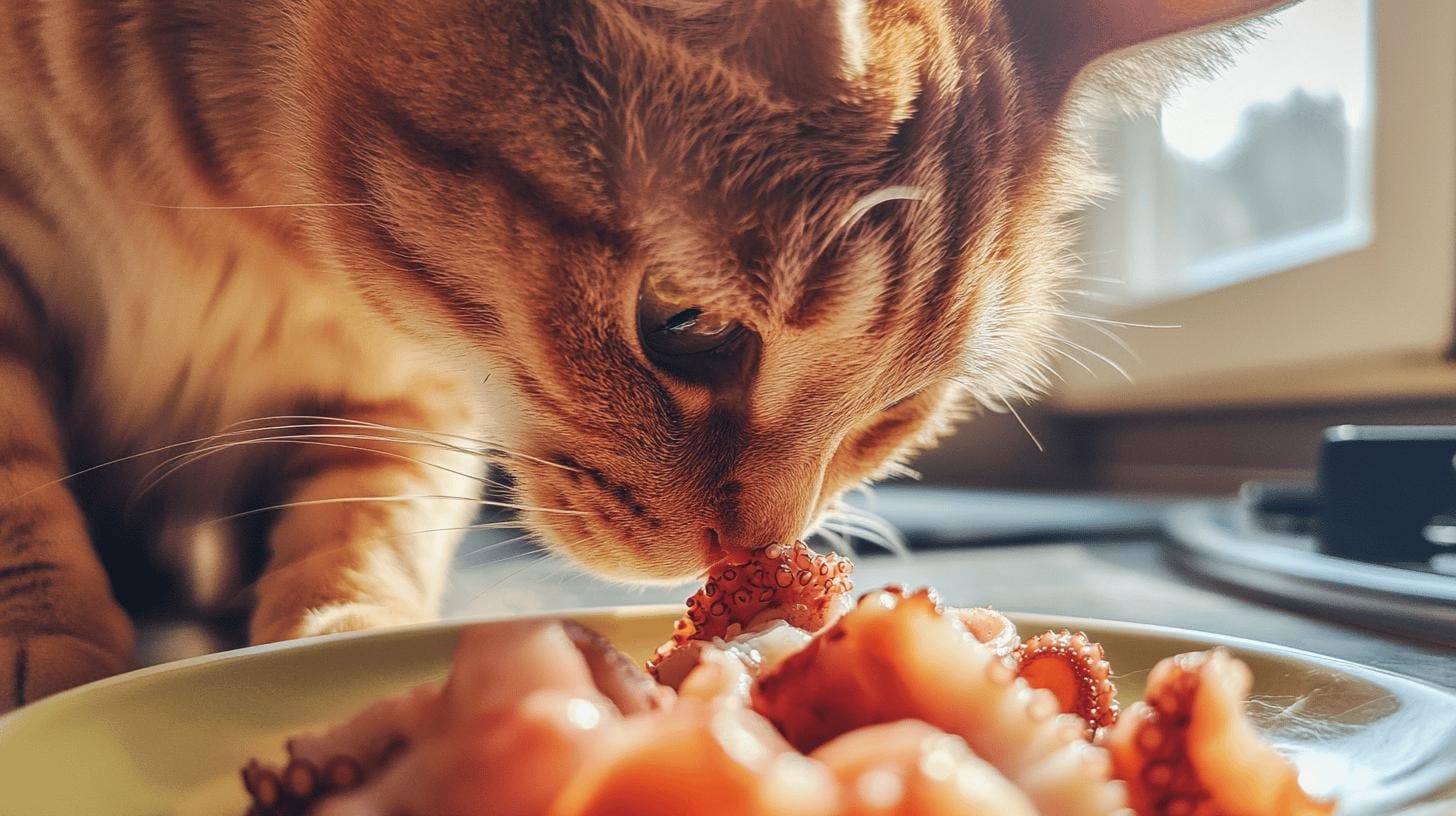
Octopus is safe for cats to eat if it is prepared correctly and given in moderation. While it can offer some nutritional benefits, like protein and omega-3 fatty acids, it should not replace a cat's regular diet. Octopus should be considered an occasional treat due to its nutritional limitations and potential risks. Ensuring the octopus is cooked thoroughly is crucial to avoid harmful bacteria and contaminants.
Feeding octopus to your cat comes with potential hazards. Raw octopus can be a source of food poisoning because it may contain bacteria such as Vibrio, Salmonella, and E. coli, which are dangerous to cats. Additionally, octopus can accumulate heavy metals like mercury, which can pose health risks over time if consumed in large amounts. It's essential to source octopus carefully and ensure it's cooked properly to minimize these risks.
Seafood allergies are the third most common type of allergy in cats, following beef and dairy allergies. Possible allergic reactions in cats include digestive issues, such as vomiting or diarrhea, and skin reactions like itching or hives. If you notice any of these symptoms after introducing octopus or any new food into your cat's diet, it's vital to consult with a veterinarian. Recognizing and understanding these possible allergies can help keep your cat safe and healthy.
Moderation is key when feeding octopus to cats. Overfeeding can increase the risk of exposure to heavy metals and bacteria. Offering small amounts as an occasional treat ensures your cat enjoys the benefits without the associated risks. Always monitor your cat for any adverse reactions and adjust their diet accordingly.
| Potential Hazard | Risk Level for Cats |
|---|---|
| Bacterial Contamination | High if uncooked |
| Heavy Metal Accumulation | Moderate |
| Seafood Allergies | Moderate |
| Overfeeding Risks | Moderate |
Nutritional Profile of Octopus for Cats
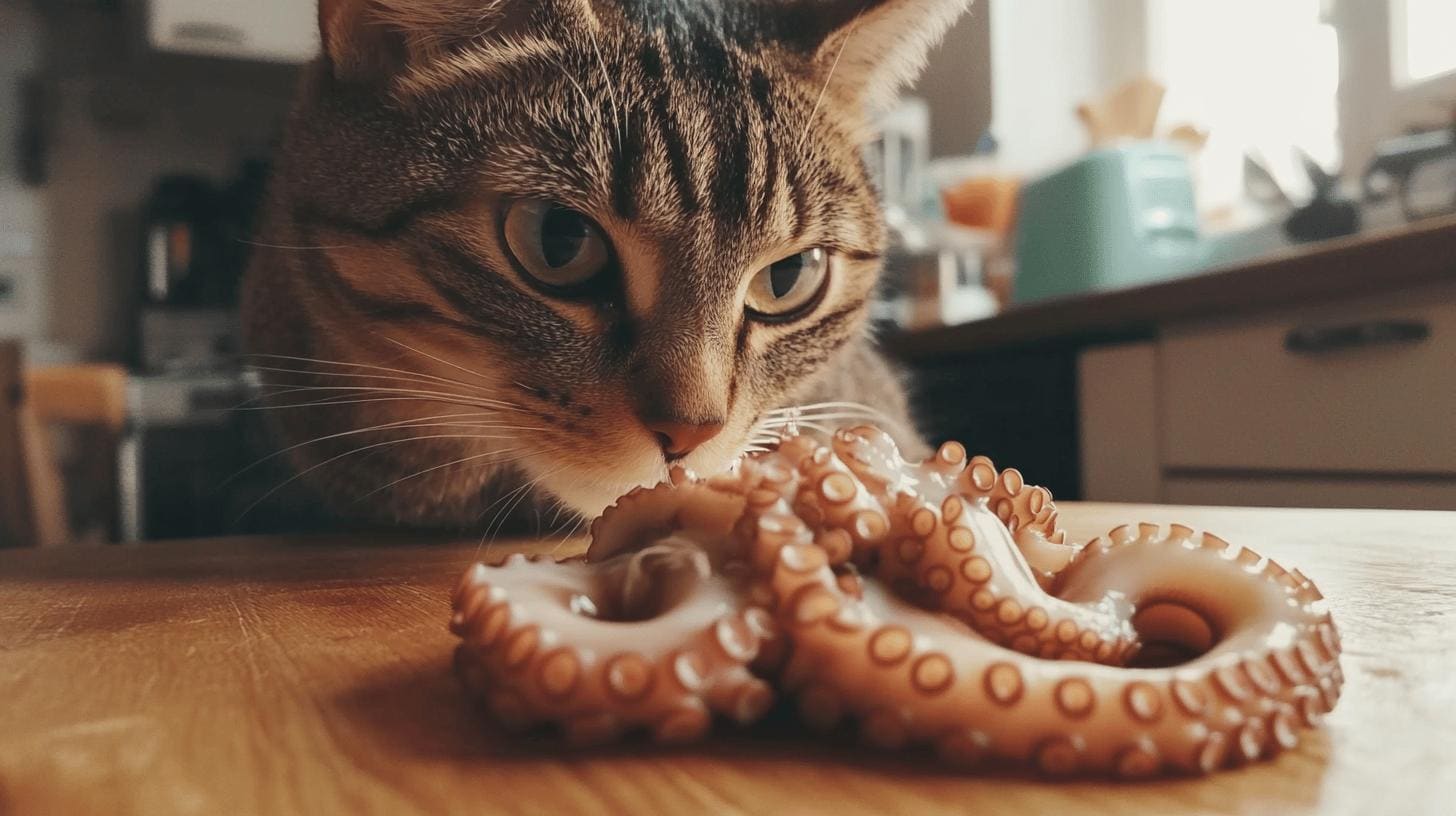
Octopus provides nutrients that can enhance a cat's diet when fed occasionally. It delivers protein for muscle maintenance and omega-3 fatty acids, which are beneficial for coat and heart health. Additional nutrients include iron, copper, and zinc, though octopus lacks complete nutrition, making it unsuitable as a daily meal replacement.
While protein and omega-3s are advantageous, octopus should complement a balanced diet rather than replace it. The lack of essential vitamins and minerals in octopus means it can't fulfill a cat's nutritional needs alone. Moderation is crucial to prevent health issues like mercury exposure from seafood.
- Protein: Supports muscle growth and repair.
- Omega-3 Fatty Acids: Promote a healthy coat and support heart health.
- Iron: Aids in oxygen transport in the blood.
- Copper: Essential for overall metabolism and the formation of red blood cells.
- Zinc: Supports immune function and skin health.
Preparing Octopus for Cats: Guidelines and Methods
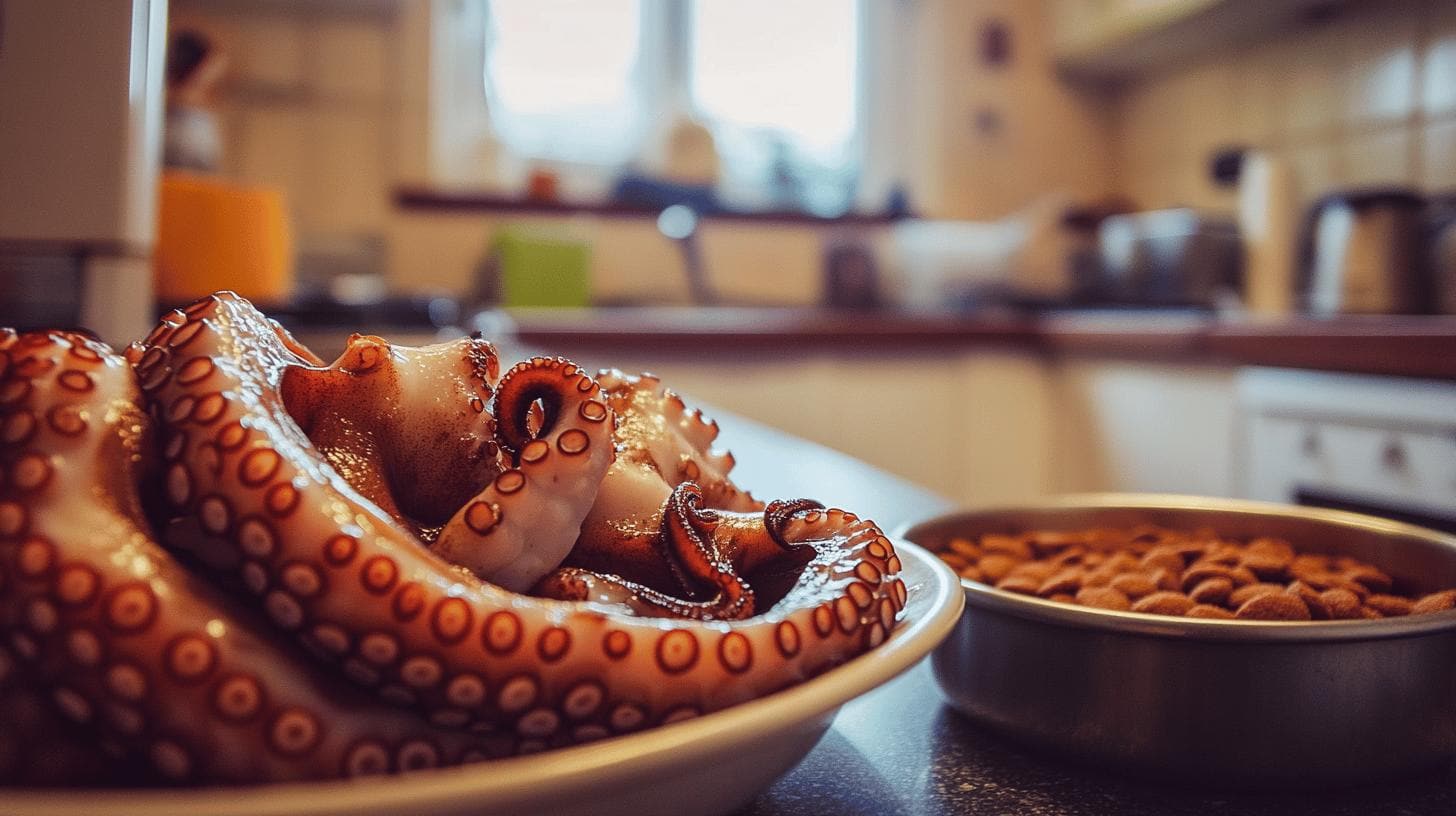
Thorough preparation of octopus is crucial for your cat's safety. Raw octopus may contain bacteria like Vibrio, Salmonella, and E. coli, which can lead to food poisoning. Cooking octopus properly eliminates these risks and enhances its nutritional benefits as a treat.
Steaming or boiling are ideal cooking techniques for cats. These methods preserve nutrients while effectively killing bacteria. Cook until tender, ensuring all parts are heated thoroughly. Avoid oils or fats to prevent unnecessary calories and digestive issues.
Avoid harmful additives such as salt, onion, garlic, and chives. These can cause health problems in cats. Serve octopus plain in small pieces to avoid choking and ensure a safe eating experience.
Cooking Techniques for Safe Octopus
Steaming and boiling are preferred methods for cooking octopus for cats. These techniques thoroughly cook the meat without introducing harmful additives. They provide a nutritious, safe treat free from the risks of raw or improperly cooked octopus.
Recognizing fresh octopus is key. Look for firm, moist flesh and a mild sea scent. Avoid any with a strong odor or slimy texture. This ensures your cat enjoys only safe, fresh octopus.