Is your cat eyeing your cooking oil with curiosity? Before you pour a splash into their food, let's explore the safety and health concerns. While oils like olive and coconut might seem harmless, their impact on cats can vary. A tiny amount could help with digestion or coat health, yet too much can cause trouble. Think of it like indulging in that extra slice of cake—it might taste good, but it doesn’t come without risks. Are we taking chances with our pets? Let’s find out what's best for our feline friends.
Can Cats Safely Consume Oil?
Cats can indeed consume various oils, but the safety and health benefits can vary significantly depending on the type of oil. Olive oil and coconut oil are generally considered safe for cats when given in small amounts. Yet, excessive consumption can lead to health issues. While oil can offer benefits like aiding digestion or improving coat health, there are potential allergic reactions to be aware of. Cats might show signs of oil allergy, which could include digestive issues or skin irritations.
Potential signs of oil allergy in cats:
- Vomiting
- Diarrhea
- Skin irritations
- Lethargy
- Loss of appetite
If a cat ingests a large quantity of oil, immediate veterinary care is crucial. Overconsumption can lead to severe health problems, including liver issues. In such cases, it's vital to monitor your cat closely for any unusual behavior or symptoms and seek professional help. Always have your vet's contact information readily available in case of emergencies.
Different oils have distinct health impacts on cats. For example, olive oil might aid in digestion and hairball management, while coconut oil could help with skin health. However, they are not a substitute for essential nutrients found in a cat's primary diet. Each type of oil brings its own set of benefits and risks, and it's essential to consider these before adding them to your cat's diet. Always consult with a veterinarian to ensure that any oil included is appropriate for your cat's specific health needs.
Exploring the Benefits and Risks of Olive Oil for Cats
Olive oil is safe for cats and offers several health benefits. It's great for aiding digestion and helps manage hairballs, especially in long-haired cats. Olive oil's low saturated fat content makes it a healthier choice than options like coconut oil. It's rich in vitamin E and antioxidants, which boost the immune system. These nutrients are excellent for overall health and may enhance skin and coat condition.
Despite its benefits, olive oil should be used with caution. Limit its use to 5–20 drops to prevent health issues. Overuse can lead to digestive upset, causing diarrhea or vomiting. Directly giving olive oil to your cat might result in aspiration pneumonia if inhaled into the lungs. Olive oil should complement, not replace, essential nutrients in your cat's diet. Watch your cat's response to olive oil and consult a vet if any adverse effects occur.
Introducing Olive Oil to Your Cat's Diet
Start by mixing a small amount of olive oil into your cat's regular food. This minimizes the risk of aspiration and makes the oil more palatable. Begin with just a few drops, gradually increasing to 5–20 drops, while observing your cat's reaction. Always consult your veterinarian before making dietary changes to ensure they meet your cat's specific health needs.
The Role of Coconut Oil in Cat Health
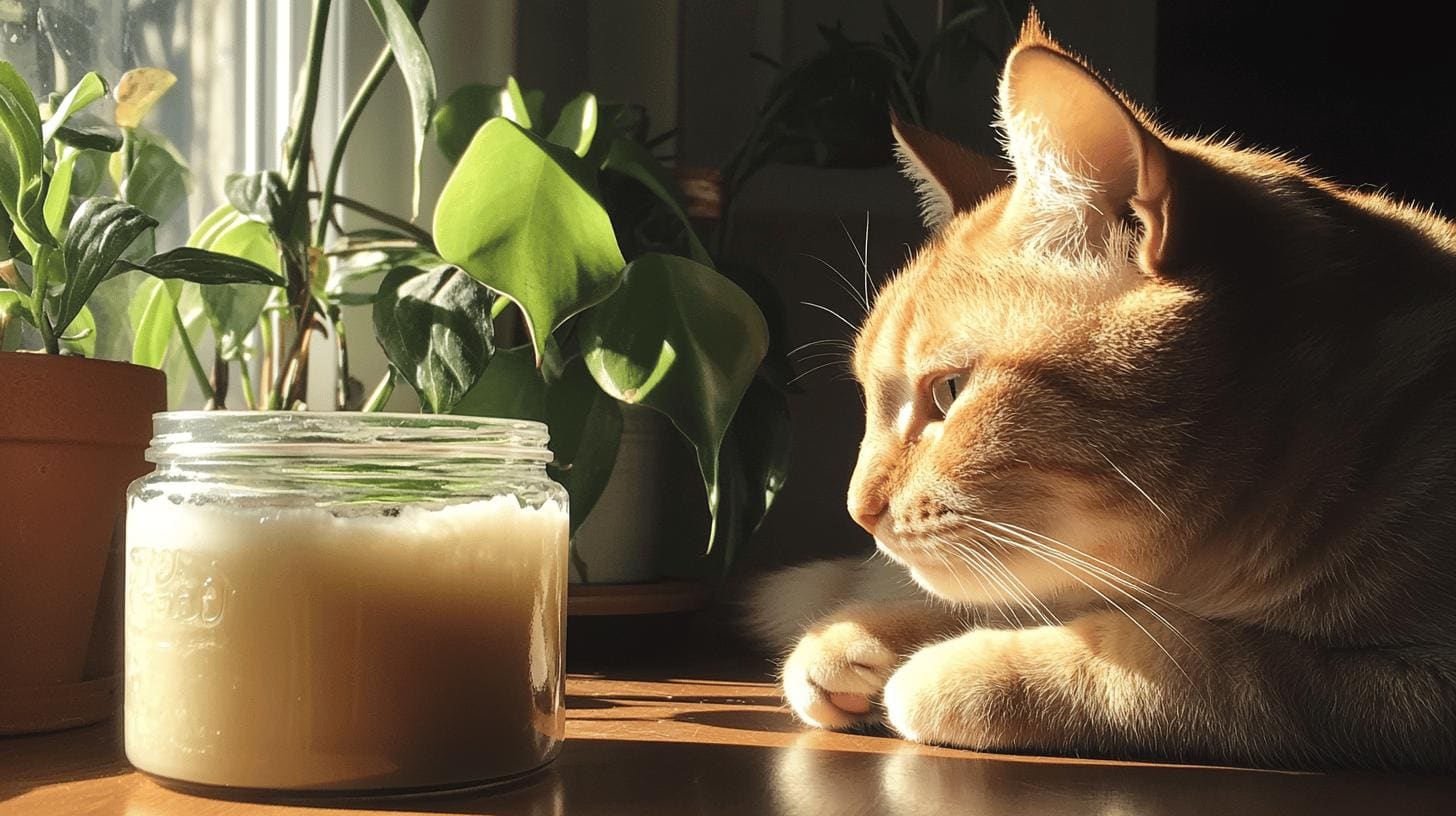
Coconut oil can be a beneficial addition to a cat's care routine when used sparingly. Its properties can help improve skin health, making it a great option for cats with dry or flaky skin. When applied topically, it can soothe irritations and moisturize the skin. Additionally, coconut oil can aid digestion, helping to ease constipation and support a healthy gut when added in small amounts to a cat's diet.
Recommended usages of coconut oil for cats:
- Apply to dry or irritated skin to moisturize and soothe
- Add to food in small amounts to aid digestion
- Use as a natural remedy for hairball management
- Apply to paws to soothe cracked or dry areas
Despite its benefits, coconut oil is composed of 80–90% saturated fat, so moderation is key. It's not a substitute for the essential nutrients in a cat's primary diet. Overconsumption could lead to weight gain or digestive issues. It's crucial to consult a veterinarian before introducing coconut oil to your cat's diet to determine the appropriate dosage and ensure it fits their specific health needs.