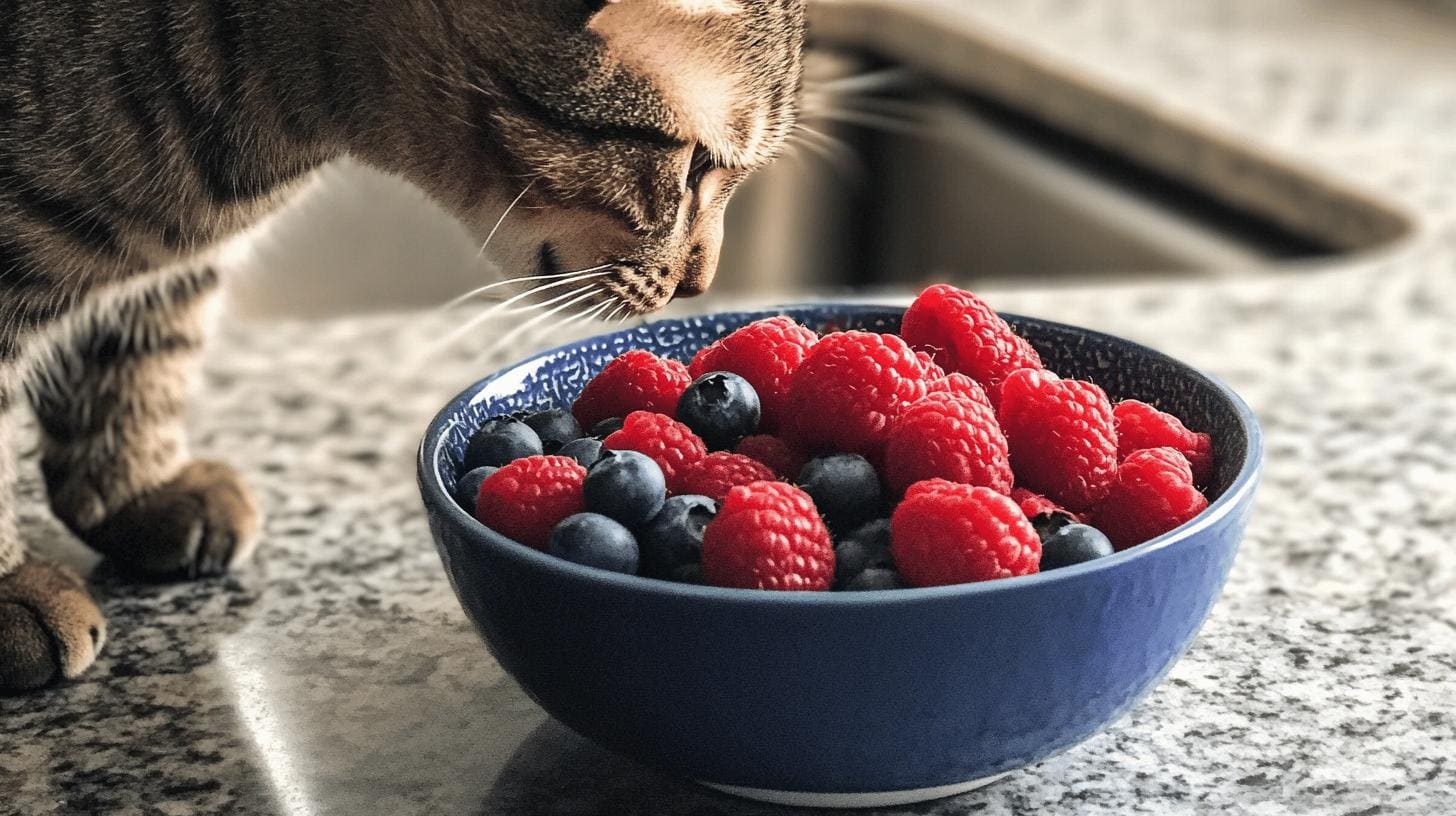
Are raspberries a sweet treat that's safe for your cat, or are they a dietary no-go? If you've ever wondered whether your feline friend can nibble on this vibrant berry, you're not alone. Cats can eat raspberries, but there's a lot to consider.
From sugar content to potential allergies, the journey to a cat-friendly diet can be like navigating a tricky maze. In this guide, I'll lay out clear steps and recommendations to help you decide how to include raspberries in your cat's meals safely.
Can Cats Eat Raspberries Safely?

Raspberries are non-toxic to cats, making them safe for feline consumption in moderation. Despite this, it's important to keep in mind that raspberries have a high sugar content, which can lead to digestive upset. Offering them in limited quantities is key to ensuring your cat's health.
Cats should only have one to two raspberries per serving and no more than once a week. Some cats, especially those with sensitive stomachs, may experience vomiting or diarrhea from eating raspberries. Additionally, fruit allergies in cats can manifest as itching, swelling, and gastrointestinal upset.
Safety Guidelines for Feeding Raspberries to Cats
- Wash Thoroughly: Always wash raspberries to remove any chemicals or pesticides.
- Limit Portion Size: Offer only one to two raspberries per serving.
- Monitor for Allergies: Watch for signs of allergies such as itching or swelling.
- Check for Digestive Issues: Be alert for symptoms like vomiting or diarrhea.
- Consult Your Veterinarian: Before introducing raspberries, check with your vet for personalized advice.
Caloric Intake Guidelines
Raspberries should only make up 5%-10% of a cat's daily caloric intake. This ensures that your cat's primary nutrition comes from meat-based sources, which are essential for their health. Consider your cat's daily caloric needs and consult a veterinarian to determine the appropriate amount of raspberries. This balance helps prevent nutritional imbalances and health issues related to excessive sugar consumption.
Moderation is the best approach when it comes to feeding raspberries to your cat. Consulting with a veterinarian is always a smart choice to ensure that any new food fits well within your cat's diet. Maintaining a balanced and complete diet is crucial for your cat's overall health, with meat-based nutrition playing a central role.
Nutritional Value and Benefits of Raspberries for Cats

Raspberries are packed with nutrients that, at first glance, seem beneficial for cats. They include fiber, antioxidants, and essential vitamins such as A, C, E, and K. Additionally, they contain minerals like calcium and potassium. While these nutrients are beneficial, it's important to remember that cats are obligate carnivores, meaning their bodies are designed to absorb nutrients primarily from meat.
| Nutrient | Potential Benefits for Cats |
|---|---|
| Fiber | Aids in digestion |
| Antioxidants | Supports immune health |
| Vitamin A | Promotes vision health |
| Vitamin C | Boosts immune system |
| Calcium | Strengthens bones |
Despite these nutrients, the impact on cats is limited. Their digestive systems are not as effective at extracting these benefits from plant-based foods compared to a diet rich in animal proteins. While raspberries can offer some fiber and antioxidants, they should not replace the primary source of nutrition that cats need from meat.
Therefore, while raspberries can occasionally be a safe treat, they should be given in moderation to avoid any potential digestive issues. Always consult with a veterinarian when considering adding new foods to your cat's diet.