Have you ever wondered if giving your cat a taste of raw salmon could be as harmless as a little treat? While it seems tempting to offer them something fresh from the ocean, the reality is quite different.
Feeding cats raw salmon can be risky, opening the door to harmful bacteria and parasites. It's like stepping into uncharted waters without knowing the dangers lurking beneath. Let's take a closer look at the risks associated with raw salmon for cats and understand the best ways to keep our feline friends safe and healthy.
Can Cats Safely Eat Raw Salmon?
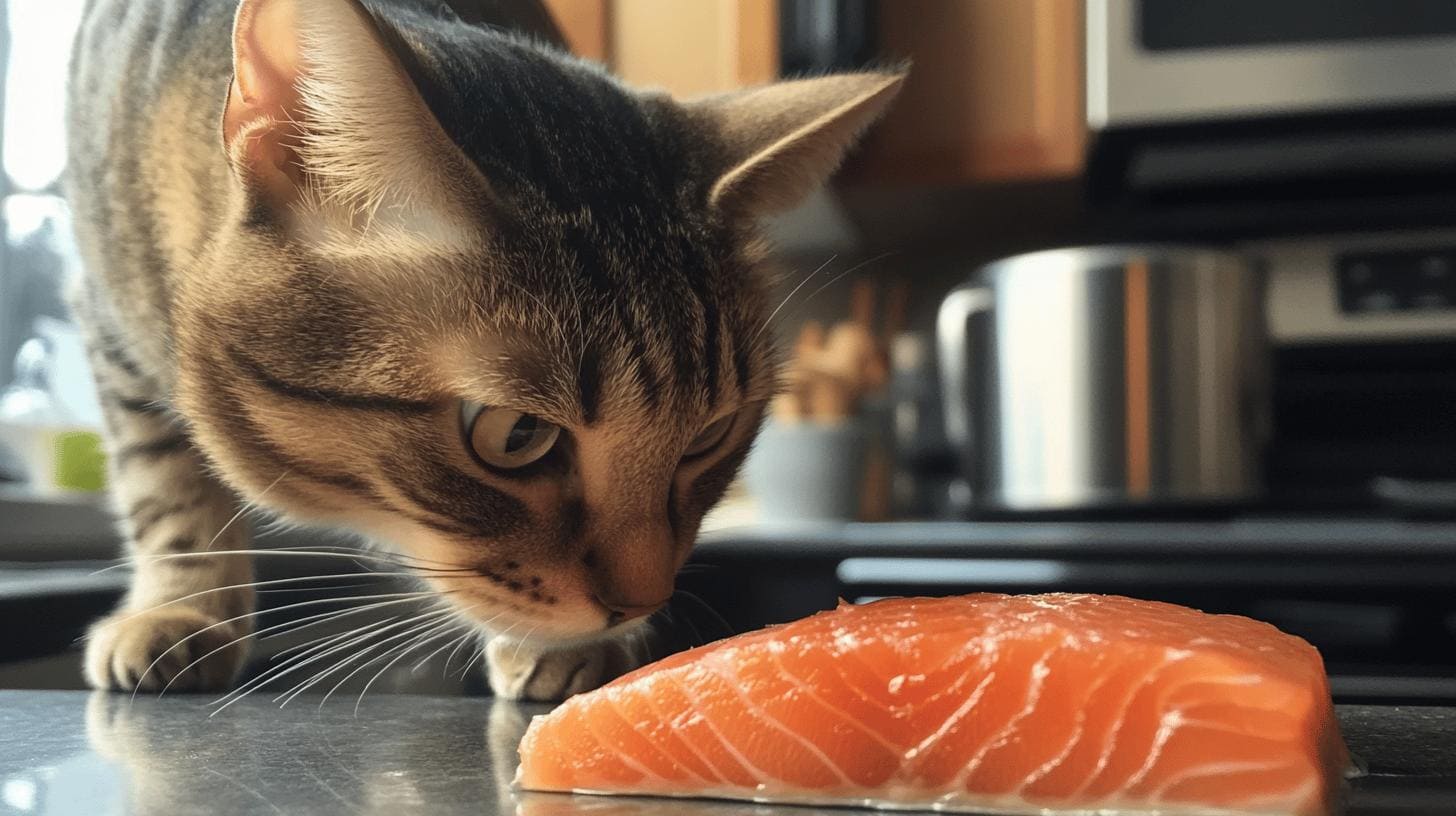
Feeding raw salmon to cats is generally not safe. Raw salmon can harbor harmful bacteria like E. coli and salmonella, which can lead to severe food poisoning in cats. These bacteria can cause symptoms such as vomiting, diarrhea, and dehydration.
An expert in feline nutrition mentions, "Although wild cats may consume raw fish, domestic cats are at a higher risk of bacterial infections when eating raw salmon." It's crucial to understand that even though cats are natural hunters, domestic cats have different digestive systems that are not as equipped to handle raw foods as their wild counterparts.
Here's a rundown of the potential risks associated with feeding raw salmon to cats:
- Gastrointestinal Issues: Consuming raw salmon can upset a cat's stomach, leading to digestive disturbances.
- Bacterial Infections: Raw salmon may contain harmful bacteria like E. coli and salmonella, posing serious health risks.
- Parasites: Unless the salmon is flash-frozen, it may carry parasites that can harm your cat.
- Toxins: Certain toxins present in raw salmon can be harmful, especially if the fish is not fresh.
- Mercury Content: Like many fish, salmon can contain mercury, which is dangerous when consumed in large amounts.
It's best to avoid giving your cat raw salmon to keep them safe from these potential health hazards.
Can Cats Safely Eat Raw Salmon?
Feeding raw salmon to cats isn't recommended. Raw salmon can harbor harmful bacteria like E. coli and salmonella, potentially leading to severe food poisoning. Symptoms include vomiting, diarrhea, and dehydration.
A feline nutrition expert explains, "Domestic cats face higher risks of bacterial infections from raw salmon compared to wild cats." Domestic cats' digestive systems aren't as equipped to handle raw foods as their wild counterparts.
To keep your cat safe, consider these alternative protein sources instead of raw salmon:
- Cooked Chicken: Provides essential proteins without the risk of bacteria.
- Cooked Fish: Fully cooking fish eliminates harmful bacteria and parasites.
- Commercial Cat Food: Formulated to meet all nutritional needs without the risks associated with raw foods.
- Canned Tuna in Water: A safer occasional treat, low in mercury compared to raw fish.
- Boiled Eggs: A good source of protein and nutrients without bacterial risks.
Understanding your cat's nutritional needs is key. Domestic cats require balanced diets that differ from those of wild cats, making it essential to choose safe food options.
Benefits and Nutritional Content of Salmon for Cats
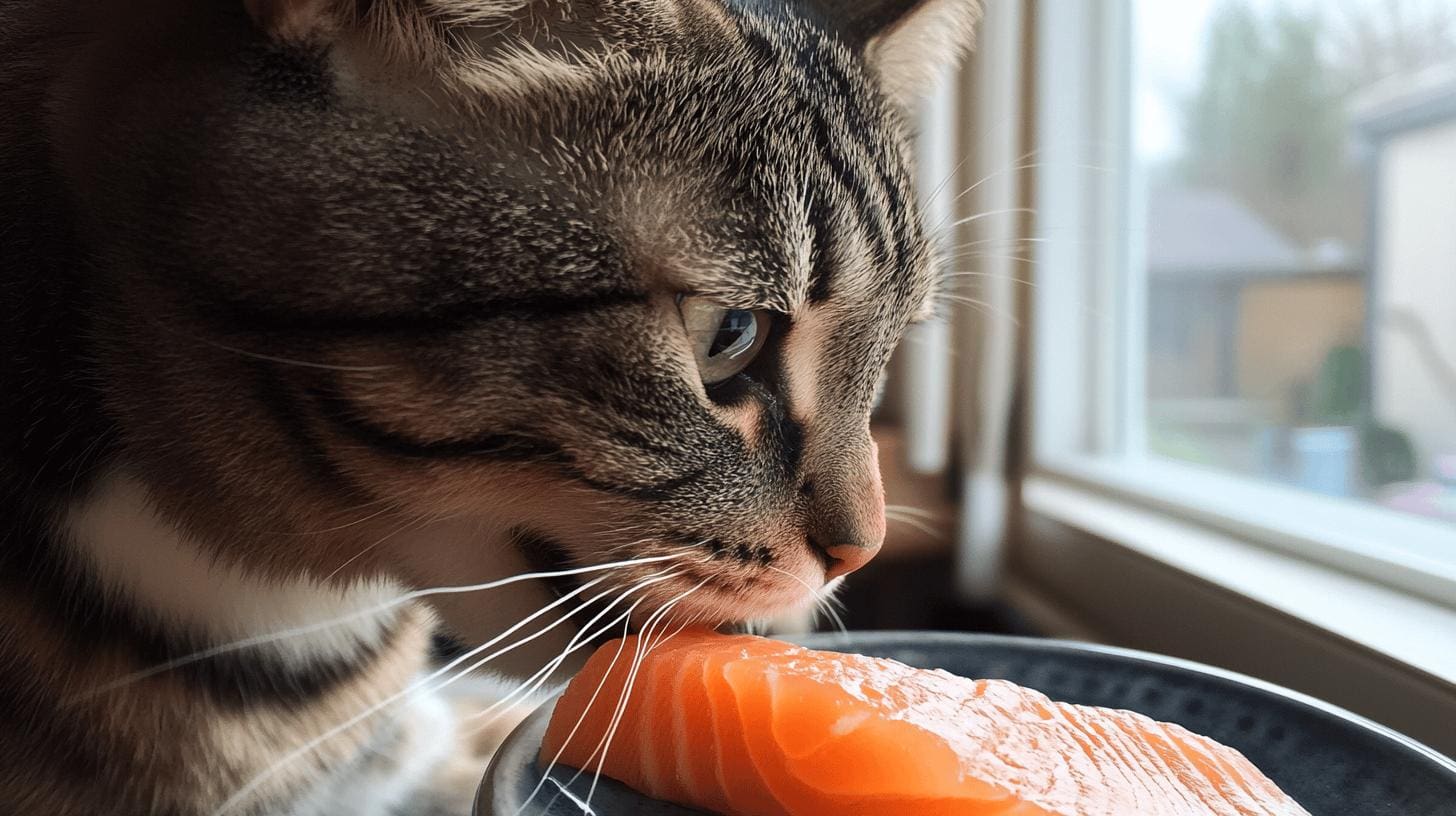
Salmon is a powerhouse of nutrition for cats, offering a rich profile of essential nutrients. It's packed with high-quality proteins that are crucial for maintaining strong muscles and overall body health. In addition to proteins, salmon is loaded with vitamins such as B12 and D, which are vital for energy metabolism and bone health.
Its omega-3 fatty acids are the standout nutrients, known for their anti-inflammatory properties and ability to support a healthy cardiovascular system.
Omega-3 fatty acids provide significant benefits for cats, particularly in maintaining healthy skin, a shiny coat, and flexible joints. These fatty acids help reduce inflammation, which can alleviate joint pain and improve mobility in older cats.
They also contribute to a glossy, well-maintained coat, reducing shedding and dandruff. Including salmon or salmon oil supplements in a cat's diet can help ensure they receive these benefits.
- Omega-3 fatty acids
- Proteins
- Vitamins B12
- Vitamin D
Incorporating salmon into your cat's diet can be a great way to enhance their nutrition, but always ensure it's prepared safely and served in moderation.