
Are roses a little bouquet of safety or a hidden danger for our whiskered companions? Many cat lovers adore having roses around their homes, delighting in their beauty and fragrance. But when curious paws and noses get involved, questions arise about the safety of these blooms. In this post, we explore whether cats can safely munch on roses and the potential risks involved. Join me as we uncover the truth about roses, helping you ensure a safe and joyful environment for your feline friend.
Can Cats Eat Roses? Understanding the Safety
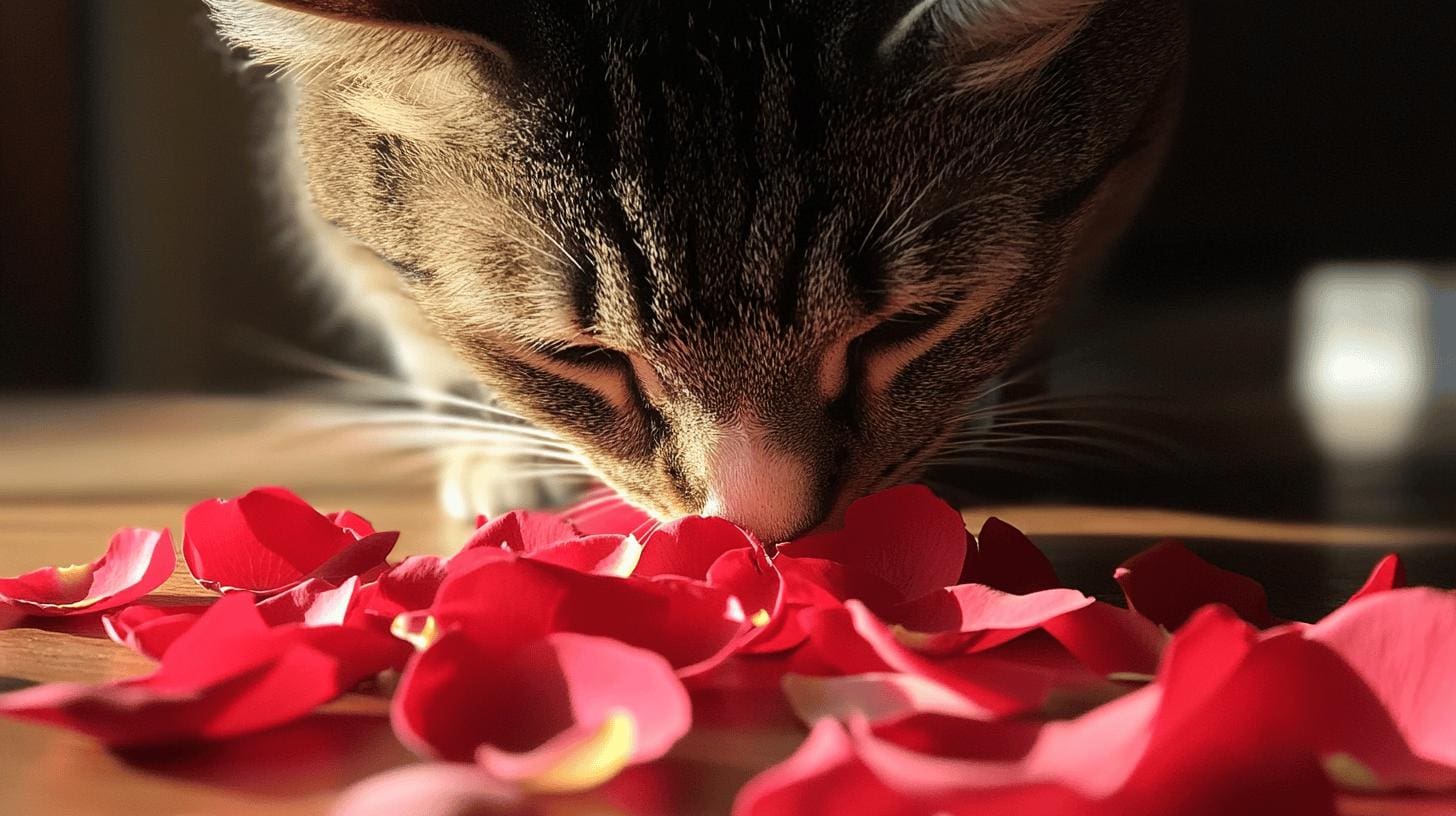
Roses are generally non-toxic to cats, which means that the petals, leaves, and stems are safe if your feline friend decides to nibble on them. This is reassuring news for cat owners who enjoy having roses in their homes or gardens. The non-toxic nature of roses ensures that, in the event of accidental ingestion, your cat will not suffer from poisoning or severe adverse effects.
That said, it's important to recognize that while roses are safe, they are not a part of a cat's regular diet. Eating roses might cause stomach upset, leading to mild digestive issues like vomiting or diarrhea. Furthermore, roses offer no nutritional benefits for cats, so it's best not to encourage them to munch on these flowers.
While the rose itself is safe, there are other potential risks to consider. The thorns on rose stems can cause physical harm, such as pricks or scratches, which could be painful for your cat. Additionally, if roses have been treated with pesticides, these chemicals might pose a risk of poisoning if ingested. For these reasons, it's wise to be cautious when it comes to rose treatments and ensure that any roses accessible to your cat are free from harmful chemicals.
Identifying Toxic Plants and Flowers for Cats
Roses themselves are non-toxic to cats, making them a safe option for homes and gardens. However, not every plant with "rose" in its name is safe for our feline friends. Several plants that include "rose" in their name can be harmful to cats if ingested. This distinction is crucial for cat owners to understand, as the potential for harm doesn't come from the rose you're familiar with, but from these similarly named plants.
- Christmas Rose: Can cause vomiting, diarrhea, and lethargy.
- Moss Rose: Known to affect the digestive system and cause irritation.
- Primrose: May lead to gastrointestinal upset and skin irritation.
- Rosebay: Can cause serious issues like vomiting, diarrhea, and even affect the heart.
- Rose of Sharon: May result in nausea and vomiting.
Recognizing the symptoms of plant toxicity in cats is essential for their safety. Common symptoms include vomiting, diarrhea, and lethargy. These signs indicate that a cat may have ingested a toxic plant and needs immediate attention. Being vigilant about these symptoms can help in taking swift action and seeking veterinary care, ensuring your cat remains healthy and safe.
Managing and Preventing Rose-Related Risks for Cats
If your cat eats part of a rose, it's crucial to monitor them closely for several hours to ensure they don't experience any adverse effects. Cats are naturally curious, and ingestion of non-food items can sometimes lead to discomfort. Look for signs of an upset stomach, such as vomiting or diarrhea. If your cat shows any signs of distress or if the roses were treated with pesticides, it's important to contact your veterinarian promptly for advice.
- Vomiting
- Diarrhea
- Lethargy
- Loss of appetite
Preventive measures can significantly reduce the risk of your cat being harmed by roses. Avoid using pesticides on any roses that your cat might access, as these chemicals can be toxic if ingested. Consider using natural deterrents to keep your cat away from the roses. Certain scents, such as citrus, are generally disliked by cats and can be used to discourage them from approaching rose plants.
- Prickly garden beds to discourage digging
- Scent deterrents like citrus oils
- Physical barriers like chicken wire fencing
Creating a safe garden environment is key to ensuring your cat can explore without risking harm. Keep an eye on your cat's interactions with the garden, especially if roses or other potentially harmful plants are present. Providing cat-friendly alternatives, such as dedicated play areas or safe plants like catnip, can help redirect your cat's interest away from roses and toward safer options. This balance allows both your garden and your cat to coexist peacefully.
