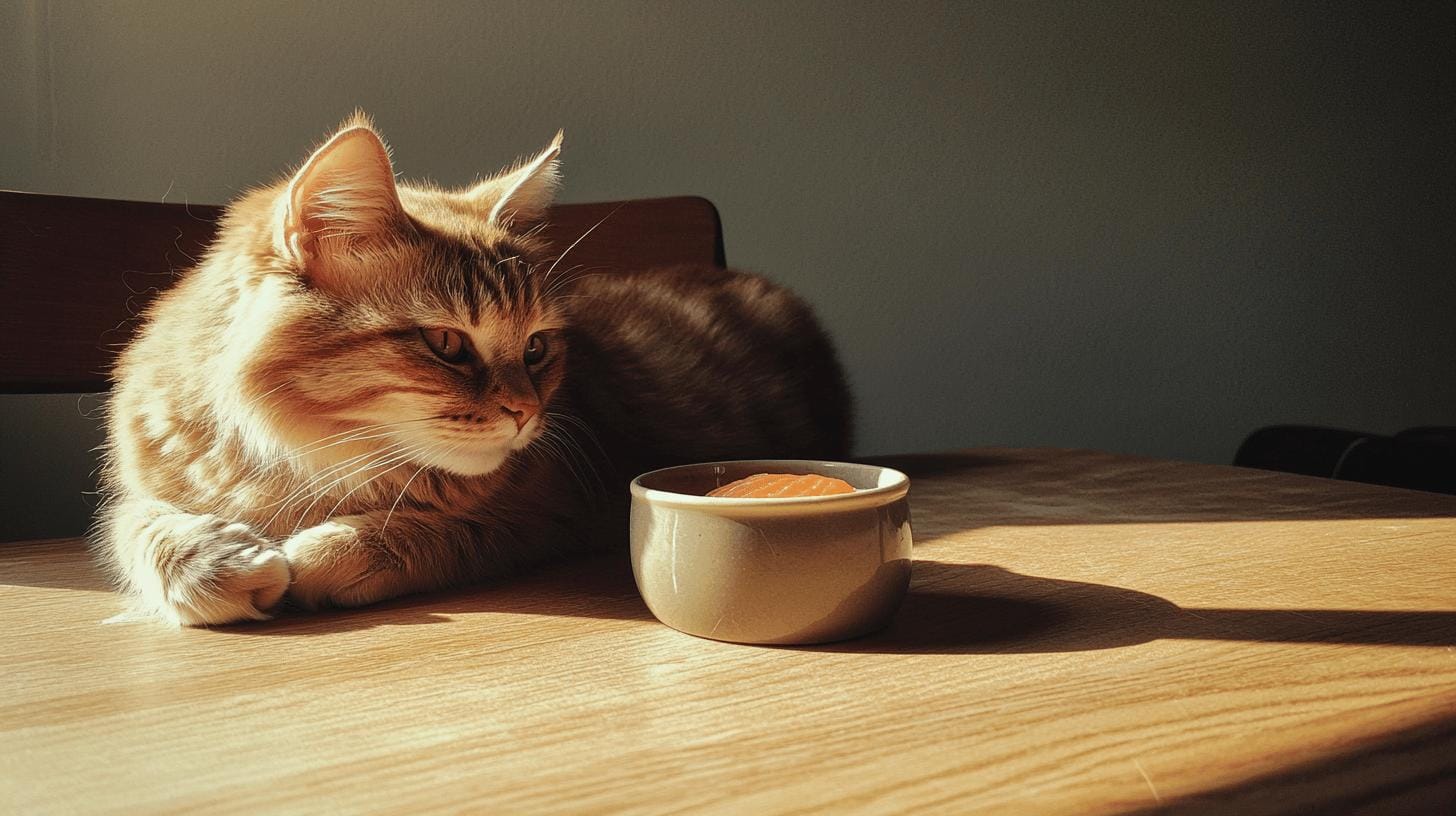
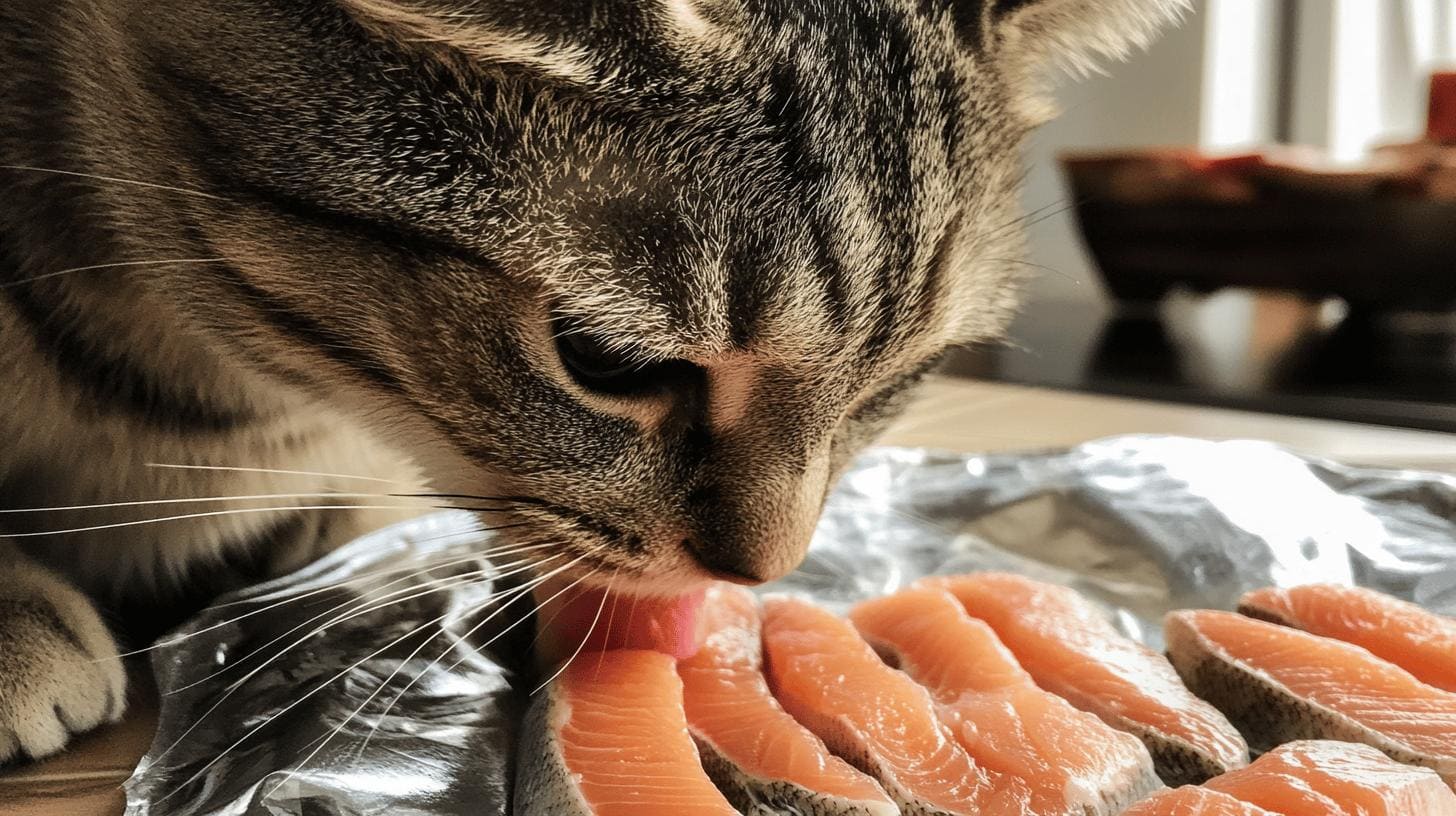
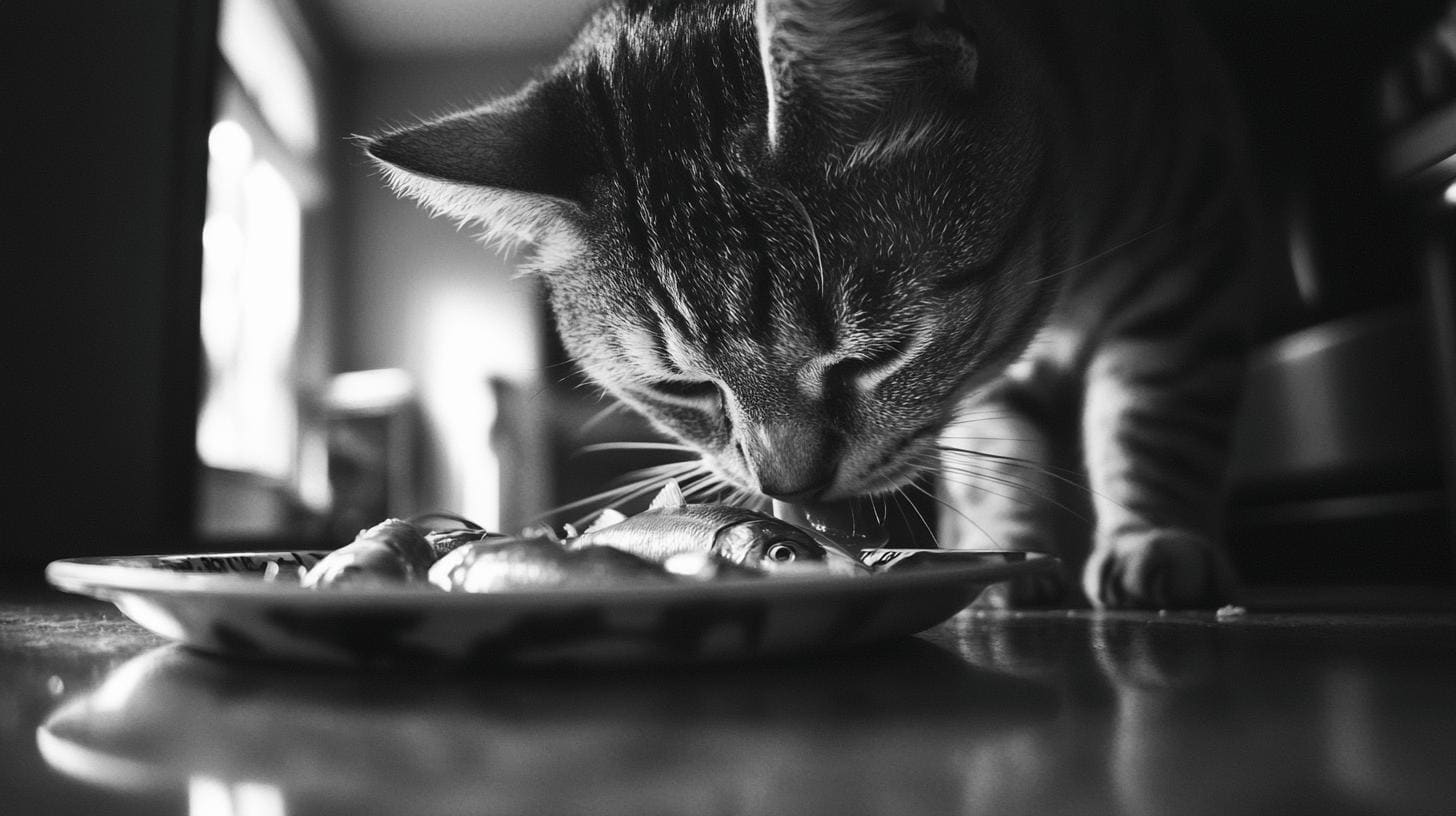
Ever wondered if that delicious salmon you love is safe for your feline friend? While cats can enjoy salmon, there's more to it than just tossing them a piece of fish. Salmon, rich in omega-3 fatty acids, offers amazing benefits like healthy skin and a glossy coat, but its inclusion in a cat's diet needs careful consideration.
The key lies in moderation and preparation. Dive into our guide to understand how to safely include salmon in your cat's menu and ensure their playtime remains both safe and tasty.
Can Cats Safely Eat Salmon?
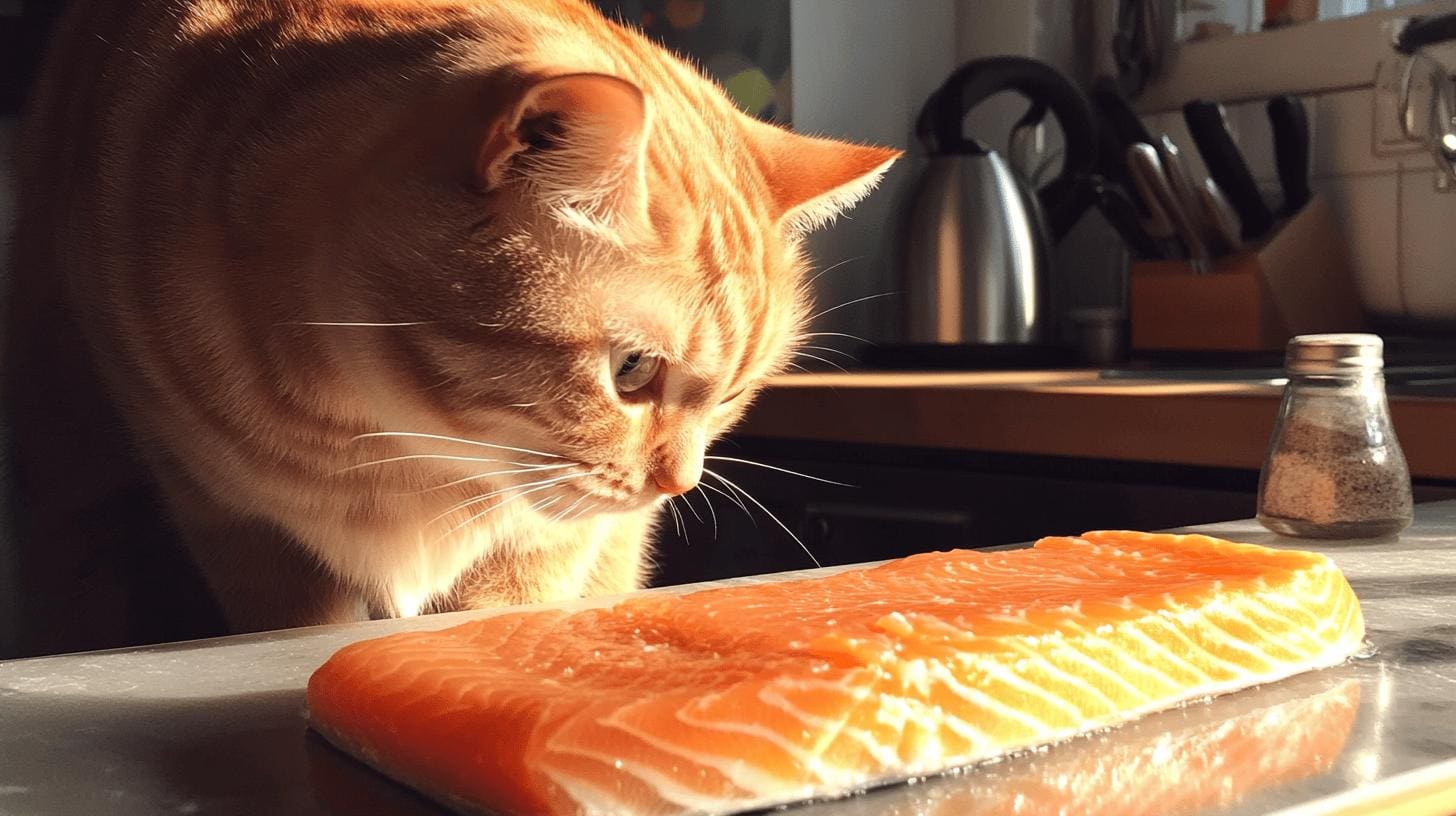
Cats can indeed eat salmon, but it should be fed in moderation. While salmon is packed with beneficial nutrients, including omega-3 fatty acids that promote healthy skin and a shiny coat, it's not a food that should make up the majority of a cat's diet.
The key is to offer salmon as an occasional treat, ensuring that it complements a well-balanced diet primarily made up of cat food. It's essential to remember that not every type of salmon is suitable for our feline companions.
When introducing salmon to a cat's diet, it's crucial to be aware of potential allergic reactions. Fish allergies are relatively common among cats, and symptoms can range from mild to severe. When feeding salmon for the first time, start with a small amount and observe your cat closely over the next 24 hours.
Look for signs of an allergic reaction such as itching, swelling, vomiting, or diarrhea. If any of these symptoms occur, it's best to consult with a veterinarian and discontinue feeding salmon.
Different types of salmon have varying levels of safety for cats. Raw salmon poses a risk due to potential parasites and bacteria, which can lead to serious health issues. Smoked salmon is another variety to avoid, as its high sodium content can be harmful to cats.
It's always safer to stick to cooked salmon, prepared without any added seasonings or oils. This ensures that the salmon remains a healthy and safe treat for your feline friend.
Risks of Feeding Cats Salmon
- Potential for allergic reactions
- Risk of parasites and bacteria in raw salmon
- High sodium content in smoked salmon
- Overfeeding can lead to an unbalanced diet
- Possible presence of bones, which can be a choking hazard
How to Prepare Salmon for Cats
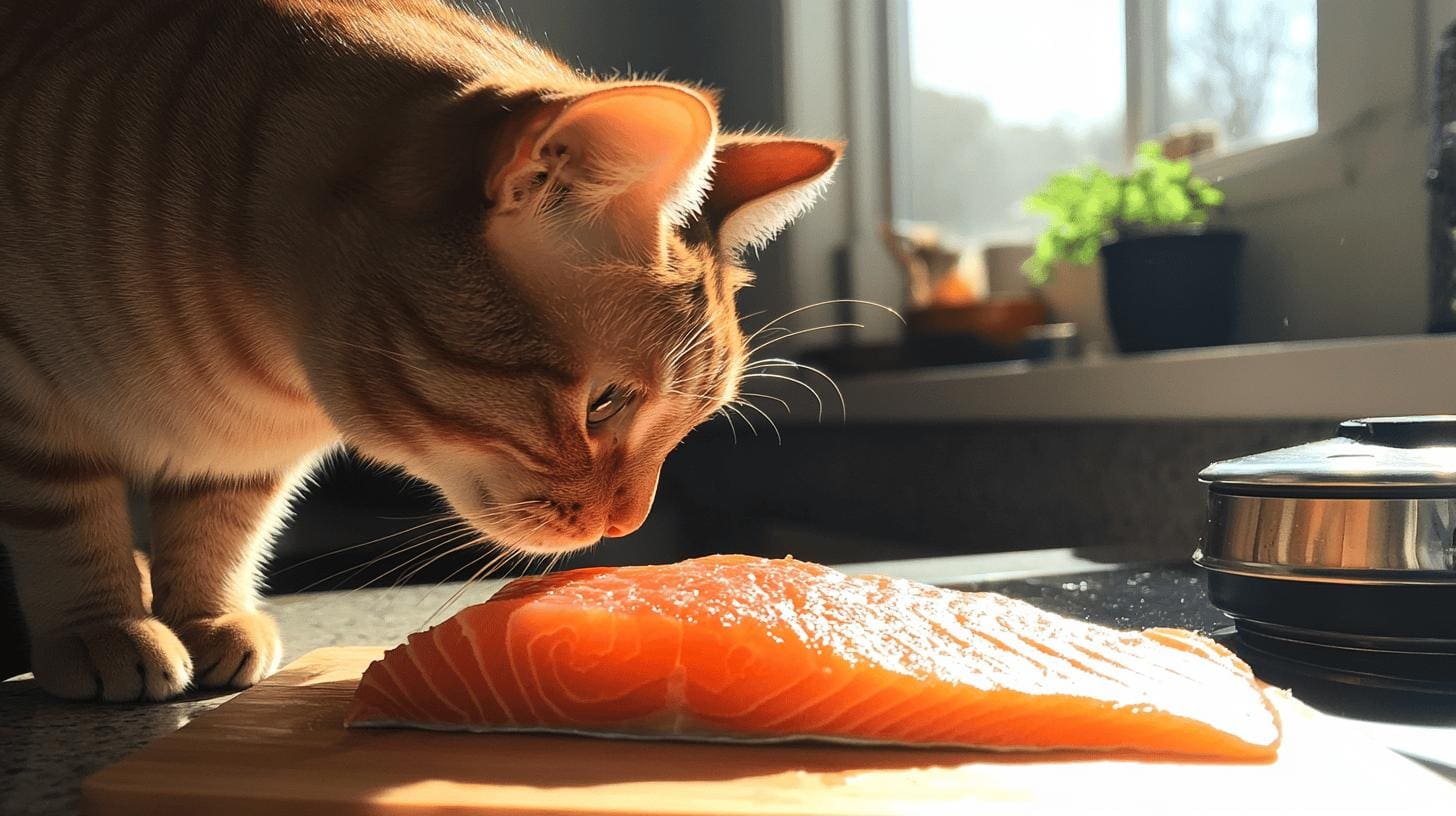
Cooking salmon is vital before feeding it to your cat. Raw salmon may contain harmful parasites and bacteria that can cause serious health issues. Cooked salmon, on the other hand, is a nutritious treat that can be safely enjoyed by your feline friend. Properly preparing salmon ensures your cat receives the benefits without the risks.
Cooking Methods
When preparing salmon for your cat, focus on simple cooking methods that preserve the fish's natural nutrients:
-
Baking: Place the salmon on a baking sheet and bake it in the oven until fully cooked. Avoid adding any oils, spices, or seasonings.
-
Grilling: Grill the salmon over medium heat, maintaining a natural taste without oils or marinades.
-
Boiling: Boil the salmon in water until it is thoroughly cooked. Make sure the water is plain with no added salt or flavors.
Bone Removal
Salmon bones can pose a choking hazard or cause internal injuries if ingested by cats. It's crucial to remove all bones, including the spine, before serving salmon to your cat. Carefully inspect the cooked salmon and use your fingers or tweezers to remove any small bones. Removing the skin is optional, but if you choose to leave it on, ensure it is fully cooked and free of seasoning.
By following these simple preparation steps, you can safely include salmon in your cat's diet as a delicious, occasional treat.
Nutritional Benefits of Salmon for Cats
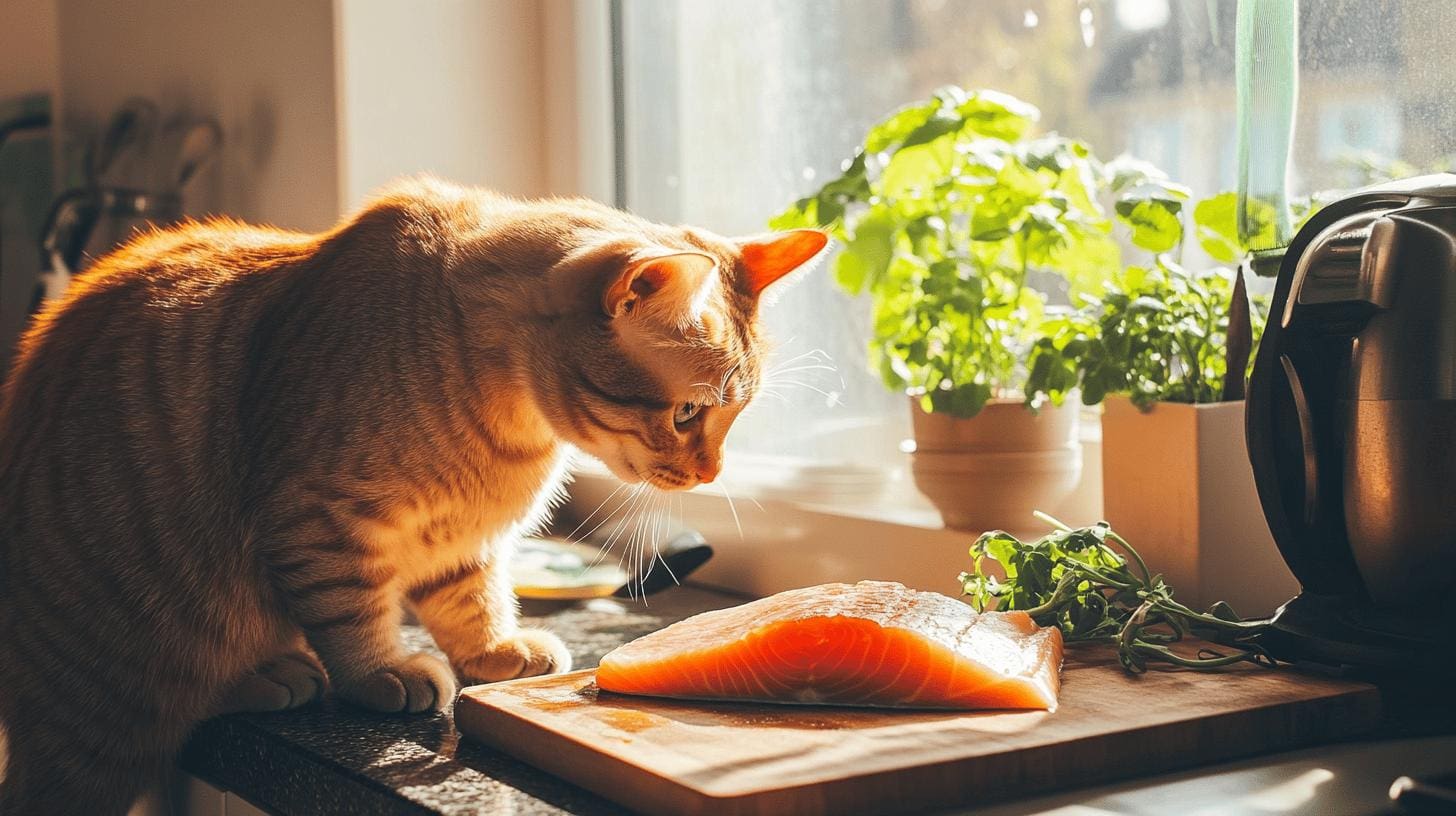
Salmon is packed with nutrients beyond omega-3 fatty acids. It contains vitamin B12, which is vital for maintaining a healthy immune and nervous system in cats. This nutrient helps keep your feline friend alert and supports nerve health, ensuring their cognitive functions are sharp.
Vitamin B6 is another critical nutrient found in salmon, supporting protein metabolism. Given cats' high-protein dietary requirements, vitamin B6 plays a significant role in their nutrition.
These vitamins complement other dietary components, making salmon a well-rounded addition to your cat's meals. Incorporating salmon into their diet can enhance their overall health, boosting their vitality and wellness.
| Nutrient | Benefit |
|---|---|
| Omega-3 Fatty Acids | Improves skin and coat health, supports brain and eye function |
| Vitamin B12 | Supports immune and nervous systems |
| Vitamin B6 | Aids in protein metabolism |