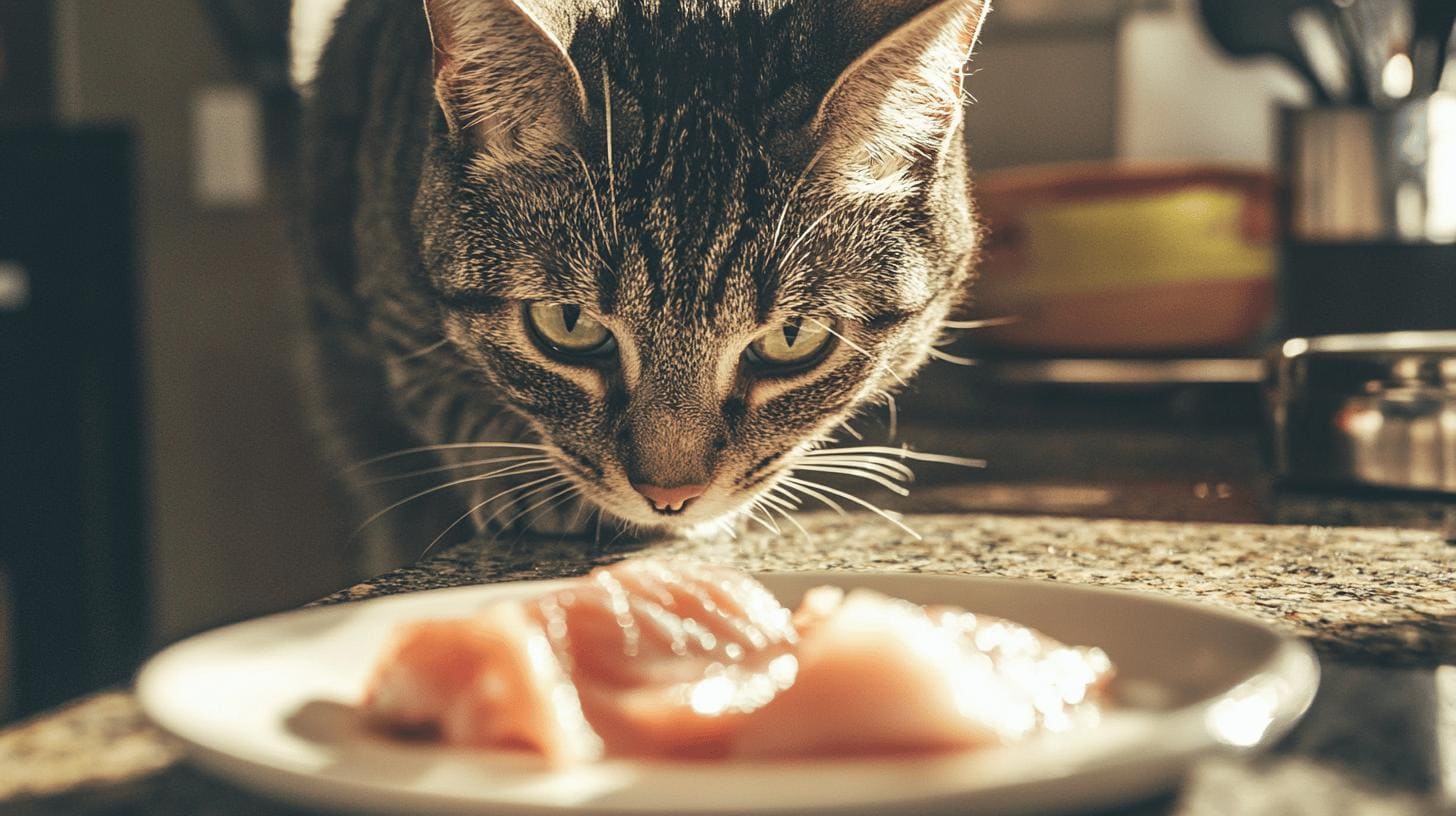
Can your cat safely enjoy a delicacy like sashimi? The idea might seem tempting, especially when our feline friends show keen interest in fishy aromas. But before sharing your sushi, it's crucial to understand the potential health risks involved.
Raw fish, like sashimi, isn't just a trendy treat; it can be a recipe for disaster. Inside, we'll explore why this seemingly harmless snack can be dangerous for cats. You'll learn what experts say and uncover the best ways to keep your cat's diet safe and balanced.
Can Cats Eat Sashimi Safely?

Cats are natural hunters and might be drawn to the smell and texture of sashimi, much like their wild ancestors who thrived on raw prey. But is sashimi safe for cats? The short answer is no.
Raw fish, including sashimi, poses significant health risks for our feline friends. The main concern is thiaminase, an enzyme present in raw fish that breaks down thiamine.
Thiamine is an essential B vitamin for cats, and its deficiency can cause severe neurological issues, convulsions, or even coma. Additionally, the risk of food poisoning due to bacteria like E. coli or salmonella further complicates the scenario.
Experts agree that feeding sashimi to cats should be avoided. Cats are obligate carnivores, requiring specific nutrients that come from properly prepared animal meat.
While the protein in fish is beneficial, it does not provide a complete nutritional profile for cats. Introducing sashimi into their diet could lead to nutritional imbalances, leaving gaps in the essential nutrients they need.
Instead, experts recommend maintaining a balanced diet with cat-appropriate foods and reserving any fish treats for rare occasions, ensuring they are cooked and unseasoned. Always consult a veterinarian when considering dietary changes for your pet.
Nutritional Considerations of Feeding Raw Fish to Cats

Fish is a great source of omega-3 fatty acids, which help keep a cat’s coat shiny and skin healthy. While fish is rich in protein, it's crucial to remember that it doesn't offer a complete nutritional profile for cats. Balancing your cat's diet with other essential nutrients is key if you choose to include fish.
If you're considering raw fish, be cautious about nutritional deficiencies. Raw fish contains thiaminase, an enzyme that destroys thiamine, a necessary B vitamin for cats.
Thiamine deficiency can lead to neurological problems. Additionally, raw fish can carry harmful bacteria, making it unsafe. Consider safer fish options, like cooked fish, or use supplements to balance the diet.
| Nutrient | Benefit |
|---|---|
| Protein | Supports muscle growth and energy |
| Thiamine (Vitamin B1) | Essential for neurological function |
| Taurine | Vital for heart and eye health |
| Omega-3 Fatty Acids | Promotes healthy skin and coat |
Safe Alternatives to Sashimi for Cats

Cooked fish can be a delightful treat for cats, offering them a taste of the sea without the risks associated with raw fish like sashimi. Cooking fish eliminates harmful bacteria and thiaminase, making it a safer option.
Salmon is a great choice, providing valuable omega-3 fatty acids that support a healthy coat and skin.
However, it's important to remember that fish should only be an occasional treat and not a staple in their diet due to cats' need for a variety of nutrients. Always ensure the fish is cooked thoroughly and prepared without any herbs, spices, or additives that could upset a cat's stomach.
Here are some guidelines for preparing fish treats for your cat:
-
Bake or steam fish to ensure it's cooked through.
-
Avoid seasonings like salt, garlic, or onions.
-
Remove all bones to prevent choking hazards.
-
Serve in small portions to avoid overfeeding.
-
Choose fresh fish instead of canned or smoked options.
Beyond fish, there are several other safe and nutritious options to consider for your cat. High-quality commercial cat foods are specifically formulated to meet their dietary needs, offering a balanced mix of proteins, fats, and essential vitamins.
If you're keen to offer something special, consider lean meats like chicken or turkey, which can be cooked plainly and served in moderation. Always prioritize your cat’s health by consulting with a veterinarian, especially when introducing new foods.