Is your curious kitty eyeing a slice of lime? You might want to think twice before letting them take a nibble. Although limes are packed with vitamins for humans, they pose a serious risk to cats. T
hese bright green fruits contain essential oils and compounds that are harmful to your feline friend. Keep reading to understand why limes are dangerous for cats, identify symptoms of lime ingestion, and learn how to protect your pet from potential citrus hazards. Stay informed to keep your furry companion safe and healthy.
Can Cats Safely Eat Lime?
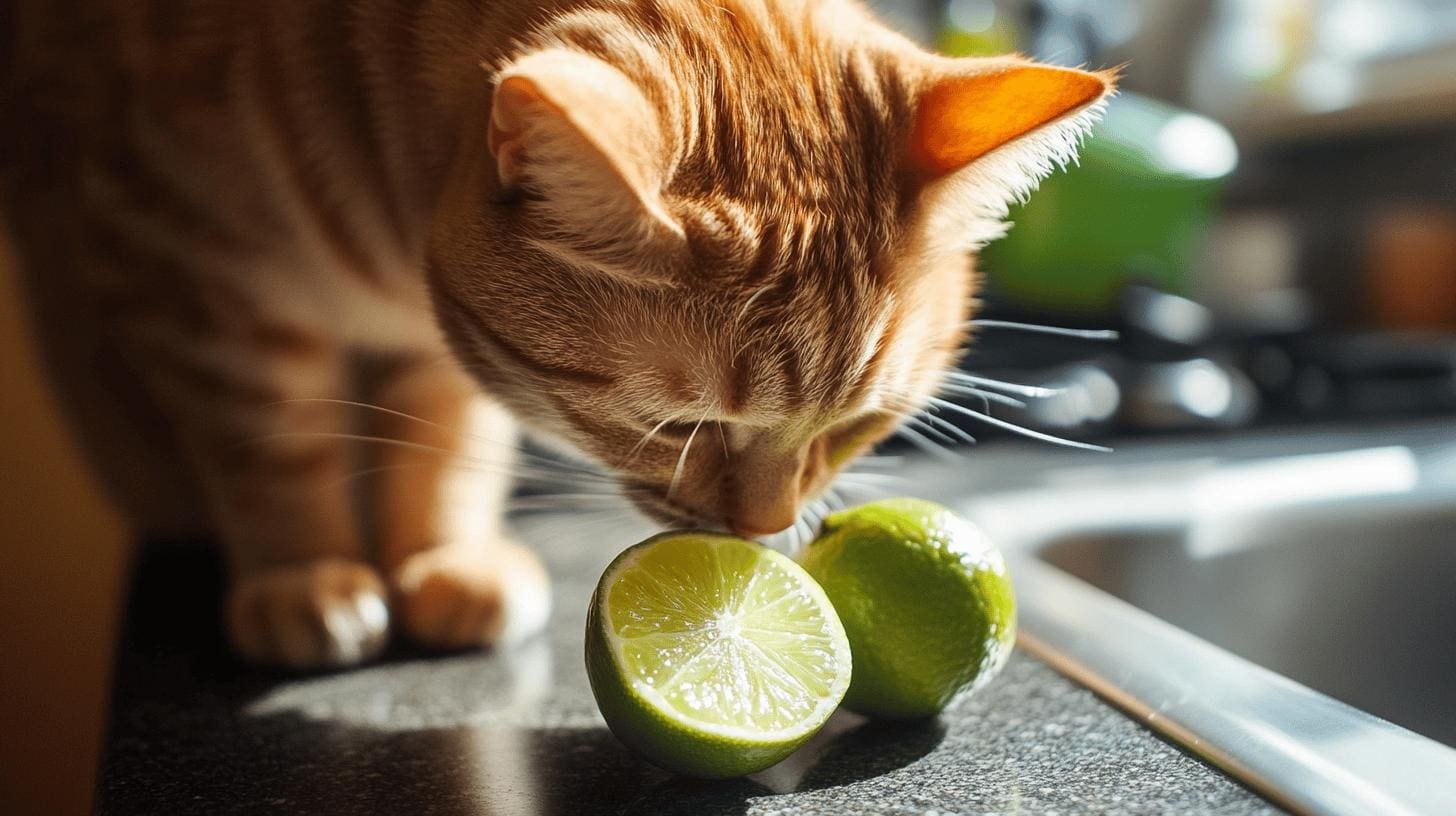
Limes are toxic to cats. The ASPCA confirms that lime exposure poses a risk not only to cats but also to dogs and horses.
The essential oils present in limes, such as limonene, are particularly harmful. If your cat comes into contact with or ingests lime, it’s crucial to seek veterinary attention promptly.
The danger of limes lies in their composition. The rind contains limonene and psoralens, which are compounds that cats cannot metabolize properly.
These substances can cause irritation and other adverse reactions in felines. Even though the juicy flesh of a lime might seem less threatening, it still houses these harmful oils, making the entire fruit unsafe for cats.
To keep your furry friend safe, steer clear of exposing them to limes or any citrus fruits. Instead, offer cat-safe treats and toys that satisfy their curiosity without putting their health at risk. It’s always better to err on the side of caution and ensure that limes are kept far away from your feline companions.
Symptoms of Lime Ingestion in Cats
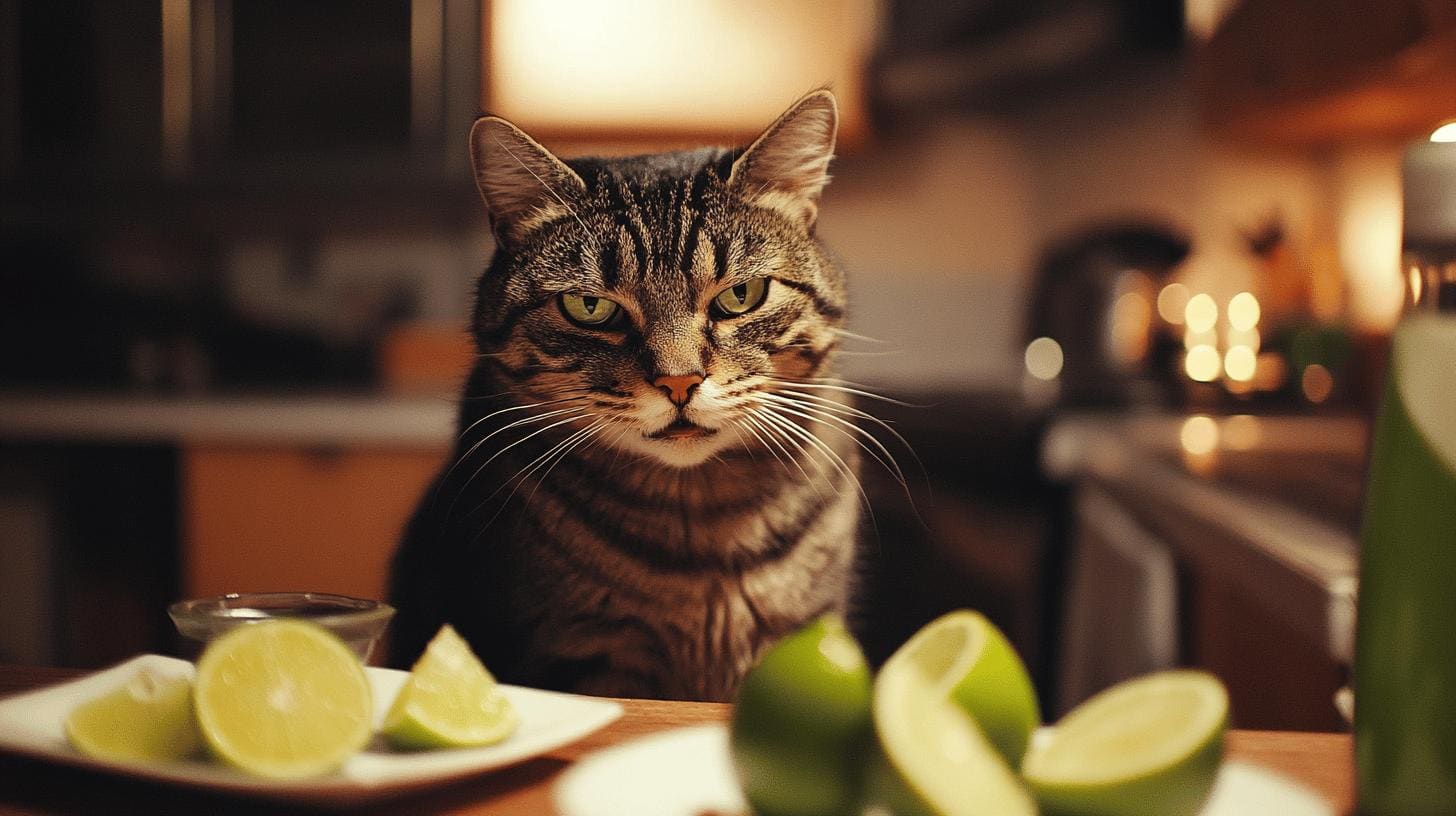
If your cat nibbles on lime, watch for general signs of distress. Lime ingestion can lead to mouth irritation, making your kitty drool excessively. This is one of the first indicators that your feline friend might have encountered something toxic.
Cats might also show signs of lethargy, appearing more tired than usual or less interested in their surroundings. These symptoms suggest that something isn’t right and immediate attention is needed.
Gastrointestinal symptoms are a common result of lime ingestion. Your cat may experience vomiting and diarrhea, which can quickly lead to dehydration.
These symptoms occur because the toxic compounds in limes irritate the stomach lining and disrupt normal digestion. It’s crucial to monitor these symptoms closely, as they can worsen and potentially become life-threatening if not addressed by a professional.
Here are additional symptoms that should prompt immediate veterinary care:
- Tremors or seizures
- Difficulty breathing
- Loss of coordination
- Excessive or unusual vocalization
- Changes in appetite or refusal to eat
Quick action is vital when you suspect your cat has ingested lime. Cats have sensitive systems that can react strongly to toxic substances. The faster you respond to symptoms, the better the outcome for your furry companion.
A prompt visit to the vet can prevent more serious health issues and ensure your cat receives the necessary treatment. Always take lime exposure seriously, and don’t delay in seeking professional help.
Preventing Lime Ingestion in Cats
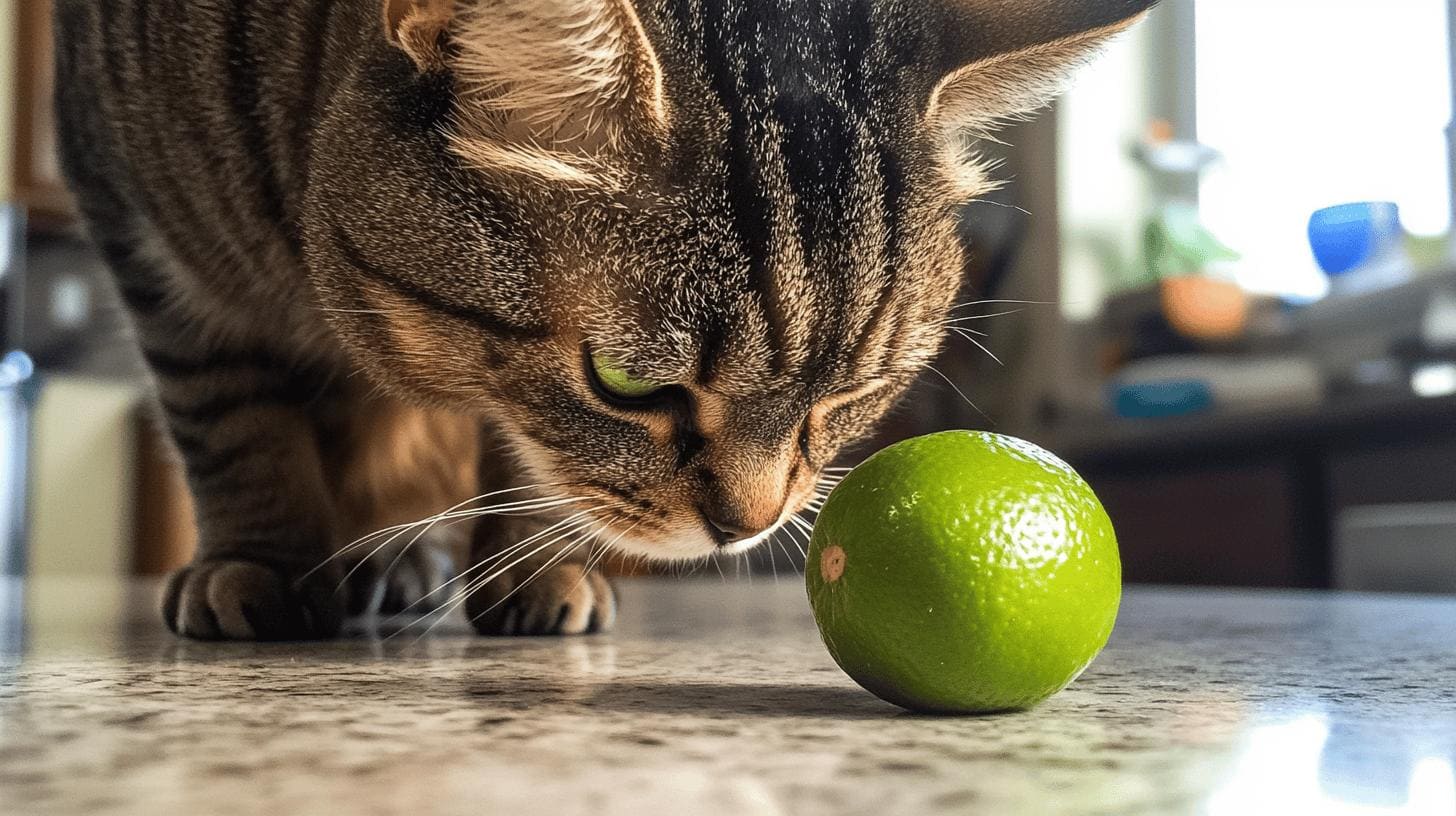
Cats typically dislike the scent of citrus fruits, including limes, which naturally deters them from these potentially harmful items. This aversion can be your first line of defense in preventing lime ingestion. Despite this natural deterrent, it’s still crucial to ensure that limes are kept out of your cat’s reach to avoid any accidental encounters that could lead to health issues.
Here are some practical tips to keep limes and other citrus fruits away from your feline friend:
- Store limes and citrus fruits in sealed containers or the refrigerator.
- Clean up any spills or remnants of lime juice immediately.
- Ensure that lime-scented products, like cleaners, are stored securely.
- Keep counters and tables free from lime-based foods and drinks.
Offering alternatives to satisfy your cat’s curiosity and taste buds is always a good plan. Instead of citrus fruits, provide cat-safe treats and toys that are designed to be both appealing and safe. This way, your kitty can enjoy their snacks without any risk of lime exposure.