
Can a cat enjoy sweet potato as an occasional treat? Yes, but with important caveats. While sweet potatoes are non-toxic to cats, they’re high in carbohydrates and should never replace the meat-based diet cats require to thrive. In this guide, you’ll learn how to safely prepare sweet potatoes for cats, when they actually help (particularly for digestive issues), how they compare to pumpkin, and what risks to watch for.
Can Cats Eat Sweet Potatoes Safely?
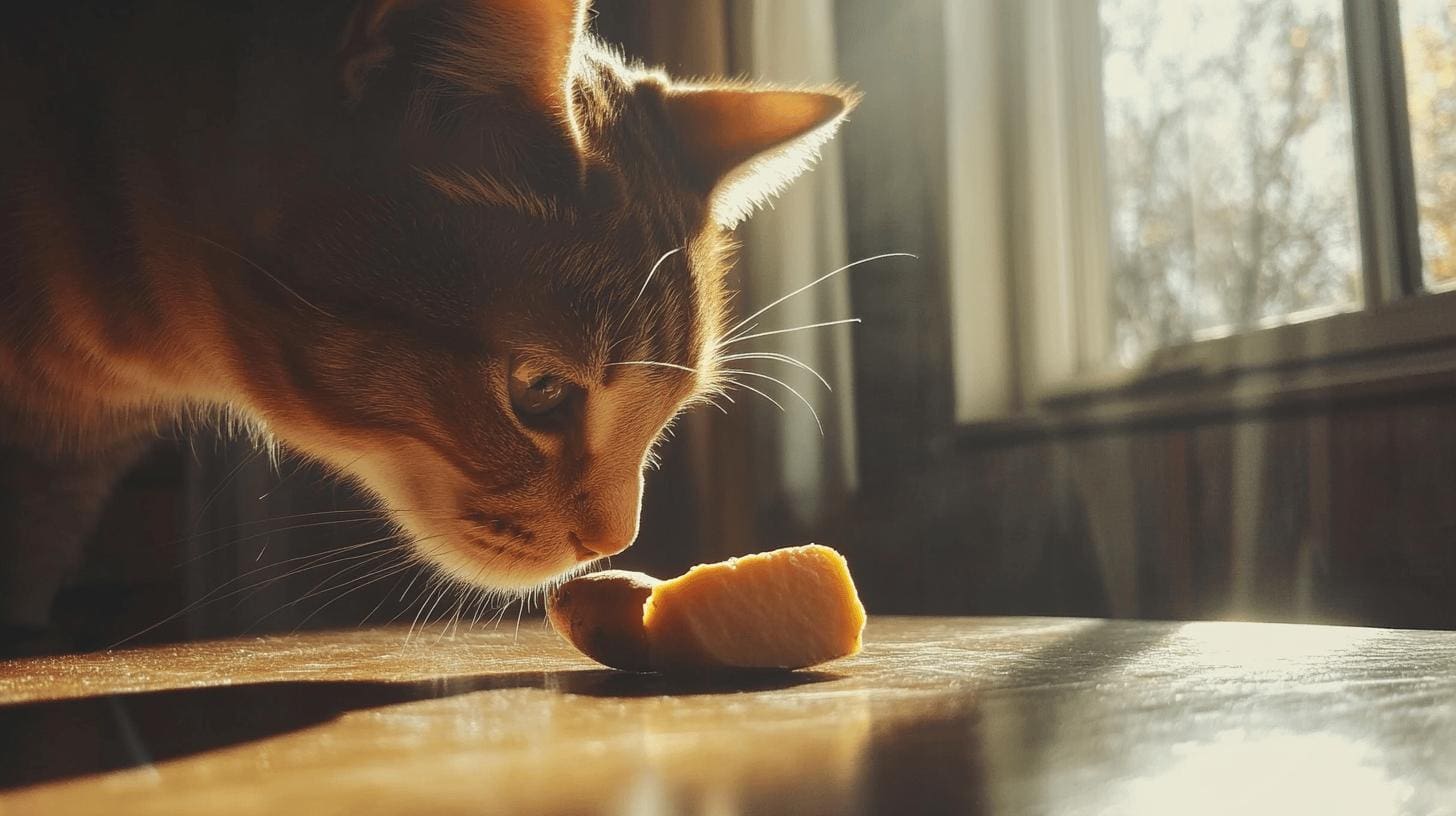
Cats can eat cooked sweet potatoes in small amounts. Sweet potatoes aren’t toxic to cats like onions or garlic, but they shouldn’t make up a significant part of their diet. Cats are obligate carnivores, meaning they require primarily meat-based protein to maintain muscle, immune function, and overall health.
The key requirement: sweet potatoes must be cooked. Boiling or baking softens the tuber and makes it digestible. Never add butter, sugar, spices, or seasonings. these can upset a cat’s stomach or be outright toxic (garlic and onion powders, for example).
Nutritionally, cooked sweet potatoes do offer some benefits. They contain vitamin A (supports vision and immune health), vitamin C (promotes skin health), potassium (helps muscle function and fluid balance), and manganese (supports bone health). However, these nutrients aren’t essential for cats. they derive what they need from properly formulated cat food.
The real value of sweet potato for cats lies in one specific area: fiber for digestive support. More on that below.
Raw Sweet Potato: Why Cooking Matters
Raw sweet potatoes are problematic for cats for three reasons:
1. Oxalate Content: Raw sweet potatoes contain oxalates, compounds that can interfere with calcium absorption. While one small piece of raw sweet potato won’t cause harm, regular feeding creates a mineral imbalance.
2. Digestibility: Raw sweet potatoes are starch-dense and difficult for cats to break down. Cats lack sufficient amylase (an enzyme for breaking down starches) in their saliva, making digestion harder and potentially causing stomach upset, diarrhea, or vomiting.
3. Choking Hazard: The firm texture of raw sweet potato can pose a choking risk, especially if a cat tries to swallow a piece whole.
Cooking breaks down the cell walls of the sweet potato, reducing oxalate availability, gelatinizing the starch to make it digestible, and softening the texture. This is non-negotiable: if you’re offering sweet potato to your cat, it must be cooked.
Note: Unlike regular white potatoes, sweet potatoes do NOT contain solanine (the toxic compound found in raw/green regular potatoes). This distinction is important when discussing potato safety for cats. sweet potato is safer, though still high in carbs.
How to Prepare Sweet Potato for Cats
Safe Preparation Method:
- Select a fresh sweet potato with no soft spots or mold.
- Wash thoroughly under running water to remove dirt and pesticides.
- Peel the skin (the skin is harder to digest and should be removed).
- Cut into small cubes (~1/4 inch) to prevent choking.
- Boil or bake until soft (typically 10-15 minutes boiling, or 20-30 minutes baking at 400°F).
- Cool completely before serving. never offer warm or hot food to cats.
- Serve plain. no butter, salt, sugar, cinnamon, nutmeg, or marshmallow topping (these are common human preparations but harmful to cats).
Portion Sizes and Frequency:
One teaspoon to one tablespoon per serving is appropriate for most cats. Serve no more than once or twice per week. For a 10-pound cat, this represents roughly 1-2% of daily calorie intake, well within the “treat” category.
Watch for Signs of Digestive Upset: When first introducing sweet potato, monitor your cat for vomiting, diarrhea, constipation, or lack of appetite. Cats with sensitive digestive systems may struggle even with cooked sweet potato. If any issues arise, discontinue and consult your vet.