
Cat play aggression towards an owner usually means the cat is treating a person like moving prey: stalking ankles, pouncing from behind furniture, grabbing hands, biting, scratching, or escalating during play. The safest first response is not punishment. Stop moving like prey, calmly end contact, and redirect future attacks into toys that keep teeth and claws away from skin.
This behavior is common in young, energetic, under-stimulated, or rough-playing cats, but adult cats can do it too. It can also overlap with fear, pain, redirected aggression, petting intolerance, or territorial stress, so the plan has two jobs: give your cat better play outlets and watch for signs that this is more than rough play.
What Cat Play Aggression Looks Like
Play aggression is built from normal hunting behaviors pointed at the wrong target. A cat may hide, stare, crouch, wiggle, chase, pounce, wrap the front paws around an arm or leg, bite, and rake with the back feet. The cat may seem excited rather than angry, but the scratches and bites are still real.
Common patterns include:
- Ankle ambushes: your cat waits behind a doorway, sofa, bed skirt, or stair and launches as you walk by.
- Hand attacks: the cat grabs during petting, typing, bed-making, or any movement that looks like prey.
- Play that tips over: a wand or chase session starts well, then the cat redirects onto your arm when the toy gets too close.
- Evening surges: the cat becomes more intense at dawn, dusk, or after a quiet day with too little activity.
- Single-person targeting: one household member gets attacked more often because of movement, routine, play history, or access.
Cornell Feline Health Center describes play-aggressive cats as cats that may stalk and pounce on human targets, often with dilated pupils and tail movement before the attack. The San Francisco SPCA also notes that lack of scheduled, appropriate playtime is a major contributor for many play-aggressive cats.
First, Rule Out the Wrong Kind of Aggression
Do not assume every bite is play. A play plan is useful only when the behavior is truly playful, predictable, and connected to movement or under-stimulation. If aggression appears suddenly, gets severe, happens when the cat is touched, includes hissing or defensive postures, or follows a stressful event, slow down and involve your veterinarian.
ASPCA guidance on feline aggression emphasizes that medical conditions can contribute to aggressive behavior, and Cornell recommends ruling out medical causes before relying on behavior modification alone. Pain, dental disease, arthritis, thyroid disease, sensory decline, wounds, and neurological issues can all change how a cat responds to people.
Call your veterinarian or a qualified behavior professional promptly if:
- the aggression is new, escalating, or hard to interrupt;
- bites break skin or the cat repeatedly holds on;
- your cat growls, hisses, hides, limps, or guards part of the body;
- attacks happen after seeing outdoor cats, hearing loud sounds, or conflict with another pet;
- children, older adults, immunocompromised people, or guests are at risk;
- you feel unsafe moving around your own home.
What to Do During an Attack
The moment teeth or claws land, your goal is to make the person boring without adding fear. Fast jerking, yelling, swatting, chasing, or rough wrestling can make the situation worse because those responses either look like prey movement or teach the cat that humans play roughly.
- Freeze for a beat. Stop the moving target. If the cat is latched on, avoid pulling away quickly.
- Go neutral. Keep your voice low and your body still. Do not punish, scruff, spray, or hit.
- Disengage calmly. Once the cat releases, step behind a door, baby gate, or barrier if needed.
- End the session. Do not immediately reward the bite by presenting a toy after contact has already happened.
- Reset the environment. After the cat is calm, start a planned toy session away from the ambush spot.
That timing matters. Redirecting before a pounce teaches the cat what to attack. Offering a toy after your skin has already been grabbed can accidentally teach the cat that biting you starts the game.
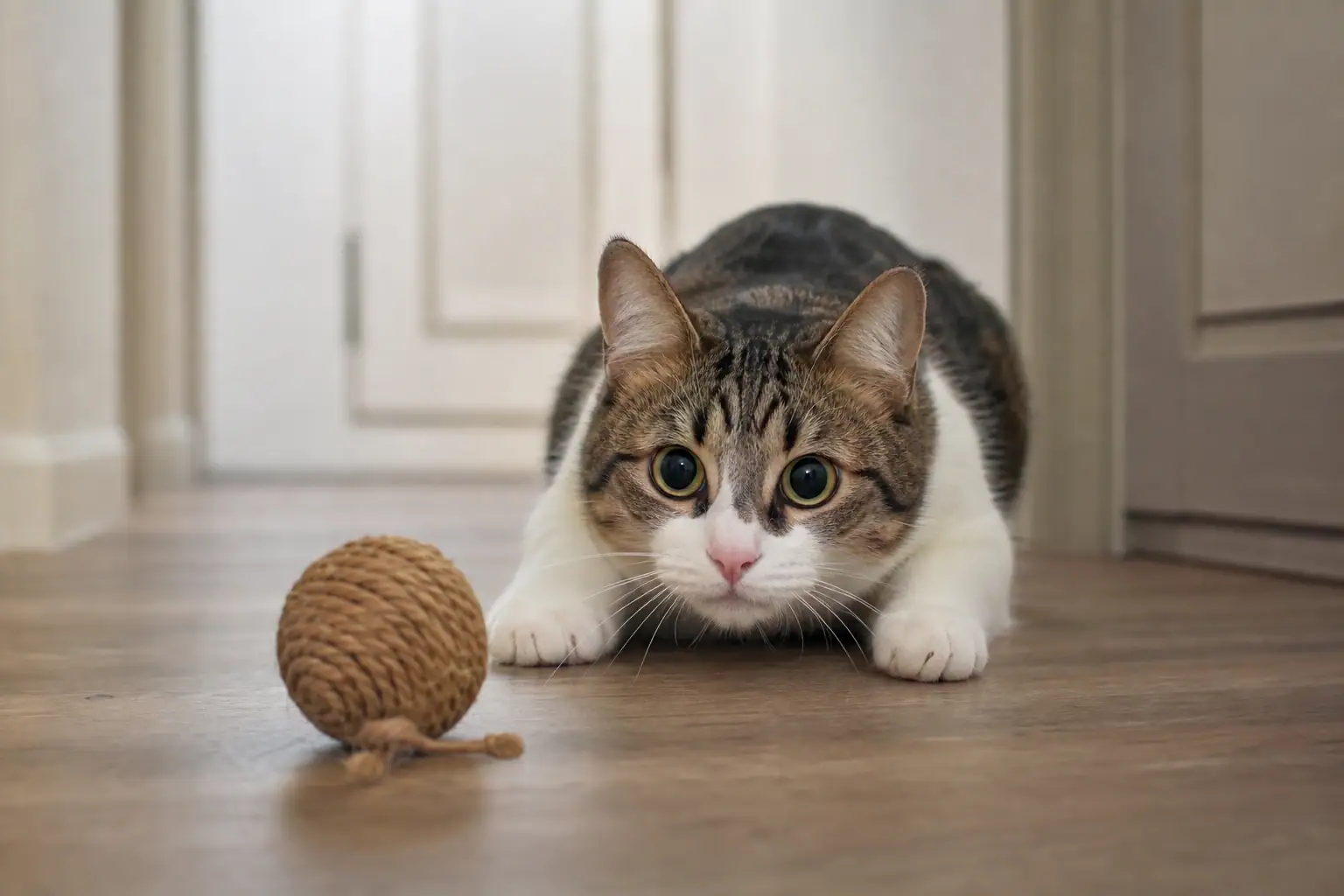
Redirect Before the Pounce
The best moment to stop cat play aggression towards an owner is the moment before it happens. Watch for the setup: fixed stare, tail twitching, crouching, rear-end wiggle, hiding around corners, pupils widening, and tracking your feet or hands.
When you see those cues, redirect with distance:
- Toss a soft, safe chase toy away from your body.
- Use a wand so the lure moves away from you, not across your ankles.
- Send the cat through a tunnel, around a chair, or up a cat tree to create a chase path.
- End with a kicker toy the cat can grab, bite, and rake.
- Follow with a small meal or treat puzzle if the cat settles better after a hunt-eat rhythm.
If the ambush happens in the same place every day, change the setup. Block under-bed launch spots, leave a toy station near the hallway, carry a toss toy when walking through the danger zone, or schedule play before the usual attack window.

