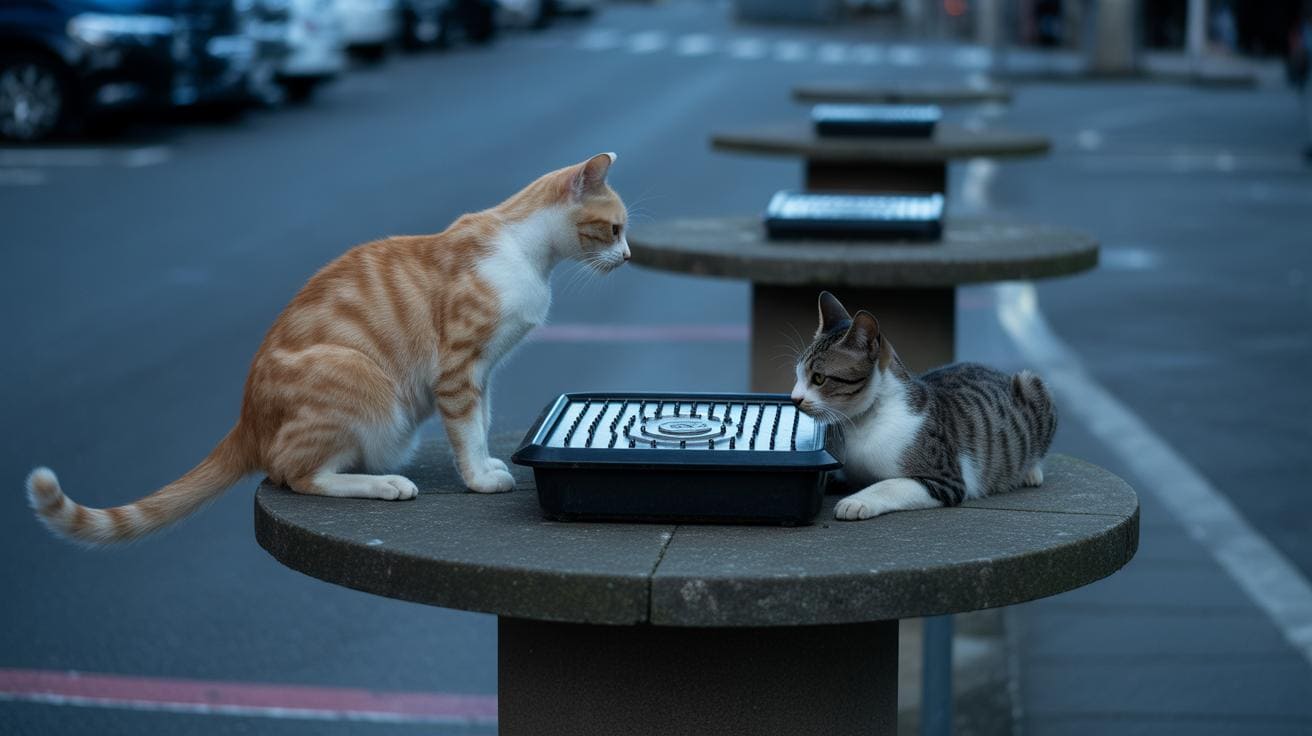
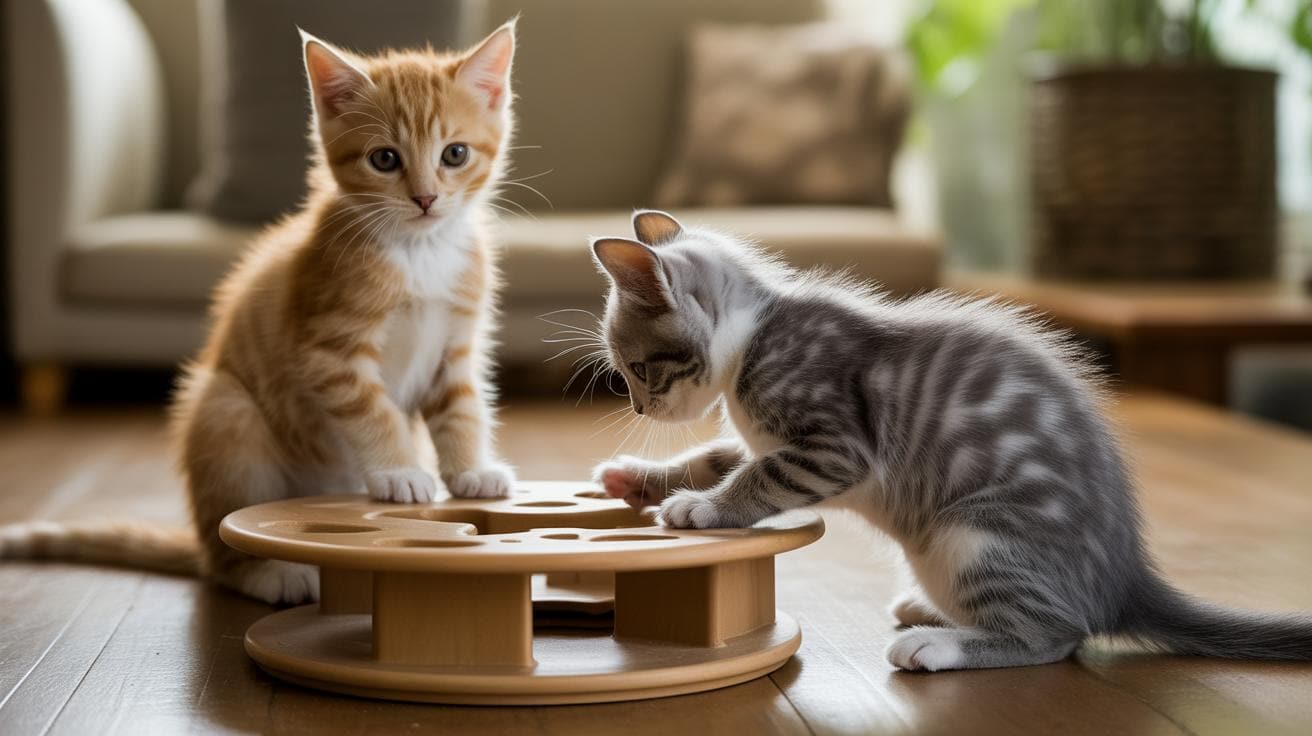
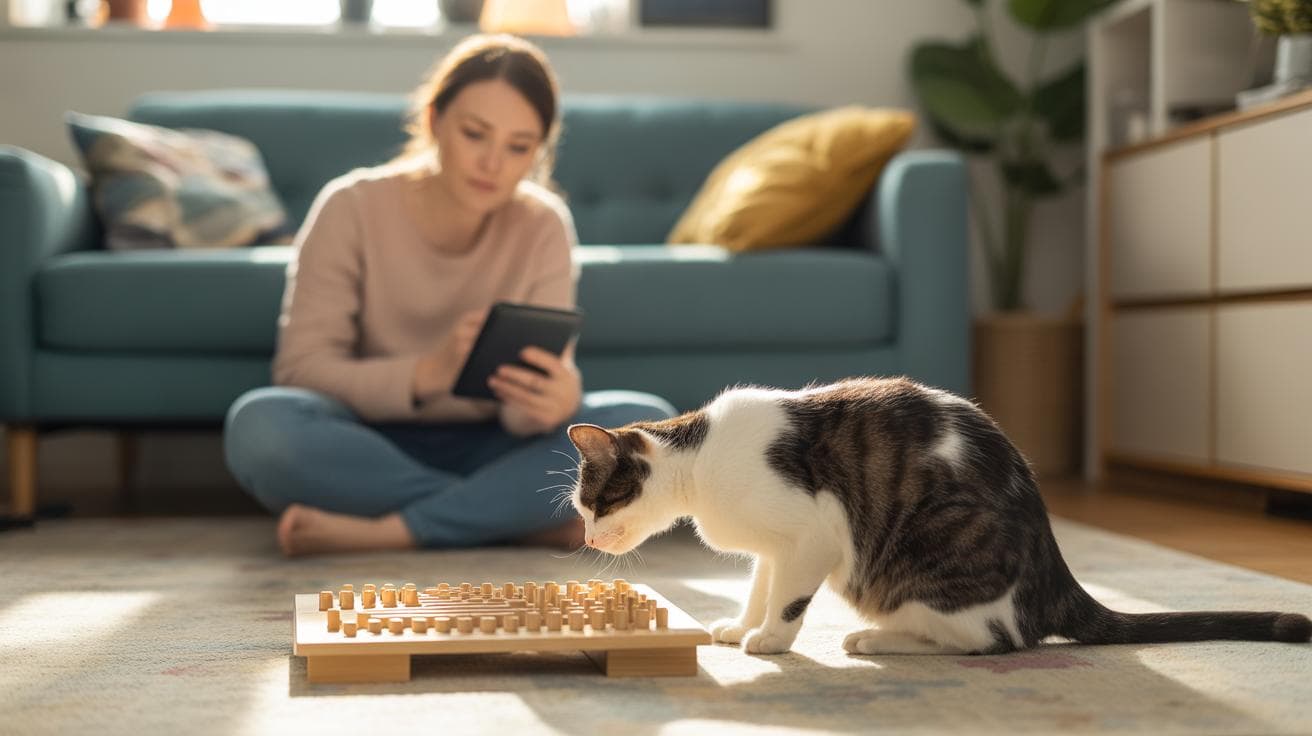
Cat Puzzle Feeder Ideas and Benefits

Are you serving your cat fast food every night? Puzzle feeders can fix that.

They turn mealtime into a slow, brainy hunt that makes your cat work for each bite. That slows down gobbling and sparks curiosity, and it’s a claw-tastic way to feed.

Today we’ll share easy DIY projects, cheap household hacks, a few store-bought favorites, simple training tips, and which cats benefit most: kittens, adult cats, seniors, and disabled cats (those with limited mobility).

Think of kibble as drive-through food. A puzzle feeder is like a mini foraging game your cat has to solve. Your cat’s whiskers will twitch as they paw treats out. Ever watched that? It’s oddly satisfying.

Worth every paw-print.

What cat puzzle feeder ideas and benefits will teach you
- What cat puzzle feeder ideas and benefits will teach you (DIY, commercial, how they work, and who should use them).jpg

This short intro gives you the good stuff: easy DIY projects, cheap household hacks, a few store-bought picks, a simple way to train your cat, and which kitties get the most out of feeders, kittens, adults, seniors, and disabled cats. Think of it like a quick toolbox for making mealtime more fun and natural for your cat. Ever watched your kitty stalk a rolling ball? That same focus can happen at dinner time.

Quick, low-effort ideas to try right away: a toilet paper roll pyramid (reuse cardboard tubes to hide kibble), a muffin tin with tennis balls (put treats under the balls so your cat noses them around), and a Nina Ottosson puzzle (a commercial puzzle toy that hides food and rewards problem solving). These are all easy to set up and watch your cat’s whiskers twitch as they work it out.

Indoor bowl meals are usually short and concentrated, unlike ancestral foraging that involved longer hunts and more effort. Think of today’s kibble as drive-through food compared to a scavenger hunt. Puzzle feeders bring some of that hunt back, stretching mealtime into a little adventure.

The Journal of Feline Medicine and Surgery reports that puzzle feeders help cats across life stages, keeping kittens, seniors, and disabled cats more engaged and mentally active. So this isn’t just play, there’s real benefit backed by research.

Training your cat to use a feeder is simple. Show them where the food is, help them get the first treat out, then cheer and reward. Start easy and make it slightly harder over days. Patience wins. Your cat learns the game and you get those proud cat-parent moments.

Benefits at a glance:

  • Slow feeding: Makes meals last longer so cats don’t gulp everything down. It helps them feel fuller and calmer during dinner.
  • Mental stimulation and problem-solving: Keeps curious indoor minds busy and reduces boredom behaviors. Your cat gets to think and win treats.
  • Weight control: Pacing portions over time reduces binge-style eating and helps with weight management without complicated gear.
  • Increased activity: Gets cats moving between bites, adding light exercise to their day and a satisfying thud when a toy rolls away.
  • Multi-cat strategies: Use separate stations and rotate feeders so cats don’t compete for food. It reduces stress and mealtime squabbles.
  • Safety and cleaning basics: Pick non-toxic, easy-to-clean materials and check for small parts that could be swallowed. Wash regularly and inspect for wear.

Worth trying for busy people too: toss a puzzle feeder before you leave and get ten minutes of safe solo play for your cat. I once watched Luna leap for a hidden treat and then nap like a champ. It’s cute, useful, and kind of genius, right?

Puzzle feeder benefits for cats: health, behavior, and measurable outcomes
- Puzzle feeder benefits for cats health, behavior, and measurable outcomes.jpg

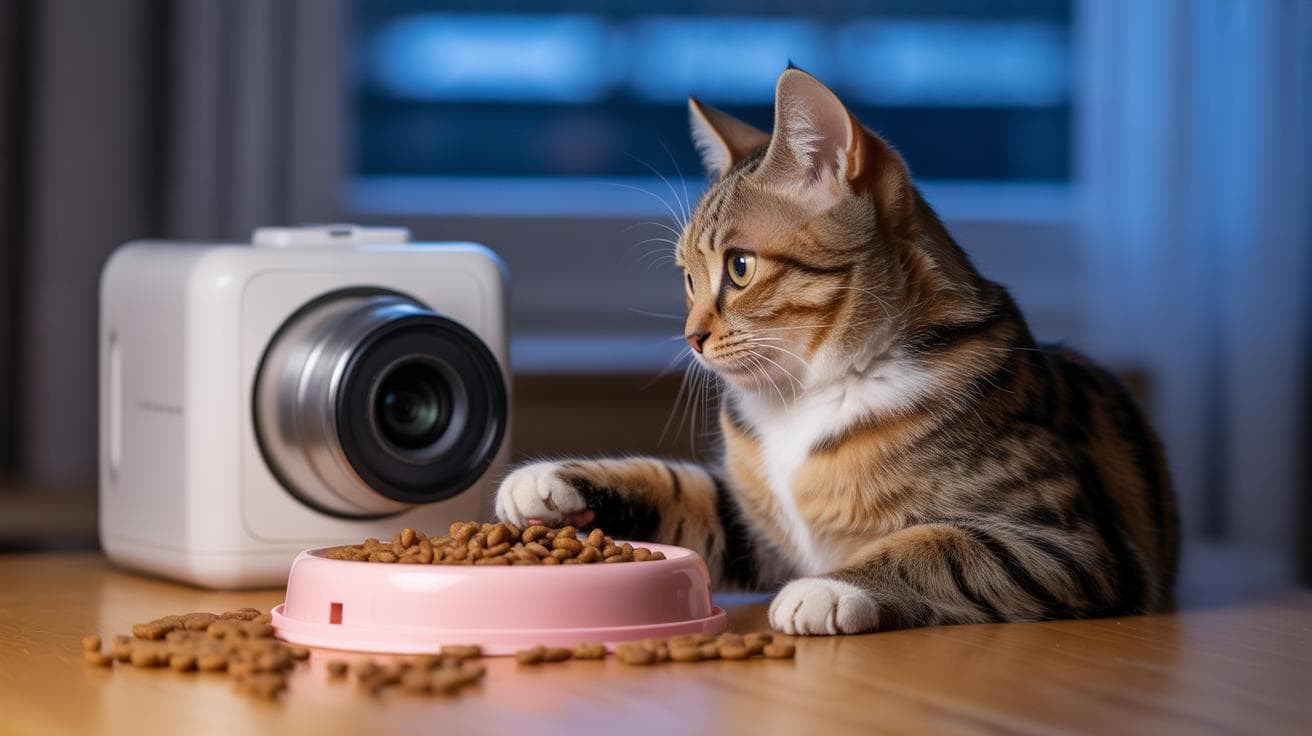
Many indoor cats finish a bowl in about 30 seconds. Their ancestors spent roughly 6 to 8 hours a day hunting and foraging. So yeah, that quick-eat habit is a mismatch with how cats evolved. Puzzle feeders spread meals out and add little bursts of effort, pawing, batting, stalking, so the whole thing feels more like a hunt.

Research in the Journal of Feline Medicine and Surgery links slower, puzzle-based feeding with less regurgitation (spitting up or vomiting) across life stages and in cats with mobility or cognitive limits. For numbers to keep in mind: a normal bowl is gobbled in ~30 seconds versus ancestral 6 to 8 hours; puzzles usually stretch a meal to about 5 to 20 minutes depending on design; and most puzzles add about 10 to 40 minutes of low-intensity activity per day as cats work for kibble. Those are useful benchmarks when you’re tracking changes.

  1. Slow feeding to prevent overeating , Meals that once took 30 seconds can stretch to 5–20 minutes with the right toy. Slower pacing helps reduce gulping. It gives digestion a gentler start, and your cat gets to savor the chase.

  2. Reduce regurgitation and improve digestion , Slower intake is tied to fewer vomiting episodes. Caretakers often see episodes drop by a few each week after switching to puzzles. That matches what vets and the Journal report.

  3. Obesity prevention , Pacing portions and adding tiny activity bursts changes how calories are eaten and burned. Over time, that helps with weight control for plump kitties. Think of it as swapping a few minutes of idle kibble for a little workout.

  4. Increased daily activity , Puzzle play commonly adds 10–40 minutes a day of gentle movement (pawing, batting, stalking). It’s not marathon-level exercise, but it’s consistent. Those minutes add up.

  5. Stronger mental engagement , Problem-solving keeps indoor minds busy. Boredom-driven trouble, loud meowing, destructive scratching, often drops when cats have a job to do. Ever watched a cat figure out a sliding lid? It’s pride-filled and hilarious.

  6. Reduced stress and better focus , The steady reward rhythm of a puzzle can calm anxious cats and give them a clear task. They know what to expect: work, then treat. Comforting for many felines.

  7. Easier multi-cat management , Spread-out feeding stations and different puzzle styles lower competition. Shy cats can eat at their own pace and confident cats can be challenged without stealing meals. That can cut squabbles and speed-eating.

  8. Life-stage benefits , From curious kittens to sleepy seniors, puzzles come in difficulty levels. Match the toy to ability so each cat gets the right challenge without frustration. For seniors, choose lower-effort puzzles. For kittens, start simple and level up.

Quick tips and troubleshooting: start slow. Introduce one puzzle at a time and watch how long meals take. Keep a simple log, meal duration, vomiting frequency (if any), and weight trends, for 2 to 4 weeks. If vomiting or weight issues keep happening, take your notes to the vet. It helps them see patterns fast.

Worth every paw-print. Try one for a week and see how your cat’s routine changes. I once watched Luna leap across the couch for a kibble drop and then chill like she’d earned a spa day. Cute, useful, and uh, sort of addicting to watch.

DIY cat puzzle feeder ideas and step-by-step builds
- DIY cat puzzle feeder ideas and step-by-step builds.jpg

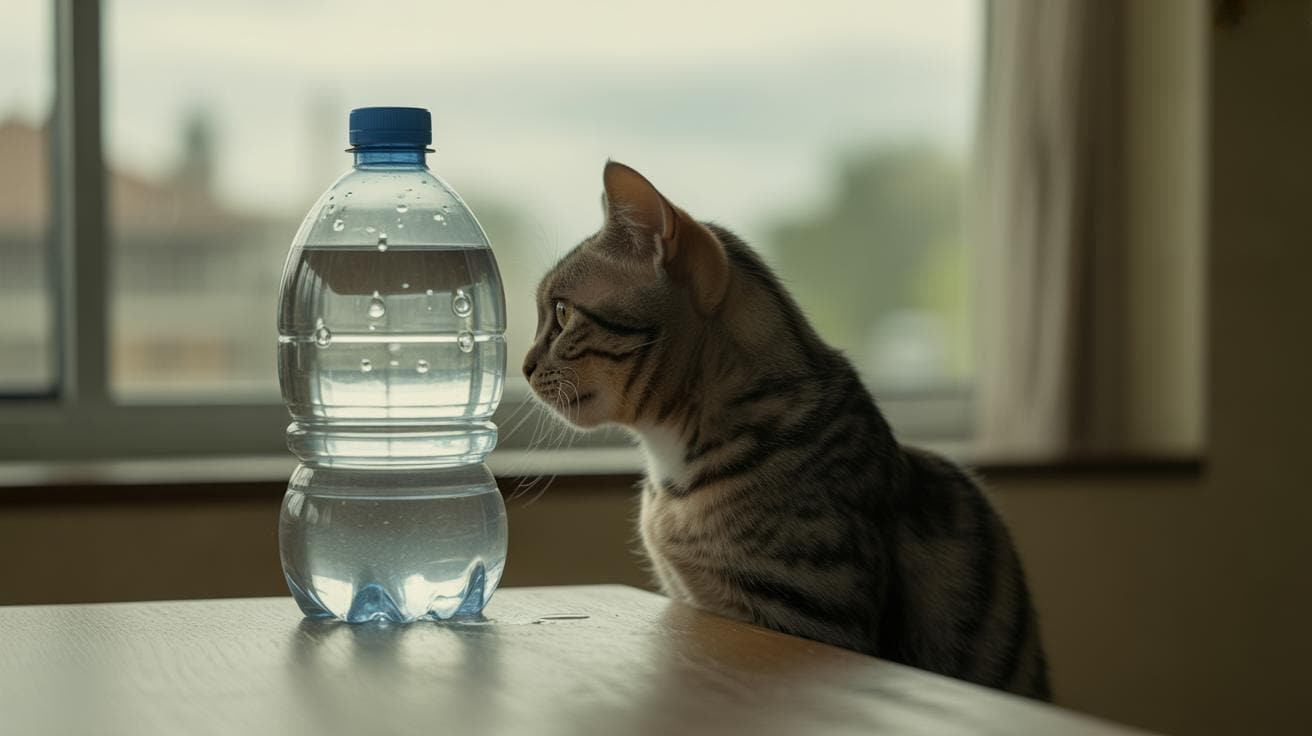
Want low-cost, quick puzzle feeders that use stuff you already have? These projects are easy to make, change as your cat learns, and keep playtime fresh. You’ll get a rolling bottle spinner, a tiny egg-carton puzzle, a toilet paper roll pyramid, a muffin tin nose-work game, and a bigger cardboard board you can upgrade. Perfect for busy days or kitten training.

Water bottle feeder

A bottle that tumbles kibble when batted. It’s simple, a little noisy in the best way, and cats learn fast by pawing and watching the treats clack out. Start with big holes, then make them smaller as your cat gets good at it.

Materials:

  • Clean plastic water bottle (empty, rinsed)
  • Dowel (wood stick) or stiff skewer (wood or metal)
  • Sandpaper (abrasive paper to smooth edges)
  • Utility knife (box cutter) or scissors
  • Tape or hot glue (quick-melting craft glue)

Steps:

  1. Cut several treat-sized holes around the bottle body. Start large so food drops easily.
  2. Sand the hole edges until smooth, no sharp bits.
  3. Cap one end and thread the dowel through the bottle to act as an axle, then mount it in a low box or between two supports.
  4. Put kibble inside, set it near a perch, and watch whiskers twitch as your cat learns to spin it.

Egg carton puzzle

Tiny, shallow, and perfect for kittens or shy cats who like quick wins. It’s quiet, low-stress, and great for teaching the idea of hidden food. My cat Luna loved the tiny surprise each time she nudged a lid.

Materials:

  • Cardboard egg carton
  • Kibble or small treats
  • Small toys or scrap cardboard
  • Tape (optional)

Steps:

  1. Drop a few pieces of kibble into selected cups.
  2. Close lids or leave them slightly ajar so your cat can nudge them open.
  3. For more challenge, stack two cartons and tape lightly so they don’t slide.

Toilet paper roll pyramid

A modular cardboard game that’s cheap and easy to reconfigure. It smells like home, rustles nicely, and you can rearrange it every day. Think of it as a tiny cardboard mountain to conquer.

Materials:

  • 6 empty toilet paper rolls (cardboard tubes)
  • Small box or tray base
  • Non-toxic glue (pet-safe glue) or tape
  • Kibble

Steps:

  1. Arrange rolls in a 3-2-1 triangle on the box base.
  2. Glue or tape at contact points so the stack won’t topple.
  3. Fill rolls with kibble and place near a cat tree so your cat can scout before pouncing.

Muffin tin feeder

Fast to set up and great for mixing up nose-work and problem solving. Cover some cups with balls or cardboard circles for a quick puzzle rotation. It’s perfect for portion control, too.

Materials:

  • 6-cup muffin tin
  • Tennis balls or cut cardboard circles
  • Kibble or small wet-food portions
  • Non-slip mat (to stop the tin from sliding)

Steps:

  1. Put food in a few cups, leave others empty.
  2. Cover occupied cups with a ball or cardboard lid.
  3. Change which cups hold food each day to keep it novel.

Large cardboard sheet puzzle

A bigger, upgradeable board for layered hiding spots and taller play. You can make it as simple or as tricky as you like, adding small containers for varied sounds and textures. It’s a great project to involve kids or shelter volunteers.

Materials:

  • Large cardboard sheet
  • Toilet paper roll halves (short cardboard tubes)
  • Small containers (bottle caps, jar lids)
  • Hot glue or strong craft glue

Steps:

  1. Glue roll halves upright across the sheet in rows.
  2. Attach small containers at different heights for layered hideouts.
  3. Scatter kibble across compartments and fold gentle flaps to create lids.

Build time for these projects is usually 5-10 minutes and cost is minimal. Start easy with wide openings and obvious rewards, then tighten holes or add lids as your cat learns, progression keeps them interested. Check all materials for chew risks, smooth any rough edges, and clean pieces regularly. See the Safety section for full cleaning and hazard guidance. Worth every paw-print.

Store-bought and commercial cat puzzle feeder options (what to buy and why)
- Store-bought and commercial cat puzzle feeder options (what to buy and why).jpg

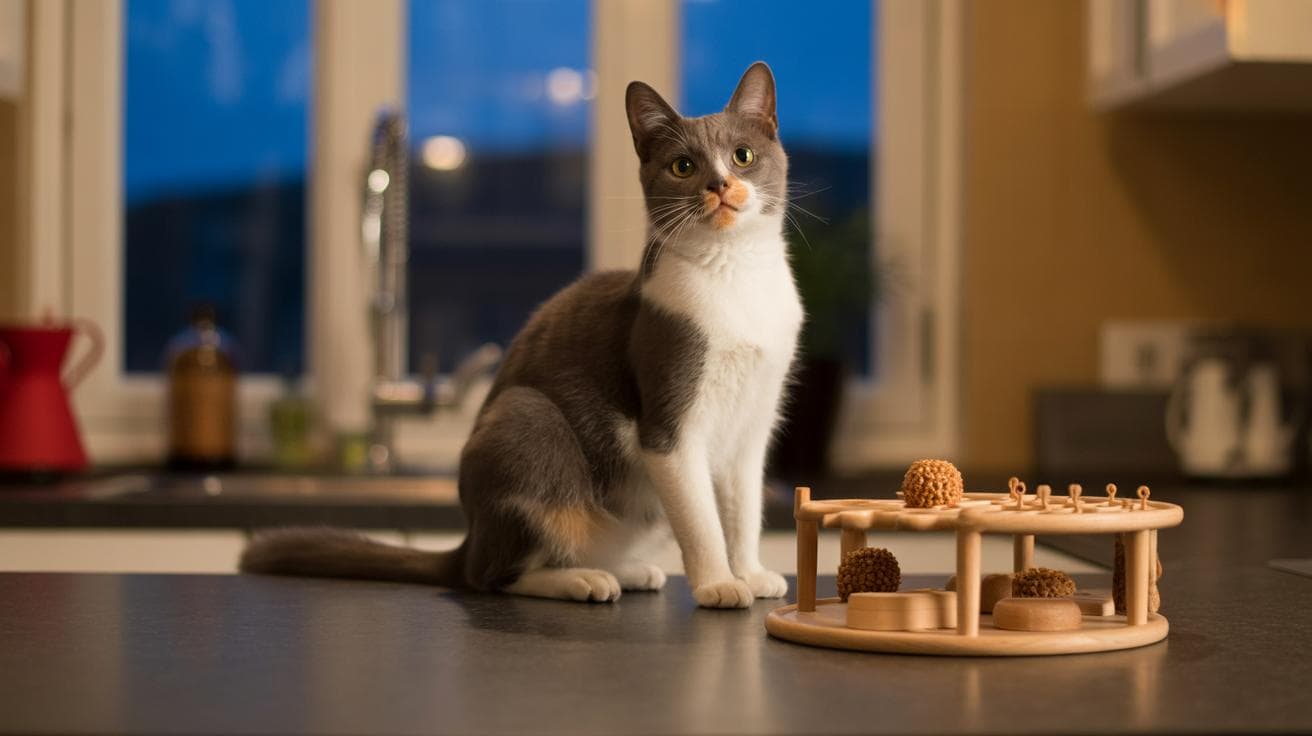
Think in simple categories and you’ll score quick wins. There are rotating or tumbler toys that spill kibble when batted , great for active cats who love the chase. Lickimat-style pads slow down wet food and encourage calming licking. Multi-chamber puzzle boards test clever problem-solvers, and simple slow-feeder bowls help speedy eaters stretch their meals. If you like brand names, check Nina Ottosson for adjustable puzzles, Lickimat for textured wet-food play, and Kong for sturdy treat-dispensers , solid starting points when shopping.

Pick the model that fits your cat’s habits. Durability and chew resistance matter if your cat likes to gnaw; look for tough plastics or rubber (rubber is soft, flexible material). Wet-food compatibility matters if you use pâté or paste. Cleaning ease matters if you hate scrubbing , dishwasher-safe parts save time and keep mold away. Budget feeders are great for casual use, while premium interactive feeders often use tougher plastics (a chew-resistant polymer), let you change difficulty levels, and have parts made for frequent washing.

Model/Type Best for Price range
Lickimat Wet-food pacing & sensory engagement $10–20
Nina Ottosson puzzle Problem-solvers & adjustable difficulty $25–60
Simple slow feeder bowl Fast eaters who gulp kibble $10–30

Quick buying tips to keep things simple:

  • Durability: choose sturdy plastics or rubber if your cat chews a lot; think heavy-duty, not flimsy.
  • Cleanability: dishwasher-safe parts save time and help hygiene.
  • Wet/dry compatibility: get lick mats or bowls that work with wet food if you feed pâté or soft paste.
  • Adjustable difficulty: models that let you change the challenge grow with your cat’s skills.
  • Multi-cat homes: pick extra stations or feeders that limit access so one bossy cat doesn’t eat everyone’s food.

A few last thoughts: try one new feeder for short play sessions first and watch how your cat reacts. Ever seen your cat figure out a puzzle in seconds? It’s oddly proud-making. Worth every paw-print.
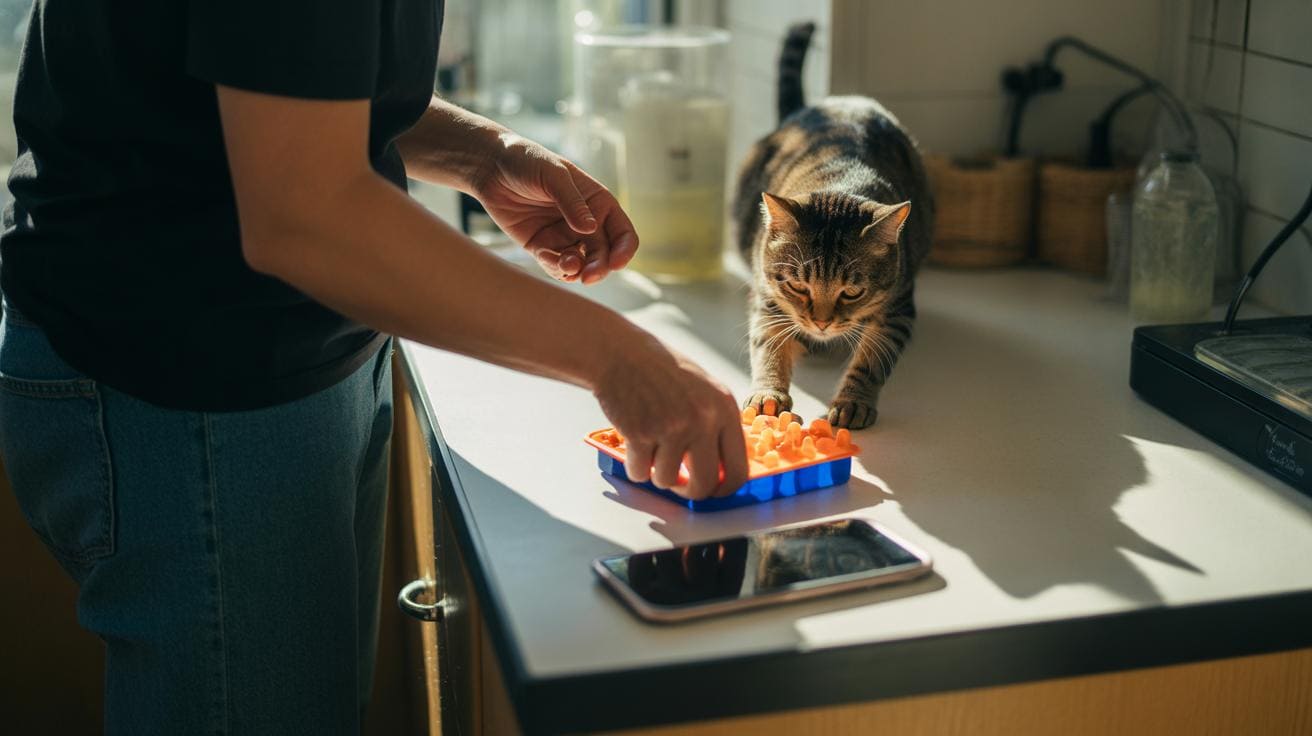
How to introduce and train cats to use puzzle feeders (four-week progression and proactive tips)

- How to introduce and train cats to use puzzle feeders (four-week progression and proactive tips).jpg

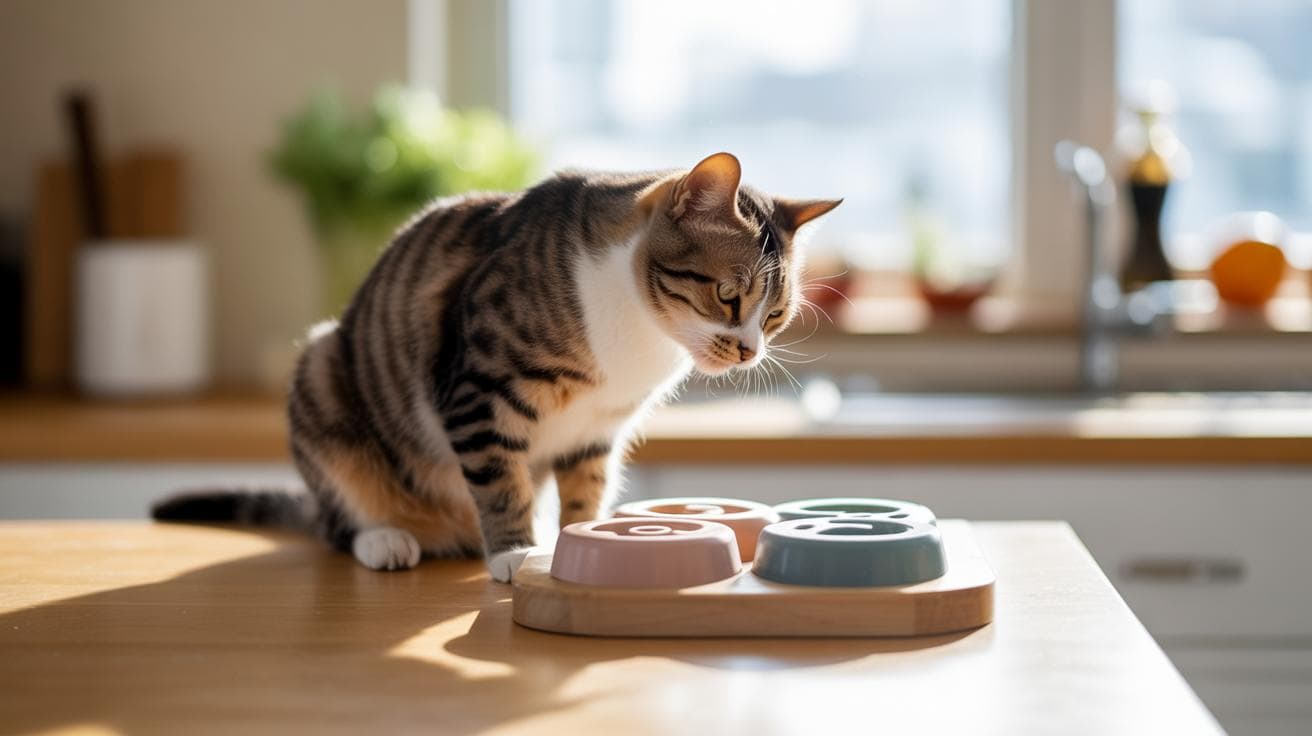
Short, gentle sessions win. Puzzle feeders (interactive bowls or toys that make your cat work a bit for food) are a great way to turn mealtime into play. Keep the treats tasty, sessions short, and your tone cheerful, your cat will pick up confidence faster than you think. Ever watched whiskers twitch as a toy rolls? That’s the good stuff.

Four-week progression

  1. Week 1: Beginner access
    Start easy. Use feeders with wide openings or lids that come off easily so food pops out with little effort. Offer high-value treats or favorite kibble (dry cat food) and keep sessions to 5–10 minutes while you cheer and praise. Supervise closely so the first tries feel like a win.

  2. Week 2: Slight challenge increase
    Make the holes a bit smaller or add a light cover so your cat has to paw or nudge a little more. Stretch sessions to 10–15 minutes and keep showing the first few rewards so they understand the payoff. Keep praising, and don’t worry if progress is slow.

  3. Week 3: Add mild obstacles
    Introduce a light flap, a small barrier, or a rolling piece, think gentle puzzles, not frustration. Give a short play burst before feeding to boost interest, then let them try with minimal help. Step in only if they stall for too long; sometimes a tiny nudge teaches more than doing it for them.

  4. Week 4: Combine and normalize
    Use two puzzle types during normal mealtime so solving becomes part of the routine. If needed, return some meals to a regular bowl now and then, then switch back to puzzles so confidence stays high. Aim for predictable timing so your cat learns the new rhythm.

Many cats hesitate at first. Extra praise, easy wins, and patience go a long way, adjust difficulty slowly so they feel clever, not blocked.

Proactive tips to reduce failure rates:

  • Place puzzles near a quiet perch so your cat can watch and feel safe before trying.
  • Start each session with a few hand-fed treats to build interest and a positive link.
  • Change only one thing at a time when you adjust difficulty, too many changes confuse them.
  • Supervise the first several sessions and celebrate every small success with a soft voice or a scratch behind the ear.
  • Keep sessions short and frequent instead of long and rare; ten minutes often beats one long stretch.
  • Rotate feeder styles weekly to keep novelty high and boredom low.

Worth every paw-print.

Safety, cleaning, and hygiene for cat puzzle feeders

- Safety, cleaning, and hygiene for cat puzzle feeders.jpg

Good hygiene keeps your cat safe and the toys fun. This short guide covers cleaning puzzle feeders, chewing risks, and quick inspection steps so feeders stay safe and useful. Think of it as a few easy habits that save you headaches and your cat’s whiskers.

  • Choose non-toxic materials and smooth any rough edges. For plastics, look for "food-safe" (made to meet standards so no harmful chemicals leach). Cardboard should be dry and intact, wet, crumbling cardboard is a no-go.
  • If your cat chews cardboard or soft plastics, swap to chew-proof options like hard plastics (polypropylene (PP) (a tough, dishwasher-safe plastic) or polycarbonate (a very strong clear plastic)) or metal (stainless steel (rust-resistant metal)). Safer materials mean fewer surprises.
  • Do a quick wipe of dry-food puzzles every day with a damp cloth to remove crumbs and slow bacteria growth. Easy and fast.
  • Deep clean wet-food mats and lick mats 1 to 2 times a week. Use warm, soapy water, rinse well, and let air-dry completely so mold doesn’t get a foothold.
  • Use the dishwasher when parts are labeled dishwasher-safe. The heat helps kill microbes and makes life easier, just check the label first.
  • Always dry every piece completely before storing or reusing. Trapped moisture invites mildew and mold.
  • Do a weekly quick check for cracks, loose bits, or weird smells. Once a month, do a deeper look at moving parts, seals, and anything glued on. Give glued parts a firm tug to see if they come loose.
  • Keep small, detachable bits out of reach to avoid choking hazards. If something can pop off, consider removing it or replacing the feeder.
  • Supervise your cat the first few times you introduce a new DIY feeder so you can spot chewing or unsafe behavior fast. Ever watched your kitty figure out a new toy? It’s entertaining, and useful for safety checks.
  • Favor easy-to-clean designs: smooth surfaces, removable trays, and few crevices. They cut cleaning time and lower contamination risk.

Retire or replace any feeder that shows cracks, persistent odors, loose pieces, visible mold, or chewing damage that exposes stuffing or sharp edges. Better safe than sorry. Worth every paw-print.

Using cat puzzle feeder ideas and benefits in multi-cat homes and for implementation

- Using cat puzzle feeder ideas and benefits in multi-cat homes and for implementation.jpg

Quick checklist to keep feeding fair, calm, and fun for every cat. Use separate stations, RFID (radio-frequency identification, reads a cat’s implanted microchip or a collar tag), microchip-locked feeders, staggered schedules, pre-measured portions, puzzle rotation, and supervise early sessions. Think of this as a simple game plan to cut stress and keep tails up.

  • Separate stations – give each cat their own puzzle feeder in a different room or at different heights so shy kitties can eat away from the bossy ones. Example: label a shelf bowl "Luna (40 g)" so everyone knows whose is whose. Your cat’s whiskers will thank you.

  • RFID or microchip-locked feeders – tech that only opens for the right cat (reads the implanted microchip or a tag). This really stops food-stealers without you playing referee. Example: "Only Bella’s chip opens this bowl."

  • Staggered schedules – feed cats a few minutes apart so they don’t rush or crowd each other. Example: 7:00 Milo, 7:05 Luna. Little gaps = calmer meals.

  • Pre-measure portions – scoop each cat’s food into labeled containers so servings don’t get mixed up. Example label: "Milo – 50 g." Quick, tidy, and no guessing.

  • Rotate puzzles – swap feeder types and move stations weekly to keep curiosity high and guarding low. Swap a ball-feeder for a treat mat every seven days and watch how they stay interested. It’s like toy rotation for humans, but furrier.

  • Supervise early sessions – watch new setups for several days to spot stealing, chewing, or stress and step in gently. If one cat gets anxious, tweak the arrangement. Worth the few extra minutes.

A few extra tips: put food out on different textures or low surfaces for older kitties, and use short play sessions before meals to slow down speedy eaters. Ever watched your kitty chase shadows and then eat like a champ? Little things add up. Worth every paw-print.

Modifying cat puzzle feeder ideas for kittens, seniors, and cats with special needs

- Modifying cat puzzle feeder ideas for kittens, seniors, and cats with special needs.jpg

Small changes to size, height, and texture can make a puzzle feeder work for every cat in your home. Move slowly when you raise the difficulty, and check with your vet about any medical or mobility limits before trying a new design. Think of this as gentle training, not a race.

Senior adjustments

Lower the feeder so older or arthritic cats don’t have to stretch or twist their spine. Put puzzles on the floor or a low, steady step so reaching is easy and comfy.

Make the holes bigger and the compartments shallower for stiff paws or sore mouths. Bigger openings mean kibble or wet food comes out with a gentle nudge, so the effort feels rewarding, not frustrating.

Give the puzzle a non-slip base (rubberized pad that grips tile or wood floors) so tubes, trays, and tins don’t slide when a cat pushes them. Stability cuts down on strain and gives older cats the confidence to try the toy. Worth every paw-print.

Kitten safety

Start kittens on very shallow compartments and give larger reward pieces so they score quick wins. Tiny parts can be tempting and risky, so keep treats a bit oversized at first.

Supervise every new DIY puzzle for the first few weeks and swap out any bits that get chewed or come loose. Kittens learn by mouthing, so watch closely and raise the challenge slowly. Ever watched your kitten pounce on a moving ball? It’s adorable, but safety first.

Features to look for

  • Non-toxic materials (safe if licked or chewed)
  • Dishwasher-safe parts (can go in the dishwasher for easy cleaning)
  • Soft edges (no sharp cardboard flaps or rough cuts)
  • Stable base (won’t tip or slide during play)
  • Shallow compartments (easy wins for kittens and seniors)
  • Wet-food compatibility (lick mats, textured lids, or ice-tray portions)

Keep it fun, keep it safe, and adjust one small thing at a time. Your cat will thank you with purrs and playful taps.

Troubleshooting common problems and measuring success with cat puzzle feeder ideas and benefits

- Troubleshooting common problems and measuring success with cat puzzle feeder ideas and benefits.jpg

We removed this standalone troubleshooting section and folded the practical fixes into the "How to introduce and train…" and "Using cat puzzle feeder ideas in multi-cat homes" sections so the tips live where you use them. The metrics table moved into "Puzzle feeder benefits for cats: health, behavior, and measurable outcomes."

  • Widen holes and make early wins obvious. Start simple. Show them how it works: push a ball so a kibble piece pops out, then let your cat try. Your cat’s whiskers will twitch and confidence grows fast.

  • Sit with them for the first few plays. Help with the first handful of treats so a confused cat learns the game. Think of it like teaching a trick – patient, short sessions win.

  • For multi-cat guarding, give each cat its own station or separate room. Stagger meal starts by a few minutes and label portions or bowls so each cat learns their spot. If one cat dominates, try dividing food across rooms until everyone gets the hang of it.

  • If a cat chews or swallows bits, stop the DIY parts and switch to chew-proof commercial feeders made from sturdy materials like polymer (a tough plastic) or stainless steel (durable metal). Supervise until you’re sure it’s safe.

  • If you notice vomiting or repeated regurgitation, pause puzzles and go back to bowls with small, frequent meals. Watch symptoms closely and reintroduce gentler puzzles only if the cat is doing better. And yes, call your vet if it keeps happening.

Note on tracking: meal duration, body weight, BCS (body condition score), and behavior signs were moved into the benefits section as a compact "What to track / Frequency / Targets" box so monitoring sits right beside the outcomes. Check "Puzzle feeder benefits for cats: health, behavior, and measurable outcomes" for the specifics.

Worth every paw-print.

You jumped straight into DIY builds, household hacks, store-bought picks, training tips, and who benefits, kittens, adults, seniors, and cats with special needs. Quick examples: toilet paper roll pyramid, muffin tin + tennis balls, and a Nina Ottosson puzzle.

We contrasted indoor meals with ancestral foraging, showing why meals need more effort spread across the day to feel natural.

Journal of Feline Medicine and Surgery supports puzzle feeders across life stages; we covered training, safety, and multi-cat logistics. Try a mix, rotate puzzles, and watch calmer, fitter cats. Give cat puzzle feeder ideas and benefits a try, purrfect payoff.

FAQ

Frequently Asked Questions — Cat Puzzle Feeders

Are cat puzzle feeders suitable for wet food or dry food?

Cat puzzle feeders are suitable for both wet and dry food. Wet meals work best on lickmat-style pads (textured rubber mat) or shallow trays, while dry kibble fits balls, tumblers, and slot puzzles.

What are the best cat puzzle feeders and brands to buy?

The best cat puzzle feeders include Nina Ottosson (sturdy puzzle boards), Lickimat (textured mats), Catit, and Kong, available from major retailers like Amazon. Match the feeder to your goal — slow-eating, problem-solving, or wet-food pacing.

How can I make a homemade cat puzzle feeder?

You can make a homemade cat puzzle feeder from common items:

  • Toilet paper roll pyramid (empty cardboard tubes)
  • Muffin tin plus tennis balls
  • Bottle spinner using a plastic water bottle and some tape
What is a cat puzzle feeder ball and how does it work?

A puzzle feeder ball is a round toy that releases kibble as your cat bats it, promoting chasing and slower eating. It works best with dry food for active, playful cats.

Can puzzle feeders slow my cat’s eating and reduce vomiting?

Puzzle feeders slow a cat’s eating by forcing them to work for food, lengthening meal time, reducing gulping and regurgitation, and adding mental challenge and extra movement during meals.

Are puzzle feeders safe for kittens, seniors, or cats with special needs?

Puzzle feeders can be safe when adapted: use shallow compartments for kittens, lower height and larger openings for seniors, and soft lick mats (textured rubber pad) for dental sensitivity. Consult your vet for cats with medical issues.

How do I introduce my cat to a puzzle feeder?

Introduce a puzzle feeder gradually with a four-week plan: start with wide access and high-value treats, extend session length, add mild obstacles, then mix puzzle types. Keep sessions short and supervised.

How should I clean and maintain puzzle feeders?

Clean puzzle feeders by wiping dry-food toys daily and deep-cleaning wet-food mats 1–2 times weekly. Dry thoroughly to prevent mold, inspect weekly, and replace cracked or smelly parts promptly.

What setup works best for puzzle feeders in multi-cat homes?

In multi-cat homes, set separate puzzle stations, stagger feeding times, label each feeder, or use RFID-enabled bowls for single-cat access. Supervise early sessions and rotate puzzles to match each cat’s skill level.

Author

  • Nathaniel Price is a retired construction manager turned LLM writer, where he combines his years of experience managing complex projects with his love for crafting precise, engaging content.

    His work thrives on meticulously researching and writing about all things related to cats, from behavior to care, ensuring that every piece is informative and well-researched.

    When he’s not writing, Nathaniel enjoys fishing, which offers him a peaceful escape. He also has a deep appreciation for nature, often reflecting on his belief that “happiness is found in the quiet moments.”

    View all posts

Similar Posts