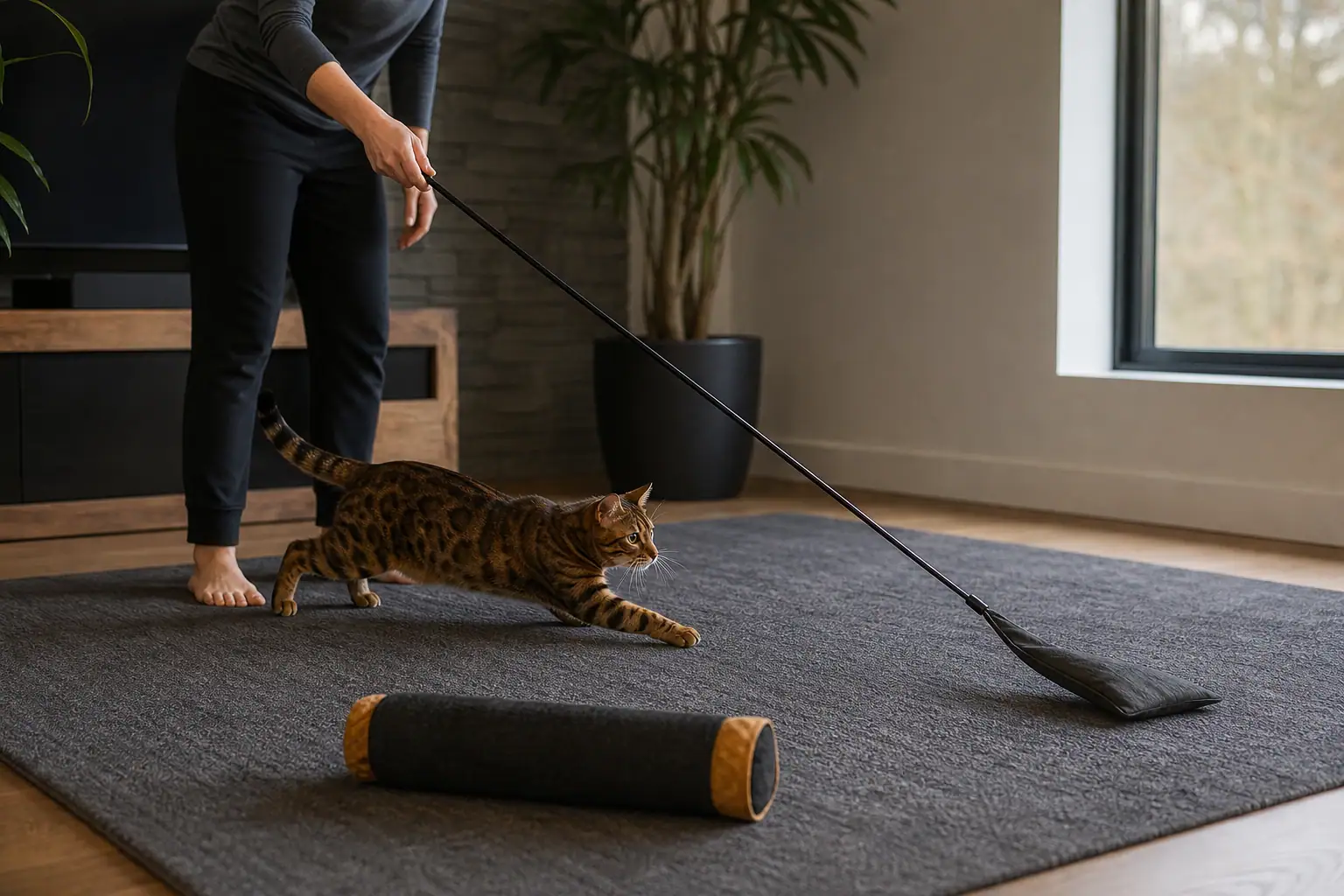
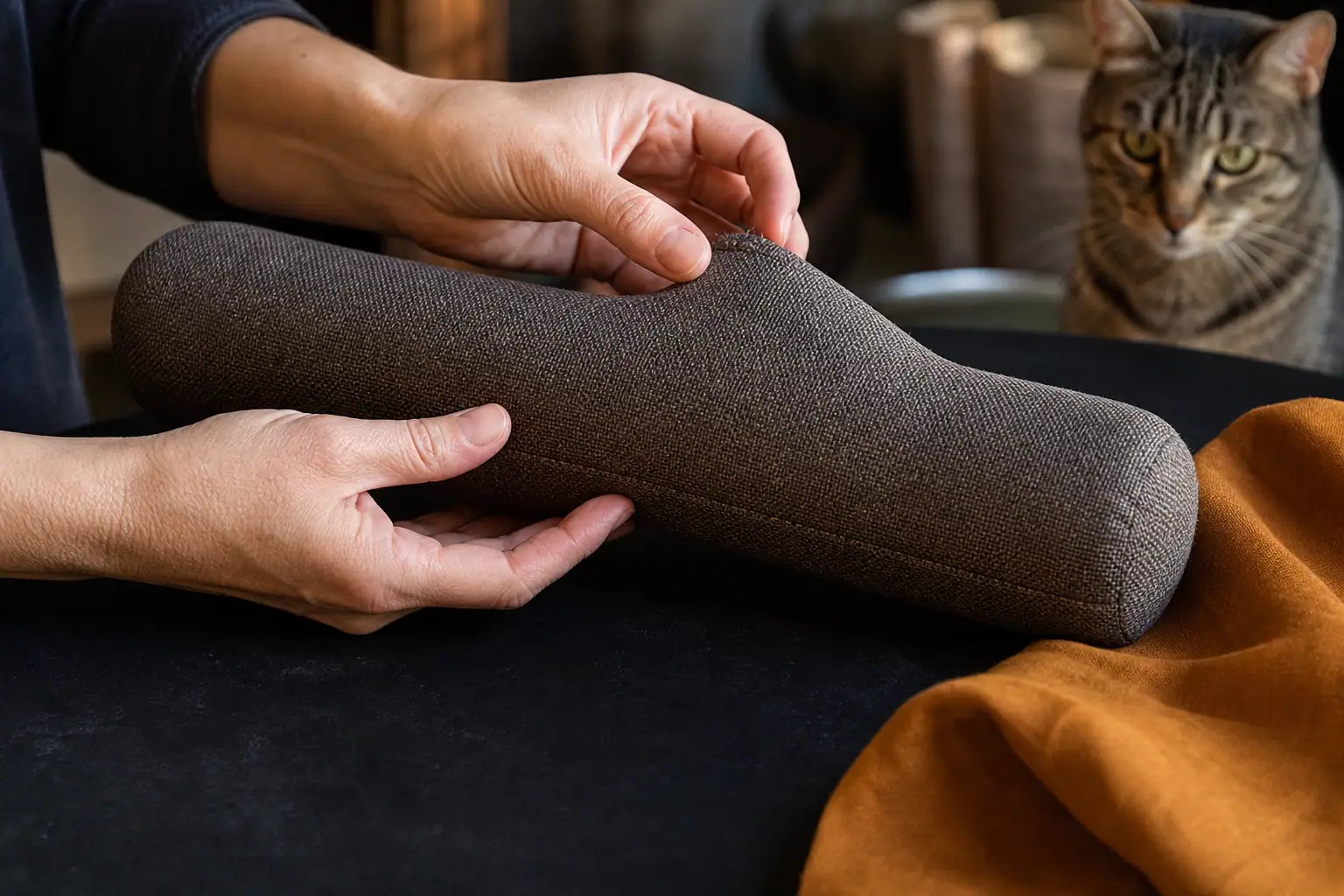
Cat rough play is often normal when it is mutual, quiet, brief, and easy for either participant to leave. Stalking, chasing, pouncing, wrestling, mouthing, and rabbit-kicking are all part of feline play. It becomes a problem when claws or bites injure someone, one cat repeatedly tries to escape, the interaction stays tense, or the behavior suddenly changes.
Do not judge a wrestling match from one dramatic moment. Watch the pattern: Do both cats choose to return? Do they trade roles? Are there pauses? Can the smaller or less confident cat walk away? Rough-looking play can be healthy; one-sided pursuit is not made safe just because the more energetic cat intends to play.
Is Rough Play Normal for Cats?
Yes. Play lets cats rehearse parts of hunting and social behavior without the full intent or force of a real attack. Kittens are especially likely to chase, grab, bite, and wrestle, but many adult cats keep a vigorous play style. A cat may also direct the same sequence toward a toy or a person’s moving ankle.
The important word is inhibited. In healthy social play, cats adjust their force and respond when a partner pauses, protests, or leaves. The UC Davis School of Veterinary Medicine notes that play aggression is common in kittens and young cats, but is too rough when biting is uninhibited, claws are not controlled, or the target is a weaker, older, or ill cat.
Do kittens grow out of rough play?
Activity often changes with age, but do not wait for a painful habit to disappear on its own. A kitten who learns that hands, feet, or a reluctant housemate are acceptable targets may keep practicing that pattern as a larger, stronger adult. Teach the safer rule now: human skin ends the game; appropriate toys keep it going.
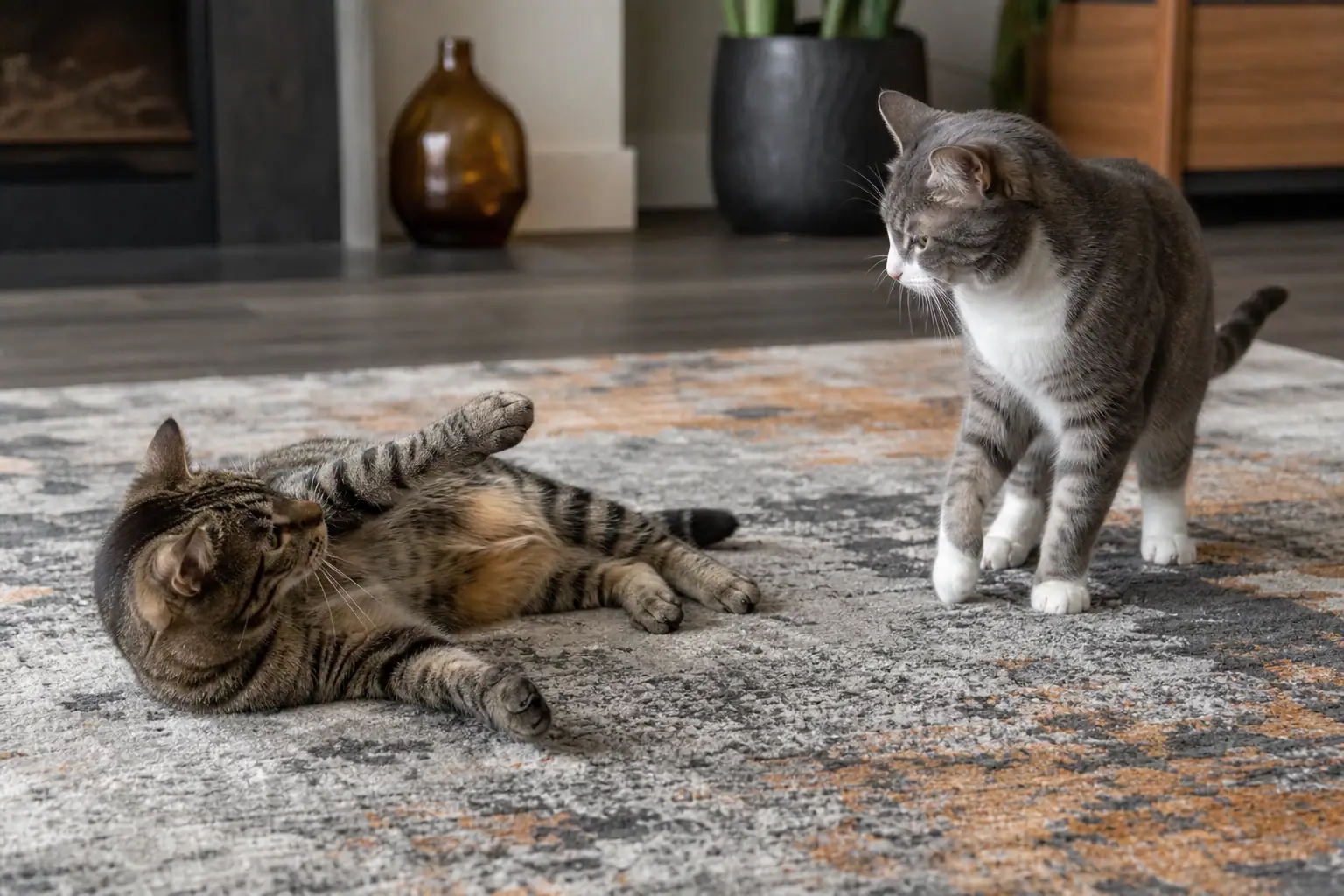
Cat Play vs. Fighting: Read the Whole Interaction
There is no single foolproof sign. Wrestling, biting, pinning, chasing, and a belly-up posture can occur in play, tension, or a mixture of both. In a 2023 Scientific Reports study of 105 cat pairs, reciprocal wrestling was associated most closely with playful interactions, while vocalization and chasing were associated more with agonistic interactions. The researchers also identified an intermediate category—evidence that “playing or fighting” is sometimes the wrong binary question.
| What to watch | More consistent with mutual play | Reason to pause or intervene |
|---|---|---|
| Choice | Both cats approach, return, or re-start the game | One cat hides, freezes, or repeatedly tries to leave |
| Roles | Chasing, pinning, and being on top change sides | The same cat always pursues, corners, or pins |
| Sound | Mostly quiet, perhaps with an occasional brief protest | Repeated growling, yowling, screaming, or persistent hissing |
| Body | Loose movement, normal-looking coat, quick pauses | Rigid posture, flattened ears, puffed fur, arched back, or sustained tail lashing |
| Response to “stop” | The other cat backs off when a partner pauses or protests | Pursuit continues after the other cat disengages |
| Afterward | Both recover quickly and behave normally around each other | Hiding, guarding routes or resources, staring, avoidance, or renewed conflict |
A single hiss can be a boundary rather than proof of a broken relationship. What matters is whether the other cat respects it. The 2024 AAFP Intercat Tension Guidelines advise looking beyond the bout at the cats’ everyday relationship. Cats who rest together, groom or rub one another, touch noses, and comfortably share space provide different context from cats who routinely block, stare at, avoid, or hide from one another.
Try the consent-and-recovery test: separate the moment into three questions. Did both cats choose the interaction? Did each cat retain the ability to stop? Did both return to relaxed behavior afterward? If any answer is consistently no, manage it as a welfare problem rather than entertaining roughhousing.
Why a Cat Starts Playing Too Rough
Rough play is a description, not a diagnosis. The same bite or pounce can have different causes, so look for the trigger and timing before choosing a response.
- Unmet play needs: A young or high-energy cat may ambush ankles or overwhelm a quieter cat when there are too few acceptable outlets for chase, grab, and kick behavior.
- Learned hand play: Fingers under a blanket and hand wrestling teach a kitten that skin is a moving target. The game becomes less cute when adult teeth and claws arrive.
- A play-style mismatch: One cat wants repeated contact while the other prefers a short chase or no social play at all. Age, size, health, and confidence can widen that mismatch.
- Overarousal: Fast, continuous movement can push a cat past controlled play. Watch for tail lashing, skin twitching, fixed staring, hard grabbing, or bites that intensify.
- Stress or redirected arousal: An outdoor cat at the window, a loud noise, a new pet, or another frustrating event can prime a cat to strike the nearest person or animal.
- Pain or illness: A cat who suddenly resists touch, lashes out when moved, or changes behavior needs a veterinary check. The Merck Veterinary Manual lists pain, fear, frustration, resource conflict, and play among the possible contributors to aggression.
Keep a simple one-week log: time, location, target, what happened just before the episode, body-language signs, and what ended it. Patterns such as pre-dinner ankle ambushes, window-triggered attacks, or one cat being cornered near a litter box make the next step much clearer. A short video taken from a safe distance can also help your veterinarian or a qualified behavior professional assess the interaction.