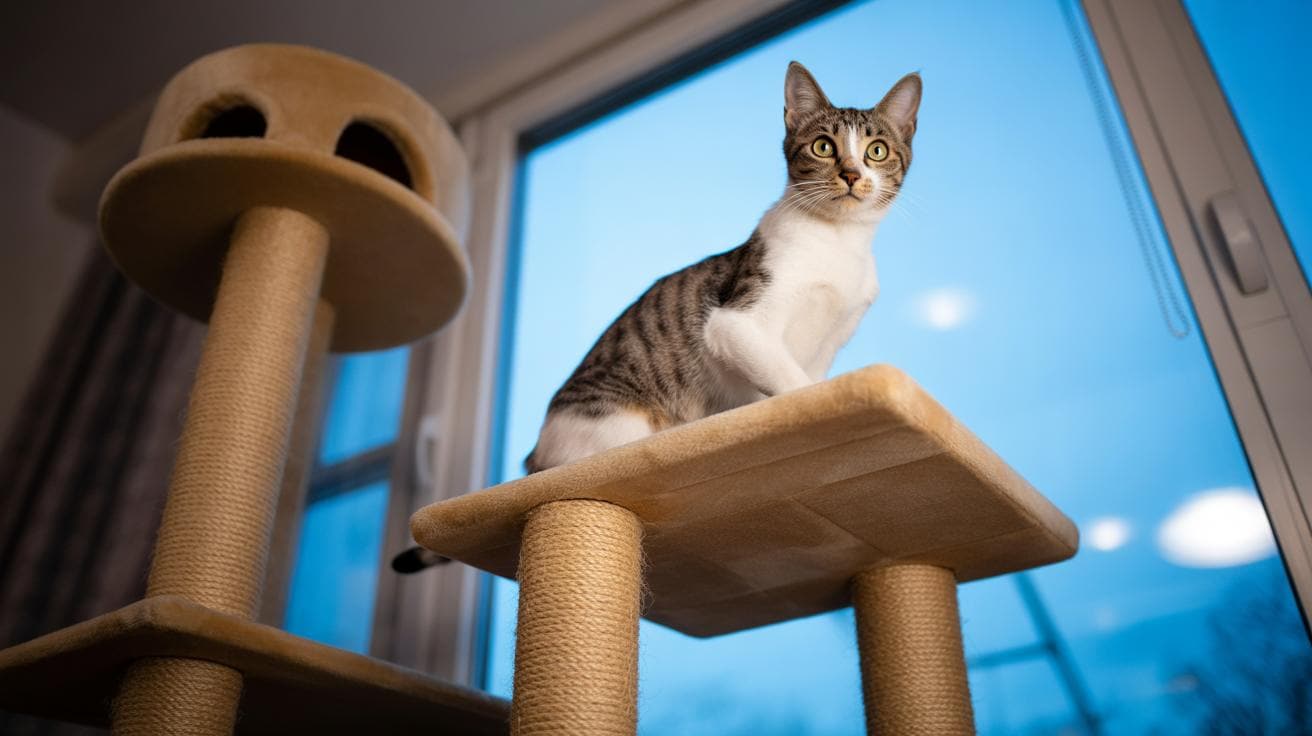
Thought a tiny apartment meant no room for a full cat kingdom? Think again! With a few quick measurements and the right slim tower or a wall-mounted climbing circuit (a path of shelves fixed to the wall so your cat can run and perch), your kitty can climb, nap, and bird-watch without taking over the living room.
We’ll show the best cat towers for small spaces and hand you a quick 6-step measurement and selection checklist to pick a stable, comfy tower. The checklist covers floor footprint (how much floor it takes), ceiling height, and each cat’s size and mobility, so even a shy senior or a zooming kitten gets a perfect fit. Ever watched your cat’s whiskers twitch as a bird lands outside? This helps make moments like that happen more often.
Worth every paw-print.
Checklist: Quick 6-step measurement & selection guide for compact cat towers
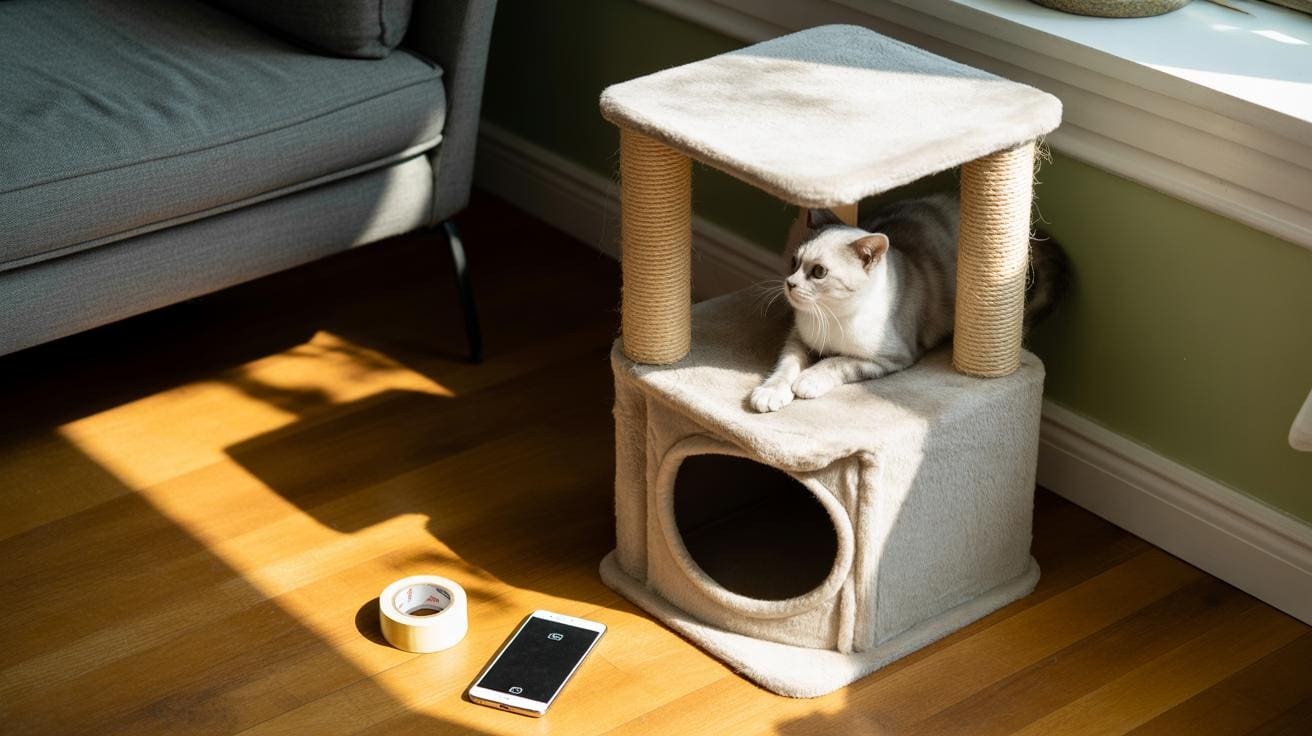
- Measure the floor footprint (the floor space the tower will take) and check clearance near walls or any obstacles.
- Measure ceiling height and note how much room you need above the top perch.
- Record each cat's weight and any mobility needs, young, spry, arthritic, or extra large.
- Pick whether you want a wider base or a taller stack for your room.
- Look for stability features: a wide base, a solid post core (the strong center that gives a post its support), and anchor options.
- Confirm how easy it is to clean and whether parts can be replaced.
Start by measuring what the room actually gives you: the floor area you can spare, the vertical space up to the ceiling, the usual traffic lanes, and where the windows are. This helps your cat climb, nap, and watch birds without blocking walkways or your view.
Match perch style to each cat. Tiny cats often love narrow perches and high paths. Medium cats do fine on standard platforms. Big cats need deeper beds and wider platforms that feel sturdy under their weight. For exact platform depths and weight capacities, check the Multi-cat section for concrete numbers.
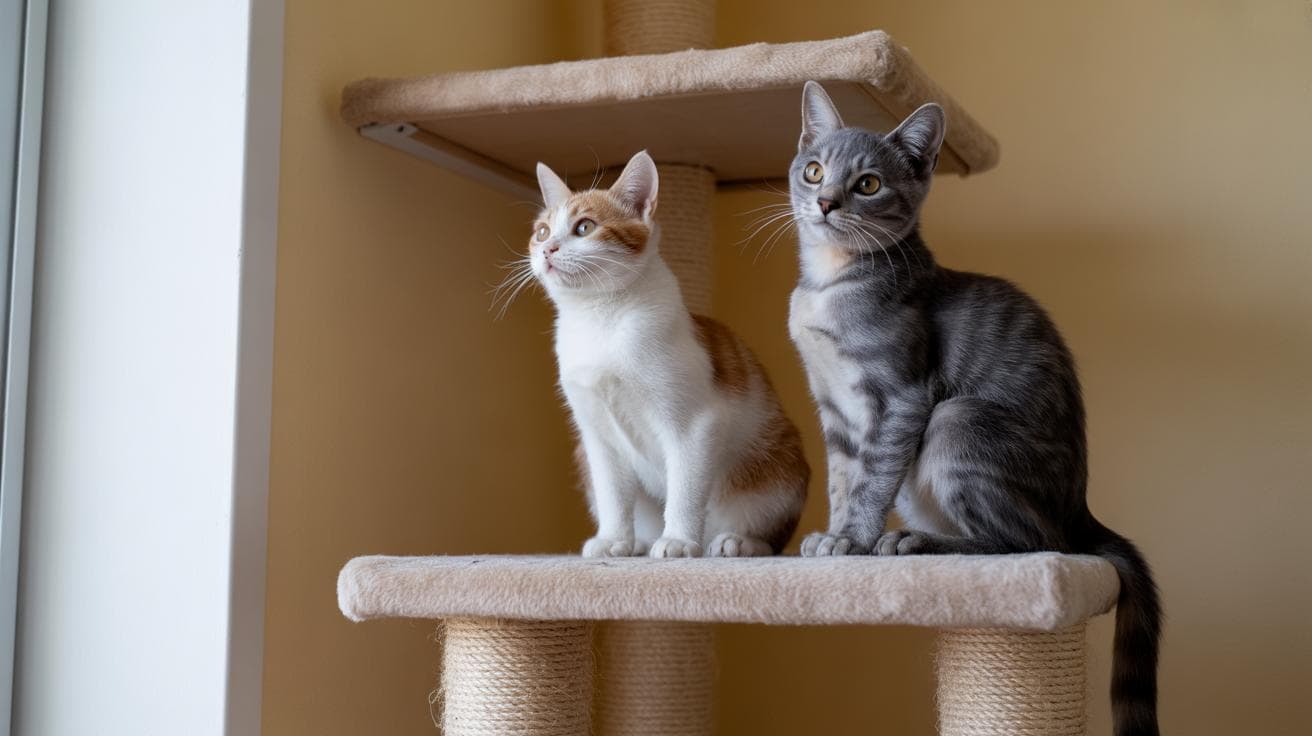
If you have more than one cat, plan spots so each cat has a private perch and a shared high lookout. Give shy cats a route that keeps them off the floor sometimes. For precise layout and how many platforms you need in a small home, see the Multi-cat section.
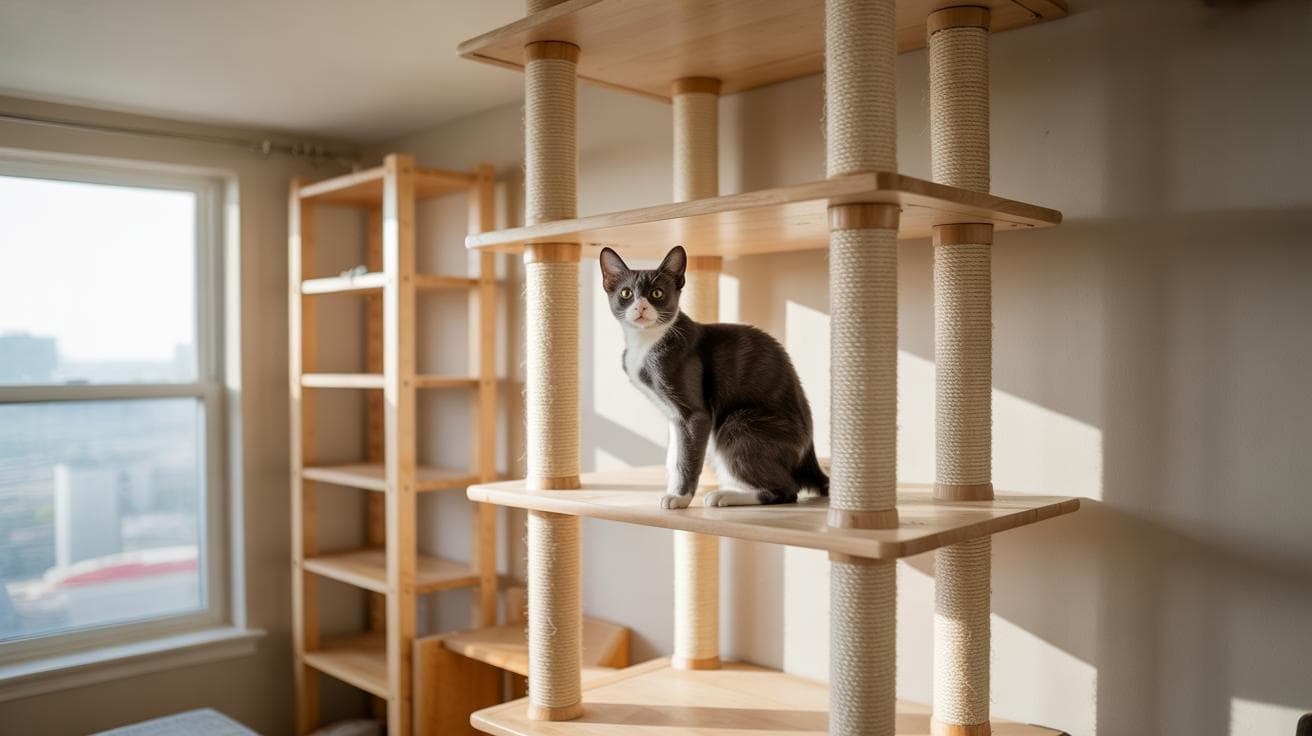
Quick product picks to consider: wall-mounted circuits (platforms attached to the wall that create vertical routes) save floor space and are great for shy climbers or tight rooms. Slim vertical towers stack perches straight up and fit narrow spaces, though they may need wall support for extra stability. Corner towers tuck into unused corners and offer several levels while keeping the base tiny, perfect beside a window or between furniture.
Worth every paw-print.
Design types of cat towers for small spaces: pros, cons and situational fit

Four main styles cover most small-room needs: wall-mounted condos, corner towers, tension-pole or slim vertical towers, and floating shelf circuits. See the Installation, placement and renter-friendly anchoring section for anchor and safety specifics. These options let you give your cat lots of vertical playground without taking over the floor.
Wall-mounted cat towers
Wall-mounted condos free up floors and make real vertical highways for window-watching kitties. They must be attached to studs (the wood framing behind drywall) or rated anchors (heavy-duty wall fasteners) so the route does not pull away, which means they are less portable. Perfect for studios or anyone who wants a neat, furniture-like look and the most floor space left free. Your cat will love hopping from ledge to ledge and watching the street below.
Corner cat towers
Corner towers use those forgotten 1 by 2 foot spots and give your cat several levels without eating room. Two walls add natural stability, so these fit nicely beside a sofa or near a sunny window. Great when floor space is tight but you still want multiple platforms for naps and pounces. They feel sturdy, and honestly, my cat turned one into a personal lookout.
Tension-pole and slim vertical towers
Tension-pole trees use a spring-loaded upright that presses between floor and ceiling (a rod that grips each surface) and they often work well for renters. Slim vertical designs stack small perches high with a tiny footprint; they trade platform depth for height, so add wall support if your cat is a big jumper. These are ideal for hallways or narrow rooms where every inch counts.
Floating shelves and shelf circuits
Floating shelves let you build a stitched-together vertical path across walls, great for single or shy cats who like hopping between spots. They look sleek and are very configurable, but each shelf has a load limit (weight capacity) so plan routes carefully to keep the jumps comfy and safe. Arrange them like stepping stones and watch your cat glide along.
| Design Type | Typical Footprint (sq ft) | Best For | Key Pros | Key Cons |
|---|---|---|---|---|
| Wall-mounted cat condo | 0–1 | Stud-backed walls, window routes | Max floor savings; continuous vertical paths | Needs solid anchoring (studs or rated anchors); not very portable |
| Corner cat tower for apartments | 1–2 | Small living rooms, corners near windows | Stable thanks to two-wall support; lots of levels on a small base | Less flexible placement; may block a corner use |
| Tension pole cat tree / slim vertical cat tree | <1–2 | Narrow rooms, renters | Renter-friendly; tiny footprint | Smaller platforms; may need extra wall support for active cats |
| Floating cat shelves setup | 0 (wall area) | Shy cats, custom vertical runs | Highly customizable; very space-efficient | Each shelf has a weight limit; requires careful layout planning |
Materials, durability and weight capacity for small-space cat towers
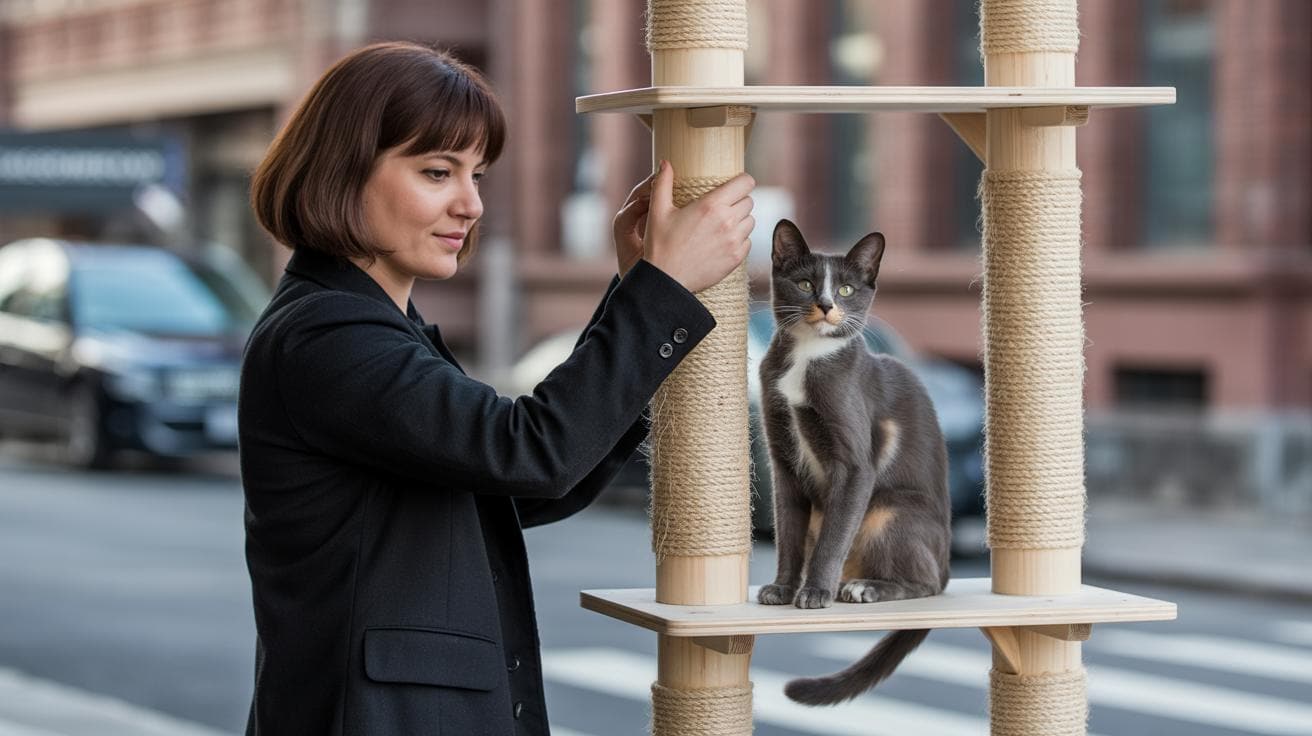
Pick a strong core and the tower won’t wobble when your kitty launches into a leap. Ever seen a cat freeze mid-air because the tower shook? Not cute. A solid base feels calm under paw and keeps naps undisturbed.
Engineered wood (layers pressed together to resist warping) and solid plywood (thin sheets of real wood glued in layers) stand up to hard landings way better than particleboard (wood chips glued into a cheap core). Post cores matter too. Cardboard tubes feel fine at first, but solid wood or fiberglass (like a strong fishing-rod core) stay stiff and resist sagging over time.
Scratch surfaces change a tower’s lifespan. Sisal-wrapped posts (sisal is a coarse natural fiber good for digging claws into) usually outlast short-pile carpet. Faux fur perch pads (soft synthetic fabric) are dreamy for naps, but they wear where cats knead or jump, so go for thicker foam and tough stitching.
Manufacturers often list per-platform weight ranges you can use as a guide. Small single-perch platforms commonly rate about 10 to 30 lb. Reinforced, multi-cat platforms often run 25 to 50+ lb. Look for per-platform weight numbers, base width, and post-core material in the specs. Remember, listed capacities are often static tests; jumping and several cats create dynamic forces, so pick a model with some wiggle room above your heaviest cat’s weight.
Common wear spots are seams, sisal wrap ends, and fasteners. Models that let you replace posts, swap sisal wraps, or change out cushions will last much longer and save you money over time. I once watched Luna leap six feet onto a tower with replaceable parts , worth every paw-print.
Best Cat Towers for Small Spaces
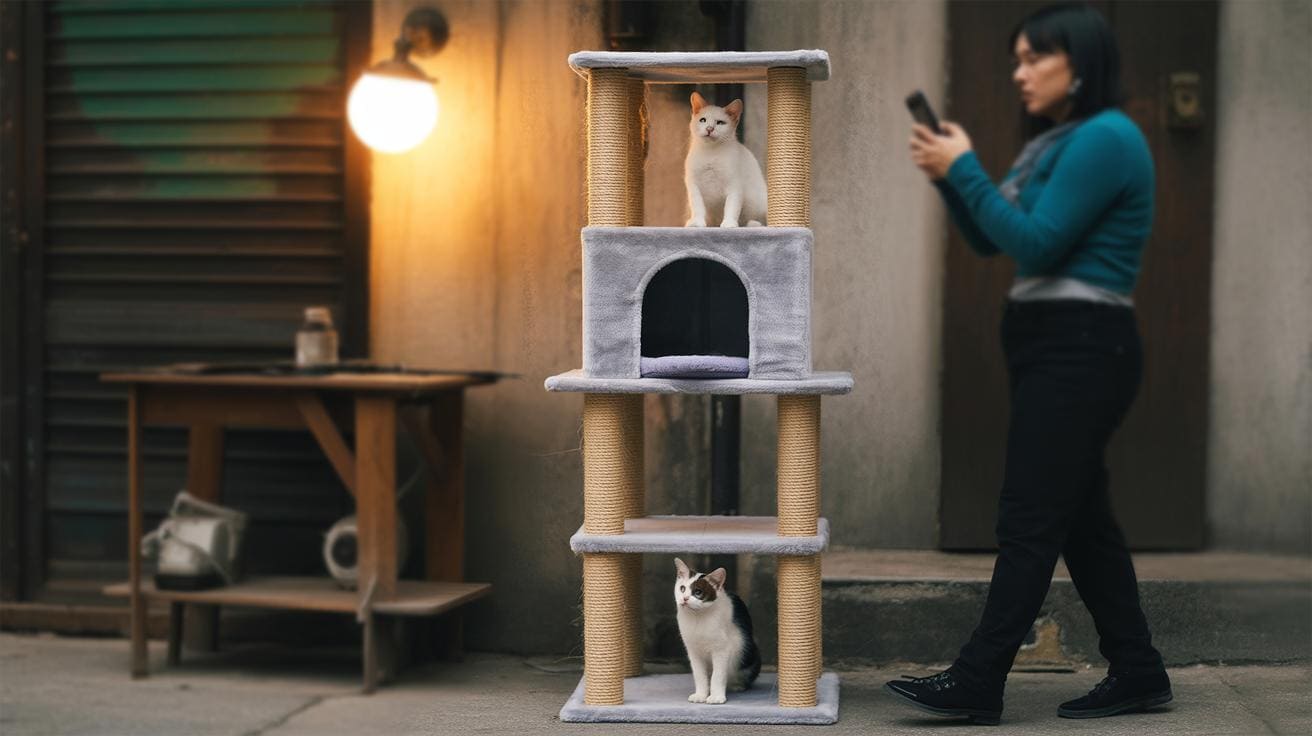
I chose these towers by footprint, stack height, what the core is made of, and whether they suit more than one cat. I pictured kitties weaving between perches and tested for stability, comfort, and real-life wear. Ever watched a cat decide a shelf is a trampoline? Yeah, I kept that in mind.
Budget picks (affordable small cat towers under $100- $150):
- AmazonBasics Cat Activity Tree , about 3 ft tall, narrow footprint, simple perches. Pro: super wallet-friendly starter. Con: particleboard (cheap wood bits glued together) is lighter and won’t last like sturdier cores.
- Go Pet Club 62-Inch Cat Tree , 62 in tall with a slim base and hammocks to nap in. Pro: lots of levels for the price, so your cat gets vertical fun. Con: thinner posts may wear out faster and need replacing.
- KBS Multi-Tier Cat Tree with Scratching Posts , mid-height and compact with multiple platforms. Pro: scratching surfaces are replaceable, which is nice. Con: basic cushions that flatten sooner than premium foam.
Mid-range picks (best balance of style and durability):
- Vesper V-High Base , tall but streamlined, with memory-foam (dense sleep foam that molds a little) cushions on the beds. Pro: classy laminate finish and comfy spots for naps. Con: pricier than the very basic trees.
- KBSPETS Multi-Tier Tree , compact footprint with modular platforms and condos you can rearrange. Pro: flexible layout is great for tiny rooms. Con: the wood finish isn’t as fancy as some modern pieces.
- SpryInterior Cat Tree Tower , slim corner-friendly design with reinforced posts for extra strength. Pro: perfect for multi-cat small homes where everyone needs a zone. Con: higher cost for the build quality, but you get sturdiness.
Premium compact cat trees (premium compact cat trees and best narrow cat trees):
- KBSPETS Wooden Modern Cat Tree , designer vibe with solid plywood (real layered wood) core and a cozy condo. Pro: upscale materials and great stability. Con: it costs more, but it looks like furniture.
- Frond Design Studios Trestle Tree , elegant materials and thoughtful engineering make it blend with home decor. Pro: it’s furniture-grade and quiet to the eye. Con: luxury price tag.
- Frisco 72-Inch Cat Tree , very tall with a broad base so multiple cats can patrol the heights. Pro: a lot of vertical territory for zoomies and naps. Con: needs a corner or a strong spot so it stays steady.
Pick taller, slim towers when floor space is tiny and your cats are young or agile jumpers , they’ll love the vertical routes. Pick shorter, wider models when you have big cats, seniors, or want lower-step access that’s easier on hips and knees. Worth every paw-print.