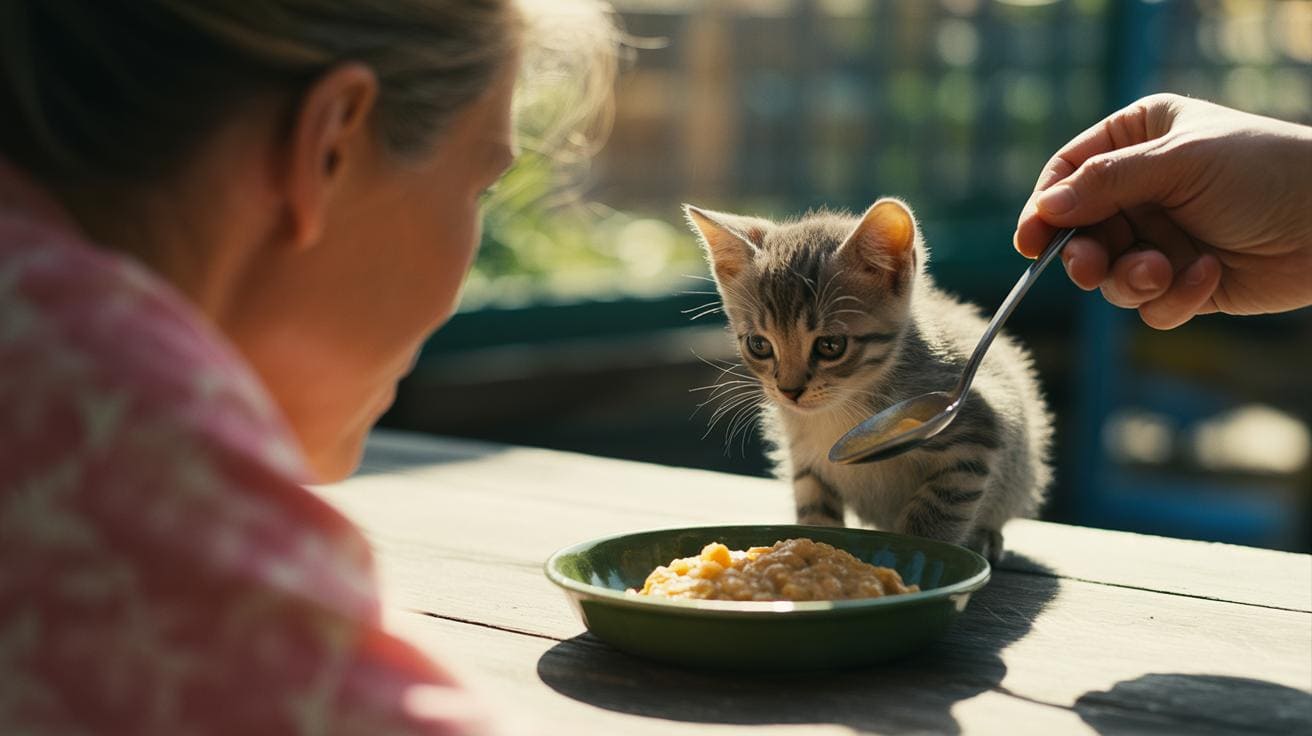
Ever been handed a newborn kitten and told to give it regular milk? That’s a quick way to make things worse. Tiny tummies can’t handle cow’s milk and they can get sick fast. Ever watched a kitten shiver in your hands? It’s awful.
First things first. Warm the kitten so its body temperature comes up. Call a vet right away. And get kitten milk replacer (KMR, a balanced commercial formula made specifically for kittens).
Don’t give regular cow’s milk. Really. Don’t. Oops, worth saying twice.
We’ll walk you through safe warming methods, the single last-resort evaporated milk recipe (canned evaporated milk diluted to a kitten-friendly strength), and exactly how much to feed in the critical first 24 hours so you can help without causing harm and know when to seek emergency care. You’ll feel more confident. Worth every paw-print.
Emergency Quick Action (first 24 hours)
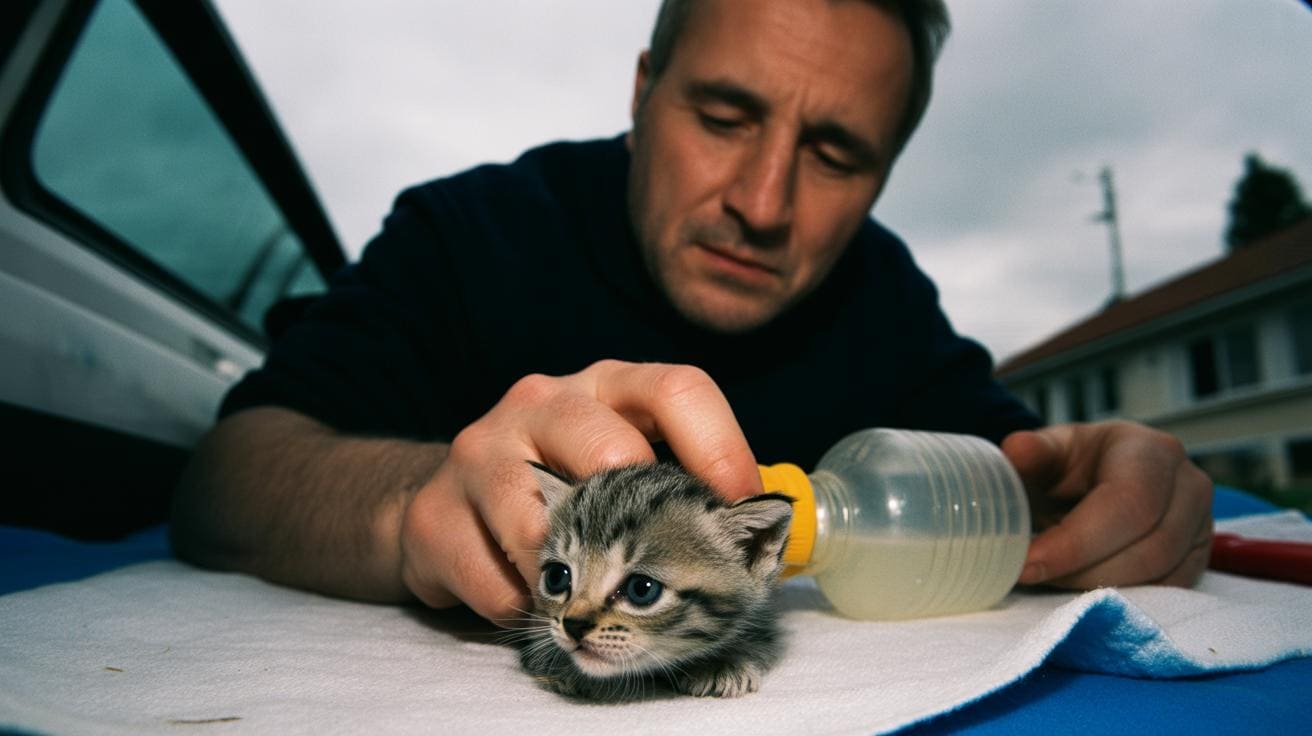
Do not feed a cold kitten. Warm the kitten first with warm towels, a warm water bottle wrapped in a cloth, or close body contact until the skin feels warm to the touch. Newborns can't control their body temperature, so warming comes before any feeding.
Call a veterinarian or your local rescue right away for triage and transport options. Try to get commercial kitten milk replacer (KMR) (kitten milk replacer, a balanced commercial formula) as soon as you can. If KMR isn't available, use the single, explicitly worded evaporated milk emergency recipe only as a last-resort (see detailed section).
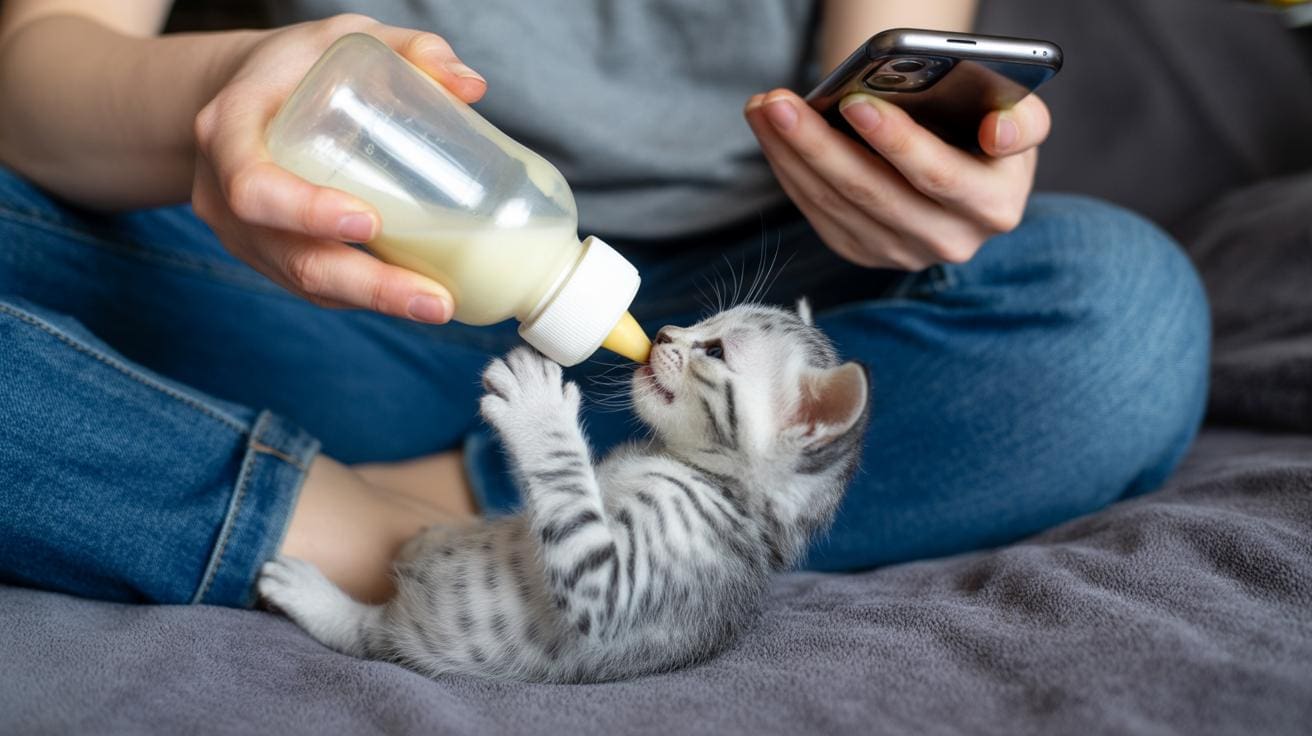
For the first feeding use a small syringe or a kitten bottle and be conservative. For kittens 0-10 days old, give about 3 to 4 cc (ml) every 2 hours. Watch every swallow. If the kitten coughs, gags, chokes, or seems to inhale milk, stop feeding and get help right away.
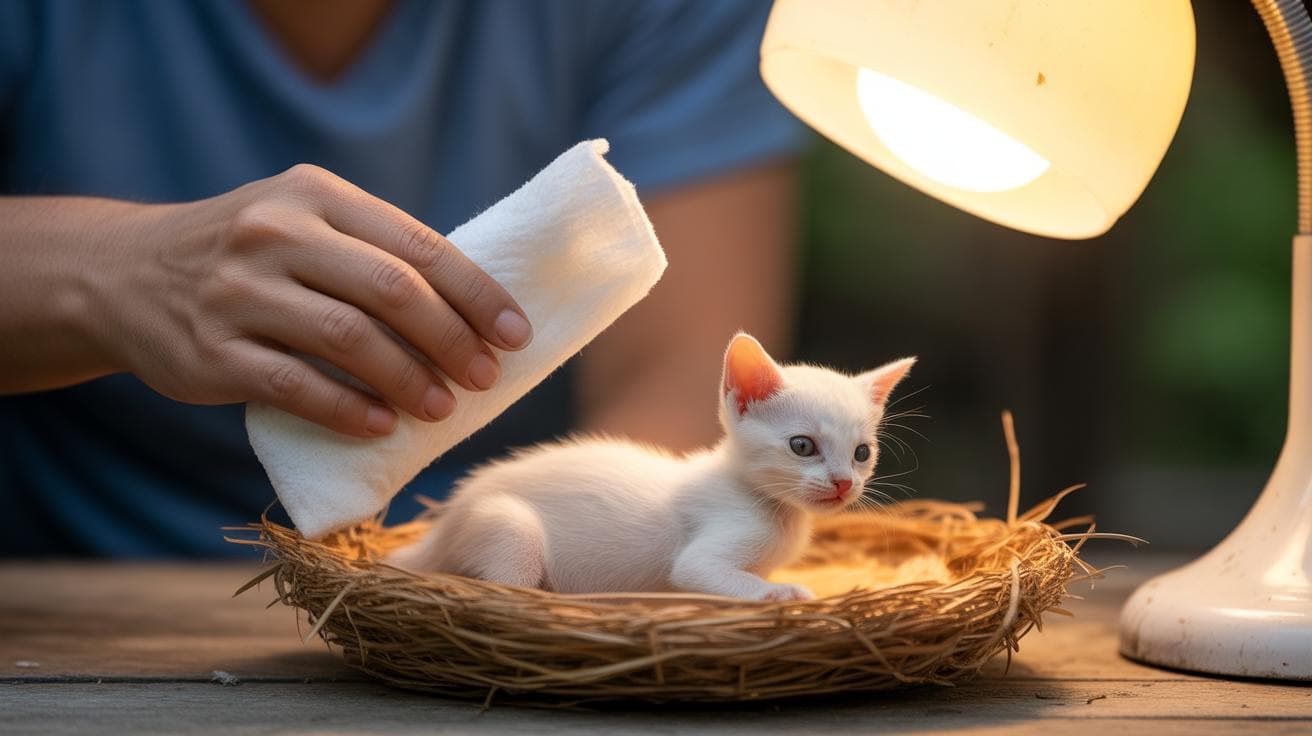
After each feed burp the kitten and gently stimulate elimination with a warm, moist cloth (like mom would with her tongue). Begin hourly weight checks during the first 24 hours: log the time, amount given, and weight to build a baseline. This helps you spot trouble early. Ever watched a tiny tail twitch after a good feed? Small joys.
Go to emergency care now for any urgent signs: an unresponsive or very weak kitten, skin that stays cool even after warming, severe breathing difficulty, repeated aspiration (milk going into the airway), or inability to swallow.
- Confirm the kitten is warm to the touch; if it's cold, warm it with safe methods and do not feed while cold.
- Call a vet or local rescue for immediate advice and transport options.
- Locate KMR (kitten milk replacer); if you can't get it, use the single, clearly written evaporated milk emergency recipe (see detailed section) as a last resort.
- Administer the first feed by syringe or bottle using a conservative volume and frequency (0-10 days: about 3-4 cc every 2 hours); watch swallowing closely and stop at any coughing or choking.
- Burp the kitten and stimulate elimination after each feeding using a warm, moist cloth.
- Weigh and log the kitten hourly during the first 24 hours: record time, volume given, and weight to create a baseline.
- Get emergency care now for any of the urgent signs listed above.
| Age/Condition | Frequency | Typical volume per feeding (cc/ml) | Feeds per day |
|---|---|---|---|
| 0-10 days | every ~2 hours | 3-4 cc (ml) | ~12 feeds/day |
See detailed sections below for full formula choices, preparation and warming tips, bottle vs syringe vs tube feeding techniques, a complete feeding chart, hygiene steps, and troubleshooting.
What to Feed a Newborn Kitten Without a Mother
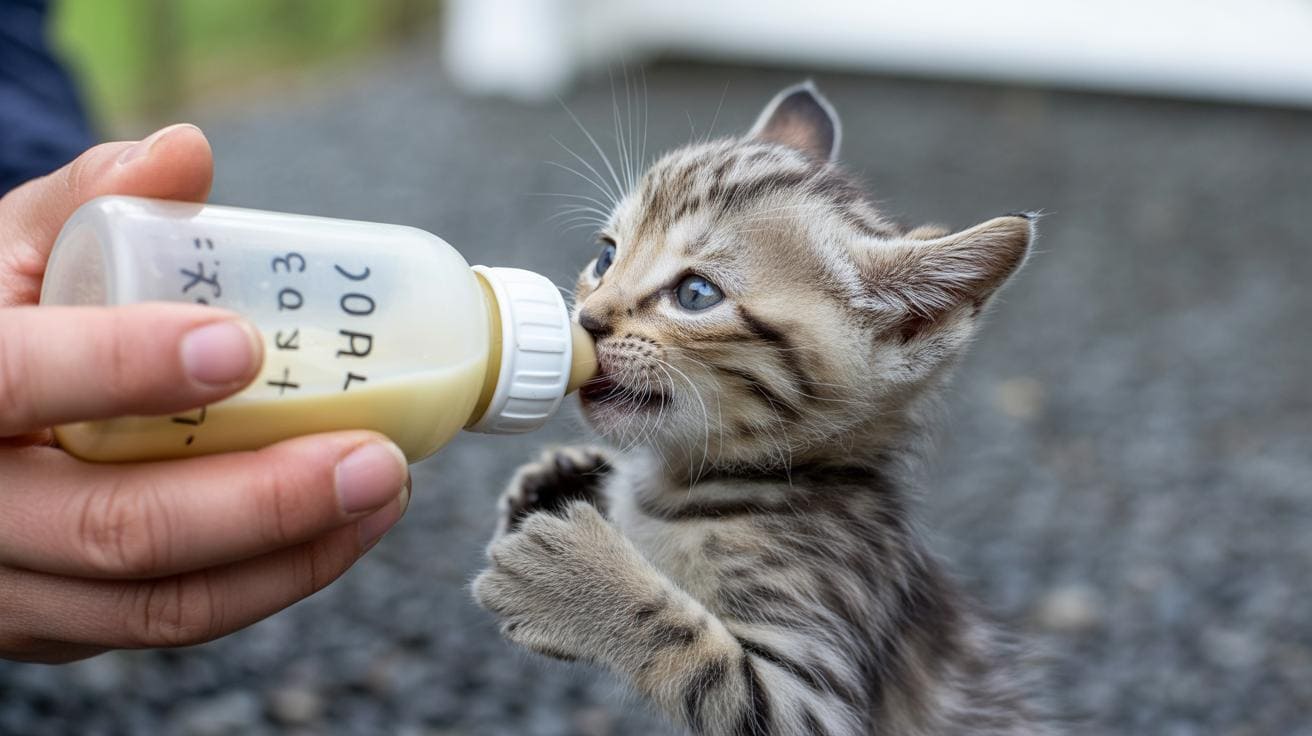
The best choice is a commercial kitten milk replacer like KMR (kitten milk replacer – a vet-formulated milk substitute made to match a mother cat's milk). These products are designed to give tiny bodies the right balance of nutrients without the tummy trouble that cow’s milk can cause. Powdered formulas (dry powder you mix with warm water) are light to store and let you mix small batches. Ready-to-use liquids (pre-mixed, grab-and-feed) are lifesavers at 3 a.m., but they take more space and usually cost more.
If you can’t get a proper replacer right away, there’s a single evaporated milk – based emergency mix mentioned later; use that only as a last resort and call your vet fast. Cow’s milk is not a good long-term substitute – it often causes diarrhea and poor nutrition. Goat milk raises safety questions, so only use it with your vet’s OK.
Follow the formula label for dosing by weight and age. Kittens usually stop when they’re full, so watch for slow lapping or relaxed paws as signs they’re done. Warm the formula to lukewarm before offering it – not hot. Make small batches so leftovers don’t sit around. Ever watched a kitten lap for the first time? Cute, messy, and their whiskers get all sticky, so have wipes nearby.
Quick care tips: feed with a proper kitten nursing bottle or syringe, keep the kitten on its belly while feeding (not on its back), and burp gently if it seems gassy. If you can’t source formula locally, call nearby shelters, veterinarians, or pet stores for same-day help.
Do/don’t
- Do use a commercial kitten milk replacer (KMR or equivalent).
- Do follow the package dosing by weight and age.
- Do keep a powdered mix and a ready-to-use bottle on hand if possible.
- Don’t give cow’s milk as routine food for kittens.
- Don’t use homemade mixes except the single emergency evaporated milk recipe, and only short-term.
- Don’t offer goat milk without a vet’s OK.
Recommended on-shelf brands
- PetAg KMR
- Royal Canin Babycat Milk
- Tomlyn Nutritional Milk Replacer
If you don’t have formula now, locate some fast or contact local shelters or a veterinarian for immediate help. Worth every paw-print.
Preparing and warming powdered kitten formula safely for a newborn kitten without a mother
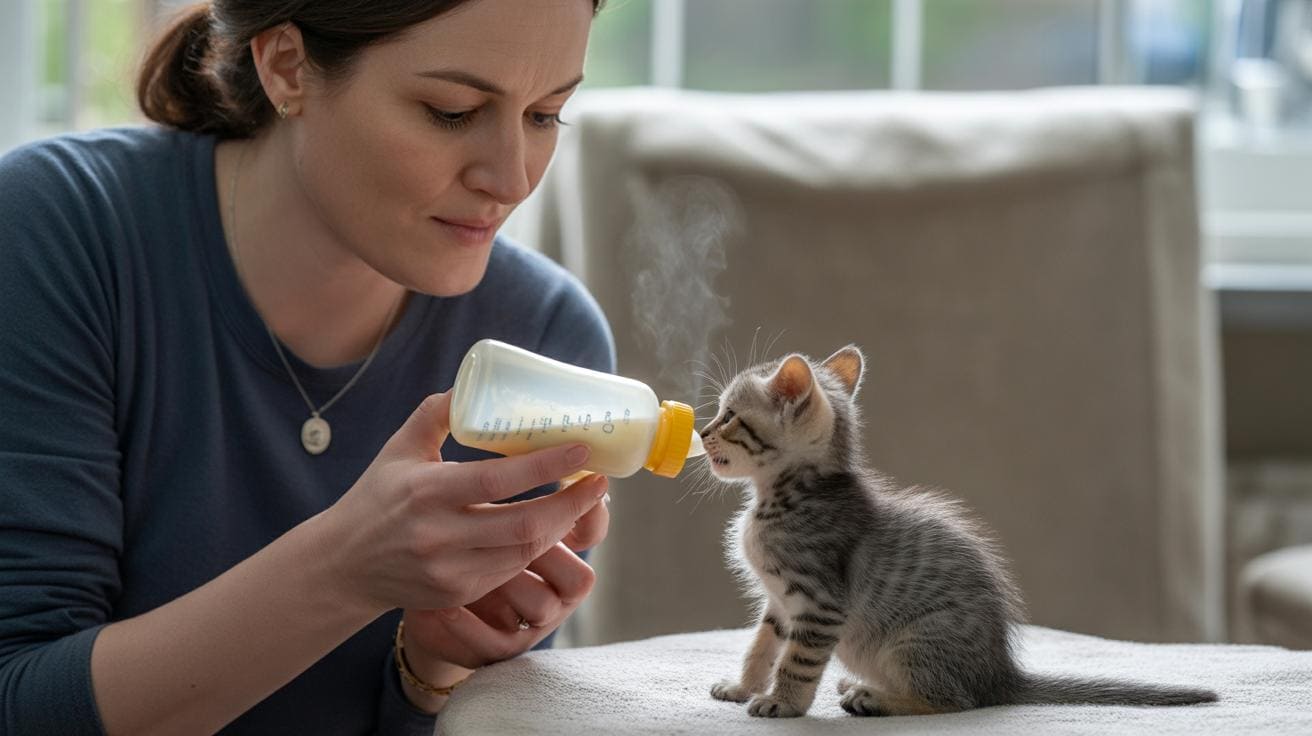
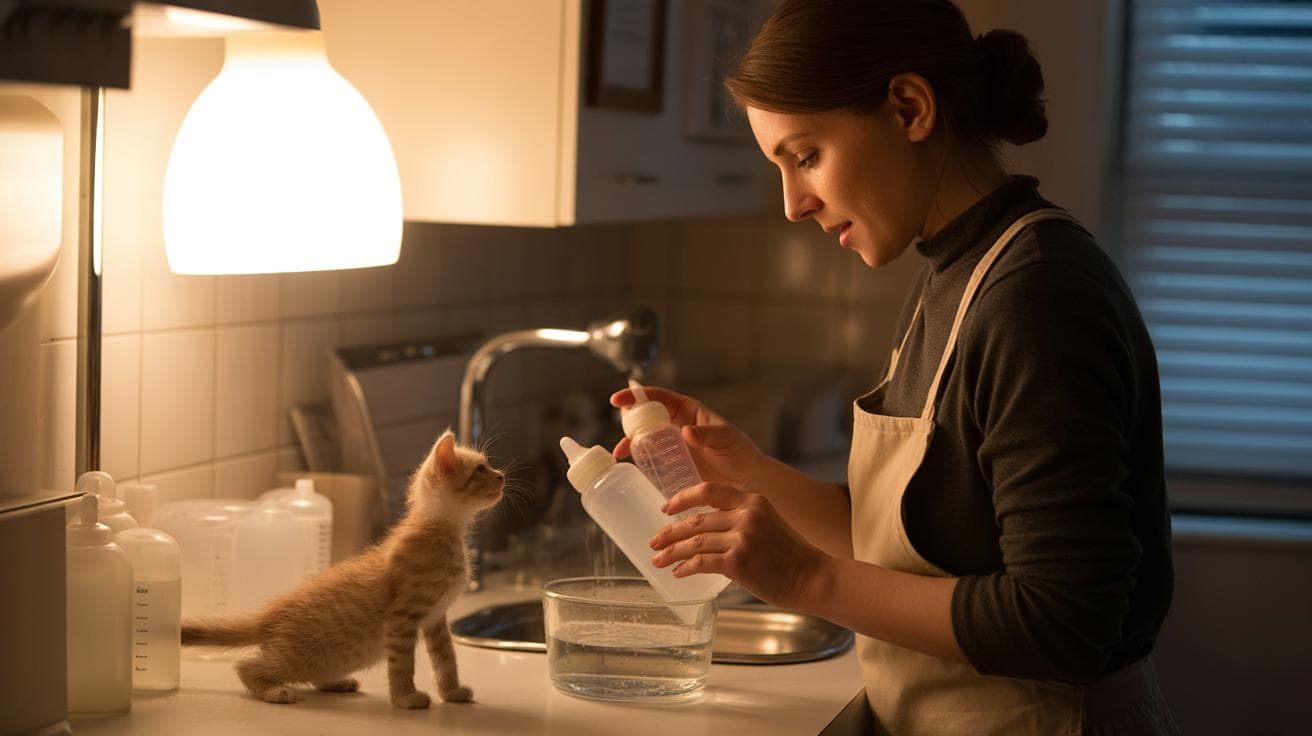
First things first: wash your hands and clean your gear. Powdered formula (a dry, balanced kitten milk mix) must be measured and mixed exactly the way the package says so the kitten gets the right nutrients. Use a clean bottle or syringe (a small plunger device) and only make as much as you need for the next feeding. Saves waste. Saves stress.
Warm the mixed formula in a warm water bath, not the microwave. Put the sealed bottle in a cup or bowl of warm water and swirl gently until it feels lukewarm. Never give cold formula; chilled milk can upset a tiny belly and drop body temperature. Test a drop on the inside of your wrist , it should feel warm and comfortable, not hot. Think skin temperature. Ever watched a kitten tuck into warm milk and sigh? That’s the purr-fect sign.
If you’re using bottle nipples, check the flow before you start. If the formula trickles too slowly, gently widen the hole with a sterilized pin (sterilized means germ-free; heat or boil the pin first). Make tiny increases only. Don’t cut the whole tip off , that makes the flow too fast and can cause choking.
Handle leftovers the way the label tells you. If the label allows refrigeration, chill the bottle right away and use within the time the maker recommends. If not, toss it. And remember: warm only what you’ll use for the next feeding. Saves trouble. Worth every paw-print.
Numbered preparation checklist
- Wash hands and clean or sterilize bottles, nipples, and mixing tools.
- Measure powdered formula exactly per package directions.
- Warm the sealed bottle in warm water; never microwave.
- Test a drop on your inner wrist , it should be lukewarm, not hot.
- If needed, enlarge the nipple hole with a sterilized pin; do tiny changes only.
- Refrigerate or discard leftovers following the formula label’s instructions.
| Test site | Desired result |
|---|---|
| Inside of your wrist | Feels warm and comfortable, not hot; like your skin temperature |
How to bottle feed a newborn kitten without a mother: positioning, nipple choice, and aspiration prevention
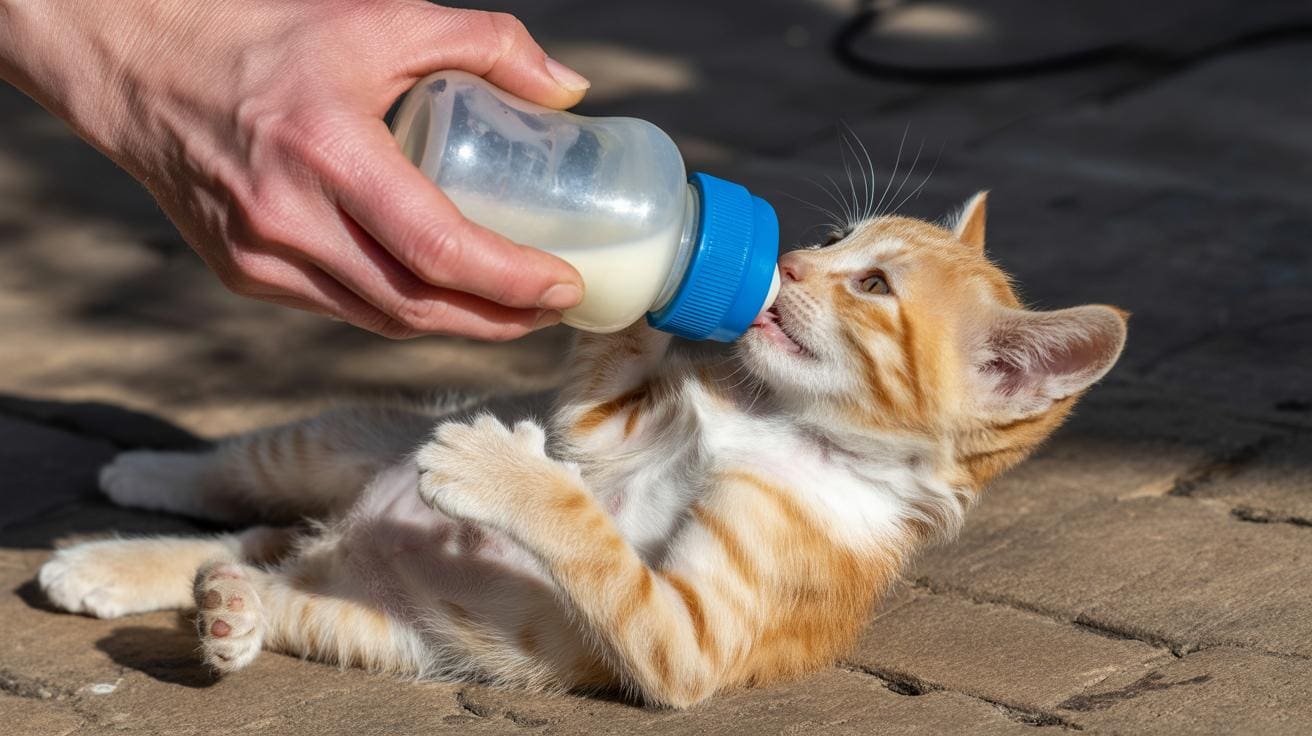
Safety first. Slow, steady milk flow and the right hold keep milk out of tiny lungs and lower the chance of aspiration pneumonia (when milk goes into the lungs and causes infection). Use kitten bottles with elongated nipples (long, narrow rubber teats that mimic a mother cat's teat) and make tiny adjustments to the flow with a sterilized pin (a pin boiled or heat-treated to kill germs). Never cut the whole tip off , that makes milk gush and can lead to choking or lung trouble.
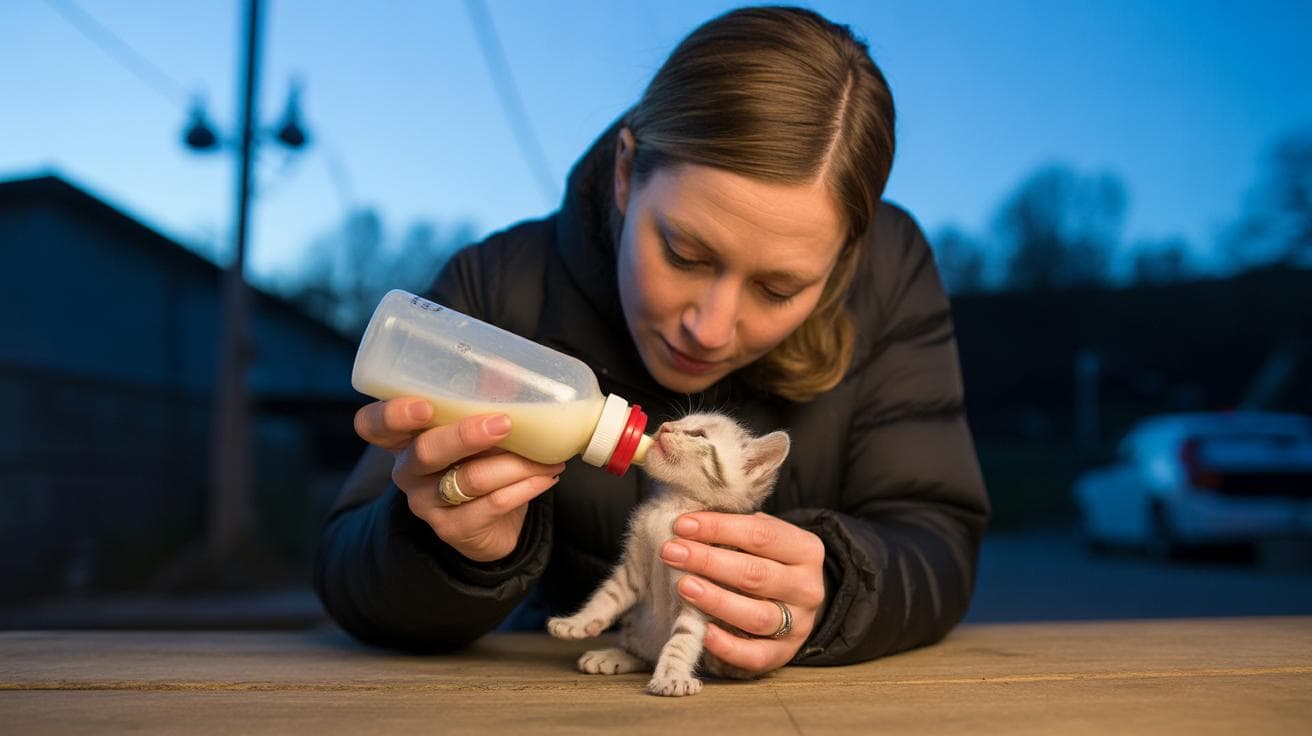
Hold the kitten belly-down, the way it would nurse from mom. Tip the bottle so milk pools at the end of the nipple but does not pour. Watch every swallow; you should see the throat move. If the kitten coughs, gags, or seems to inhale, stop and get help.
Ever watched a kitten’s whiskers twitch as milk appears at the nipple? It’s the sweetest. But pace matters. Tiny pauses let them breathe and reset their latch.
- Pick an elongated nipple size made for neonates (newborn kittens) and have spares to try.
- Test the flow by holding the bottle upright and letting a single drop fall slowly , not a stream.
- Place the kitten on its stomach, supporting head and chest; never feed a kitten on its back.
- Angle the bottle so the nipple stays partly full and the kitten must swallow gently.
- Feed at a calm, steady rhythm; pause if the kitten sputters or pulls away.
- If the latch looks poor (wide gape, no swallowing), reposition the head or try a different nipple size.
- After feeding, burp and gently stimulate elimination with a warm, soft cloth per routine.
- Clean bottles and nipples right away; dry parts fully before reassembly to prevent bacteria.
Worth every paw-print.
How to burp and clean after bottle feeding
Hold the kitten upright against your shoulder or tummy and give gentle, rhythmic pats until you feel a burp. Wipe the face and chin with a warm, damp cloth and dry thoroughly so the kitten doesn’t get chilled. Change damp bedding quickly and keep the feeding area warm and clean.
Common feeding mistakes to avoid
- Cutting the nipple tip off or making a large hole that lets milk gush.
- Feeding a kitten on its back.
- Pouring milk too fast or forcing a full syringe into the mouth.
- Skipping burping or leaving the kitten wet and chilled.
If you’re unsure, ask a vet or experienced caregiver. It’s scary at first, but with slow feeds and steady hands you’ll help that tiny fluff thrive.
What to Feed a Newborn Kitten Without a Mother
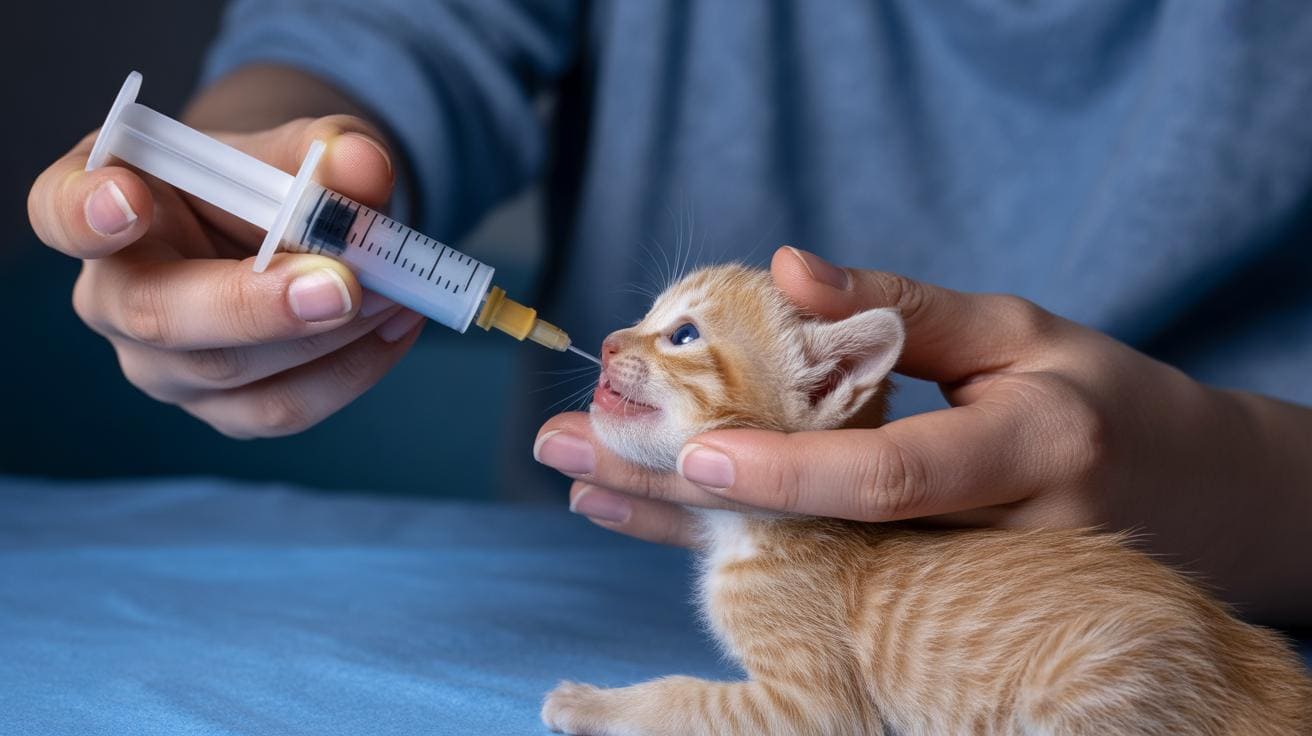
Syringe and dropper feeding work when a kitten can breathe and swallow but can’t latch. A syringe (small plastic tube with a plunger for measured liquid) or a dropper (a little rubber bulb and tube) lets you give tiny, slow drops at the side of the mouth so the kitten can swallow without gulping air. Use warmed kitten milk replacer (kitten formula that replaces mom’s milk) just like you would in a bottle, but give very small, paced amounts and watch every swallow. You’ll notice tiny gulps and maybe a sleepy face afterward.
Tube feeding, which means placing a small, flexible feeding tube into the kitten’s stomach, is a last-resort option for very weak, premature, or kittens that won’t suck. It can save lives, but it has higher risks: aspiration (milk going into the lungs), internal injury, and infection if done wrong. Get a veterinarian to teach you and watch the first few feeds; this is not a home DIY. It’s lifesaving sometimes, but higher stakes, so be careful.
Practical safety tips for syringe and dropper feeding:
- Hold the kitten on its belly, like how they nurse from mom.
- Tilt your head slightly so the milk pools at the mouth corner, then give tiny drops.
- Go slow. Pause if the kitten coughs, sputters, or seems startled.
- After feeding, burp gently and stimulate elimination with a warm, damp cloth on the belly and rear.
- If the kitten fails to swallow reliably, goes limp, or keeps aspirating, stop and get urgent vet help.
A few quick comparisons to help you choose:
- Bottle: most natural, since the kitten can nurse and suck. Needs a good latch.
- Syringe/Dropper: great for weak nursers who can still swallow. Easy to overfeed if you rush.
- Tube Feeding: gives exact volume when sucking fails. Higher risk of lung aspiration and injury, so vet supervision is required.
- When a kitten can latch, bottle feeding is usually safer. When they can’t latch but can swallow, syringe or dropper is better. When they can’t suck or are very weak, tube feeding may be the only option.
| Method | When to use | Main risk |
|---|---|---|
| Bottle | Kitten can latch and swallow | Aspiration if flow is too fast or the position is wrong (milk into the lungs) |
| Syringe/Dropper | Cannot latch but can swallow | Overfeeding or fast flow causing coughing or choking |
| Tube Feeding | Very weak, premature, or non-suckling kittens; vet-guided | Internal injury, aspiration, infection |
Emergency checklist – stop home feeds and get to a vet now if:
- The kitten chokes, coughs repeatedly, or milk sprays from the nose.
- The kitten becomes very limp, won’t wake, or is hard to rouse.
- You see signs of aspiration: wet-sounding breathing, persistent coughing, or blue gums.
- The kitten cannot suck or swallow at all despite warming and belly stimulation.
Don’t try tube feeding without veterinary training and supervised practice. Really. It can save a life, but it needs a pro to show you how.