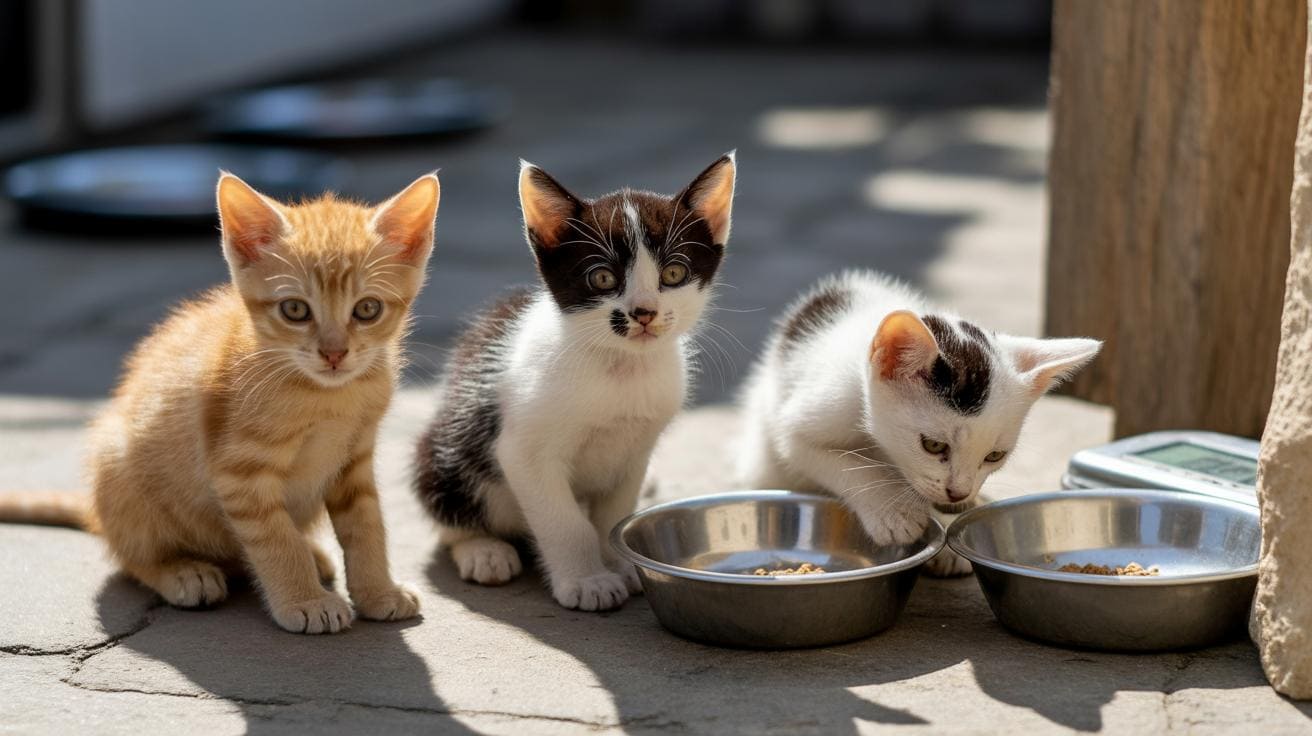
Think a 4-week-old kitten can wait for grown-up food? Nope. At four weeks they still need kitten-friendly meals and a little formula support.
This quick, waking-hours plan uses warm mixed gruel (soft, mashed kitten food blended with kitten formula) and tiny bottle top-ups (kitten-milk replacement – a commercial powdered milk made for kittens). Keep portions simple and rounded – 1 or 2 tablespoons so you can spoon-feed fast, even half-asleep.
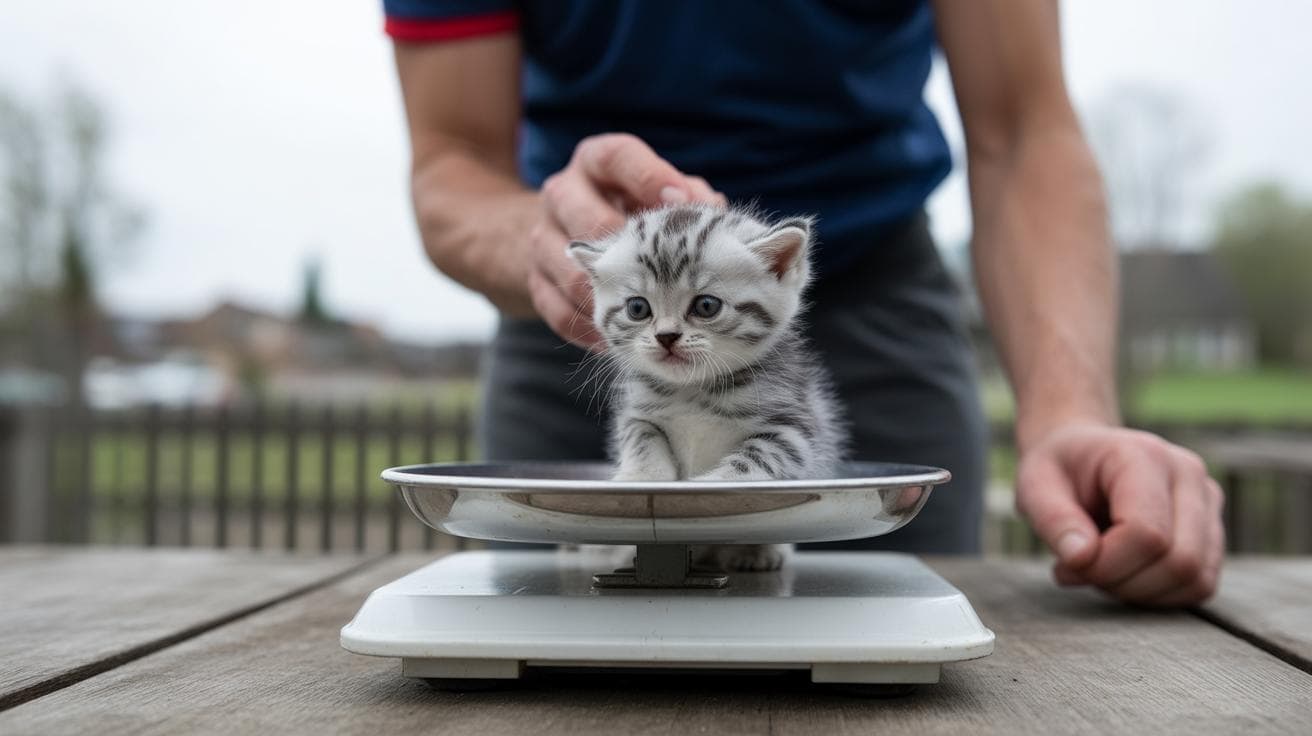
Ever watched a tiny head bob over a saucer? Pretty cute. Aim for steady weight gain of about 0.5 to 1 ounce per day. If the kitten is orphaned or underweight, do one brief overnight check and offer a small bottle feed.
You’ll find exact portions, easy recipes, and step-by-step how-to tips in the rest of this post. Worth every purr.
4-week old kitten feeding schedule
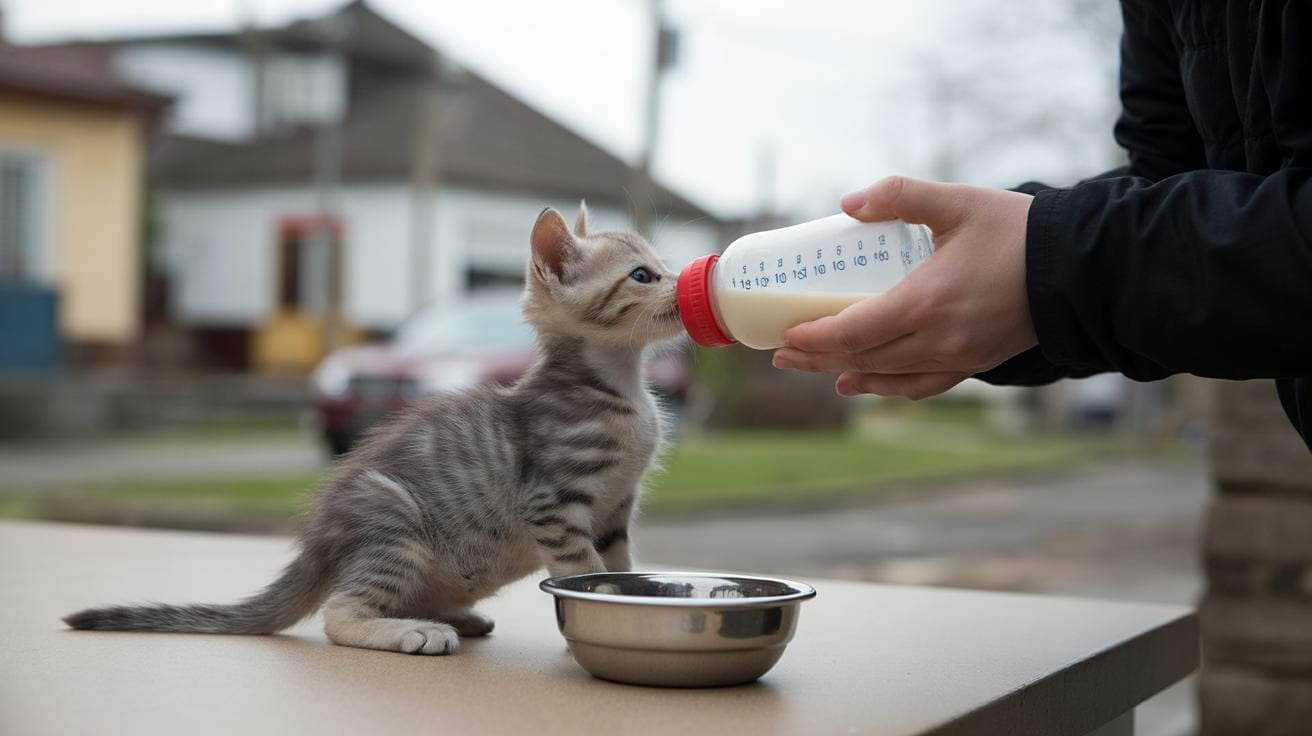
This is a simple, waking-hours plan: offer mixed gruel (soft, mashed kitten food made with formula) warmed to body temperature, plus small bottle top-ups. Aim for steady weight gain of about 0.5 to 1 ounce per day, and do one short overnight check if the kitten is orphaned or underweight. Ever watched a tiny head bob over a saucer? Pretty cute, and useful too.
Keep portions easy to grab when you're half asleep. Round to single numbers like 1 tbsp or 2 tbsp so you can feed fast. Gruel is the daytime star; bottle top-ups (small formula feeds from a bottle) fill the gaps and calm kittens who miss nursing. Serve gruel in a shallow dish so they lap, not suck, keep bottles warm and free of clumps, and check the Weight Monitoring and Weaning sections for exact tbsp/ml and recipes if you need precise numbers.
Night-care for fragile kittens is short and focused. If the kitten is orphaned or not gaining well, do one quick overnight check: warm the kitten, offer 1 tbsp bottle if they’re sleepy but can swallow, and stimulate elimination (gently rub the belly and genitals with a warm, damp cloth to help them pee and poop). If you see breathing trouble, refusal of two meals, or weight loss over two to three days, get urgent help. For full how-to on preparing formula, choosing nipple sizes, latch technique, and exact growth targets, see Formula Handling, Bottle Technique, and Weight Monitoring.
| Time | Feed type | Approx portion (rounded) | Notes |
|---|---|---|---|
| Morning wake | Mixed gruel + bottle top-up | 2 tbsp (30 ml) gruel + 1 tbsp (15 ml) bottle | Serve warm in a shallow dish so they lap. Gentle bottle top-up if still hungry; praise the tiny lappers. |
| Midday | Bottle feed (formula) | 1 tbsp (15 ml) | Hold belly-side down to mimic nursing, offer the nipple and watch for steady swallowing. Calm, steady strokes help. |
| Early afternoon | Saucer gruel | 1 tbsp (15 ml) | Tip very small amounts so they learn to lap. Stay close and cheer on the curiosity. |
| Late afternoon | Mixed gruel + bottle top-up | 2 tbsp (30 ml) gruel + 1 tbsp (15 ml) bottle | Keep the texture smooth and clump-free. Offer the bottle if they lose interest in the saucer. |
| Early evening | Saucer gruel | 1 tbsp (15 ml) | Let the kitten explore the saucer; gentle lapping is the goal. Little paws in the dish are normal, um, adorable. |
| Late evening | Bottle feed | 1 tbsp (15 ml) | Hold calmly and clean the face after feeding to prevent crusty residue. A soft wipe goes a long way. |
| Overnight check (if orphan/underweight) | Small bottle top-up | 1 tbsp (15 ml) | Quick warmth and breathing check, offer 1 tbsp if they’ll swallow, and stimulate elimination if needed (warm, gentle rubbing). |
| Morning weigh-in | Weigh then feed if low | 1 tbsp (15 ml) if needed | Log the weight daily; target about +0.5 to +1 ounce per day. If not gaining, consult Weight Monitoring steps. |
Week‑by‑week weaning plan (days 1–7 starter + weeks 5–8 overview)
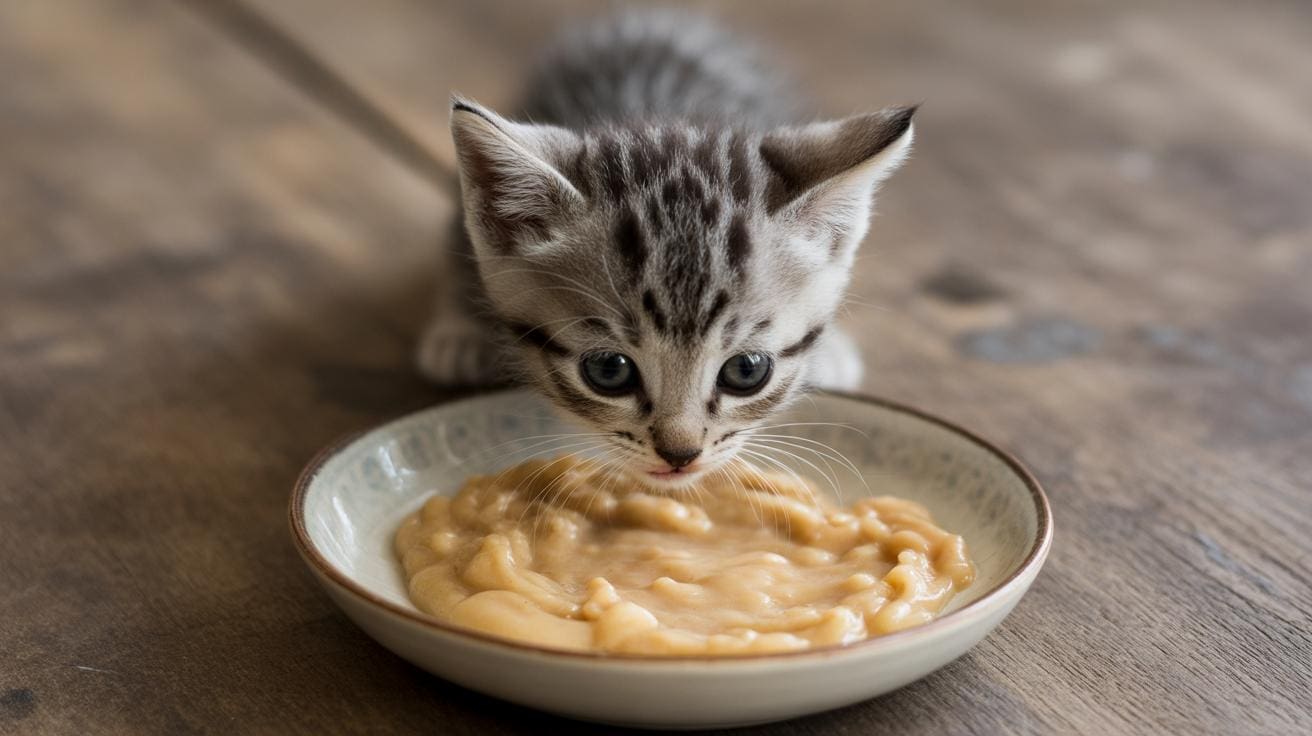
Start slow and follow your kitten’s cues. Offer a daytime gruel made from the week‑4 recipe (1/4 cup wet kitten food + 1/2 cup kitten formula + 1 tbsp warm water, blended smooth and served at body temperature) while keeping regular bottle top‑ups. Move on to thicker textures only when the kitten licks, laps, and swallows steadily. Think of it like baby steps: tiny saucer tries now, fewer bottles later.
-
Day 1 , thin gruel introduction
Make: 1/4 cup canned wet kitten food (60 ml) + 1/2 cup kitten formula (120 ml) + 1 tbsp warm water (15 ml). Kitten formula means commercial powdered kitten milk replacer (a milk substitute made for kittens). Blend until smooth, warm to about body temperature (about 100°F / 38°C) and serve in a shallow dish so they can lap easily. Offer the gruel twice a day and keep giving bottle feeds between saucer attempts. Put tiny drops on the rim so they learn to lap. Move forward when they lick confidently and keep the food down. -
Day 2 , repeat thin gruel
Same recipe and two saucer sessions today, with bottle support. Tip a drop toward their whiskers to encourage lapping, cute and effective. Keep going if they start nosing more of the saucer. -
Day 3 , thicken slightly
Change to: 1/4 cup wet (60 ml) + 1/3 cup formula (80 ml) + 1 tbsp warm water (15 ml). Offer gruel 2–3 times a day and leave it out a few minutes so they can explore the texture. If they lap eagerly and don’t just suck at the dish, you’re ready to advance. -
Day 4 , thicker texture
Make: 1/4 cup wet (60 ml) + 1/4 cup formula (60 ml) + 1 tbsp warm water (15 ml). Do saucer sessions three times daily and slowly reduce bottle top‑ups as they eat more gruel. Advance when they lap steadily and show interest between meals. -
Day 5 , prep for chunks
Use the same thicker mix as Day 4, but stir in tiny soft bits while keeping most of it smooth. Offer three times a day and watch for chewing attempts. Ready to move on when they try to chew the soft pieces or push them around with their tongue. -
Day 6 , soft pieces added
Make: 1/4 cup wet (60 ml) + 1/4 cup formula (60 ml) + 1 tbsp water (15 ml) + 1 tsp soft chunks (5 ml). Serve in a shallow dish three times daily, encouraging lapping and gentle biting. Move forward when they chew and swallow without coughing or gagging. -
Day 7 , chunky gruel practice
Same mix but with slightly larger soft pieces (about 1–2 tsp total). Offer 3–4 saucer meals a day and keep bottles as short top‑ups only. If chewing and lapping are consistent, start shifting toward mostly saucer feeds. Worth every paw‑print.
Weeks 5–8 overview
By week 6 aim for about four gruel meals a day. Then in weeks 7–8 move to three firmer meals daily, steadily cutting bottle reliance as lapping and chewing become reliable. For busy days, toss a short saucer session before you head out, ten minutes of play and practice gives you peace of mind. Ever watched a kitten figure out food? It’s the best.
Formula handling and KMR mixing (mixing ratios, temperature targets, storage)
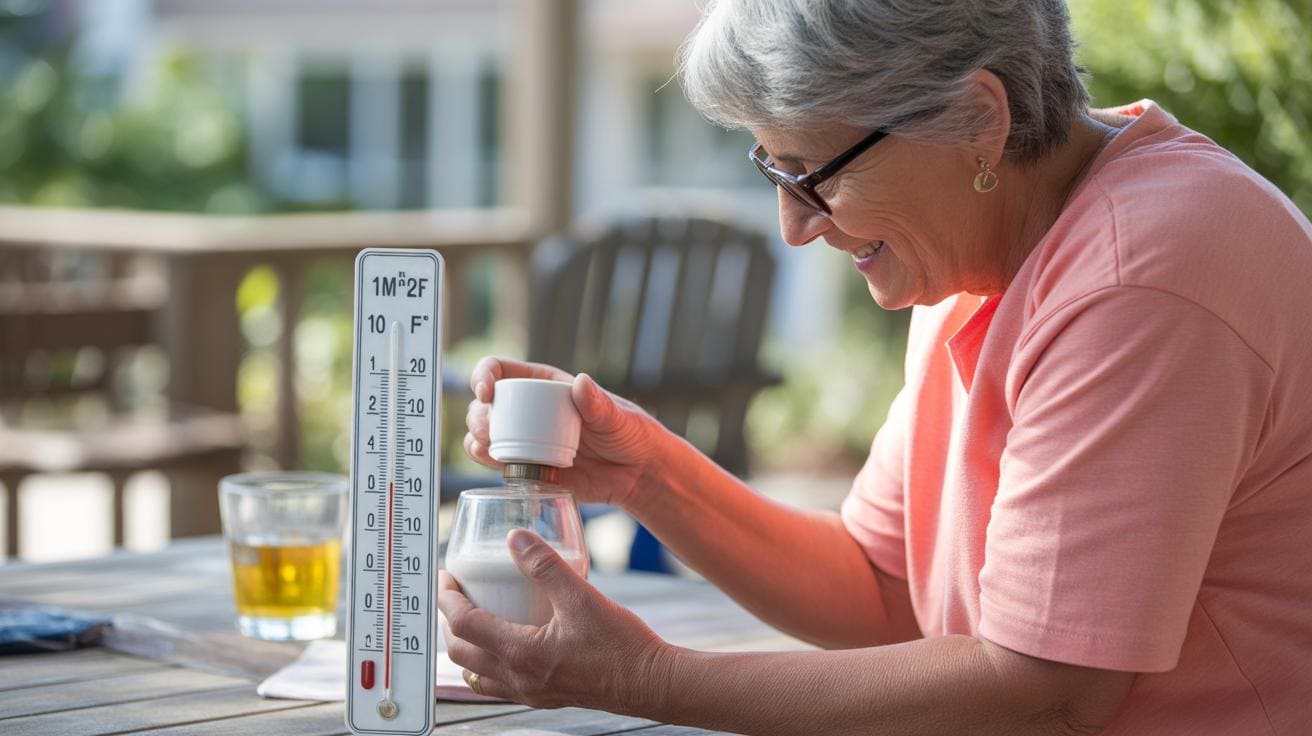
Pick a commercial kitten formula and follow the directions on the can. KMR (kitten milk replacer) is the right kind of formula for kittens , not cow’s milk, human baby formula, or dairy alternatives; those can give kittens terrible tummy trouble. Keep opened cans or cartons in the fridge the way the maker says and only prepare fresh, clump-free portions right before feeding for the healthiest digestion.
Read the label first and match the brand’s mixing ratio. A common example is 1 level scoop of powder to 2 fl oz (60 ml) water, but brands vary, so double-check your container. Stir or shake until fully dissolved and test the flow through the nipple (bottle tip) so it drops steadily before you let your kitten latch on.
Warm prepared formula to about 100 to 102°F (about 38 to 39°C) so it feels like the inside of your wrist. If it’s too cool, pop the sealed bottle into a warm water bath and test again; if it’s too hot, cool it quickly under running cold water. Never heat bottle formula in a microwave , microwaves can create hot spots that burn tiny mouths.
If the mix clumps, strain it with a fine mesh strainer (like a small kitchen sieve) or just remake that portion so it’s smooth. Store prepared formula in the fridge and follow the manufacturer’s time limit , many recommend using it within 24 hours , and toss any leftovers after that. Wash bottles, nipples, and prep tools with hot, soapy water and sanitize regularly so you don’t invite bacteria to snack on your kitten.
Want tips on nipple hole cutting, flow testing, or preventing aspiration? See the Bottle Technique and Troubleshooting sections. Ever watched a kitten figure out a bottle for the first time? It’s the cutest thing , and worth making sure every step is safe.
Bottle technique, syringe feeding options, and introducing the shallow dish
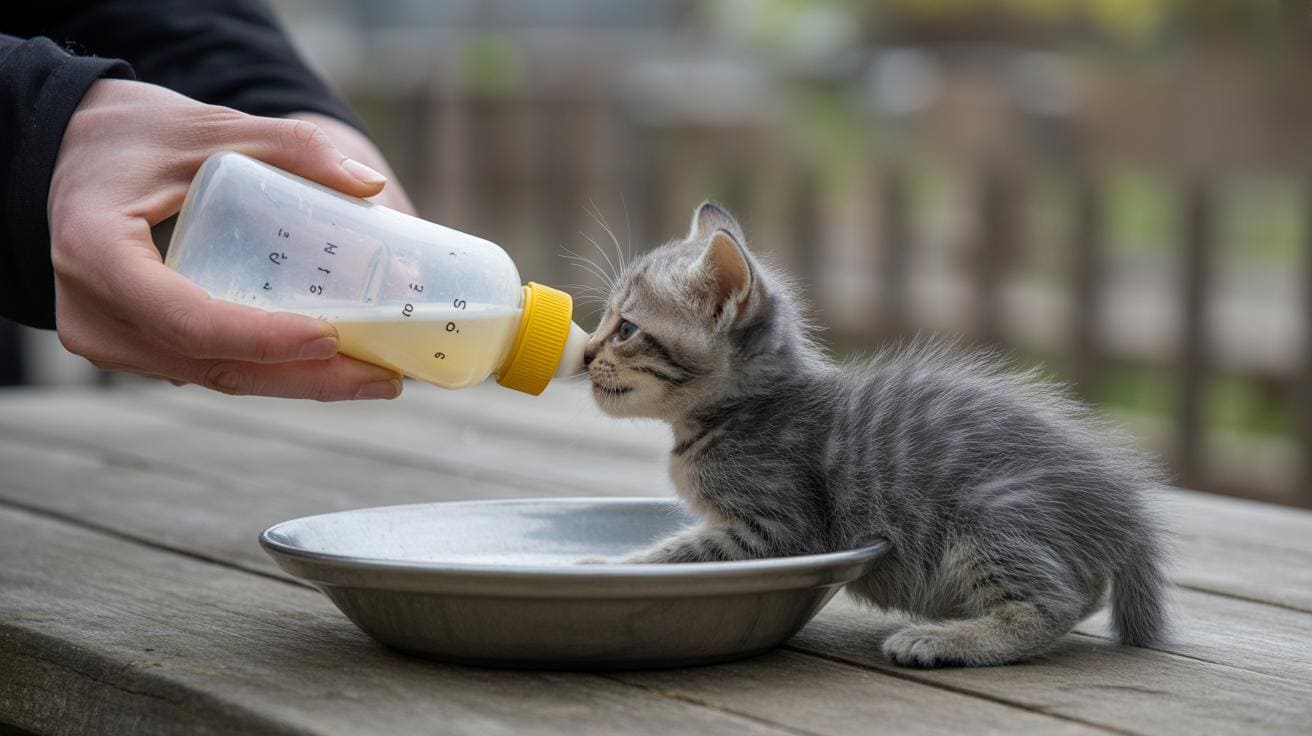
Ever watched a kitten figure out nursing? Hold the kitten belly-down in a natural nursing position, belly against your forearm like mom would hold them, and steady the head with your non-dominant hand. Offer the nipple (rubber teat) at the lip crease and let the kitten latch and swallow at its own pace; don’t squeeze formula (kitten milk replacer) into the mouth or force the flow. Look for a steady swallow rhythm and little jaw pulses you can feel, those mean they’re doing it right. If the kitten coughs, stops breathing, or the lungs sound wet, stop and get help fast, because that can be aspiration (liquid getting into the lungs).
Syringe feeding can be a handy backup when the bottle flow is hard to manage or the kitten won’t latch. Use a blunt, needleless syringe (a small plastic tool that gives tiny measured amounts) and work very slowly, a drop or two at a time. Keep the kitten upright enough to swallow. Rapid pushes increase the risk of aspiration, so take your time. For when to try syringe feeding and what warning signs to watch for, see Troubleshooting for flow problems and aspiration signs.
Nipple prep really matters. Cut the hole so formula drips slowly when the bottle is inverted and always test the flow before offering it; too fast and the kitten may aspirate, too slow and they’ll get tired and give up. If a kitten fusses at the bottle, try a different nipple shape or a slightly larger hole and re-test the flow until it feels right. For detailed step-by-step nipple cutting, flow-rate tricks, and emergency aspiration responses, check Bottle Technique and Troubleshooting.
When it’s time to teach lapping, bring out a shallow dish and serve warm, slightly thinned gruel (a porridge-like mix of formula). Tip tiny amounts toward their whiskers so they discover how to lap rather than suck. Keep saucers very shallow and stay close so you can guide them and praise each little lick. After any feeding, wipe the face clean with a warm, damp cloth to prevent crusty residue. For tips on helping with elimination (stimulating urination and defecation when needed), see Orphaned Kittens.
Worth every paw-print.