The best cat toys are not just the toys a cat attacks first. They are the toys that fit the way your cat hunts, bites, carries, kicks, and rests after play. For a gentle cat, that might be a feather wand and a crinkle ball. For a rough player, it usually means sturdier fabric, fewer dangling parts, bigger chew-safe shapes, and a clear rule: some toys are for supervised play only.
If your cat shreds ordinary toys, shop by play style before you shop by trend. Match wand toys to chasers, kicker toys to grab-and-bite cats, puzzle toys to food-motivated cats, and tough plush or fabric toys to cats that like to carry prey around the house. Then inspect the toy often. No cat toy is truly indestructible, and the safest setup is a rotation that gives your cat variety without leaving risky strings, feathers, bells, or loose stuffing available overnight.
Start With the Way Your Cat Hunts
Cats play in pieces of the hunting sequence: stalk, chase, pounce, grab, bite, bunny-kick, carry, and sometimes eat. A toy works better when it gives your cat one of those outlets without putting your hands, household cords, or fragile objects in the middle of the game.
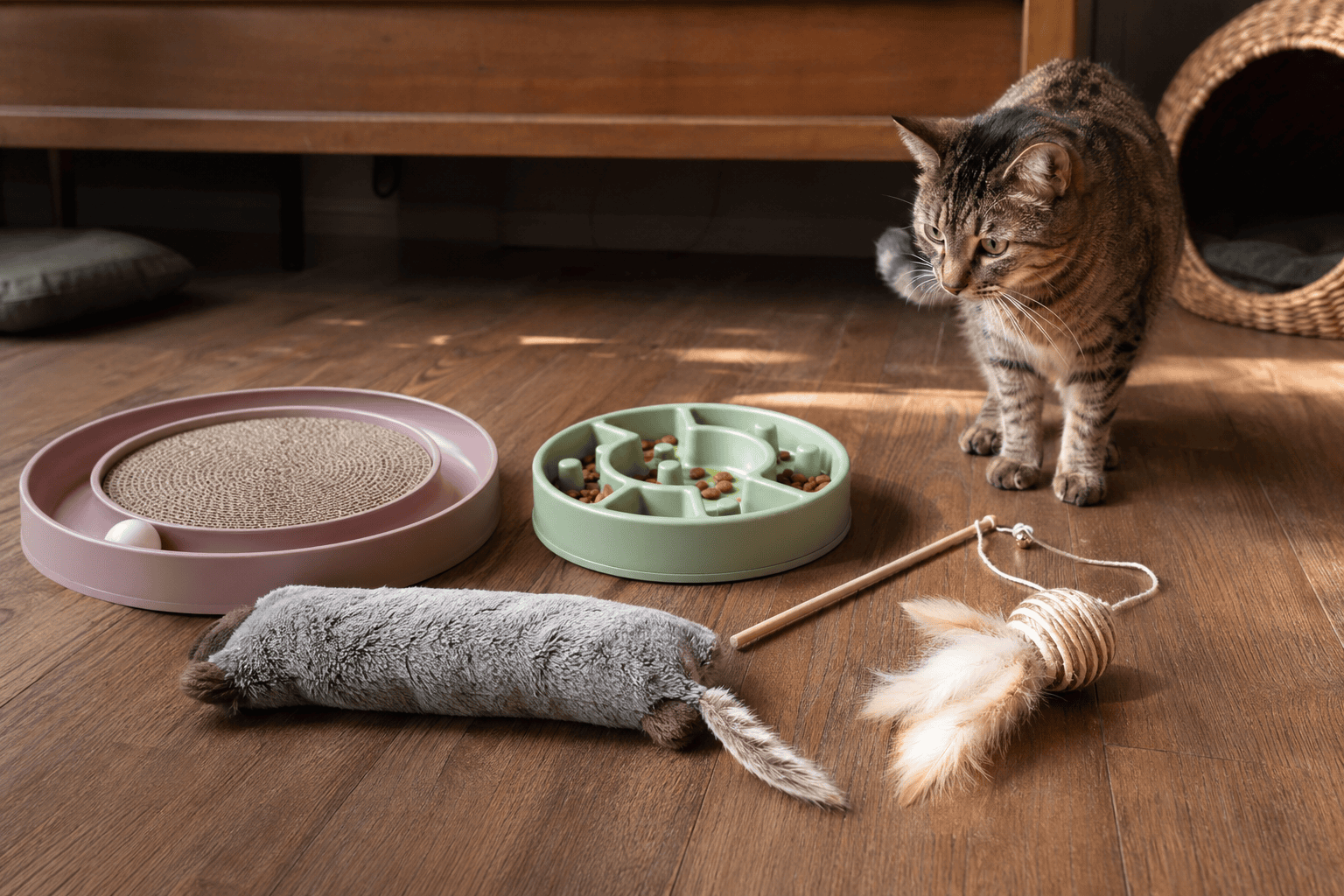
For chasers, use wand toys, track balls, springs, rolling toys, or battery-operated toys that move unpredictably. For pouncers, try tunnels, crinkle mats, paper bags with handles removed, and toys hidden partly under a blanket. For biters and kickers, choose a long kicker toy or sturdy plush that is large enough to grip with the front paws and kick with the back legs. For problem solvers, use puzzle feeders and treat hunts that make dinner feel more like foraging.
The mistake many owners make is buying one popular toy and expecting it to solve boredom. A cat that ignores a plush mouse may still love a wand that moves like a bird. A cat that destroys a feather teaser may be asking for a tougher kicker, not more delicate feathers.
The Main Types of Cat Toys and When to Use Them
Wand and teaser toys are best for exercise, bonding, and redirecting play away from hands and ankles. They should usually be put away after the session because strings, cords, feathers, and small attachments can become chewing or swallowing hazards.
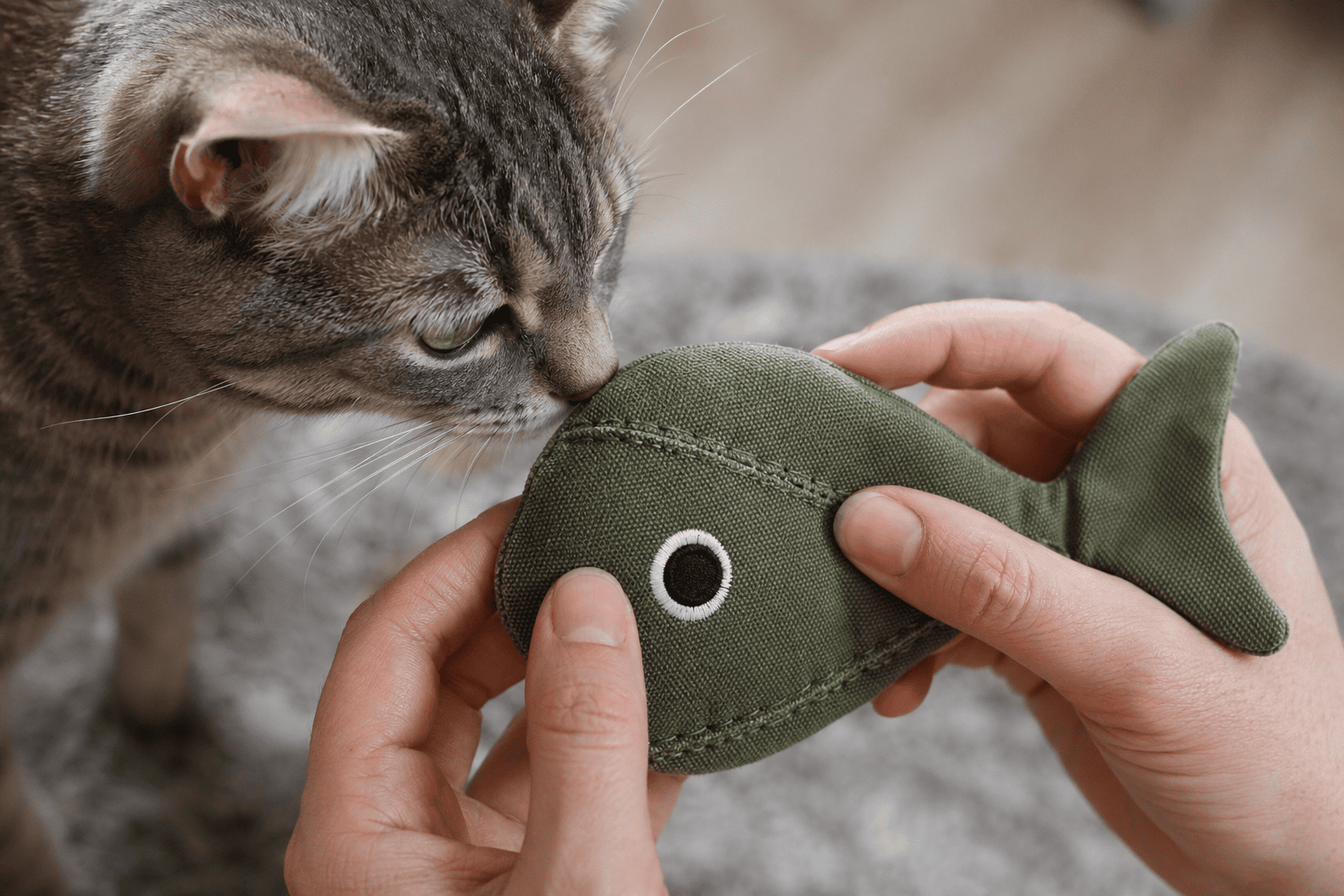
Kicker toys are useful for cats that latch on and rake with their back feet. Look for dense fabric, reinforced stitching, a shape that is too large to swallow, and minimal decorative pieces. A good kicker lets a strong cat wrestle without tearing into tiny parts immediately.
Chase toys such as balls, springs, and track toys give cats quick movement. For unsupervised use, favor toys that are too large to swallow, cannot splinter, and do not have detachable bells, pom-poms, or glued-on parts.
Puzzle toys and food dispensers help indoor cats work for part of their meal. These are especially useful for cats that get bored between human play sessions. Start easy so the puzzle feels solvable, then make it harder once your cat understands the game.
Electronic toys can be helpful when you are busy, but they need extra checking. Inspect battery compartments, charging ports, wheels, tails, and removable lures. Any battery-powered toy should have a secure compartment and should be removed if the case cracks or the battery area loosens.
What Makes a Cat Toy More Durable
Durability starts with construction, not marketing language. Look for tight stitching, smooth seams, layered or heavier fabric, and a body shape that spreads bite pressure instead of concentrating it on a thin tail or glued-on decoration. If a toy has a lure, feather bundle, bell, ribbon, or plastic eye, assume that part will be the first failure point.
For cats that chew aggressively, simple designs are often safer. A plain fabric kicker can outlast a cute toy covered in trim. A ball track can be safer for solo play than a loose ball that disappears under furniture and gets chewed later. A cardboard box can be better enrichment than a flimsy novelty toy, as long as staples, tape, handles, and loose plastic labels are removed.
Do not use the word durable as permission to leave a toy out forever. Use it as a reason to expect more play sessions before replacement, while still checking seams and parts after rough use.