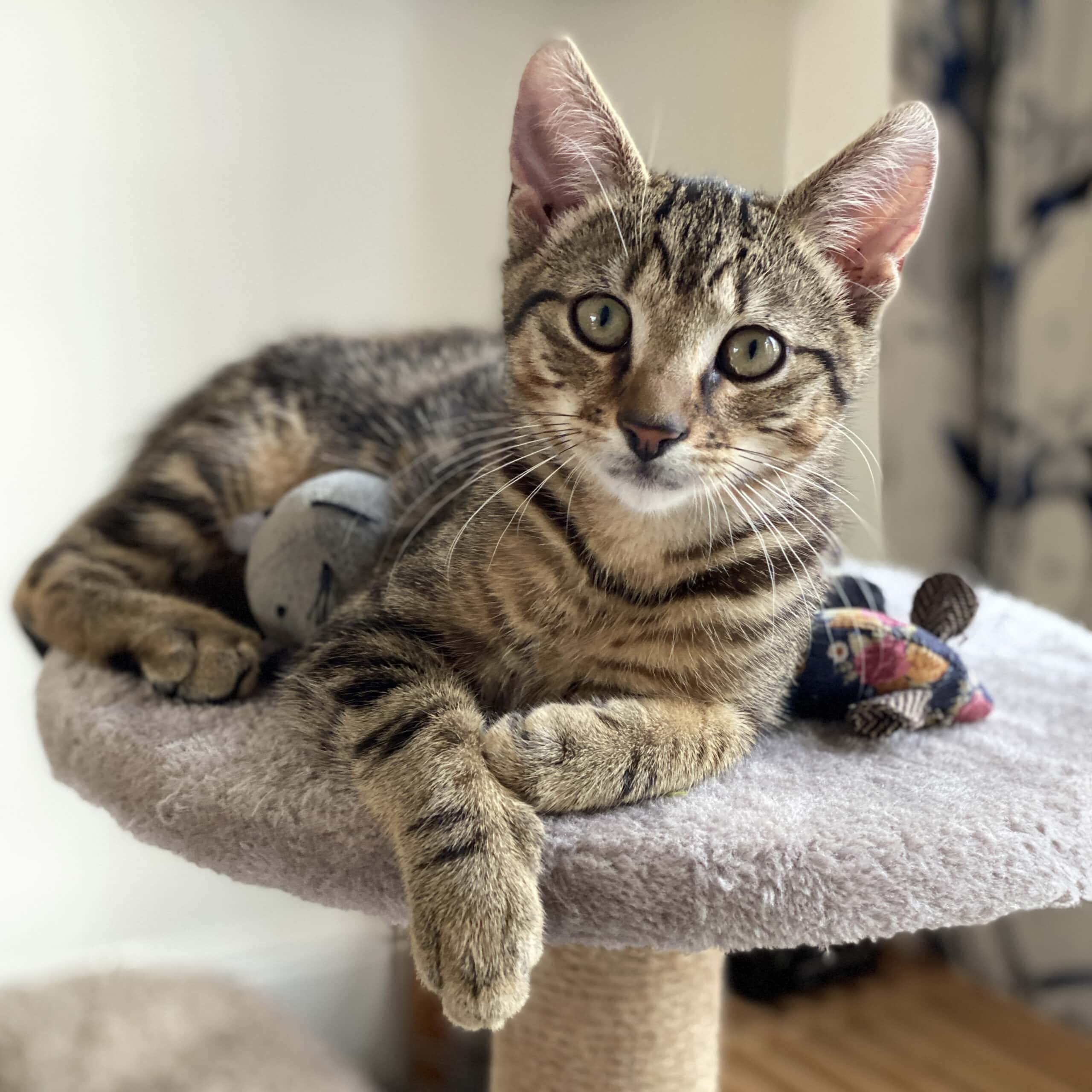
Cat toys for boredom work best when they give your cat a job: stalk, chase, pounce, bite, rake, solve a small problem, scratch, sniff, or watch from a safe perch. The goal is not to buy one magic toy that keeps a cat busy forever. The goal is to build a small rotation that matches how your cat actually plays.
For bored indoor cats, start with five toy roles: a chase toy, a capture toy, a puzzle or food toy, a scratch-and-stretch station, and a solo toy your cat can safely use without you holding it. If your cat destroys ordinary toys, add a stricter safety habit: supervise strings and fragile lures, inspect seams after hard play, and retire toys before loose parts become swallowing hazards.
What boredom looks like in cats
Boredom is not always a cat staring sadly at an empty room. It can look like nighttime pacing, repeated meowing, ankle attacks, furniture scratching, over-focused chewing, food begging soon after meals, or a cat who seems restless but ignores the same old toy pile. Medical problems can cause some of these signs too, so sudden changes, overgrooming, appetite changes, pain, or aggression should be discussed with a veterinarian.
The Cornell Feline Health Center describes toys as a way to encourage exercise and cognitive enrichment by letting cats stalk, pounce, and problem solve. That is the lens to use when shopping: ask what natural behavior the toy supports, not just whether it looks cute.
The five toy roles that fight boredom
Most bored cats do not need a bigger toy bin. They need more variety in the type of play available. Use this simple mix before buying another duplicate mouse.
- Chase toy: A wand, rolling ball, moving mouse, or lure that gets your cat tracking motion and sprinting in short bursts.
- Capture toy: A kicker, tough plush, rope toy, or rugged fabric toy your cat can grab, bite, and bunny-kick after the chase.
- Puzzle or food toy: A treat ball, sliding puzzle, snuffle mat, lick mat, or DIY feeder that makes part of a meal take effort.
- Scratch-and-stretch station: A vertical post, horizontal scratcher, cardboard pad, sisal surface, or sturdy cat tree near the play zone.
- Solo boredom toy: A track toy, safe ball, tunnel, box setup, or timed electronic toy that can hold attention when you are busy.
This mix matters because one toy rarely satisfies the whole hunting sequence. A wand creates motion but may be unsafe if left out. A kicker gives the satisfying catch but does not create much chase by itself. A puzzle feeder works the brain but does not replace running, climbing, or wrestling. Boredom drops when the routine covers more than one need.
Match the toy to the boredom problem
Before buying, identify the main problem you are trying to solve. A bored cat who wakes you at 4 a.m. may need a different setup than a cat who shreds soft toys in three minutes.
- Night zoomies: Use two short evening chase sessions, then end with a capture toy or small measured food puzzle.
- Ankle attacks: Use distance toys such as wands and rolling toys. Do not wrestle with hands or feet.
- Fast food begging: Move part of the meal into a beginner puzzle feeder or treat ball instead of adding extra snacks.
- Furniture scratching: Add scratchers where the cat already stretches or scratches, then pair that area with play.
- Toy destruction: Use tougher capture toys, avoid glued-on parts, and inspect seams, tags, bells, feathers, and elastic after play.
- Low interest in toys: Slow the movement down, hide the lure behind furniture, try dusk or dawn play, and rotate toys out of sight.
For cats that play hard, Titan Claws’ guide to cat toys that last is useful because it focuses on failure points, material choices, and supervised rough play instead of treating durability as a vague marketing claim.
Best toy types for bored indoor cats
The best cat toys for boredom are usually categories, not single products. Choose one or two from the list below and test them in short sessions before building a bigger rotation.
- Wand toys: Best for cats who need exercise, stalking, and owner-led play. Put string, ribbon, elastic, and feather lures away after use.
- Kicker toys: Best for wrestlers and rough players who need a safe catch after chasing. Look for strong seams, dense fabric, and a size your cat cannot swallow.
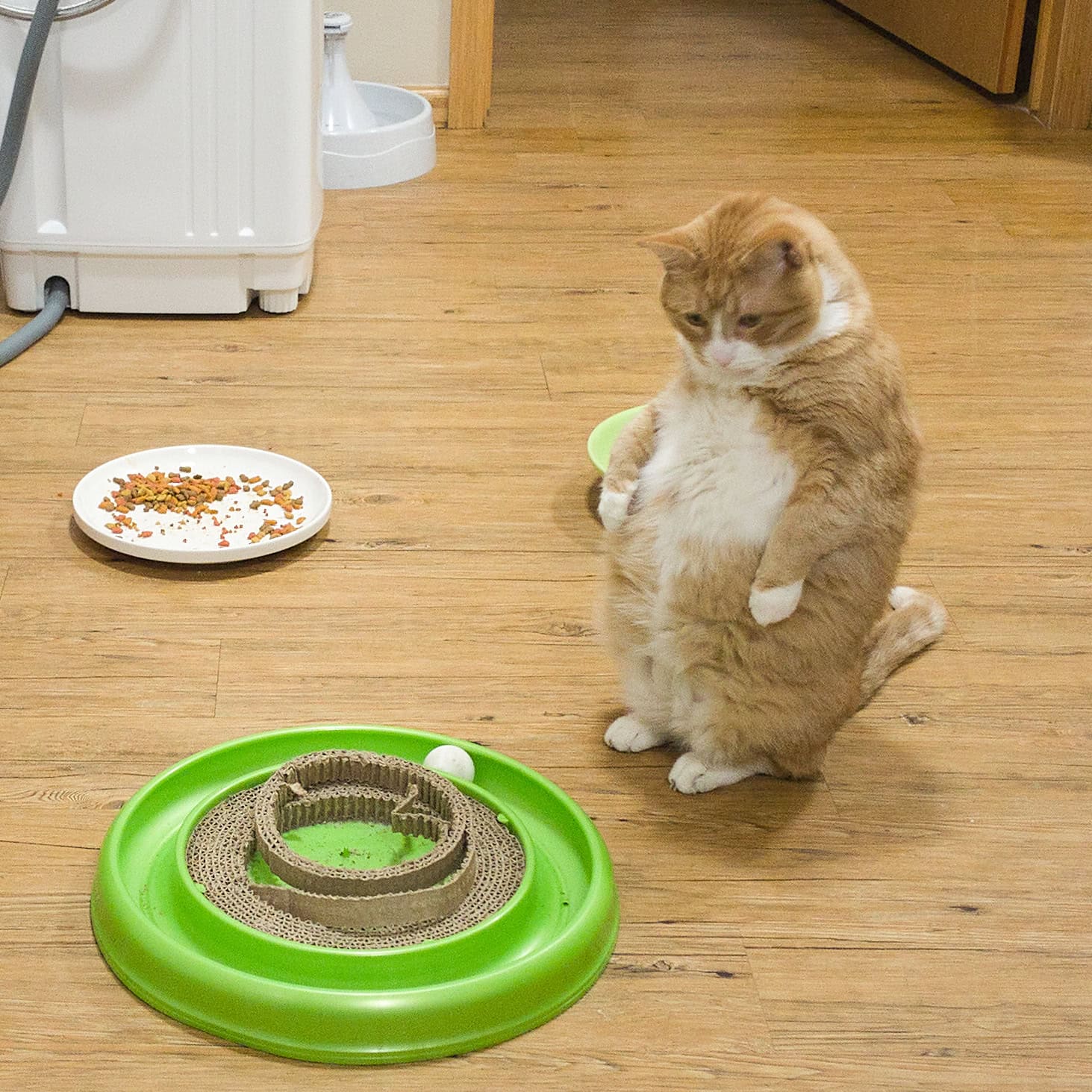
- Track toys: Best for solo batting and quick bursts. They work well for cats who like predictable movement and repeated paw taps.
- Puzzle feeders: Best for food-motivated cats, indoor cats with stale routines, and cats that need mental work without overexcitement.
- Electronic moving toys: Best as short novelty sessions, especially for cats left alone during part of the day. Choose rechargeable, enclosed designs and inspect charging ports, seams, and moving parts.
- Tunnels and boxes: Best for stalkers, shy cats, and ambush play. They make ordinary wand movement more interesting because the toy can disappear and reappear.
- Scratchers: Best for cats who need claw, shoulder, and scent-marking outlets. A scratcher is not a toy in the usual sense, but it is part of a boredom plan.
If your cat chews aggressively, read the Titan Claws material guide on what materials make cat toys safer and tougher. The useful takeaway is that seams, glued parts, weak attachments, and exposed cores often fail before the main fabric or plastic does.