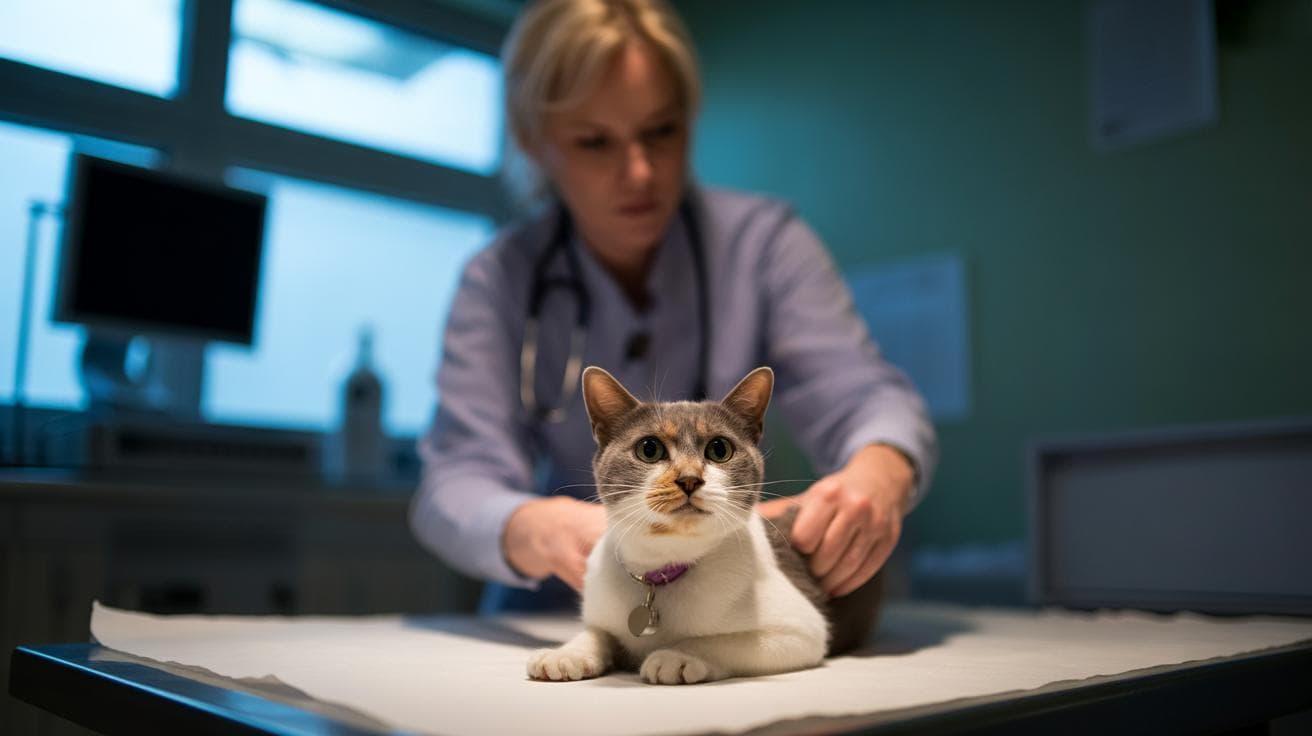
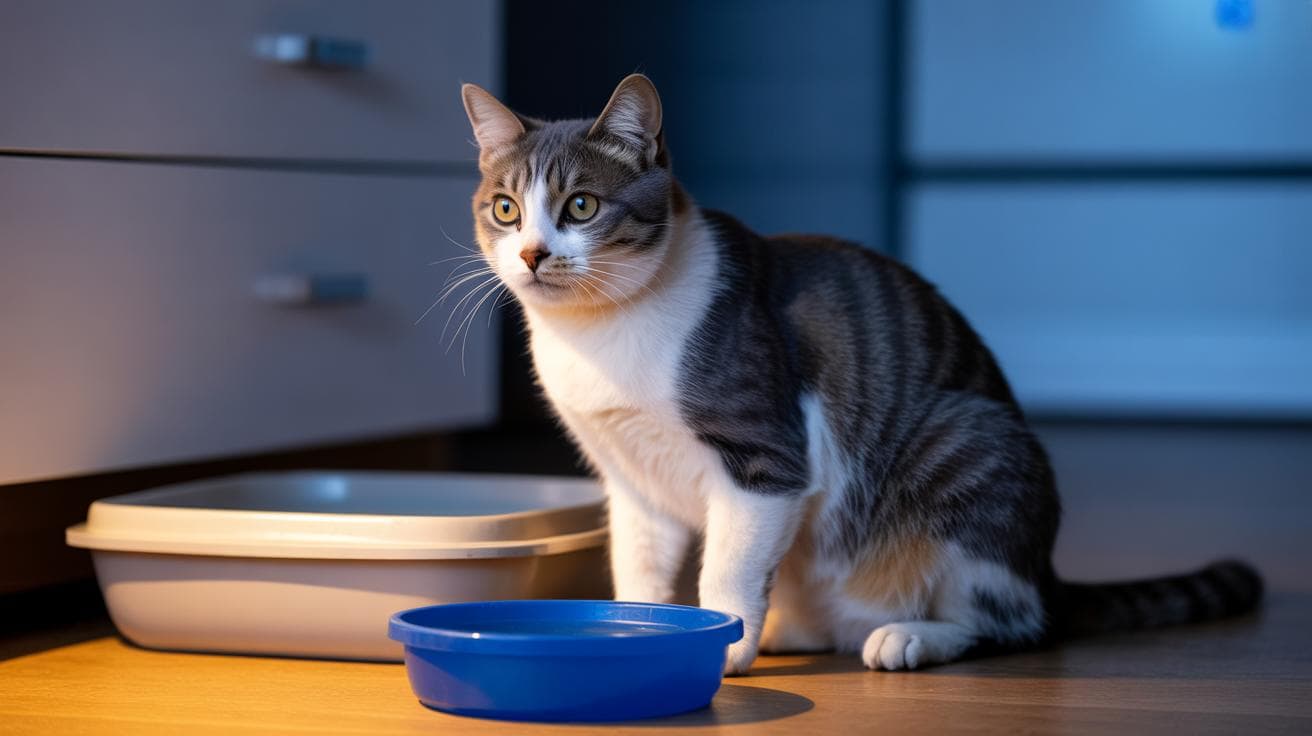
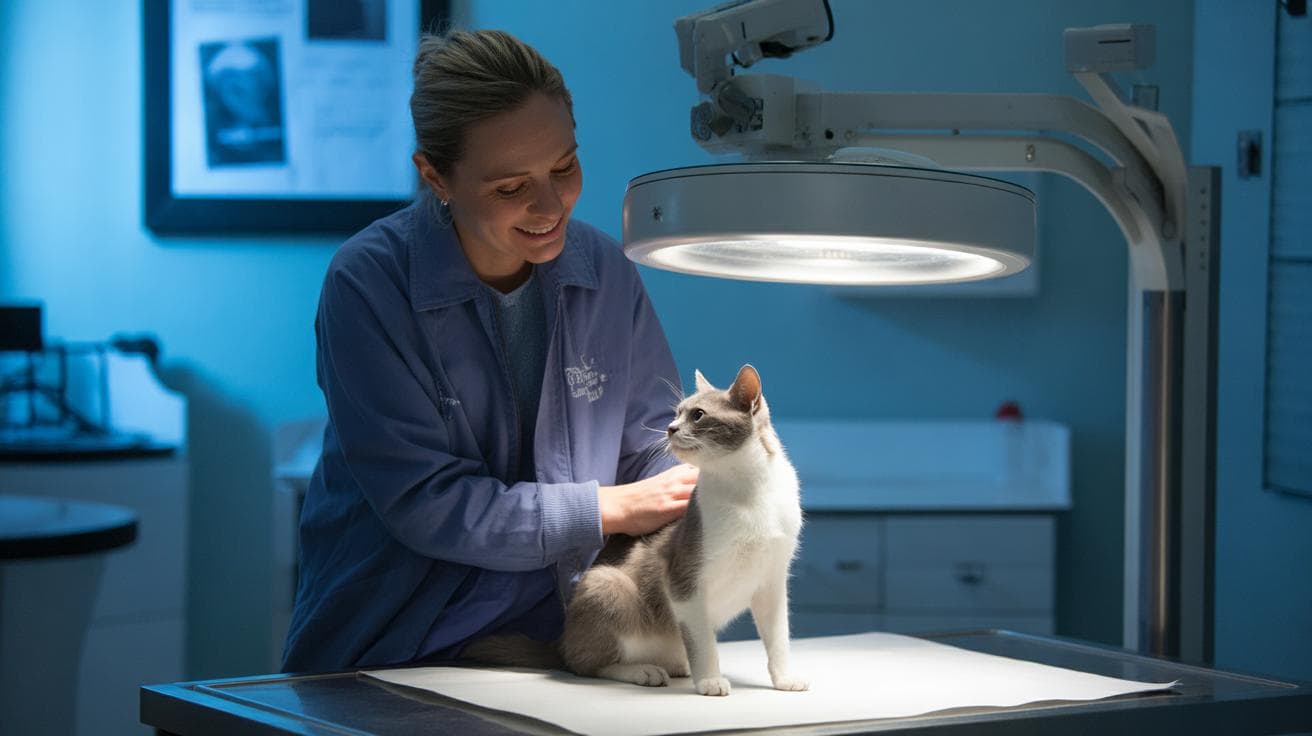
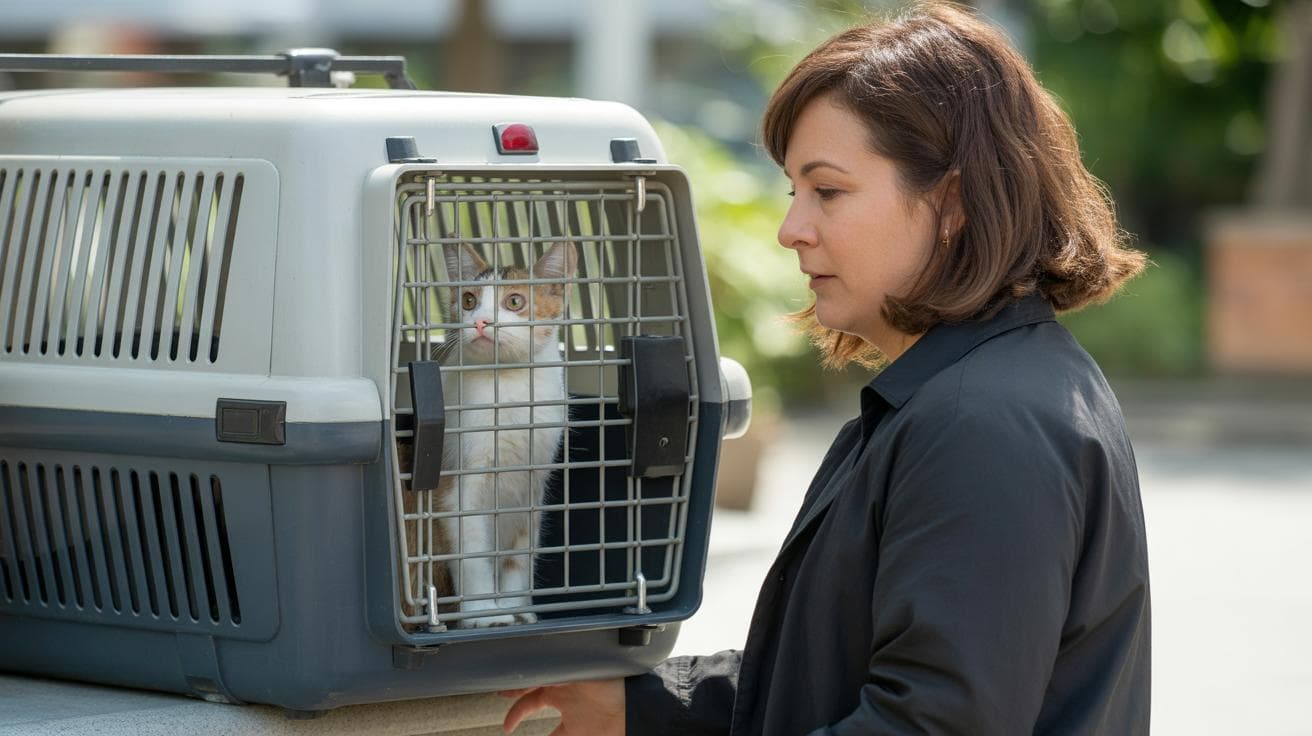
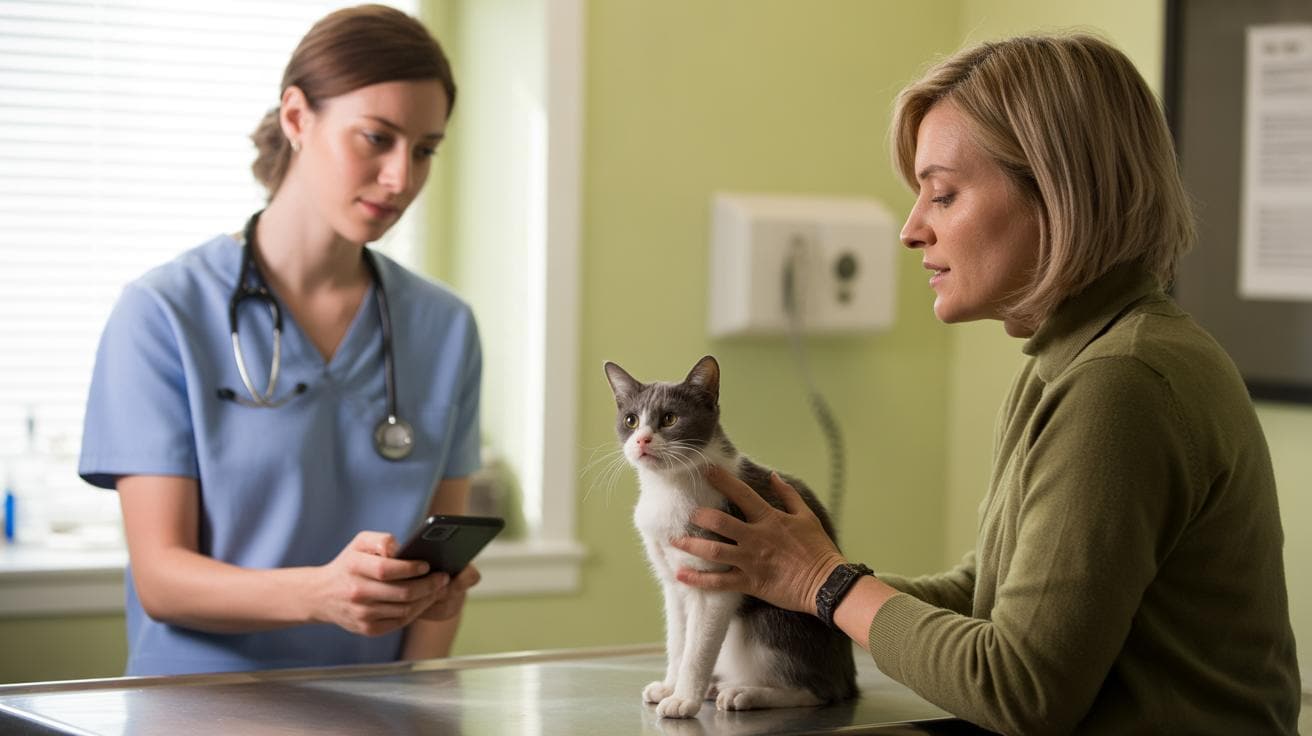
See blood in the litter box? Don’t shrug it off. That pink puddle can mean something as simple as a urinary tract infection (UTI) or as dangerous as a urethral obstruction (a plug or blockage in the tube that carries urine out), so it deserves a quick check.
Common causes include urinary tract infection (UTI) , germs that bug the bladder , bladder stones (hard mineral lumps that irritate or block the bladder), cystitis (bladder inflammation), and clotting disorders (when blood doesn’t clot properly). Tiny crystals (small mineral bits that can form stones) can show up too and start trouble. Each one feels different to your kitty, but they all can make peeing painful or bloody.
Watch for emergency signs like straining in the box, repeated short trips with little or no pee, loud crying while trying to pee, a hard or swollen belly, vomiting, or sudden weakness. If your cat is struggling and producing almost no urine, go to a vet right away , this can become life-threatening in a matter of hours. Ever watched a cat try and fail to pee? Heartbreaking.
Basic tests your vet might run include urinalysis (a urine test that checks for blood, crystals, and bacteria) and sometimes bloodwork to look at kidney function. Quick first-aid at home: stay calm, keep your cat warm, offer fresh water, and try to collect a small urine sample if you can (a clean shallow container or a plastic bag on the litter works in a pinch). Don’t try to squeeze the bladder or give human meds, okay? Pack the cat carrier and see your vet if you notice any worrying signs.
You’ll feel better getting it looked at , and your cat will too. Worth every paw-print.
Rapid answers for blood in your cat's urine: why it happens, how serious it is, and what to do now
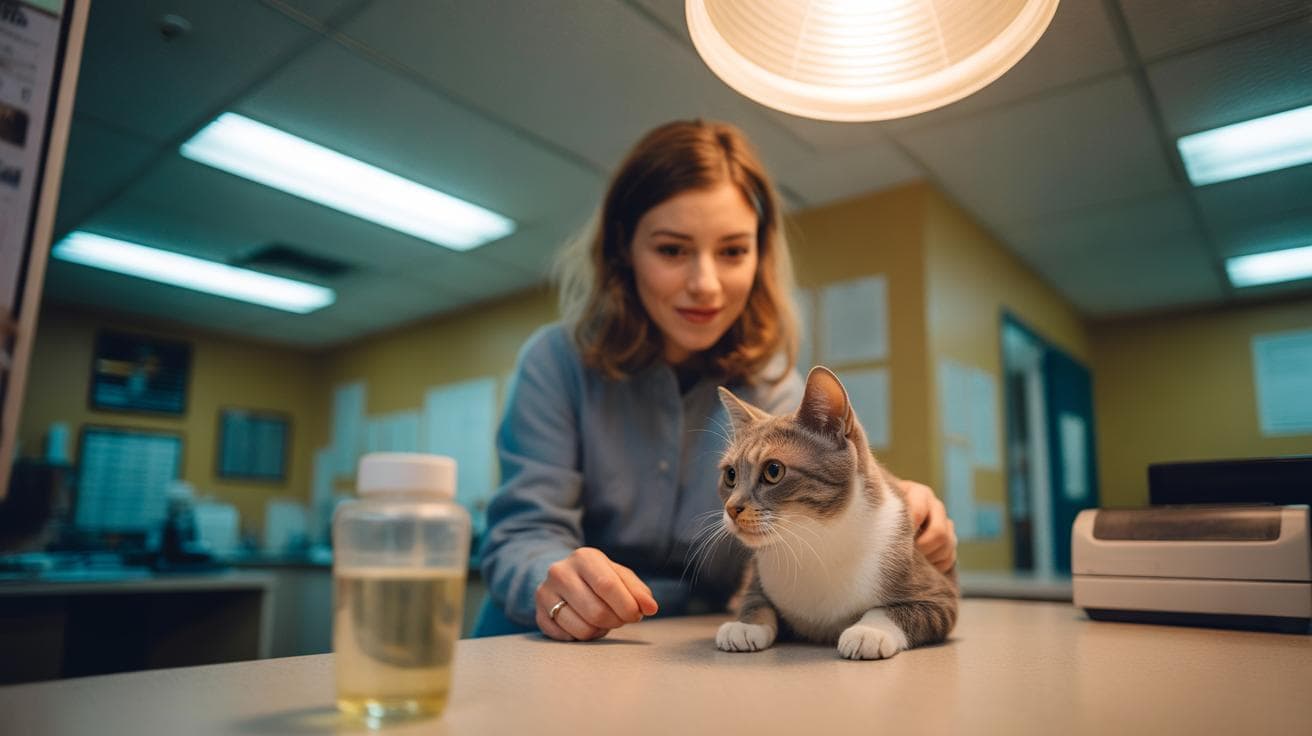
If your cat is straining with little or no urine, go to an emergency clinic now.
- Keep your cat safe and stay calm. Close them in a quiet room so they don’t panic.
- Watch to see if they are straining and whether any urine comes out.
- If you can, collect a urine sample or snap a photo of the urine or soiled litter , that can help the vet.
- Don’t give antibiotics or other meds at home, and keep your cat away from possible toxins.
- Call your regular clinic or an emergency clinic and head there right away if you think there might be a blockage.
Watch for these emergency signs:
- Straining with little or no urine.
- Repeated vomiting.
- Collapse or not responding.
- Open-mouth breathing or trouble breathing.
- Extreme sleepiness or not waking up.
- A hard, swollen, or painful belly.
A urethral obstruction (a plug or blockage in the tube that carries urine out) can get dangerous fast. If it’s not treated, your cat can get kidney failure, a life-threatening electrolyte imbalance (too much potassium), or the bladder could rupture within 48 to 72 hours. If you suspect a blockage, getting to an emergency vet quickly is critical.
Do not try to put in a catheter at home , you can hurt the urethra or push the plug in further. Don’t give antibiotics without a vet’s advice; the wrong drug can hide signs or harm the kidneys. Bring a fresh urine sample or clear photos of urine color or soiled litter if you can, plus any recent medicines and a short history of the signs you’ve seen.
For full diagnostic-test descriptions and the official clinic test table, see the "How vets confirm hematuria" section, which outlines urinalysis (checking urine for blood, crystals, infection), culture (growing bacteria to identify infection), bloodwork (checking organ function and electrolytes), and imaging (x-rays or ultrasound) that vets use to find the cause of blood in a cat’s urine.
Ever watched your kitty’s whiskers twitch while they try to go? It’s scary when things go wrong, but quick action really helps.
Causes of Blood in Cat Urine
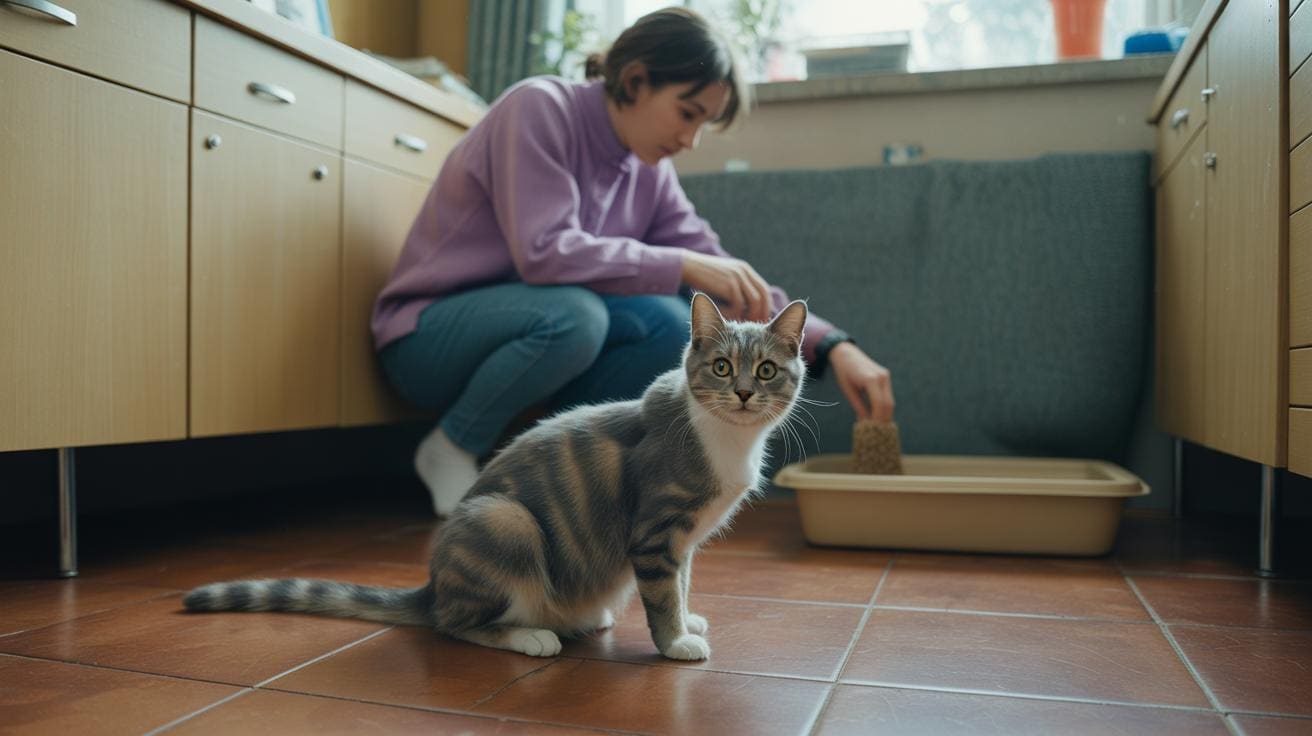
Seeing blood in your cat’s urine is scary, and it’s one of the top reasons folks call the vet. The common culprits are FLUTD, urinary tract infection, and bladder stones, and each can make your kitty pee outside the box, strain, or produce bloody or discolored urine.
FLUTD, which stands for feline lower urinary tract disease, is basically sterile bladder inflammation (bladder irritation without bacteria). It often hits young to middle-aged cats under stress and causes lots of trips to the litter box, tiny amounts of urine, and sometimes blood. It’s usually not an emergency unless the cat becomes blocked.
A urinary tract infection (UTI) is more common in older cats and in females. With a UTI you’ll often see painful, frequent urination and visible blood. Prompt vet care is a good idea.
Bladder stones and crystalluria (tiny mineral crystals in the urine) can show up at any age, but certain kinds of stones are more common in middle-aged to older neutered males. Stones are hard mineral lumps that can cause pain, repeat infections, or even blockages. Some cases need surgery.
Urethral plugs or obstructions are most common in neutered males and cause straining with little or no urine, plus severe pain. This is an emergency. Get your cat to an emergency clinic right away.
Trauma to the urinary tract after a fall, fight, or accident can cause visible blood and pain at any age, so urgent evaluation is wise. Coagulopathy (a bleeding disorder that makes blood not clot properly) can cause bleeding from multiple places, including the urine, and may be life-threatening.
Bladder tumors (cancer) occur more often in older cats, usually over ten, and often cause persistent blood in the urine and weight loss. Kidney disease or pyelonephritis (a kidney infection) tends to affect older cats and can cause darker or bloody urine plus lethargy or vomiting; these sometimes need quick treatment.
Intact females can have reproductive tract bleeding (uterine or vaginal bleeding) that looks like bloody urine and should be checked by a vet.
Visible blood can be pink, brown, bright red, or come with clots, and sometimes the blood is microscopic and only a vet will find it. Other signs that vary by cause include changes in how much your cat pees, odd urine smell, vocalizing while peeing, or extra licking around the genitals. Ever watched your cat make everything dramatic around the litter box? Yeah, that’s the one to watch.
Match your cat’s signs to the short list below to help the vet triage quickly:
- FLUTD/FIC (sterile bladder inflammation): Often young to middle-aged cats of any sex, stress-related frequent urination, blood, and litter-box avoidance; usually not an emergency unless blocked.
- Urinary tract infection (UTI): More common in older or female cats, painful and frequent peeing with visible blood; prompt vet care is typical.
- Bladder stones/crystals: Seen in middle-aged to older cats and often neutered males; signs include straining and blood and may need urgent care or surgery.
- Urethral plugs/obstruction: Most common in neutered males, causes straining with little or no urine and severe pain. This is an emergency.
- Trauma to urinary tract: Any age after a fall or fight, shows blood and pain; urgent evaluation advised.
- Coagulopathy and bleeding: Can affect cats of any age, causes bleeding from multiple sites including urine and may be life-threatening (bleeding disorder).
- Bladder tumor: Tends to occur in older cats with persistent blood and weight loss; needs a thorough workup.
- Kidney disease/pyelonephritis (kidney infection): Usually older cats, may cause darker or bloody urine plus lethargy or vomiting and can need fast treatment.
- Reproductive tract bleeding: Intact females can have uterine or vaginal bleeding that may look like bloody urine and requires veterinary assessment.
For which diagnostic tests are typical for each cause, refer to the "How vets confirm hematuria" section for full descriptions and the diagnostic table.
How vets confirm hematuria in cats: tests you can expect at the clinic
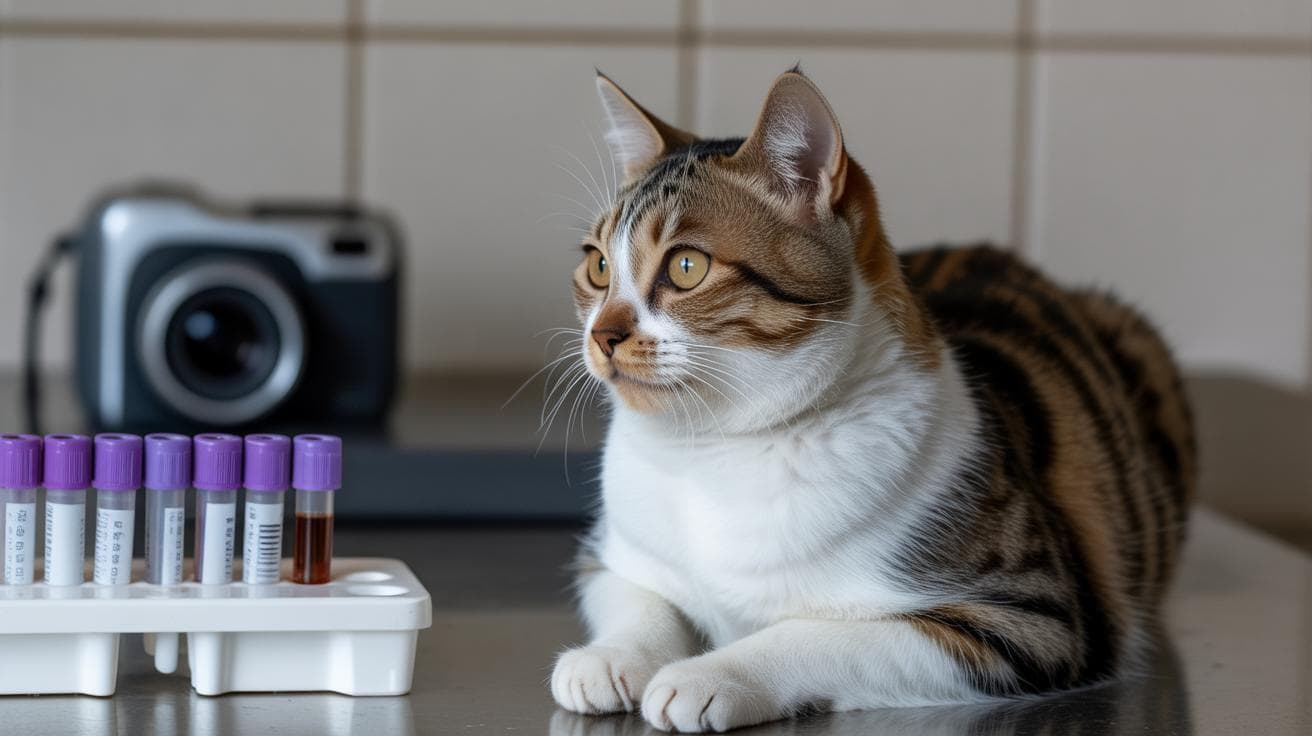
When a vet looks into blood in your cat's urine, they follow a clear, step-by-step plan. First they take a focused history and do a physical exam, then they test the urine, check bloodwork, and image the urinary tract if needed. Think of it like building a puzzle, each test adds a piece until the picture makes sense. Ever watched your kitty stare at a puddle and you wonder why? Yeah, this is the clinic version of that curiosity.
- Take a detailed history and do a physical exam.
- Run a urinalysis (urine test) and examine urine sediment (microscope check of particles).
- Send a urine culture and sensitivity (grow any bacteria and find the best antibiotic) when infection is suspected or before a long antibiotic course.
- Perform a CBC (complete blood count) and blood chemistry panel (blood chemistry, including electrolytes and creatinine – kidney marker).
- Use abdominal ultrasound (sound-wave imaging that shows soft tissues) to look for stones that don’t show on x-ray, masses, and subtle kidney changes.
- Take radiographs (x-rays) when radiopaque stones (stones that show up on x-ray) are likely or to screen for other changes.
Urinalysis uses a dipstick (a quick chemical strip) plus a microscopic sediment exam (looking for red blood cells, crystals, bacteria, and cells). Dipsticks are fast but can give false positives from foods, cleaning agents, or contamination, so the sediment exam tells the real story and can catch microscopic hematuria you wouldn’t see with the naked eye. Urine culture and sensitivity takes about 48 to 72 hours, and it helps pick the right antibiotic for a clear infection or for recurrent problems.
Cystocentesis (taking urine with a needle straight from the bladder) gives the cleanest sample for culture and lowers contamination risk, but a vet must do it because there is a small risk of bleeding or poking something if the bladder is tiny or scarred. Catheterized samples can be useful sometimes, but they may introduce bacteria or need sedation in male cats, so your vet will choose the method that fits your cat’s situation.
Bloodwork checks for infection, dehydration, how the kidneys are doing, and dangerous electrolyte problems like high potassium (a salt your body uses for heart and nerve function). Imaging choices: radiographs (x-rays) pick up radiopaque stones; ultrasound finds nonradiopaque stones (stones that don’t show on x-ray), bladder masses, and subtle kidney changes. If a mass shows up or the cause stays unclear, the vet might suggest cystoscopy (a camera into the bladder) or a biopsy (tissue sample).
Sample collection tips: a voided or free-catch sample is the easiest, but it can be contaminated. Use a clean container, keep the sample chilled, and try to get it to the clinic within two hours. Bring a list of recent medications, a photo of discolored urine if you have one, and a short timeline of signs. Rechecks are common. For example, we usually recheck urinalysis 7 to 14 days after finishing treatment for a simple UTI, and follow-up is longer for kidney infections or stones.
| Test | Purpose | What it reveals |
|---|---|---|
| Urinalysis | Quick screen for blood, protein, glucose, and pH | Shows visible versus microscopic hematuria, urine concentration, and clues to infection or crystals |
| Urine culture | Identify bacterial infection and antibiotic sensitivity | Grows bacteria and guides targeted antibiotic choice (results about 48 to 72 hours) |
| Urine sediment | Microscopic exam of cells, crystals, and organisms | Confirms red blood cells, white blood cells, bacteria, and crystal type |
| CBC / Chemistry (including electrolytes) | Assess overall illness and organ function | Finds anemia, signs of infection, kidney values, and dangerous electrolyte imbalances |
| Abdominal ultrasound | Detailed look at bladder, kidneys, ureters, and masses | Finds stones that don’t show on x-ray, tumors, inflammation, and subtle kidney structure changes |
| Radiographs | Screen for stones that show on x-ray | Shows dense stones like some struvite or calcium oxalate stones when they are dense enough to appear |
Urinary tract infections and kidney infections: presentation, treatment, and timelines
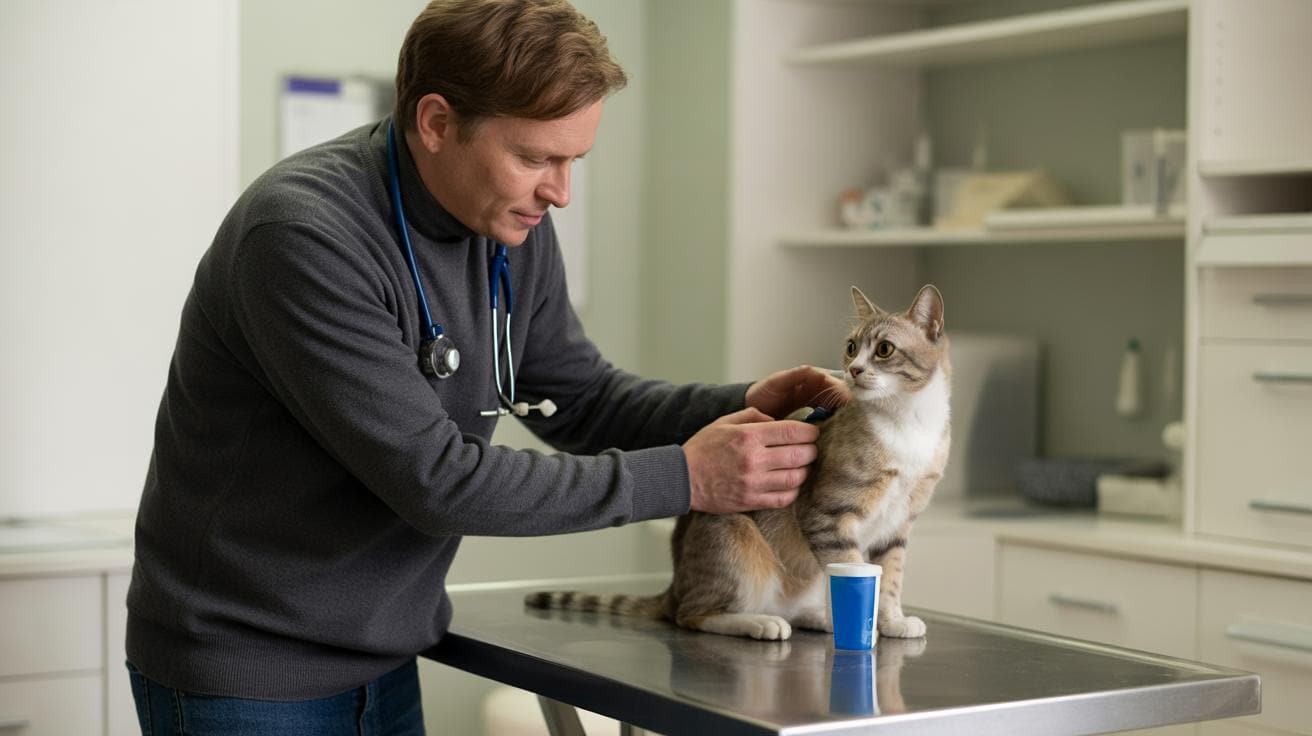
A urinary tract infection in cats can involve the bladder (where urine is stored), the urethra (the tube urine leaves through), the ureters (tiny tubes that carry urine from the kidneys), or the kidneys themselves. You might notice blood in the litter box, more trips to the box, straining, or crying while your cat pees. Sometimes the signs are subtle, like lingering at the box or licking down there. Older cats and females tend to get bacterial UTIs more often, but any cat can be affected. Ever watched your kitty freeze and stare while trying to pee? Yeah, not fun.
When the infection moves up into the kidneys it’s called pyelonephritis (kidney infection). That’s deeper and tougher. Cats with pyelonephritis often seem sick overall , fever, not eating, and vomiting, on top of dark or bloody urine.
Vets confirm a UTI with a urinalysis (a dipstick test plus looking at the urine under a microscope). They’ll usually send a urine culture and sensitivity (growing the bacteria to choose the right antibiotic) when infection is likely or before starting a long antibiotic course. For full test descriptions and timing, see the "How vets confirm hematuria" section. Hydration helps the whole process , offering canned food or giving supervised subcutaneous fluids (fluids given under the skin) can ease the kidneys while medications work.
- collect urine for urinalysis and culture
- give a targeted antibiotic chosen from the culture results (antibiotic selection for cats)
- provide pain control if your cat seems uncomfortable
- recheck urinalysis and culture at the end of treatment
- keep fluids up and watch litter-box output
Uncomplicated lower UTIs often start to feel better in days and are usually clearer within a week with proper treatment. Kidney infections usually need a longer antibiotic course, commonly 4-6 weeks. Follow-up testing (repeat urinalysis and culture) helps confirm the infection is truly gone. Isn’t it nice when a treatment actually works? For a practical owner resource on prognosis and recurrence, see Do cat UTIs go away.