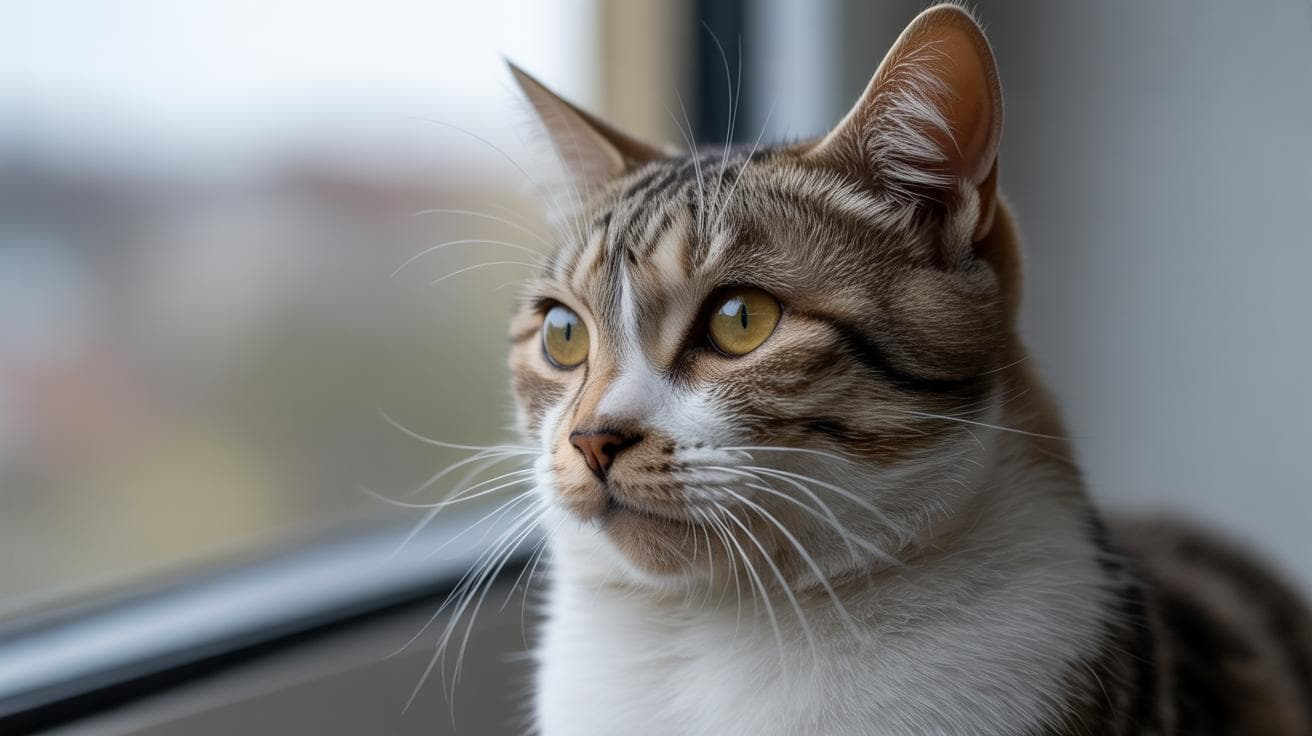
Ever wake up to your cat with a red, goopy eye? Conjunctivitis (inflamed conjunctiva, the thin, moist tissue lining the inner eyelid) makes kitties squint, paw at their face, and wake with crusty fur around the eye. It can be small and annoying, or the start of something that could hurt their vision.
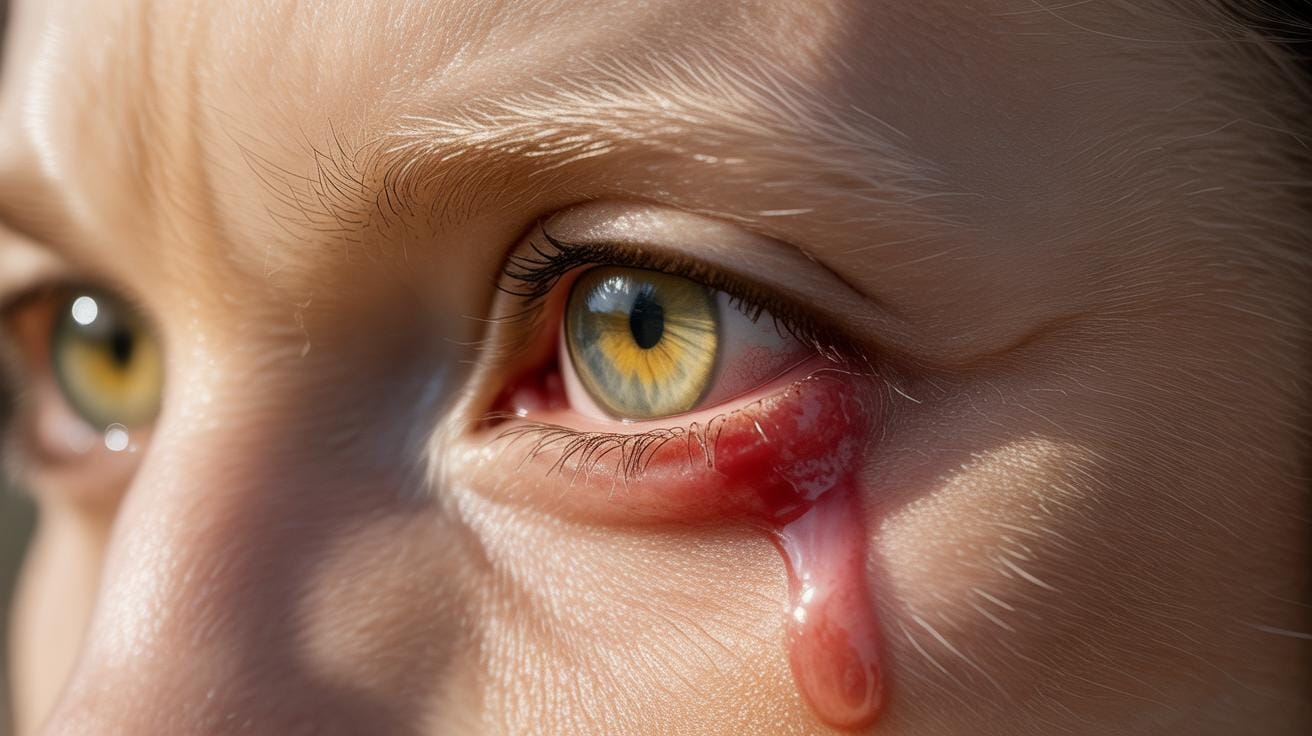
Look for these signs: constant squinting, lots of blinking, a thick yellow or green discharge, redness, swelling, or a cloudy-looking eye. You might see your cat rubbing their face on furniture or avoiding bright light. The sticky crust at the corner of the eye is a classic, and it smells a bit off sometimes.
Causes are usually simple: feline herpesvirus (a common cat virus that acts like cold sores), bacteria (tiny germs), allergies, or a scratch to the cornea (the clear front surface of the eye). Even a tiny foreign speck can start the whole mess. Kittens and cats with weak immune systems can get worse faster.
When to call the vet right away: if the eye is shut and won’t open, if the cornea looks cloudy or blue, if there’s blood or lots of pus, if your cat seems in real pain, or if they suddenly stop seeing. Also get help fast if both eyes go bad quickly, or if your cat is a kitten, frail, or has a fever. Don’t wait and hope it fixes itself.
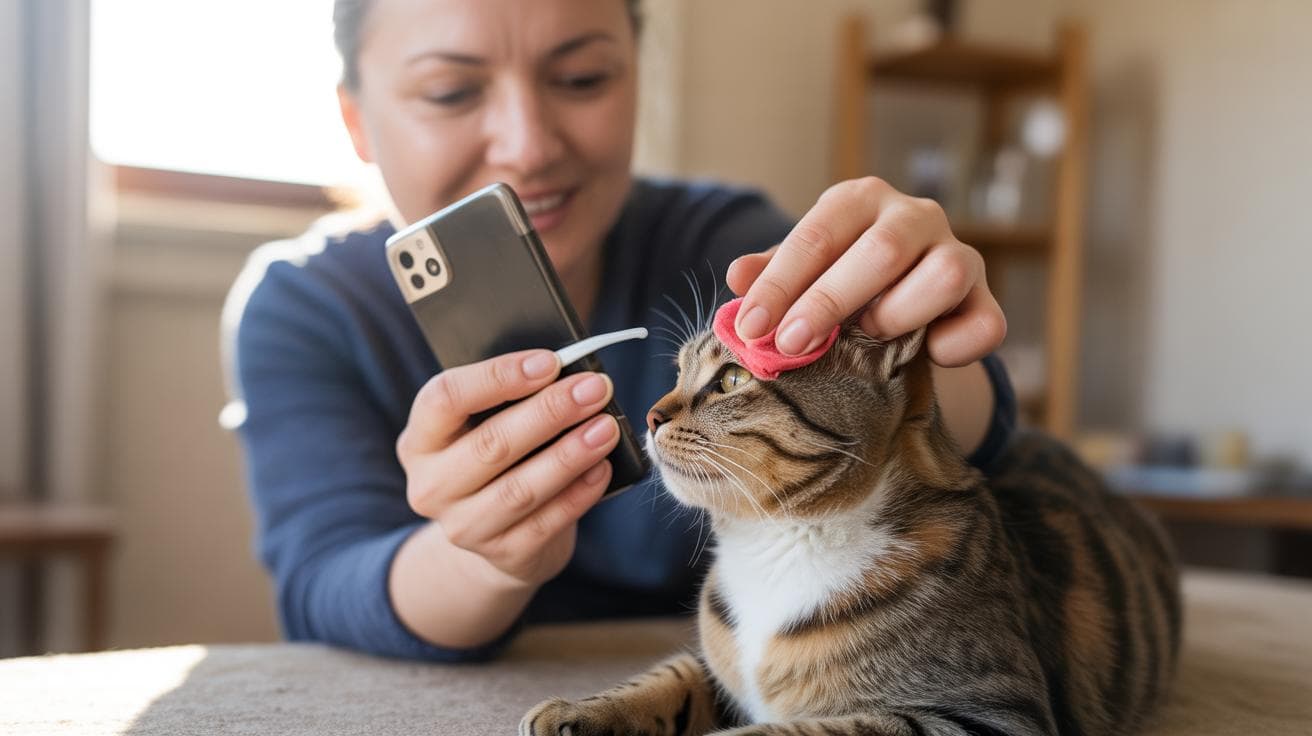
Home care that actually helps: gently wipe discharge with a soft cloth moistened with sterile saline (you can buy it or make it by dissolving 1/4 teaspoon salt in a cup of boiled, cooled water). Dab from the inner corner outward, use a fresh bit of cloth each time, and warm-compress the eye for a few minutes to loosen crusts. If the vet prescribes drops or ointment, use them exactly. Don’t put human eye drops in kitty eyes unless the vet says so. My Luna hated the compress at first, then tolerated it, and finally purred.
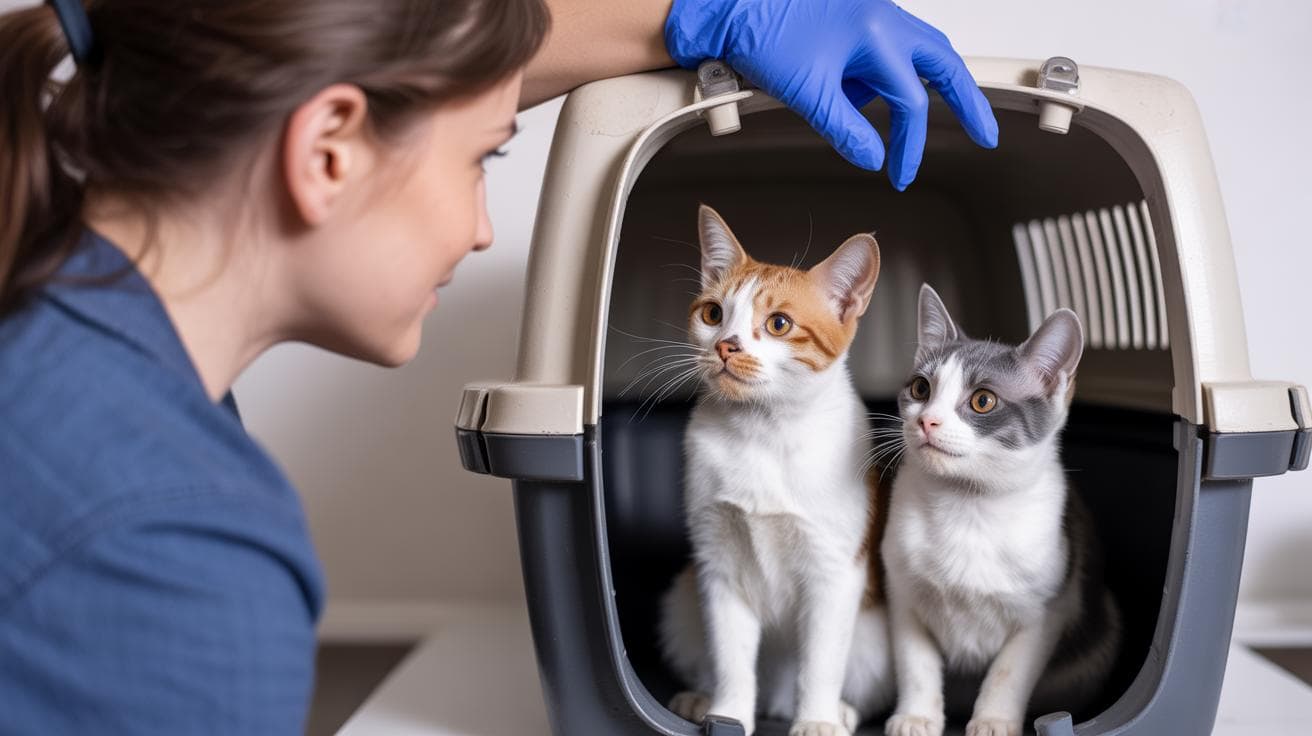
Keep other cats safe by isolating the sick one until the vet says it’s fine, washing hands after touching eyes, and cleaning bowls and bedding. If you’re unsure, call your vet and snap a quick photo to send them. Better safe than sorry.
Quick answer – At-a-glance: cat pink eye
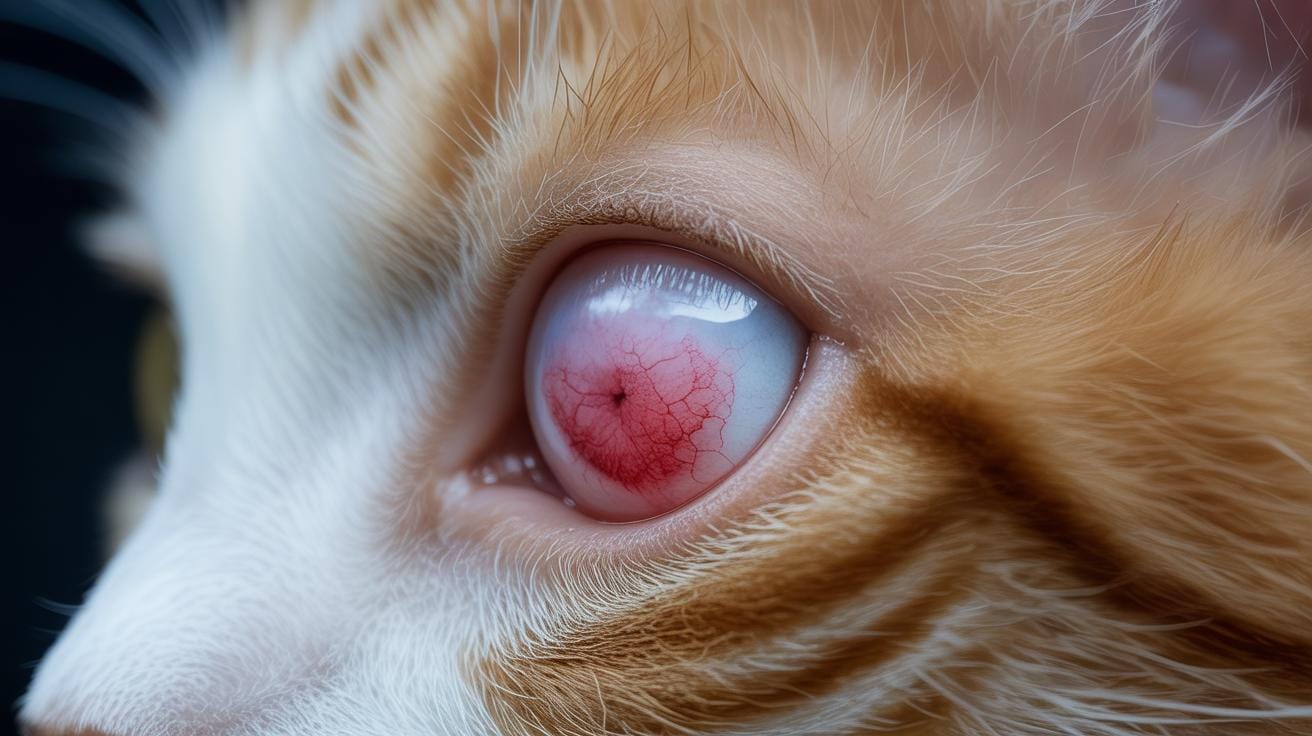
Conjunctivitis, or cat pink eye, is when the conjunctiva (the thin, moist tissue that lines the inner eyelids and covers the white of the eye) gets inflamed. It can show up in one eye or both. Not fun for your kitty, and not great for you either.
The usual culprits are viruses, bacteria, allergies, or injury. Viral cases often involve feline herpesvirus FHV-1 (a common cat cold virus). Bacterial infections are, well, bacteria. Allergies or a scratch can irritate the eye too.
Watch for red flags. Sudden vision loss, obvious severe pain, or heavy, thick yellow-green discharge (that’s purulent gunk) need a vet right away. These signs can mean a corneal ulcer (a painful scratch or erosion on the clear front of the eye) or a worse infection.
Your cat needs a vet exam to tell what’s behind the redness, prevent corneal ulcers, and stop other cats from getting sick. Diagnosis usually means an eye check, maybe a swab to see bacteria or virus, and a look for corneal damage. Treatment can include topical antibiotics for bacterial infections, antiviral meds or supportive care for FHV-1, and anti-inflammatory or allergy meds when needed.
At home, gently wipe away crust with a warm, damp cloth and keep your hands clean. Don’t use human eye drops unless your vet says so. If you have multiple cats, keep them separate until the vet clears things up.
Read below for symptoms, diagnosis, treatment, and home care.
Recognizing conjunctivitis and eye infection symptoms in cats
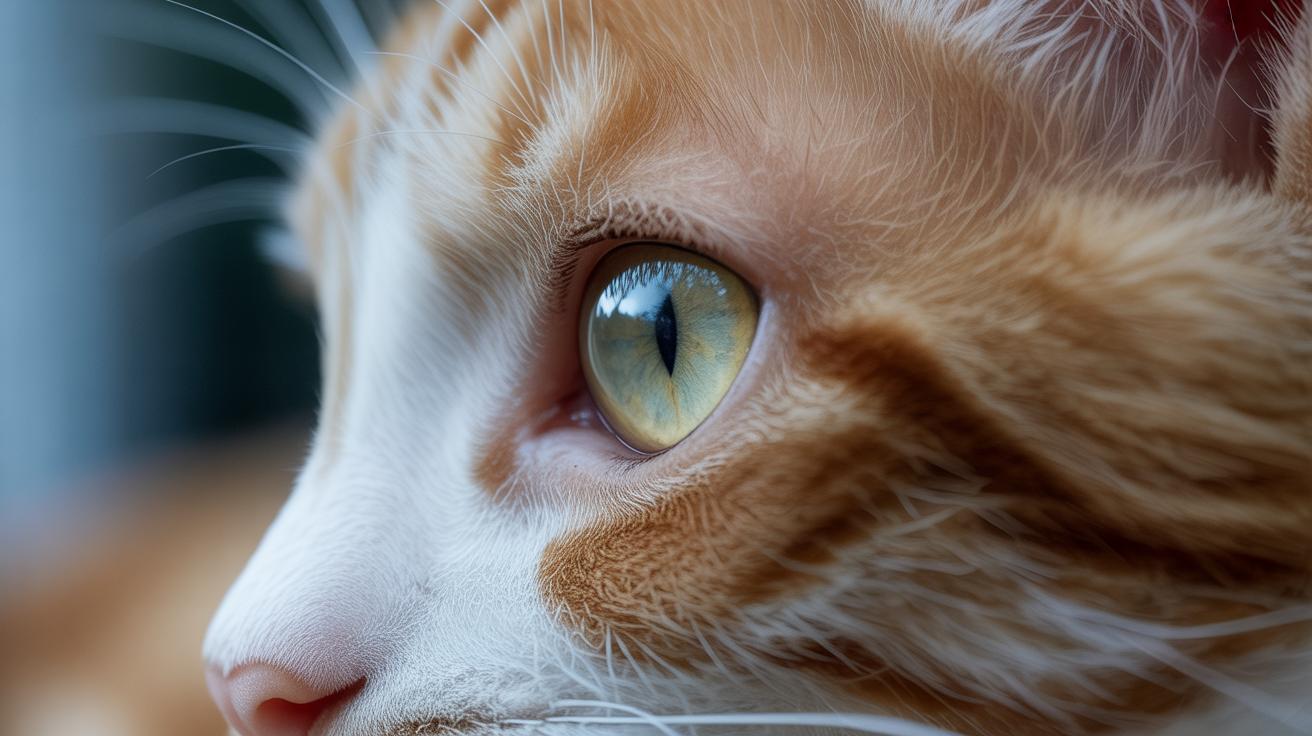
Cat eyes tell a story. When something’s wrong you’ll spot it , whiskers twitching, a soft paw to the face, or that tiny, worried blink. Ever watched your kitty squint and wondered if it’s just nap-time or something more? Let’s break it down in plain, friendly terms.
Here are the main signs to watch for:
- Red eye: conjunctival redness (hyperemia) , extra blood in the eye tissues that makes the white or rim look flushed.
- Puffy eyelid lining: conjunctival swelling (chemosis) , the thin membrane around the eye gets puffy.
- Too-teary: excessive tearing (epiphora) , tears running or pooling at the corner of the eye.
- Clear watery discharge , the eye looks wet but not thick.
- Thick yellow or green gunk: mucopurulent or purulent discharge (mucus plus pus) , this can cake into crusts on the lashes.
- Crusty eyelid boogers or sticky eyelids after sleep.
- Squinting or blinking a lot: blepharospasm (involuntary eye squeeze because the eye hurts).
- Pawing at the face or rubbing the eye with a paw.
- Corneal clouding , the clear front surface of the eye looks hazy or frosted, and you might see sudden vision changes.
One eye or both?
- If only one eye is affected, think foreign body, local injury, or an early localized infection.
- If both eyes are involved, viral or systemic causes are more likely.
Kittens
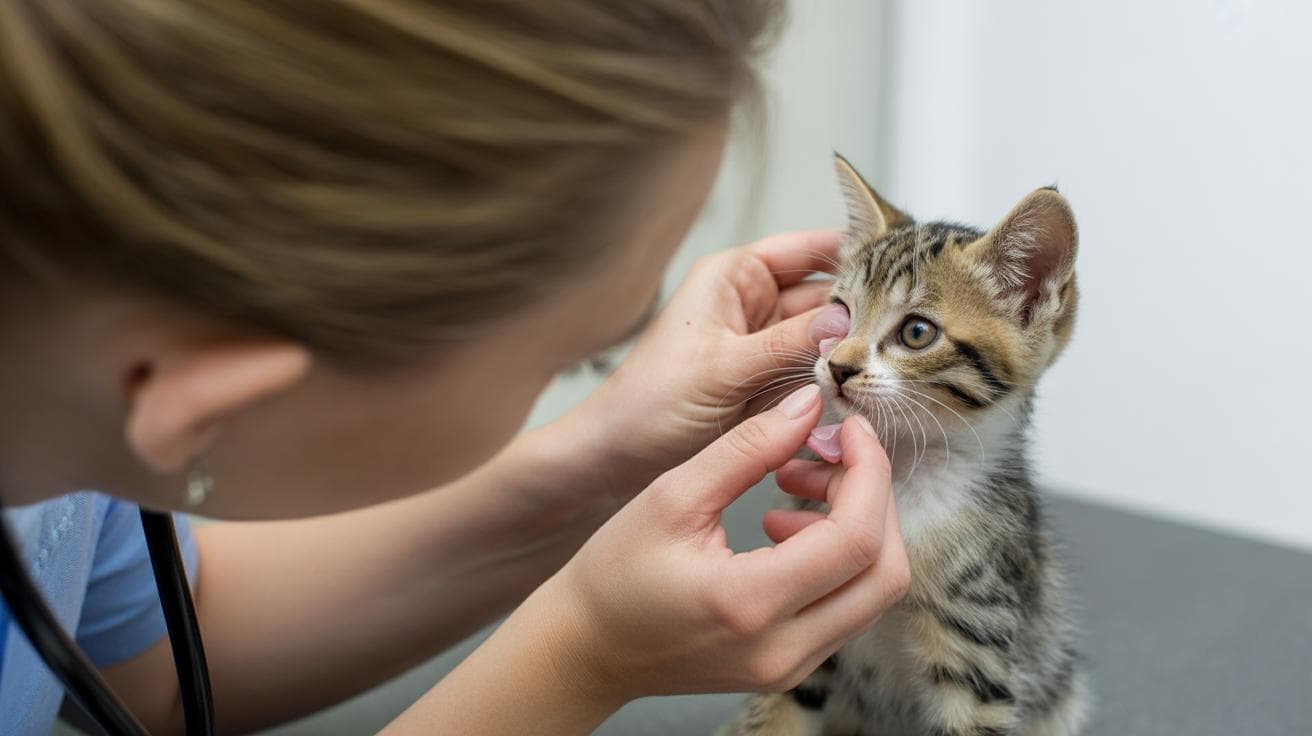
Kittens often get sticky eyes. That can be neonatal infection or blocked tear ducts (tiny tear channels that didn’t open properly). Don’t ignore it , little ones can worsen fast.
What to do and what to show your vet
Take clear photos or a short video of the eye, the discharge, and any squinting. Note if the problem came on fast, if the discharge is thick and colored, or if your cat seems bumping into things. These details help the vet decide if it’s a simple conjunctivitis case, a corneal problem, or something needing urgent care.
If you see thick yellow/green gunk, heavy pain signs, corneal clouding, or sudden vision loss, get veterinary help sooner rather than later. Worth getting checked.
Common causes of conjunctivitis and cat eye infections: viral, bacterial, allergic, trauma
Infections are the biggest reason cats get conjunctivitis, especially where cats live close together, like shelters, catteries, or busy multi-cat homes. Kittens, stressed cats, or those with weak immune systems and conditions like FIV (feline immunodeficiency virus) or FeLV (feline leukemia virus) are more likely to get sick or have repeat problems. Ever notice sneezing or a runny nose along with the eye stuff? That often points to a viral cause.
Viral causes
Feline herpesvirus, FHV-1 (feline herpesvirus 1), is the most common viral culprit. Most cats meet it when they’re young and many stay lifelong carriers, meaning they harbor the virus and flare up again later when stressed or ill. Flareups usually bring watery or mucoid eyes, sneezing, and often both eyes get involved. Calicivirus can affect the eyes too, but it’s less likely to be the main cause.
Bacterial causes
Some bacteria commonly involved are Chlamydophila felis (a bacterial species) and Mycoplasma (tiny bacteria), which often show up in young or stressed cats. Other bacteria like Staphylococci or Streptococci can move in after a virus or an injury and make the discharge thicker and yellow-green , that sticky gunk usually means your vet will recommend topical antibiotics (eye drops or ointments).
Non-infectious causes and trauma
Allergic conjunctivitis comes from pollen, dust, smoke, or household chemicals , airborne irritants that make eyes red and itchy. Trauma or a foreign object in the eye usually causes sudden, one-sided signs and needs quick attention. Structural problems, like entropion (an inward-rolling eyelid) or issues with the third eyelid (the thin protective lid at the inner corner), can keep the eye irritated until they’re fixed. Worth getting checked, you know, before it turns into a bigger mess.
How veterinarians diagnose conjunctivitis and eye infections in cats
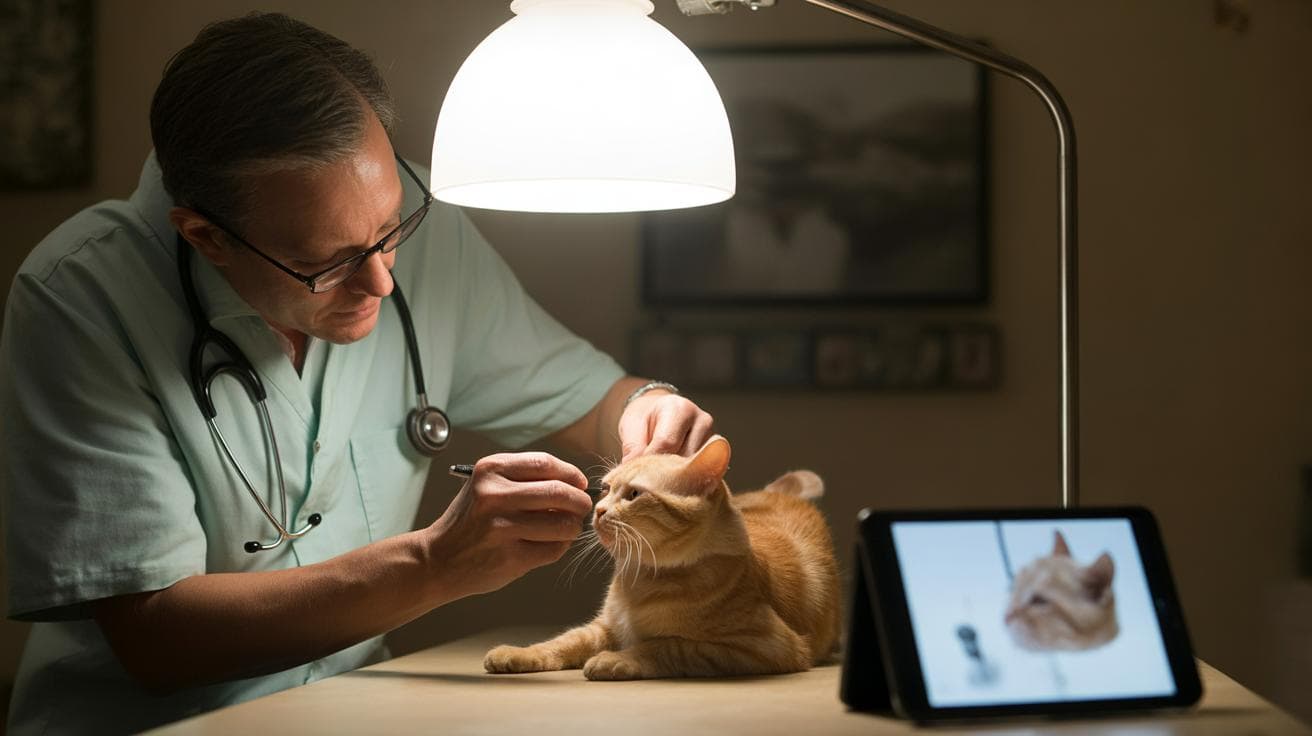
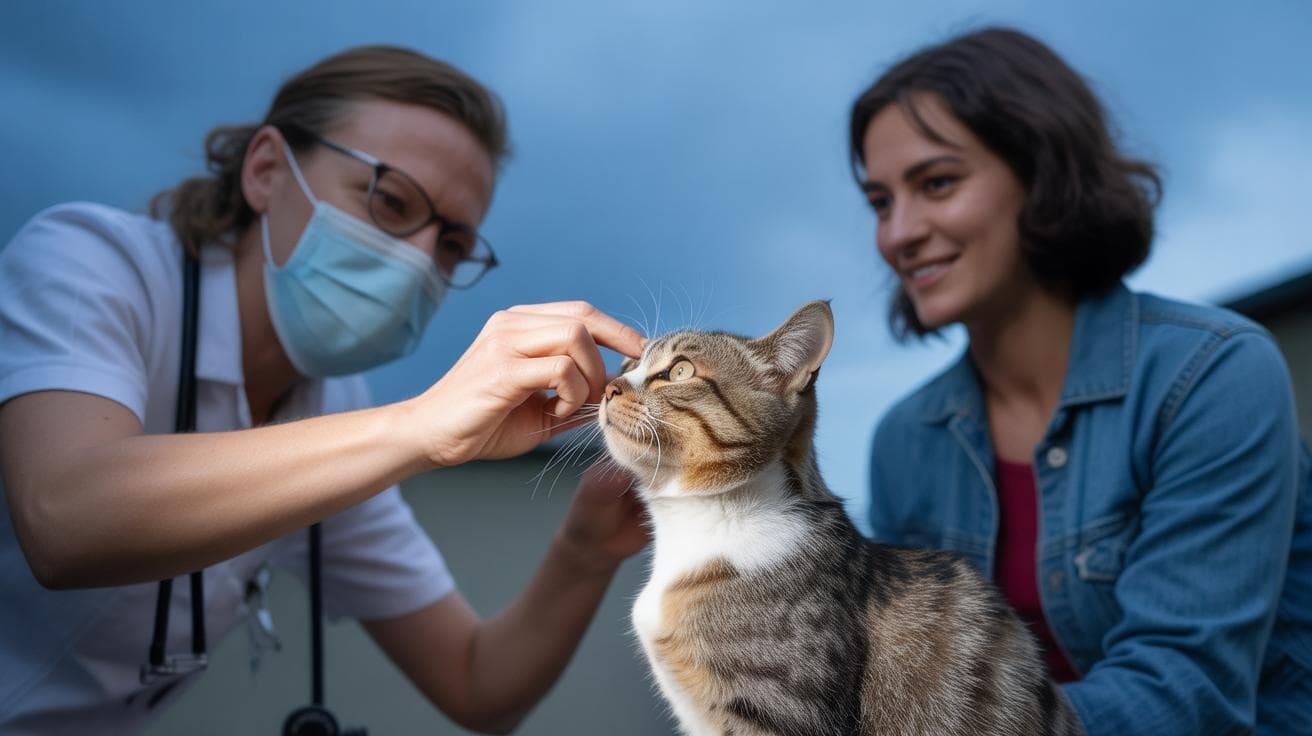
If your cat has red, watery, or crusty eyes, vets start with a close eye check and a quick head-to-toe look for signs of a cat cold or other health issues. That extra context helps them figure out whether the eye problem is local or part of something bigger. They use magnifying tools and bright lights to examine the eyelids, the cornea (the clear front window of the eye), and the third eyelid (a thin, protective fold you might not notice).
Next, they do a few quick bedside tests. The Schirmer tear test (measures tear production) checks for dry-eye problems. A fluorescein stain (a safe dye that highlights corneal scratches or ulcers) shows if the cornea is scratched. An intraocular pressure check (measures pressure inside the eye) helps rule out glaucoma. It’s fast, and most cats tolerate it fine.
To find the cause, vets often collect a conjunctival swab (a sample from the lining of the eye) or perform a corneal scraping (gently removing a few surface cells) for cytology (cell exam) and culture (growing microbes to see what’s there). They may also order PCR testing for FHV-1 (a lab test that looks for feline herpesvirus DNA) or bloodwork if they suspect a systemic illness. Culture and sensitivity testing helps pick the right antibiotic by showing which drugs will work best.
If the case is painful, keeps coming back, or the cornea has a deep ulcer, your vet may refer you to a veterinary ophthalmologist (an eye specialist) for advanced imaging or surgery. Worth every paw-print when it saves sight. Ever watched a kitty suddenly perk up after treatment? Heart-melting.
| Test | Purpose | Typical finding |
|---|---|---|
| Schirmer tear test (measures tear production) | Check for dry eye | Low in KCS (dry-eye); normal otherwise |
| Fluorescein stain (safe dye for corneal defects) | Detect corneal scratches or ulcers | Bright uptake indicates an ulcer |
| Intraocular pressure (measures eye pressure) | Rule out glaucoma or abnormal pressure | High or low is abnormal |
| Conjunctival swab / cytology (cell exam) | Look for bacteria, fungi, or inflammatory cells | Organisms, neutrophils, or other cell changes |
| PCR for FHV-1 (detects feline herpesvirus DNA) | Confirm viral infection | Positive result indicates FHV-1 |
| Culture & sensitivity (grow and test microbes) | Identify bacteria and best antibiotic | Growth with an antibiogram |
Conjunctivitis and Eye Infections in Cats: Care
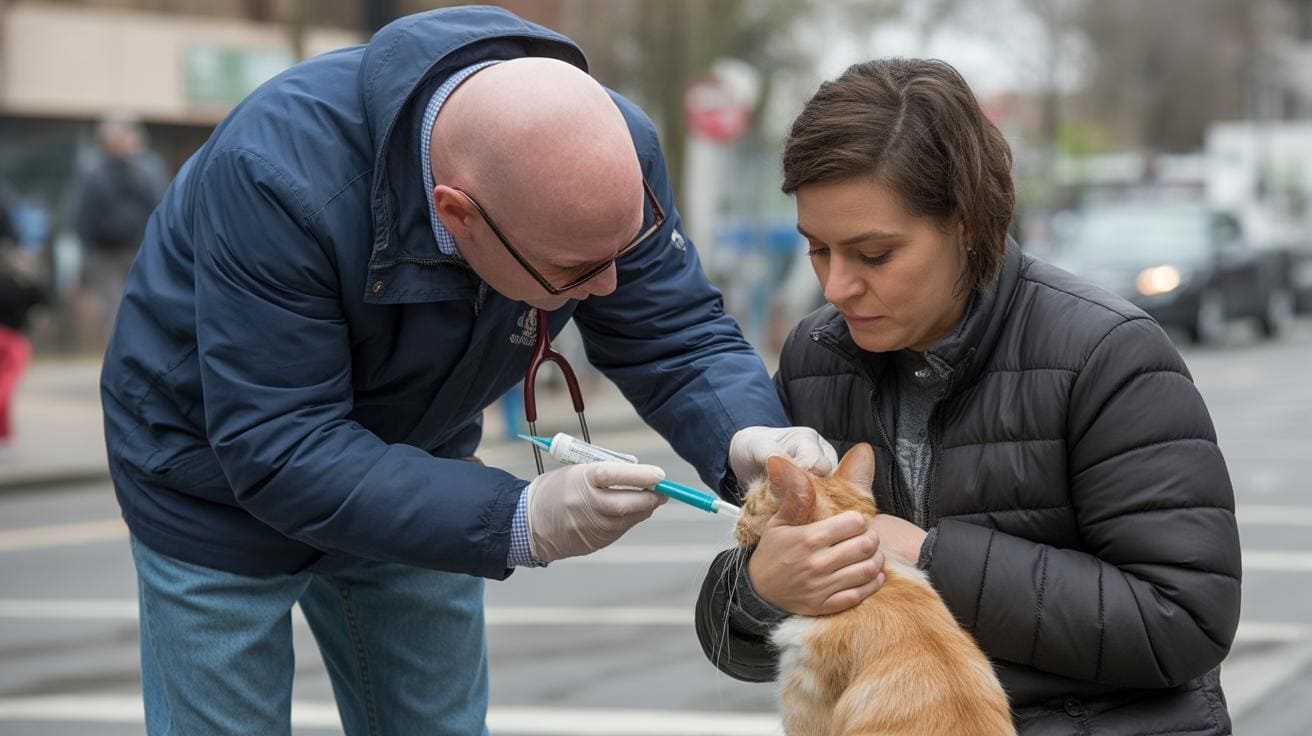
Treatment depends on what is causing the problem. If bacteria are to blame, your vet will usually prescribe a topical antibiotic ointment (medicine you put on the eye) placed in the lower lid, and sometimes systemic antibiotics (pills or injections that treat the whole body) if the infection is severe or your cat has a fever. Viral eye disease, like flares from feline herpesvirus, may get topical antiviral drops or ointments (meds that fight virus at the eye) or oral antivirals (pills) when the vet thinks it will shorten the flare.
Steroid eye drops can help inflammation, but they can also make trouble worse if a corneal ulcer is present. So vets usually check with a fluorescein stain first (a tiny dye test that shows corneal scratches or ulcers). If an ulcer is there, steroids can slow healing. Oops, not worth the risk.
Thick, sticky eye gunk (mucopurulent discharge – thick yellow or green goop) is handled by the antibiotic ointment plus gentle cleaning with a warm, damp cloth to loosen crusts so the meds actually reach the eye. Pain control matters too. Topical lubricants like artificial tears (eye drops that keep the surface moist), warm compresses, and an Elizabethan collar to stop rubbing are common parts of care. Ever watched your kitty try to claw a sore eye? Yeah, that collar helps.
Finish the full course your vet prescribes so the infection does not come back or breed resistant bacteria. Plan rechecks so the vet can watch healing and stop or change meds if needed. Some people try L-lysine (an amino acid supplement) to help suppress feline herpesvirus, though the evidence is mixed. If infections keep coming back or the cornea (the clear front layer of the eye) is damaged, your vet may refer you to an ophthalmologist (eye specialist) for advanced care or surgery.
Topical antibacterials and antiseptics
Topical antibiotic ointments are picked to target the common eye bacteria and are put into the lower conjunctival sac (the little pocket under the eyelid) so they stay on the surface longer than drops. Antiseptic eye rinses may be used briefly to wash away heavy debris, but they are not a long term fix.
Antivirals and systemic therapy
Topical antiviral agents can be used for localized viral disease, while oral antivirals (pills) are reserved for more severe or widespread herpes flares. PCR testing (a lab test that finds viral genetic material) can help guide whether antivirals will be useful.
Supportive care and surgical procedures
Supportive care includes lubricants, warm compresses, pain meds, and E-collars to prevent rubbing. For chronic problems caused by anatomy or long term damage, surgical options like tear duct surgery or entropion correction (fixing an eyelid that rolls inward) can stop ongoing irritation and help the eye heal. Worth every paw-print when it gets your cat comfortable again.