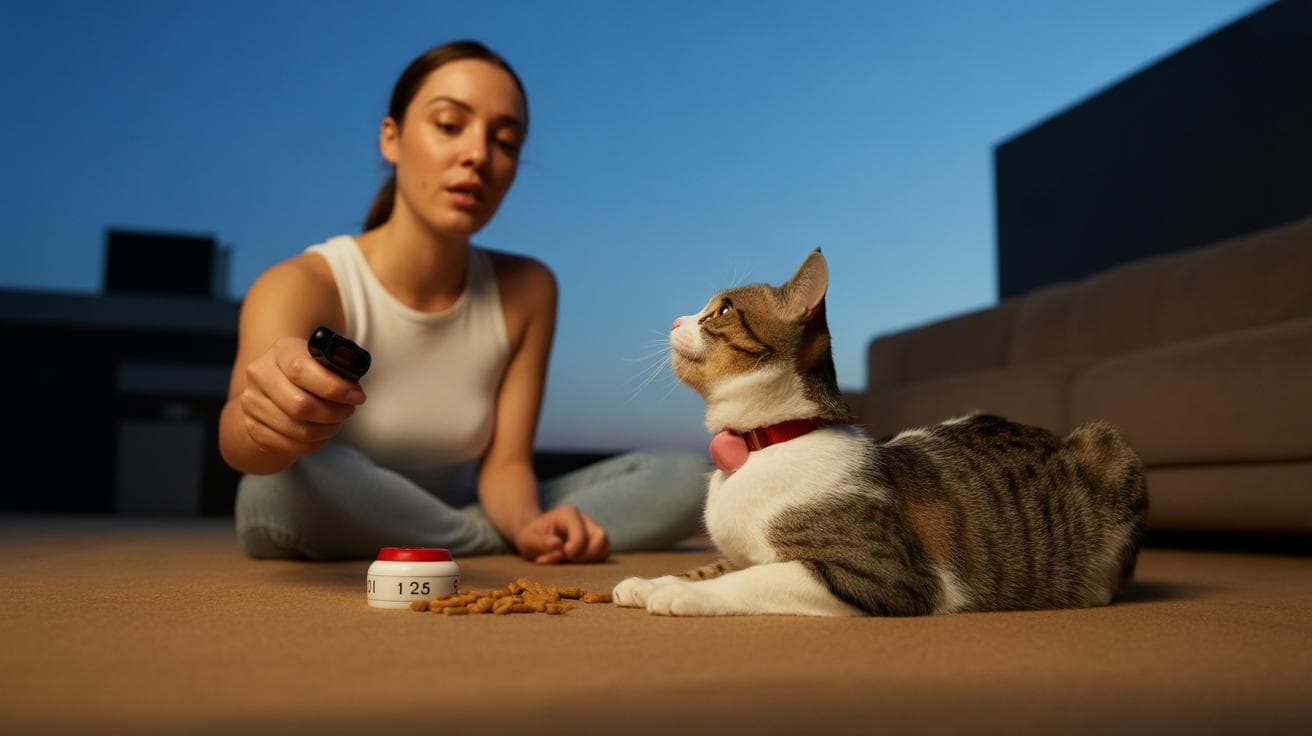
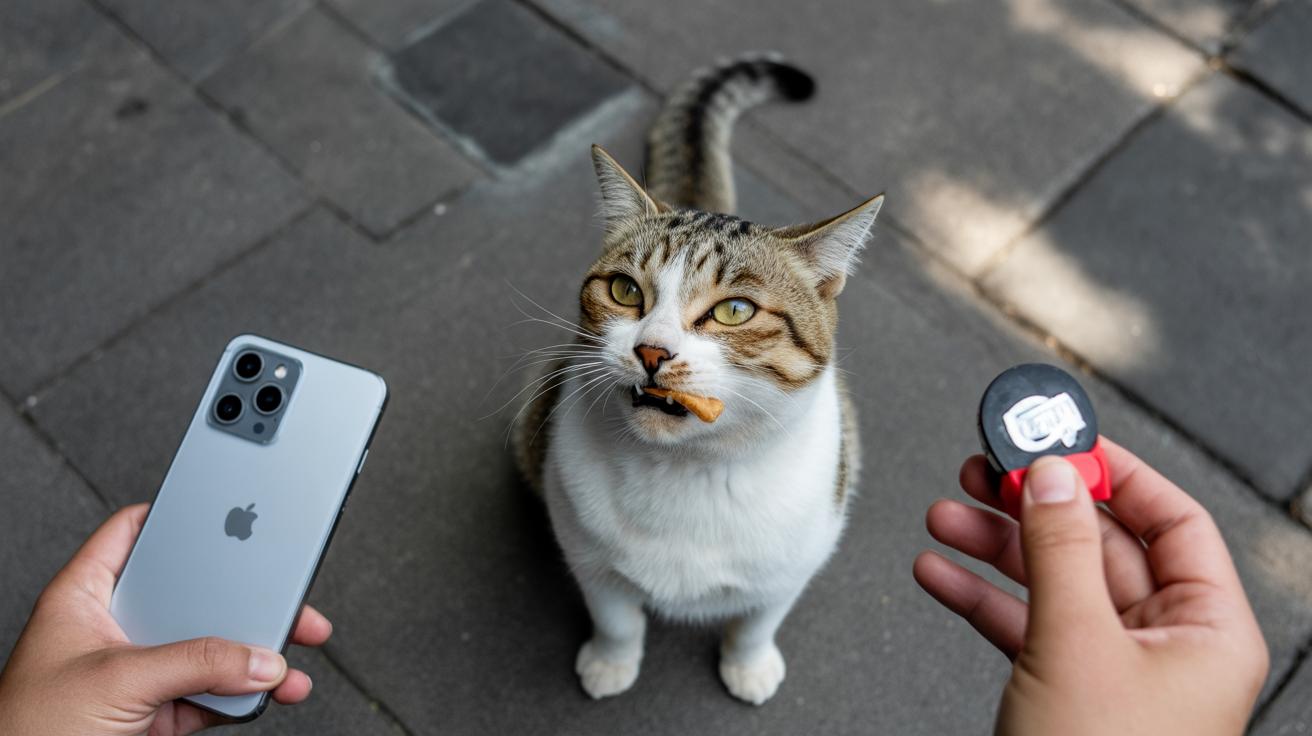
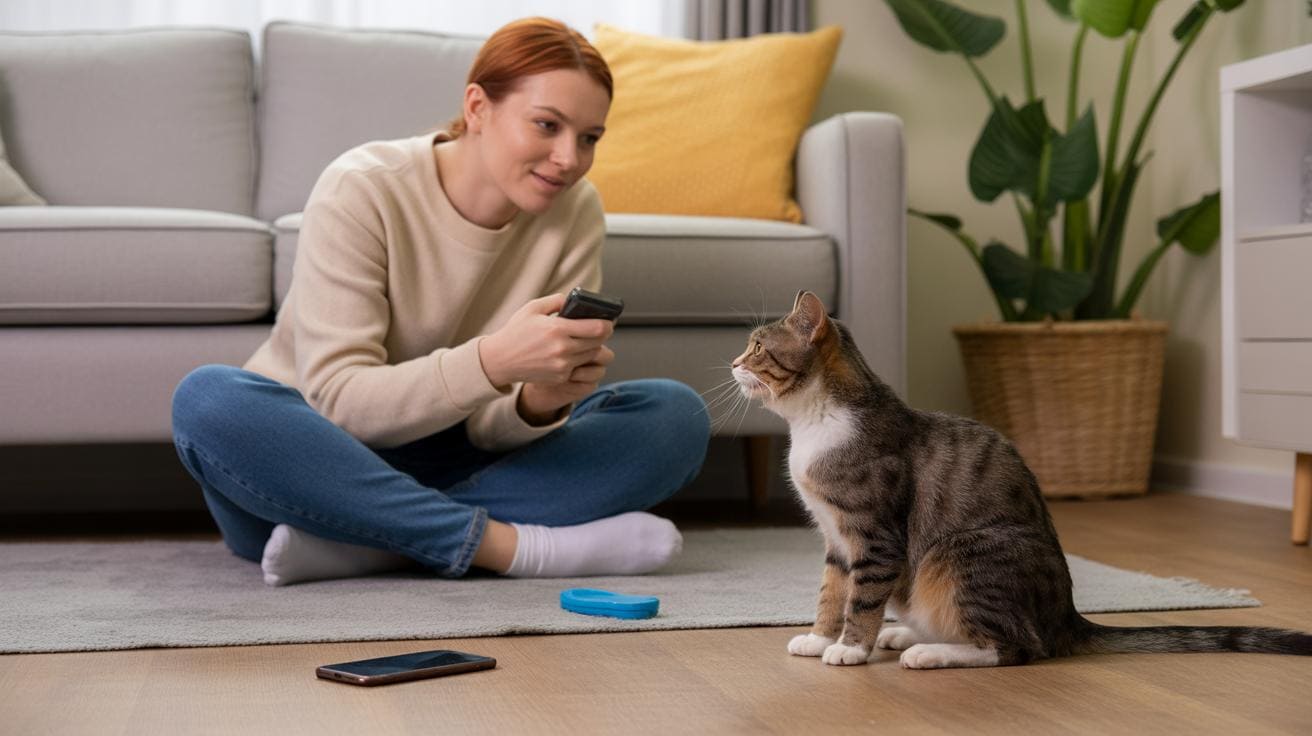
Think cats can't be trained? I figured that too, until I tried clicker training. A clicker (a small plastic tool that makes a sharp click) acts like a camera flash for behavior: you click the exact moment your cat does what you want, then give a tiny treat. That quick sound tells them "yes" faster than words ever could.
It's simple and fast, great for busy people or shy kitties. Short, playful sessions and perfect timing turn wild, random pounces into tricks you can repeat. Ever watched your cat lock onto a sunbeam and pounce? That same laser focus is what starts the magic, so try a minute or two before you head out and watch them shine.
Worth every paw-print. Claw-tastic.
Simple clicker training for cats: getting started
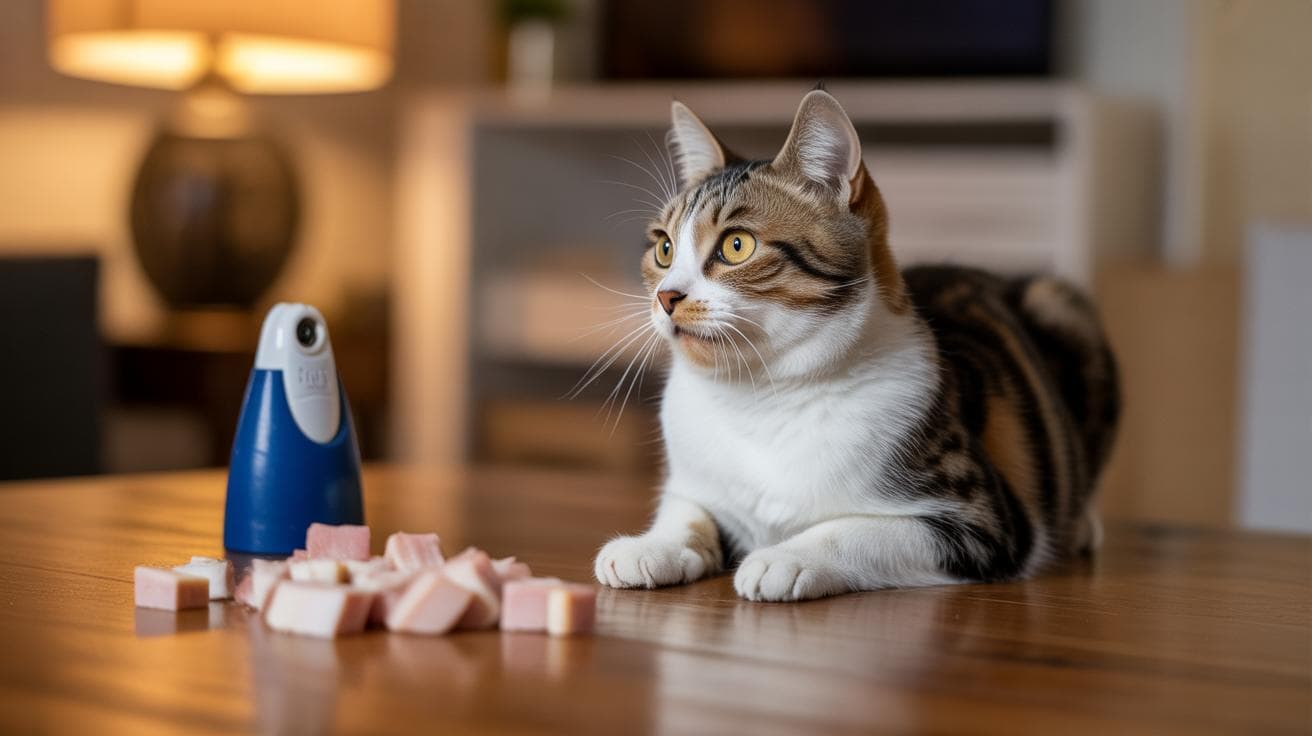
Clicker training uses a sharp, consistent click to mark the exact moment your cat does something you want, then you follow that click with a reward. The clicker (a small plastic device that makes a crisp sound to mark behavior) tells your cat, "Yes, that!" It’s simple. And kinda magical when your kitty gets it.
- Get your cat’s attention. Ever watched your cat stare at a sunbeam and suddenly pounce? That focus is what you want.
- Offer a tiny treat (tiny chicken cubes, tuna flakes, or meat baby food). Make treats so small your cat can eat one in 1–2 bites.
- Click the instant the desired action happens. Click at the exact millisecond the behavior finishes. The click is the marker.
- Give the treat immediately after the click. Fast reward helps your cat link the click to the action.
- Repeat in short bursts. Do a few quick tries, then pause. Short and fun beats long and boring.
- End on a win and stop while your cat is still interested. Worth every paw-print.
Keep sessions super short: 1–5 minutes each, a few times a day. Click only when the behavior finishes. That exact timing is the whole secret.
See detailed sections below for equipment, charging/timing, and troubleshooting.
Choosing clickers and reward tools for clicker training cats
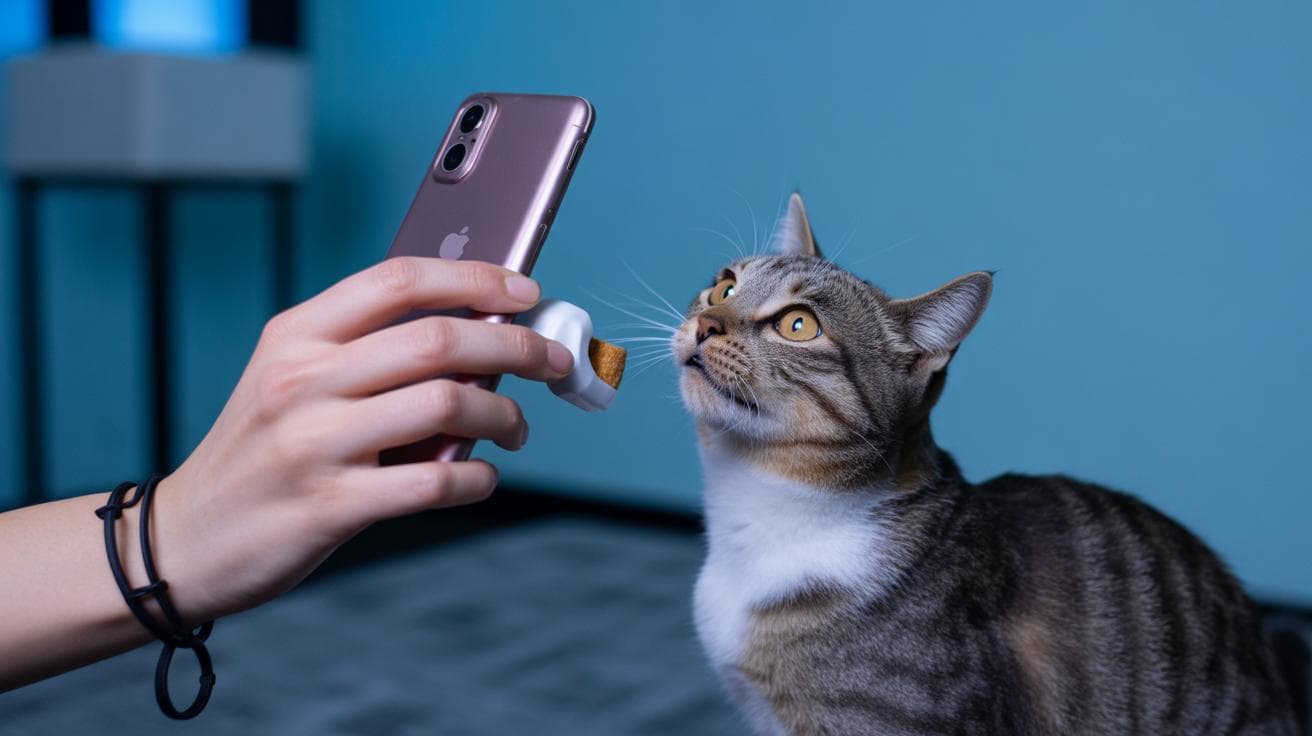
Pick a click sound your cat notices but doesn’t make them jump. Think of the click as your cat’s “yes” , a clear, consistent marker that says, good job. Standard plastic clickers (plastic – a small hard device that makes a crisp snap) give a bright, repeatable sound. Soft or silent clickers (dampened plastic or foam-covered models – soften the snap) are gentler for shy kitties. You can also use a pen-click, a tongue-click, or a clicker app (phone program that plays a click sound). Try a couple of options and pick the one your cat keeps coming back to , curious ears and steady returns beat drama every time.
Treats and a few small tools make training way easier. Use tiny, soft bites that disappear in one or two chews: tiny dice of fresh chicken, flakes of tuna, a dab of meat-flavored baby food on a spoon (baby food – smooth, single-ingredient meat), or soft commercial treats (commercial treats – bite-sized, soft). A target stick (short stick with a nub for your cat to touch) is great if your cat snatches treats from your fingers. Carry treats in a pouch or small bowl (treat pouch – clips to your waist) and use a little scoop so pieces stay the same size. That way calories don’t sneak up on you or your cat.
Worth every paw-print.
- Standard plastic clicker (plastic – crisp snap)
- Soft/silent clicker (foam-covered or dampened click)
- Pen-click method
- Tongue-click option
- Clicker app (phone program that plays a click sound)
- Treat pouch or small bowl (keeps treats handy)
- Target stick (short stick with a nub for touching)
| Clicker Type | Pros | Cons |
|---|---|---|
| Standard plastic clicker | Clear, loud marker that your cat learns quickly; cheap and long-lasting | Can startle very shy or noise-sensitive cats |
| Soft/silent clicker | Gentler sound for nervous cats while still consistent | Harder to hear across a busy or noisy room |
| App / phone clicker | Free, adjustable volume, handy when you forget a device | Phone alerts can interrupt; sound quality and timing vary by phone |
Calorie-control note: keep pieces tiny, count rewards, and try training before meals to boost motivation.
For a quick refresher from the Quick Start, see section: Choosing clickers and reward tools for full equipment details.
Charging the clicker and timing the click for clicker training cats
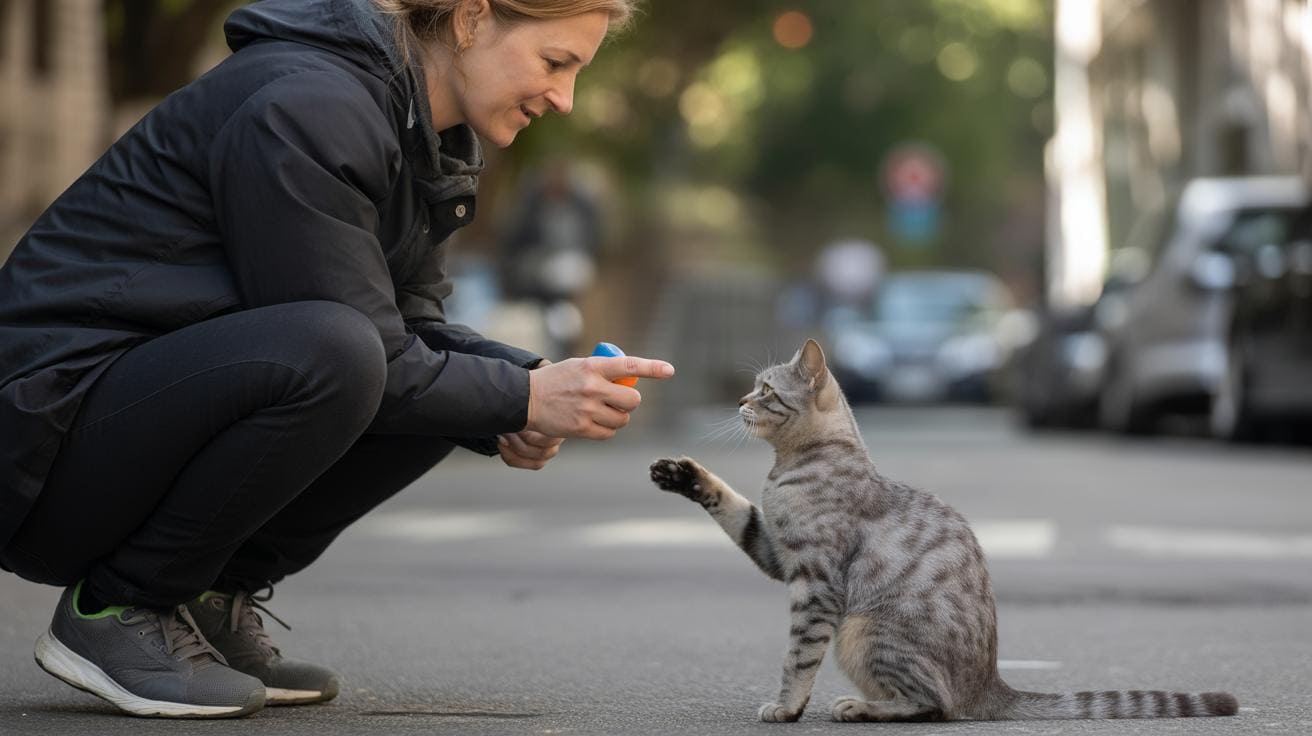
Charging the clicker means teaching your cat that the click predicts a treat. Clicker (a small handheld device that makes a sharp click) charging is just pairing the sound with food so your cat thinks, “Oh good, treat time.” Do 10 to 20 click→treat pairings in a few short sets and your cat will learn that click equals reward.
Timing is the whole trick. Click the instant the behavior finishes – for a sit, click the moment the rear hits the floor. Then give the treat right away. If you wait even a beat, the cat gets confused.
Here’s a simple plan to practice. Start with three sets of 10 charge pairs to build the click-treat link. After a short 5–10 minute break, run 5 to 10 timing drills where you make the action slow and clear so you can click the exact finish. Think of the drills like warm-ups before the real game.
Many beginners hit the same snags. Late clicks, clicking while the cat is still moving, and slow treat delivery are the usual culprits. The good news: small drills and tiny habit changes fix them fast.
- Find a quiet spot with few distractions.
- Use very small treats (tiny chicken cubes, tuna flakes, or meat baby food).
- Do 10–20 click→treat pairings across short sets (try 3 sets of 10).
- Wait 5–10 minutes, then do another short set.
- Test by waiting for a simple offered action and click the precise finish.
Common mistakes and quick drills
- Late click → Drill: Practice with slow behaviors, like having your cat sit very slowly, so you can click at the exact end. Do 10 slow reps.
- Clicking during approach → Drill: Train clear end-points (rear on floor, paw touch) and only click when that point is reached.
- Slow reward delivery → Drill: Pre-place treats in a bowl so you can hand one instantly after the click.
- Startling sound → Drill: Try a softer clicker or a pen-click and recharge with gentle pairings so the sound feels friendly.
- Treat-stealing interrupts timing → Drill: Use a target stick to separate the touch from the snack, so the timing stays clear.
- Overclicking for partials → Drill: Raise your standards slowly; only click for closer approximations to the full behavior.
Ever watched your kitty chase a shadow and think, “Yes, more of this”? Use short, fun sessions and you’ll get clean clicks and happy cats. Worth every paw-print.
If a troubleshooting tip points to recharging or timing practice, come back to this section: Charging the clicker and timing the click for clicker training cats.
Simple clicker training for cats: getting started
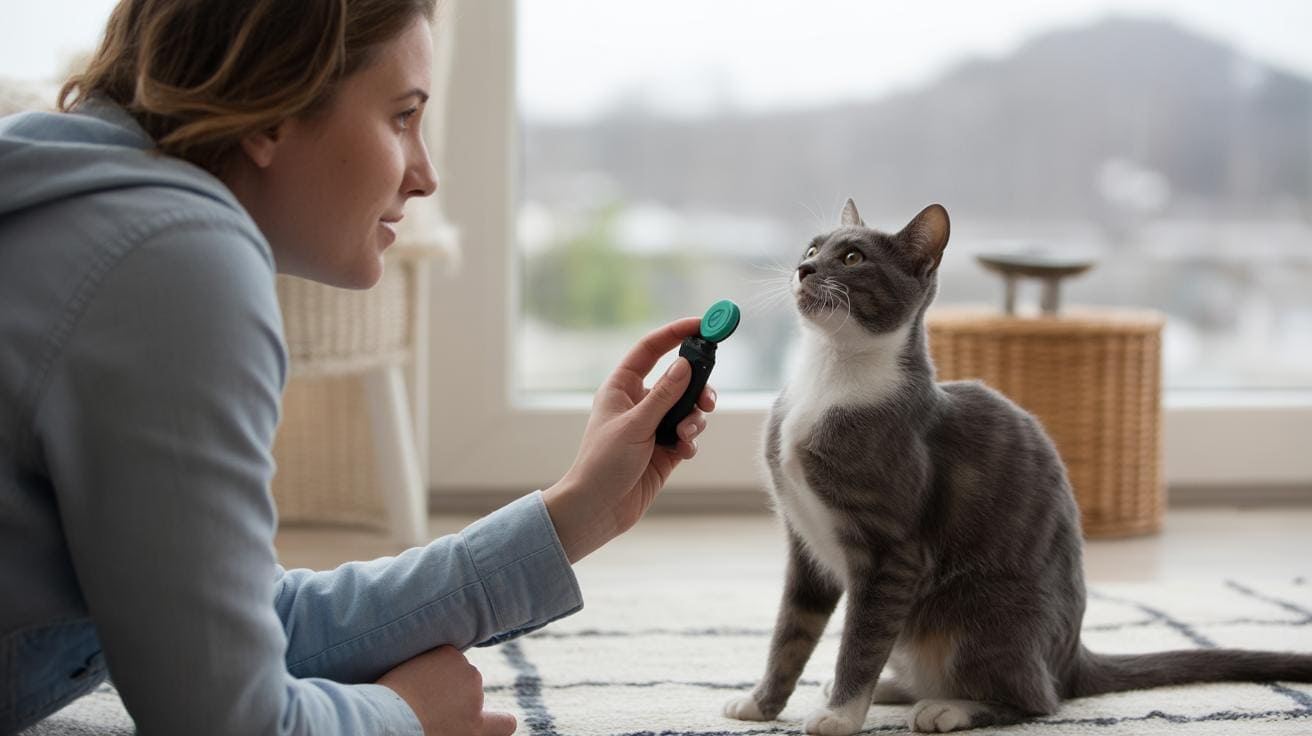
These first three lessons – sit, recall (come), and target touch – are perfect quick wins. They give you a clear path to more fun tricks and help your cat learn the clicker-to-treat connection (the idea that a click means a treat is coming). Keep sessions short and playful. Stop while your cat still wants more.
Sit
Use a treat to lure your cat into a sit with a smooth upward arc toward the head, then mark the exact moment the rear hits the floor with your clicker (a small handheld device that makes a sharp click).
- Get your cat’s attention by holding the treat near the nose.
- Move the treat slowly in an upward arc to just between the ears.
- Wait for the rear to lower. Don’t push the cat down.
- Click the instant the rear touches the floor. That millisecond is the marker.
- Give the treat right away and praise calmly.
- Repeat in short bursts, and finish on a clear success so the cat ends happy.
Timing cues to watch for
- Click the moment the rear hits the floor.
- Click when the head lifts to follow the lure (if you’re teaching the movement).
- Click when the cat holds the sit for a breath or two.
Recall (Come)
Start close, in a quiet room, and use very high-value treats. Click while your cat is moving toward you at first, then switch to clicking on arrival once they get the idea.
- Pick a quiet room and a super-tasty treat.
- Call your cat’s name or a short cue, and show the treat.
- Take one step back, pause, then call again.
- Click as your cat moves toward you in the early stage, or click on arrival later on.
- Reward immediately at your feet so coming equals payoff.
- Slowly increase distance and add gentle distractions over many short sessions.
Tip: start 1-3 feet away, keep sessions tiny, and remove distractions until your cat is reliable.
Target Touch
A target stick (a small wand with a nub) or your fingertip becomes a precise tool to guide movement and stop treat-snatching.
- Present the target near the cat’s nose.
- Wait for a nose touch; don’t push the stick into their face.
- Click the instant the nose makes contact.
- Reward and then withdraw the target briefly.
- Use the target to lure positions or require a touch before giving a treat, which cuts down on grabby behavior.
Short, easy session plan
| Behavior | Typical reps per set | Sets per session | Session time per behavior |
|---|---|---|---|
| Sit | 6-10 | 2-4 | 1-2 minutes |
| Recall (Come) | 3-6 | 3-5 | 1-3 minutes |
| Target Touch | 8-12 | 2-3 | 1-2 minutes |
Keep things fun. Your cat’s whiskers will twitch, they’ll give you that slow-blink, and you’ll both feel proud. Worth every paw-print.
Shaping, luring, and capturing natural behaviors in clicker training cats
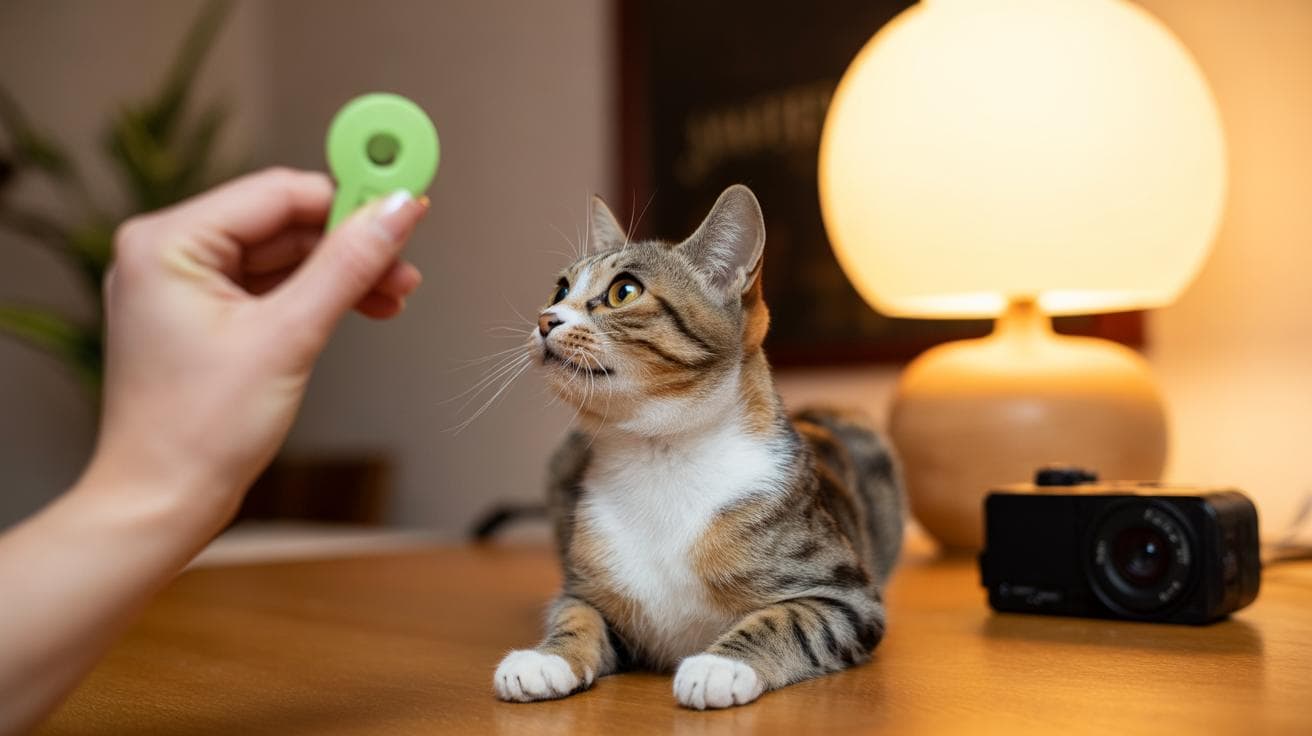
Luring means using a treat to guide movement, think of moving a tasty dot where you want your cat to go. Shaping is rewarding tiny, useful steps toward a bigger trick until the full behavior appears. Capturing is the easiest one for spontaneous stuff: you click and reward the instant your cat offers the action on its own. Clicker (a small handheld sound device) or a quick verbal marker works the same way.
Pick the method based on how easy it is to guide the action. Use a lure for simple position cues like sit or down. Use shaping for layered or new tricks that don’t follow a single baited path, like a precise jump sequence or a paw target that needs several parts. Use capture when the cat already does the thing sometimes, then you just watch closely and click the moment it happens.
Start fast. Clicks should come quickly at first, and give a treat every time so your cat connects the sound with the reward. As the behavior gets tighter, only click for closer versions and space out treats so the action stays reliable. Keep treats tiny and quick to eat so momentum doesn’t stop (tiny chicken cubes, tuna flakes, or meat baby food).
Ever watched your cat’s whiskers twitch as a treat rolls across the carpet? That’s exactly the kind of attention you want. Break the final behavior into the smallest possible steps, praise the little wins, and tighten your criteria slowly.
- Decide the final behavior you want.
- Break it into the tiniest possible steps.
- Click the closest approximation the cat offers.
- Reward every click at first, fast and frequent.
- Raise the standard gradually; only click for closer versions.
- Fade treat frequency as accuracy improves (keep occasional surprises).
Examples:
- Luring: sit, lie down.
- Shaping: jump through a hoop, fetch a small toy.
- Shaping: spin or weave between legs.
- Capturing: stretching, pawing a toy offered spontaneously.
- Capturing: head-butt or slow-blink offered without prompt.
- Luring/Target combo: stepping onto a mat or into a carrier.
Worth every paw-print. See section: First lessons for target and lure steps you can copy.