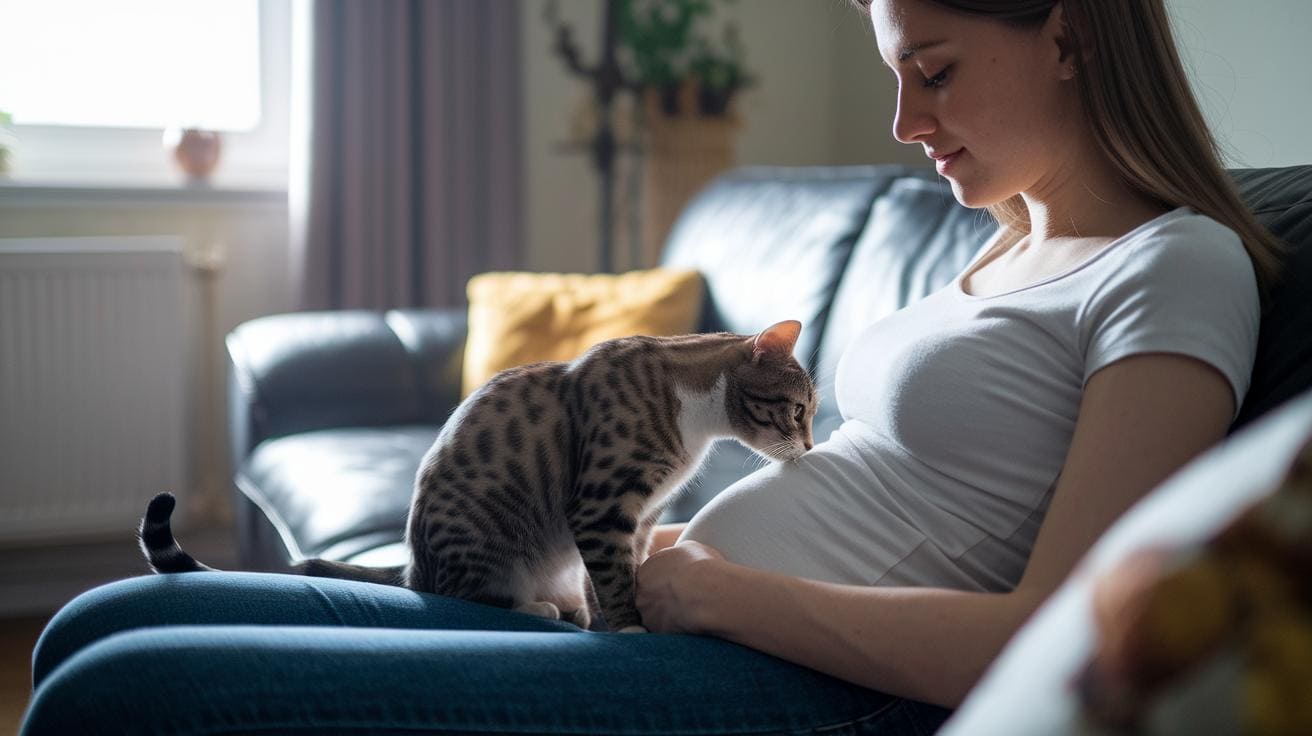
Ever noticed your cat snuggling up extra close these days? It might be more than a mood swing.
Cats are like little detectives on four paws. They can sniff out surges of hormones (natural body chemicals). Their whiskers twitch at tiny heat changes on your skin.
And get this – they might even hear the faint thump-thump of your baby’s first kicks. Really.
In this post, we’ll show you how your kitty pieces together these subtle hints, from fresh scents to a slower walk, and why they seem to sense your pregnancy before you do.
do cat know when you are pregnant Surprisingly
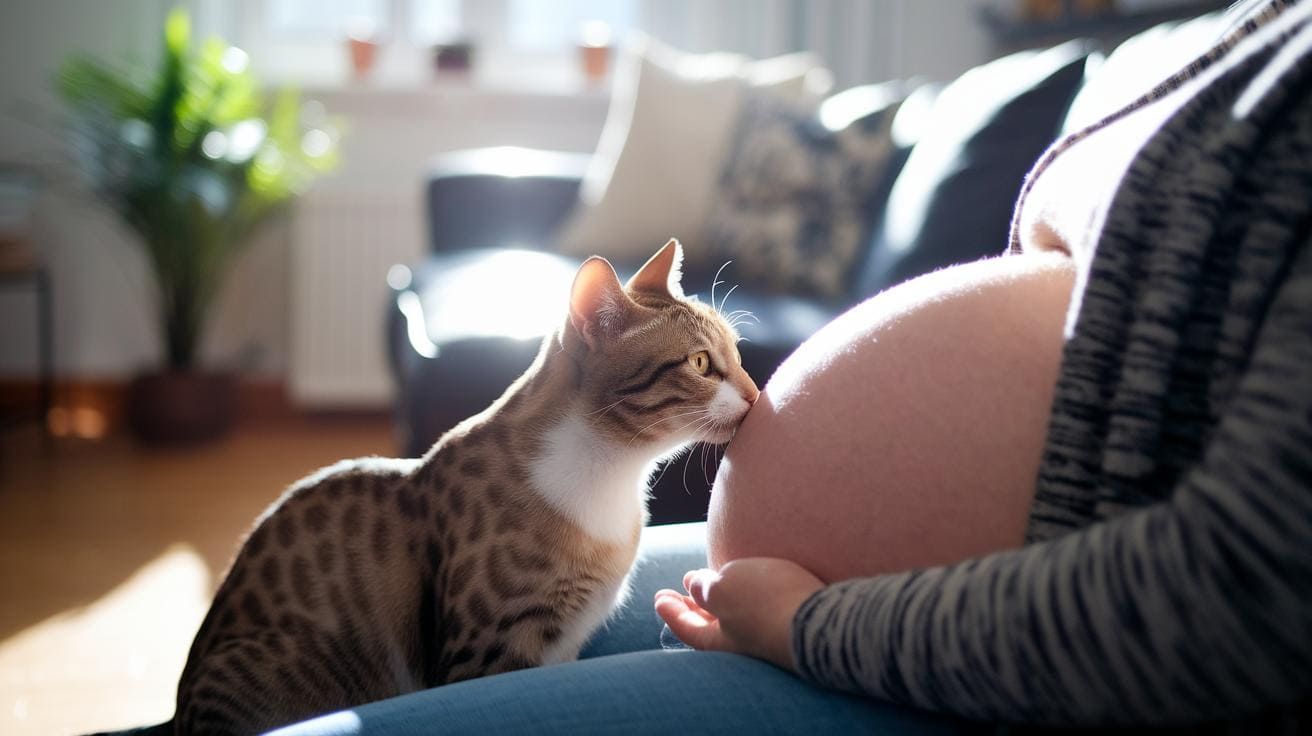
Oh, you bet your kitty does. They can smell your changing hormones (like progesterone and hCG (human chorionic gonadotropin, a pregnancy hormone)) and feel a tiny extra warm glow on your skin. They might even pick up on faint thumps from your baby’s heartbeat or muffled kicks. And they notice you moving slower, taking more breaks, or setting up new baby gear.
These little clues usually have them purring nonstop, nuzzling your belly, or giving you curious head butts. Ever watched your cat tilt its head like it’s trying to read your mind? Totally pawsome. My Luna even started guarding my belly pillow like a furry sentry.
Here are the main things your cat is tuning into:
- Changed hormones (see “How Cats Detect Your Pregnancy Through Their Sense of Smell”)
- A slight rise in warmth (see “Temperature Cues” section)
- Baby noises inside (see “Can Cats Hear Your Baby?”)
- Your new routines (see “Feline Behavior Changes During Your Pregnancy”)
Feline Behavior Changes During Your Pregnancy
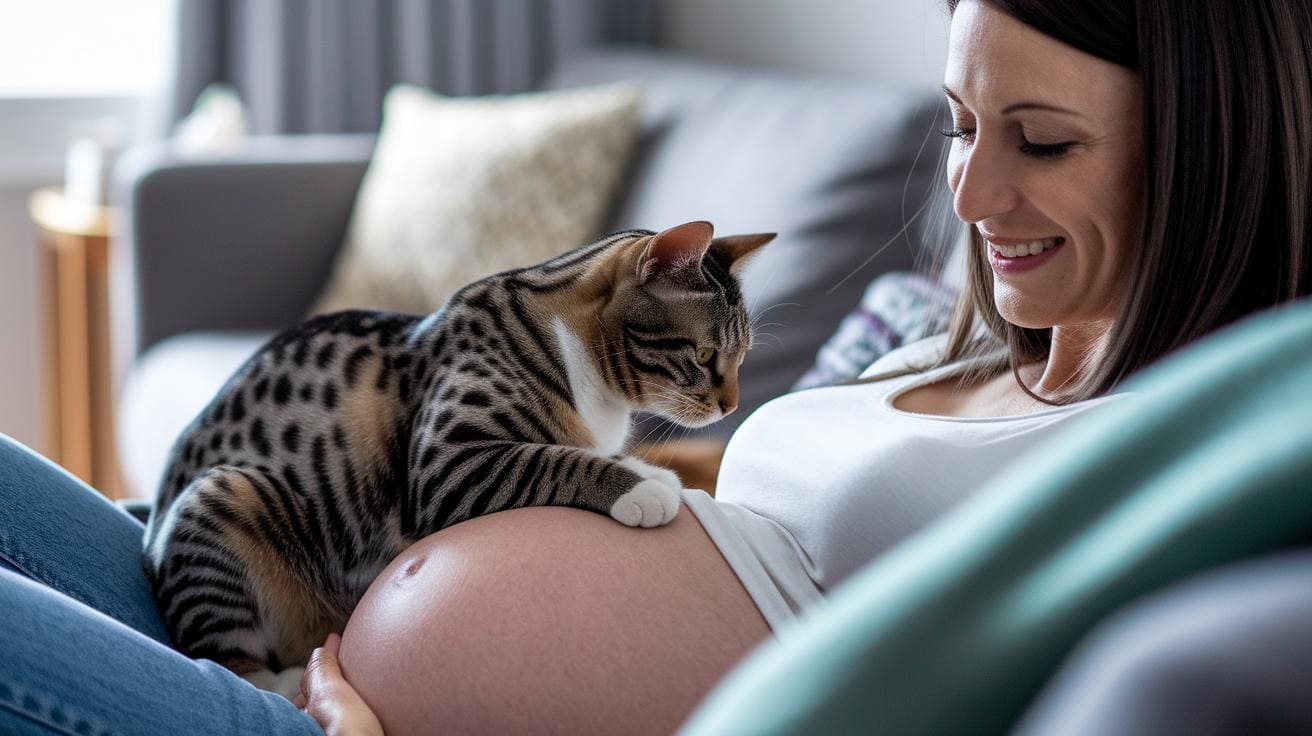
Ever notice your cat acting a bit different when you’re expecting? Some kitties get super lovey, rubbing their cheeks along your arms, kneading like dough (that soft pressing with their paws), and purring so loud you can feel the vibration. Other cats turn into your shadow, following you room to room and meowing for lap time. And then there are the pros at retreat, they’ll curl up in a quiet spot away from all the belly-rubbing drama.
You might catch your cat sniffing or gently batting at your baby bump, whiskers twitching in curiosity. Then comes the classic head-on-the-belly move, with your fluffball snoozing like a kitty guard dog. Protective mode can get hilarious, um, I once found Mr. Tuxedo perched outside the nursery door at midnight, standing watch. Whether they’re male or female, every cat reacts based on their temperament and how close you two are.
This mix of cuddly clings and watchful stances makes pregnancy feel even more magical. Your furball is sending extra purrs, soft paw taps, and those sweet belly-hug naps. In a way, these behavior tweaks say, “I’m here for you, human.” Worth every surprise whisker brush.
How Cats Detect Your Pregnancy Through Their Sense of Smell
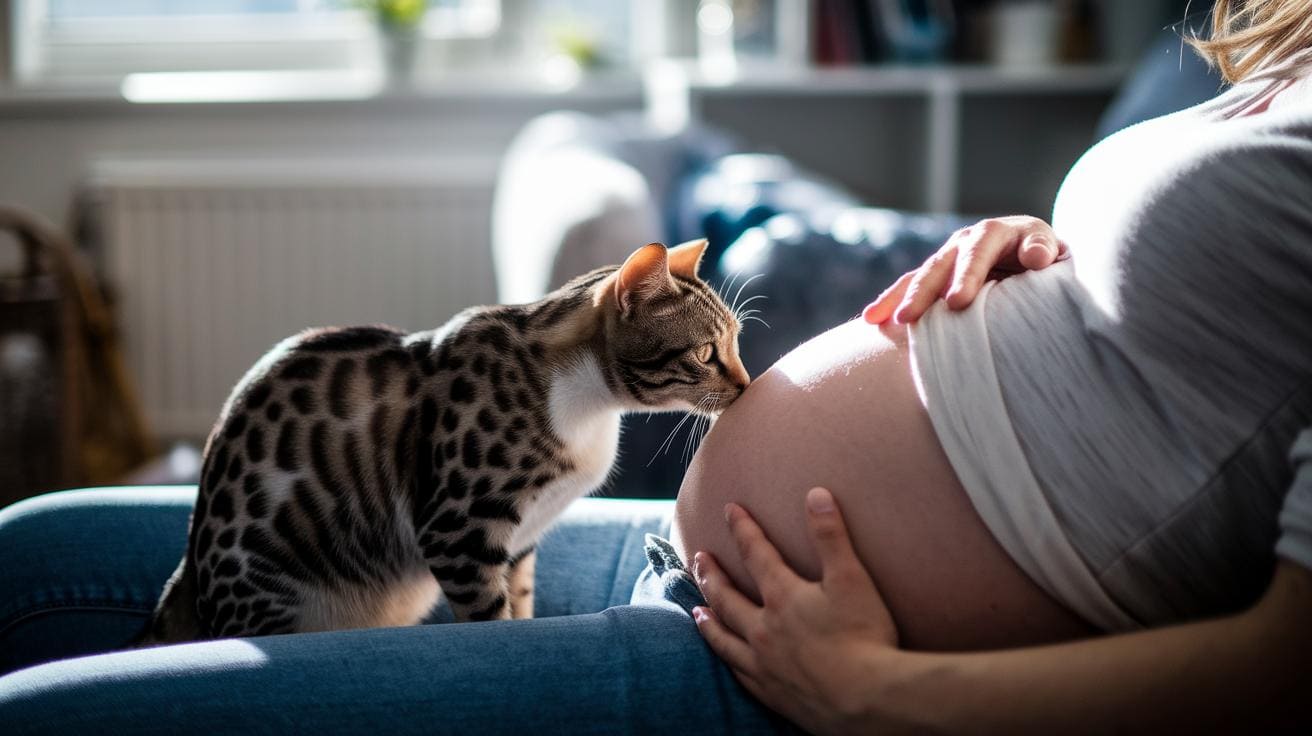
Cats have a secret scent tool called the vomeronasal organ (tiny scent receptor pouch in the roof of their mouth). And they team it up with scent glands on their cheeks and paws. When your kitty presses her face into your skin, she’s gathering pheromones (invisible chemical messages). Really, her nose is about 14 times stronger than ours.
Right after ovulation, around six to ten days in, your body starts changing the scent it gives off. Rising levels of hCG (human chorionic gonadotropin, that key pregnancy hormone), progesterone (hormone that helps support pregnancy), and estrogen (hormone that controls many female traits) tweak your sweat and other natural fluids. To a cat’s super-sniffer, even the tiniest shift is like a flashing neon sign.
I’ve heard from so many cat parents who say their felines started sniffing or nuzzling their belly weeks before any doctor appointment. Some even knead or rub against clothes to sample the new aroma. It’s instinctive scent talk, your cat’s way of tuning in to what’s going on inside you.
In truth, scent is the heavyweight champ in how your cat figures out you’re expecting. Sure, warmth from your belly or a change in your routine helps too, but it’s that personal perfume remix that speaks loudest. So next time your furry friend circles your midsection, know she’s using that claw-some nose to pick up on pregnancy hormones you can’t hide.
Can Cats Hear Your Baby? Examining Felines’ Audio Clues to Your Pregnancy
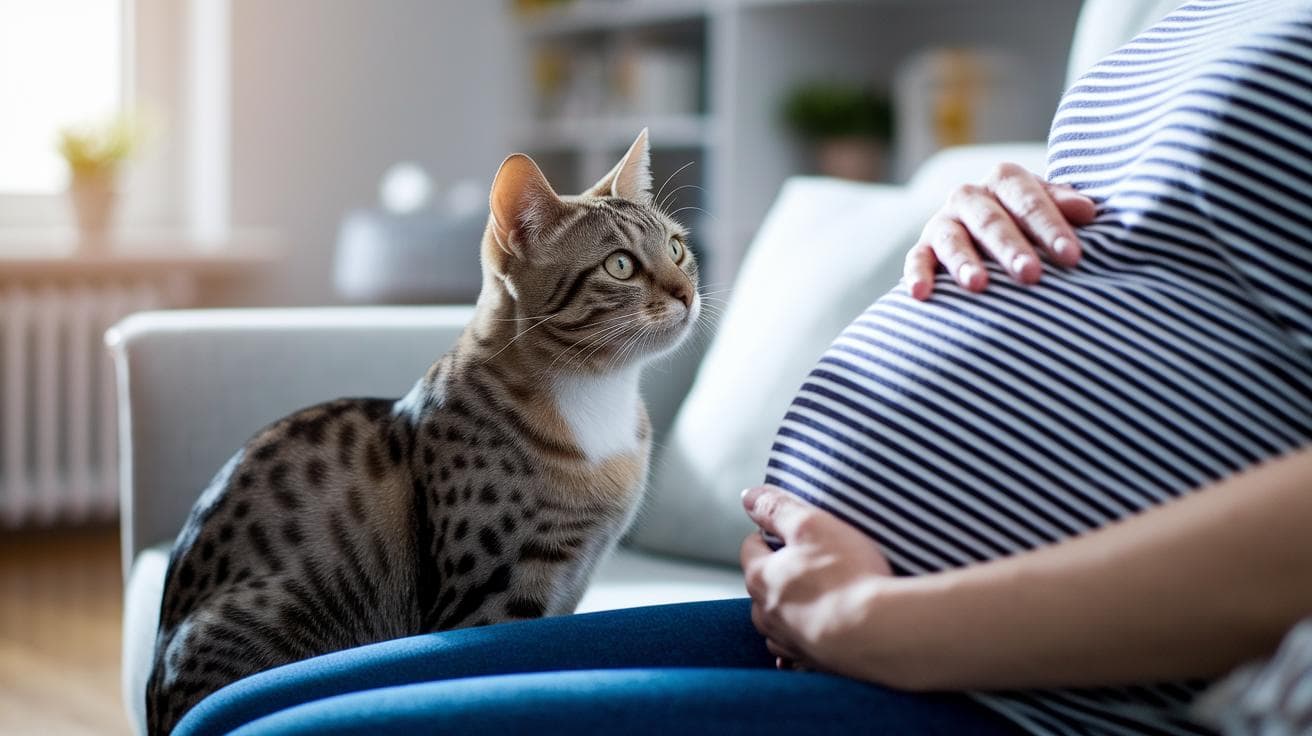
Ever seen your kitty tilt its head at your belly? Cats hear up to 65 kHz (kilohertz, one thousand sound waves per second) – way above our 20 kHz limit. That might let them pick up tiny internal noises you can’t. Pet parents share stories of kitties hearing a fetal heartbeat (baby’s heartbeat) as early as week seven – but it’s all word of mouth, not science. It’s the same gift that helps cats sense low blood sugar or early seizures by catching little shifts in your breath or blood flow. No wonder they tune in when you rest your hand on your bump.
Around week sixteen, you’ll feel those gentle kicks when your cat purrs (the cozy rumble cats make). That vibration can make your baby stir. Some cats lean in, ears forward, like they’re tracking silent bass notes or muffled ultrasound beeps (sound wave scans). Purr-tastic chorus, huh? Watch for ears swiveling toward your bump or a sudden tail flick during snuggle time. See? Tiny audio detectives at work.
- Cat vs human hearing: 65 kHz vs 20 kHz
- Possible fetal heartbeat detection at week seven
- Reaction to purring vibrations and ultrasound beeps
Managing Cat Care and Safety During Your Pregnancy
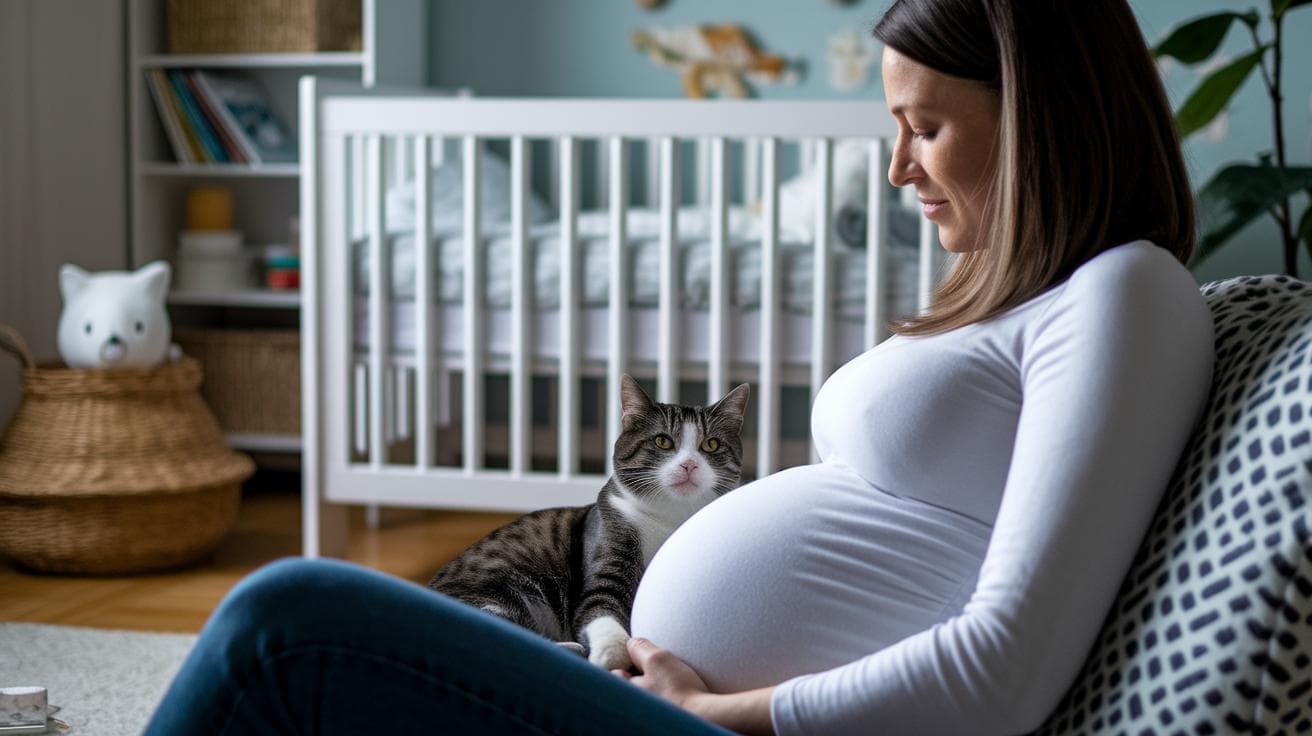
Ever watched your kitty check out new boxes like a tiny inspector? Cats love routine, so keep feeding, play, and sleep times just as before. Toss that toy mouse when you always do and save your coziest spot for evening snuggles. It’s paw-some for keeping stress at bay.
Litter box hygiene needs extra care. If you can hand off scooping, hooray, you’re sidestepping toxoplasmosis (an illness from cat waste). If you can’t, slip on disposable gloves and a simple mask, kind of like a quick kitchen chore. Then wash your hands with hot water and soap before touching anything else.
And cats need hideouts of their own. Try a cardboard box up on a shelf or a soft bed tucked behind a closed door. These little retreats help them dodge surprise baby sounds or new furniture fuss. A calm cat is less likely to dash under your feet or leap onto your belly, keeping you both comfy and safe.
Don’t skimp on affection either. Even with extra doctor visits and diaper piles, carve out lap time or a quick brush session. A short play session before bedtime can burn off energy and curb late-night meows. With steady love and gentle reassurance, you’re balancing baby prep with your cat’s need for connection.
Worth every purr.