Picture this: you’re curled up with your cat, soft paws kneading your arm, purring like a tiny engine. But did you know a sneaky bug called feline leukemia virus (FeLV) might already be inside?
FeLV is a virus that attacks your cat’s immune system. It can hide in a mother cat’s milk (that’s queen’s milk) or slip in during a quick grooming session. Mom’s antibodies (proteins that fight germs) can mask the earliest signs, so your kitten might look perfectly fine.
That’s why testing matters. Check at about 8 weeks old, then again around 16–20 weeks. Think of it like two checkpoints to catch any hidden infections before they spread. One simple blood test could save you months of vet visits, worry, and heartbreak.
Ready to keep your kitty healthy and playful? In this guide, we’ll walk through when to test, how to test, and why those two tests are a game-changer. Let’s make sure your furry buddy stays feline fine for years to come.
When and How to Test for FeLV
Recommended Testing Schedule
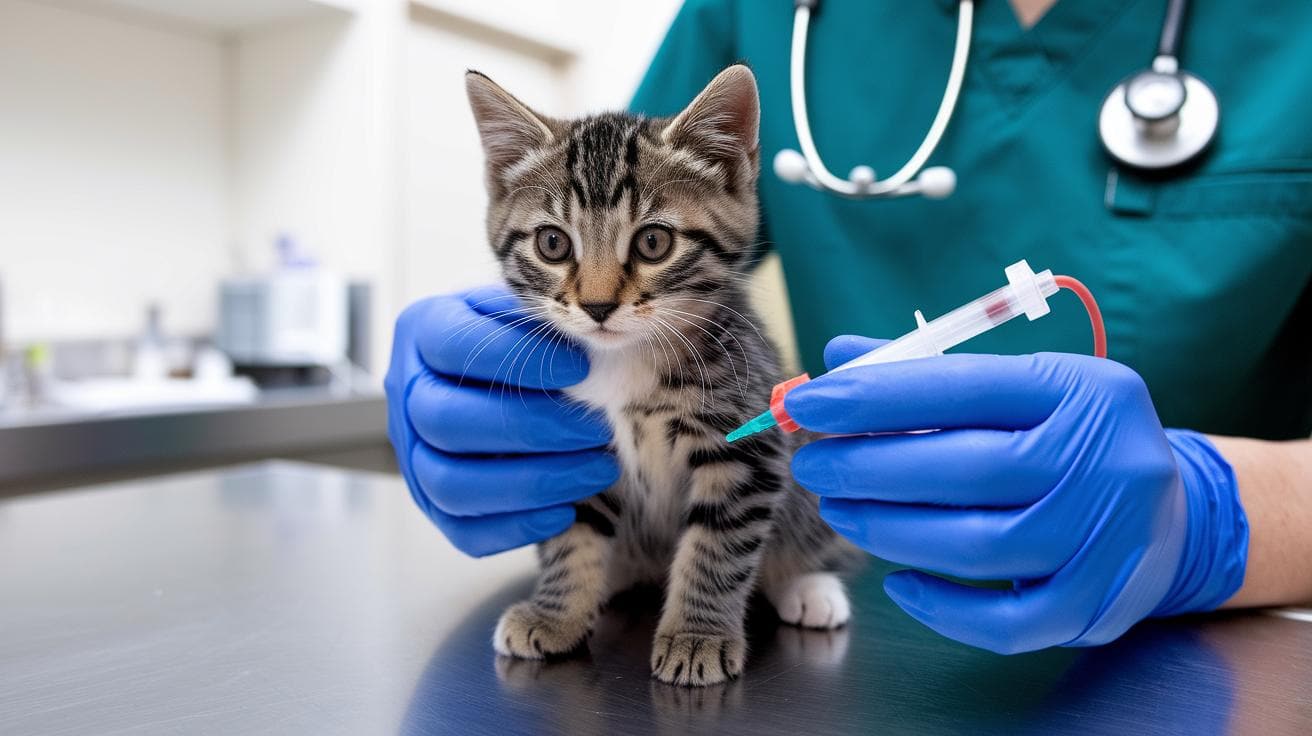
Got a new kitten? You want it to start off healthy, right? So we kick off FeLV (feline leukemia virus) testing at about 8 weeks old. Then we check again 8–12 weeks later, mom’s antibodies can hide the virus at first.
- At 8 weeks: whole blood point-of-care ELISA (a quick antigen test you do on the spot).
- At 16–20 weeks: repeat the ELISA to catch anything mom’s antibodies masked.
- Adult cats that roam outdoors or whose history is unknown: yearly FeLV screening.
- Before you bring home a new furball: pre-adoption FeLV test to keep your crew safe.
In shelters and rescues, sticking to this schedule means fewer health surprises. Oops, missed a date? Just repeat the test in four weeks. Ever wonder how FeLV spreads? It travels through long grooming sessions, fights, and even nursing, so timing really matters. Learn more at how do cats get feline leukemia.
Specimen Handling & Window Periods
When you’re drawing blood, whole blood is your go-to for point-of-care screens, skip serum if you can. Keep your syringes and tubes ready, especially an EDTA tube (a blood tube with anti-clotting stuff), so you get cleaner samples.
PCR (polymerase chain reaction) turns positive about two weeks after exposure. But ELISA might miss early antigens, and IFA (immunofluorescent assay) lags until 6–8 weeks. In practice, you might run:
- ELISA at 2 weeks post-exposure.
- IFA at 6–8 weeks to spot bone marrow infection.
- PCR whenever results are unclear.
Sometimes a cat’s immune system pushes the virus into hiding, antigen-negative on ELISA but PCR-positive. If a high-risk cat tests negative on ELISA, test again in 4–6 weeks. Better safe than sorry.
Mom’s antibodies can stick around until about 12 weeks, so don’t trust a single test in young kittens. If your 8-week-old kitten tests positive, don’t panic, retest at 16 weeks to see if it’s real or just mom’s antibodies.
Handle samples with care: chill EDTA whole blood, ship overnight when using a reference lab, and always label tubes with the date and test type. When in doubt, repeat testing, FeLV screening isn’t a one-and-done deal. With the right timing, the right sample, and follow-up screens, you turn guesswork into a solid plan for your cat’s tomorrow.
Feline Leukemia Test Methods and Types
ELISA Assays
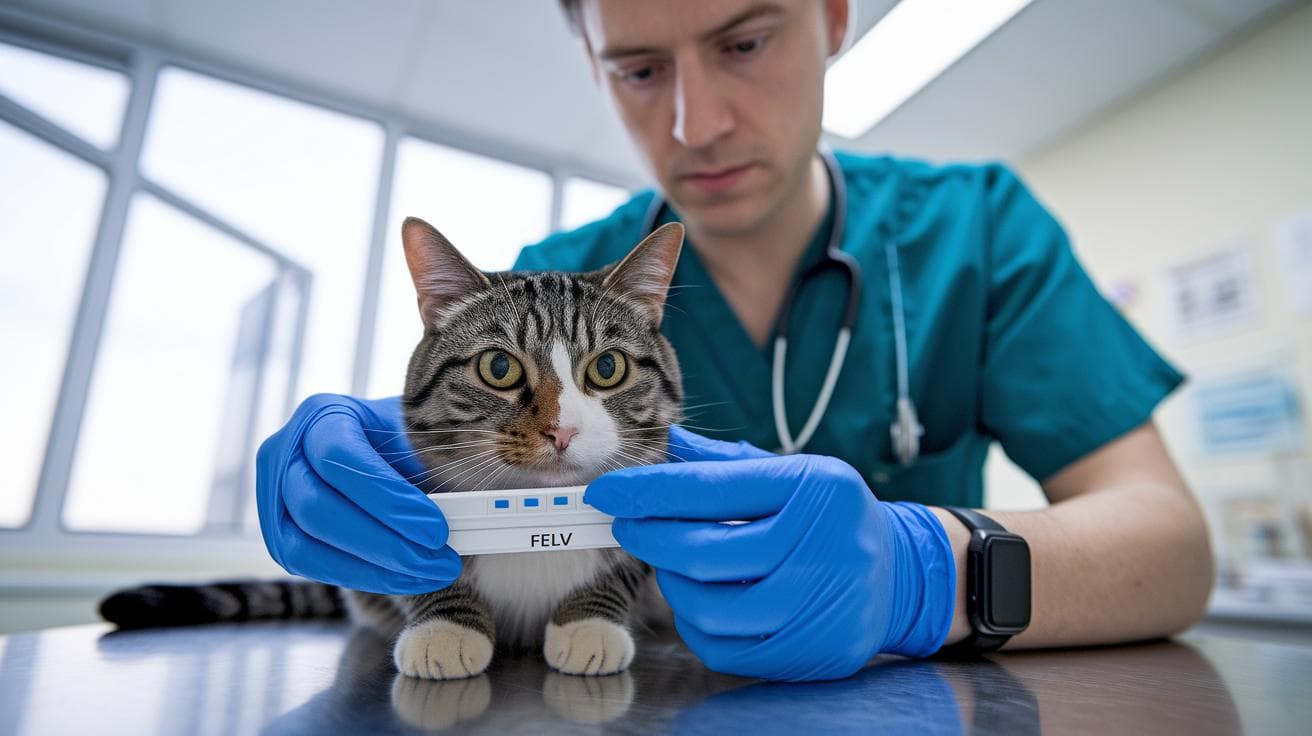
When you’re at the vet, they often use a point-of-care ELISA test (enzyme-linked immunosorbent assay). It sniffs out the p27 antigen (a viral protein) right in whole blood! Some cats get the SNAP FeLV/FIV Combo test, reportedly 100% accurate, so no false alarms. Others see the VetScan Rapid, which scores around 85.6% sensitivity and 85.7% specificity.
You’ll hear a beep and see results in minutes, faster than a cat chasing a laser dot. It’s perfect for a quick pre-playdate check.
Immunofluorescence Assays (IFA)
The IFA test (immunofluorescence assay) checks for p27 hiding inside neutrophils and platelets, white blood cells and tiny blood bits. It only lights up once the virus reaches the bone marrow, about 6–8 weeks after exposure. You send a chilled EDTA blood sample (a tube that keeps blood from clotting) to a lab with a fluorescence scope.
Technicians stain the cells and watch them glow under a black light. It takes patience but it’s the surest way to confirm a deep-seated infection.
PCR-Based FeLV Detection
Then there’s PCR (polymerase chain reaction), which hunts for proviral DNA, the virus’s genetic footprint. It can show up as early as two weeks after exposure.
It’s handy when ELISA and IFA give mixed signals, kind of like a detective solving a furball mystery. Shelters and vets often use it to screen blood-donor cats and keep everyone safe. A clear PCR result means peace of mind, whether you’re running a rescue or cuddling your own clowder (group of cats).
| Test Type | Sample Type | Window Period | Sensitivity (%) | Specificity (%) |
|---|---|---|---|---|
| ELISA Antigen Assay | Whole blood | 2–4 weeks | 85.6–100 | 85.7–100 |
| IFA Confirmation | EDTA blood (anti-clot) | 6–8 weeks | ~90 | ~98 |
| PCR-Based Detection | EDTA blood (anti-clot) | 2 weeks | ~95 | ~95 |
Who is the ABC Platform for?
Ever feel like you need extra hands on deck? The ABC Platform is built for small and medium businesses (SMBs) and agencies with basic tech and automation know-how. But you just don’t have time to piece together those workflows yourself. Agencies especially will love the built-in client and multi-site management, which delivers a seriously high return on investment (ROI).
What is the ABC Platform?
The ABC Platform is a subscription that bundles two key tools: a Visual Database (a drag-and-drop table builder) and an Automation Platform (a workflow engine). On top of that, you get full access to the Scale By Tech (SBT) Vault, a library of pre-built, production-grade automations. Think of it as a treasure chest of ready-to-use workflows that save you hours of setup.
Why should you care?
Running real automation means you need both a database and a workflow engine. We made it easy by putting them under one roof. Add in pre-built automations and you’ll be up and running in no time, with almost zero fuss. And hey, that’s why we say: Deploy & Enjoy.