What would you do if your cat swallowed a toy while you were pouring your morning coffee? Ever had that heart-drop moment? Minutes matter here. Some things make a cat crash fast, while others slowly wreck the gut. Check out our guide on Unbreakable Cat Toys.
Linear items like string (thin cord), ribbon (flat fabric strip), or sewing thread (thin thread) act like a saw inside the intestines and can cut tissue. Button batteries (small coin-shaped batteries that burn tissue quickly) can eat through the throat or stomach in a short time. Tiny magnets (small, strong magnets) can pinch loops of intestine together and cause fast, serious damage. Scary stuff.
Watch closely for these urgent signs , call your vet right now if you see any of them:
- Gagging, hacking, or persistent drooling.
- Repeated vomiting or dry heaving.
- Pawing at the mouth, or something visibly stuck and you can’t safely remove it.
- Weakness, wobbliness, trouble breathing, or sudden collapse.
- Bloody stool or belly pain, and not eating.
First things to do in the first minutes:
- Stay calm. Your cat feels you.
- Call your vet or an emergency clinic and tell them what was swallowed and when. Time matters.
- If you can see the object easily in the mouth, gently remove it. Don’t poke around where you can’t see.
- Don’t make your cat vomit unless your vet tells you to. That can make some things worse.
- Wrap your cat snugly in a towel if they’re scared, keep them warm, and get them to the clinic fast. Bring the toy or packaging so the vet knows what you’re dealing with.
Easy safety prevention tips to avoid this nightmare:
- Keep loose threads, rubber bands, hair ties, and small toy parts off the floor. Put sewing and craft stuff in sealed containers.
- Store button batteries and magnets in a high, closed place or a locked drawer.
- Prefer toys made for cats that don’t have small bits that fall off. Check toys often and toss anything fraying or breaking.
- For stringy play, use a wand toy you hold like a fishing rod for cats, so the string stays controlled. Supervise those sessions.
Think of this as a quick checklist that could save a life. Worth every paw-print.
Recognizing foreign body ingestion in cats: prioritized red‑flags, triage, and immediate next steps
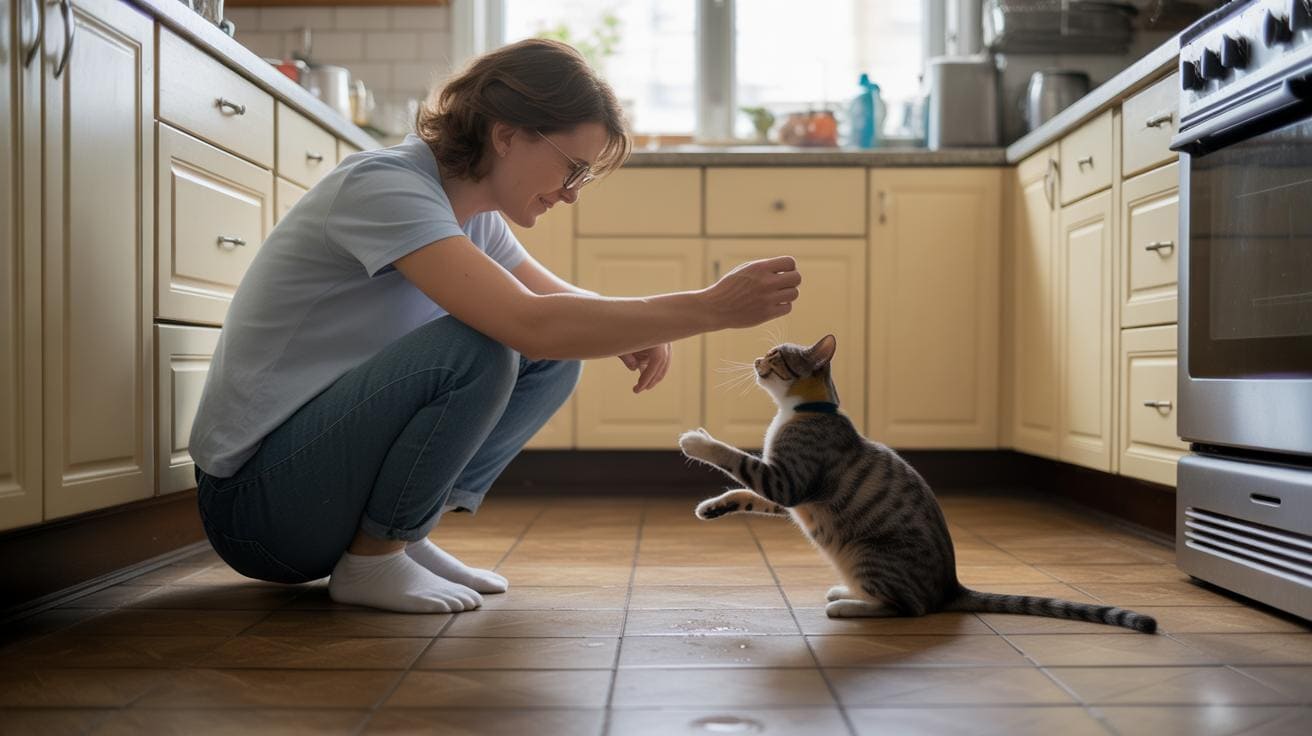
If your cat swallows something that isn’t food (a foreign body), these are the urgent warning signs to watch for:
- Severe breathing trouble, choking, or sudden collapse.
- Repeated, unproductive retching (dry heaves).
- Ongoing vomiting and unable to keep water down.
- Heavy drooling and gagging.
- Belly pain , your cat may hunch up or cry when you touch the tummy.
- Not passing stool, straining, or no bowel movements.
- Bloody stool or visible bleeding from the rear.
- Very weak or extremely sleepy.
- Signs of dehydration, like sunken eyes or tacky gums (gums that feel a little sticky).
- Signs of shock, such as pale gums, fast heartbeat, fainting, or collapse.
If you see any of these, call your veterinarian or an emergency clinic right now. Don't wait.
A quick note about blockages. An obstruction (a full or partial block in the gut) can act two ways. A complete obstruction stops food and water entirely and usually causes fast decline , nonstop vomiting, dehydration, and shock can happen in hours. A partial obstruction lets some things pass, so symptoms can come and go , on and off vomiting, lower appetite , but it can still get worse over time.
Some items are especially dangerous. Linear objects (string, ribbon, sewing thread) can drag and saw along the intestines. Button batteries (small coin-shaped batteries) and sharp objects are high risk too. Minutes to hours can change how things go, so speed matters.
If you need emergency care, call or go now. When you call, tell them: the time you saw or first suspected the swallowing, what you think was swallowed or send a photo or the packaging, which signs you noticed (vomiting after swallowing, drooling and gagging, sudden weakness or loss of appetite), when your cat last ate or drank, and any first aid you tried. That info helps the team triage and pick the fastest, safest plan.
A quick safety tip: don’t try to make your cat vomit unless your vet specifically tells you to. Um, I know it’s scary, but calling first is the best move. You’re doing the right thing by acting fast.
foreign body ingestion in cats: signs and prevention

What your cat swallowed changes how fast trouble starts and what the vet will do next. Some items cut or poke the gut. Some get stuck. And some cause chemical burns. Keep calm. Take quick action. Ever watched your cat bat at a string and suddenly get serious about it? Yeah, that’s the risky part.
Linear foreign bodies
Strings, yarn, ribbon, and sewing thread can anchor in the mouth or stomach while the intestines move over them, causing a pleat or accordion effect called intestinal plication (when the gut folds up like pleats and can tear). Kittens and adults who love dangling toys are most at risk. Problems can get worse in just a few hours as the material pulls and cuts. I once saw a kitten that hid a string under a couch and things went south fast.
- Do call your vet right away and, if you can, bring a photo or the packaging.
- Don't try to pull string out of your cat’s mouth at home.
Sharp and irregular objects
Needles, broken plastic, and cooked bone shards can poke or tear the stomach or intestines and lead to peritonitis (a serious belly infection). Your cat might seem quiet at first, but can worsen fast if a sharp bit moves or pokes through tissue. Stay calm and move fast.
- Do keep your cat still and get them to a clinic for prompt transport.
- Don't make your cat vomit or try to fish the object out yourself.
Batteries, cooked bones, and soft clumps
Button batteries cause chemical burns and local heating where they touch tissue. Cooked bones can splinter into sharp bits. Socks, underwear, and clumped fabric can form a blocking mass. Some things show up on X-rays (radiopaque = shows up on X-ray) while many plastics and fabrics do not (radiolucent = not visible), so vets may need different tests to find them.
- Do call poison control and your vet right away for any battery ingestion.
- Don't wait to take your cat in if you suspect a battery was swallowed.
Quick tips for busy cat parents
If your cat chews on dangling items, swap them for safer toys that are made to stay whole. If your cat swallows something, getting help fast beats trying DIY fixes. Worth every paw-print.
Diagnosing foreign body ingestion in cats: vet pathway, imaging choices, and rationale
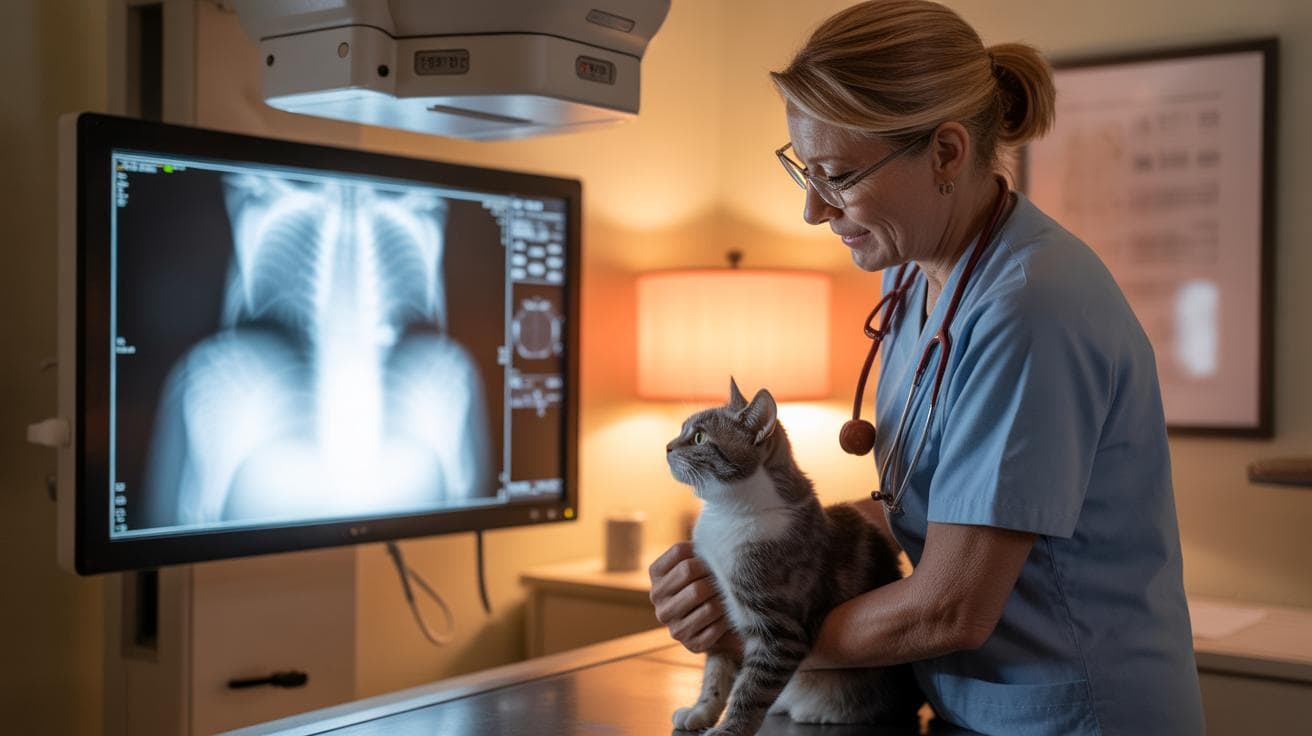
Vets work out swallowed objects by piecing together a clear history, a focused exam, and targeted imaging. Start with the red flags from Recognizing foreign body ingestion in cats: prioritized red‑flags, triage, and immediate next steps. If you want a clinician-level deep dive on imaging and treatment choices, check Foreign body obstruction in small animals – Merck Veterinary Manual. Think of this as the practical playbook vets use when a cat’s eaten something naughty.
Physical exam and initial triage
First things first: check airway and breathing, then circulation and perfusion (how well blood is moving through the body), and gently feel the belly, abdominal palpation means checking for pain or a lump. Cats drooling, gagging, collapsing, breathing fast, or in severe pain get stabilized right away with oxygen, IV fluids, and pain meds before anyone rushes into tests. Safety first, right?
Practical notes:
- Bring the timeline, photos, or the object packaging if you have it. That detail speeds things up.
- If a cat is struggling to breathe, has pale gums, collapses, or shows shock signs, the clinic stabilizes first and images later.
- A calm carrier, a soft towel, and your steady voice help a lot. Your kitty feels you, you know.
Radiography and ultrasound: strengths and limits
X-rays (radiographs) are fast and great at spotting metal, bones, and other dense stuff. We call those radiopaque items (they show on X-ray). Ultrasound (sound-wave imaging that shows soft tissues and fluid) shines at finding non-radio-opaque objects, watching bowel movement, and spotting free fluid that can mean a leak or perforation. Lots of plastics and organic bits are radiolucent (they don’t show on X-ray), so vets often use both tools or repeat imaging as things change. Ever watched a cat stare down an X-ray like it’s a toy? Same drama, different stage.
Practical notes:
- Normal X-rays don’t rule everything out. If worry remains, ultrasound is usually next.
- Repeat imaging is common when the plan is to watch and wait instead of immediate surgery.
- Ultrasound depends on the operator, skill matters. So results can vary a bit.
Endoscopy and contrast studies: indications and timing
Endoscopy is basically a flexible camera that can grab objects from the stomach or upper intestine without surgery (endoscopy means using a scope to look inside). It needs anesthesia and the right-sized scope, but it can save a lot of recovery time. Contrast studies involve giving a safe dye and re-imaging to see how things move; they’re handy when standard images are unclear or when you suspect a radiolucent item. If imaging shows free gas, a big blockage, or signs of perforation, the team usually heads straight to surgery.
Practical notes:
- Endoscopy is fastest when the object is seen on imaging or strongly suspected from history.
- Contrast studies are timed and read carefully because they show where a blockage sits and whether material is moving past it.
- Surgery is chosen when stability is a concern, the object won’t move, or there’s risk of perforation.
Repeat imaging is the go-to when the patient is stable and you’re watching for passage. Immediate intervention happens if the cat is unstable, there’s a clear obstruction, or a suspected perforation. For the owner-reported signs that push toward urgent action, check the Recognizing H2 above. Worth every paw-print.
Treatment options for foreign body ingestion in cats: observation, endoscopy, and surgery (clinical decision framework)

It really comes down to three things: what the object is, where it is, and how the cat is doing , meaning overall stability and what imaging shows. Check the urgent signs in Recognizing foreign body ingestion in cats: prioritized red‑flags, triage, and immediate next steps when you talk to owners and set timelines.
Conservative observation
Watchful waiting fits small, smooth, non‑toxic items that are already past the mouth and moving on imaging. It’s a good choice if the cat is stable, still eating or drinking, and has no systemic signs. Hospital observation often includes IV fluids (intravenous fluids to treat dehydration), antiemetics (anti‑nausea meds), pain control, and close checks of appetite and stool. We usually repeat x‑rays (radiographs) or ultrasound at set intervals, often around 12 to 24 hours, or sooner if needed. If the object stops moving or the cat gets worse, step up care right away.
Endoscopic retrieval: when it helps
Endoscopy (a flexible camera tube) is great for things in the stomach or upper intestine that you can reach. It avoids an incision, so recovery tends to be faster. Success is high when the item is visible on imaging and can pass back up the esophagus. But scopes can’t reach far into the small intestine and may struggle with large, sharp, or oddly shaped objects. General anesthesia is required, and prep includes fasting and pre‑anesthetic bloodwork.
Surgery: when it’s needed
Surgery is chosen if the object is out of endoscope reach, is sharp and dangerous, has caused a perforation, or has damaged tissue. Common procedures are:
- Gastrotomy (opening the stomach) to remove stomach items.
- Enterotomy (cutting into the intestine) for lodged intestinal objects.
- Resection and anastomosis (removing a damaged bowel piece and sewing the ends back together) when part of the bowel is dead or perforated.
During surgery we check for leaks, multiple foreign bodies, and contamination of the belly (peritonitis, abdominal infection). Longer obstruction time, heavy contamination, or shock at presentation all make the prognosis worse. But caught early, many cats do well. Worth every paw‑print.
When observation is safe
Observation works for stable cats with small, smooth, non‑toxic items that are moving on repeat imaging and who keep eating and acting normally. Monitor closely and repeat imaging as your clinician recommends.
Endoscopic retrieval: capabilities and limits
Endoscopy often retrieves toys, coins, and some bones from the stomach. It needs the right scope size, anesthesia, and an object that can pass through the esophagus. It won’t reliably reach the distal small intestine and isn’t ideal for some sharp items.
Surgical management and common intraoperative findings
Expect gastrotomy for stomach removals, enterotomy for intestinal lodgments, and resection/anastomosis for devitalized bowel. Common findings include perforation, peritonitis (belly infection), linear plication (when the intestine folds along a string-like object), and multiple objects. These issues affect recovery time and outcome.
Note for clinicians: tie treatment urgency back to the red‑flags in Recognizing foreign body ingestion in cats: prioritized red‑flags, triage, and immediate next steps when advising owners.